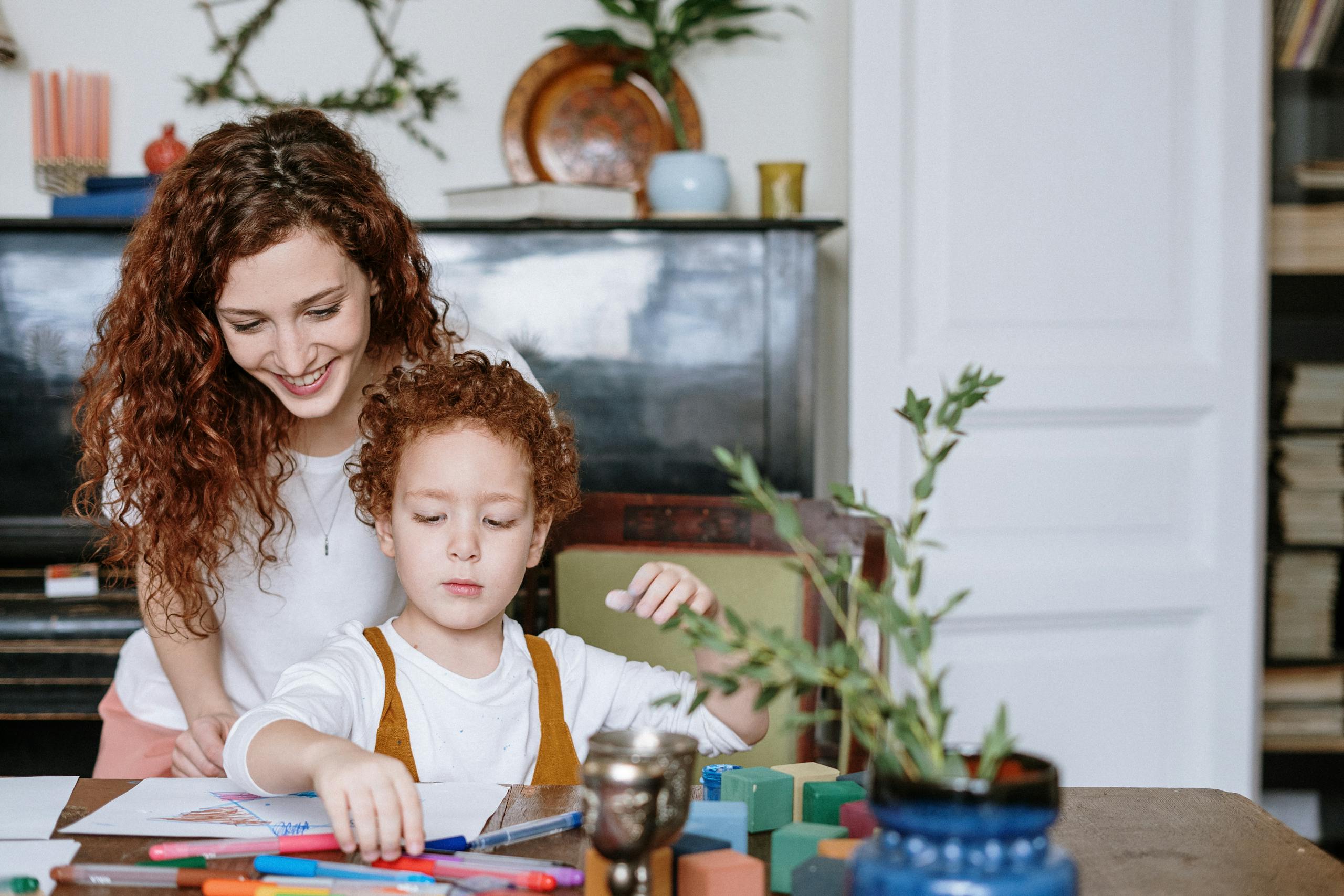

Not every introvert relates to home the same way. Some of us collect objects and memories, building nests thick with meaning. Others root themselves deeply in one place, finding the outside world manageable only in careful doses. And some carry their sense of self lightly, moving through the world without needing four walls to feel whole. Magpies, homebodies, and nomads represent three distinct ways introverts inhabit space, and understanding which one you are can change how you stop apologizing for the way you live.
These aren’t rigid boxes. They’re more like tendencies, patterns in how we restore ourselves and what we need from our surroundings. An introvert who travels constantly might still be a homebody at heart, carrying a portable ritual that recreates safety wherever they land. A magpie might also be a nomad. What matters is recognizing the underlying need, not fitting a label.
Our Introvert Home Environment hub explores the full range of how introverts relate to their physical spaces, but this particular angle, the one about personality and place, adds a layer that doesn’t get enough attention. Where you feel safe, what you collect, and how much you move aren’t random preferences. They’re clues about your inner architecture.
What Does It Mean to Be an Introvert Magpie?
The magpie in folklore collects shiny things, not out of greed, but out of a deep compulsion to gather what catches the light. Introvert magpies do something similar, except what they’re collecting is meaning. Every object in their space has a story. Every shelf is a kind of autobiography.
What’s your personality type?
Take our free 40-question assessment and get a detailed personality profile with dimension breakdowns, context analysis, and personalised insights.
Discover Your Type8-12 minutes · 40 questions · Free
I recognize this in myself more than I’d like to admit. My home office is a controlled chaos of books I’ve annotated, client awards from campaigns I’m proud of, a framed print from a trip to Portugal I took alone after a particularly brutal agency pitch season. None of it looks curated. All of it is intentional. Each piece is a marker, a physical record of something that mattered.
For introvert magpies, objects aren’t clutter. They’re a form of external memory, a way of making the internal world visible. Because so much of an introvert’s richest experience happens inside, in the processing, the noticing, the quiet observation of things others walk past, having physical anchors to those experiences creates a kind of continuity. The object says: this happened, this mattered, you were here.
There’s a difference, though, between meaningful collection and accumulation driven by anxiety. Some introverts collect because the world outside feels unpredictable, and objects feel controllable. That’s worth noticing. The relationship between environment and emotional regulation is well-documented, and for introverts who are already managing a higher baseline of internal stimulation, the physical space can either amplify or soothe that load. Magpies who collect from joy tend to feel energized by their spaces. Magpies who collect from fear tend to feel vaguely trapped by them.
Highly sensitive introverts often fall into the magpie category, and for them the question of how much is too much becomes especially important. There’s a thoughtful piece on HSP minimalism and simplifying for sensitive souls that explores how to honor the impulse to collect without letting it tip into overwhelm. It’s a balance I’ve had to find myself, learning which objects genuinely restore me and which ones I’m just holding onto out of habit.
What magpies tend to share is a rich relationship with the past. They’re often the people who remember the specific details of a conversation from years ago, who notice when something has been moved, who feel the absence of a familiar object as a small but real loss. That depth of noticing is a genuine strength, even when it makes them look, from the outside, like they just can’t throw anything away.

What Makes a True Introvert Homebody Different From Just Preferring to Stay In?
Most people assume homebodies are simply people who don’t like going out. That’s a surface reading. A true introvert homebody has a specific and sophisticated relationship with their physical environment. Home isn’t just where they sleep. It’s where they become themselves again.
There’s a version of this I lived for years without naming it. After a full week of client presentations, agency reviews, and the relentless performance of extroverted leadership, I would come home on a Friday evening and feel something physically release in my chest when I closed the door. Not relief from a bad week. Relief from the sustained effort of being legible to other people. Home was the place where I didn’t have to translate myself.
For homebody introverts, the home environment isn’t passive. It’s actively restorative. The specific chair, the particular light, the familiar sounds and smells, these aren’t incidental. They’re part of a system that helps the nervous system downshift. Emerging work in environmental psychology points toward how deeply our surroundings influence mood, cognition, and stress response, and homebodies seem to have an intuitive grasp of this long before they could articulate it.
The homebody couch is almost a cultural shorthand for this, and there’s more truth in that image than people give it credit for. It’s not laziness. It’s a specific kind of sensory anchoring. The couch knows you. You know the couch. That mutual familiarity is a small but real form of safety for a nervous system that spends most of the day adapting to environments it didn’t choose.
What separates a homebody from someone who simply avoids social discomfort is the quality of what happens at home. Homebodies aren’t hiding. They’re working, reading, thinking, creating, connecting through chosen channels. One of those channels, especially for introverts who want connection without the drain of real-time social performance, is the kind of slow, text-based interaction you find in chat rooms built for introverts. The homebody isn’t antisocial. They’re selective about the conditions under which they engage.
Homebodies also tend to be deeply thoughtful gift recipients and givers within their immediate circle. Because their home is so central to their identity, gifts for homebodies that enhance or honor that space carry unusual weight. A candle isn’t just a candle. A throw blanket isn’t just a throw blanket. These objects become part of the restorative ecosystem, and the person who chose them understood something true about who you are.
One thing I’ve noticed, both in myself and in the introverts I’ve worked alongside over two decades, is that homebodies often have a finely developed sense of what deeper, more meaningful conversation actually feels like, and they’re more likely to find it at home, in a small gathering, over a meal they cooked, than in any networking event or conference room. The home isn’t a retreat from life. For many introverts, it’s where life actually happens.
Can an Introvert Really Be a Nomad? Isn’t That Contradictory?
This is the one that surprises people most. The image of a nomad, always moving, always in new environments, always meeting strangers, reads as deeply extroverted. And yet some of the most committed nomads I’ve encountered are introverts, and their reasons for moving are almost the opposite of what you’d expect.
Introvert nomads don’t move because they crave stimulation. They move because constant novelty can be a form of privacy. When no one knows you, no one has expectations of you. You can be fully present in a place without the accumulated social weight of history and obligation. There’s a kind of freedom in anonymity that deeply appeals to the introvert who has spent years managing other people’s perceptions.
I had a creative director at my agency, a deeply introverted woman who had done a stint of location-independent work in her twenties, and she described it to me once in terms I’ve never forgotten. She said moving frequently gave her permission to be exactly who she was in that moment, without having to reconcile it with who she’d been the year before. For someone whose inner life evolves constantly, that kind of clean slate has real appeal.
Introvert nomads tend to carry their restorative rituals with them rather than embedding them in a place. The morning coffee routine, the specific playlist, the journaling practice, these become portable anchors. Where the homebody builds a nest, the nomad builds a practice. Both are doing the same underlying work: creating a reliable internal environment that doesn’t depend entirely on the external one.
What introvert nomads often struggle with is the social assumption that movement equals extraversion. People assume you must love meeting new people, must thrive on spontaneity, must be energized by constant change. The reality is more nuanced. Many introvert nomads are highly selective about the connections they make on the road, preferring a single deep conversation with a local over a week of hostel small talk. They’re not collecting experiences the way an extrovert might. They’re processing them, slowly, privately, often in writing.
There’s also a subset of introvert nomads who are fleeing rather than exploring, using movement to avoid the vulnerability of being truly known in one place. That’s worth examining honestly. Movement can be a genuine expression of personality, or it can be a strategy for staying emotionally unavailable. The difference usually shows up in whether the nomad feels enriched by their movement or vaguely hollow from it.
How Do You Figure Out Which One You Actually Are?
Most people assume they know, and most people are at least partly wrong. We tend to identify with the category that sounds most flattering or most socially acceptable given our current circumstances, rather than the one that most accurately describes our actual needs.
A more honest approach is to look at where you feel most like yourself, not most comfortable, but most authentically present. Comfort can be a form of avoidance. Authenticity is something different.
Ask yourself where your best thinking happens. Magpies often think best surrounded by their collections, the visual stimulation of meaningful objects sparks association and memory. Homebodies think best in familiar, settled environments where the sensory landscape is known and therefore ignorable. Nomads often think best in motion or in new environments, where the novelty clears out accumulated mental noise.
Ask yourself what you miss when you travel. Magpies miss their things, specific objects, the particular arrangement of their space. Homebodies miss the feeling of the place itself, the light, the sounds, the smell of their own home. Nomads often don’t miss their physical space at all, which tells you something important about where their sense of self is actually located.
Ask yourself what drains you most about your current living situation. Magpies who’ve been forced into minimalist spaces often feel a low-grade restlessness, like something is missing. Homebodies in transient or unstable housing situations often report a kind of chronic low-level anxiety that has nothing to do with the specific stressors in their life. Nomads who’ve been settled in one place for too long sometimes describe a feeling of stagnation that they struggle to explain to people who love where they live.
None of these are permanent identities. I’ve moved through all three at different points in my life. In my agency years, I was a homebody who couldn’t afford to act like one. My apartment was a recovery station between professional performances, and I treated it accordingly. Post-agency, building Ordinary Introvert from home, I’ve become something closer to a magpie, surrounding myself with the books, notes, and objects that make the internal work feel real and grounded.
What Do These Three Types Share, and Why Does That Matter?
Beneath the surface differences, magpies, homebodies, and nomads share the same core need: a reliable way to return to themselves. The specific mechanism differs. The underlying requirement doesn’t.
All three types are managing the same fundamental introvert reality: the external world costs something. Social interaction, sensory input, performance, adaptation, all of it draws from a finite internal reserve. The question each type is answering, in their own way, is how to replenish that reserve reliably.
What’s striking is how much of this happens below the level of conscious choice. Most introverts don’t decide to become homebodies or nomads. They find themselves drawn to certain arrangements and away from others, and only later, if they’re lucky, do they find language for what they’ve been doing all along. That’s part of what I find valuable about frameworks like this one, not as boxes to climb into, but as mirrors that help you see a pattern you were already living.
There’s also a social dimension worth naming. All three types face judgment from a culture that has strong opinions about how people should relate to home and place. Homebodies get called lazy or antisocial. Magpies get called hoarders or sentimental. Nomads get called commitment-phobic or irresponsible. None of these labels are accurate, and all of them reflect the same underlying discomfort: the person isn’t relating to space the way the majority expects, and that makes people uneasy.
The connection between place attachment and psychological wellbeing is real and meaningful. Dismissing someone’s relationship to their home environment, whether that’s a deeply nested magpie space, a carefully curated homebody sanctuary, or a nomad’s deliberately minimal footprint, isn’t just culturally narrow. It misses something important about how human beings actually function.
One thing all three types can benefit from is building a vocabulary for their needs, especially when those needs affect the people around them. A partner who doesn’t understand why you can’t just get rid of stuff, or why you can’t just come out tonight, or why you need to move again, isn’t necessarily being unsympathetic. They may simply not have the framework to understand what they’re seeing. Approaches to introvert-extrovert conflict resolution often emphasize exactly this: naming the need clearly, before the tension builds.
How Do These Types Show Up in Relationships and Work?
Understanding your type matters most where friction is highest, and that’s usually in close relationships and professional environments where your spatial and social needs collide with someone else’s.
Magpies in shared spaces face a specific challenge. Their collections feel essential to them and chaotic to others. I’ve seen this play out in agency settings where a magpie creative had a desk that looked, to everyone else, like a filing system had exploded. To them, it was a perfectly legible landscape. Every pile had meaning. Every object was in conversation with something else. The tension wasn’t about cleanliness. It was about two different relationships to objects and space colliding in a shared environment.
Homebodies in demanding professional cultures face a different friction. The expectation to be always available, always mobile, always willing to work from anywhere can feel like a direct assault on the conditions they need to do their best work. Remote work has helped many homebody introverts enormously, not because they’re avoiding the office, but because working from a space they’ve optimized for their own nervous system genuinely produces better output. That’s not a preference. That’s a performance condition.
Nomad introverts in relationships face the hardest version of this tension. The need to move, to reset, to avoid the accumulated weight of a single place, can look like avoidance or lack of commitment to a partner who experiences home as safety. Articulating the difference between “I need novelty to feel alive” and “I’m afraid of being known” is difficult work, and it requires a level of self-honesty that not everyone is ready for.
In professional settings, nomad introverts often thrive in roles with built-in variety, consulting, project-based work, travel-heavy positions, not because they love airports, but because the changing context keeps their thinking fresh and prevents the kind of social calcification that happens when everyone in an office has known each other too long. I’ve noticed this in my own career: some of my sharpest thinking happened on planes and in hotel rooms, away from the familiar grooves of the agency office.
For all three types, the professional world rewards self-knowledge. Knowing what you need, being able to articulate it without apology, and finding environments that accommodate it, is a form of strategic intelligence. It’s not self-indulgence. It’s how you build a sustainable working life.
What Should You Actually Do With This Framework?
Frameworks are only useful if they change something. So here’s the practical question: once you’ve identified your type, what do you do with it?
Start by auditing your current environment against your actual needs. If you’re a homebody who’s been living like a nomad because your job requires it, what small changes could make your current space more restorative? If you’re a magpie who’s been shamed into minimalism, what would it look like to give yourself permission to collect meaningfully again? If you’re a nomad who’s been trying to settle because that’s what adults are supposed to do, what would it cost you to stop fighting your own nature?
For homebodies especially, there’s real value in investing in the quality of your home environment, not as a luxury, but as a functional choice. A good homebody gift guide isn’t just a shopping list. It’s a framework for thinking about which additions to your space would genuinely serve your restoration, versus which ones are just more stuff. The distinction matters.
For magpies, the work is often about curation rather than reduction. Not throwing things away, but getting clearer about which objects are genuinely meaningful and which have simply accumulated. A book I’d recommend for anyone thinking seriously about the homebody experience and what it means to build a life around home is covered in this piece on the homebody book that explores exactly that territory.
For nomads, the work is often about building portable rituals that provide the internal consistency that a fixed home would otherwise supply. success doesn’t mean stop moving. It’s to stop losing yourself in the movement.
All three types benefit from one shared practice: paying attention to when you feel most like yourself, and then protecting the conditions that made that possible. That’s not selfishness. That’s maintenance. You can’t think clearly, work well, love generously, or contribute meaningfully from a state of chronic depletion. Your relationship to your home environment isn’t a lifestyle choice that exists in isolation from everything else. It’s infrastructure.

There’s more to explore about how introverts relate to their physical spaces, from the sensory details that make a home feel safe to the broader question of what it means to belong somewhere. Our complete Introvert Home Environment hub covers that full landscape if you want to keep going.
About the Author
Keith Lacy is an introvert who’s learned to embrace his true self later in life. After 20 years in advertising and marketing leadership, including running agencies and managing Fortune 500 accounts, Keith now channels his experience into helping fellow introverts understand their strengths and build fulfilling careers. As an INTJ, he brings analytical depth and authentic perspective to every article, drawing from both professional expertise and personal growth.
Frequently Asked Questions
What is the difference between a magpie, a homebody, and a nomad introvert?
These three types describe different ways introverts relate to home and space. Magpie introverts collect meaningful objects and build richly layered environments that serve as external records of their inner life. Homebody introverts root themselves deeply in a familiar place, drawing restoration from the specific, known qualities of their home environment. Nomad introverts carry their sense of self with them rather than embedding it in a place, finding freedom and clarity in movement and novelty. All three are valid expressions of introvert needs, and many people move between types at different life stages.
Can an introvert be both a homebody and a magpie at the same time?
Yes, and this combination is actually quite common. Many introverts are both deeply attached to their home space and drawn to filling it with meaningful objects. The homebody provides the where, a specific, familiar place that feels safe and restorative. The magpie provides the how, the particular arrangement of objects and collections that make that space feel like an authentic expression of the self. The two tendencies reinforce each other: the homebody needs to be in their space, and the magpie has made that space worth being in.
Are introvert nomads less introverted than homebodies?
No. Introversion describes how you process energy, not how much you move. Introvert nomads are just as introverted as homebodies. What differs is where they locate their sense of internal stability. Homebodies find it in a familiar place. Nomads find it in portable rituals and practices they carry with them. Both are managing the same introvert need for reliable restoration. The nomad who seems to thrive on constant movement is usually doing so because the movement itself creates a kind of privacy and freshness that their specific introvert temperament responds to, not because they’re secretly extroverted.
How do I know if my homebody tendencies are healthy or if I’m avoiding something?
The most honest test is whether your time at home is generative or just numbing. Healthy homebody behavior produces something: rest, creative work, meaningful connection, restored energy. Avoidance tends to produce a kind of hollow comfort, the feeling of having hidden rather than having genuinely recovered. Another useful signal is whether you feel genuine contentment in your home environment or a low-grade guilt and restlessness. Genuine homebodies tend to feel at peace in their space. Introverts using home as avoidance often feel vaguely ashamed of it, which is a different emotional register entirely.
How can understanding my type help me in professional settings?
Knowing your type gives you a clearer picture of the working conditions that support your best output. Homebodies often do their strongest work in stable, familiar environments, which means remote work or a consistent private office can be a genuine performance advantage, not just a preference. Magpies tend to think better when their workspace reflects their personality and contains meaningful objects, and pushing them into sterile, minimalist environments can quietly undermine their creativity. Nomad introverts often produce their most original thinking when given variety in their context, whether that’s project-based work, travel, or regularly changing their working environment. In all three cases, self-knowledge translates directly into better advocacy for the conditions you actually need.