

The best relaxing products for homebodies are the ones that make your space feel intentional rather than accidental. They’re not about escaping life. They’re about building an environment where rest is something you’ve designed, not something you’ve stumbled into out of exhaustion.
After years of running advertising agencies, I spent a lot of time convincing myself that stillness was something I had to earn through productivity. My home was where I recovered from the world, not where I actually lived. When I finally started treating my space as something worth investing in, the shift was immediate and real. The right products didn’t make me lazy. They made me whole.

If you’re someone who genuinely prefers home to anywhere else, you already know that your environment shapes everything. The texture of a blanket, the quality of light in a room, the scent drifting from a diffuser, these details aren’t trivial. They’re the architecture of your inner life. And for those of us wired for depth and internal reflection, that architecture matters more than most people realize.
Our Introvert Home Environment hub covers the full range of how introverts and homebodies can shape their spaces to match how they actually think and feel. This article goes deeper into the specific products that make that possible, the ones worth your money, your shelf space, and your trust.
What Makes a Product Actually Relaxing for a Homebody?
Not every product marketed as “relaxing” actually delivers. I’ve bought enough overpriced candles and novelty gadgets during agency gift-giving seasons to know the difference between something that looks calming in a catalog and something that genuinely quiets your nervous system.
What’s your personality type?
Take our free 40-question assessment and get a detailed personality profile with dimension breakdowns, context analysis, and personalised insights.
Discover Your Type8-12 minutes · 40 questions · Free
For homebodies specifically, the distinction matters. A product is truly relaxing when it reduces friction, removes low-level irritants, or adds something sensory that your body responds to without you having to think about it. It works quietly, in the background, the way a good support system works.
Highly sensitive people, in particular, often find that their homes need a different kind of curation. The principles behind HSP minimalism and simplifying for sensitive souls apply directly here: fewer, better things tend to create more genuine calm than a room full of wellness products competing for your attention.
What I’ve found, both personally and in watching how my team members responded to their own work environments, is that relaxation products fall into a few meaningful categories. Sensory comfort. Ambient environment. Mental decompression. Physical restoration. The best homebody setups address all four.
Which Comfort Textiles Are Worth the Investment?
Blankets and pillows sound basic. They are not. When I finally replaced the scratchy throw blanket I’d had since my first apartment with a weighted blanket and a properly filled duvet, I understood something I’d been missing for years. The physical sensation of being held by fabric is not a luxury. For many introverts, it’s a genuine nervous system reset.
Weighted blankets have become well-known in recent years, and there’s a reason they’ve stayed popular. The gentle, distributed pressure they provide can reduce the low-level physical tension that builds up after a day of social interaction or sensory overload. Many homebodies find them particularly effective during the evening wind-down period, that hour or two between finishing responsibilities and actually sleeping.
Beyond weighted blankets, consider the material. Bamboo and cotton blends breathe better than polyester and tend to feel less clingy on warm evenings. Sherpa and fleece work beautifully in colder months. The point isn’t to follow a trend. It’s to find the texture that makes you exhale.
Your couch is also part of this equation. The right seating can make the difference between a home that feels like a place to crash and one that feels like a place to genuinely restore. I’ve written elsewhere about what makes a homebody couch worth the investment, and the short version is this: depth, firmness level, and armrest height matter more than aesthetic. Buy for how you actually sit, not for how it photographs.

How Can Lighting Change the Feel of Your Space?
Lighting is the most underestimated variable in home comfort, and I say that as someone who spent two decades in an industry obsessed with visual environments. When I was running agency creative departments, we paid enormous attention to how lighting affected mood in client presentations. Warm, lower light made people feel safe and receptive. Harsh overhead fluorescents made them critical and defensive.
The same principle applies in your home. Overhead lighting that mimics office conditions will keep your brain in work mode regardless of what you’re doing underneath it. Shifting to warm-toned lamps, dimmable bulbs, or even candlelight in the evening sends a different signal entirely.
Smart bulbs have made this genuinely accessible. Products like Philips Hue or LIFX allow you to shift color temperature throughout the day, cooler and brighter in the morning to support focus, warmer and dimmer in the evening to ease the transition toward rest. The upfront cost is real, but the daily return on something you interact with every waking hour is hard to argue against.
Salt lamps, often dismissed as aesthetic-only purchases, do produce a warm amber glow that many people find genuinely soothing. The science on negative ion claims is thin, so I won’t oversell that angle. What I will say is that the quality of light they emit, soft, directional, warm, creates a visual environment that encourages stillness. That’s worth something on its own.
Candles work similarly. Scented or unscented, the act of lighting a candle functions as a ritual signal that the day is shifting. Rituals matter more than people admit. According to research published in PubMed Central on stress and environmental cues, the brain responds to contextual signals when regulating arousal levels. Creating consistent environmental transitions, like dimming lights or lighting a candle, helps the nervous system recognize that it’s safe to downshift.
What Scent and Sound Products Actually Help Introverts Decompress?
Aromatherapy diffusers have earned their place in the homebody toolkit. A quality ultrasonic diffuser with a few reliable essential oils, lavender, eucalyptus, cedarwood, can shift the sensory quality of a room in minutes. I keep one in my home office and one in the living room. After a day of video calls and client strategy sessions, walking into a room that smells like cedar and bergamot rather than stale coffee is a genuine transition marker.
The oils themselves are worth some research. Lavender has the most consistent support for promoting calm. Eucalyptus works well for clearing mental fog. Citrus scents tend to be energizing rather than relaxing, so they’re better suited for morning routines than evening wind-downs. Experiment, but start simple. Three or four reliable oils will serve you better than a cabinet full of blends you’ll never use.
Sound is equally important, and often more personal. White noise machines are a staple for homebodies who live in apartments or near busy streets. The ability to create a consistent sonic environment, one that masks unpredictable external noise, is genuinely valuable for people whose brains process sound deeply. Many introverts find that environmental noise contributes significantly to cognitive fatigue, and reducing that variable has measurable effects on how rested they feel.
Beyond white noise, consider brown noise or pink noise as alternatives. Brown noise is lower and richer than white noise, closer to the sound of a distant waterfall, and many people find it more immersive. Dedicated sound machines from brands like LectroFan or Marpac Dohm have better acoustic quality than phone apps and don’t drain your battery while you sleep.
For music, the research on ambient and instrumental tracks for focus and relaxation is well-established enough that I feel comfortable pointing you toward it without overstating specifics. What I know from personal experience is that having a dedicated “decompression” playlist, something you only play when you’re intentionally resting, trains your brain to associate those sounds with relaxation. The playlist becomes a cue, the same way lighting a candle does.

What Reading and Journaling Supplies Make Quiet Time Better?
Homebodies read. It’s not a stereotype. It’s a pattern that makes complete sense when you understand how introverts process the world. Books are one of the few forms of connection that don’t require you to perform. You receive meaning at your own pace, in your own internal voice, without anyone waiting for your response.
Investing in your reading setup is investing in your mental health. A good reading lamp with adjustable warmth and brightness protects your eyes and extends your comfortable reading time. A proper book stand or lap desk removes the physical strain of holding a book for long periods. An e-reader with a warm light setting, like a Kindle Paperwhite or a Kobo Libra, gives you access to an enormous library without the blue light that disrupts sleep.
If you’re building out a reading corner, the homebody book recommendations I’ve put together elsewhere are a good starting point for what to actually fill those shelves with. But the physical setup matters as much as the content. A dedicated reading chair, positioned near natural light during the day and a warm lamp in the evening, signals to your brain that this is a place for absorption rather than output.
Journaling supplies are worth mentioning separately because the act of writing by hand does something different than typing. Many introverts find that handwriting slows their thoughts down enough to actually examine them. A quality notebook, something with paper thick enough to not bleed through, and a pen that writes smoothly without requiring pressure, removes the small frustrations that interrupt the flow of reflection.
I started keeping a paper journal during a particularly difficult agency acquisition process. I had too many thoughts moving too fast, and no one I could talk to without it affecting the deal. Writing by hand forced me to slow down and actually finish a thought rather than cycling through fragments. That habit stuck, and I still keep a notebook on my desk more than a decade later.
The connection between writing and processing is something Psychology Today has explored in depth, particularly around how introverts tend to process experiences through reflection rather than conversation. A good journal gives that reflection somewhere to land.
Which Bath and Body Products Support Real Restoration?
Physical restoration is the category most often treated as indulgent rather than necessary. That framing is worth questioning. Your body carries the day’s tension in ways that don’t disappear just because you’ve stopped working. For people who absorb environmental and social stimulation deeply, the physical component of decompression is not optional.
A bath ritual is one of the most effective reset tools available to homebodies, and it costs less than most wellness products. Epsom salts, which contain magnesium sulfate, are widely used for muscle recovery and relaxation. Whether the magnesium absorbs transdermally at significant levels is still debated, but the combination of warm water, mineral salts, and intentional stillness produces real physical relaxation regardless of the mechanism.
Bath bombs and botanical soaks add a sensory layer that makes the experience feel more deliberate. Scented options with lavender or chamomile complement the warmth of the water. Unscented options work well for those who are sensitive to fragrance. The point is the ritual, not the product itself.
For people who prefer showers, a eucalyptus bundle hung near the showerhead releases aromatherapy steam with the heat. A quality shower head with adjustable pressure settings makes a meaningful difference in how the experience feels. These are small investments with daily returns.
Skincare as a wind-down practice is worth considering separately from skincare as a beauty routine. Applying a face mask or a slow moisturizing routine in the evening is less about the product’s ingredients and more about the act of doing something deliberately, slowly, for yourself. Many introverts find that this kind of single-focus, sensory activity serves as a genuine transition between the day’s demands and the evening’s rest.

What Digital Tools Help Homebodies Recharge Without Isolation?
There’s a version of homebody life that tips into isolation, and most of us know the difference when we feel it. Being home because you genuinely want to be there feels different from being home because the world feels too large to approach. Products and tools that support connection on your own terms can help maintain that distinction.
E-readers with library integration, like Libby or Overdrive, connect you to your local library’s digital collection for free. That’s a meaningful form of community participation that doesn’t require leaving your chair. Podcast apps with curated subscriptions give you access to conversations and ideas that feel like company without the social overhead of actual interaction.
For introverts who want genuine connection without the energy cost of in-person socializing, text-based community platforms offer something real. I’ve explored how chat rooms for introverts can provide meaningful interaction that works with our communication style rather than against it. The written format gives you time to think, which is where most introverts do their best connecting.
Noise-canceling headphones deserve a mention here because they do double duty. They protect you from unwanted sound, which is a genuine physical need for many introverts and highly sensitive people. They also signal to others in your household that you’re in a focused or restorative state, which reduces interruptions without requiring you to have a conversation about needing space. That combination of sensory protection and social communication makes them one of the highest-value products on this list.
Tablet stands and ergonomic phone holders matter more than they seem. When your device is positioned comfortably, you’re more likely to use it for genuinely restorative activities, reading, watching something you actually want to watch, video calling someone you care about, rather than the passive scrolling that leaves you feeling worse than when you started. Small ergonomic adjustments change the quality of how you use your time at home.
How Do You Build a Gift List Around Homebody Relaxation?
If you’re the homebody in your social circle, you’ve probably received gifts that missed the mark. Tickets to events you didn’t want to attend. Experiences designed for extroverts. Products chosen for their novelty rather than their usefulness in a quiet life.
Building a thoughtful wish list, or helping someone shop for the homebody in their life, is actually a skill. The gifts for homebodies guide I’ve put together covers this in detail, but the underlying principle is simple: the best gifts for homebodies reduce friction, add sensory comfort, or support a specific restorative activity the person already loves.
A quality tea or coffee setup, a specific type of loose-leaf tea or a pour-over coffee kit, is almost universally appreciated because it elevates a daily ritual the person already has. A good pair of slippers or a robe does the same thing. These aren’t exciting gifts in the traditional sense. They’re useful ones, and for homebodies, usefulness is its own form of thoughtfulness.
If you’re shopping for someone else, the homebody gift guide breaks down options by category and budget. The most important thing to understand is that homebodies tend to be particular about their spaces, so consumables, things that get used up and replaced, are often safer choices than permanent objects. A beautiful candle is a better gift than a decorative item you’re not certain fits their aesthetic.
During my agency years, I managed client holiday gifting for accounts that sometimes ran into six figures. The gifts that consistently generated the warmest responses were never the flashiest ones. They were the ones that said, “I noticed what you actually like.” That principle scales down to personal gift-giving perfectly.
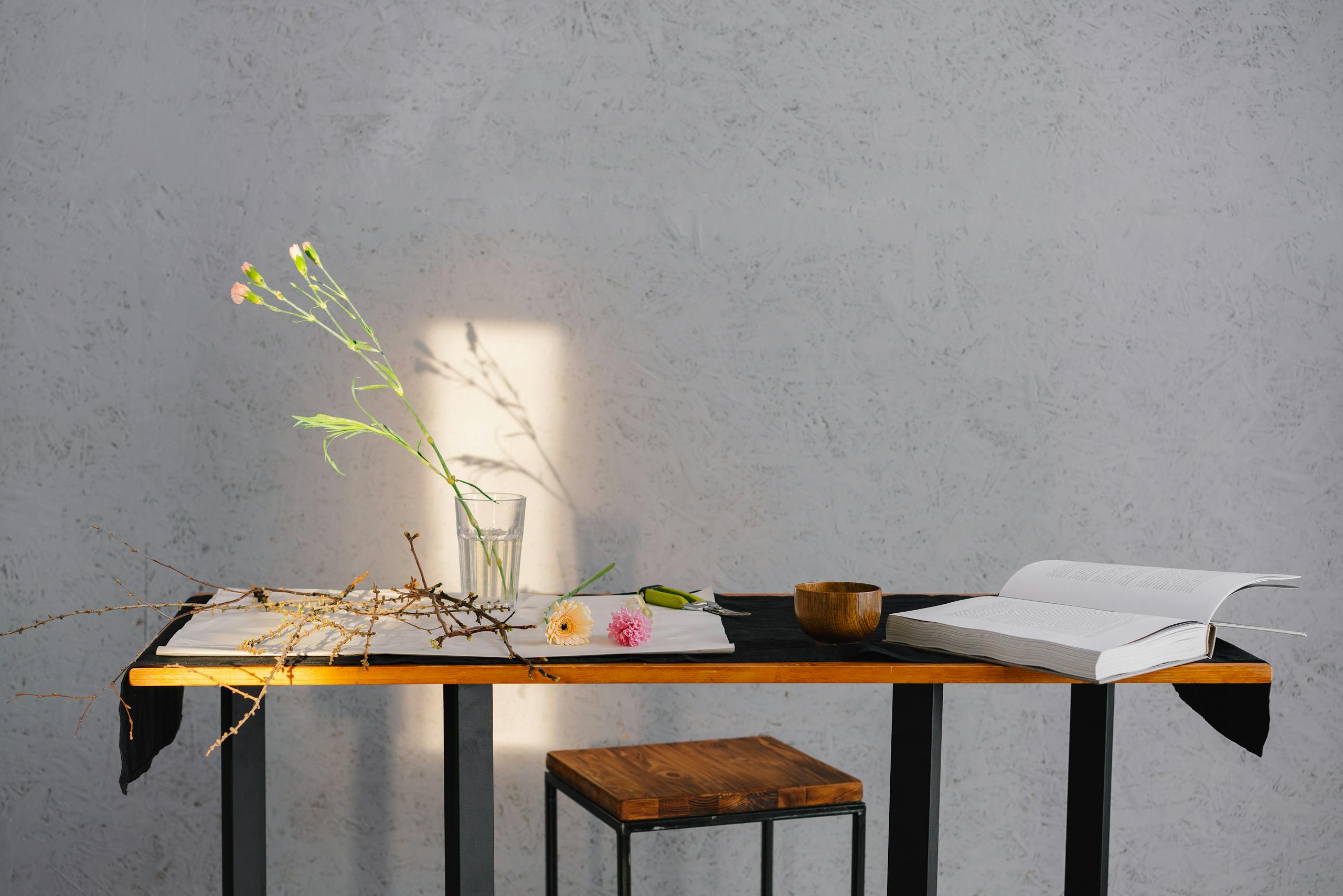
What Does a Complete Homebody Relaxation Setup Actually Look Like?
Pulling all of this together into a real setup requires thinking about your space as a system rather than a collection of individual purchases. Every element should work with the others. Warm lighting pairs with soft textiles. A diffuser complements a sound machine. A reading chair positioned near a lamp creates a functional zone rather than just a piece of furniture.
Start with the sensory layer. What does your space smell like, sound like, feel like when you walk in? If the answer involves harsh lighting, ambient noise you can’t control, and surfaces that feel utilitarian, address those first. They’re the foundation everything else sits on.
Add the comfort layer next. Textiles, seating, and temperature control. A weighted blanket, a couch or chair that fits how you actually sit, and the ability to adjust the temperature of your space without negotiating with someone else. These are the physical conditions that allow your body to release tension.
Then build the activity layer. What do you actually do when you’re at your most restored? Reading, writing, cooking, watching, listening, creating? Invest in the tools that make that activity easier and more enjoyable. A good reading lamp if you read. A quality cutting board and sharp knives if cooking is your form of meditation. A sketchbook and good pens if drawing quiets your mind.
The connection between intentional environment design and psychological wellbeing is something researchers have been examining more closely in recent years. What they’re finding aligns with what most introverts already know intuitively: the spaces we inhabit shape our internal states, and shaping those spaces deliberately is a form of self-care with real consequences.
One final note from personal experience. The most important shift I made wasn’t buying a specific product. It was deciding that my home deserved the same level of intentional design that I brought to my professional environments. For years, I poured creative energy into client spaces and let my own home exist as an afterthought. When I reversed that, everything about how I recovered, thought, and felt at home changed. Products are just the tools. The decision to take your own comfort seriously is what makes them work.
There’s more to explore across the full range of how introverts can shape their living spaces. The Introvert Home Environment hub brings together everything from minimalism principles to specific product recommendations, all through the lens of how people wired for depth and quiet actually live.
About the Author
Keith Lacy is an introvert who’s learned to embrace his true self later in life. After 20 years in advertising and marketing leadership, including running agencies and managing Fortune 500 accounts, Keith now channels his experience into helping fellow introverts understand their strengths and build fulfilling careers. As an INTJ, he brings analytical depth and authentic perspective to every article, drawing from both professional expertise and personal growth.
Frequently Asked Questions
What are the most useful relaxing products for homebodies on a budget?
Start with the highest-impact, lowest-cost changes first. A warm-toned lamp or a set of dimmable bulbs costs less than most wellness products and immediately changes how your space feels in the evening. Epsom salts for a bath ritual, a quality candle, and a simple essential oil diffuser can be assembled for under $50. These sensory basics address the environmental layer that affects your nervous system most directly. From there, add one higher-investment piece at a time, a weighted blanket, a better reading chair, noise-canceling headphones, as budget allows.
Are weighted blankets actually effective for introverts and highly sensitive people?
Many introverts and highly sensitive people report genuine relief from the distributed pressure that weighted blankets provide. The physical sensation can help reduce the residual tension that builds up after extended social interaction or sensory exposure. The effectiveness varies by person, and the right weight matters, a general guideline is roughly 10 percent of your body weight, though personal preference plays a role. If you’re sensitive to feeling constrained, a lighter weighted blanket or a heavy duvet may work better than a traditional weighted option.
How do I set up a relaxing reading corner at home?
A functional reading corner needs three things: a comfortable seat that supports your posture during extended reading, a light source positioned to illuminate your page without creating glare or eye strain, and enough separation from high-traffic areas to feel like a distinct zone. A dedicated chair or sectional corner works better than a couch you also use for watching television, because the brain responds to environmental cues and will associate different zones with different activities over time. Add a small side table for your drink and a blanket within reach, and you have everything you need.
What scents are most effective for relaxation at home?
Lavender has the most consistent track record for promoting calm and is a reliable starting point for anyone building an aromatherapy practice. Cedarwood and sandalwood create a grounding, warm quality that many people find deeply settling. Chamomile works well in the evening, particularly in combination with lavender. Eucalyptus is better suited to mental clarity than deep relaxation. Citrus scents, while pleasant, tend to be energizing rather than calming and work better in morning routines. Start with one or two oils you respond to personally rather than building a large collection based on general recommendations.
How can I make my home feel more restorative without redecorating entirely?
Focus on the sensory layer before the visual one. Lighting temperature and intensity have a larger effect on how a space feels than most decorative changes. Swapping harsh overhead lights for warm lamps costs less than repainting a room and produces an immediate shift. Adding textiles, a throw blanket, a rug, heavier curtains, changes how a space feels acoustically and physically without touching the walls. A diffuser running a consistent scent creates an olfactory association with home comfort that builds over time. These layered sensory adjustments accumulate into an environment that genuinely supports restoration, often without a single piece of furniture changing.