
Being a homebody isn’t a personality flaw waiting to be corrected. It’s a functional relationship with your own environment, one where home does something specific and necessary: it restores what the outside world depletes. The homebodies factor is the quiet, often overlooked reality that for many introverts and sensitive people, home isn’t just where you sleep. It’s where you become yourself again.
Most conversations about homebodies focus on the social judgment, the raised eyebrows, the pressure to get out more. What gets skipped over is the actual mechanics of why home matters so deeply, and what that relationship reveals about how certain minds process the world.
My relationship with home changed significantly once I stopped treating it as a retreat from failure and started understanding it as the environment where my best thinking actually happens. That reframe took longer than I’d like to admit. If you’re sorting through your own version of this, the Introvert Home Environment hub covers the full landscape of how introverts relate to their spaces, from sensory design to the social dynamics that make home feel necessary in the first place.
What Does Home Actually Do for an Introvert’s Brain?
There’s a version of this question that sounds philosophical, but it has a practical answer. Home functions as a regulated environment. Noise levels are controlled. Social demands are minimal or absent. Sensory input is predictable. For a brain that processes everything deeply, that predictability isn’t laziness. It’s efficiency.
What’s your personality type?
Take our free 40-question assessment and get a detailed personality profile with dimension breakdowns, context analysis, and personalised insights.
Discover Your Type8-12 minutes · 40 questions · Free
I spent the better part of two decades running advertising agencies in environments that were deliberately designed to be stimulating. Open floor plans, constant client calls, team brainstorms that ran long, pitch days that started at seven in the morning and ended whenever the last person lost their voice. The culture rewarded visible energy. And I performed in it. But what I noticed, consistently, was that my actual thinking happened before I got to the office or after I left. The commute home was where I processed what had happened. My home office on weekends was where the real strategic clarity emerged.
At the time, I told myself I was just more productive in quiet. What I understand now is that the stimulation of the agency environment was consuming cognitive resources I needed for depth. Home gave those resources back.
Highly sensitive people experience this even more acutely. The nervous system of an HSP processes environmental input at a finer grain than average, which means the sensory load of a typical workday is genuinely heavier. If you’re exploring how that sensitivity intersects with home design, the piece on HSP minimalism and simplifying for sensitive souls gets into the practical side of building spaces that don’t add to that load.
Why Do Homebodies Feel the Pull Toward Home So Strongly?
Not everyone feels this. Some people genuinely recharge in crowds, find empty houses uncomfortable, and experience stillness as something to escape rather than seek. That’s not wrong. It’s just a different wiring.
For introverts, the pull toward home is tied to something measurable about how social interaction uses energy. Being around people, even people you like, requires a kind of continuous environmental monitoring. You’re tracking tone, reading expressions, managing your own responses, anticipating what comes next. That monitoring doesn’t switch off automatically when you’re in a group. It runs in the background whether you want it to or not.
Home interrupts that loop. When you’re alone in a familiar space, the monitoring can finally quiet down. What returns in that quiet is something that feels a lot like yourself.

One of the things I’ve noticed in my own experience is that the strength of the pull toward home correlates directly with the intensity of what preceded it. A low-stakes Tuesday with a few focused work calls? I could stay out after work without much friction. A day that involved a major client presentation, two difficult personnel conversations, and a budget meeting that went sideways? The only thing I wanted was my couch. The homebody couch isn’t a joke or a cliché. It’s a genuine recovery tool for people whose minds run hard.
There’s a meaningful body of work on how restorative environments function psychologically. One area of research that maps onto this experience involves attention restoration theory, which holds that certain environments allow directed attention to recover. Nature gets most of the credit in that framework, but the underlying mechanism, reducing demands on voluntary attention, applies just as well to a quiet, familiar home space. A PubMed Central review on psychological restoration and environment touches on how environmental features contribute to mental recovery in ways that go beyond simple relaxation.
Is the Homebody Preference a Choice or a Trait?
Both, and the distinction matters more than it might seem.
The preference itself, the pull toward home, toward quiet, toward environments you control, is largely a trait. It’s part of how an introverted or highly sensitive nervous system is organized. You didn’t decide to find crowded spaces draining any more than you decided your eye color. That part isn’t a choice.
What is a choice is how you relate to that trait. You can spend years fighting it, as I did, performing extroversion in professional settings and then collapsing at home in a way that felt like defeat. Or you can start treating the preference as information, as a signal about what conditions allow you to function at your actual best.
That shift in framing changes everything. Once I stopped reading my need for home time as a weakness and started treating it as data about my optimal operating conditions, I made better decisions. I stopped scheduling back-to-back client dinners. I protected mornings at home before big pitch days. I started being honest with my team about when I needed to work remotely rather than performing presence for its own sake.
The work didn’t suffer. In several cases it improved, because I was showing up with actual mental reserves instead of running on fumes and forcing myself through interactions I wasn’t equipped to handle well that day.
A piece in Psychology Today on why introverts need deeper conversations gets at something related: the quality of engagement matters more to introverts than the quantity. That principle extends beyond conversation to environments. Home isn’t chosen because it’s easy. It’s chosen because it allows for a quality of presence that crowded, stimulating environments make harder to sustain.
How Does the Homebody Relationship With Home Evolve Over Time?
Something I’ve observed in myself and in people I’ve worked with over the years is that the homebody relationship with home tends to deepen rather than diminish as people get older. Part of that is practical. You accumulate more of what you actually like. Your space starts to reflect you rather than whoever you were trying to be in your twenties.
But part of it is psychological. As introverts gain more self-knowledge, the defensiveness around the preference often softens. You stop needing to justify why you’d rather stay in. You stop apologizing for the fact that a quiet evening at home genuinely sounds better than the alternative being offered. The home becomes less of a hiding place and more of a chosen environment.
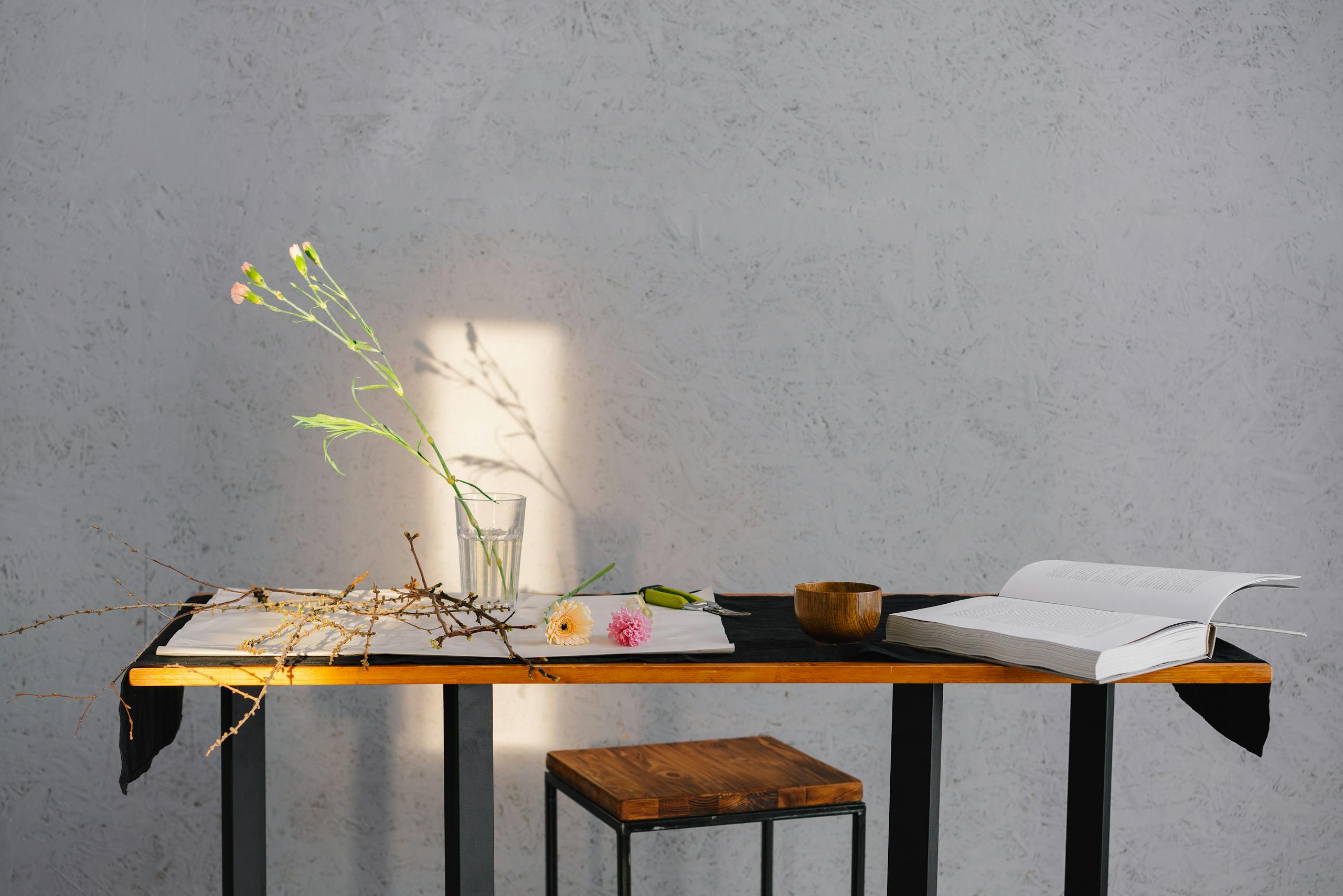
That evolution often involves building out the home environment more intentionally. The books that actually mean something. The objects that have weight and history. The rituals that mark the transition from the outside world to your own space. I know people who have spent real thought on what they keep near them at home, not as decoration but as a kind of environmental curation. If you’re at that stage of thinking about the space itself, there’s a good homebody book resource that approaches this from a lifestyle angle rather than a design-magazine angle.
The social dimension of home evolves too. Many homebodies find that their preferred mode of connection shifts toward smaller, more intentional gatherings in home settings rather than large external events. Having one or two people over for a long dinner feels fundamentally different from attending a party with thirty people. Both involve other humans. The experience of each is almost nothing alike.
For introverts who still want some form of social connection without the full sensory load of in-person environments, chat rooms designed for introverts offer something interesting: genuine interaction at a pace and intensity that doesn’t require the same kind of sustained performance that in-person socializing demands.
What Does the Homebody Factor Look Like in Practice?
The homebodies factor isn’t abstract. It shows up in specific, daily patterns that are easy to overlook until you start paying attention to them.
It shows up in how you feel on Sunday evening before a demanding week. For many introverts, that feeling is less about dread of work and more about the anticipatory awareness that the next five days will involve sustained social performance with limited recovery time. The solution isn’t always to work less. Sometimes it’s to be more deliberate about building recovery into the structure of the week itself.
It shows up in how you feel after a vacation. Many homebodies find that travel, even genuinely enjoyable travel, leaves them more depleted than a week at home would have. That’s not ingratitude. It’s the straightforward result of spending days in unfamiliar environments with unpredictable sensory input and reduced control over your surroundings. Coming home after a trip often feels like arriving somewhere, not just returning.
It shows up in what you choose to invest in for your home environment. There’s a reason homebodies tend to be thoughtful about what surrounds them. When home is where you spend meaningful time and do meaningful recovery, the quality of that environment matters in a way it simply doesn’t for people who treat home as a place to sleep between activities. A well-considered gift for a homebody isn’t a joke about staying in. It’s an acknowledgment that the home environment is genuinely important to how that person functions.
And it shows up in the texture of an ordinary evening. The specific pleasure of being home, lights at the right level, sounds at a volume you chose, no obligation to perform or monitor or manage, is something that’s genuinely difficult to explain to someone who doesn’t experience it. It’s not boredom avoidance. It’s presence.
How Does the Homebody Factor Intersect With Mental and Emotional Health?
There’s a version of homebodiness that is healthy and a version that can become isolating, and the line between them is worth examining honestly.
The healthy version involves home as a restorative base. You go out, engage with the world, handle what needs handling, and return home to recover and reflect. The home functions as a support structure for a life that includes external engagement, even if that engagement is selective and limited compared to what an extrovert might choose.

The version that can become problematic is when home shifts from a chosen environment to an avoidance mechanism. When the pull toward home is driven primarily by anxiety about what’s outside rather than genuine preference for what’s inside, the dynamic changes. Home stops being restorative and starts being a way of not dealing with things that need to be dealt with.
I’ve sat with that distinction in my own life. There were periods during particularly difficult stretches at the agency, a major client loss, a team restructuring that went badly, a period of financial uncertainty, when my preference for home started shading into something more avoidant. I wasn’t recovering at home during those times. I was hiding. The difference was that I wasn’t doing anything at home that was actually restorative. I was just not being somewhere else.
Genuine recovery involves some form of active engagement with your own inner state. Reading, thinking, creating, reflecting. Avoidance involves numbing or simply waiting for the discomfort to pass. The home is the same in both cases. What you’re doing in it is entirely different.
A PubMed Central article examining social isolation and its psychological dimensions makes a distinction that maps onto this: chosen solitude and involuntary isolation produce very different outcomes. The homebodies factor, at its healthiest, is firmly in the chosen solitude category.
Emotional resilience, for introverts, often looks different than it does for extroverts. It’s not about bouncing back through social engagement or talking things through with a group. It tends to be quieter, more internal, more dependent on having the space to process without interruption. A Frontiers in Psychology piece on personality and emotional processing touches on how individual differences in temperament shape the way people recover from stress, which has direct implications for understanding why the home environment matters so differently to different people.
What Can Homebodies Learn From Paying Attention to What Home Does for Them?
There’s a practical exercise embedded in taking the homebodies factor seriously: start noticing what, specifically, about home restores you.
Is it silence? Is it the absence of social monitoring? Is it the ability to move through your own space without narrating yourself to anyone? Is it the specific physical comfort of your own furniture, your own lighting, your own smells? Is it the freedom to be mid-thought without someone interrupting?
Once you know what it is, you can start building more of it into your life deliberately, and you can start recognizing when you’re getting enough of it versus when you’re running low.
I started doing this in a fairly systematic way about a decade ago, partly because I was curious about my own patterns and partly because I was tired of feeling depleted in ways I couldn’t explain. What I found was that the specific restorative element for me wasn’t silence exactly. It was the absence of being observed. I could handle noise. What I couldn’t handle indefinitely was the feeling of being watched, evaluated, performing. Home was the place where that stopped.
That insight changed how I thought about the agency environment. I started closing my office door more. I started taking lunch alone more often. I wasn’t withdrawing from the team. I was protecting a resource that allowed me to show up better when I was with them.
The people around you benefit from you understanding the homebodies factor in yourself, because a person who has recovered is a fundamentally different presence than a person who is running on empty and performing functionality they don’t have.
When you’re thinking about building a home environment that actually supports this kind of recovery, the details matter more than you might expect. What surrounds you, what you reach for at the end of a hard day, what makes the space feel like yours, these aren’t trivial questions. A thoughtful homebody gift guide can be a surprisingly useful starting point for thinking through what your own space might be missing, not as a shopping list but as a framework for what kinds of objects and comforts actually serve the recovery function.

The homebodies factor, at its core, is about taking seriously what your environment does for you. Not defending it to people who don’t understand it. Not apologizing for it. Just paying attention to it, learning from it, and building a life that accounts for it honestly.
That’s not a small thing. For introverts especially, the home environment is often the difference between a life that feels sustainable and one that feels like constant recovery from the previous day. Getting it right matters.
There’s more to explore on this topic across the full range of how introverts relate to their spaces. The Introvert Home Environment hub brings together everything from sensory design to social dynamics to the specific ways homebodies build lives that actually work for them.
About the Author
Keith Lacy is an introvert who’s learned to embrace his true self later in life. After 20 years in advertising and marketing leadership, including running agencies and managing Fortune 500 accounts, Keith now channels his experience into helping fellow introverts understand their strengths and build fulfilling careers. As an INTJ, he brings analytical depth and authentic perspective to every article, drawing from both professional expertise and personal growth.
Frequently Asked Questions
What is the homebodies factor?
The homebodies factor refers to the functional relationship between introverts and their home environments. For people who are wired for deep processing and internal reflection, home does something specific: it restores cognitive and emotional resources that social and sensory-heavy environments deplete. It’s not simply a preference for staying in. It’s a pattern of recovery that shapes how introverts and highly sensitive people sustain themselves over time.
Is being a homebody a sign of introversion?
There’s significant overlap, but the two aren’t identical. Many introverts are homebodies because their need for recovery from social stimulation makes home environments particularly valuable. That said, some introverts enjoy being out in the world and find ways to manage their energy without relying heavily on home time. And some people who identify as homebodies may not be strongly introverted. The connection is meaningful but not absolute.
How is healthy homebodiness different from social avoidance?
The difference lies in what’s driving the preference. Healthy homebodiness is characterized by genuine enjoyment of home environments and the restorative activities that happen there, combined with the capacity to engage with the outside world when needed or wanted. Social avoidance, by contrast, is driven primarily by anxiety or discomfort about external situations. In the avoidance pattern, home functions as a way of not dealing with things rather than as an active space for recovery and renewal.
Can understanding the homebodies factor improve your productivity?
Significantly, yes. Once you understand that your best thinking often happens in lower-stimulation environments and that your cognitive performance is directly tied to having adequate recovery time, you can structure your work and schedule around that reality. Many introverts find that protecting home time before high-stakes professional situations, rather than treating it as a reward afterward, produces noticeably better results. The resource management logic is straightforward: you perform better when you’re not depleted.
How can homebodies build home environments that actually support recovery?
Start by identifying what specifically about home restores you. Is it silence, the absence of being observed, physical comfort, creative freedom, or something else? Once you know the specific element, you can design your space around it more deliberately. Reducing sensory clutter, creating distinct zones for different activities, and surrounding yourself with objects that have genuine meaning to you all contribute to a home environment that actively supports recovery rather than simply providing a different location to be tired in.