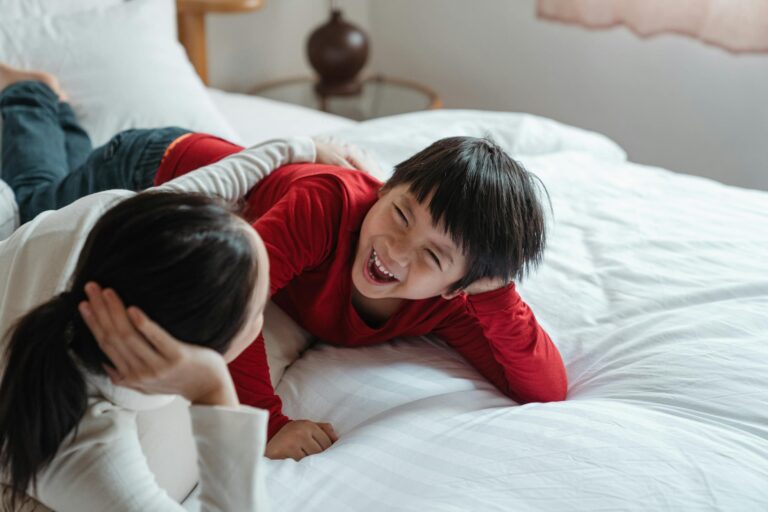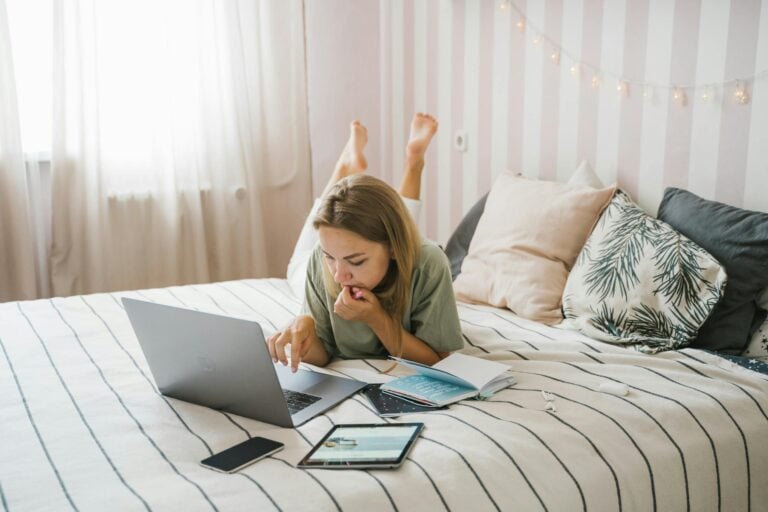

A homebody is someone who genuinely prefers spending time at home over seeking entertainment or social engagement elsewhere, finding restoration, meaning, and comfort within their own space rather than feeling confined by it. This isn’t avoidance or fear dressed up as preference. It’s a real and distinct way of experiencing the world, where the familiar rhythms of home feel more alive than anything happening outside.
Most articles about homebodies spend their energy defending the lifestyle against criticism. That’s a conversation worth having, but it’s not the one I want to have here. What I find more interesting is what homebodies actually look like from the inside, the specific traits, tendencies, and interior experiences that shape how we move through daily life. Because once you recognize these patterns in yourself, something settles. You stop wondering if something is wrong with you and start seeing the logic of who you are.
Our Introvert Home Environment hub covers the full landscape of how introverts relate to their spaces, from sensory design to solitude rituals. This article goes a layer deeper, into the personality traits that make the homebody experience feel so natural and so necessary for certain people.

What Does a Homebody Actually Feel, Day to Day?
Early in my agency career, I had a mentor who treated busyness like a badge of honor. He was always somewhere, always in motion, always describing the weekend plans that had exhausted him. I remember nodding along and thinking I should want that. I didn’t. What I actually wanted was to get home, pour something warm, and think through the week without anyone talking at me.
What’s your personality type?
Take our free 40-question assessment and get a detailed personality profile with dimension breakdowns, context analysis, and personalised insights.
Discover Your Type8-12 minutes · 40 questions · Free
That gap between what I thought I should want and what I actually wanted followed me for years. It wasn’t until much later that I recognized it as a trait, not a deficiency. Homebodies experience their home environment as genuinely activating rather than limiting. The day doesn’t feel wasted when it’s spent at home. It feels complete.
There’s a particular quality to a homebody’s attention at home that’s hard to describe to someone who doesn’t share it. Ordinary details carry weight. The way light moves across a room in late afternoon. The particular quiet of a Sunday morning before anyone else is awake. A homebody doesn’t need external stimulation to feel engaged because the interior landscape is already rich enough.
That interior richness connects directly to how homebodies process the world. Where some people think best in motion or in conversation, homebodies tend to process quietly, alone, at their own pace. The home isn’t just a physical space. It’s where the thinking actually happens.
Is Sensitivity One of the Core Homebody Traits?
Not every homebody is highly sensitive, but the overlap is significant enough to be worth examining. Many people who strongly identify as homebodies describe a heightened awareness of their environment, noticing sounds, textures, social dynamics, and emotional undercurrents that others filter out without effort. That kind of awareness is exhausting in chaotic or crowded spaces. Home becomes the place where the volume finally turns down.
I’ve seen this pattern clearly in my own life. Running agencies meant constant sensory and social input: open offices, client calls, presentations, agency parties where I was expected to be “on.” By Thursday of any given week, I was running on fumes, not because the work was hard but because the environment was relentless. Friday night at home wasn’t laziness. It was survival.
For highly sensitive people, the connection between environment and wellbeing is especially direct. Research published in PubMed Central has documented how environmental stimulation affects individuals differently based on their neurological sensitivity, with some people showing substantially stronger responses to the same inputs. That’s not a character flaw. It’s a documented variation in how nervous systems operate.
If you’re someone who finds that simplifying your home environment makes a meaningful difference in how you feel, that’s worth paying attention to. There’s a whole conversation about HSP minimalism and simplifying for sensitive souls that speaks directly to this, covering how reducing visual and sensory noise at home can shift your baseline in ways that feel almost disproportionate to the change.
Do Homebodies Actually Avoid People, or Do They Just Connect Differently?
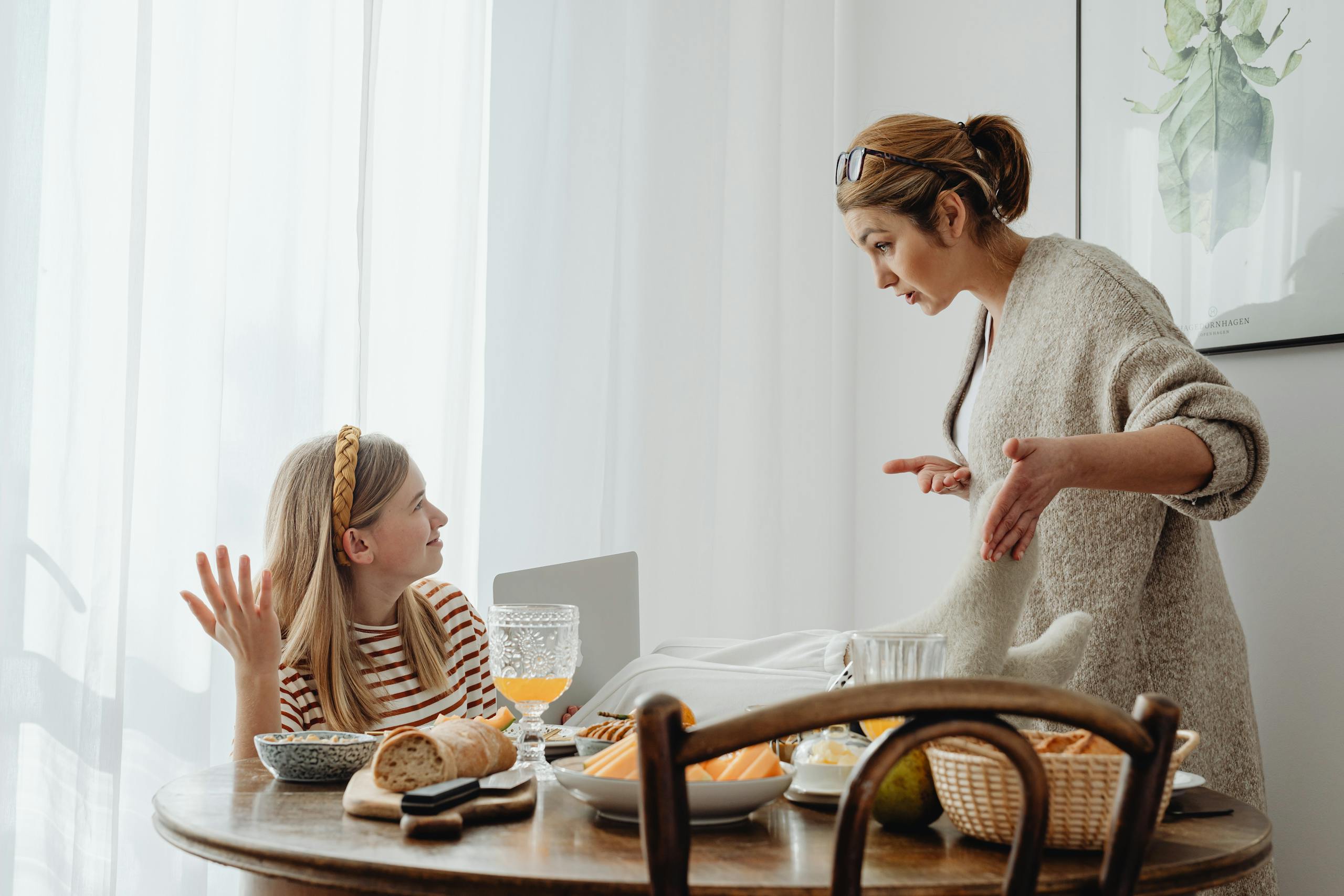
One of the most persistent misconceptions about homebodies is that they’re antisocial. From the outside, staying home on a Saturday night looks like isolation. From the inside, it often looks like a deliberate choice to protect the kind of connection that actually feels meaningful.
Homebodies tend to prefer depth over volume in their relationships. A long conversation with one person they trust over a party where they’ll have fifteen short conversations with people they barely know. That preference isn’t about fear of people. It’s about what kind of connection feels worth the energy expenditure.
There’s something real in what Psychology Today has written about the need for deeper conversations, specifically how surface-level social interaction often leaves introverts feeling more depleted than refreshed, while genuine depth-oriented connection can actually restore energy rather than drain it. That distinction matters enormously for understanding why homebodies make the social choices they do.
And the ways homebodies connect have expanded considerably. Digital spaces have become genuinely meaningful for people who prefer to engage on their own terms, at their own pace, without the noise and performance that comes with in-person group settings. Chat rooms designed for introverts represent one example of how homebodies have carved out social spaces that fit their actual wiring rather than forcing themselves into formats that don’t.
I remember the first time I realized that some of my most substantive professional relationships had developed through written communication rather than in-person meetings. Email chains, long thoughtful messages, the kind of back-and-forth that allowed both parties to think before responding. That wasn’t a lesser form of connection. In many cases, it was better.
What Role Does Physical Space Play in the Homebody Personality?
Ask a homebody to describe their ideal home and you’ll hear something very specific. It won’t be vague. They’ll tell you about the light in a particular room at a particular time of day, the chair that has become irreplaceable, the corner where they do their best thinking. The physical details matter because the physical environment is doing real psychological work.
Homebodies tend to be highly attuned to how their spaces feel, not just how they look. Temperature, texture, sound levels, the arrangement of furniture, whether a room feels open or enclosed. These aren’t decorating preferences. They’re functional requirements for a certain kind of mental state.
That relationship between physical space and psychological comfort shows up clearly in something as specific as the couch. I know that sounds almost too ordinary to be worth mentioning, but there’s a reason the homebody couch has become something of a cultural touchstone. For someone who does most of their living at home, the furniture they occupy for hours every day isn’t incidental. It’s infrastructure.
During the years I ran my first agency, I had a corner of my home office that was entirely mine. Not a “home office” in the corporate sense, just a chair, a lamp, a small table for coffee, and a view of the backyard. I did some of my best strategic thinking there, not at my desk, not in conference rooms, but in that specific corner with that specific quality of quiet. My team thought I disappeared on weekends. I was actually doing some of my most productive work, just not in any format that looked like work from the outside.

Are Homebodies More Likely to Have Rich Inner Lives?
There’s a pattern I’ve noticed across the years, both in myself and in the introverts I’ve worked with and managed: the people who are most comfortable spending extended time alone tend to be the ones with the most active interior lives. Not necessarily the most expressive people, not the loudest voices in a meeting, but the ones who are genuinely busy inside their own heads in ways that are satisfying rather than distressing.
Homebodies often have elaborate systems for how they spend their solitary time. Reading, writing, creative projects, long-form thinking, cooking with real attention, watching films with genuine engagement rather than background noise. The home isn’t a waiting room between social engagements. It’s where the actual texture of life exists.
Books hold a particular place in the homebody experience. Not just as entertainment but as companions, as portals, as the kind of deep engagement that crowds and noise make impossible. There’s a reason the idea of a homebody book resonates so strongly with people who identify this way. Reading is perhaps the most perfectly suited activity for someone who finds depth more nourishing than breadth.
I managed a creative director at one of my agencies who was deeply introverted and deeply brilliant. She produced work that consistently outperformed what our more gregarious team members created. When I finally asked her about her process, she described a weekend ritual: Saturday morning entirely alone, no phone, no plans, just reading and sketching and letting ideas develop without pressure. Monday morning she’d arrive with concepts that felt like they came from somewhere else entirely. They didn’t. They came from that protected interior space she’d built for herself.
There’s a quality of attention that emerges when someone is genuinely comfortable with solitude. Frontiers in Psychology has explored the relationship between solitude and psychological wellbeing, finding that voluntary solitude, chosen rather than imposed, carries meaningfully different outcomes than social isolation. For homebodies, the distinction is everything. The home is chosen. The solitude is chosen. That choice is what makes it restorative.
How Does the Homebody Trait Show Up in Routines and Rituals?
Homebodies are almost universally creatures of routine, but not in the rigid, anxious way that word sometimes implies. Their routines are more like anchors: specific sequences of small actions that create a sense of continuity and predictability that the outside world rarely offers.
Morning coffee made the same way in the same mug. An evening walk at the same time each day. A particular order to weekend activities that rarely varies. These routines aren’t boring to the homebody who lives them. They’re the scaffolding that makes everything else possible.
There’s also something worth noting about how homebodies recover from disruption. When work travel, family obligations, or social commitments pull them out of their home rhythms for extended periods, the return home carries a particular quality of relief. Not just comfort but recalibration. The body and mind both seem to exhale.
I traveled constantly during my agency years. New York, Chicago, Los Angeles, London, client visits that stretched into multi-day trips where I was performing extroversion from the moment I landed until the moment I boarded the return flight. The drive home from the airport was always the first moment I felt like myself again. Not the hotel room, not the flight. The specific route home, the familiar landmarks, the knowledge that I was almost back to my own space.
That recovery process is documented in what we understand about how stress and restoration work neurologically. PubMed Central has published work on restorative environments and how certain spaces support psychological recovery in ways that others don’t. For homebodies, the home is precisely that kind of restorative environment, tuned over time to support exactly the kind of recovery their nervous system needs.

What Do Homebodies Value That Others Often Miss?
Homebodies tend to have a sophisticated relationship with comfort that goes beyond the physical. They understand, often intuitively, that comfort is not the same as complacency. A homebody can be deeply ambitious, intellectually restless, professionally driven, and still find that the home environment is where they do their best work, their deepest thinking, and their most genuine living.
They also tend to value quality over quantity in their possessions, their relationships, and their experiences. A homebody is more likely to spend money on one exceptional piece of furniture than on a dozen mediocre ones, more likely to invest in a few deep friendships than maintain a wide social network, more likely to read one book slowly and thoroughly than skim five. That orientation toward depth is consistent across domains.
That same sensibility shows up in how homebodies think about gifts, both giving and receiving. The things that matter to someone who lives deeply at home are specific and considered. A thoughtful guide to gifts for homebodies reflects this, because the best gifts for this personality aren’t generic. They’re things that enhance the home experience in some specific way, things that say “I see how you actually live” rather than “I bought something that seemed fine.”
Along the same lines, the homebody gift guide takes a more curated approach to what actually resonates with people who have built their lives around their home environment. The difference between a gift that lands and one that doesn’t often comes down to whether the giver understands that the home isn’t just where a homebody sleeps. It’s where they live.
I’ve thought about this in the context of how I approach my own space now compared to my agency years. Back then, my home was essentially a recovery station, a place I returned to after the real action happened elsewhere. Now I understand it differently. The home is where the real action happens. Everything else is logistics.
Is Being a Homebody a Fixed Trait or Something That Evolves?
Some people discover their homebody nature early. Others arrive at it after years of trying to be something else. My own experience falls firmly in the second category. I spent the better part of two decades building a professional identity around high-energy leadership, client entertainment, industry events, and the constant social performance that advertising culture demanded. I was good at it. I was also exhausted by it in ways I couldn’t fully articulate at the time.
The shift came gradually, not as a single moment of clarity but as a slow accumulation of evidence. I noticed that my best ideas came when I was alone. I noticed that my most meaningful relationships were the ones that didn’t require me to perform. I noticed that the weekends I spent entirely at home left me feeling more like myself than the ones packed with social obligations.
What I was doing, without a framework for it at the time, was identifying my actual traits rather than the traits I’d been performing. That process of identity clarification is something many introverts go through, often in their thirties or forties, when the gap between who they’ve been presenting and who they actually are becomes too wide to ignore.
The homebody trait doesn’t necessarily intensify with age, but it often becomes more visible as people stop suppressing it. Someone who spent their twenties forcing themselves to be more social, more present at events, more available for spontaneous plans, may find in their thirties that they simply stop pretending those things feel good. That’s not retreat. That’s accuracy.
There’s also something worth acknowledging about how external circumstances can reveal homebody tendencies that were always there. Many people discovered during extended periods of staying home that they were more comfortable with that arrangement than they expected. Not just tolerating it but genuinely preferring it. That preference was always part of their wiring. Circumstances just made it visible.

What Homebody Traits Translate Into Genuine Strengths?
Homebodies are often better observers than they get credit for. When you’re not constantly in motion, not filling every moment with external stimulation, you develop a particular quality of attention. You notice patterns. You catch what other people miss because they’re moving too fast to see it.
In my agency work, this showed up in how I read clients. I wasn’t the loudest person in the room during presentations, but I was often the one who caught the hesitation in a client’s response, the slight shift in body language that signaled something wasn’t landing, the subtext beneath what was being said explicitly. That came from a lifetime of paying attention quietly rather than performing loudly.
Homebodies also tend to be unusually good at sustained, focused work. The ability to stay with a problem, a project, or a creative challenge for extended periods without needing external validation or stimulation is genuinely rare and genuinely valuable. In environments that reward depth of thought over speed of output, that trait is a significant advantage.
There’s a connection here to what Psychology Today has noted about introverted approaches to conflict and collaboration, specifically that the tendency to process internally before responding often produces more considered, effective outcomes than the more immediate reactive style that extroversion sometimes favors. Homebodies bring that same quality to everything they do.
Self-sufficiency is another trait that shows up consistently. People who are genuinely comfortable at home develop a wide range of skills and interests precisely because they’re not waiting for external entertainment. They cook well, read broadly, pursue creative projects, maintain their spaces with care, and generally become capable across domains that more outward-facing people often neglect. That self-sufficiency isn’t insularity. It’s competence.
There’s also something to be said about the homebody’s relationship with rest. In a culture that treats busyness as virtue and rest as laziness, someone who has genuinely made peace with being home has usually also made peace with the idea that rest is productive. That reframe has real consequences for long-term health, creativity, and sustainability in ways that the relentlessly busy often pay for eventually.
If you want to explore more about how introverts relate to their home environments across all these dimensions, the full Introvert Home Environment hub brings together everything from space design to sensory sensitivity to the social rhythms that make home life genuinely fulfilling rather than just comfortable.
About the Author
Keith Lacy is an introvert who’s learned to embrace his true self later in life. After 20 years in advertising and marketing leadership, including running agencies and managing Fortune 500 accounts, Keith now channels his experience into helping fellow introverts understand their strengths and build fulfilling careers. As an INTJ, he brings analytical depth and authentic perspective to every article, drawing from both professional expertise and personal growth.
Frequently Asked Questions
What are the most common traits of a homebody?
The most common homebody traits include a genuine preference for home environments over external social settings, a strong need for solitude to restore energy, heightened sensitivity to environmental stimulation, a tendency toward deep focus and sustained attention, rich interior lives filled with reading or creative pursuits, and meaningful but selective relationships that prioritize depth over breadth. These traits often cluster together and reflect a consistent underlying orientation toward inward experience rather than outward stimulation.
Is being a homebody the same as being introverted?
There’s significant overlap, but they’re not identical. Most homebodies are introverted, meaning they restore energy through solitude rather than social interaction. Yet introversion is a personality dimension while being a homebody is more specifically about where someone prefers to spend their time and what kind of environment feels most natural. Some extroverts also prefer home-based activities, particularly if they’re highly sensitive or have built a home life that genuinely satisfies them. The two traits frequently coexist but aren’t interchangeable.
Are homebody traits a sign of social anxiety?
Not necessarily, and conflating the two does a disservice to both. Social anxiety involves fear and avoidance driven by distress. Homebody preferences are typically driven by genuine comfort and positive attraction to home environments rather than fear of what’s outside them. A homebody can decline a party invitation without experiencing anxiety about it. They simply prefer to be home. That said, some people do have both traits, and it’s worth examining whether your preference for home comes from a place of contentment or a place of fear, because those require different responses.
Can homebody traits change over time?
The underlying temperament tends to be fairly stable, but how someone expresses and relates to their homebody nature can shift considerably across a lifetime. Many people spend years suppressing or overriding these traits in response to social or professional expectations, then find in midlife that they stop performing outward-facing preferences they never actually had. Others may find that life circumstances, parenthood, career changes, health shifts, bring them into closer alignment with their natural homebody tendencies. The trait itself doesn’t change so much as the willingness to honor it.
How do homebodies maintain meaningful relationships?
Homebodies tend to invest deeply in fewer relationships rather than maintaining a wide social network. They often prefer one-on-one or small group settings over large gatherings, favor longer and more substantive conversations over frequent brief check-ins, and make use of written communication, phone calls, and digital connection to maintain closeness without requiring constant in-person presence. The relationships that work best for homebodies are typically with people who respect their need for home-based rhythms and don’t interpret a preference for staying in as a rejection of the relationship itself.