

A homebody is someone who finds genuine comfort, restoration, and meaning within the private world of home, preferring familiar surroundings over constant social activity. It is not a phase, a limitation, or a polite way of saying someone is antisocial. It is a personality orientation rooted in how certain people process energy, find meaning, and feel most like themselves.
Most definitions stop there, at the surface. But there is a richer layer worth examining, one that explains why so many introverts, highly sensitive people, and deep thinkers feel an almost gravitational pull toward home that goes beyond simple preference. This article explores what it actually means to be a homebody, where the identity comes from, and why it deserves more respect than it typically receives.
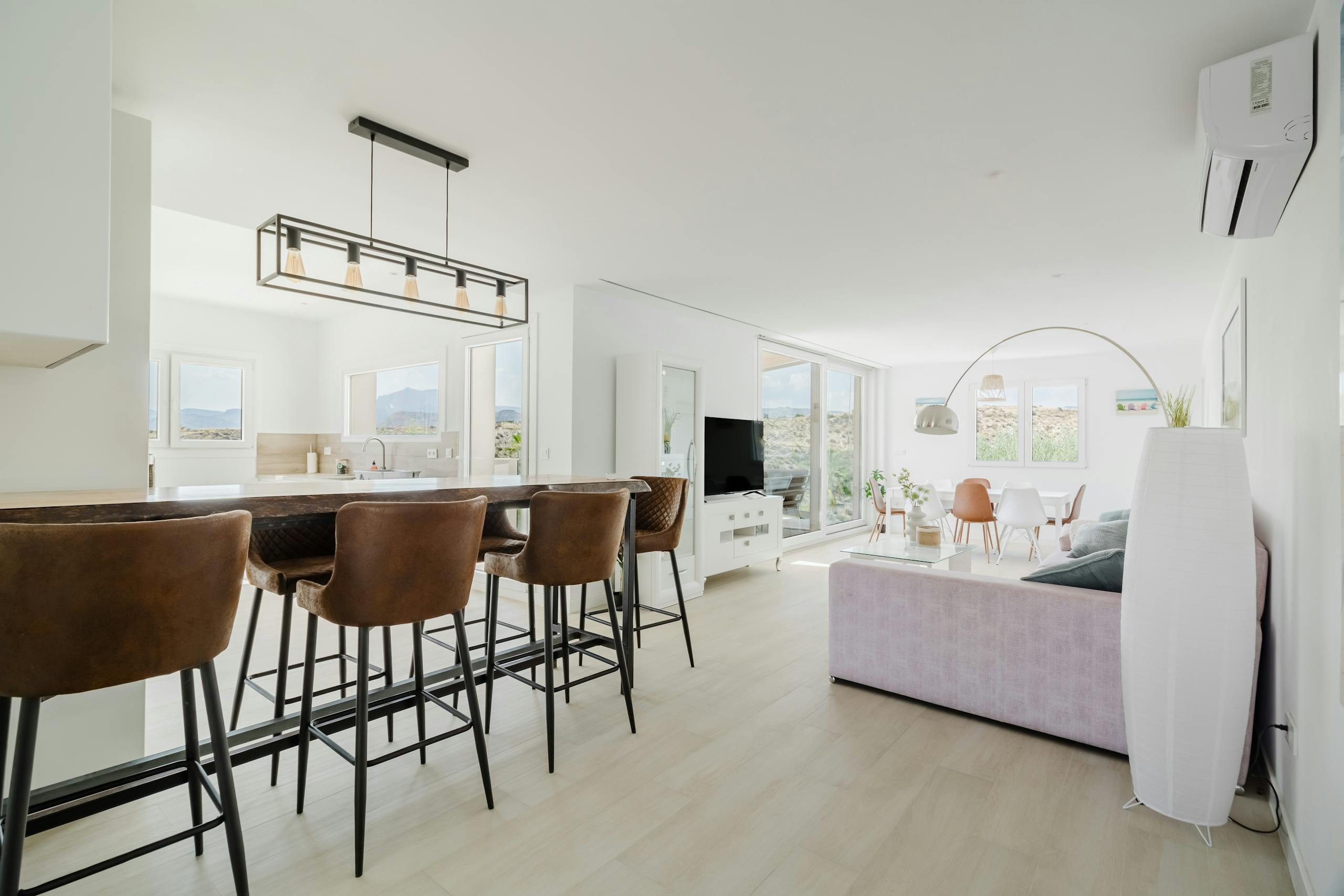
My own relationship with this word took years to sort out. Running advertising agencies for two decades meant I was constantly in motion: client dinners, pitch presentations, industry conferences, networking events. From the outside, I looked like someone who thrived in that world. Inside, I was counting the hours until I could get home, close the door, and breathe again. I did not have language for what that meant at the time. I just knew that home was where I could finally think.
If you have been exploring what your relationship with home says about your personality, our Introvert Home Environment hub covers the full landscape, from designing spaces that restore your energy to understanding why your home matters so much more than society tends to acknowledge.
What Does the Word Homebody Actually Mean?
The word itself is deceptively simple. “Homebody” combines two ordinary words into something that carries surprising weight for the people it describes. At its core, it refers to a person whose body, mind, and sense of self are most at ease within the home environment. Not trapped there. Not hiding there. At ease there.
What’s your personality type?
Take our free 40-question assessment and get a detailed personality profile with dimension breakdowns, context analysis, and personalised insights.
Discover Your Type8-12 minutes · 40 questions · Free
The distinction matters because the word gets misread constantly. People hear “homebody” and assume it signals avoidance, fear of the outside world, or some failure to engage with life fully. That reading misses the point entirely. A homebody is not someone who cannot go out. A homebody is someone who genuinely does not need to in order to feel complete.
There is a difference between someone who stays home because they are afraid and someone who stays home because home is where their richest life happens. The first is anxiety. The second is temperament. Conflating them is one of the more persistent misunderstandings around this identity, and it causes real harm to people who spend years wondering if something is wrong with them.
I spent a long stretch of my career in that confusion. My team at the agency was full of people who seemed to run on social fuel. They were energized by the chaos of a busy office floor, the spontaneous after-work drinks, the loud brainstorming sessions. I participated, because participation was expected, but I noticed that I came home from those evenings feeling hollowed out rather than charged up. I assumed for years that I just needed to practice socializing more. Eventually I accepted that I was wired differently, not deficiently.
Is Being a Homebody a Personality Trait or a Lifestyle Choice?
Both, and the distinction between them is less important than most people assume. For many people who identify as homebodies, the pull toward home is not a conscious decision made each morning. It is a baseline orientation, a default setting that runs beneath all the daily choices about where to spend time and energy.
Personality research has long established that introverts draw energy from solitude and quiet environments rather than from social stimulation. That is not a choice any more than being left-handed is a choice. The preference is simply there, present from early life, shaping how a person moves through the world. A homebody orientation often sits on top of this introvert baseline, adding a specific attachment to domestic space as the primary source of comfort and restoration.
At the same time, the homebody lifestyle involves real choices: how you decorate your space, how you spend your evenings, what you prioritize when planning your week. Those choices layer on top of the underlying temperament. So the honest answer is that being a homebody starts as a trait and expresses itself through choices. Neither layer cancels out the other.
What I find interesting, looking back at my agency years, is how long I tried to make my choices override my trait. I scheduled my calendar to be as social as possible, convinced that if I just acted like an extrovert long enough, the underlying wiring would eventually cooperate. It did not. My personality was not something I could outwork. Accepting that was, genuinely, one of the more freeing realizations of my adult life.

How Does Being a Homebody Connect to Introversion?
The overlap between introversion and the homebody identity is significant, though the two are not identical. Not every introvert is a homebody, and occasionally someone who leans extroverted will identify with the term during a particular season of life. That said, the connection runs deep enough that understanding one helps clarify the other.
Introversion, as a personality dimension, involves a preference for less external stimulation and a tendency to restore energy through solitude rather than social activity. A piece published by Psychology Today on introvert conversation preferences captures something relevant here: introverts tend to find meaning in depth rather than breadth, whether that applies to relationships, ideas, or environments. Home provides the kind of depth that a rotating cast of social environments rarely can.
The home becomes, for many introverts, a space where the full complexity of their inner life can actually unfold. Outside, there is constant filtering: managing how you come across, reading social cues, moderating your responses for an audience. At home, that filtering drops. You can think without performing. You can feel without explaining. For people whose inner world is particularly rich and active, that is not a small thing.
Highly sensitive people often experience this even more acutely. The nervous system of an HSP processes sensory and emotional information at a higher intensity than average, which means that external environments carry a heavier cognitive load. Home, when designed thoughtfully, offers a kind of sensory shelter. The approach to HSP minimalism and simplifying for sensitive souls speaks directly to this: stripping back the noise of a space so the person inside it can actually breathe.
I managed several highly sensitive creatives during my agency years, and I watched them handle open-plan offices with a kind of quiet endurance that cost them something real. One of my best copywriters would come in early every morning, before the floor filled up, because that was the only time she could actually produce her best work. She was not being precious about it. She was managing her environment the way any sensible person manages a resource they depend on.
What Does a Homebody’s Inner Life Actually Look Like?
From the outside, a homebody’s life can look uneventful. A quiet evening at home. A weekend with no plans. A social calendar that raises eyebrows at its sparseness. What that view misses entirely is the richness of what happens inside those quiet hours.
Homebodies tend to be people for whom the inner life is genuinely compelling. Reading, thinking, creating, observing, reflecting: these are not consolation prizes for missing out on social activity. They are the actual substance of a well-lived day. The homebody book as a concept captures this well. A book is not just an object. It is a portal to an entire world of thought and experience that does not require leaving your living room to access.
There is also a quality of attention that homebodies bring to their domestic spaces that outsiders rarely appreciate. When your home is your primary environment, you notice it differently. You notice what the afternoon light does to a particular corner of the room. You notice which chair you think best in and which one makes you restless. You develop a relationship with your space that goes beyond mere familiarity.
The homebody couch is a small example of something larger. For someone whose home is their center of gravity, even the choice of where to sit carries meaning. It is not laziness. It is the cultivation of an environment that supports how your mind actually works.
Some homebodies also maintain rich social connections, just through different channels. Online communities and chat rooms for introverts have given many people who prefer home the ability to connect meaningfully without the sensory and social overhead of in-person gatherings. That is not a lesser form of connection. For people wired this way, it is often a more sustainable and genuinely satisfying one.

Why Do People Still Treat “Homebody” Like a Problem?
The cultural bias toward extroversion is well-documented, and it shapes how the homebody identity gets perceived. Productivity, ambition, and social engagement have long been treated as the default markers of a life well-lived. Choosing home over those markers tends to read, in many social contexts, as a kind of quiet failure.
What makes this particularly frustrating is that the judgment often comes from people who mean well. Family members who worry you are isolating. Friends who push you to “get out more” as a form of care. Colleagues who read your preference for working from home as a lack of team commitment. The concern is genuine, but it is built on a faulty premise: that the homebody’s preference is a symptom of something that needs fixing rather than a valid expression of who they are.
Some psychological frameworks support the idea that solitude and quiet are not merely tolerated by certain personality types but are actively necessary for their wellbeing. Work published through PubMed Central on personality and environmental preference touches on the neurological differences that shape how people respond to stimulation. The introvert’s nervous system is not broken. It is calibrated differently, and that calibration has genuine implications for where and how a person thrives.
I felt this pressure acutely when I was running my agencies. There was an unspoken assumption that a good leader was visible, present, and socially available at all times. Taking a lunch alone in my office was interpreted, on more than one occasion, as a sign that something was wrong. Nobody considered that I did my best strategic thinking in silence and that a quiet lunch was how I prepared for the afternoon’s decisions. The visibility was valued more than what the visibility was supposed to produce.
The research landscape on introvert effectiveness in professional settings is worth noting here. A piece from Harvard’s Program on Negotiation challenges the assumption that extroverted styles are inherently more effective in high-stakes professional contexts. The qualities that make someone a homebody, careful attention, depth of thought, preference for considered response over immediate reaction, translate into real professional strengths when given the right conditions.
How Do You Know If You Are Genuinely a Homebody?
The question is worth sitting with, because there is a meaningful difference between someone who has temporarily retreated from a world that has worn them down and someone whose baseline orientation is simply homeward. Both are valid. They just call for different responses.
A genuine homebody tends to feel most like themselves at home, not as a reaction to something external, but as a steady, consistent preference. They do not come home from a quiet weekend feeling like they missed out. They come home from a busy social weekend feeling relieved to be back. The pleasure of home is not relief from something unpleasant. It is positive in its own right.
Some indicators that tend to show up consistently in people who identify strongly with this orientation:
- You invest real thought and care into your home environment, because it is where you actually live most of your life.
- You feel most creative, focused, and clear-headed at home rather than in external environments.
- Social plans often feel like something to recover from rather than something that refuels you.
- You can spend extended time alone without loneliness, because solitude feels full rather than empty.
- You have a strong sense of what your home needs to feel right, and changes to that environment affect you more than they might affect others.
None of these are diagnostic criteria. They are patterns. And patterns, in personality, are more useful than any single data point.
There is also a version of this that shows up in how people approach gift-giving and receiving. Someone who is genuinely home-centered tends to appreciate things that enhance their domestic world in specific, thoughtful ways. A well-considered list of gifts for homebodies reflects this: the best gifts for this personality type are the ones that make home feel even more like the place they want to be.

Can You Be a Homebody and Still Have a Full, Connected Life?
Without question. The assumption that a full life requires constant outward movement is one of the more limiting ideas in the cultural conversation about how to live well. Depth of experience does not require breadth of location.
Some of the most intellectually and emotionally rich lives have been lived primarily from one place. Writers, philosophers, artists, and thinkers across history have produced their most significant work from the quiet of a single room. The quality of attention they brought to their inner world was not diminished by the smallness of their external world. In many cases, it was enabled by it.
Modern life has also expanded what “connected” means in ways that suit the homebody temperament well. Deep, sustained relationships can be maintained across distance. Intellectual communities can be found and participated in without leaving home. Creative work can reach audiences that the creator never has to stand in front of. The homebody who feels isolated is often someone who has not yet found the forms of connection that suit their actual temperament.
Findings published through PubMed Central on social connection and wellbeing suggest that the quality of connection matters more than the quantity or the format. A few genuinely meaningful relationships tend to support wellbeing more effectively than a wide network of shallow ones. That finding aligns naturally with how most homebodies already prefer to operate.
I had a client relationship during my agency years that lasted over a decade, built almost entirely on phone calls, written correspondence, and two or three in-person meetings per year. It was one of the most productive and genuinely warm professional relationships I ever had. The depth of it had nothing to do with how often we were in the same room.
What Makes a Home Environment Work for a Homebody?
This is where the identity gets practical. If home is your primary environment, the design and feel of that space carries real weight. A homebody who lives in a chaotic, uncomfortable, or overstimulating space is not going to get the restoration they need from being there. The environment has to actually support the person.
What that looks like varies considerably by individual. Some homebodies need visual calm: clean lines, minimal clutter, a space that does not demand constant visual processing. Others need sensory warmth: soft textures, low lighting, layered comfort that signals safety to the nervous system. Most need some combination of both, adjusted for their particular sensitivities.
The homebody gift guide I have referenced before touches on something important here: the best additions to a homebody’s space tend to be the ones that reduce friction and increase comfort rather than add novelty for novelty’s sake. A homebody does not need their space to be exciting. They need it to be right.
Function matters as much as aesthetics. A homebody who works from home needs a workspace that genuinely supports focus. Someone who reads extensively needs lighting and seating that make long reading sessions sustainable. Someone who cooks as a form of restoration needs a kitchen that feels like a pleasure to be in rather than a chore. The home as a system should serve the person’s actual life, not some idealized version of what a home is supposed to look like.
After years of working in environments designed for other people’s needs, setting up my own home workspace with my specific requirements in mind was a revelation. I am an INTJ, and my thinking runs best in silence with visual order around me. Once I stopped apologizing for that and just designed my space accordingly, my output quality changed noticeably. The environment was no longer working against me.
A related piece from Frontiers in Psychology on personality and environmental fit supports the broader principle: people perform and feel better when their environment matches their psychological needs. For homebodies, that is not a luxury preference. It is a practical requirement.

What Should You Take Away From All of This?
Being a homebody is not a personality flaw dressed up in comfortable language. It is a genuine orientation toward the world, one that carries its own set of strengths, preferences, and needs. The people who live this way are not failing to engage with life. They are engaging with it on terms that actually suit them.
What I have come to appreciate most, after years of trying to be someone who thrived in constant motion, is that the homebody identity is fundamentally about honesty. Honest about where your energy comes from. Honest about what kind of environment lets you think clearly. Honest about the difference between a life that looks full from the outside and one that actually feels full from the inside.
That honesty is not always easy to arrive at, especially in a culture that still tends to read outward activity as evidence of a life well-lived. But once you get there, the relief of it is hard to overstate. You stop spending energy performing a preference you do not have, and you start putting that energy into the life you actually want to build.
If this article has sparked something worth exploring further, the Introvert Home Environment hub is a good place to keep going. It covers everything from the psychology of why introverts need home to work the way it does, to the practical details of building a space that genuinely supports the way you are wired.
About the Author
Keith Lacy is an introvert who’s learned to embrace his true self later in life. After 20 years in advertising and marketing leadership, including running agencies and managing Fortune 500 accounts, Keith now channels his experience into helping fellow introverts understand their strengths and build fulfilling careers. As an INTJ, he brings analytical depth and authentic perspective to every article, drawing from both professional expertise and personal growth.
Frequently Asked Questions
What does it mean to be a homebody?
A homebody is someone who finds genuine comfort, restoration, and meaning within their home environment, preferring familiar domestic surroundings over frequent social outings or external activity. It is a personality orientation, not a sign of avoidance or anxiety. Homebodies tend to have rich inner lives and feel most fully themselves when they are at home rather than constantly in motion.
Is being a homebody the same as being an introvert?
The two overlap significantly but are not identical. Introversion describes how a person manages energy, specifically drawing it from solitude rather than social interaction. Being a homebody describes where a person feels most at ease and most like themselves. Most homebodies are introverts, but the homebody identity adds a specific attachment to domestic space that goes beyond the broader introversion dimension.
Is there something wrong with being a homebody?
No. Being a homebody is a valid personality orientation, not a problem to solve. The cultural bias toward extroversion and outward activity has led many people to treat the homebody preference as a deficit, but that reading is inaccurate. Homebodies can lead full, connected, and meaningful lives. The quality of a life is not determined by how much of it is spent outside the home.
Can a homebody still have strong social connections?
Yes, and many do. Homebodies often prioritize depth over breadth in their relationships, maintaining a smaller number of genuinely close connections rather than a wide social network. Modern communication tools, online communities, and the ability to connect meaningfully through writing and conversation without in-person meetings have made it easier than ever for homebodies to sustain rich social lives on their own terms.
How can a homebody make their home environment work better for them?
Start by understanding your specific needs rather than following generic design advice. Homebodies generally benefit from spaces that reduce sensory friction, support their primary activities such as reading, working, or creating, and signal comfort and safety to their nervous system. Visual calm, good lighting, comfortable seating, and minimal clutter tend to matter more than novelty or trend-driven aesthetics. The goal is a space that actively supports how your mind works.