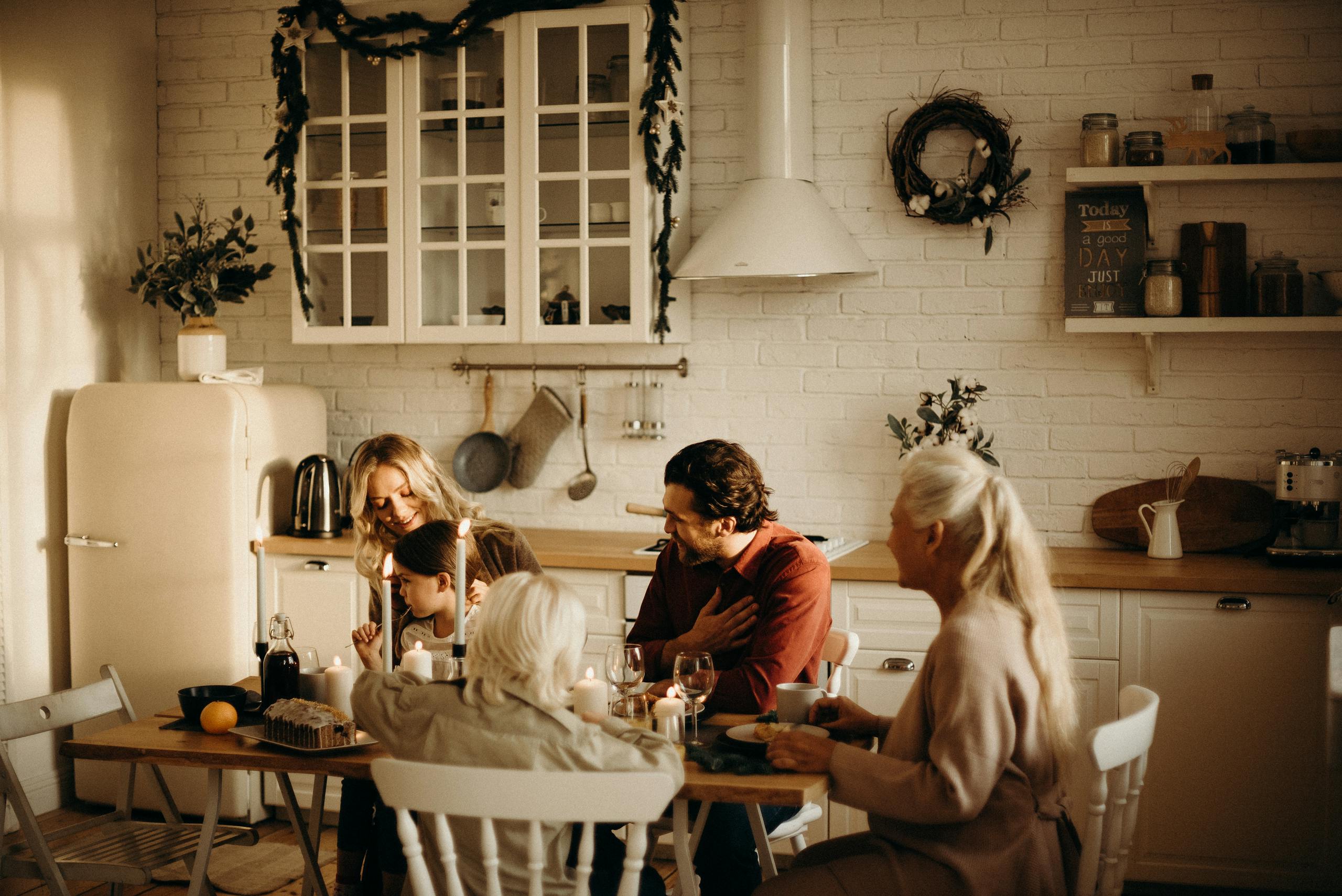

A homebodie (sometimes spelled “homebody”) is a person who finds genuine comfort, contentment, and restoration in the home environment, preferring familiar surroundings over frequent social outings or external entertainment. Far from being a personality flaw or a phase to outgrow, it describes a real and valid way of moving through the world. And for a lot of introverts, it’s the most honest description of who they’ve always been.
My first real encounter with the word was somewhere in my late thirties. I was running an advertising agency at the time, managing a team of people who seemed to recharge by being everywhere at once. Happy hours, industry events, weekend networking brunches. I was exhausted just reading the calendar invites. Someone called me a homebodie at a staff offsite and laughed like it was a gentle insult. I remember thinking: that’s not an insult. That’s a biography.
There’s something clarifying about having a word for what you are. Not a diagnosis. Not a limitation. Just a name for the way your nervous system says yes to quiet and no to noise.
If you’re exploring what this identity means and how it connects to introversion, sensory processing, and the way some of us build our lives around home rather than away from it, the Introvert Home Environment hub is where I’ve gathered everything worth reading on that subject. It’s a good place to start if this article sparks something.

Where Did the Word “Homebodie” Come From?
The word itself has a long history, longer than most people realize. “Homebody” appears in English usage going back to the 1800s, originally used to describe someone who stayed close to home rather than traveling or socializing extensively. The spelling “homebodie” is an older variant that still circulates today, often in searches from people who’ve heard the term spoken but haven’t seen it written down.
What’s your personality type?
Take our free 40-question assessment and get a detailed personality profile with dimension breakdowns, context analysis, and personalised insights.
Discover Your Type8-12 minutes · 40 questions · Free
Both spellings point to the same idea: a person whose center of gravity is the home. Not someone who is afraid of the outside world, not someone who is antisocial in the clinical sense, but someone who genuinely prefers the texture of home life to the stimulation of constant outward activity.
What’s interesting is how the word has shifted in cultural weight over time. For much of the twentieth century, calling someone a homebody carried a faint whiff of judgment. It implied passivity, lack of ambition, social failure. You didn’t want to be the homebody at the office. You wanted to be the person who was always out, always connected, always seen.
That framing has changed considerably. The past several years have accelerated a broader cultural reckoning with what we actually want from our lives versus what we’ve been conditioned to perform. More people are openly identifying as homebodies, not apologetically but proudly. The word has been reclaimed in a meaningful way.
Part of that reclamation involves understanding the difference between isolation and intentional staying. A homebodie isn’t someone who can’t connect with others. They’re someone who connects differently, often more deeply, in environments that don’t drain them before the conversation even starts.
Is Being a Homebodie the Same as Being an Introvert?
Close, but not identical. The overlap is significant, though the two concepts describe different things.
Introversion is a personality orientation rooted in how a person gains and spends energy. Introverts tend to restore through solitude and quiet, while extroverts tend to restore through social engagement and external stimulation. This is neurological as much as it is behavioral. The introvert’s brain processes incoming stimulation more intensively, which means the same social environment that energizes an extrovert can leave an introvert genuinely depleted.
Being a homebodie is more of a lifestyle preference that often, though not always, flows from that underlying orientation. Many introverts are homebodies because home is where they can regulate their stimulation levels most effectively. But some extroverts are also homebodies, particularly those who have built rich home lives, have young children, or simply find that their preferred forms of connection happen at home rather than out.
As an INTJ, my homebodie tendencies run deep. The combination of introversion and the INTJ’s preference for controlled, purposeful environments means that home isn’t just a place I sleep. It’s where my thinking actually works. I’ve had some of my best strategic insights sitting in a quiet room with a notebook, not in a brainstorming session with twelve people and a whiteboard covered in sticky notes.
There’s also the highly sensitive person dimension worth mentioning. Many people who identify as homebodies, whether or not they use the HSP label, have sensory processing patterns that make home environments not just preferable but genuinely necessary. The way I’ve seen this play out in practice is that home becomes a place of genuine physiological regulation, not just preference. Exploring HSP minimalism and the practice of simplifying for sensitive souls gets at this beautifully, because for some people, the home environment itself needs to be carefully curated to actually deliver that restoration.

What Does Life Actually Look Like as a Homebodie?
People sometimes imagine the homebodie life as a kind of permanent Saturday in pajamas, which is a charming image but misses the actual richness of it. What I’ve found, both in my own experience and in conversations with readers, is that homebodies tend to build genuinely full lives. They’re just full in a different direction.
There’s the reading. I went through a period in my mid-forties when I was averaging a book every ten days, not because I was avoiding anything but because I had finally stopped apologizing for preferring books to bars. A good homebody book isn’t just entertainment; it’s a whole world you can inhabit at your own pace, on your own terms, without anyone interrupting your train of thought.
There’s the cooking, the gardening, the projects. There’s the quality of attention you can bring to things when you’re not burning half your energy on social performance. I once spent an entire weekend redesigning the layout of my home office and emerged Monday morning genuinely refreshed, which would have baffled my extroverted colleagues who spent that same weekend at a lake house with twenty people.
There’s also the social life, which exists but takes a different shape. Homebodies don’t avoid people. They tend to prefer smaller gatherings, one-on-one conversations, and interactions that have some depth to them. Psychology Today has written about the introvert’s need for deeper conversations, and this maps directly onto the homebodie experience. Small talk at a crowded party feels like effort. A long dinner with one or two people you actually care about feels like nourishment.
Online connection plays a role too. Many homebodies have found that chat rooms and online spaces designed for introverts give them a way to connect meaningfully without the sensory and social overhead of in-person events. This isn’t a lesser form of connection. For some people, it’s where their most honest conversations happen.
The furniture matters more than people might expect. When your home is your primary environment, the physical space carries real weight. A homebody couch isn’t just a piece of furniture; it’s a relationship. I’ve spent more intentional hours on my couch than in any conference room, and I’d argue that some of my most productive thinking happened there.
Why Does the Homebodie Identity Matter Beyond Preference?
Naming something matters. When I finally started understanding my introversion through the lens of MBTI and personality research, something genuinely shifted in how I managed my energy and my career. Not because the label gave me permission to be different, but because it gave me a framework for understanding why I’d always been different.
The homebodie identity functions similarly. It’s not just a preference for staying in on Friday nights. It’s a way of organizing your relationship to stimulation, restoration, connection, and meaning. When you understand that about yourself, you can stop treating your natural inclinations as problems to fix and start treating them as data about what actually works for you.
There’s a body of work on how environment shapes psychological wellbeing, and some of it is genuinely illuminating. Research published in PubMed Central has examined the relationship between restorative environments and mental health, pointing to how certain physical spaces genuinely support recovery from stress and cognitive fatigue. For homebodies, this isn’t abstract theory. It’s lived experience with a scientific backing.
What strikes me about the homebodie identity, particularly for introverts who’ve spent years performing extroversion in professional settings, is how much energy gets reclaimed when you stop fighting it. I spent the better part of my thirties trying to be the kind of leader who thrived on constant social engagement. I attended every event, said yes to every dinner, kept my door open even when I desperately needed it closed. I was functional. I was not well.
The shift came gradually. I started protecting certain evenings. I stopped apologizing for leaving events early. I built a home environment that genuinely restored me rather than just housed me. And my work got better, not worse. My thinking was clearer. My decisions were more grounded. The people on my team got a more present version of me on the days I was actually in the office.
There’s also something worth saying about how the homebodie identity intersects with productivity and deep work. Additional research from PubMed Central on attention and cognitive restoration suggests that environments low in distraction and high in personal comfort support sustained focus in ways that open, stimulating environments often don’t. Homebodies have been practicing this intuitively for years.
How the Homebodie Identity Shows Up in Professional Life
One of the more interesting tensions I navigated across two decades in advertising was the gap between what my work required and what my nature preferred. Agency life is inherently social. Clients expect presence. Pitches require performance. The culture rewards the people who seem to be everywhere at once.
What I learned over time is that being a homebodie didn’t disqualify me from any of that. It just meant I had to be strategic about my energy in ways my extroverted colleagues didn’t. I was meticulous about protecting recovery time. I did my best preparation work at home, alone, before any big client presentation. I was genuinely excellent in those rooms because I had genuinely rested before entering them.
The introverts I’ve managed over the years who struggled most weren’t struggling because of their homebodie tendencies. They were struggling because they hadn’t given themselves permission to honor those tendencies. They were trying to match an energy output that wasn’t sustainable for their nervous systems, and it was costing them in ways that showed up as burnout, disengagement, and diminished creative output.
One of my creative directors, a deeply talented INFP, used to come in Monday mornings looking hollowed out after weekends full of social obligations she didn’t actually want. The work she produced on those weeks was technically fine but lacked the spark that made her genuinely exceptional. When she finally started protecting her weekends, staying home, reading, cooking, doing the things that actually restored her, the work changed. You could feel it.
There’s a broader point here about how organizations benefit when they stop treating the homebodie orientation as a deficiency. Work published in Frontiers in Psychology has examined how personality traits and work environment fit affect performance outcomes, and the pattern is consistent: people do better work when their environment matches their processing style. For homebodies, remote work or hybrid arrangements aren’t perks. They’re performance infrastructure.
What Homebodies Actually Need (And How to Give It to Yourself)
One of the more practical aspects of embracing the homebodie identity is getting intentional about the home environment itself. Not in a decorating-magazine way, though that’s fine too, but in the sense of asking: does this space actually serve what I need from it?
For me, that question led to some real changes over the years. I got rid of furniture that was uncomfortable but looked good. I stopped filling shelves with things I thought I should display and started filling them with things I actually used and loved. I created a specific corner of my home that was purely for reading and thinking, no screens, no work materials, just quiet and good light.
The gifts that matter to homebodies reflect this same orientation. Not novelty for its own sake, but things that deepen the quality of home life. A good gifts for homebodies list looks very different from a generic gift guide because it’s built around what actually makes the home environment richer, more comfortable, and more genuinely restorative. And if you’re shopping for someone who lives this way, the homebody gift guide I’ve put together goes deeper on what lands versus what misses.
Beyond the physical space, homebodies benefit from being honest with themselves about their social needs. Not zero connection, but intentional connection. Choosing depth over frequency. Saying no to the things that drain without giving back, and saying yes, genuinely, to the things that actually nourish.
There’s also the question of how you talk about yourself to others. I spent years deflecting when people asked why I wasn’t at whatever event everyone else attended. I’d manufacture excuses rather than simply say: I prefer to be home. That deflection cost me something. It communicated that I was ashamed of something I wasn’t actually ashamed of. When I started being direct about it, most people either respected it immediately or revealed that they felt the same way and had been performing their social enthusiasm for years.
The Homebodie Identity and Mental Health
A question worth addressing directly: is being a homebodie a sign of anxiety, depression, or avoidance?
Sometimes, yes. And that distinction matters. There’s a difference between choosing home because it genuinely restores you and retreating to home because the outside world feels threatening in ways that are limiting your life. Both involve staying in. The internal experience and the long-term impact are very different.
The homebodie who chooses home from a place of contentment, who has relationships they value, work or projects that engage them, and a general sense of their life being full, is not struggling. They’re simply organized differently than the cultural default assumes.
The person who stays home because leaving feels impossible, because social contact produces genuine dread rather than just preference for quiet, because the isolation has started to compound on itself, that person deserves support and probably professional conversation, not just permission to call themselves a homebodie.
Most homebodies I’ve known, and most of the introverts who write to me about their home-centered lives, fall clearly in the first category. They’re not avoiding life. They’re living it in a way that makes sense for who they are. The challenge is often less about their psychology and more about a culture that keeps trying to convince them something is wrong with them.
On the question of introversion and professional contexts, it’s worth noting that the homebodie orientation doesn’t preclude effectiveness in demanding roles. Harvard’s Program on Negotiation has examined whether introverts are at a disadvantage in high-stakes professional settings, and the findings are more nuanced than the cultural narrative suggests. The qualities that make homebodies effective, depth of preparation, careful observation, comfort with silence, translate into genuine professional strengths when channeled well.
Reclaiming the Word Without Apology
Something I’ve noticed in the years since I started writing about introversion is how many people arrive at this material carrying a kind of low-grade shame about their preferences. They don’t want to go to the party, and they feel bad about not wanting to go to the party, and they feel bad about feeling bad, and by the time they actually decline the invitation they’ve spent more emotional energy on the decision than the party would have cost them.
The homebodie identity, when embraced rather than apologized for, cuts through a lot of that. It’s a declaration, quiet and personal, that your preferences are legitimate. That staying in isn’t failing to show up. That the life you’re building at home is a real life, not a placeholder for the more social life you’re supposed to want.
I think about the version of me that was running that agency in my late thirties, attending every event, exhausted and performing, wondering why I felt so disconnected from my own life even when things looked successful from the outside. That person needed someone to hand him the word and say: this is what you are, and it’s fine, it’s actually more than fine, it’s who you are and it works.
Nobody handed me that. I had to find my way to it slowly, through a lot of burned weekends and unnecessary social exhaustion. My hope is that articles like this one get to people earlier in that process. Not to give them permission to be antisocial or to avoid growth, but to give them clarity about what they’re actually working with.
The homebodie isn’t a lesser version of the social butterfly. They’re a different organism entirely, with different needs, different strengths, and a different relationship to what makes life feel worth living. Understanding that distinction is the beginning of building something real.

There’s a lot more to explore on how introverts and sensitive people can build home environments that genuinely work for them. The full Introvert Home Environment hub pulls together everything from physical space design to the psychology of why home matters so much to people wired like us.
About the Author
Keith Lacy is an introvert who’s learned to embrace his true self later in life. After 20 years in advertising and marketing leadership, including running agencies and managing Fortune 500 accounts, Keith now channels his experience into helping fellow introverts understand their strengths and build fulfilling careers. As an INTJ, he brings analytical depth and authentic perspective to every article, drawing from both professional expertise and personal growth.
Frequently Asked Questions
What does homebodie mean?
A homebodie (also spelled homebody) is a person who finds genuine comfort and contentment in spending time at home rather than seeking frequent social outings or external entertainment. The word describes a real lifestyle orientation, not a personality flaw. Many introverts and highly sensitive people identify as homebodies because home provides the low-stimulation, high-comfort environment their nervous systems genuinely need to restore and function well.
Is “homebodie” a real spelling?
“Homebodie” is an older variant spelling of “homebody” that still appears in searches and informal usage. Both spellings refer to the same concept. The more standard modern spelling is “homebody,” but “homebodie” has historical roots and is commonly used by people who’ve heard the word spoken before encountering it in writing. Either spelling is understood and accepted in everyday use.
Are all introverts homebodies?
Not necessarily, though the overlap is significant. Introversion describes how a person gains and spends energy, with introverts restoring through solitude rather than social stimulation. Being a homebody is a lifestyle preference that often flows from that orientation, but it’s possible to be introverted without being strongly home-centered, and some extroverts also identify as homebodies based on their life circumstances and preferences. The two identities are related but distinct.
Is being a homebodie a sign of depression or anxiety?
Not on its own. A homebodie who chooses home from a place of genuine contentment, maintains meaningful relationships, and feels their life is full is not struggling with a mental health issue. They simply have a different relationship to stimulation and social engagement than the cultural default assumes. That said, if staying home feels compelled rather than chosen, if leaving produces genuine dread, or if isolation is compounding over time, those patterns are worth exploring with a mental health professional. The distinction lies in whether the preference is expansive or limiting.
How can a homebodie build a fulfilling social life?
Homebodies tend to thrive with intentional rather than frequent connection. Smaller gatherings, one-on-one conversations, and interactions built around shared interests or depth of conversation tend to be far more satisfying than large social events. Online communities and chat spaces designed for introverts can also provide meaningful connection without the sensory and social overhead of in-person events. The goal isn’t more social activity but more aligned social activity, time with people and in formats that actually give back rather than just deplete.