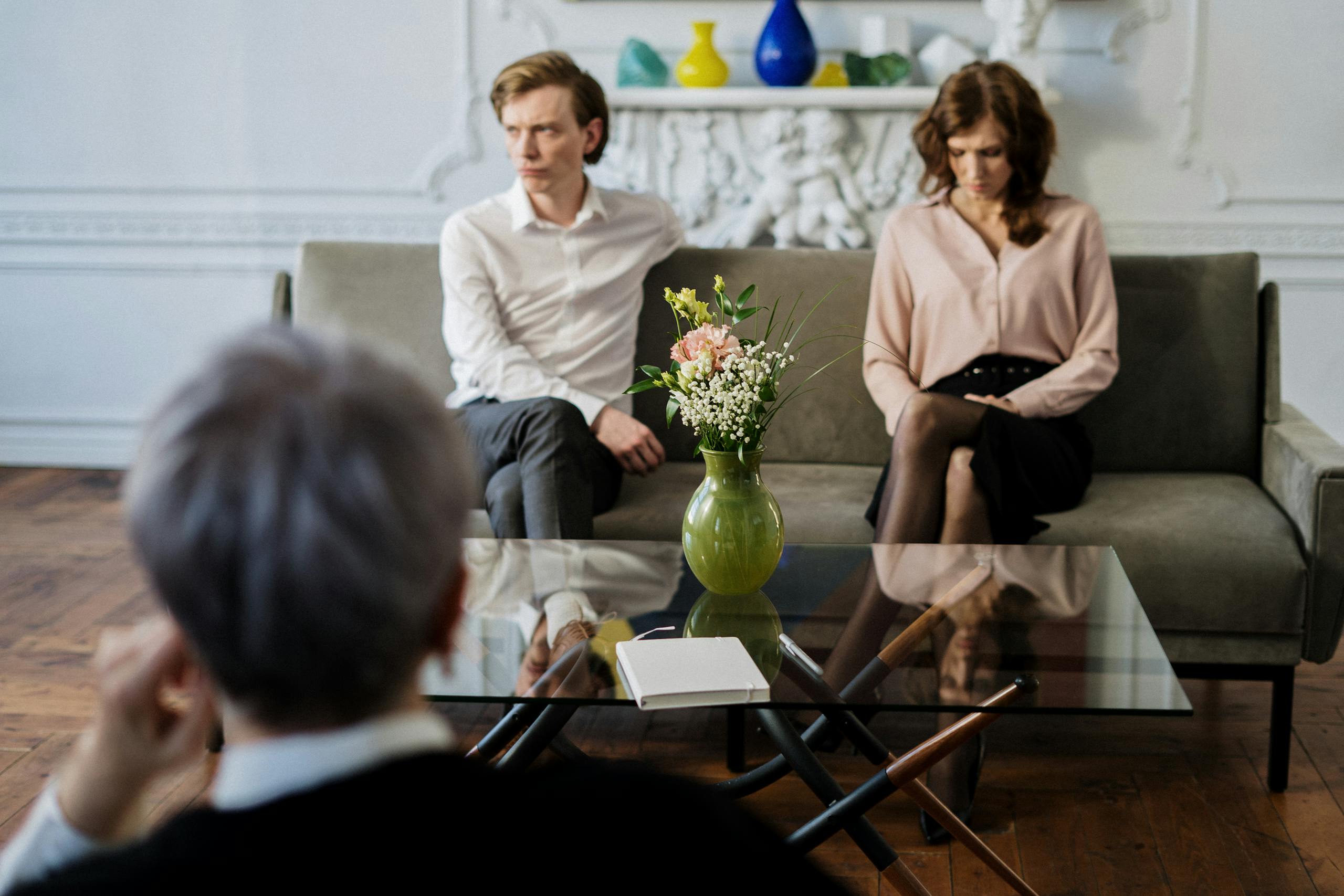

Clingy relationships and introverted personalities are not automatically incompatible, but they do create a specific kind of friction that deserves an honest look. No, you are not “too introverted” for connection, but you may be genuinely unsuited for a relationship where constant togetherness is treated as proof of love. That distinction matters enormously.
What most people call clinginess, I’d describe as a mismatched need for proximity. One person experiences distance as abandonment. The other experiences constant contact as suffocation. Neither of them is broken. They just process closeness very differently.

Plenty of introverts ask themselves some version of this question after a relationship ends or a partner pushes back on their need for space. Am I too much in my own head? Am I emotionally unavailable? Is something wrong with me? Those questions are worth sitting with, but they deserve a more nuanced answer than “yes” or “no.” Our full Introvert Dating and Attraction hub covers the broader landscape of how introverts experience romantic connection, and this particular tension sits right at the center of it.
What Does “Clingy” Actually Mean in a Relationship?
Before we can answer whether you’re too introverted for clingy relationships, we need to be precise about what clinginess actually is. It gets used as a catch-all term that flattens some genuinely different dynamics.
What’s your personality type?
Take our free 40-question assessment and get a detailed personality profile with dimension breakdowns, context analysis, and personalised insights.
Discover Your Type8-12 minutes · 40 questions · Free
Some people label a partner “clingy” when that partner has a secure, healthy desire for regular contact. Others use the word to describe something more accurately called anxious attachment, where a partner’s emotional equilibrium depends almost entirely on reassurance from you. Those are different situations requiring different responses.
Anxious attachment, as described in attachment theory, involves a persistent fear of abandonment combined with hypervigilance about a partner’s availability. Someone with this pattern may interpret your quiet evening alone as rejection. They may text repeatedly when you don’t respond immediately. They may feel genuine distress, not manipulation, when you pull back to recharge.
That distress is real. So is your need for solitude. The problem isn’t that either of you is defective. The problem is that your core regulatory systems are asking for opposite things at the same time.
I watched this play out in my agency years, not in romantic relationships, but in working partnerships. I had a creative director who needed daily check-ins to feel secure in a project. He wasn’t incompetent. He was wired for constant feedback. I’m an INTJ who processes best in extended silence, then emerges with a fully formed perspective. We had to build explicit structures around our collaboration because our defaults were genuinely incompatible. Left unaddressed, he read my silence as disapproval. I read his check-ins as a lack of trust. Neither reading was accurate.
Why Introverts Experience Clinginess So Intensely
Introverts don’t just prefer solitude as a lifestyle choice. Solitude is how the nervous system recovers. Social interaction, even enjoyable interaction with someone we love, draws on cognitive and emotional resources that need replenishing through quiet time. This isn’t selfishness. It’s physiology.
When a partner’s anxiety activates every time you try to recharge, you end up in a cycle that’s genuinely exhausting. You need space to restore yourself. Your partner interprets that need as withdrawal. Their anxiety escalates. You sense their distress and either capitulate (which leaves you depleted) or hold your boundary (which intensifies their fear). Round and round it goes.
Understanding how introverts fall in love and the patterns that emerge helps clarify why this cycle hits so hard. Introverts tend to invest deeply and selectively. When we commit, we’re all in, but “all in” for us doesn’t mean all-present. It means consistent, meaningful, intentional connection. A partner who can’t distinguish between those two things will misread our depth as distance.

There’s also something worth naming about how introverts process emotional information. My mind works through layers before it surfaces anything externally. I notice things, file them, connect them to older observations, and eventually arrive at something worth saying. In a relationship with a highly anxious partner, that processing time gets interpreted as stonewalling or indifference. It’s neither. It’s just how the machinery runs.
A peer-reviewed study on introversion and social energy supports what many introverts already know intuitively: the cognitive demands of social interaction are genuinely higher for introverted individuals, which is why recovery time isn’t optional. It’s functional.
Is This a Compatibility Issue or a Communication Issue?
Honest answer: sometimes it’s both, and you need to know which one you’re dealing with before you decide what to do about it.
Communication issues are solvable. If your partner doesn’t understand why you need solitude, and you’ve never clearly explained it, that’s a conversation waiting to happen. Many people who haven’t spent much time around introverts genuinely don’t know that “I need a few hours alone” isn’t code for “I’m unhappy with you.” That misread can be corrected.
Compatibility issues are different. If your partner understands your need for space and still feels consistently threatened by it, you may be looking at a fundamental mismatch in attachment styles. That doesn’t mean the relationship is doomed, but it does mean both of you will need to do significant internal work, not just communicate better.
Exploring how introverts experience and express love feelings can help a partner understand that the emotional investment is real, even when the presence isn’t constant. Sometimes the most useful thing you can do is give your partner language for what they’re experiencing, and give yourself language for what you need.
I spent years in client-facing roles where I had to make my internal process legible to people who worked very differently than I did. Fortune 500 clients wanted responsiveness. I needed processing time. The solution was never to pretend I was wired differently. It was to build explicit agreements about timelines and communication rhythms. Relationships work the same way. You’re not going to become someone who finds constant contact energizing. Your partner isn’t going to stop needing reassurance overnight. What you can build is a shared structure that honors both.
What Introverts Actually Need From a Partner
Introverts don’t need partners who disappear. We need partners who understand that our version of closeness looks different from the constant-contact model.
What that looks like in practice varies by person, but some patterns show up consistently. Introverts tend to value quality of time over quantity of time. A focused two-hour conversation means more than a full day of parallel activity where neither person is fully present. We tend to need advance notice before social commitments, including couple activities, because spontaneity has a higher cognitive cost for us. And we need a partner who can sit in comfortable silence without reading it as a problem to solve.
Understanding how introverts show affection and what their love language looks like is genuinely useful here. An introvert who plans a quiet evening at home, who remembers a detail you mentioned three weeks ago, who sends a thoughtful message instead of calling, is expressing love. It just doesn’t look like the high-contact version of love that anxious partners often need to feel secure.

The introvert’s ideal partner isn’t necessarily another introvert, though there are real advantages to that pairing. What matters more is a partner who has enough internal security to not need constant validation. Someone who has their own interests, their own friendships, their own inner life. Someone who can interpret your silence as contentment rather than rejection.
Highly sensitive people often share this need for intentional space, even when their emotional intensity runs high. The complete guide to HSP relationships covers how sensitivity and the need for downtime intersect in romantic partnerships, which maps closely onto what many introverts experience.
When Two Introverts Pair Up: Does That Solve the Problem?
It helps, but it doesn’t automatically fix everything. Two introverts in a relationship share a baseline understanding of why solitude matters, which eliminates a lot of the explanatory labor. You don’t have to justify why you need a quiet Saturday. Your partner already knows.
That said, two introverts can still have mismatched needs. One might need more verbal reassurance than the other. One might process conflict through withdrawal while the other needs to talk things through, even slowly. The dynamic of two introverts falling in love has its own specific rhythms and challenges worth understanding before you assume shared introversion means smooth sailing.
There’s also a risk of two introverts reinforcing each other’s avoidance. If both partners default to withdrawal during conflict, important conversations can go unresolved for weeks. Shared solitude is a strength. Shared avoidance is a different thing entirely.
The 16Personalities piece on introvert-introvert relationship dynamics raises some of these less-discussed tensions, particularly around how two inward-focused people can sometimes struggle to initiate the kind of direct communication that keeps a relationship healthy.
How to Have the Space Conversation Without Sounding Like You’re Pulling Away
Timing matters enormously here. Don’t have this conversation when you’re already depleted and your partner is already anxious. That combination produces defensiveness on both sides.
Start from a position of connection, not complaint. “I want to talk about something that would help me show up better for us” lands very differently than “I need you to stop being so clingy.” One opens a door. The other slams one.
Be specific about what you need rather than vague about what bothers you. “I’d love to have Sunday mornings as quiet time for myself, and then we could have lunch together” gives your partner something concrete to work with. “I just need more space” gives them nothing except anxiety.
And then, critically, follow through on the reconnection. One pattern I’ve seen in introvert-anxious partner dynamics is that the introvert negotiates for space, takes it, and then doesn’t explicitly reconnect afterward. The anxious partner’s fear gets confirmed. What helps is making the return visible. Come back. Initiate. Let your partner see that solitude feeds you rather than distances you from them.
When conflict does arise around these needs, the approach matters as much as the content. The framework for handling conflict peacefully in sensitive relationships applies directly here, especially when one or both partners tend to shut down under emotional pressure.

The Harder Question: When Is It Time to Walk Away?
Some relationships genuinely aren’t built to hold both people’s needs. That’s a painful thing to acknowledge, and I don’t want to minimize how difficult it is to arrive at that conclusion.
But there’s a difference between a relationship that requires growth and adjustment, and a relationship where one person’s baseline need consistently wounds the other. If your need for solitude is non-negotiable, and your partner’s need for constant reassurance is equally non-negotiable, and neither of you can move toward the middle without genuine distress, that’s not a communication problem. That’s a structural incompatibility.
I’ve had to make similar calls in business contexts. Some client relationships required a level of responsiveness and emotional availability that I simply couldn’t sustain without compromising the quality of my work and my own wellbeing. Letting those clients go wasn’t failure. It was honesty about fit. Relationships deserve the same honesty.
Personality psychology offers some useful framing here. A study on personality traits and relationship satisfaction points to the significance of baseline compatibility in long-term partnership outcomes. Attraction and effort matter, but they work against a backdrop of whether two people’s fundamental wiring allows them to meet each other’s needs without chronic depletion.
The Psychology Today piece on romantic introverts is worth reading if you’re trying to articulate your relational style to yourself or a partner. It names several patterns that introverts often recognize immediately but struggle to explain to people who don’t share them.
Reframing the Question Entirely
consider this I want to leave you with. The question “am I too introverted for clingy relationships” is worth reframing. You’re not asking whether you’re too introverted. You’re asking whether you’re compatible with a particular relational style. Those are different questions.
Being introverted doesn’t make you a bad partner. It makes you a specific kind of partner who thrives under specific conditions. A partner who needs constant contact to feel secure is a specific kind of partner too. Neither of you is deficient. You may simply be mismatched.
What I’ve found, both in my own experience and in watching others work through this, is that the introverts who do best in relationships are the ones who’ve gotten clear about what they actually need and stopped apologizing for it. Not demanding. Not rigid. Clear. There’s a version of solitude that’s a quiet gift to a relationship. You come back fuller. You’re more present when you are present. You bring something real to the table instead of the depleted, going-through-the-motions version of yourself.
That clarity, paired with a partner who can receive it without feeling threatened, is what a good introvert relationship actually looks like. It’s not about finding someone who needs nothing. It’s about finding someone whose needs and yours can coexist without either of you constantly running on empty.
And if you’re still figuring out what that looks like for you, that’s okay. The Psychology Today guide on dating as an introvert is a solid starting point for understanding how your personality shapes your relational patterns and what to look for in a compatible partner.
The Healthline breakdown of common introvert myths is also worth a read if you’ve internalized the idea that introversion itself is the problem. It isn’t. The problem is misalignment, and misalignment is something you can actually do something about.

You’re not too introverted for love. You’re too introverted for a version of love that requires you to abandon yourself to sustain it. That’s not a flaw. That’s self-knowledge, and it’s one of the most valuable things you can bring into any relationship.
If this piece resonated, there’s a lot more to explore in our complete Introvert Dating and Attraction hub, where we dig into the full range of how introverts experience romantic connection, from first attraction through long-term partnership.
About the Author
Keith Lacy is an introvert who’s learned to embrace his true self later in life. After 20 years in advertising and marketing leadership, including running agencies and managing Fortune 500 accounts, Keith now channels his experience into helping fellow introverts understand their strengths and build fulfilling careers. As an INTJ, he brings analytical depth and authentic perspective to every article, drawing from both professional expertise and personal growth.
Frequently Asked Questions
Can an introvert have a healthy relationship with a clingy partner?
Yes, but it requires honest communication and genuine effort from both sides. The introvert needs to clearly articulate their need for solitude without framing it as rejection. The clingy partner, often someone with anxious attachment tendencies, needs to work on building internal security that doesn’t depend entirely on constant reassurance. When both people are willing to meet in the middle and build explicit agreements about space and reconnection, the relationship can work. Without that mutual effort, the cycle of withdrawal and anxiety tends to escalate over time.
Is needing alone time a sign that I’m emotionally unavailable?
Not necessarily. Needing solitude to recharge is a neurological reality for introverts, not a character flaw or a sign of emotional unavailability. Emotional unavailability looks different: it involves consistent avoidance of intimacy, deflecting vulnerability, or refusing to engage with a partner’s emotional needs. An introvert who takes space to restore themselves and then returns to the relationship fully present is not emotionally unavailable. An introvert who uses solitude as a permanent escape from intimacy may be. The distinction lies in whether you come back, and how present you are when you do.
How do I explain my need for space without hurting my partner?
Frame it as something that makes you a better partner, not something that takes you away from them. Be specific rather than vague, and always pair the request for space with a clear reconnection plan. For example, telling a partner that you need quiet time on weekend mornings and would love to have lunch together afterward gives them something concrete and reassuring. Avoid having this conversation when either of you is already emotionally activated. Choose a calm, connected moment, and approach it as a conversation about what helps the relationship thrive, not a complaint about what your partner is doing wrong.
Are introverts more likely to attract clingy partners?
There’s a pattern worth noticing here. Introverts tend to be calm, attentive listeners who don’t broadcast their emotions loudly. Those qualities can feel deeply stabilizing to someone with anxious attachment, which can create an initial strong pull toward the introvert. Over time, the introvert’s natural need for space can trigger the anxious partner’s fear of abandonment, creating the very cycle both people find exhausting. Awareness of this dynamic doesn’t mean introverts should avoid emotionally expressive partners entirely. It does mean paying attention early to how a potential partner responds when you take normal amounts of time for yourself.
What attachment style is most compatible with an introvert?
Secure attachment is the most compatible match for most introverts. A securely attached partner has enough internal stability to not interpret solitude as abandonment. They have their own interests, friendships, and inner life, which means they don’t rely on constant togetherness to feel loved. They can receive an introvert’s quieter expressions of affection, a thoughtful gesture, a remembered detail, a focused conversation, as genuine and sufficient. Anxious attachment tends to be the most challenging pairing for introverts, not because anxiously attached people are bad partners, but because their core need for constant reassurance runs directly counter to what introverts require to function well.