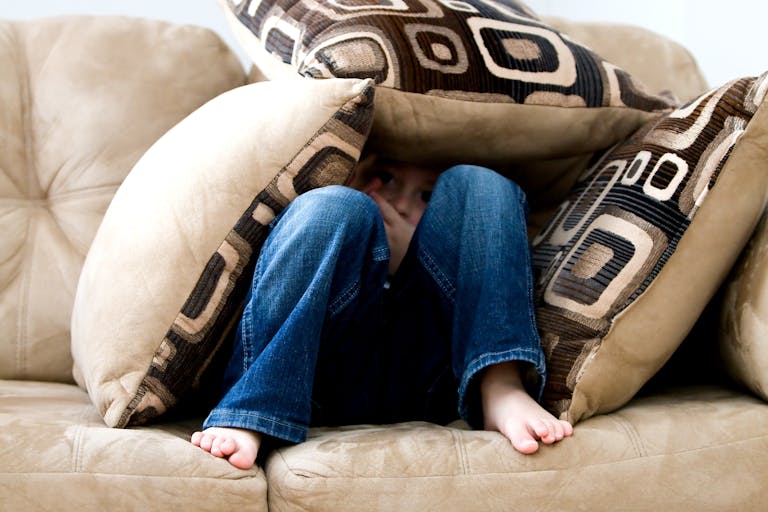

AP meaning attachment style refers to the anxious-preoccupied (AP) pattern, one of four adult attachment orientations identified in attachment theory. People with this style experience high relationship anxiety and low avoidance, meaning they deeply crave closeness, fear abandonment, and often feel uncertain about whether their partner truly values them. It’s not a character flaw. It’s a nervous system response shaped by early experiences of inconsistent caregiving.
As someone who spent two decades in high-pressure agency environments, I’ve sat across from enough people to recognize this pattern playing out in real time, not just in romantic relationships, but in professional ones too. The anxiously attached person in the room is often the most emotionally intelligent, the most attuned, and quietly the most exhausted.

There’s a lot more to the introvert experience of attachment than most articles acknowledge. If you’re curious how personality and connection intersect more broadly, our Introvert Dating and Attraction hub covers the full landscape of how introverts form, sustain, and sometimes struggle within romantic relationships.
What Does AP Mean in Attachment Theory?
Attachment theory, originally developed by John Bowlby and later extended to adult relationships by researchers like Cindy Hazan and Phillip Shaver, describes how early bonds with caregivers shape the internal working models we carry into adult relationships. The anxious-preoccupied style sits in a specific quadrant: high anxiety about relationships, low avoidance of closeness.
What’s your personality type?
Take our free 40-question assessment and get a detailed personality profile with dimension breakdowns, context analysis, and personalised insights.
Discover Your Type8-12 minutes · 40 questions · Free
Someone with an AP attachment style wants intimacy. They want it consistently, reliably, and with reassurance that it won’t disappear. The challenge is that their nervous system has been conditioned, often from childhood, to expect that love might be withdrawn without warning. So they stay alert. They scan for signs of cooling interest. They rehearse worst-case scenarios. They reach out, sometimes more than the situation calls for, not because they’re needy in some shallow sense, but because their internal alarm system is calibrated to threat-detect within relationships.
It’s worth being precise about the four styles before going further. Secure attachment involves low anxiety and low avoidance. Anxious-preoccupied involves high anxiety and low avoidance. Dismissive-avoidant involves low anxiety and high avoidance. Fearful-avoidant involves high anxiety and high avoidance. Each represents a different strategy the nervous system developed to manage the uncertainty of emotional connection.
One important clarification: being anxiously attached is not the same as being emotionally weak, overly dramatic, or “too much.” The hyperactivated attachment system driving AP behavior is a genuine physiological response, not a personality defect. Peer-reviewed work published through PubMed Central has examined how attachment anxiety correlates with measurable differences in stress response and emotional regulation, reinforcing that this is a real neurological pattern, not a choice.
How Does the AP Attachment Style Show Up in Relationships?
The behavioral signature of anxious-preoccupied attachment is worth understanding in detail, because it often gets misread, by partners, by friends, and sometimes by the person themselves.
People with AP attachment tend to seek frequent reassurance. They may check in more often than their partner expects. They may read into silence or delayed responses as evidence of rejection. They tend to prioritize the relationship above their own needs and can lose themselves in the process of trying to maintain connection. When conflict arises, they often pursue rather than withdraw, which can feel overwhelming to partners with avoidant styles.
I once worked with a client-side marketing director at a Fortune 500 brand we served for several years. She was brilliant, deeply perceptive, and genuinely one of the most collaborative people I’d encountered in that world. She was also visibly anxious about how our agency team perceived her. She would follow up on emails within minutes, apologize for feedback that didn’t need apologizing for, and read every delayed response from our creative team as a sign of dissatisfaction. Watching her, I didn’t see neediness. I saw someone whose radar for relational safety was permanently set to high alert. That same attunement made her exceptional at her job. It also cost her a lot of energy.

In romantic relationships, AP individuals often find themselves drawn to partners who are somewhat emotionally unavailable. The anxious-avoidant pairing is one of the most common and most written-about dynamics in attachment literature. The AP partner pursues. The dismissive-avoidant partner withdraws. The pursuit triggers more withdrawal. The withdrawal triggers more pursuit. Both people are acting from their nervous system’s deepest programming, and both often feel genuinely misunderstood.
Understanding how introverts fall in love and what relationship patterns emerge adds another layer here. Many introverts who identify with AP attachment find that their need for deep connection collides with their tendency to process emotion internally, creating an internal push-pull that can be disorienting.
Is Anxious-Preoccupied Attachment More Common in Introverts?
This question comes up often, and it deserves a careful answer. Introversion and anxious attachment are independent constructs. Being introverted doesn’t make you anxiously attached, and being extroverted doesn’t protect you from it. The two dimensions operate on entirely different axes.
That said, there’s a reason introverts sometimes identify with AP patterns more readily. Introverts tend to process emotion deeply and quietly. They often have rich inner lives where they replay interactions, analyze meaning, and sit with uncertainty longer than they’d like. For an introvert who also carries anxious attachment, that internal processing can amplify the very fears the AP style generates. The mind doesn’t just flag a concern and move on. It examines it from multiple angles, considers every implication, and sometimes arrives at conclusions that feel certain but are actually projections.
As an INTJ, I experience this in a particular way. My default mode is strategic and analytical. When I feel uncertain about a relationship, my mind doesn’t panic outwardly. It builds models. It runs scenarios. It prepares contingencies. That’s not anxious-preoccupied behavior in the clinical sense, but I recognize the cognitive pattern underneath it, the desire for certainty in a domain where certainty is rarely available. I’ve watched INFJs on my team process this even more intensely, absorbing the emotional atmosphere of a room and then spending hours trying to decode what it meant for their standing with the people in it.
What matters for introverts with AP attachment is recognizing that the internal processing that makes them perceptive and thoughtful can also become a loop that feeds relational anxiety. success doesn’t mean stop processing. It’s to develop the capacity to observe the loop without being consumed by it.
Attachment anxiety also intersects meaningfully with high sensitivity. If you identify as a highly sensitive person, the HSP relationships dating guide addresses how heightened emotional processing affects partnership in ways that closely mirror what anxiously attached people experience.
What Causes Anxious-Preoccupied Attachment to Develop?
Attachment styles form primarily in early childhood through repeated interactions with caregivers. The anxious-preoccupied style typically develops when caregiving was inconsistent, sometimes warm and responsive, sometimes unavailable or distracted. The child learns that love exists but can’t be counted on to stay. So they develop strategies to keep it close: heightened vigilance, increased bids for connection, and a tendency to suppress their own needs in favor of maintaining the relationship.
It’s important to note that this isn’t a deterministic process. Many people with inconsistent early caregiving don’t develop anxious attachment, and many people with apparently stable childhoods do. Temperament, significant life events, later relationships, and individual resilience all play a role. Additional research available through PubMed Central examines how attachment patterns continue to evolve across the lifespan, reinforcing that early experience is influential but not the whole story.
Adult experiences can also shift attachment orientation. A relationship with a consistently available, emotionally responsive partner can gradually recalibrate an anxious nervous system. Therapy, particularly approaches like Emotionally Focused Therapy (EFT), schema therapy, and EMDR, has meaningful evidence behind it for helping people move toward what researchers call “earned secure” attachment. This is well-documented: attachment styles are not fixed. They can change, and people do change them.

One thing I’d add from personal observation: the professional world can reinforce anxious attachment patterns in ways we rarely talk about. Agency culture, at least the version I lived in for twenty years, ran on approval cycles. Clients approved or rejected. Pitches won or lost. Creative work was praised or dismantled. For someone already wired to seek reassurance and fear withdrawal of approval, that environment is both a natural fit and a slow drain. I saw talented people burn out not because the work was too hard, but because they needed every client response to confirm their worth.
How Does AP Attachment Affect Communication and Conflict?
Communication patterns in anxiously attached individuals tend to follow a predictable shape. When they feel secure, they’re often warm, expressive, and deeply attuned to their partner’s emotional state. When they feel threatened, even by something as minor as a shorter-than-usual text, the communication style can shift dramatically. They may become more insistent, more emotionally intense, or more prone to catastrophizing.
This isn’t manipulation. It’s a nervous system in threat-response mode. The AP person isn’t choosing to escalate. They’re responding to what their internal wiring interprets as a genuine danger signal. Understanding that distinction matters enormously for both the person with AP attachment and their partner.
Conflict is particularly challenging. The anxiously attached person often needs resolution quickly, because unresolved conflict feels like evidence that the relationship is ending. They may push for conversation before their partner is ready, which can trigger withdrawal in avoidant partners and create the exact dynamic they were trying to prevent. Managing disagreements peacefully in sensitive relationships requires both partners to understand these underlying patterns, not just the surface behavior.
For introverts with AP attachment, there’s an additional complexity. The introvert’s natural preference is to process internally before engaging. But the AP nervous system wants resolution now. That internal tension, between the introvert’s need to think before speaking and the anxious attachment’s urgency to repair, can create a kind of paralysis that looks like withdrawal to a partner but feels like overwhelm from the inside.
Exploring how introverts experience and express love feelings can help partners understand why this apparent withdrawal isn’t indifference. It’s processing. It’s the introvert trying to find the right words for something that feels very high-stakes.
Can Anxious-Preoccupied Attachment Style Be Changed?
Yes. This deserves to be said plainly and without qualification: attachment styles can shift. The idea that you’re permanently fixed in the pattern you developed in childhood is not supported by what we know about how the nervous system and relational experience interact over a lifetime.
That said, change isn’t automatic. It requires something more than simply wanting to be less anxious in relationships. It usually involves some combination of self-awareness, therapeutic support, and corrective relationship experiences, meaning relationships where the feared abandonment doesn’t happen, where the partner shows up consistently, and where the nervous system gradually learns that closeness can be safe.
Therapy approaches that have shown meaningful results for anxious attachment include EFT, which works directly with the attachment system and the emotional responses it generates, schema therapy, which addresses the deep-seated beliefs driving the anxious patterns, and EMDR, which can help process the early experiences that shaped the attachment orientation in the first place. Self-report tools like the Experiences in Close Relationships (ECR) scale can provide useful self-reflection, though formal assessment through a trained clinician gives a more accurate picture than any online quiz.
I’ve done enough work on my own patterns to know that awareness is the first step, but it’s not the whole path. Understanding intellectually why you do something doesn’t automatically stop you from doing it. The nervous system changes through experience, not just insight. That’s why the quality of the relationships you’re in matters so much. A partner who responds consistently, who doesn’t use withdrawal as a tool, and who creates genuine emotional safety is doing something therapeutic, whether they know it or not.

What Does AP Attachment Look Like in Introvert-Introvert Relationships?
When two introverts are in a relationship and one or both carry anxious-preoccupied attachment, the dynamic takes on a particular texture. Two introverts in love often create a rich, private world together, full of depth, shared meaning, and genuine understanding. But when AP attachment enters that equation, the introvert’s need for alone time can collide directly with the AP partner’s need for reassurance.
An introvert who needs solitude to recharge isn’t withdrawing because the relationship is failing. But to an anxiously attached partner, that withdrawal can feel like exactly that. The AP partner may interpret normal introvert behavior, closing the door to decompress, going quiet after a long day, needing space to think, as signals of emotional distance. And because both partners are introverts, neither may be particularly comfortable with the kind of direct, immediate verbal reassurance that would short-circuit the anxiety.
This is one of the more nuanced dynamics in introvert relationships. When two introverts fall in love, the relationship often thrives on unspoken understanding, but anxious attachment requires that some things be spoken clearly and consistently.
The solution isn’t for the introvert partner to abandon their need for solitude. It’s for both partners to develop a shared language around what space means and what it doesn’t mean. Something as simple as “I need an hour to decompress, and then I want to hear about your day” can do more to soothe an anxious nervous system than hours of reassurance offered reactively after the anxiety has already escalated.
How Can Someone with AP Attachment Build More Secure Relationships?
Building toward secure functioning when you carry anxious-preoccupied attachment isn’t about suppressing your need for connection. It’s about developing a more stable internal foundation so that your sense of worth and safety doesn’t depend entirely on your partner’s moment-to-moment behavior.
A few practices that genuinely help. First, learning to distinguish between a real threat and a perceived one. The AP nervous system generates alarm signals that feel urgent and certain. Developing the habit of asking “what evidence do I actually have for this fear?” before acting on it creates a small but meaningful pause between stimulus and response.
Second, understanding how you express love and how your partner expresses it. Anxiously attached people often show love through acts of service, words of affirmation, and physical presence. When their partner expresses love differently, they may not register it as love at all. How introverts show affection is often quieter and more action-oriented than the verbal reassurance AP individuals tend to need most. Bridging that gap requires explicit conversation, not assumption.
Third, investing in relationships and activities outside the primary partnership. One of the patterns that sustains anxious attachment is placing the entire weight of emotional security on one person. Broadening the sources of meaning, connection, and validation in your life reduces the pressure on any single relationship to carry everything.
Fourth, and perhaps most importantly, choosing partners who are genuinely available. Psychology Today’s guidance on dating introverts touches on the importance of emotional availability, and for someone with AP attachment, this isn’t a nice-to-have. It’s foundational. Consistently choosing partners who are emotionally unavailable reinforces the original wound. Choosing someone who shows up reliably, even imperfectly, begins to rewrite it.
There’s also something worth saying about self-compassion. The anxiously attached person often directs enormous energy toward managing the relationship and very little toward understanding and caring for themselves. That imbalance isn’t sustainable. At some point, the work has to turn inward, not to become less relational, but to become more grounded.

I managed a creative director at one of my agencies who carried this pattern visibly. He was extraordinarily talented, the kind of writer who could make a room go quiet with a single line. He was also perpetually anxious about whether the work was good enough, whether the client liked him, whether I was happy with his performance. What he needed wasn’t more praise from me, though that helped. What he needed was to develop a relationship with his own work that wasn’t entirely contingent on external validation. Watching him eventually build that, through a combination of therapy, some hard-won relationship experience, and genuine creative confidence, was one of the more meaningful things I witnessed in twenty years of running agencies.
There’s a broader conversation about how introverts form deep connections and what gets in the way. Our Introvert Dating and Attraction hub brings together many of these threads, from attachment patterns to communication styles to the specific challenges introverts face in building lasting romantic connection.
About the Author
Keith Lacy is an introvert who’s learned to embrace his true self later in life. After 20 years in advertising and marketing leadership, including running agencies and managing Fortune 500 accounts, Keith now channels his experience into helping fellow introverts understand their strengths and build fulfilling careers. As an INTJ, he brings analytical depth and authentic perspective to every article, drawing from both professional expertise and personal growth.
Frequently Asked Questions
What is AP meaning in attachment style?
AP stands for anxious-preoccupied, one of the four adult attachment styles identified in attachment theory. It describes a pattern characterized by high relationship anxiety and low avoidance of closeness. People with this style deeply want intimacy and connection, but carry a persistent fear that their partner may pull away or abandon them. This fear drives a hyperactivated attachment system, meaning the nervous system stays on alert for signs of relational threat. It’s not a character weakness. It’s a learned response shaped by early experiences of inconsistent caregiving.
Are introverts more likely to have an anxious-preoccupied attachment style?
No. Introversion and anxious-preoccupied attachment are independent dimensions. Being introverted doesn’t cause or predict anxious attachment, and extroverts can carry this style just as readily. That said, introverts with AP attachment may experience it differently because their tendency to process emotion internally can amplify relational fears. The introvert’s mind revisits interactions, analyzes meaning, and sits with uncertainty, which can feed the anxiety loop that AP attachment generates. Awareness of this interaction between personality and attachment style is genuinely useful for introverts working through these patterns.
Can anxious-preoccupied attachment style be changed?
Yes, attachment styles can shift over time. The concept of “earned secure” attachment is well-documented: people who began with anxious or avoidant patterns can move toward secure functioning through therapy, corrective relationship experiences, and conscious self-development. Therapeutic approaches with meaningful evidence behind them for anxious attachment include Emotionally Focused Therapy (EFT), schema therapy, and EMDR. Consistently available, emotionally responsive relationships also recalibrate the nervous system over time. Change isn’t automatic or quick, but it is genuinely possible.
What is the difference between AP and fearful-avoidant attachment?
Both anxious-preoccupied and fearful-avoidant attachment involve high relationship anxiety, but they differ in avoidance. AP individuals have low avoidance: they want closeness and actively pursue it, even when anxious. Fearful-avoidant individuals have high avoidance alongside high anxiety, creating a painful push-pull where they want connection but also fear it. This means fearful-avoidants often oscillate between approaching and withdrawing in relationships, while AP individuals tend to pursue consistently. Both styles involve genuine distress, but the behavioral expression differs significantly.
How does AP attachment affect relationships with avoidant partners?
The anxious-preoccupied and dismissive-avoidant pairing is one of the most common and most challenging dynamics in attachment research. The AP partner pursues connection and reassurance. The dismissive-avoidant partner, whose nervous system deactivates emotional needs as a defense strategy, tends to withdraw under pressure. The pursuit triggers more withdrawal, and the withdrawal triggers more pursuit, creating a cycle that both partners often feel trapped in. These relationships can work with mutual awareness, clear communication, and often professional support. Many couples with this dynamic do develop more secure functioning over time, but it requires both partners to understand what’s driving their own behavior.