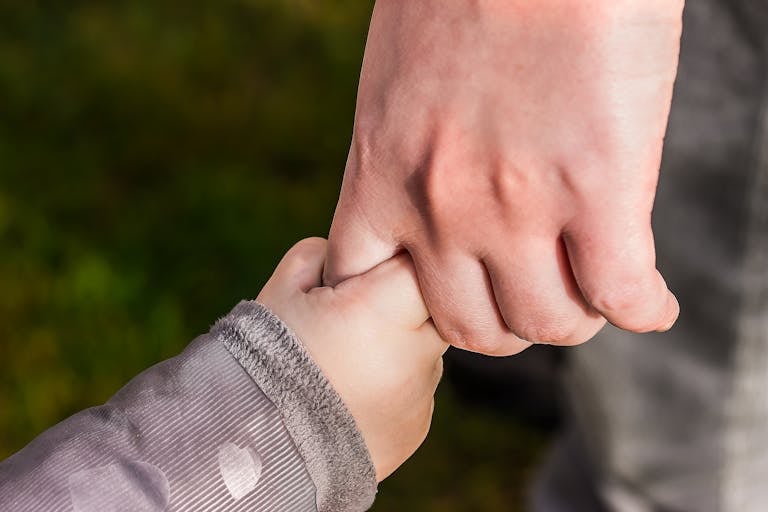

Attachment styles, as defined in AP Psychology, are patterns of emotional bonding that develop in early childhood and shape how people connect, seek comfort, and respond to intimacy throughout their lives. The framework identifies four primary styles: secure, anxious-preoccupied, dismissive-avoidant, and fearful-avoidant, each reflecting a different combination of anxiety and avoidance in close relationships. What began as a clinical model for understanding infant behavior has become one of the most practically useful lenses for making sense of adult romantic patterns.
What makes this framework genuinely compelling is not just its academic origins but how vividly it explains things most of us have felt and couldn’t quite name. Why do some people pull away the moment a relationship gets close? Why do others seem to need constant reassurance even when everything is going well? Attachment theory doesn’t pathologize these patterns. It contextualizes them.
As someone wired for deep analysis, I’ve always been drawn to frameworks that explain human behavior at a structural level rather than a surface one. Attachment theory does that better than almost anything else I’ve encountered. And for introverts in particular, understanding this framework can reframe experiences that might otherwise feel like personal failures.
If you’re exploring the fuller picture of how introverts connect romantically, our Introvert Dating and Attraction hub covers the emotional, behavioral, and relational dimensions that make introvert relationships distinctly meaningful.

Where Did Attachment Theory Come From?
The theory originated with British psychiatrist and psychoanalyst John Bowlby, who proposed in the mid-twentieth century that human beings have an innate need to form close emotional bonds with caregivers. His work challenged the prevailing behaviorist view that children bonded with caregivers primarily because caregivers provided food. Bowlby argued instead that the need for proximity and emotional safety was its own fundamental drive.
What’s your personality type?
Take our free 40-question assessment and get a detailed personality profile with dimension breakdowns, context analysis, and personalised insights.
Discover Your Type8-12 minutes · 40 questions · Free
Mary Ainsworth built on Bowlby’s work through her landmark research involving what she called the Strange Situation, a structured observation protocol where infants were briefly separated from their caregivers and then reunited. Her observations revealed distinct patterns in how children responded to separation and return, patterns that mapped onto what she categorized as secure, anxious-ambivalent, and avoidant attachment. A fourth pattern, disorganized attachment, was later identified by Mary Main and Judith Solomon to describe children who showed no consistent strategy when distressed.
Decades later, researchers Cindy Hazan and Phillip Shaver extended the model into adult romantic relationships, proposing that the same fundamental dynamics play out between adult partners. Their work opened the door to a field of study that has since produced some of the most practically applicable insights in relationship psychology.
In AP Psychology courses, attachment theory typically appears in the developmental psychology unit, framed around early childhood formation. But the adult implications are where the real depth lives, and that’s where I want to spend most of our time here.
What Are the Four Attachment Styles in Detail?
Each attachment style is defined by two dimensions: anxiety about abandonment or rejection, and avoidance of intimacy or emotional closeness. Mapping high and low scores on those two dimensions produces the four styles.
Secure Attachment
Securely attached people score low on both anxiety and avoidance. They’re generally comfortable with emotional intimacy, capable of depending on others without losing their sense of self, and able to tolerate temporary distance without interpreting it as abandonment. They tend to communicate needs clearly and respond to a partner’s needs with empathy rather than defensiveness.
One thing worth clarifying: secure attachment doesn’t mean conflict-free relationships. Securely attached people still face disagreements, misunderstandings, and hard seasons in relationships. What they have is a more reliable internal toolkit for working through difficulty without the relationship itself feeling threatened. That’s a meaningful distinction.
Anxious-Preoccupied Attachment
Anxiously attached people score high on anxiety and low on avoidance. They want closeness intensely and are highly attuned to relational signals, often interpreting ambiguity as a sign of trouble. Their attachment system is hyperactivated, meaning the internal alarm that monitors connection is persistently on high alert.
This isn’t a character flaw or simple neediness. It’s a nervous system response shaped by early experiences where emotional availability was inconsistent. When a caregiver was sometimes warm and sometimes withdrawn, a child learned to escalate attachment behaviors, to cry louder, cling harder, because that was the strategy that occasionally worked. That pattern can carry forward into adult relationships as a persistent fear of abandonment that drives behavior the person often can’t consciously control.
Understanding this dynamic has practical relevance for how introverts experience relationships. You can read more about the emotional complexity involved in understanding and handling introvert love feelings, particularly when the internal experience doesn’t match what’s being expressed outwardly.
Dismissive-Avoidant Attachment
Dismissive-avoidant people score low on anxiety and high on avoidance. They’ve typically learned to suppress emotional needs and maintain self-sufficiency as a primary strategy. They may genuinely believe they don’t need much closeness, and they often present as calm and independent even in situations that would distress most people.
What’s important to understand here is that dismissive-avoidants do have feelings. Physiological research has shown that avoidantly attached individuals can show internal arousal responses even when they appear externally calm. The emotions exist but are suppressed through a process psychologists call deactivation. The strategy developed because emotional expression, in their early environment, didn’t reliably produce comfort. So they learned to turn the volume down internally as a form of self-protection.
This is also a critical point for introverts who sometimes get mislabeled. Introversion and avoidant attachment are not the same thing. An introvert may be perfectly securely attached, comfortable with deep intimacy, and simply need more solitude to recharge. Avoidance is about emotional defense, not energy preference. Conflating the two does a disservice to both concepts.

Fearful-Avoidant Attachment
Fearful-avoidant people score high on both anxiety and avoidance. They want closeness deeply but are also frightened by it. The relational dynamic they often create is one of approach and retreat: moving toward a partner when distance feels too great, then pulling back when closeness feels threatening. This style is sometimes called disorganized in the developmental literature, reflecting that no single consistent strategy emerged in childhood.
It’s worth noting that fearful-avoidant attachment and borderline personality disorder are not the same thing. There is overlap and correlation, but they are distinct constructs. Not everyone with fearful-avoidant patterns has BPD, and not everyone with BPD is fearful-avoidant. Conflating them oversimplifies both.
How Does Attachment Theory Apply to Introvert Relationships Specifically?
Running advertising agencies for over two decades gave me an unusual vantage point on human behavior under pressure. I managed teams of creative people, strategists, account directors, and producers, all with different emotional wiring. What I observed again and again was that the patterns people brought into the conference room were the same patterns they brought into their personal relationships. The person who shut down during a difficult client conversation was often the same person who went quiet during a disagreement at home. The person who escalated every ambiguous email into a crisis was often doing the same thing in their marriage.
Attachment theory gave me a framework for what I was watching. And when I started applying it to my own introversion, things clicked in ways they hadn’t before.
As an INTJ, my default mode is internal processing. I don’t externalize emotions quickly or easily. Early in relationships, that tendency was sometimes misread as disinterest or coldness. I wasn’t being cold. I was thinking. But without a shared language for what was happening, the gap between my internal experience and my external expression created confusion for people who wanted connection and weren’t sure if I was offering it.
Attachment theory helped me articulate something I’d felt but couldn’t explain: that my need for solitude wasn’t a signal that I didn’t care. It was how I processed caring. That distinction matters enormously in intimate relationships, and it connects directly to how introverts express affection, often through actions and presence rather than words and demonstrations.
For introverts handling romantic relationships, understanding your own attachment style adds another layer of self-awareness. Are you pulling back because you need solitude, or because closeness feels threatening? Are you quiet because you’re processing, or because you’ve learned that expressing needs doesn’t work? Those are different questions with different answers, and attachment theory helps you tell them apart.
The patterns that emerge when introverts fall in love are worth examining closely. Our piece on relationship patterns when introverts fall in love explores how the internal experience of falling for someone can look very different from the outside, and why that gap sometimes creates misunderstanding.
What Does the Anxious-Avoidant Dynamic Actually Look Like in Practice?
One of the most commonly discussed attachment dynamics is the pairing of an anxiously attached person with a dismissive-avoidant one. It’s sometimes called the anxious-avoidant trap because the two styles can activate each other in ways that feel almost designed to cause pain.
Here’s the basic mechanism. The anxious partner, whose attachment system is hyperactivated, reads the avoidant partner’s natural tendency toward distance as confirmation of their fear that they’re not loved or valued. They pursue more. The avoidant partner, whose deactivation strategy kicks in when closeness feels like too much, experiences that pursuit as pressure and pulls back further. Which confirms the anxious partner’s fear. Which intensifies the pursuit. And so on.
What makes this dynamic particularly relevant for introverts is that the introvert’s genuine need for solitude can be misread as avoidant behavior even when no avoidant attachment is present. An introvert who needs a few hours alone after a long day isn’t withdrawing from the relationship. They’re restoring themselves so they can be present in it. But to an anxiously attached partner, that withdrawal can feel like rejection.
I had a creative director at one of my agencies who was in exactly this dynamic with her partner. She was a deeply introverted INFP, and her partner had what I’d now recognize as strong anxious attachment patterns. Every time she needed to decompress after a demanding week, he interpreted it as emotional abandonment. She couldn’t understand why her legitimate need for space kept triggering conflict. He couldn’t understand why she kept “disappearing” when things got hard. Neither of them had the language for what was actually happening.
That language matters. And contrary to a common misconception, anxious-avoidant relationships aren’t doomed. With mutual awareness, honest communication, and often professional support, many couples with this dynamic develop what researchers call secure functioning over time. The patterns aren’t fixed. They’re responsive to experience, reflection, and intentional effort.

Highly sensitive people often experience attachment dynamics with particular intensity. The emotional amplification that characterizes high sensitivity means that relational signals, both positive and threatening, land harder. Our complete dating guide for HSPs addresses how sensitivity intersects with attachment in ways that are both challenging and deeply rewarding.
Can Attachment Styles Actually Change?
One of the most important things to understand about attachment theory is that these styles are not permanent assignments. They’re patterns, and patterns can shift.
The concept of “earned secure” attachment is well-documented in the research literature. People who began with insecure attachment styles can develop secure functioning through corrective relationship experiences, sustained self-reflection, and therapeutic work. It’s not a quick process, and it’s not linear. But it’s genuinely possible.
Therapeutic modalities that tend to be particularly effective for attachment work include Emotionally Focused Therapy, which works directly with attachment needs within the couple relationship; schema therapy, which addresses the deep belief systems that underlie attachment patterns; and EMDR, which can help process the early experiences that shaped those patterns in the first place.
Corrective relationship experiences, meaning relationships where a partner consistently responds with sensitivity and reliability, can also shift attachment over time. This is one reason why the quality of your primary relationship matters so much. A securely attached partner doesn’t just make day-to-day life more pleasant. They can actually help reorganize your attachment system through repeated experiences of safety and responsiveness.
For introverts, self-reflection is often a natural strength, and that strength is directly applicable here. The capacity to examine your own patterns, to notice when you’re pulling back out of fear rather than genuine need, to recognize when anxiety is distorting your read of a situation, is exactly what attachment work requires. Being wired for internal processing isn’t a liability in this context. It’s an asset.
It’s also worth noting that significant life events, both positive and negative, can shift attachment orientation. A profound loss, a deeply healing relationship, a period of sustained therapy, these experiences can all move someone along the spectrum. The idea that you’re permanently locked into the style you developed in childhood doesn’t hold up. There is continuity, yes, but it’s not deterministic.
How Does Attachment Theory Interact with Introvert-Introvert Relationships?
Two introverts in a relationship can create something genuinely beautiful: a shared understanding of the need for quiet, a mutual comfort with depth over breadth, a relationship that doesn’t require constant performance. But attachment dynamics still operate within that dynamic, and understanding them adds important nuance.
Two securely attached introverts can build a relationship that’s both spacious and deeply connected. They can honor each other’s need for solitude without interpreting it as rejection, and they can come together with genuine presence when they do connect.
Two anxiously attached introverts, on the other hand, can create a different kind of dynamic. Both may be highly attuned to relational signals, both may fear abandonment, and both may seek reassurance in ways that can create a cycle of mutual escalation. The shared introversion doesn’t neutralize the attachment anxiety. It just gives it a quieter expression.
The specific patterns that emerge when two introverts build a life together are worth examining carefully. Our article on what happens when two introverts fall in love explores both the natural strengths and the specific challenges that arise when two inward-oriented people try to create genuine intimacy.
One thing I’ve noticed in my own relationships and in observing others: the introvert-introvert pairing can sometimes create a kind of parallel solitude that feels like connection but isn’t quite. Two people sitting in the same room, each absorbed in their own world, can be comfortable without being close. Attachment theory helps name the difference between companionable quiet and emotional distance, and that distinction is worth paying attention to.

What Role Does Conflict Play in Revealing Attachment Patterns?
Conflict is where attachment patterns become most visible. When the relationship feels threatened, whether through a disagreement, a perceived slight, or a period of distance, the attachment system activates and the underlying style comes to the surface.
Securely attached people can hold conflict without it feeling like a threat to the relationship itself. They can disagree, feel hurt, and still trust that the bond is intact. They can repair relatively quickly because they don’t interpret conflict as evidence that the relationship is fundamentally unsafe.
Anxiously attached people often experience conflict as existential. The disagreement isn’t just a disagreement. It’s evidence of the feared abandonment. This can lead to escalation, to pursuing resolution with an urgency that the situation may not warrant, because the underlying fear is so much larger than the surface issue.
Dismissive-avoidant people often withdraw during conflict. The activation of the attachment system triggers their deactivation strategy, and they go quiet, shut down, or physically leave. This isn’t indifference, even though it can look that way. It’s a defense mechanism that developed because engagement with emotional intensity felt unsafe or unproductive at some earlier point.
For highly sensitive introverts, conflict carries an additional layer of complexity. The sensory and emotional amplification that comes with high sensitivity means that even low-intensity conflict can feel overwhelming. Learning to work through disagreement without either shutting down or flooding is a specific skill, and one that’s deeply worth developing. Our piece on handling conflict peacefully as an HSP addresses this directly, with practical approaches that account for the sensitivity dimension.
At one of my agencies, I had a senior account director who would go completely silent during difficult client conversations. I initially read it as disengagement. Over time, I came to understand it as his attachment system doing exactly what it had learned to do: withdraw when emotional intensity exceeded a certain threshold. Once I understood that, I could create conditions where he could contribute without being overwhelmed. That same understanding applies in intimate relationships. Knowing what’s actually happening, rather than interpreting behavior through the lens of your own attachment fears, changes everything.
How Do You Actually Figure Out Your Own Attachment Style?
This is where a note of honest caution is warranted. Online quizzes can offer a rough orientation, but they have significant limitations as formal assessment tools. The most rigorous assessments used in research settings are the Adult Attachment Interview, which requires a trained clinician to administer and interpret, and the Experiences in Close Relationships scale, a validated self-report measure. A five-minute quiz on a lifestyle website is not the same thing.
There’s also a specific challenge with self-report for dismissive-avoidant patterns. Because the deactivation strategy operates somewhat unconsciously, people with dismissive-avoidant attachment may genuinely not recognize their own patterns. They may report that they’re comfortable with intimacy because they’re not consciously aware of the degree to which they’re avoiding it. This is one reason why working with a therapist who understands attachment can be more revealing than any self-assessment.
That said, honest self-reflection combined with a validated measure like the ECR can provide a useful starting point. The questions to sit with are: How do I respond when a partner needs more closeness than I’m currently offering? How do I respond when I feel like a partner is pulling away? What does conflict do to my sense of the relationship’s safety? Do I believe I’m fundamentally lovable and that others are fundamentally trustworthy?
Those questions, examined with genuine honesty, can illuminate a great deal. And for introverts, who tend to be naturally inclined toward self-examination, the process of exploring attachment patterns can be one of the more meaningful forms of personal development available. A study published in PubMed Central examining adult attachment and relationship quality highlights how attachment security correlates with relationship satisfaction across multiple dimensions, underscoring why this self-awareness work has real practical stakes.
There’s also an important broader point here: attachment is one lens, not the only lens. Communication skills, shared values, life stressors, mental health, and compatibility across multiple dimensions all affect relationship quality. Attachment theory is a powerful framework, but it doesn’t explain everything, and treating it as the sole explanatory model for all relationship problems would be an oversimplification.

Why Does This Framework Matter for Introverts Specifically?
Introverts often carry a particular burden in relationships: the assumption that their internal orientation is a relational deficit. That needing alone time means they love less. That being slow to express emotion means they feel less. That preferring depth to breadth means they’re somehow less capable of connection.
Attachment theory, understood properly, dismantles that assumption. Secure attachment has nothing to do with how much social stimulation you need. It has everything to do with the internal working models you carry about your own worth and others’ reliability. An introvert can be profoundly securely attached. An extrovert can be deeply anxiously attached. The dimensions are independent.
What attachment theory offers introverts is a framework for distinguishing between what’s temperament and what’s pattern. Your introversion is temperament. It’s how you’re wired to process the world. Your attachment style is a pattern, shaped by experience, and responsive to growth. Knowing the difference lets you stop pathologizing the former while doing the real work on the latter.
There’s something in Psychology Today’s exploration of romantic introverts that resonates here: the introvert’s tendency toward deep, meaningful connection rather than broad social engagement is actually well-suited to the kind of sustained, attentive presence that secure attachment thrives on. The capacity for depth that introverts bring to relationships isn’t a consolation prize for being socially reserved. It’s a genuine relational strength.
I spent years in advertising trying to perform a version of leadership that didn’t fit how I was built. Loud, fast, constantly available, always performing confidence. It was exhausting and in the end ineffective. The same dynamic plays out in relationships when introverts try to perform a version of connection that doesn’t fit their actual wiring. Attachment theory helps clarify what genuine connection looks like for you specifically, rather than what it’s supposed to look like according to an extroverted template.
Understanding how introverts experience love at a deeper level adds important context to everything attachment theory describes. The way an introvert processes falling for someone, the internal intensity that rarely matches the external expression, is something our piece on introvert relationship patterns when falling in love examines with the nuance it deserves.
Additional context on how personality and attachment intersect in real relationships is available through this PubMed Central research on personality and close relationship outcomes, which offers a broader view of the factors that shape how people bond over time. And for those curious about how online dating intersects with introvert tendencies, Truity’s analysis of introverts and online dating raises interesting questions about how digital environments interact with attachment needs. Meanwhile, Healthline’s piece on introvert and extrovert myths is a useful corrective to some of the oversimplifications that still circulate about introversion in relationship contexts.
For a comprehensive look at the full range of introvert dating and relationship topics, from attraction to long-term partnership, the Introvert Dating and Attraction hub brings together everything we’ve written on how introverts connect, love, and build lasting relationships.
About the Author
Keith Lacy is an introvert who’s learned to embrace his true self later in life. After 20 years in advertising and marketing leadership, including running agencies and managing Fortune 500 accounts, Keith now channels his experience into helping fellow introverts understand their strengths and build fulfilling careers. As an INTJ, he brings analytical depth and authentic perspective to every article, drawing from both professional expertise and personal growth.
Frequently Asked Questions
What is the AP Psychology definition of attachment styles?
In AP Psychology, attachment styles are defined as characteristic patterns of relating to close others that develop through early caregiver relationships and persist into adulthood. The four main styles are secure (low anxiety, low avoidance), anxious-preoccupied (high anxiety, low avoidance), dismissive-avoidant (low anxiety, high avoidance), and fearful-avoidant (high anxiety, high avoidance). Each reflects a different internal working model about one’s own worth and others’ reliability in close relationships.
Are introverts more likely to be avoidantly attached?
No. Introversion and avoidant attachment are independent dimensions. An introvert may be securely attached, anxiously attached, avoidantly attached, or fearfully attached. Introversion describes how someone processes energy and stimulation. Avoidant attachment describes a defensive strategy around emotional intimacy. Needing solitude to recharge is not the same as suppressing emotional needs as a form of self-protection. Conflating the two leads to misunderstanding both concepts.
Can your attachment style change over time?
Yes. Attachment styles are patterns, not permanent traits. The concept of earned secure attachment is well-established in the psychological literature. People can shift toward more secure functioning through corrective relationship experiences, sustained self-reflection, and therapeutic work such as Emotionally Focused Therapy, schema therapy, or EMDR. Significant life events can also shift attachment orientation. The continuity from childhood to adulthood is real but not deterministic.
How do attachment styles affect conflict in relationships?
Conflict activates the attachment system, which is why it reveals underlying styles so clearly. Securely attached people can hold disagreement without feeling the relationship itself is threatened. Anxiously attached people often experience conflict as evidence of feared abandonment, leading to escalation and urgent pursuit of resolution. Dismissive-avoidant people tend to withdraw when emotional intensity rises, using deactivation as a defense. Fearful-avoidant people may oscillate between approach and withdrawal. Understanding these patterns helps partners interpret behavior more accurately rather than through the distorting lens of their own attachment fears.
What’s the most accurate way to identify your attachment style?
The most rigorous assessments are the Adult Attachment Interview, administered by a trained clinician, and the Experiences in Close Relationships scale, a validated self-report measure. Online quizzes offer only rough orientation and have significant limitations, particularly for dismissive-avoidant patterns where the deactivation strategy can make self-report unreliable. Working with a therapist trained in attachment theory typically provides more accurate and actionable insight than any self-assessment tool alone.