

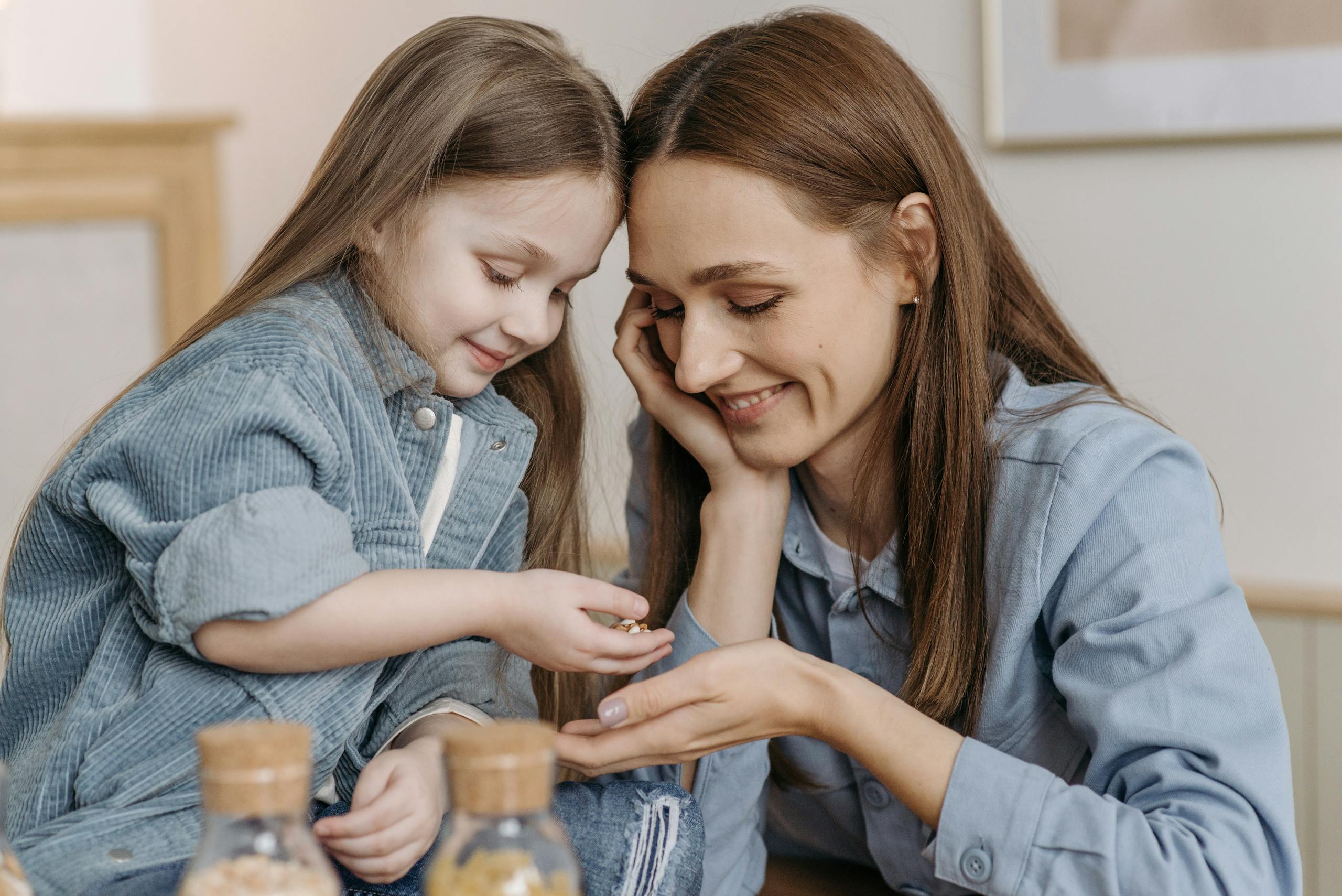
When a mother is consistently attentive, warm, and responsive, something quietly profound happens in her child’s developing nervous system. The child learns, at a pre-verbal level, that closeness is safe, that needs will be met, and that other people can be trusted. That early blueprint becomes the foundation of what attachment researchers call secure attachment, a way of relating to others that tends to persist, in some form, across a lifetime of relationships.
Attentive maternal care doesn’t guarantee a perfect emotional life. Securely attached people still experience heartbreak, conflict, and self-doubt. What changes is the internal toolkit available when those hard moments arrive.
Much of what I’ve come to understand about my own relational patterns, in friendships, in business partnerships, in romantic relationships, has come from looking backward at the emotional environment I grew up in. As an INTJ who spent two decades leading advertising agencies, I was far more comfortable analyzing market data than examining attachment patterns. But the two are more connected than I ever expected.
Our Introvert Dating and Attraction hub covers the full range of how introverts approach romantic connection, but the question of where our relational instincts come from adds a layer that most dating advice never touches. Attachment style isn’t just a personality quiz result. It’s a story that begins long before the first date.
What Does Attentive Mothering Actually Look Like in Practice?
Attentiveness in early caregiving isn’t about perfection. It’s about consistent responsiveness. A mother who notices when her infant is distressed and responds with warmth, who reads emotional cues reasonably well, who repairs moments of disconnection rather than letting them fester, is doing the relational work that shapes a child’s internal model of the world.
What’s your personality type?
Take our free 40-question assessment and get a detailed personality profile with dimension breakdowns, context analysis, and personalised insights.
Discover Your Type8-12 minutes · 40 questions · Free
Developmental psychologists use the phrase “good enough parenting” for a reason. The goal isn’t a mother who never misreads her child or never feels overwhelmed. The goal is a mother who shows up consistently enough that the child develops a working assumption: people who care about me will generally be there when I need them.
That assumption becomes a kind of emotional shorthand. It gets carried into every subsequent relationship, quietly shaping how much risk feels tolerable, how quickly trust forms, how a person responds when someone they love disappoints them.
I think about one of my account directors at the agency, a woman who had an almost uncanny ability to stay grounded during client crises. When a major campaign fell apart two weeks before launch, she didn’t catastrophize or shut down. She assessed, communicated clearly, and kept the team steady. I noticed over time that she brought the same quality to her personal relationships. She wasn’t unaffected by difficulty. She just seemed to have a deep, quiet confidence that problems could be worked through. That kind of steadiness doesn’t come from nowhere.
How Does Secure Attachment Form from Responsive Care?
Attachment theory, developed through the work of John Bowlby and expanded by Mary Ainsworth’s observational research, describes how infants form emotional bonds with caregivers. Ainsworth’s research identified distinct patterns in how children responded when separated from and reunited with their mothers, patterns that mapped onto what we now call attachment styles.
When a caregiver is reliably responsive, the child develops what Ainsworth called secure attachment. In Ainsworth’s framework, secure attachment is characterized by low anxiety and low avoidance. The child is distressed when the caregiver leaves, genuinely comforted when she returns, and able to use the caregiver as a secure base from which to explore the world.
In adult terms, that translates to someone who is comfortable with both intimacy and independence. They can lean on others without feeling consumed by the need for reassurance. They can tolerate distance without interpreting it as abandonment. They hold relationships with a kind of open-handed confidence rather than a white-knuckled grip.

Worth noting here: secure attachment doesn’t mean the absence of relationship problems. Securely attached people still have conflicts, still get hurt, still make mistakes with the people they love. What they tend to have is a more reliable set of internal resources for working through those difficulties. The difference lies in the emotional infrastructure, not in some immunity to struggle.
There’s also an important distinction to hold onto. Introversion and secure attachment are completely independent variables. Being introverted doesn’t make someone avoidantly attached, and being extroverted doesn’t make someone secure. An introvert who grew up with attentive, responsive care can be deeply, genuinely securely attached, comfortable with closeness and equally comfortable with solitude. The need for alone time is about energy, not emotional defense.
Understanding the patterns introverts bring to romantic love becomes much richer when you factor in attachment style alongside personality type. They’re separate layers of who a person is, and both matter.
What Happens Inside the Nervous System of a Securely Attached Person?
One of the things that surprised me when I started reading about attachment science is how physiological the whole thing is. Attachment isn’t just a psychological concept. It’s wired into the body’s stress response systems.
When a caregiver consistently soothes a distressed infant, they’re doing more than offering comfort in the moment. They’re helping the child’s nervous system learn to regulate itself. Over time, that co-regulation becomes the foundation for self-regulation. The child internalizes the soothing experience and gradually develops the capacity to calm their own distress.
Research published through PubMed Central examining early caregiving and neurological development supports the idea that early relational experiences shape the developing brain in ways that influence emotional regulation across the lifespan. This isn’t deterministic, but it is meaningful.
For securely attached adults, the nervous system’s response to relational stress tends to be more proportionate. They feel the discomfort, but it doesn’t overwhelm their capacity to think and respond. They can stay present in difficult conversations without either flooding emotionally or shutting down entirely.
Compare that with what happens in anxious attachment, where the attachment system becomes hyperactivated, generating intense fear of abandonment that drives behavior in ways the person often doesn’t consciously choose. Or dismissive-avoidant attachment, where the attachment system is deactivated as a defense strategy. The feelings exist physiologically, but they’re suppressed and blocked from conscious experience. Studies using physiological measures have shown that dismissive-avoidant individuals show internal arousal responses to relational stress even when they appear externally calm and unaffected.
These are nervous system patterns, not character flaws. And they originate, in large part, in the quality of early caregiving.
How Does Growing Up Securely Attached Shape Adult Romantic Relationships?
In my agency years, I noticed something about the people who had the most stable, satisfying relationships outside of work. They weren’t necessarily the most charming or the most socially polished. They were the ones who seemed genuinely comfortable being known. They could receive feedback without collapsing. They could express a need without framing it as an apology.
That quality, the capacity to be known and to know others without excessive defensiveness or anxiety, is one of the clearest hallmarks of secure attachment in adult relationships.
Securely attached adults tend to communicate more directly about emotional needs. They’re more likely to express vulnerability without either drowning in it or running from it. When conflict arises, they’re better positioned to stay engaged with the problem rather than attacking the person or withdrawing entirely.
For introverts specifically, this plays out in interesting ways. An introvert with secure attachment can honor their genuine need for solitude and recharge time without that need becoming a source of relational anxiety. Their partner doesn’t experience the alone time as rejection, because the securely attached introvert has the tools to communicate clearly about what they need and why. Understanding how introverts experience and express love feelings is much easier when secure attachment is part of the picture.

There’s also the question of how securely attached people show affection. Because they’re not operating from a place of scarcity or fear, their expressions of love tend to feel more consistent and less conditional. The way introverts show affection is often quiet and specific, a remembered detail, a thoughtful gesture, a sustained presence. When that natural style is paired with secure attachment, it becomes something genuinely powerful in a relationship.
Psychology Today’s exploration of romantic introversion describes how introverts often bring a depth of attention to their relationships that extroverts can underestimate. Pair that attentiveness with a secure foundation and you have someone who loves with both presence and steadiness.
Can Attachment Style Change If Your Early Experience Wasn’t Secure?
This is one of the most important questions in the whole conversation, and I want to be careful to answer it accurately rather than optimistically.
Attachment styles are not fixed permanently by childhood experience. There is meaningful continuity between early attachment patterns and adult attachment orientation, but that continuity is not deterministic. Significant relationships, life experiences, and therapeutic work can all shift attachment patterns over time.
The concept of “earned secure” attachment is well-documented in the research literature. An adult who grew up with inconsistent or unresponsive care can develop a secure attachment orientation through what researchers call corrective relational experiences. A deeply trustworthy partner, a skilled therapist, or a sustained period of self-reflection can all contribute to that shift.
Therapeutic approaches including Emotionally Focused Therapy, schema therapy, and EMDR have shown meaningful results in helping people with insecure attachment patterns develop more secure functioning. It’s not quick, and it’s not simple, but the capacity for change is real.
I spent years in my agency career operating from patterns I now recognize as somewhat avoidant. I prized self-sufficiency to an extreme. I was uncomfortable being dependent on others, even when dependence would have been entirely appropriate. I framed that as strength, as the INTJ preference for independence. Some of it was. But some of it was a learned defense that I had to consciously examine and work through before I could show up fully in close relationships.
That examination didn’t come naturally to me. It came through a combination of therapy, honest conversations with people I trusted, and a lot of uncomfortable self-reflection during the kind of long solitary walks that introverts use to process the things that matter most.
Additional perspective on early development and attachment continuity is available through this PubMed Central resource on developmental attachment research, which examines how early caregiving experiences relate to later relational functioning without overstating the determinism.
What About Highly Sensitive People and Attentive Mothering?
There’s a meaningful overlap worth addressing here. Many introverts are also highly sensitive people, meaning they process sensory and emotional information more deeply than average. For an HSP child, the quality of early caregiving has an amplified effect in both directions.
An HSP child raised by an attentive, attuned mother tends to develop not just secure attachment but a particularly rich capacity for empathy, emotional depth, and relational awareness. The same sensitivity that makes the HSP child more vulnerable to harsh or inconsistent care also makes them more responsive to warmth and attunement.
In adult relationships, an HSP with a secure attachment foundation brings something genuinely rare: deep emotional perception paired with the internal stability to hold that perception without being overwhelmed by it. If you’re curious about how that plays out in dating and partnership, the complete HSP relationships dating guide covers the specific dynamics that highly sensitive people face in romantic connection.

One of the more nuanced challenges for securely attached HSPs is conflict. Even with a stable internal foundation, HSPs tend to experience disagreements more intensely than non-sensitive people. Their nervous systems register interpersonal friction at a higher amplitude. Working through conflict peacefully as an HSP requires a specific set of skills that goes beyond what secure attachment alone provides.
What secure attachment does offer the HSP in conflict is a baseline trust that the relationship can survive the difficulty. That trust is not nothing. It’s the difference between a disagreement that feels like a problem to solve and one that feels like evidence that the relationship is fundamentally broken.
How Does Secure Attachment Affect Introvert-Introvert Relationships?
One of the questions I get asked most often is whether two introverts can build a genuinely satisfying relationship together. My answer is always yes, with the honest caveat that any pairing has its own specific challenges to manage.
When both partners in an introvert-introvert relationship carry secure attachment, something interesting happens. The shared preference for depth over breadth, for quiet evenings over packed social calendars, for meaningful conversation over small talk, stops being a potential source of relational stagnation and becomes a genuine point of connection. When two introverts fall in love, the relational patterns that emerge are shaped as much by attachment style as by personality type.
Two securely attached introverts can honor each other’s need for solitude without either person interpreting withdrawal as rejection. They can sit in comfortable silence. They can pursue separate interests and return to each other without the reunion feeling fraught with unspoken anxiety.
Where introvert-introvert pairings sometimes struggle, regardless of attachment security, is in the area of initiating difficult conversations. Both partners may prefer to process internally before speaking, which can mean important issues get deferred longer than they should. 16Personalities has explored some of the specific risks in introvert-introvert relationships, including the tendency toward mutual avoidance of conflict that can leave real issues unaddressed.
Secure attachment helps here, because securely attached people have a higher tolerance for the discomfort of difficult conversations. They believe, at a foundational level, that the relationship can hold the weight of honesty.
What Can Adults Do with This Understanding?
Knowing your attachment style is useful. Knowing where it came from can be even more so, not because it assigns blame, but because it helps you understand your own patterns with more compassion and less confusion.
If you grew up with an attentive, responsive mother, you likely carry a relational foundation that serves you well in adult intimacy. That doesn’t mean you don’t have work to do. It means you have a relatively stable platform from which to do it.
If your early experience was less consistent, that’s worth knowing too, not as a sentence, but as information. Many people discover that what they interpreted as personal failing in relationships, the tendency to push people away, the inability to stop seeking reassurance, the confusion when closeness feels simultaneously necessary and terrifying, makes far more sense when viewed through an attachment lens.
A word of caution about self-assessment: online attachment quizzes can point you in a useful direction, but they’re rough indicators at best. Formal assessment uses tools like the Adult Attachment Interview or the Experiences in Close Relationships scale. Self-report has real limitations, particularly for dismissive-avoidant individuals who may not recognize their own patterns because the defense strategy works precisely by keeping those patterns out of conscious awareness. If the question feels important to you, working with a therapist who specializes in attachment is worth considering.
Healthline’s piece on introvert and extrovert myths is a useful reminder that many of the assumptions we carry about personality and behavior are far more complex than the popular narratives suggest. Attachment is one of those areas where nuance matters enormously.
For introverts doing this kind of inner work, the process often looks like extended solitary reflection, journaling, long walks, and quiet hours spent sitting with uncomfortable realizations. That’s not a lesser form of self-development. For many of us, it’s the most effective one. The INTJ in me resisted therapy for years, framing it as inefficient. What I eventually found was that having a skilled external perspective accelerated the self-understanding I’d been circling around alone for a decade.

Attachment is also not the only lens through which to understand relationship patterns. Communication skills, values alignment, life stressors, and individual mental health all play significant roles in how relationships function. Treating attachment as the single explanatory framework misses the full picture. It’s a powerful lens, and it’s one lens among several worth holding.
One of the most grounding things I’ve read on this subject comes from Psychology Today’s guidance on dating introverts, which emphasizes the importance of understanding the particular relational needs that introverts bring to partnerships, needs that become far more legible when you factor in attachment style alongside personality.
There’s something quietly hopeful in all of this. The blueprint laid down in early childhood is real and it matters. And it is not the final word on who you get to become in relationships. Earned security is possible. Meaningful change is documented. The story your nervous system learned to tell about closeness can be revised, slowly and with real effort, but genuinely revised.
If you want to keep exploring how all of this connects to the specific experience of dating and attraction as an introvert, our full Introvert Dating and Attraction resource hub brings together the most useful perspectives we’ve developed on this topic.
About the Author
Keith Lacy is an introvert who’s learned to embrace his true self later in life. After 20 years in advertising and marketing leadership, including running agencies and managing Fortune 500 accounts, Keith now channels his experience into helping fellow introverts understand their strengths and build fulfilling careers. As an INTJ, he brings analytical depth and authentic perspective to every article, drawing from both professional expertise and personal growth.
Frequently Asked Questions
Does having an attentive mother guarantee secure attachment in adulthood?
Attentive, responsive mothering creates strong conditions for secure attachment to develop, but it doesn’t guarantee a particular outcome in adulthood. Other relationships, significant life events, and individual temperament all play a role in how attachment patterns evolve over time. Attachment continuity across the lifespan exists but is not deterministic. Many people with warm early caregiving still develop some insecure patterns through later experiences, and many people with difficult early histories develop earned security through corrective relationships and therapeutic work.
Are introverts more likely to be avoidantly attached?
No. Introversion and avoidant attachment are independent of each other. An introvert may be securely attached, anxiously attached, dismissive-avoidant, or fearful-avoidant. The introvert preference for solitude and recharging alone is about energy management, not emotional defense. Avoidant attachment involves the suppression and deactivation of emotional needs as a protective strategy, which is a different mechanism entirely from the introvert need for quiet and internal processing time. Conflating the two leads to misunderstanding both introversion and attachment theory.
Can attachment style change in adulthood?
Yes, meaningfully so. The concept of earned secure attachment is well-documented. Adults who developed insecure patterns in childhood can shift toward more secure functioning through corrective relational experiences, sustained self-reflection, and therapeutic approaches including Emotionally Focused Therapy, schema therapy, and EMDR. Change is typically gradual and requires genuine effort, but the capacity for it is real and supported by evidence. Attachment style should be understood as an orientation that can evolve, not a fixed trait.
How does secure attachment affect how introverts handle conflict in relationships?
Securely attached introverts tend to have a higher tolerance for the discomfort of difficult conversations because they hold a foundational belief that the relationship can survive honesty and disagreement. They may still need more processing time before engaging with conflict than extroverted partners expect, and they may prefer to work through their thoughts internally before speaking. What secure attachment adds is the confidence that engaging with conflict is worth the discomfort, rather than something to be avoided at all costs. This is particularly relevant for highly sensitive introverts, who feel interpersonal friction more intensely and benefit from the stabilizing effect of a secure base.
What’s the difference between secure attachment and simply having no relationship problems?
Secure attachment does not mean immunity from relationship difficulty. Securely attached people experience conflict, heartbreak, misunderstanding, and periods of disconnection just as everyone does. What differs is the internal toolkit available when those difficulties arise. Securely attached individuals tend to regulate emotional distress more effectively, communicate needs more directly, repair ruptures more readily, and maintain a stable sense of self and relationship even during hard periods. The difference lies in the resources available for working through problems, not in the absence of problems themselves.