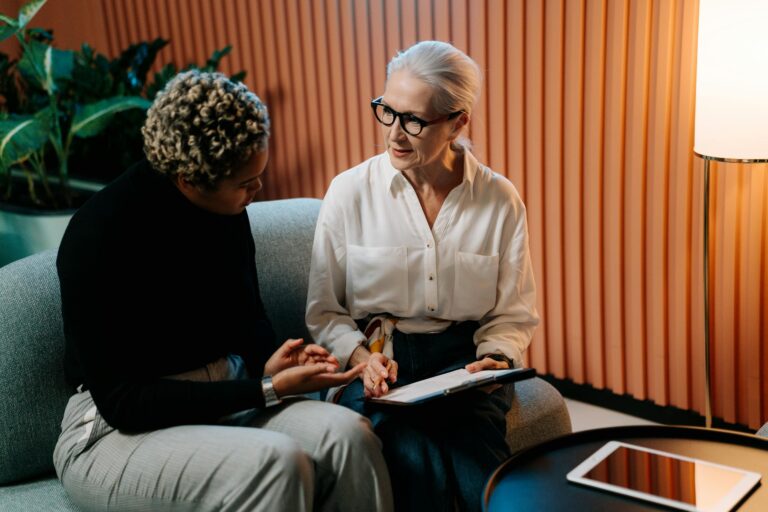

Bowlby’s three attachment styles, later expanded and refined by researcher Jay Belsky, describe the emotional blueprints we carry into every close relationship: secure, anxious-preoccupied, and dismissive-avoidant, with fearful-avoidant emerging as a fourth pattern in adult attachment research. These styles shape how we seek closeness, tolerate vulnerability, and respond when love feels threatened. For introverts especially, understanding these patterns can reframe years of confusing relationship experiences as nervous system responses rather than personal failings.
Attachment theory began with John Bowlby’s observation that infants develop distinct strategies for maintaining closeness with caregivers, and those strategies don’t simply disappear in adulthood. Belsky’s later contributions examined how evolutionary pressures and early environments influence which attachment strategy a person develops. What makes this framework so useful is that it explains not just what we do in relationships, but why our bodies and minds respond the way they do when intimacy is at stake.

Much of what I explore on Ordinary Introvert connects directly to the broader world of introvert dating and attraction. Our Introvert Dating and Attraction hub pulls together everything from how introverts fall in love to how they handle conflict, and attachment theory sits at the center of all of it. Before we get into the specific styles, it’s worth grounding this in real experience, because attachment isn’t an abstract concept. It shows up in every text you agonize over sending, every moment you pull back when someone gets too close, and every time you feel inexplicably calm in a relationship that others might find boring.
What Did Bowlby Actually Argue About Attachment?
John Bowlby spent decades building a theory that challenged the dominant psychological thinking of his era. Where many theorists focused on drives and rewards, Bowlby argued that humans are biologically wired to seek proximity to caregivers when threatened or distressed. He called this the attachment behavioral system, and he believed it was as fundamental to human survival as hunger or fear.
What’s your personality type?
Take our free 40-question assessment and get a detailed personality profile with dimension breakdowns, context analysis, and personalised insights.
Discover Your Type8-12 minutes · 40 questions · Free
Bowlby’s original framework described three patterns of attachment observed in young children: secure, anxious-ambivalent, and avoidant. These emerged from Mary Ainsworth’s Strange Situation experiments, which Bowlby drew on heavily. A securely attached child uses the caregiver as a safe base, exploring freely and seeking comfort when distressed. An anxiously attached child shows heightened distress and difficulty being soothed. An avoidant child appears calm but suppresses emotional expression, a defense against a caregiver who was consistently unresponsive.
What Bowlby emphasized, and what gets lost in pop psychology summaries, is that these aren’t character flaws. They’re adaptive strategies. A child who learns that expressing need leads to rejection develops avoidance as a protective measure. A child whose caregiver is inconsistent learns that escalating distress signals is the most reliable way to get a response. These are intelligent responses to specific environments, not signs of damage.
I think about this a lot in the context of my own professional life. Running advertising agencies for over two decades, I watched people handle workplace dynamics in ways that mirrored their attachment patterns almost exactly. The account manager who could never let a client complaint go without catastrophizing it. The creative director who seemed completely unbothered by feedback but whose work quietly deteriorated whenever she felt overlooked. At the time I just thought of these as personality quirks. Now I recognize them as attachment systems playing out in a professional context.
How Did Belsky Extend Bowlby’s Framework?
Jay Belsky’s contribution to attachment theory came primarily through an evolutionary lens. Where Bowlby focused on the mechanics of how attachment forms, Belsky asked a deeper question: why do different attachment strategies exist at all? If secure attachment produces better outcomes, why hasn’t natural selection eliminated anxious and avoidant patterns?
Belsky proposed that different attachment strategies may be adaptive in different environments. In unpredictable or high-stress environments, an anxious strategy that keeps you hypervigilant to threat and relationship instability might actually serve survival. In environments where resources are scarce and others are unreliable, an avoidant strategy that promotes self-sufficiency and emotional independence might be the more functional approach. Secure attachment, in this view, is optimal in stable, predictable environments, but it isn’t the only viable strategy across all contexts.
This reframing matters enormously for how we think about anxious and avoidant patterns. They aren’t simply broken versions of secure attachment. They’re strategies calibrated to specific environmental conditions. The challenge in modern adult relationships is that those original environmental conditions no longer apply, yet the strategy persists. Your nervous system learned a particular approach to closeness based on early experience, and it continues running that program even when the circumstances have completely changed.

Belsky also contributed to research on differential susceptibility, the idea that some individuals are more sensitive to environmental influences, both positive and negative, than others. This connects in interesting ways to what we know about highly sensitive people and introverts. If you want to understand how sensitivity intersects with relationship patterns, the HSP relationships complete dating guide covers this territory in depth, particularly how heightened sensitivity shapes the way people experience closeness and conflict.
What Does Secure Attachment Actually Look Like in Adult Relationships?
Secure attachment in adults is characterized by low anxiety about abandonment and low avoidance of closeness. Securely attached people are generally comfortable with intimacy, able to depend on others without losing themselves, and capable of supporting a partner’s needs without feeling threatened. They tend to communicate directly about relationship concerns rather than either escalating or shutting down.
One important clarification: secure attachment doesn’t mean conflict-free relationships. Securely attached people still argue, still hurt each other’s feelings, still face difficult periods. What they tend to have is a more reliable set of tools for working through difficulty. They can tolerate the discomfort of a disagreement without concluding that the relationship is over. They can give a partner space without interpreting it as rejection. They can ask for what they need without excessive fear of the response.
For introverts, secure attachment often looks quieter than the cultural scripts we’ve inherited about what healthy love looks like. An introvert with secure attachment might not initiate daily check-in calls or express affection through grand gestures. They might show love through consistency, through remembering small details, through creating space for a partner to decompress. Understanding how this plays out is something I write about extensively when exploring how introverts show affection through their love language, because the gap between how introverts express care and how that care gets received is one of the most common sources of relationship friction.
It’s also worth noting clearly: introversion and secure attachment are independent dimensions. An introvert can absolutely be securely attached. Preferring solitude and needing time to recharge has nothing to do with whether you’re comfortable with emotional intimacy. Avoidant attachment is about emotional defense, not energy preference. Conflating the two does a real disservice to introverts who have done genuine relational work and built secure patterns.
How Does Anxious-Preoccupied Attachment Show Up in Relationships?
Anxious-preoccupied attachment involves high anxiety about relationships combined with low avoidance of closeness. People with this pattern deeply want connection but live with a persistent fear that it will be taken away. Their attachment system is, in technical terms, hyperactivated. It scans constantly for signs of distance, reads ambiguous signals as threatening, and responds to perceived withdrawal with escalating bids for reassurance.
This isn’t clinginess as a character trait. It’s a nervous system response shaped by early experiences of inconsistent caregiving. When attunement was unpredictable, the most reliable strategy was to stay alert and amplify distress signals until connection was restored. That system doesn’t turn off just because you’re now an adult in a stable relationship. It keeps running, often generating the very distance it fears.
I’ve watched this dynamic unfold in professional settings too. One of the senior account directors at my agency was extraordinarily talented, but she needed constant validation from clients. Not in an obvious way, but in a pattern I could see clearly once I understood what I was looking at. Every positive piece of client feedback was momentarily reassuring and then almost immediately insufficient. Every ambiguous email became a potential crisis. What looked like professional anxiety was actually an attachment pattern playing out in a workplace context.
In romantic relationships, anxious-preoccupied attachment often creates a painful loop. The person seeks reassurance, the partner feels pressured and pulls back slightly, the withdrawal triggers more anxiety, which generates more reassurance-seeking, which creates more distance. Understanding this cycle is crucial for anyone in a relationship with an anxiously attached partner, or for anyone trying to understand their own responses. The guide to understanding and working through introvert love feelings touches on this kind of emotional complexity in ways that resonate with anxious attachment patterns specifically.

What Is Dismissive-Avoidant Attachment and Why Is It Misunderstood?
Dismissive-avoidant attachment involves low anxiety about relationships combined with high avoidance of closeness. People with this pattern tend to value self-sufficiency, feel uncomfortable with emotional dependence, and often minimize the importance of close relationships. They can appear emotionally detached or indifferent, which leads to one of the most persistent and damaging myths about this attachment style: that dismissive-avoidants simply don’t have feelings.
Physiological research tells a different story. When people with dismissive-avoidant attachment are exposed to attachment-relevant stressors, their bodies respond. Heart rate changes, cortisol levels shift, physiological arousal occurs. The difference is that their cognitive and emotional processing systems have learned to suppress and deactivate that arousal before it reaches conscious awareness. The feelings exist. They’re being actively, if unconsciously, blocked.
This distinction matters enormously in relationships. A dismissive-avoidant partner who goes quiet during conflict isn’t demonstrating that they don’t care. They’re demonstrating that their nervous system has learned that expressing need or distress is dangerous. The shutdown is a defense, not an absence of feeling. Treating it as evidence of emotional emptiness tends to confirm the avoidant’s implicit belief that vulnerability leads to rejection, which deepens the pattern rather than addressing it.
As an INTJ, I recognize some surface-level similarities between my natural processing style and dismissive-avoidant patterns. I do prefer to work through things internally before discussing them. I do value autonomy and find excessive emotional demands draining. But these are cognitive and energetic preferences, not defenses against intimacy. The difference, from the inside, is that I’m not suppressing emotion. I’m processing it in my own way, on my own timeline, and then genuinely engaging. Avoidant suppression is a fundamentally different mechanism, even if it can look similar from the outside.
The intersection of avoidant patterns and highly sensitive nervous systems creates its own complexity. Conflict in particular can trigger both attachment responses and sensory overwhelm simultaneously. The guide to HSP conflict and handling disagreements peacefully addresses how to work through this layered response without either shutting down or escalating.
What Is Fearful-Avoidant Attachment and How Does It Differ From Dismissive?
Fearful-avoidant attachment, sometimes called disorganized attachment in childhood research, involves both high anxiety and high avoidance. People with this pattern simultaneously want closeness and fear it. They may crave intimacy intensely but pull away when they get close to it, caught between the longing for connection and the terror that closeness will lead to hurt, abandonment, or loss of self.
Where the dismissive-avoidant has resolved the attachment dilemma by deactivating the need for closeness, the fearful-avoidant hasn’t resolved it at all. Both the need and the fear remain fully active, creating a push-pull dynamic that can be exhausting for both the person experiencing it and their partners. Relationships may feel intensely passionate early on and then destabilize as genuine intimacy develops.
A point worth making clearly: fearful-avoidant attachment is sometimes conflated with borderline personality disorder, but these are distinct constructs. There is research suggesting correlation and overlap, but not all people with fearful-avoidant attachment have BPD, and not everyone with BPD has fearful-avoidant attachment. Collapsing these categories oversimplifies both and can lead to unhelpful labeling.
What fearful-avoidant individuals often need most is a relationship environment that is genuinely consistent over time, not perfectly conflict-free, but predictably safe. That’s a long-term process, and it almost always benefits from professional support. The good news, and this is worth stating plainly, is that attachment styles can shift. Through therapy, through corrective relationship experiences, through conscious self-development, people genuinely do move toward more secure functioning. The concept of “earned secure” attachment is well-documented in the clinical literature. No one is permanently fixed in a pattern.
How Do These Patterns Shape the Way Introverts Experience Falling in Love?
Introverts tend to process emotional experience deeply and often more slowly than the social scripts around dating expect. Add an attachment pattern to that processing style and you get a very specific set of relationship dynamics that can be genuinely confusing without a framework to understand them.
A securely attached introvert falling in love tends to do so gradually and with increasing certainty. They may not express it dramatically, but the commitment, once formed, tends to be solid. They’re comfortable with the slower pace of emotional disclosure that introversion naturally produces. They don’t need the relationship to be constantly validated because their internal sense of its stability is reliable.
An anxiously attached introvert falling in love faces a particular challenge: the introvert’s natural need for solitude can trigger the anxious attachment system even in healthy relationships. A partner who needs an evening alone to recharge isn’t withdrawing. But the anxious nervous system doesn’t always distinguish between chosen solitude and emotional rejection. This creates a painful dynamic where the introvert needs space to function and the anxious system interprets that space as threat.
Understanding these patterns has completely reframed how I think about the relationship dynamics I’ve observed over the years, including my own. The way introverts fall in love and the relationship patterns that emerge makes much more sense when you layer attachment theory on top of introvert processing styles. The combination creates something genuinely distinct from what either framework describes alone.
Do Two Introverts With Different Attachment Styles Face Unique Challenges?
Two introverts in a relationship share a fundamental understanding of energy management, depth preference, and the need for quiet that extrovert-introvert pairings often have to negotiate carefully. But shared introversion doesn’t guarantee attachment compatibility, and in some ways it can obscure attachment dynamics that need attention.
Consider two introverts where one is securely attached and the other is dismissive-avoidant. Both may value solitude and independence. Both may communicate sparingly. From the outside, and even from the inside initially, this can feel like perfect compatibility. Over time, though, the securely attached partner will want genuine emotional intimacy, not just parallel companionship. The avoidant partner’s suppression of emotional needs may start to feel like distance rather than shared preference. The similarity in surface behavior can mask a significant difference in relational capacity.
Two anxiously attached introverts face a different kind of challenge. Both understand the fear of abandonment, but they may amplify each other’s anxiety rather than providing the consistent reassurance each needs. When one partner goes quiet to recharge, the other’s attachment system activates. When that partner then seeks reassurance, the first partner, already depleted, may pull back further. The dynamic can escalate in ways that neither person intends or fully understands.
There’s real depth to explore in what happens when two introverts fall in love, particularly around how shared traits create both strengths and blind spots. Attachment awareness adds another layer to that picture that I think is genuinely underexplored in most writing about introvert-introvert relationships.
A study published in PubMed Central examining attachment and relationship quality found that attachment anxiety and avoidance both independently predict lower relationship satisfaction, regardless of partner type. This suggests that the attachment pattern itself matters more than the introvert-extrovert dynamic in predicting long-term relationship health.
Can Attachment Styles Actually Change, and What Does That Process Look Like?
One of the most important things to understand about attachment theory is that these patterns are not permanent. The clinical literature is clear on this. Attachment orientations can and do shift across the lifespan, through therapy, through significant relationship experiences, and through deliberate self-development work.
The concept of “earned secure” attachment describes people who had insecure attachment in childhood but developed secure functioning in adulthood. This isn’t rare. It’s a well-documented phenomenon. The path typically involves developing what researchers call coherent narrative, the ability to reflect on early experiences with clarity and without being overwhelmed by them, and having at least one consistently safe relationship experience that provides new data to the attachment system.
Therapeutic approaches that have shown effectiveness in shifting attachment patterns include Emotionally Focused Therapy, which works directly with the attachment system in couples, schema therapy, which addresses the deep belief structures that underlie attachment patterns, and EMDR, which processes the specific memories that anchor insecure working models. These aren’t quick fixes. Attachment patterns are deeply ingrained, and shifting them requires sustained effort. But the capacity for change is real.
I think about this in terms of the work I’ve done on my own professional and personal patterns over the years. As an INTJ, I came into my adult life with a strong preference for self-sufficiency and a genuine discomfort with emotional vulnerability. Some of that is temperament. Some of it, I’ve come to understand, was attachment-related. The process of distinguishing between the two, of figuring out what was introvert preference and what was defense, has been one of the more significant pieces of personal work I’ve done. It didn’t happen through a single insight. It happened through years of paying attention, some good therapy, and a few relationships that were honest enough to show me where my patterns were getting in the way.
Additional research available through PubMed Central examines how attachment security can be developed through relationship experiences, supporting the idea that change is possible even without formal therapy when the relational environment is consistently safe and responsive.

How Can Understanding Your Attachment Style Improve Your Relationships Right Now?
Knowing your attachment style doesn’t automatically change your patterns, but it does give you something invaluable: a way to observe your responses with some distance rather than being completely inside them. When you recognize that your urge to send a third unanswered text is your attachment system activating, not a reasonable assessment of the situation, you have a choice point you didn’t have before.
For anxiously attached people, the most useful immediate practice is learning to distinguish between genuine relationship problems and attachment system activation. Not every silence is rejection. Not every moment of distance is abandonment. Building a small library of alternative interpretations for ambiguous signals, and practicing reaching for those interpretations before acting on the anxious reading, can interrupt the reassurance-seeking cycle.
For dismissively avoidant people, the most useful practice is often simply noticing the shutdown before it completes. Avoidant deactivation happens quickly and below conscious awareness. Learning to catch the early signs, a slight emotional flatness, a sudden interest in changing the subject, an impulse to get very busy, creates a window for a different choice. You don’t have to immediately become emotionally expressive. You just have to notice what’s happening and stay in the conversation a little longer than your instinct suggests.
For fearful-avoidant people, the work is often about building tolerance for the discomfort of closeness itself. success doesn’t mean eliminate the fear but to be able to stay present with it long enough to let new relational data accumulate. Every time you tolerate vulnerability and the feared outcome doesn’t materialize, you’re building a new data set for your attachment system to work with.
One practical note on self-assessment: online attachment style quizzes are rough indicators at best. Formal assessment uses tools like the Adult Attachment Interview or the Experiences in Close Relationships scale. Self-report has real limitations, particularly for dismissive-avoidants who may not recognize their own suppression patterns. If you’re trying to understand your attachment style seriously, working with a therapist who specializes in this area gives you much more reliable insight than any quiz.
A thoughtful piece at Psychology Today on dating as an introvert addresses some of the surface-level challenges that attachment patterns can complicate, particularly around pace, communication, and the introvert tendency to process internally before sharing. And for a deeper look at how introvert-specific traits interact with romantic connection, this Psychology Today piece on romantic introverts captures some of the nuances that attachment theory helps explain.
What I’ve found, both personally and in the conversations I have through Ordinary Introvert, is that the most powerful shift comes from combining self-knowledge with genuine curiosity about your partner’s experience. Attachment theory gives you a map. The actual work is the ongoing practice of showing up with awareness, communicating with honesty, and being willing to update your understanding of yourself and the person you love.
If you’re exploring how these dynamics play out across the full range of introvert relationships, our Introvert Dating and Attraction hub brings together everything from first attraction to long-term partnership in one place.
About the Author
Keith Lacy is an introvert who’s learned to embrace his true self later in life. After 20 years in advertising and marketing leadership, including running agencies and managing Fortune 500 accounts, Keith now channels his experience into helping fellow introverts understand their strengths and build fulfilling careers. As an INTJ, he brings analytical depth and authentic perspective to every article, drawing from both professional expertise and personal growth.
Frequently Asked Questions
What are Bowlby’s three original attachment styles?
Bowlby’s original framework, informed by Mary Ainsworth’s research, described three attachment patterns in children: secure, anxious-ambivalent, and avoidant. Securely attached children use caregivers as a safe base and can be soothed when distressed. Anxiously attached children show heightened distress and difficulty settling. Avoidant children suppress emotional expression as a defense against consistently unresponsive caregiving. Adult attachment research later identified a fourth pattern, fearful-avoidant, characterized by both high anxiety and high avoidance of closeness.
What did Belsky add to Bowlby’s attachment theory?
Jay Belsky extended Bowlby’s framework through an evolutionary perspective, arguing that different attachment strategies may be adaptive in different environmental conditions rather than representing a hierarchy from broken to healthy. He proposed that anxious and avoidant patterns may have offered survival advantages in unpredictable or resource-scarce environments. Belsky also contributed to differential susceptibility research, examining why some individuals are more sensitive to environmental influences than others, which has implications for understanding highly sensitive people and their attachment patterns.
Are introverts more likely to be avoidantly attached?
No. Introversion and avoidant attachment are independent dimensions that should not be conflated. An introvert can be securely attached, anxiously attached, avoidantly attached, or fearful-avoidant. Introversion describes an energy preference, specifically a tendency to recharge through solitude rather than social interaction. Avoidant attachment describes an emotional defense strategy rooted in early caregiving experiences. An introvert who needs quiet time to recharge is not necessarily defending against intimacy. Treating these as the same thing misrepresents both constructs and can lead introverts to misidentify their own patterns.
Can attachment styles change in adulthood?
Yes, attachment styles can genuinely shift across the lifespan. The clinical concept of “earned secure” attachment describes people who developed secure functioning in adulthood despite insecure early attachment. Change can occur through therapy, particularly Emotionally Focused Therapy, schema therapy, and EMDR, through corrective relationship experiences that provide new data to the attachment system, and through sustained self-development work. The process is rarely quick, but the capacity for change is well-documented. No one is permanently fixed in an insecure attachment pattern.
How can I identify my own attachment style accurately?
Online quizzes provide rough indicators but have significant limitations, particularly for dismissive-avoidants who may not recognize their own suppression patterns through self-report. More reliable assessment tools include the Adult Attachment Interview, which examines how you narrate early experiences, and the Experiences in Close Relationships scale, used in research settings. Working with a therapist who specializes in attachment provides the most accurate and useful picture of your attachment patterns, along with the context to understand how those patterns developed and how they’re currently affecting your relationships.