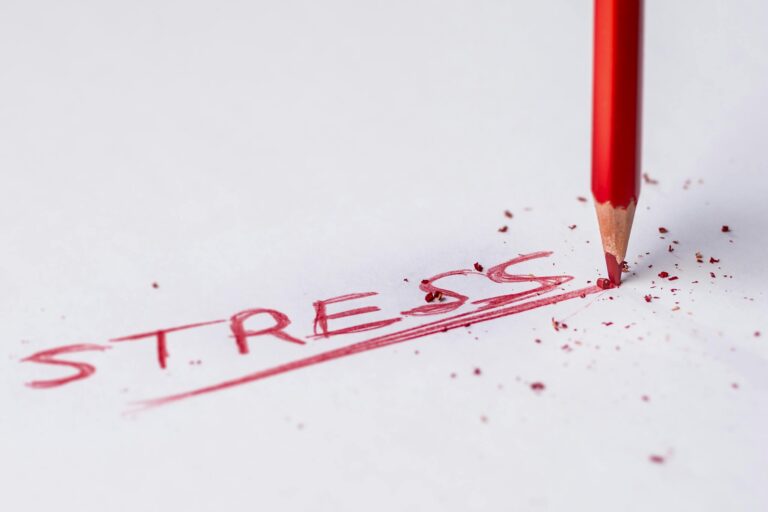

Conflict does not signal a troubled relationship. Avoiding it does. Healthy couples disagree, push back, and work through tension, not because something is broken between them, but because they are two distinct people with distinct inner worlds trying to build something real together. The absence of conflict is not peace. Often, it is distance wearing a very convincing disguise.
That distinction took me an embarrassingly long time to understand, both in my professional life and in my personal relationships. As an INTJ who spent decades running advertising agencies, I was wired to solve problems efficiently and move on. Conflict felt like friction in a system that should run smoothly. So I minimized it, sidestepped it, and told myself that keeping things calm meant keeping things healthy. I was wrong on both counts.

Introverts, in particular, carry a complicated relationship with conflict. We process deeply, feel strongly, and often prefer to absorb tension quietly rather than surface it. That internal orientation is one of our genuine strengths in many areas of life. In romantic relationships, though, it can quietly build walls we never intended to construct. If you’ve ever wondered why a relationship that seemed perfectly calm started feeling hollow, this is worth sitting with.
Our Introvert Dating and Attraction hub covers the full landscape of how introverts connect, attract, and sustain meaningful relationships. Conflict avoidance is one of the most underexamined threads running through all of it, and understanding it changes how you see everything else.
Where Does the Myth That Conflict Means Trouble Come From?
Most of us absorbed this belief before we were old enough to question it. We watched adults around us treat disagreements as emergencies. Arguments behind closed doors, the cold silence that followed, the sense that raised voices meant something was crumbling. Children are extraordinarily good at reading emotional atmospheres, and many of us concluded early on that conflict was dangerous, a symptom of something going wrong.
What’s your personality type?
Take our free 40-question assessment and get a detailed personality profile with dimension breakdowns, context analysis, and personalised insights.
Discover Your Type8-12 minutes · 40 questions · Free
For introverts, that early learning often gets reinforced. We tend to notice emotional undercurrents that others miss. We feel the weight of tension in a room. We replay conversations afterward and analyze what went sideways. All of that sensitivity makes conflict feel higher-stakes than it might for someone who processes more externally and moves on faster. So we develop workarounds. We soften our opinions. We let things go that deserve to be said. We become very skilled at keeping the surface calm while something unresolved settles into the foundation.
The myth gets cultural reinforcement too. Romantic comedies end when the couple resolves their central tension. Social media shows curated partnership highlights. Relationship advice columns often focus on compatibility and connection, rarely on the productive friction that actually deepens both. We end up with a distorted picture of what a good relationship looks like, one that is suspiciously free of disagreement.
What the picture misses is that conflict, handled with care, is one of the primary mechanisms through which two people actually come to understand each other. Psychology Today’s look at romantic introverts touches on how introverts often experience love with particular intensity, which makes the stakes of unresolved tension feel even higher. That intensity is not a liability. It is information worth paying attention to.
What Does Conflict Avoidance Actually Look Like in Practice?
Conflict avoidance rarely looks like what people expect. It does not usually show up as someone storming out of conversations or refusing to engage. More often, it is subtle and socially acceptable. It looks like changing the subject when something uncomfortable surfaces. It looks like agreeing to end the tension rather than because you genuinely agree. It looks like telling yourself the issue is not worth bringing up, even when it keeps returning to your mind at two in the morning.
I watched this pattern play out across my agency years in ways that had nothing to do with romance, but taught me everything about relationships. I once managed a creative director, an INFP with extraordinary instincts for storytelling, who would agree in every meeting and then quietly undermine decisions she disagreed with through inaction. She was not being manipulative. She genuinely hated conflict and had no framework for voicing dissent constructively. The result was a team that could not trust its own agreements, because no one knew which agreements were real and which were just social lubricant. We eventually had a direct conversation about it, which she found excruciating in the moment and described afterward as one of the most clarifying of her career.

In romantic relationships, the same dynamic plays out with higher emotional stakes. One partner swallows a grievance. The other never knows there is a grievance to address. Over time, the first partner accumulates a private ledger of unspoken frustrations, and the second partner is blindsided when something eventually breaks. Neither person is villainous in this story. Both are operating from a flawed belief that keeping the peace is the same as maintaining connection.
Understanding how introverts fall in love and the relationship patterns that follow helps clarify why this avoidance tendency is so common among us. We invest deeply and carefully. We are protective of what we have built. Conflict feels like a threat to something precious, so we protect it by avoiding the very conversations that could strengthen it.
Is Conflict Avoidance Actually Hurting Introverts More Than Others?
There is something particular about the introvert experience of conflict avoidance that makes it worth examining separately from the general population. Because we process internally, the conflict does not disappear when we choose not to voice it. It continues. We turn it over, examine it from multiple angles, assign meaning to it, and carry it forward into subsequent interactions. An extrovert who avoids a difficult conversation might genuinely set it aside. Many introverts cannot. The unspoken thing lives in the mental background, coloring how we interpret everything that comes after.
That internal processing is one of the things I find most fascinating about how introverts experience love. Introvert love feelings are often rich, layered, and deeply felt, which means unresolved conflict does not just sit on the surface. It gets woven into the emotional fabric of the relationship. A grievance that never got voiced becomes an assumption about the relationship’s safety. An assumption that never got tested becomes a belief. A belief that never got challenged becomes a wall.
There is also something worth naming about how conflict avoidance interacts with introvert communication styles. We often prefer written communication, need processing time before responding, and can find spontaneous confrontation genuinely overwhelming. These are not character flaws. They are real features of how many introverts are wired. The problem arises when we use those preferences as reasons to avoid difficult conversations entirely, rather than as parameters for how we have them.
A note worth adding here: highly sensitive people face an especially layered version of this challenge. The complete HSP relationships dating guide on this site addresses how heightened emotional sensitivity affects every stage of a romantic relationship, including how disagreements land and how recovery happens afterward. If you identify as an HSP, that piece adds important texture to what we are exploring here.
What Does Healthy Conflict Actually Look Like Between Partners?
Healthy conflict is not loud, aggressive, or dramatic. It does not require anyone to win. What it requires is that both people feel safe enough to be honest, and skilled enough to express disagreement without attacking the other person’s character or worth.
In practice, that means a few specific things. It means being able to say “I felt dismissed when that happened” without the other person hearing “you are a dismissive person.” It means being able to hear a partner’s frustration without treating it as evidence that the relationship is failing. It means staying in the conversation long enough to reach actual understanding, not just mutual exhaustion.

One of the most useful reframes I have encountered is treating conflict as a shared problem rather than a personal accusation. When my agency teams were at their most functional, disagreements felt like collaborative problem-solving rather than territorial battles. The same shift is available in relationships. “We have a tension here that needs addressing” lands very differently than “you did something wrong.”
Timing and format matter too, especially for introverts. Springing a difficult conversation on a partner who needs processing time is a setup for a poor outcome. Asking in advance, “Can we talk about something that has been on my mind? Maybe this evening?” gives both people a chance to arrive prepared. That is not conflict avoidance. That is conflict architecture, designing the conditions that make productive disagreement possible.
The way introverts express care and the way they handle tension are often deeply connected. How introverts show affection through their love language often involves acts of thoughtfulness and quality presence, and those same instincts can be channeled into how they approach disagreement. Bringing care and intentionality to a difficult conversation is itself an act of love.
Academic work on relationship conflict patterns, including material available through Loyola University’s research archives, points consistently toward the same conclusion: it is not the presence of conflict that predicts relationship satisfaction, but the quality of how partners engage with it. Couples who disagree well tend to report higher trust, more intimacy, and greater stability over time than couples who disagree rarely.
How Does Conflict Avoidance Play Out When Both Partners Are Introverts?
Two introverts in a relationship can create something genuinely beautiful: deep understanding, shared preference for quiet, mutual respect for processing time, and conversations that go somewhere real. They can also, without realizing it, create a relationship where difficult things never get said because both partners are equally committed to keeping the peace.
I have seen this in my own life and in the lives of people I know well. Two thoughtful, sensitive people who care deeply about each other can spend years in a relationship where no one ever raises their voice and no one ever says the thing that actually needs to be said. The surface is serene. Underneath, both people are carrying things they have decided are not worth the disruption.
When two introverts fall in love, the relationship patterns that emerge are distinct and worth understanding on their own terms. The strengths are real. So are the specific blind spots, and conflict avoidance is near the top of that list. Two people who both prefer to process internally can end up in a relationship where important conversations keep getting quietly deferred, each person assuming the other is fine because neither is saying otherwise.
16Personalities explores the hidden risks of introvert-introvert pairings with useful honesty. One of the patterns they identify is the tendency for both partners to retreat inward during tension rather than toward each other, which can leave both people feeling isolated within the same relationship. The solution is not to become more extroverted. It is to build explicit agreements about how conflict will be handled, before conflict arrives.
What Happens to Intimacy When Conflict Gets Consistently Avoided?
Intimacy requires honesty. Not the performed honesty of sharing your favorite memories or your childhood stories, but the riskier honesty of saying what you actually think, what genuinely bothers you, what you need that you are not getting. That kind of honesty is only possible in a relationship where both people believe it is safe to disagree.
When conflict gets consistently avoided, the relationship does not stay in place. It contracts. Both people learn, through accumulated experience, what topics are safe and what topics are off-limits. Over time, the relationship operates in an increasingly narrow corridor of acceptable conversation. Everything outside that corridor, which often includes the most important things, goes unspoken.

There is a clinical framework that maps this well. Attachment theory, developed through decades of psychological research, describes how early relational experiences shape adult expectations about safety and connection. People with anxious or avoidant attachment patterns are particularly prone to conflict avoidance, each for different reasons. Published work via PubMed Central on attachment and relationship functioning offers a deeper look at how these patterns operate in adult romantic partnerships and why they are so persistent without deliberate effort to address them.
What I have noticed in my own experience is that the relationships where I felt most genuinely known were the ones where I had been willing to be genuinely disagreeable. Not hostile, but honest. The conversations that felt most risky beforehand were often the ones that created the most connection afterward. That is counterintuitive if you have spent years believing that harmony equals closeness. But it reflects something true about how real intimacy actually works.
For highly sensitive people, this dynamic carries additional complexity. The emotional experience of conflict is often more intense, the recovery time longer, and the fear of rupture more acute. Working through conflict peacefully as an HSP is its own skill set, and one worth developing deliberately rather than assuming sensitivity means conflict should simply be avoided.
How Can Introverts Build the Skill of Productive Disagreement?
Productive disagreement is a skill, not a personality trait. It can be built, practiced, and improved. That framing matters, because many introverts have concluded that their discomfort with conflict is fixed, a permanent feature of who they are. It is not. It is a learned response that can be supplemented with learned tools.
Start with the low-stakes version. Practice expressing a genuine preference or mild disagreement in everyday situations where the emotional stakes are manageable. A different restaurant preference. A film you did not enjoy that your partner loved. A plan you would rather adjust. These small moments of honest expression build the relational muscle memory that makes harder conversations more accessible later.
Pay attention to what you are actually feeling before you try to articulate it. One of the genuine strengths introverts bring to relationships is the capacity for self-reflection. Use it. When something bothers you, take time to understand what specifically is bothering you and why, before you bring it to your partner. That preparation is not avoidance. It is the internal processing that allows you to communicate with precision rather than reactivity.
Agree on a conflict protocol with your partner. This sounds clinical, but it is genuinely useful. Decide together what it looks like to call a time-out when a conversation gets too heated, how long that pause lasts, and what the expectation is for returning to the topic. Decide how you will signal that something needs to be addressed without it feeling like an ambush. These agreements do not make conflict less real. They make it less threatening, which is what allows both people to actually show up for it.
Psychology Today’s guidance on dating introverts emphasizes the importance of understanding how introverts process and communicate, which is directly relevant here. A partner who understands that an introvert needs time before responding to conflict is far less likely to interpret that pause as stonewalling or indifference. That understanding has to be built through conversation, which is itself a form of the honest communication we are talking about.
There is also something worth saying about the difference between conflict and cruelty. Introverts who fear conflict often conflate the two. They imagine that expressing disagreement means expressing contempt, or that raising a grievance means attacking the person they love. Healthy conflict does neither. It keeps the focus on the issue, not the person. It expresses impact without assigning malice. It stays curious rather than accusatory. Those distinctions are learnable, and they change the entire experience of disagreement.
Additional perspective from PubMed Central research on interpersonal conflict and wellbeing reinforces what many relationship practitioners have observed: the quality of conflict resolution, not the frequency of conflict, is what shapes long-term relationship health. Couples who develop genuine skill at working through disagreement tend to report stronger bonds than those who simply avoid friction.

Late in my agency career, I worked with a client couple who ran a family business together. They disagreed constantly, about strategy, about staffing, about direction. From the outside, it looked exhausting. From the inside, watching them work, it was something else entirely. Every disagreement was a genuine negotiation between two people who trusted each other enough to be fully honest. They had built something that could hold their differences, and it made both the business and the marriage stronger. That image has stayed with me as a model of what productive conflict can look like when it is done with care.
If you are exploring the broader landscape of how introverts connect romantically, there is much more to work through. Our complete Introvert Dating and Attraction hub brings together the full range of topics that shape how we love, attract, and sustain relationships as people wired for depth and internal reflection.
About the Author
Keith Lacy is an introvert who’s learned to embrace his true self later in life. After 20 years in advertising and marketing leadership, including running agencies and managing Fortune 500 accounts, Keith now channels his experience into helping fellow introverts understand their strengths and build fulfilling careers. As an INTJ, he brings analytical depth and authentic perspective to every article, drawing from both professional expertise and personal growth.
Frequently Asked Questions
Does conflict always mean something is wrong in a relationship?
No. Conflict is a normal and often healthy part of any relationship between two distinct people. What matters is not whether conflict occurs, but how both partners engage with it. Couples who work through disagreements with honesty and care tend to build stronger trust and deeper intimacy than those who avoid difficult conversations entirely. The absence of conflict can signal genuine harmony, but it can also signal that important things are going unsaid.
Why do introverts tend to avoid conflict more than extroverts?
Introverts often process emotion and experience internally, which means unresolved tension does not simply dissipate when a conversation ends. It continues internally, making conflict feel higher-stakes. Many introverts also developed early associations between conflict and relational danger, and their sensitivity to emotional atmosphere reinforces the impulse to keep the surface calm. These tendencies are understandable, but they can work against genuine intimacy when they become a pattern of consistent avoidance.
What is the difference between healthy conflict and harmful conflict?
Healthy conflict focuses on a specific issue and expresses how something affected you without attacking your partner’s character or worth. It stays curious rather than accusatory, and it aims for understanding rather than victory. Harmful conflict, by contrast, involves contempt, personal attacks, stonewalling, or defensiveness that makes genuine communication impossible. The goal is not to eliminate disagreement but to develop the skills that keep disagreement constructive.
How can introverts handle conflict without feeling overwhelmed?
Several practical approaches help. Agreeing in advance on how conflicts will be handled, including the option to pause and return to a conversation, reduces the sense of being ambushed. Taking time to process internally before speaking allows introverts to communicate with precision rather than reactivity. Starting with lower-stakes disagreements builds the relational confidence to handle harder conversations over time. The goal is not to become someone who loves conflict, but to become someone who can engage with it skillfully when it matters.
What happens to a relationship when conflict is consistently avoided?
Over time, consistent conflict avoidance tends to contract the relationship. Both partners learn implicitly which topics are safe and which are off-limits, and the relationship begins operating in a narrower and narrower corridor of acceptable conversation. Important things go unspoken. Grievances accumulate privately. Intimacy gradually diminishes, not through any dramatic rupture, but through the slow erosion of honest connection. Many couples describe this as growing apart without understanding why, when the underlying cause is often years of avoided conversations.