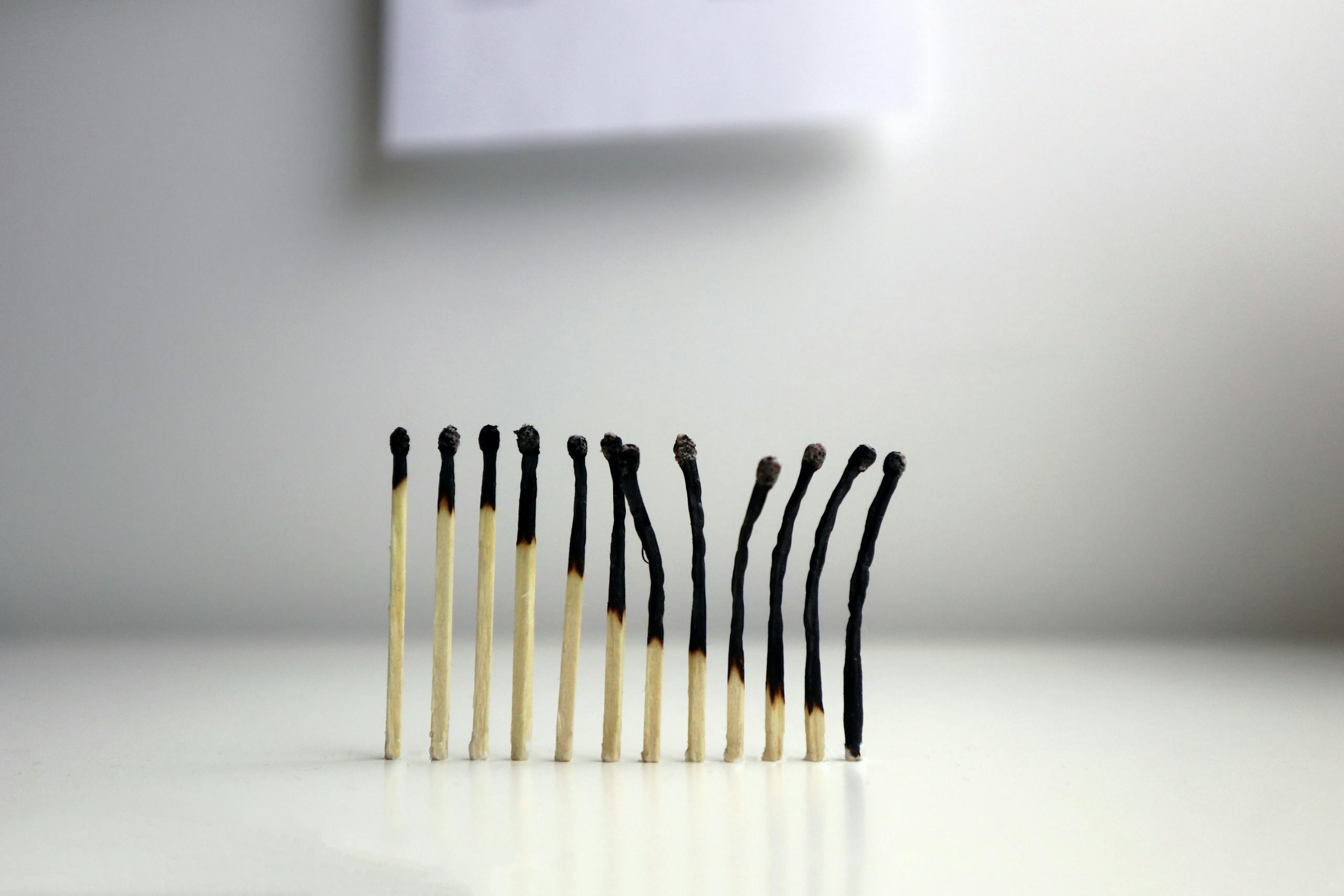

Couple burnout is a measurable state of emotional, physical, and relational exhaustion that builds when two people consistently give more to their relationship than they have the capacity to offer. Unlike a rough patch or a bad week, it accumulates quietly over months, often undetected until one or both partners feel hollow, resentful, or completely disconnected. For introverts especially, the signs can be easy to misread as personal fatigue rather than a shared relational pattern worth examining together.
Measuring where you and your partner stand on the burnout spectrum matters because awareness creates options. Without some honest assessment, couples tend to either push through numbly or pull apart without ever understanding what actually happened between them.

If you’re exploring how introversion shapes romantic connection more broadly, our Introvert Dating and Attraction hub covers the full range of these dynamics, from early attraction all the way through long-term partnership challenges. Couple burnout sits right at the heart of that conversation.
What Does Couple Burnout Actually Feel Like From the Inside?
Most people assume burnout announces itself dramatically. In my experience, it doesn’t. It whispers.
What’s your personality type?
Take our free 40-question assessment and get a detailed personality profile with dimension breakdowns, context analysis, and personalised insights.
Discover Your Type8-12 minutes · 40 questions · Free
Running advertising agencies for over two decades, I watched burnout consume talented people in slow motion. The same pattern appears in relationships. Nobody wakes up one morning and declares themselves burned out. What actually happens is a gradual erosion. The small rituals that once felt meaningful start feeling like obligations. Conversations that used to spark something real begin to feel rehearsed. You stop reaching for the other person, not out of anger, but out of a kind of exhausted indifference.
As an INTJ, I process emotions internally and with considerable delay. That wiring made it genuinely difficult for me to distinguish between needing solitude to recharge and actually withdrawing from my partner because something between us had worn thin. Those are very different states, but from the outside, and sometimes even from the inside, they can look identical.
Couple burnout tends to show up across three overlapping dimensions: emotional exhaustion, where you feel drained rather than restored by time together; depersonalization, where your partner starts to feel more like a roommate or a logistical partner than someone you’re genuinely connected to; and reduced personal accomplishment within the relationship, where you stop believing your efforts to connect are making any real difference. Those three dimensions come from burnout frameworks originally developed in occupational psychology, and they translate with uncomfortable precision to intimate relationships.
Understanding how introverts experience love and the patterns that emerge when they fall for someone helps clarify why burnout can feel especially confusing for people wired like us. What looks like burnout from the outside might sometimes be a healthy introvert recharge. But what feels like recharging might sometimes be avoidance. Telling the difference requires honest self-examination.
How Do You Measure Couple Burnout in a Real Relationship?
There are formal instruments researchers use to assess couple burnout, most notably the Couple Burnout Measure developed by Ayala Pines. It asks partners to rate how often they feel physically exhausted by their relationship, emotionally exhausted, trapped, hopeless, rejected, and several related states. The scores across those items create a composite picture of relational depletion.
You don’t need a formal scoring sheet to begin your own honest assessment, though. The questions themselves are the point. Consider asking yourself how often you feel genuinely restored after spending time with your partner versus how often you feel more depleted. Notice whether you look forward to seeing them or whether you’ve started quietly hoping plans fall through. Pay attention to whether you bring your real thoughts and feelings to conversations or whether you’ve started editing yourself to avoid friction.
One pattern I’ve noticed in my own life, and in conversations with other introverts, is that we tend to underreport our own distress. We’re so accustomed to managing our inner world privately that we can normalize levels of exhaustion that would alarm most people. I spent the better part of a year during a particularly brutal new business push at my agency telling myself I was just tired from work, when what was actually happening was that I had nothing left for anyone, including the person I came home to every night. That distinction matters enormously when you’re trying to measure what’s really going on.
Formal measurement tools aside, the most useful couple burnout measure for most people is a structured honest conversation with themselves first, and then with their partner. Psychology Today’s overview of overcoming dating burnout highlights that self-awareness is consistently the first step before any relational repair becomes possible. You have to know what you’re measuring before you can change it.
Why Are Introverts Particularly Vulnerable to Couple Burnout?
Introverts carry a specific vulnerability into long-term relationships that doesn’t get discussed enough. We expend social and emotional energy in ways that extroverts often don’t, and we replenish that energy through solitude and quiet. When a relationship consistently demands more social and emotional output than our natural rhythm allows, the deficit compounds faster than it would for someone who gains energy from connection.
There’s also the communication gap to consider. Many introverts, myself included, tend to signal distress through withdrawal rather than direct expression. We go quiet. We become more internal. We need more space. A partner who doesn’t understand introversion can read those signals as rejection or disinterest, which creates a cycle: the introvert withdraws to restore, the partner pursues out of anxiety, the introvert withdraws further, and the distance between them grows into something that starts to feel permanent.
The research published in PubMed Central’s work on emotional regulation in relationships points to the way emotion processing styles shape relational outcomes significantly. When partners process emotional information very differently, misreads accumulate. For introverts, those misreads often land as evidence that the relationship is failing, which accelerates the burnout spiral.
Highly sensitive people face an additional layer of this. The overlap between introversion and high sensitivity means many introverts are absorbing not just their own emotional load but their partner’s as well. If you or your partner identifies as highly sensitive, the HSP relationships guide on this site addresses how that sensitivity shapes partnership dynamics in specific and important ways.
I managed a creative director at my agency who was both highly introverted and highly sensitive. She was extraordinary at her work, genuinely gifted at reading a room and translating emotional truth into visual ideas. But she absorbed every piece of client criticism, every internal conflict, every tense meeting, as if it were her personal failure. By the time we had a real conversation about it, she was running on empty in every area of her life, including her marriage. Her burnout wasn’t just professional. It was total.
What Specific Patterns Accelerate Couple Burnout for Introverts?
Several patterns show up repeatedly when introverts describe how their relationships reached a breaking point of exhaustion.
The first is the slow disappearance of restorative solitude. Early in a relationship, alone time tends to feel optional, even undesirable. As months and years pass, the introvert’s need for genuine solitude reasserts itself. When that need goes unmet, or when asking for it creates conflict, the introvert starts borrowing against future energy reserves. The debt accumulates invisibly until it becomes unpayable.
The second pattern is chronic emotional translation work. Introverts often feel responsible for making their inner world legible to partners who communicate more expressively. That translation effort, the work of converting internal experience into external language on someone else’s timeline, is genuinely exhausting. Over time, many introverts simply stop attempting it. They go silent not because they have nothing to say but because the effort of saying it feels like more than they can manage.
Understanding how introverts experience and express love feelings can help both partners recognize this translation fatigue before it hardens into disconnection. What looks like emotional unavailability is often something more specific and more addressable than that.
A third pattern involves unspoken resentment around social obligations. When an introverted partner consistently attends social events, family gatherings, or couple activities that drain rather than restore them, without ever naming that cost, the resentment builds beneath the surface. It doesn’t announce itself as resentment. It arrives as irritability, as a shorter fuse, as a growing reluctance to make plans at all.
The work of setting and respecting boundaries within a partnership, as Psychology Today outlines, is directly relevant here. Boundaries aren’t walls. They’re the honest communication of what you can and cannot sustain. Without them, the gap between what you’re giving and what you have fills with bitterness.
How Does Couple Burnout Differ When Both Partners Are Introverts?
Two introverts in a relationship share certain natural advantages. They tend to understand the need for quiet, for space, for depth over breadth in conversation. They’re often less likely to pressure each other into social engagements that drain rather than restore. On paper, it sounds like the ideal arrangement for avoiding burnout entirely.
In practice, two-introvert couples face their own specific burnout risks. The most common one is parallel withdrawal. Both partners retreat into their separate inner worlds simultaneously, and what starts as a comfortable coexistence gradually becomes a kind of emotional isolation. Neither person is doing anything wrong, exactly. Both are doing what introverts do. But the relationship starts to feel like two people living alongside each other rather than genuinely together.
The dynamics when two introverts fall in love are genuinely different from mixed-temperament partnerships, and the burnout patterns that emerge are different too. Recognizing those specific patterns is the starting point for addressing them before they calcify.
There’s also the risk of what I’d call mutual avoidance dressed up as respect. Two introverts who’ve learned to honor each other’s need for space can sometimes use that framework to avoid difficult conversations indefinitely. “I’m giving you space” can become a way of not saying what needs to be said. Over time, the unspoken accumulates until the relationship feels more like a comfortable arrangement than a living, breathing connection.
A Springer study on personality traits and relationship satisfaction suggests that similarity in temperament doesn’t automatically produce better outcomes. What matters more is how partners communicate about their shared and differing needs. Two introverts who talk openly about their parallel withdrawal tendencies are far better positioned than two introverts who silently assume the other is fine.
What Role Does Conflict Avoidance Play in Building Burnout?
Introverts are often conflict-averse by nature. We prefer to process disagreements internally before bringing them into conversation, and many of us would rather absorb discomfort than risk an emotionally charged confrontation. That tendency, which can be a genuine strength in professional settings, becomes a liability in intimate relationships when it means legitimate grievances never get aired.
Unresolved conflict doesn’t disappear. It metabolizes into distance. Every avoided conversation, every swallowed frustration, every moment of choosing peace over honesty adds a small weight to the relational load both partners are carrying. At some point, the cumulative weight becomes burnout.
For highly sensitive introverts, conflict carries an additional cost. The physiological arousal that comes with disagreement, the racing heart, the heightened emotional intensity, the way a raised voice can feel physically overwhelming, makes avoidance feel not just easier but necessary. The guidance on how HSPs can approach conflict more peacefully offers concrete strategies for working through disagreements without the kind of emotional flooding that makes avoidance feel like the only option.
I’ve had to learn this in my own life. My INTJ default in conflict is to withdraw, analyze, and return with a logical case. That approach works reasonably well in boardrooms. In close relationships, it lands as coldness. The person on the other side of the table doesn’t want a logical case. They want to feel heard. Closing that gap took genuine effort and more than a few conversations that didn’t go the way I’d planned them in my head.
Findings shared through Springer’s research on relational wellbeing and communication patterns consistently point to the same conclusion: couples who develop constructive conflict habits report significantly lower burnout indicators than those who default to avoidance, regardless of personality type. The introvert’s preference for quiet resolution isn’t the problem. The complete absence of resolution is.
How Can Couples Use Love Language Awareness to Prevent Burnout?
One of the quieter contributors to couple burnout is the sustained experience of giving love in ways that don’t land and receiving love in forms that don’t restore you. When your natural way of expressing care consistently misses your partner, and when their expressions of care consistently miss you, both people end up feeling unseen despite genuine effort. That invisible misalignment is exhausting in a way that’s hard to name.
Introverts tend to express affection through presence, through remembered details, through acts of service that say “I was paying attention.” A partner who needs verbal affirmation can miss those expressions entirely, not because they’re absent but because they arrive in a language the partner isn’t fluent in reading. The introvert, meanwhile, keeps giving in the only ways that feel authentic and wonders why it never seems to be enough.
Taking time to genuinely understand how introverts show affection through their particular love languages can shift this dynamic meaningfully. It’s not about performing love in ways that feel artificial. It’s about making your natural expressions legible to the person you’re with, and learning to receive their expressions with the same generosity.
During the most demanding years of running my agency, I defaulted to acts of service as my primary expression of care. I handled logistics, managed details, showed up prepared. What I wasn’t doing was saying the thing out loud. My partner at the time needed to hear it, not just see it. The gap between what I was giving and what was being received was a slow leak that took years to notice and longer to address.
Burnout prevention in a relationship isn’t only about managing energy. It’s about ensuring that the care you’re extending is actually landing where it’s meant to go. Wasted effort, the kind that comes from consistently expressing love in a form your partner can’t receive, drains both people without building anything between them.
What Practical Steps Can Couples Take When Burnout Is Already Present?
Measuring burnout is only useful if it leads somewhere. Once you’ve honestly assessed where you and your partner stand, the question becomes what to actually do with that information.
The first step is naming it without assigning blame. Couple burnout isn’t a verdict on either person’s character or commitment. It’s a systems problem, a mismatch between the energy the relationship requires and the energy available to it. Framing it that way opens a conversation rather than closing one.
Rebuilding requires deliberate restoration, not just reduced demand. Many couples try to address burnout by doing less together, fewer obligations, less pressure. That can help, but it’s incomplete. What’s also needed is intentional positive experience, moments that remind both people why the relationship matters. Those moments don’t have to be elaborate. For introverts especially, they’re often small and quiet: a long walk, a shared meal without phones, a conversation that goes somewhere real.
Work from PubMed Central on relationship recovery and positive interaction patterns supports the value of consistent small positive exchanges over infrequent grand gestures. The daily texture of a relationship matters more than the occasional repair attempt.
Professional support is worth considering seriously, not as a last resort but as a practical tool. Couples therapy gives both people a structured space to say what’s been going unsaid, with someone present who can help translate across the communication gap. For introverts who find it difficult to access their feelings in real time, having a session to prepare for can actually make emotional honesty easier rather than harder.
Individual support matters too. When one partner is carrying anxiety or emotional overwhelm that spills into the relationship, addressing that directly can reduce the relational load significantly. Healthline’s overview of cognitive behavioral therapy approaches for anxiety-related patterns offers a useful starting point for understanding what individual therapeutic support can look like.
Finally, and this is something I’ve had to learn slowly: recovery from couple burnout requires both people to be honest about what they actually need, not what they think they should need, not what would be convenient for the other person, but what is genuinely true for them. For introverts, that kind of direct self-disclosure can feel almost counterintuitive. We’re so accustomed to processing privately that saying “I need this specific thing from you” can feel uncomfortably exposed. It’s worth the discomfort.

There’s much more to explore about how introversion shapes every stage of romantic connection. Our complete Introvert Dating and Attraction hub brings together resources on attraction, communication, conflict, and long-term partnership from an introvert-centered perspective.
About the Author
Keith Lacy is an introvert who’s learned to embrace his true self later in life. After 20 years in advertising and marketing leadership, including running agencies and managing Fortune 500 accounts, Keith now channels his experience into helping fellow introverts understand their strengths and build fulfilling careers. As an INTJ, he brings analytical depth and authentic perspective to every article, drawing from both professional expertise and personal growth.
Frequently Asked Questions
What is the Couple Burnout Measure and how does it work?
The Couple Burnout Measure is a psychological assessment tool developed to evaluate the degree of emotional, physical, and relational exhaustion within a romantic partnership. It asks individuals to rate how frequently they experience states like emotional depletion, hopelessness, feeling trapped, and reduced connection with their partner. The resulting scores indicate where on the burnout spectrum a relationship currently sits, from mild fatigue to severe depletion. It functions similarly to occupational burnout measures but applies those dimensions specifically to intimate relationships. Even without a formal scoring tool, the underlying questions offer a valuable framework for honest self-assessment.
Can introverts be more susceptible to couple burnout than extroverts?
Introverts can be particularly vulnerable to couple burnout for several reasons. Because they expend rather than gain energy through social and emotional interaction, the sustained demands of a close relationship can deplete their reserves more quickly than they’re replenished, especially when solitude is limited or when their need for quiet is misunderstood as rejection. Introverts also tend to process distress internally and signal it through withdrawal rather than direct expression, which can allow burnout to progress further before either partner recognizes what’s happening. That said, burnout is not exclusive to introverts. Any person in a relationship where their fundamental needs are consistently unmet is at risk.
What are the earliest warning signs of couple burnout?
Early warning signs of couple burnout include a gradual loss of enthusiasm for time together, a sense of going through the motions in conversations and shared activities, increased irritability with your partner over small things, reduced interest in physical or emotional intimacy, and a quiet but persistent feeling of being drained rather than restored by the relationship. Many people also notice they’ve stopped bringing their real thoughts and feelings to their partner, editing themselves to avoid friction or simply because the effort of full honesty feels like more than they can manage. These signs are easy to attribute to stress or busyness, which is part of why burnout often goes unaddressed until it’s well advanced.
How is couple burnout different from just going through a rough patch?
A rough patch is typically tied to a specific stressor or period of difficulty, a job loss, a family crisis, a major life transition, and tends to resolve as the external pressure eases. Couple burnout is more diffuse and persistent. It doesn’t trace back to a single event and it doesn’t lift when circumstances improve. It’s characterized by a cumulative depletion that has built over time, often through patterns that individually seem small but collectively have eroded the relational foundation. One useful distinction: in a rough patch, both partners generally still feel connected to each other even while struggling. In burnout, the connection itself is what feels absent or exhausted.
Is couple burnout reversible, and what does recovery actually look like?
Couple burnout is reversible in most cases, particularly when both partners are willing to acknowledge what’s happened and engage honestly with what needs to change. Recovery typically involves a combination of reducing unnecessary relational demands, restoring individual energy reserves through appropriate solitude and self-care, and deliberately rebuilding positive shared experience. For introverts, recovery also often requires finally saying out loud what has been going unspoken, naming needs that have been suppressed, and creating communication patterns that make that kind of honesty sustainable rather than a one-time event. Professional support through couples therapy can significantly accelerate the process. Recovery is rarely linear, but it is genuinely possible when both people choose to work toward it.