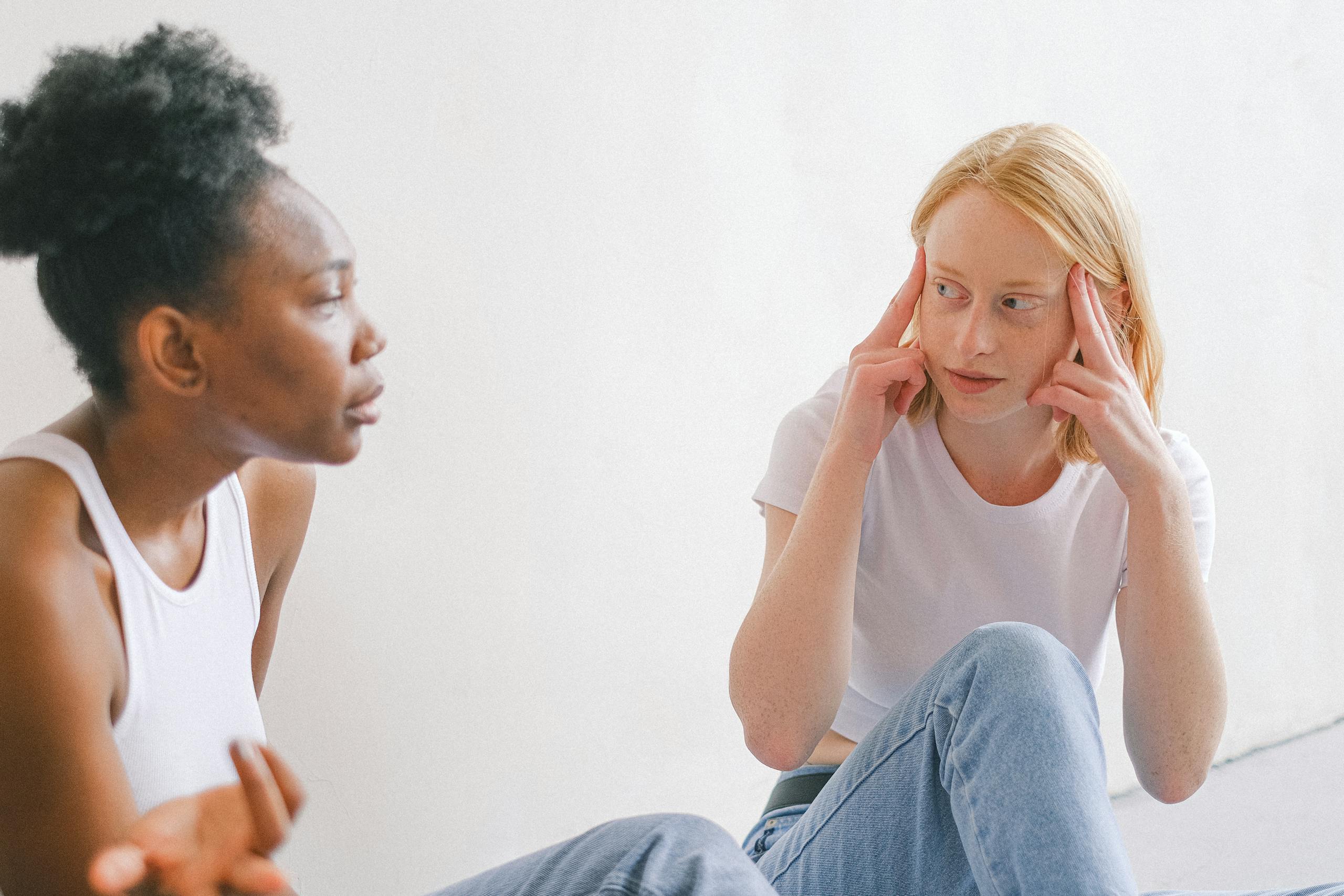

No, introverted women do not make bad girlfriends. That framing gets it completely backwards. What often reads as emotional distance, low enthusiasm, or hard-to-read behavior is something else entirely: a woman who processes deeply, connects selectively, and expresses love in ways that don’t always match the loud, performative standards our culture tends to celebrate.
The real question isn’t whether she’s a good girlfriend. It’s whether the people around her have ever taken the time to understand how she actually works.

I’ve spent a lot of time thinking about this, partly because I’ve watched it play out professionally for decades. Running advertising agencies meant building teams, and some of the most capable, perceptive, and genuinely invested people I worked with were introverted women who were consistently underestimated. They weren’t disengaged. They weren’t cold. They were operating on a different frequency, one that required a different kind of attention to receive clearly.
That same dynamic shows up in relationships. And it’s worth pulling apart honestly, because the myths around introverted women in romantic partnerships cause real damage, both to the women themselves and to the people who love them without fully understanding them.
Our Introvert Dating and Attraction hub covers the full landscape of how introverts experience romantic connection, but the specific question of introverted women and partnership deserves its own honest examination. There’s a lot of noise around this topic, and most of it misses the point entirely.
Where Does the “Bad Girlfriend” Myth Actually Come From?
Somewhere along the way, our culture decided that a good romantic partner is someone who is consistently expressive, verbally affectionate, socially available, and visibly enthusiastic about shared activities. A good girlfriend, in this framing, texts back immediately. She wants to go out. She’s warm and effusive in public. She says what she feels without much prompting.
What’s your personality type?
Take our free 40-question assessment and get a detailed personality profile with dimension breakdowns, context analysis, and personalised insights.
Discover Your Type8-12 minutes · 40 questions · Free
Introverted women often don’t fit that template. Not because they lack warmth or depth, but because their warmth and depth move differently.
She might take longer to respond to messages, not because she doesn’t care, but because she’s thinking carefully about what she wants to say. She might prefer a quiet evening at home over a party, not because she’s antisocial, but because that’s genuinely where she recharges. She might go quiet during conflict, not because she’s shutting her partner out, but because she needs time to process before she can speak clearly.
Each of those behaviors, viewed through an extroverted lens, can look like detachment, disinterest, or avoidance. Viewed on their own terms, they’re just different expressions of the same underlying investment.
I managed a creative director at one of my agencies who was extraordinarily introverted. Brilliant strategist, deeply loyal to her team, someone who noticed everything. But in client meetings, she rarely spoke unless she had something precise to contribute. Several clients flagged her as “disengaged.” She wasn’t. She was the most engaged person in the room. She was just processing rather than performing. Once I understood that distinction, I stopped trying to coach her into performing more and started creating space for her to contribute in the way she actually worked best. The results were remarkable. The same principle applies in relationships.
Does Being Introverted Mean Being Emotionally Unavailable?
This is probably the most persistent and most damaging misconception. Introversion is about energy, specifically where a person draws their energy from and what depletes it. It is not a measure of emotional capacity, warmth, or relational investment. Those are separate things entirely.
Introverted women are often extraordinarily emotionally present. They tend to be careful observers. They notice shifts in tone, changes in body language, things left unsaid. They may not broadcast their emotional responses in real time, but that doesn’t mean those responses aren’t happening. It means they’re happening internally, often with considerable depth and nuance.
What sometimes gets labeled as emotional unavailability is actually something closer to emotional caution. Many introverted women have learned, often through experience, that opening up quickly in relationships creates a kind of vulnerability that isn’t always met with care. So they move deliberately. They watch before they trust. They test the waters before they wade in.
That isn’t unavailability. That’s discernment.
There’s also an important distinction worth making here between introversion and social anxiety. The two overlap sometimes, but they’re not the same thing. Healthline’s breakdown of introversion versus social anxiety makes this clear: introversion is a personality trait, while social anxiety is a clinical condition involving fear and distress in social situations. Conflating them leads to misreading introverted behavior as anxious avoidance when it’s often simply a preference for depth over breadth in connection.

Understanding how introverts actually experience emotional connection, including the patterns that emerge as they fall deeper into a relationship, is something I’ve written about in depth. The piece on relationship patterns when introverts fall in love gets into the specific ways introverted people move through romantic attachment, and it reframes a lot of behaviors that partners often misread.
How Do Introverted Women Actually Show Love?
One of the most significant gaps in understanding introverted partners is around how they express affection. An introverted woman in love is not likely to be the person who posts effusive captions on social media or greets her partner with theatrical enthusiasm every time she sees them. That doesn’t mean the love isn’t there. It means the love is expressed differently.
She remembers things. Small things, specific things, details that most people let slip past. She remembers what you said three conversations ago about something that mattered to you. She shows up with exactly the thing you mentioned needing. She creates quiet, intentional space for the people she loves.
She invests in quality over quantity in conversation. When she opens up, she opens up fully. She’s not interested in small talk for its own sake, but when she’s talking with someone she trusts, she goes deep and she means every word.
She protects your time together. An introverted woman who chooses to spend her limited social energy with you is making a statement. She doesn’t distribute that energy widely. Being included in her inner circle is not a small thing.
The article on how introverts show affection through their love language gets into the specific ways this plays out across different expressions of care. It’s worth reading if you’re trying to understand a partner whose affection doesn’t always look the way you expected it to.
I’ll be honest about something here. As an INTJ, I’ve had to do my own work around recognizing when the people in my life were expressing care in ways I wasn’t calibrated to receive. My own patterns of expression are fairly contained, and for years I assumed everyone else operated similarly. What I eventually understood was that the same gap that made me hard to read for some people also made it harder for me to read others. Recognizing that was humbling, and it made me a significantly better partner and colleague.
What Do Introverted Women Actually Need in a Relationship?
Getting this wrong is where a lot of relationships with introverted women run into trouble. Not because she’s high-maintenance, but because what she needs is specific, and if her partner doesn’t understand it, they’ll keep offering the wrong things.
She needs solitude that isn’t treated as rejection. One of the most common friction points in relationships with introverted women is the moment she says she needs time alone. For a partner who doesn’t share that need, it can feel like withdrawal or punishment. It isn’t. It’s maintenance. She is not stepping away from the relationship. She’s doing what she needs to do to come back to it fully present.
She needs depth in conversation, not just frequency. Checking in constantly with surface-level messages doesn’t fill the same need as one real conversation. She’d rather have one hour of genuine connection than three hours of noise.
She needs a partner who doesn’t pressure her to perform extroversion. Being asked repeatedly why she’s quiet, or being told she should “open up more” in social situations, creates a kind of low-grade stress that accumulates. She knows she’s different. She doesn’t need it pointed out as a deficiency.
She needs patience with her processing time. When something significant happens, she may not have an immediate verbal response. She needs to sit with it, turn it over, understand it from multiple angles before she can speak to it clearly. Rushing that process produces responses that don’t actually reflect what she thinks or feels.
Personality research has explored how introversion interacts with relationship satisfaction, and the picture that emerges is consistent: introverted individuals tend to thrive in relationships characterized by mutual respect for individual space and genuine intellectual engagement. A study published in PubMed Central examining personality and relationship quality points to how personality traits shape what people need from their partners, and why mismatched expectations around social behavior are a common source of relational friction.

Can an Introverted Woman and an Extroverted Partner Actually Work?
Yes. With some genuine effort on both sides, these pairings can be deeply complementary. The challenge is that the effort has to be real, not performative. Both partners need to actually understand how the other person functions, not just tolerate the differences while quietly hoping the other person will eventually change.
What tends to go wrong in introvert-extrovert relationships is a slow accumulation of misread signals. She pulls back to recharge, he reads it as disinterest. He wants to go out more, she reads it as pressure. Neither person is wrong in what they need. They’re just operating from different defaults, and without a shared framework for understanding those defaults, the gap widens.
What tends to go right is a kind of productive complementarity. She brings depth, careful observation, and a grounding quality. He brings social energy, spontaneity, and a willingness to push into new experiences. When those qualities are valued rather than resented, the combination can be genuinely powerful.
I watched this dynamic play out at the agency level too. Some of my most effective creative partnerships were between people who processed very differently. The extroverted account manager who generated ideas out loud paired with the introverted strategist who filtered and refined them. The tension between those modes, when channeled well, produced better work than either person would have done alone.
The emotional intelligence required to make that work in a romantic context is real, though. Conflict in particular can expose the fault lines. The way introverted women tend to handle disagreement, pulling inward to process rather than engaging immediately, can feel to an extroverted partner like stonewalling. Understanding the difference between withdrawal and processing is critical. The piece on working through conflict peacefully in sensitive personalities offers some genuinely useful frameworks for this, particularly around giving each person the space they need to engage authentically rather than reactively.
What About Two Introverts Together?
There’s a particular quality to relationships between two introverted people that’s worth examining on its own. From the outside, these partnerships can look quiet to the point of seeming disconnected. Two people who both prefer staying in, who don’t need constant verbal affirmation, who are comfortable with long silences. It can look like nothing much is happening.
What’s actually happening is often a very high level of mutual attunement. Two people who understand each other’s need for space don’t have to negotiate it constantly. Two people who both value depth over breadth in conversation tend to have fewer but more meaningful exchanges. The relationship has a different rhythm, one that doesn’t require external validation to feel real.
The specific patterns that emerge when two introverts build a life together are worth understanding in detail. The article on what happens when two introverts fall in love maps those patterns honestly, including both the genuine strengths and the places where two introverts can inadvertently create distance by both defaulting to internal processing when direct communication would serve them better.
There’s also the question of highly sensitive people in these dynamics. Some introverted women are also HSPs, meaning they process sensory and emotional information at a deeper level than most. That adds another layer to how they experience relationships, and it’s something a partner needs to understand. The complete dating guide for HSP relationships is a useful resource for anyone in this situation, whether you’re the HSP or the partner trying to understand what that means in practice.

What Does the Research Actually Suggest About Introversion and Relationship Quality?
The honest answer is that introversion itself is not a predictor of relationship quality in either direction. What predicts relationship quality is a combination of factors: communication patterns, shared values, emotional regulation, and the degree to which both partners feel genuinely understood. Introversion is one variable among many.
That said, there are patterns worth noting. Introverted people tend to be more selective about who they invest in, which means when they do commit to a relationship, they tend to commit fully. They’re not spreading their relational energy across a wide network. They’re concentrating it.
There’s also evidence that introversion correlates with certain qualities that are genuinely valuable in long-term partnerships: careful listening, thoughtful communication, a preference for substance over surface, and a tendency toward loyalty. These aren’t small things in the context of building a life with someone.
Work published through PubMed Central on personality and interpersonal functioning points to how individual differences in personality shape relational dynamics, and the picture that emerges is nuanced. No personality profile is uniformly advantageous or disadvantageous in relationships. What matters is fit, understanding, and the willingness to engage with difference honestly.
Cognitive behavioral approaches to social patterns also offer useful context here. Healthline’s overview of CBT for social anxiety is relevant not because introverted women have a disorder, but because some of the frameworks for understanding how people interpret social feedback and adjust their behavior are genuinely illuminating for anyone trying to understand why an introverted partner responds the way they do in certain situations.
Understanding how introverted love actually develops over time, including the emotional patterns that emerge as a relationship deepens, is something I’ve explored in the piece on understanding and working with introvert love feelings. The arc of how an introverted woman moves from guarded to open is not linear, and knowing what to expect makes it significantly easier to stay present for the process rather than misreading it as stagnation.
What Are the Genuine Challenges (And How Do You Work Through Them)?
Being honest about this matters. Introverted women are not without relational challenges. Pretending otherwise doesn’t help anyone.
Communication gaps are real. When an introverted woman goes quiet during a difficult conversation, her partner can feel shut out. Even if she’s processing rather than withdrawing, the effect on the relationship is similar if it isn’t addressed. Learning to signal what’s happening, even briefly, closes that gap considerably. Something as simple as “I need some time to think about this before I can respond well” is more useful than silence, even if silence is the natural default.
Social friction is real. If her partner has a strong social life and expects her to participate fully in it, there will be tension. Negotiating what shared social life actually looks like, rather than assuming it should default to either person’s preference, is ongoing work.
The tendency toward self-sufficiency can sometimes tip into isolation. Some introverted women are so accustomed to managing their own internal world that they forget to let their partner in. That’s not a character flaw. It’s a habit, and habits can be examined and adjusted.
Research on interpersonal behavior and personality, including work accessible through PubMed on personality and relationship dynamics, suggests that self-awareness is one of the strongest moderators of how personality traits play out in relationships. An introverted woman who understands her own patterns and can communicate about them is in a fundamentally different position than one who hasn’t examined them. That’s true for any personality type, but it’s particularly relevant here because the patterns that define introversion are ones that are easy to misread from the outside.
Cognitive approaches to understanding and adjusting interpersonal patterns, explored in frameworks like those described in this Springer article on cognitive behavioral approaches to interpersonal functioning, point to the same thing: awareness of one’s own patterns is the starting point for changing how those patterns affect the people around you.

What Does It Actually Take to Love an Introverted Woman Well?
Patience is the foundation. Not passive patience, the kind where you wait for her to become someone different, but active patience, the kind where you stay curious about who she actually is and keep learning.
Paying attention matters more than grand gestures. An introverted woman notices when you remember what she said. She notices when you create space for her without being asked. She notices the small, consistent things far more than the occasional dramatic ones.
Asking rather than assuming is essential. Don’t assume her quiet means she’s unhappy. Don’t assume her need for solitude means she doesn’t want to be with you. Ask. Create enough safety that she can tell you what she actually needs without worrying about how it will land.
Respecting her inner world is non-negotiable. She has a rich internal life. She thinks carefully about things that matter to her. A partner who dismisses that, who treats her thoughtfulness as overthinking or her depth as pretension, is not going to get the best of her. A partner who engages with it, who finds her inner world interesting rather than inconvenient, is going to get everything she has to give.
I’ve spent enough time in leadership to know that the people who are hardest to read quickly are often the ones worth understanding most carefully. The same is true in relationships. An introverted woman who has been genuinely understood and genuinely valued is one of the most loyal, perceptive, and deeply present partners a person can have. Getting there requires a different kind of attention than most people default to. It’s worth the effort.
There’s a lot more to explore about how introverts experience dating, attraction, and partnership across the full arc of a relationship. Our complete Introvert Dating and Attraction resource hub brings together everything we’ve written on this topic, and it’s a good place to keep going if this conversation has been useful to you.
About the Author
Keith Lacy is an introvert who’s learned to embrace his true self later in life. After 20 years in advertising and marketing leadership, including running agencies and managing Fortune 500 accounts, Keith now channels his experience into helping fellow introverts understand their strengths and build fulfilling careers. As an INTJ, he brings analytical depth and authentic perspective to every article, drawing from both professional expertise and personal growth.
Frequently Asked Questions
Are introverted women harder to date than extroverted women?
Not harder, just different. Dating an introverted woman requires a different kind of attention and a willingness to read connection through quieter signals. She may not be effusive or immediately open, but that doesn’t mean she isn’t invested. Partners who approach the relationship with curiosity rather than comparison to extroverted norms tend to find the experience deeply rewarding.
Why does my introverted girlfriend go quiet during arguments?
Introverted people typically need time to process before they can respond clearly and authentically. Going quiet during conflict is usually a sign that she’s working through what she thinks and feels, not that she’s shutting you out. Giving her that processing time, rather than pressing for an immediate response, tends to produce much more genuine and productive conversations.
Does an introverted woman’s need for alone time mean she doesn’t love her partner?
No. For introverted people, solitude is how they restore their energy. Needing time alone is not a statement about the relationship. It’s a statement about how she functions. An introverted woman who gets the alone time she needs will actually be more present, more engaged, and more emotionally available when she’s with her partner. Treating her need for space as rejection creates friction that doesn’t need to exist.
Can an introvert and an extrovert have a successful long-term relationship?
Yes, many do. The foundation is mutual understanding of how each person functions and a genuine willingness to negotiate around differences rather than expect the other person to change. Introvert-extrovert couples often bring complementary strengths to the relationship. The challenge is building a shared framework for handling social energy, communication styles, and conflict without defaulting to one person’s preferences as the standard.
How do introverted women show they’re in love?
Through consistency, attention to detail, and deliberate investment of their limited social energy. An introverted woman in love remembers what matters to you, creates intentional space for connection, engages deeply in conversation, and prioritizes time with you over the wide social landscape she could otherwise be managing. Her affection tends to be expressed through action and presence rather than verbal declaration, and it’s worth learning to recognize those signals on their own terms.