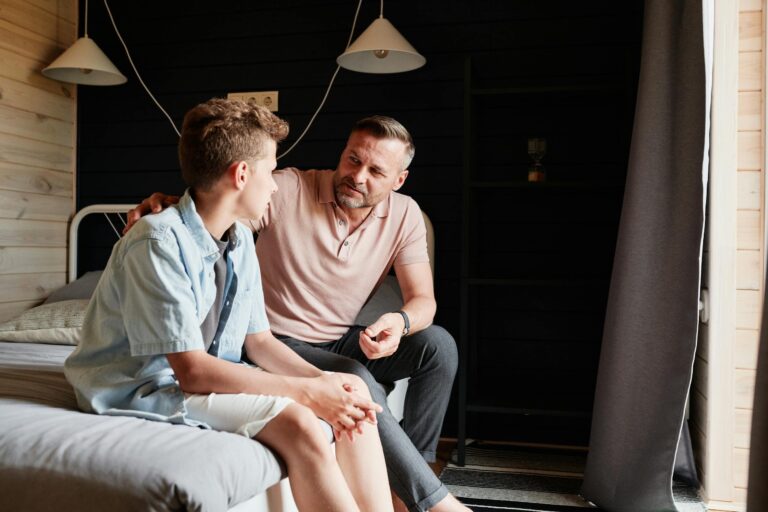

A fearful attachment style example looks like this: someone who desperately wants closeness but pulls away the moment they actually get it, not out of cruelty or manipulation, but because intimacy itself has become associated with pain. Fearful-avoidant attachment sits at the intersection of two opposing drives, high anxiety about abandonment and high avoidance of emotional closeness, creating a push-pull pattern that confuses partners and exhausts the person living it. It’s one of the most misunderstood attachment orientations, and for introverts who already process relationships through a careful, layered lens, it can be especially difficult to distinguish from personality.
What makes fearful attachment so hard to spot, and so hard to live with, is that it doesn’t look like one consistent thing. It shapeshifts depending on how safe a person feels in any given moment. One week, someone with this pattern might be warm, present, and emotionally available. The next, they’ve gone cold without explanation. Their partner is left wondering what changed. Often, nothing external changed at all. The closeness itself triggered the retreat.

Much of what I’ve written about introvert relationships touches on how we process emotional connection differently from the broader population. If you’re exploring the full picture of how introverts approach love and partnership, our Introvert Dating and Attraction hub covers everything from first attraction to long-term compatibility. Fearful attachment adds a specific layer to that picture, one worth examining carefully and honestly.
What Does Fearful-Avoidant Attachment Actually Mean?
Attachment theory, originally developed through the work of John Bowlby and later expanded by Mary Ainsworth and Mary Main, describes the mental models we build around closeness and safety based on early caregiving experiences. Adults generally fall into four orientations: secure (comfortable with both intimacy and independence), anxious-preoccupied (craving closeness, fearing abandonment), dismissive-avoidant (emotionally self-sufficient, uncomfortable with dependency), and fearful-avoidant, which is sometimes called disorganized attachment.
What’s your personality type?
Take our free 40-question assessment and get a detailed personality profile with dimension breakdowns, context analysis, and personalised insights.
Discover Your Type8-12 minutes · 40 questions · Free
Fearful-avoidant attachment combines high anxiety with high avoidance. That combination is significant because the other three styles each have an internal logic that holds together. Secure people trust that relationships are generally safe. Anxiously attached people believe closeness is good but fragile, so they pursue it intensely. Dismissive-avoidants have decided that emotional self-reliance is the safest path. Fearful-avoidants, by contrast, hold two contradictory beliefs at the same time: “I need you” and “you will hurt me.” That internal contradiction is what makes this pattern so disorienting for everyone involved.
A helpful framing from peer-reviewed research on adult attachment is that fearful-avoidant individuals often experienced caregivers who were simultaneously a source of comfort and a source of fear. The person who was supposed to be safe was also frightening or unpredictable. That leaves the nervous system in an impossible bind: approach or avoid? The answer, for many fearful-avoidants, becomes “both, at the same time.”
What Does a Fearful Attachment Style Look Like in Real Relationships?
Concrete examples help here, because abstract descriptions of “push-pull dynamics” don’t capture the lived texture of what this actually feels like.
Consider someone, call her Maya, who meets a partner she genuinely connects with. Early dating feels electric. She’s warm, engaged, curious. She texts back quickly. She suggests plans. Then, somewhere around the point where the relationship starts feeling real, something shifts. Her partner says “I love you.” Maya freezes. She doesn’t say it back. She becomes distant for two weeks. Her partner, understandably confused, asks what’s wrong. Maya says she doesn’t know. She genuinely doesn’t know. What happened neurologically is that the emotional stakes crossed a threshold her nervous system registered as dangerous, and her system did what it learned to do: create distance to create safety.
Or consider someone like Daniel, who has been in a long-term relationship for three years. His partner is patient, consistent, and loving. By any external measure, the relationship is healthy. Yet Daniel finds himself picking fights over small things, pulling back after moments of genuine connection, and sometimes fantasizing about being single, not because he doesn’t love his partner, but because the vulnerability of loving someone that much feels unbearable. The closeness triggers an alarm he can’t explain or turn off.
I’ve watched versions of this play out in professional settings too. In my years running advertising agencies, I managed a creative director who had an extraordinary gift for building client relationships. She could read a room, sense what people needed, and make everyone feel genuinely seen. But the moment a client became truly enthusiastic about her work, truly dependent on her creative vision, she would subtly sabotage the relationship. She’d miss a deadline. She’d push back unnecessarily on feedback that didn’t warrant it. She’d create friction where none needed to exist. It took me a long time to understand that her pattern wasn’t about the work at all. It was about the intimacy of being needed, and the terror that came with it.

Understanding how introverts fall in love and the patterns that emerge is genuinely useful context here, because introverts often move slowly into emotional vulnerability by nature. That natural caution can mask fearful attachment patterns, or it can be mistaken for them. The distinction matters.
Is Fearful Attachment the Same as Introversion?
No, and this confusion causes real harm. Introversion is about energy: introverts recharge through solitude and process the world internally. Avoidant attachment, including the fearful variety, is about emotional defense: it’s a nervous system strategy for managing the perceived danger of closeness. These are completely independent dimensions.
An introvert can be securely attached, fully comfortable with deep intimacy while also needing significant alone time. A highly extroverted person can be fearfully attached, craving constant social stimulation while simultaneously sabotaging close relationships. Conflating the two creates a situation where introverts pathologize their natural need for solitude, or where fearful attachment gets dismissed as “just being introverted.”
As an INTJ, I’ve had to do this work personally. My default mode is internal processing, careful observation, and deliberate emotional disclosure. Early in my career, I assumed that my reluctance to share feelings openly was just my personality type. And some of it was. But there were moments, particularly in close relationships, where I recognized something that wasn’t just introversion at work. The discomfort wasn’t about needing quiet time. It was about the specific fear that being truly known would lead to being truly rejected. That’s a different thing entirely.
The myths about introverts and extroverts that persist in popular culture make this harder. When every form of emotional reserve gets labeled “introversion,” people with genuine attachment wounds don’t get the support they actually need.
How Does Fearful Attachment Affect Emotional Expression?
One of the most painful aspects of fearful-avoidant attachment is that the feelings are absolutely present. This isn’t about emotional coldness or indifference. Fearful-avoidants typically feel things deeply, sometimes overwhelmingly so. What’s disrupted is the pathway between feeling and expressing.
When emotional intensity crosses a certain threshold, the nervous system activates what researchers describe as a deactivating strategy: suppress, withdraw, create distance. This happens automatically, below conscious awareness. The person isn’t choosing to shut down. Their system is doing what it learned to do when closeness felt dangerous.
This is worth holding onto if you’re the partner of someone with fearful attachment. Their withdrawal after a moment of genuine connection isn’t a statement about you or about the relationship’s value. It’s a fear response. That doesn’t make it easier to live with, but it changes what it means.
What makes this especially complicated is that fearful-avoidants often have a hyperactivated attachment system underneath the avoidance. Unlike dismissive-avoidants, who have genuinely suppressed much of their attachment anxiety, fearful-avoidants are often acutely aware of their fear of abandonment. They’re not indifferent to whether the relationship survives. They’re terrified it won’t. They just also can’t tolerate the vulnerability of staying close.
Exploring how introverts experience and express love feelings reveals that many introverts already struggle with the gap between what they feel internally and what they communicate externally. Add fearful attachment to that mix, and the gap can become enormous, not because the love isn’t there, but because every avenue for expressing it feels simultaneously necessary and threatening.

What Triggers the Push-Pull Cycle?
Certain moments reliably activate fearful attachment responses. Recognizing them doesn’t eliminate the pattern, but it creates the possibility of interrupting it consciously.
Milestone moments are common triggers. Saying “I love you” for the first time. Meeting a partner’s family. Moving in together. These are points where the relationship becomes undeniably real, where the stakes of potential loss increase. For fearful-avoidants, each milestone can feel less like a celebration and more like walking closer to a ledge.
Conflict is another significant trigger. Because fearful-avoidants often experienced caregivers who were both loving and frightening, conflict in relationships can activate old threat responses. A disagreement that a securely attached person would experience as uncomfortable but manageable might register as existential for someone with fearful attachment. Either they escalate disproportionately or they shut down completely, sometimes both in quick succession.
Moments of genuine tenderness can paradoxically be among the most activating triggers. A partner being unexpectedly kind, patient, or loving can feel overwhelming in a way that’s hard to explain. The vulnerability of receiving care, of being seen as someone worth caring for, can be more frightening than criticism. This is one of the cruelest features of fearful attachment: the very moments that should feel good can feel most dangerous.
For introverts who are also highly sensitive, these dynamics can be particularly intense. The complete guide to HSP relationships explores how heightened emotional sensitivity affects every layer of partnership, and the overlap between high sensitivity and fearful attachment creates a specific kind of relational complexity worth understanding on its own terms.
How Does Fearful Attachment Show Up Differently in Introverted Partners?
An introvert with fearful attachment has multiple legitimate reasons to seek solitude and emotional distance, and that layering makes the pattern harder to identify and address.
Consider how introverts naturally communicate affection. Many introverts show love through acts of service, quality time, thoughtful gestures, and quiet presence rather than verbal declarations. Understanding how introverts express affection through their love language is genuinely important context, because an introvert’s way of showing love can be misread as emotional unavailability even when their attachment is completely secure.
Add fearful attachment to an introverted personality, and the picture becomes more complex. Now you have someone who genuinely needs alone time for energy restoration, who processes emotions internally before expressing them, and who also has a nervous system that treats emotional closeness as a threat. Their partner may experience them as consistently unavailable without being able to identify which layer is driving any given moment of distance.
From my own experience as an INTJ, I can say that the internal landscape of this combination is genuinely disorienting. There were periods in my life where I couldn’t tell whether I was pulling back from a relationship because I needed solitude to recharge, because I was genuinely overwhelmed by the emotional demands of the situation, or because something older and less rational was telling me that closeness meant danger. Those are three different things requiring three different responses. Sorting them out took real work, and more honest self-examination than comes naturally to someone who prefers to process everything analytically.
Two introverts in a relationship together face a particular version of this challenge. When both partners naturally seek solitude and process emotions internally, the distance that fearful attachment creates can become normalized in ways that prevent either person from recognizing it as a problem. The dynamics of two introverts falling in love include genuine strengths, but they also include the risk of mutual avoidance becoming comfortable rather than examined.

Can Fearful Attachment Actually Change?
Yes. This is worth stating plainly because the alternative belief, that attachment style is fixed and permanent, causes people to give up on work that could genuinely transform their relational lives.
Attachment styles are not hardwired personality traits. They’re learned strategies, developed in response to early relational experiences, and they can shift through new experiences, conscious effort, and professional support. The concept of “earned secure” attachment is well-documented: people who began with insecure attachment orientations can develop the internal resources of secure attachment through meaningful relationships and therapeutic work.
Several therapeutic approaches have shown genuine effectiveness with fearful-avoidant patterns. Emotionally Focused Therapy works directly with attachment dynamics in couples and individuals. Schema therapy addresses the deep core beliefs that drive fearful attachment, particularly the belief that closeness inevitably leads to harm. EMDR can help process the specific traumatic memories that created the original threat associations. None of these are quick fixes, but they’re real paths.
Outside formal therapy, corrective relationship experiences matter enormously. A partner who responds to withdrawal with consistent patience rather than escalating anxiety or punishment can, over time, help rewire the association between closeness and danger. This requires the partner to have their own solid foundation, which is part of why handling conflict peacefully is so central to relationships where fearful attachment is present. Every conflict that gets resolved without catastrophe is evidence that the old threat model doesn’t apply here.
Self-awareness is the starting point for all of this. You can’t interrupt a pattern you can’t see. The work of recognizing your own fearful attachment responses, naming them in the moment rather than acting them out, is genuinely difficult but genuinely possible. I’ve watched people do it. I’ve done versions of it myself.
One resource worth consulting is the peer-reviewed literature on attachment and relationship outcomes, which consistently shows that attachment security is a dynamic rather than a fixed state. That’s encouraging news for anyone who has recognized themselves in the fearful-avoidant pattern.
What Should Partners of Fearful-Avoidants Understand?
Loving someone with fearful attachment is genuinely hard. That deserves acknowledgment before anything else.
The inconsistency is the most destabilizing part. Partners often describe feeling like they’re in a relationship with two different people: one who is warm, connected, and deeply present, and one who disappears without warning. The temptation is to try to figure out what you did wrong when the cold version shows up. Most of the time, you didn’t do anything wrong. You got close. That was enough to trigger the retreat.
Understanding the mechanics doesn’t mean accepting unlimited dysfunction. Partners have needs too, and a relationship where one person’s fear perpetually overrides the other’s need for connection isn’t sustainable without active work from both sides. The fearful-avoidant partner needs to be actively engaging with their patterns, whether through therapy, honest self-reflection, or both. The other partner needs to maintain their own sense of self rather than reshaping their entire emotional life around managing someone else’s triggers.
Early in my career at the agency, I had a client relationship manager on my team who was in a relationship with a fearful-avoidant partner. She described the experience as “always waiting for the other shoe to drop, even when everything was good.” That anticipatory anxiety, the hypervigilance that develops in response to a partner’s unpredictability, is a real cost. Partners of fearful-avoidants often develop their own secondary anxious responses, which then trigger more avoidance, which creates more anxiety. The cycle feeds itself.
What helps most, from what I’ve observed and from what the attachment literature consistently suggests, is a combination of clear communication about needs, genuine curiosity about the fearful-avoidant partner’s internal experience, firm but non-punitive boundaries, and professional support for both people. Anxious-avoidant pairings, including fearful-avoidant dynamics, can absolutely develop into secure functioning over time. They just rarely do so without intentional effort from both partners.
The Psychology Today perspective on dating introverts offers useful framing around patience and communication that applies directly here. And the signs of a romantic introvert explored in their communication research helps distinguish natural introvert tendencies from the specific patterns of fearful attachment, a distinction that matters for how partners respond.

Attachment patterns don’t exist in isolation from personality, and for introverts, the intersection of natural depth, sensitivity, and relational wiring creates a rich and sometimes complicated picture. There’s much more to explore across our Introvert Dating and Attraction hub, including the full range of how introverts build, sustain, and sometimes struggle in close relationships.
About the Author
Keith Lacy is an introvert who’s learned to embrace his true self later in life. After 20 years in advertising and marketing leadership, including running agencies and managing Fortune 500 accounts, Keith now channels his experience into helping fellow introverts understand their strengths and build fulfilling careers. As an INTJ, he brings analytical depth and authentic perspective to every article, drawing from both professional expertise and personal growth.
Frequently Asked Questions
What is a fearful attachment style example in everyday life?
A fearful attachment style example in everyday life might look like someone who pursues a relationship intensely at the start, becomes warm and emotionally available, then suddenly withdraws after a moment of genuine closeness, such as a partner expressing love or suggesting a significant commitment. The withdrawal isn’t calculated. It’s a nervous system response to emotional stakes that have crossed a threshold the person’s system registers as dangerous. They want the connection and fear it at the same time, which creates the characteristic push-pull pattern that confuses both partners.
How is fearful-avoidant attachment different from dismissive-avoidant attachment?
Both styles involve high avoidance of emotional closeness, but they differ significantly in anxiety levels. Dismissive-avoidant individuals have low attachment anxiety. They’ve genuinely suppressed much of their need for closeness and tend to feel comfortable with emotional self-sufficiency. Fearful-avoidants have high attachment anxiety alongside high avoidance. They’re acutely aware of their fear of abandonment and desperately want connection. They just also find closeness threatening. That combination of craving and fearing intimacy simultaneously is what makes fearful-avoidant attachment particularly disorienting to experience and to live alongside.
Can introverts have fearful attachment style, and how do you tell the difference?
Yes, introverts can absolutely have fearful attachment, and the two are completely independent dimensions. Introversion is about energy preference and information processing. Fearful attachment is about emotional defense strategies rooted in early relational experiences. The clearest way to distinguish them is to examine what’s driving the distance. Introversion-driven withdrawal is about recharging and feels restorative. Fearful attachment-driven withdrawal is triggered specifically by emotional intimacy and feels more like fleeing than resting. An introvert with secure attachment will feel comfortable with deep closeness while also genuinely needing alone time. A fearful-avoidant introvert will feel threatened by closeness itself, not just drained by excessive social stimulation.
Is fearful attachment style permanent, or can it change?
Fearful attachment is not permanent. Attachment styles are learned strategies, not fixed traits, and they can shift meaningfully through therapy, corrective relationship experiences, and conscious self-development. Therapeutic approaches including Emotionally Focused Therapy, schema therapy, and EMDR have all shown effectiveness with fearful-avoidant patterns. The concept of “earned secure” attachment describes people who began with insecure attachment orientations and developed secure functioning over time. Change is real and documented, though it generally requires sustained effort and often professional support rather than happening spontaneously.
What should a partner do when someone with fearful attachment pulls away?
When a fearful-avoidant partner withdraws, the most effective response is typically calm, consistent presence without pressure. Pursuing intensely or expressing frustration tends to confirm the fearful-avoidant’s belief that closeness leads to pain, which deepens the withdrawal. Completely backing away can trigger their abandonment anxiety, which may bring them back but doesn’t address the underlying pattern. What tends to work better is communicating clearly that you’re available and not going anywhere, while giving genuine space without punishing the withdrawal. Over time, consistent non-threatening responses to vulnerability can help shift the association between closeness and danger. Professional support, for both partners individually and potentially as a couple, significantly improves outcomes.