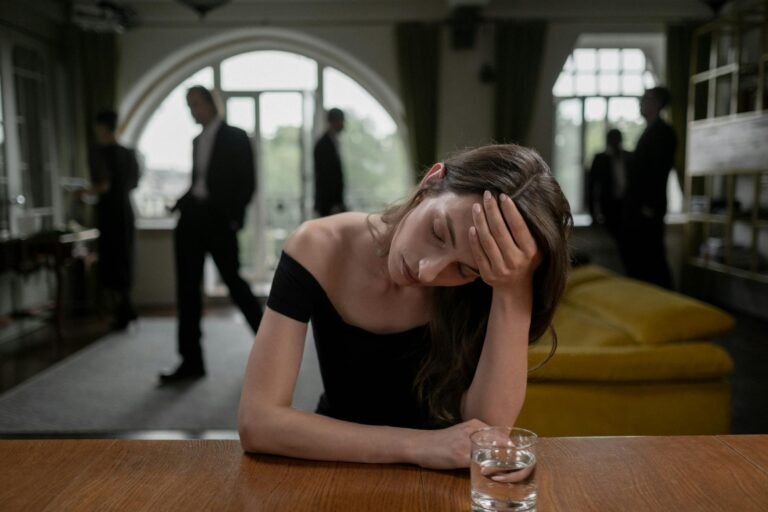

Some men genuinely need time alone between relationships, and for introverted men in particular, that space isn’t avoidance or fear. It’s how they process, recover, and prepare to show up fully in whatever comes next. When a guy needs time alone between relationships, he’s often doing the quiet, internal work that makes him a better partner down the road.
That said, this need is widely misunderstood, by partners, by friends, and sometimes by the men themselves. What looks like withdrawal or emotional unavailability is often something far more intentional: a deep internal reset that introverted men rely on to make sense of who they were in a relationship, who they want to be next, and what they actually need from a partner.

My own pattern after significant relationships ended was never to bounce back quickly. While colleagues and friends seemed ready to get back out there within weeks, I found myself needing months of deliberate solitude. At the time, I thought something was wrong with me. Now I understand it as one of the most honest things I could do for myself and for anyone who might come next.
If you’re trying to make sense of this pattern, whether you’re the guy who needs the space or someone trying to understand him, our Introvert Dating and Attraction hub covers the full landscape of how introverted people approach connection, from the first spark to long-term partnership.
Why Do Some Guys Actually Need Solitude After a Relationship Ends?
Not every man who takes time between relationships is emotionally stunted or running from something. For introverted men, solitude after a relationship ends is often a form of psychological maintenance, not avoidance.
What’s your personality type?
Take our free 40-question assessment and get a detailed personality profile with dimension breakdowns, context analysis, and personalised insights.
Discover Your Type8-12 minutes · 40 questions · Free
Relationships are energetically demanding for introverts. Even good ones. Even ones you wanted with your whole heart. When you’re wired to process the world internally, being in close partnership means constant negotiation between your inner life and someone else’s needs, rhythms, and emotional presence. That’s not a complaint. It’s just the reality of how introverts operate.
When a relationship ends, an introverted man isn’t just grieving the loss of a person. He’s often untangling months or years of emotional compression, the feelings he didn’t fully express, the needs he set aside, the parts of himself he muted to keep the peace or fit the relationship’s shape. That untangling takes time. It takes quiet.
I managed a team of account directors at one of my agencies, and one of them, an introverted guy who was excellent under pressure, went through a difficult breakup mid-campaign. He didn’t fall apart publicly. He got quieter. More precise. He needed less social time at the office, and he was more focused than ever. What looked like withdrawal was actually consolidation. He was pulling inward to stabilize. Within a few months, he was stronger than before. That’s a pattern I recognized because I’d lived it myself.
There’s something worth noting here about what Berkeley’s Greater Good Science Center has explored around solitude: time spent alone, when chosen rather than imposed, can support self-reflection, creativity, and emotional renewal. For introverted men processing the end of a relationship, chosen solitude isn’t emptiness. It’s productive quiet.
Is This a Personality Trait or an Emotional Avoidance Pattern?
This is the question worth sitting with honestly, because the line between healthy processing and avoidance isn’t always obvious, even to the person doing it.
Healthy solitude between relationships looks like this: a man uses the time to reflect on what worked and what didn’t, to reconnect with his own interests and values, to rebuild his sense of self outside of a partnership, and to approach the next relationship with more clarity. He’s not numb. He’s not hiding. He’s doing internal work that simply requires space.
Avoidance looks different. It tends to involve suppressing feelings rather than processing them, filling time with distractions to avoid sitting with grief, or using solitude as a permanent shield against future vulnerability. The man in avoidance mode doesn’t emerge more self-aware. He emerges more defended.
As an INTJ, I’m wired to analyze rather than emote, and I’ll be honest: that wiring made it easier for me to mistake analysis for processing. I could dissect a relationship intellectually, identify what went wrong, assign causes and effects, and feel like I’d done the work. But actual emotional processing, the kind that involves sitting with grief or longing or regret without immediately trying to solve it, that took longer to learn. The solitude I needed wasn’t just for thinking. It was for feeling.
Understanding the difference matters, both for introverted men and for the people who care about them. The patterns that emerge when introverts fall in love are often rooted in this same internal architecture: deep processing, careful pacing, and a need for emotional safety before full vulnerability.

How Long Is Normal, and When Does It Become a Problem?
There’s no universal answer here, and anyone who gives you a specific number of months is probably oversimplifying. The duration of healthy solo time after a relationship depends on how long the relationship lasted, how it ended, how emotionally invested the person was, and how much self-awareness they bring to the process.
What I can say from experience: after a long-term relationship ended in my mid-thirties, I needed close to a year before I felt genuinely ready to be a good partner to someone new. That wasn’t depression. It wasn’t damage. It was recalibration. My internal world had been shaped around another person for years, and reshaping it took time.
A shorter relationship might need only weeks of solo time. A marriage or a multi-year partnership might warrant much longer. The signal that it’s becoming a problem isn’t the length of time itself. It’s whether the person is actually moving through something or simply standing still.
Signs that the solitude is healthy and productive: the person is reconnecting with friendships, pursuing personal interests, developing self-awareness about past relationship patterns, and feeling progressively more settled rather than more isolated.
Signs that it may have shifted into something less healthy: deepening isolation, bitterness or cynicism about relationships in general, complete emotional shutdown, or using “I need time alone” as a permanent deflection from any future intimacy.
The CDC’s research on social connectedness is clear that prolonged social isolation carries real health risks. The goal for introverted men isn’t permanent solitude. It’s intentional, time-limited solitude that serves a genuine purpose and eventually opens back toward connection.
What Is He Actually Doing With All That Alone Time?
Partners and potential partners often wonder this, and it’s a fair question. When an introverted man says he needs time alone between relationships, what does that actually mean in practice?
For most introverted men I’ve known, including myself, that time involves several overlapping processes. There’s the grief work: letting the loss settle, feeling it without rushing past it. There’s the identity reclamation: remembering who you are when you’re not defined by a relationship, returning to your own interests, rhythms, and values. There’s the pattern analysis: honestly examining what you brought to the relationship, what you avoided, what you’d do differently.
And then there’s something harder to name. A kind of internal quiet that introverts need to feel like themselves again. Relationships, even wonderful ones, involve a constant low-level hum of attunement to another person. When that ends, the silence can feel strange at first, and then gradually, it feels like coming home.
One of the things I did during my longest solo stretch was return to reading and writing, habits I’d let atrophy during a relationship where evenings were always shared. That time alone wasn’t lonely. It was restorative in a way that I genuinely couldn’t have accessed while coupled. It gave me back parts of myself I hadn’t realized I’d been neglecting.
This connects directly to how introverts express love and what they need in return. Understanding how introverts show affection through their love language often starts with understanding what they need to feel whole on their own first.

How Does This Affect the People Who Are Interested in Him?
This is where things get genuinely complicated. A guy who needs significant time alone between relationships isn’t necessarily unavailable forever. But to someone who’s interested in him, the waiting period can feel confusing, even painful.
The person on the outside of that solitude often struggles with a particular kind of uncertainty: is he not interested, or is he just not ready? Those are very different things, and introverted men aren’t always great at communicating which one is true, partly because they may not fully know themselves.
What I’ve found, both from my own experience and from watching this dynamic play out among people I know, is that clarity is an act of respect. If you’re an introverted man who needs time before you can be present in a new relationship, saying so honestly, even if it’s uncomfortable, is far kinder than keeping someone in ambiguous waiting.
Something like: “I’m genuinely interested in you, and I’m also not in a place where I can show up the way I’d want to. I need a few more months.” That’s not rejection. That’s self-awareness communicated with honesty. Most people can respect it, even if it’s hard to hear.
The emotional complexity here is real. Understanding how introverts experience and express love feelings can help both sides of this dynamic make more sense of what’s actually happening beneath the surface.
A Psychology Today piece on dating introverts points out that introverted partners often need more time to feel safe before opening up, and that patience from a potential partner isn’t weakness. It’s often exactly what allows the relationship to eventually develop real depth.
Does Being Highly Sensitive Make This Need Even Stronger?
Many introverted men are also highly sensitive people, and if that describes you, the need for recovery time between relationships tends to run even deeper.
Highly sensitive people process emotional experiences more intensely and more thoroughly than the general population. A relationship ending isn’t just a logistical change in their life. It’s a profound emotional event that reverberates through their entire nervous system. The grief is deeper. The self-examination is more thorough. And the recovery, done properly, takes longer.
I’ve worked alongside several highly sensitive men over my years running agencies, and the ones who tried to skip their recovery time between relationships almost always struggled. They’d enter new relationships while still emotionally raw, and that rawness would create problems: hypersensitivity to conflict, difficulty trusting, a tendency to project old wounds onto new partners.
The ones who honored their need for space came back to relationships more grounded. They knew themselves better. They communicated more clearly. They were, in a word, ready.
If you identify as highly sensitive, the complete HSP relationships dating guide goes into depth on how sensitivity shapes every stage of romantic connection, including the in-between spaces. And when conflict does arise in new relationships, having tools for working through disagreements peacefully as an HSP makes a significant difference in how sustainable those relationships become.
There’s also emerging work in psychology around how emotional sensitivity intersects with relationship recovery. A piece in Frontiers in Psychology explores how individual differences in emotional processing affect how people move through relationship transitions, which offers useful context for understanding why some people simply need more time than others.

What Happens When Two Introverts Are handling This Together?
There’s an interesting dynamic that emerges when both people in a potential new relationship are introverts who’ve recently come out of something. Both may need solo time. Both may be moving slowly. Both may be simultaneously drawn toward connection and protective of their solitude.
This can actually work beautifully, if both people are honest about where they are. Two introverts who understand each other’s need for space can build something at a pace that feels natural rather than pressured. They’re less likely to push each other before either is ready.
The risk is that both people stay in a comfortable holding pattern indefinitely. When neither person is pushing toward deeper connection, it’s possible to have something that feels like a relationship but never quite becomes one. That comfortable distance can become its own kind of avoidance.
The patterns that emerge when two introverts fall in love are worth understanding before you find yourself in that dynamic. There’s real beauty in it, and real challenges that require intentional communication to work through.
What I’ve seen work in these situations is when one person, even if they’re introverted, is willing to be the one who names what’s happening and asks for more. That vulnerability can feel enormous for an introvert, but it’s often what moves things from potential to real.
How Can You Tell When He’s Actually Ready to Date Again?
There are signs, and they’re worth knowing whether you’re the man assessing his own readiness or someone trying to read where he actually is.
Genuine readiness in an introverted man tends to look like this: he talks about his past relationship with some equanimity, not bitterness or raw grief, but also not forced cheerfulness. He has a clear sense of what he wants and what he’s learned. He’s curious about you specifically, not just using you as a distraction or a way to feel less alone. He’s present in conversations rather than perpetually somewhere else in his head.
He also tends to be more direct. Introverted men who’ve done their solo work often come back to dating with a clarity they didn’t have before. They know what they’re looking for. They’re less likely to waste time on connections that don’t feel right, and more willing to invest in ones that do.
One thing that helped me recognize my own readiness was when I stopped thinking about the past relationship as a failure and started seeing it as information. Not a wound to carry, but a set of insights to apply. That shift took time. But once it happened, I was genuinely open in a way I hadn’t been before.
Psychology Today’s exploration of what it means to be a romantic introvert captures some of this well: introverts in love tend to be deeply committed once they’re in, but that commitment requires a foundation of genuine readiness. Rushing past the solo phase often means entering a relationship before that foundation exists.
What Should You Do If You’re the One Waiting?
If you care about someone who’s in this in-between space, the most important thing you can do is be honest with yourself about what you can actually handle.
Waiting for someone who needs time is a legitimate choice, and sometimes it leads to something genuinely worth waiting for. But it requires honesty about your own needs. You can’t wait indefinitely while pretending you don’t have a timeline. That’s not fair to you, and it’s not actually fair to him either.
What tends to work is having a real conversation. Not an ultimatum, but a genuine exchange: “I’m interested in you. I want to understand where you are. And I want to be honest that I have my own needs too.” That kind of directness can feel uncomfortable, but it creates the conditions for something real rather than something ambiguous.
There’s also value in continuing to live your own full life while someone you’re interested in does their solo work. Putting your own life on pause while waiting for someone else to be ready is a pattern worth examining. The healthiest version of this situation involves two people who are both living fully, with genuine interest in each other, and a willingness to see what develops when the timing is right.
Attachment styles play a real role here. Research published through PubMed Central on attachment patterns and relationship recovery offers useful context for understanding why some people need more transitional space than others, and why that need varies so significantly between individuals.

How Does This Solo Time Shape Who He Becomes as a Partner?
consider this I want to leave you with, because I think it’s the part that gets missed most often in these conversations.
The introverted man who honors his need for solitude between relationships and actually does the internal work during that time tends to become a significantly better partner than he was before. Not because the relationship that ended was bad, but because he used the space to understand himself more fully.
He knows his patterns. He understands his needs. He’s more capable of communicating both. He’s less likely to repeat the same dynamic in a new relationship because he’s actually examined what created that dynamic in the first place.
There’s also something that happens to emotional availability when it’s been properly restored rather than just suppressed. An introverted man who’s had the time he needed is genuinely more present, more open, and more capable of the kind of depth that makes relationships worth having.
I’ve watched this in myself. The relationships I entered too quickly after others ended were shallower, more defensive, and in the end less fulfilling for everyone involved. The ones I entered after real recovery had a different quality from the start. More honest. More grounded. More capable of handling difficulty without falling apart.
That’s what the solo time is really for. Not to avoid connection, but to make genuine connection possible. Work published through PubMed Central on emotional regulation and relationship quality supports this: people who process emotional experiences more thoroughly before entering new relationships tend to report higher relationship satisfaction over time.
There’s more to explore across every dimension of how introverts approach love and dating. Our complete Introvert Dating and Attraction hub is a good place to keep reading if this resonates with you.
About the Author
Keith Lacy is an introvert who’s learned to embrace his true self later in life. After 20 years in advertising and marketing leadership, including running agencies and managing Fortune 500 accounts, Keith now channels his experience into helping fellow introverts understand their strengths and build fulfilling careers. As an INTJ, he brings analytical depth and authentic perspective to every article, drawing from both professional expertise and personal growth.
Frequently Asked Questions
Why does a guy need so much time alone after a breakup?
Introverted men process emotional experiences internally, which means the end of a relationship triggers a deep internal review rather than an outward processing period. They’re untangling emotional compression, reclaiming their sense of identity, and rebuilding the internal quiet they need to function well. This process genuinely takes time, and skipping it tends to create problems in whatever comes next.
Is it a red flag when a guy says he needs time alone between relationships?
Not inherently. The need for solo time between relationships is a healthy pattern for many introverted men, and it often signals self-awareness rather than emotional unavailability. The question worth asking is whether he’s using the time to actually process and grow, or whether “needing time alone” has become a permanent deflection from any future intimacy. The former is healthy. The latter may warrant a more honest conversation.
How long should you wait for an introverted guy who needs space?
There’s no universal answer, but the most important thing is to be honest with yourself about what you can genuinely handle. Waiting indefinitely while pretending you have no timeline isn’t fair to you or to him. Having a direct, non-ultimatum conversation about where both of you are tends to produce more clarity than continued ambiguity. If he can’t give you a realistic sense of where he’s headed, that’s information worth having.
Does needing time alone between relationships mean he doesn’t want a relationship?
Not at all. For most introverted men, the solo period between relationships is specifically about preparing to be a good partner in the next one. The desire for connection is still there. What’s needed is the internal space to show up for that connection fully rather than in a depleted or unprocessed state. The man who takes this time seriously often becomes a more committed and present partner once he’s ready.
How can you tell when an introverted guy is finally ready to date again?
Genuine readiness tends to show up as equanimity about the past rather than raw grief or forced cheerfulness, a clear sense of what he’s looking for, and real curiosity about you as a specific person rather than connection as a general concept. He’ll tend to be more direct and more present. The quality of his attention changes. He stops seeming like he’s somewhere else and starts actually showing up in the conversation in front of him.