
A personality attraction test works by mapping your core traits, values, and relational needs against the kinds of people who tend to complement or mirror them, giving you a clearer picture of why certain connections feel electric and others feel flat. It’s less about finding a “perfect match” and more about understanding the invisible pull that draws you toward specific personalities, communication styles, and emotional rhythms. For introverts especially, this kind of self-awareness can change everything about how you approach relationships.
Contrast Statement: Everyone in my industry assumed I was drawn to bold, fast-talking extroverts who could hold a room. They were wrong. The people I genuinely connected with, the ones I wanted to work alongside and eventually build something with, were almost always the quiet ones. The ones who listened first. The ones who thought before they spoke. It took me a long time to understand that this wasn’t coincidence. It was personality.
After two decades running advertising agencies, I’ve observed hundreds of professional relationships and a fair number of personal ones. What I’ve come to believe is that personality attraction isn’t random. It follows patterns. And once you understand your own patterns, you stop wondering why certain people light you up and others leave you cold.
If you’re curious about the broader picture of how introverts experience romantic connection, our Introvert Dating and Attraction hub covers the full range of topics that shape how introverts find, build, and sustain meaningful relationships. This article zooms in on one specific lens: what your personality type actually reveals about who you’re drawn to, and how a personality attraction test can help you make sense of it.

What Does a Personality Attraction Test Actually Measure?
Most personality attraction tests draw from established frameworks like the Myers-Briggs Type Indicator, the Big Five personality traits, or attachment theory models. They’re designed to surface the qualities you value most in a partner, the communication styles you respond to, and the relational dynamics that feel natural versus draining to you.
What’s your personality type?
Take our free 40-question assessment and get a detailed personality profile with dimension breakdowns, context analysis, and personalised insights.
Discover Your Type8-12 minutes · 40 questions · Free
What makes these tests genuinely useful isn’t the label they assign you. It’s the reflection they prompt. When I first took a structured personality assessment in my early thirties, the results didn’t shock me. What surprised me was how clearly the report described my relational patterns, specifically, my tendency to gravitate toward people who were intellectually intense but emotionally contained. People who didn’t need to fill every silence. People who communicated through precision rather than volume.
As an INTJ, I process the world through systems and frameworks. My attraction patterns follow the same logic. I’m drawn to people who have a clear internal world, who think before reacting, and who value quality of conversation over quantity of it. A personality attraction test helped me articulate what I’d been doing instinctively for years.
For introverts broadly, these tests tend to surface a few consistent themes. A pull toward depth over breadth in conversation. A preference for partners who respect solitude without interpreting it as rejection. An attraction to people who show care through actions and presence rather than grand declarations. Understanding these patterns matters because it helps you stop second-guessing connections that feel right but don’t look like what culture tells you attraction is supposed to look like.
Psychology Today’s exploration of romantic introversion captures this well, noting that introverts often experience attraction as a slow-building recognition rather than an immediate spark. That distinction matters enormously when you’re trying to interpret your own responses to people.
Why Do Introverts and Extroverts Sometimes Attract Each Other?
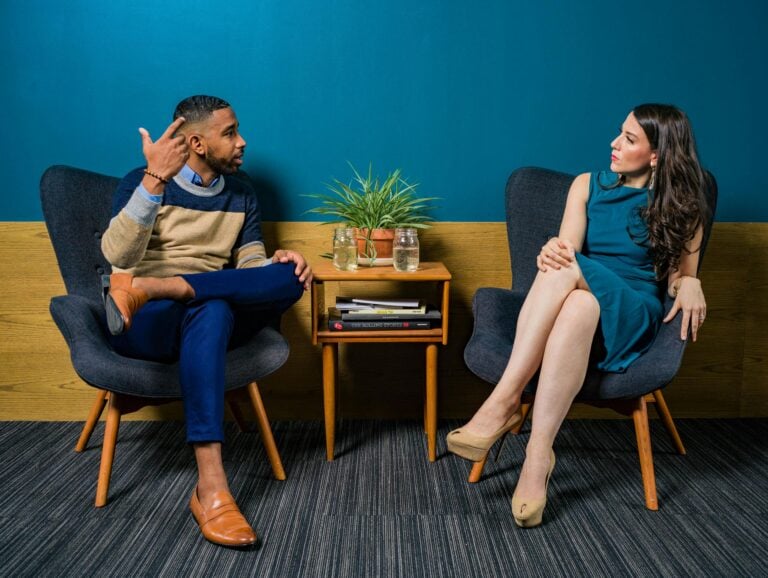
One of the most common results people report from personality attraction tests is an unexpected pull toward someone whose social style is the opposite of their own. Introverts attracted to extroverts. Extroverts drawn to introverts. It’s a pattern so common it’s almost a cliché, yet the reasons behind it are more nuanced than “opposites attract.”
From my own experience managing teams, I watched this dynamic play out constantly. Some of my most effective creative partnerships were between introverted strategists and extroverted account executives. The introvert brought depth, precision, and a willingness to sit with complexity. The extrovert brought energy, momentum, and the ability to translate ideas into action in a room full of skeptical clients. Neither could do the other’s job as well. The complementarity was real.
In romantic relationships, a similar dynamic can emerge. An extrovert’s social ease can feel genuinely freeing to an introvert who finds small talk exhausting. The extrovert handles the party. The introvert handles the depth. Each compensates for what the other finds difficult. At its best, this is a genuinely functional pairing.
At its worst, it becomes a performance. The introvert slowly depletes themselves trying to match the extrovert’s social pace. The extrovert grows frustrated by the introvert’s need for solitude, interpreting it as withdrawal or disinterest. What felt like complementarity in the early stages becomes friction once the novelty fades.
Understanding how introverts fall in love and the patterns that emerge can help you recognize whether an introvert-extrovert attraction is genuinely complementary or whether it’s asking one person to consistently work against their nature. That distinction is worth examining before you’re three years into a relationship wondering why you’re always tired.

What Do Introvert-Introvert Pairings Look Like in Practice?
When two introverts are drawn to each other, the attraction often feels different from the introvert-extrovert dynamic. Quieter. More gradual. Built on shared silences and the mutual relief of not having to perform. Many introverts describe meeting another introvert as the first time they’ve felt genuinely understood rather than merely tolerated.
My closest friendships, and the most meaningful romantic connection I’ve experienced, have all followed this pattern. There’s a particular quality to a conversation with someone who processes the way you do. No rushing to fill pauses. No pressure to be “on.” A shared preference for one long, substantive conversation over ten shallow ones.
That said, introvert-introvert pairings carry their own specific challenges. Two people who both tend to internalize emotions can create a dynamic where important conversations never quite happen. Both partners wait for the other to initiate. Both assume the other needs space. Both interpret the other’s quiet as contentment when it might be suppressed frustration.
The 16Personalities piece on the hidden challenges of introvert-introvert relationships addresses this directly, pointing out that shared introversion can sometimes mean shared avoidance of conflict rather than shared comfort. It’s a distinction worth sitting with if you’re in or considering this kind of pairing.
A deeper look at what happens when two introverts fall in love reveals both the profound ease and the specific friction points that come with this pairing. Awareness of both is what makes the difference between a relationship that deepens over time and one that quietly stagnates.
How Does Your MBTI Type Shape Your Attraction Patterns?
The Myers-Briggs framework, whatever its limitations as a clinical tool, offers a genuinely useful vocabulary for describing attraction patterns. Each of the four dichotomies, Introversion versus Extraversion, Intuition versus Sensing, Thinking versus Feeling, and Judging versus Perceiving, shapes what you find compelling in another person.
As an INTJ, my attraction patterns are fairly consistent. I’m drawn to people who lead with ideas rather than small talk. People who have an internal framework for the world and can articulate it. People whose emotional expression is real but measured, not performed for the room. I’ve watched myself lose interest in otherwise appealing people the moment conversation stays permanently surface-level. It’s not snobbery. It’s just how my wiring works.
INFPs and INFJs, types I’ve managed and worked alongside throughout my career, tend to describe their attraction patterns differently. The INFPs on my creative teams were often drawn to people who could match their emotional depth and tolerate their idealism without trying to logic it away. The INFJs were frequently attracted to people who needed their insight, partners who were smart and capable but somehow lost, people the INFJ could understand better than they understood themselves.
ISFPs and ISFJs tend to be drawn to partners who create stability and warmth, people who show up consistently and make the relationship feel safe. ISTJs often gravitate toward reliability and shared values over emotional intensity. Each type carries a distinct fingerprint of what it finds attractive, and a good personality attraction test will surface those fingerprints clearly.
Truity’s breakdown of personality type distribution is worth reading if you want context for how common or rare your type is, which matters when you’re wondering why certain connections feel hard to find. Some types are genuinely less common, and knowing that shifts the expectation from “something is wrong with me” to “I’m looking for something specific.”

What Role Does Emotional Sensitivity Play in Personality Attraction?
Some introverts carry an additional layer of sensitivity that shapes their attraction patterns in specific ways. Highly sensitive people, those who process sensory and emotional information more deeply than average, often find that their relational needs are more precise than what standard introversion alone would predict.
HSPs tend to be attracted to partners who are emotionally attuned, who notice the small things, who don’t dismiss sensitivity as weakness. They’re often repelled by people who are dismissive, emotionally blunt, or who use sarcasm as a primary mode of connection. The attraction calculus for an HSP includes a strong filter for emotional safety.
I’ve worked with several highly sensitive people over the years, and what struck me most was how precisely they could identify the feeling of a room, a meeting, a relationship. One creative director I managed could tell within minutes whether a client presentation was going to go sideways, not from the content but from the emotional temperature of the people in the room. That sensitivity was an extraordinary professional asset. In her personal life, she told me once, it made dating feel exhausting because she could feel everything the other person was feeling before they’d said a word.
If you identify as an HSP or suspect you might, the complete HSP relationships dating guide is worth your time. It addresses the specific ways high sensitivity shapes attraction, compatibility, and the kind of relational environment where HSPs genuinely thrive.
One thing worth noting is the distinction between introversion and social anxiety, which are often conflated. Healthline’s overview of introversion versus social anxiety clarifies this clearly. Introversion is a preference for less stimulation. Social anxiety is a fear-based response. Understanding which one is driving your relational patterns matters, because the solutions are different.
How Do Introverts Express Attraction Differently Than Extroverts?
One of the most consistent findings from personality attraction research is that introverts express interest in ways that are easy to miss if you’re expecting extroverted signals. No grand gestures. No immediate declarations. Instead, a gradual increase in attention, a willingness to share something personal, a quiet consistency that builds over time.
When I was interested in someone, I didn’t send flowers or make sweeping statements. I remembered what they said two weeks ago and brought it back into conversation. I suggested specific things I thought they’d genuinely enjoy rather than generic date ideas. I carved out focused time with no distractions, which, for someone running a busy agency, was actually a significant signal. None of this looked like what movies tell you attraction looks like. But it was real.
Understanding how introverts show affection through their love language can reframe what you’re looking for in a partner. If you’re waiting for someone to express interest the way an extrovert would, you might miss the quieter signals entirely. And if you’re an introvert wondering whether your own expressions of interest are landing, it helps to know that your style is valid even when it’s subtle.
A PubMed Central study on personality traits and relationship satisfaction points to consistency and attentiveness as strong predictors of long-term relationship quality, qualities that introverts tend to bring naturally to their closest relationships. The slow-build attraction style that characterizes many introverts isn’t a liability. It’s often a sign of something more durable.
Can Personality Attraction Tests Help Introverts Choose Better Partners?
The honest answer is: sometimes yes, and sometimes they create a false sense of certainty. A personality attraction test is a tool for self-awareness, not a compatibility algorithm. What it does well is help you identify patterns you might not have consciously recognized. What it does poorly is predict how two specific people will actually function together over time.
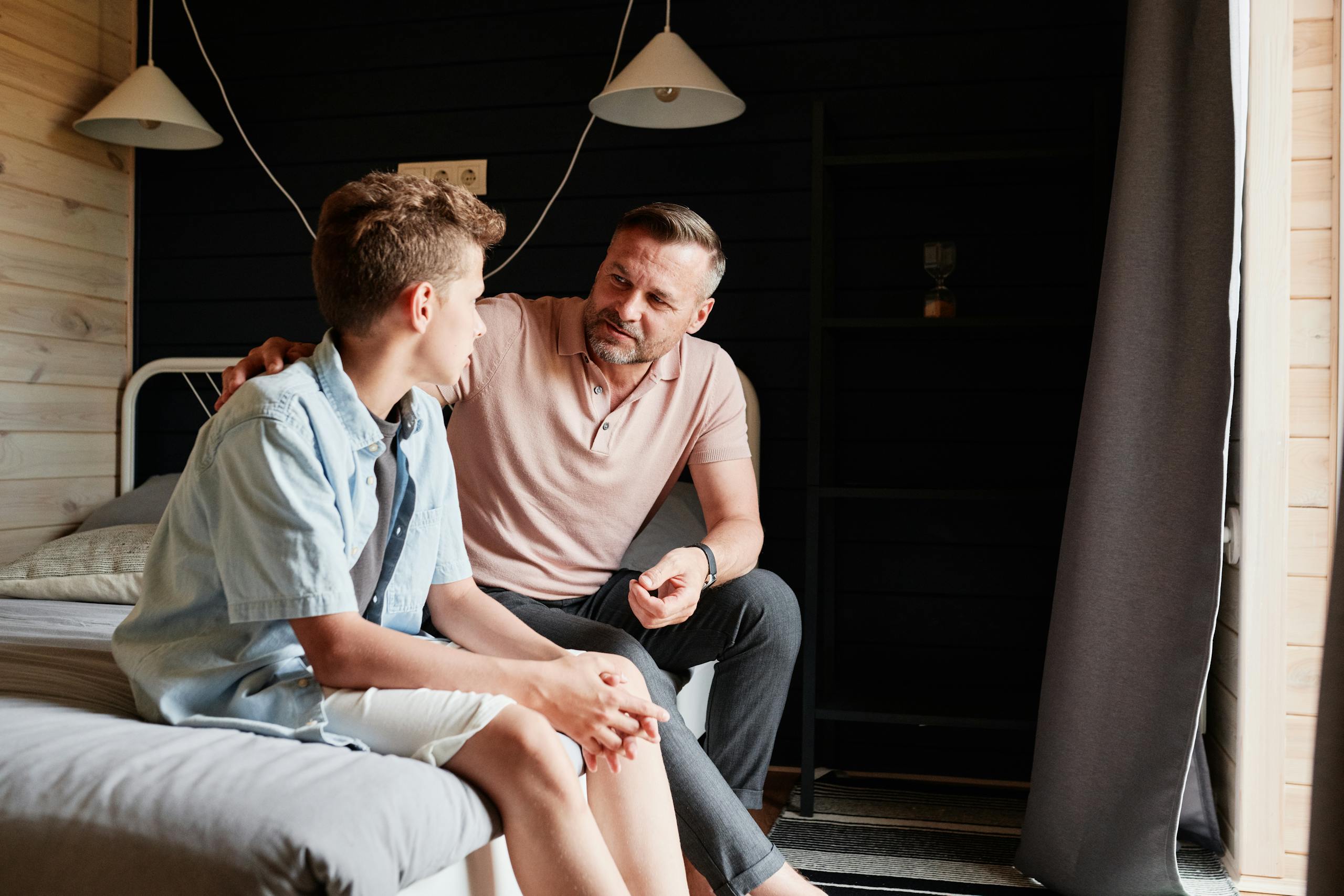
What I’ve found more useful than any single test result is the conversation that the test prompts. When I’ve taken these assessments with people I was close to, the value wasn’t in the labels. It was in what the labels opened up. Suddenly we were talking about how we each processed conflict, what we needed when we were overwhelmed, what expressions of care actually landed versus which ones felt hollow. That conversation is worth more than the score.
For introverts who are also handling the specific emotional complexity of new relationships, understanding how introvert love feelings work and how to handle them adds another layer of useful self-knowledge. The way introverts experience early-stage attraction, often more quietly and more intensely than they let on, is worth understanding before you’re in the middle of it.
Online dating platforms have added another dimension to this question. Truity’s examination of introverts and online dating makes a compelling point: the written, asynchronous nature of online communication actually plays to introvert strengths. Personality-based matching tools within these platforms are essentially running a version of an attraction test, filtering for stated values and communication styles before the first conversation even happens.
What Happens When Personality Attraction Meets Real Conflict?
Attraction gets you in the door. How you handle conflict determines whether you stay. And for introverts, the conflict piece is often where personality differences become most visible and most costly.
My default under conflict, shaped entirely by my INTJ wiring, is to withdraw and analyze before responding. I go quiet. I need time to process what happened, what I actually think about it, and what I want to say. To someone who processes conflict externally, through talking it out in real time, my withdrawal reads as stonewalling. I’ve had this specific conversation more than once in my life, on both sides of a desk and across a dinner table.
The challenge is that personality attraction tests rarely prepare you for this. They tell you who you’re drawn to. They don’t always tell you how two people with different conflict styles will manage the moments when the relationship is under pressure. That gap matters.
For highly sensitive people especially, conflict carries a particular weight. The HSP guide to handling conflict peacefully offers practical frameworks for managing disagreements in a way that doesn’t require either person to override their nature. That’s a more useful goal than trying to fight like an extrovert when you’re wired as an introvert.
A broader perspective on personality and relationship dynamics comes from research on personality compatibility and long-term relationship outcomes. The findings suggest that shared values and complementary communication styles matter more over time than initial similarity of type. Which means the attraction test is a starting point, not a destination.
Psychology Today’s guide to dating an introvert captures something I think is genuinely important: the most successful relationships with introverts are built by partners who understand that quiet isn’t absence. It’s presence in a different register. When both people in a relationship understand this, conflict becomes less threatening because the silence between arguments isn’t read as abandonment.

How to Use a Personality Attraction Test Without Over-Relying on It
The most productive way to approach a personality attraction test is as a conversation starter with yourself. Take the results seriously enough to sit with them. Don’t treat them as a checklist to apply to every person you meet.
What the test surfaces are tendencies, not certainties. My INTJ profile accurately describes my relational preferences in broad strokes. It doesn’t account for the specific person across from me, their history, their growth, the particular way they’ve learned to show up in relationships. Two people with the same type can be completely different partners. Two people with “incompatible” types can build something extraordinary if they’re both self-aware and genuinely invested.
What I’d suggest using the test for is this: identify the two or three relational needs that feel non-negotiable to you. For me, those are intellectual engagement, respect for solitude, and emotional honesty without performance. Every meaningful relationship in my life, professional and personal, has honored those three things. The ones that didn’t, regardless of how promising they looked on paper, eventually fell apart.
Once you know your non-negotiables, you can use the attraction test as a filter rather than a formula. You’re not looking for someone who scores the same as you on every dimension. You’re looking for someone whose core values and relational style can coexist with yours without either person consistently working against their nature.
That’s a more honest and more useful goal than finding your “type match.” And it’s one that introverts, with their natural capacity for self-reflection and their preference for depth over breadth, are actually very well positioned to pursue.
There’s a lot more to explore across all the dimensions of introvert attraction and connection. Our full Introvert Dating and Attraction hub brings together everything from early-stage attraction to long-term compatibility, written specifically for people who approach relationships the way introverts do: thoughtfully, selectively, and with a genuine investment in getting it right.
About the Author
Keith Lacy is an introvert who’s learned to embrace his true self later in life. After 20 years in advertising and marketing leadership, including running agencies and managing Fortune 500 accounts, Keith now channels his experience into helping fellow introverts understand their strengths and build fulfilling careers. As an INTJ, he brings analytical depth and authentic perspective to every article, drawing from both professional expertise and personal growth.
Frequently Asked Questions
What is a personality attraction test?
A personality attraction test is an assessment tool designed to help you identify the traits, communication styles, and relational dynamics you’re naturally drawn to in a partner. Drawing from frameworks like Myers-Briggs, the Big Five, or attachment theory, these tests surface patterns in your attraction history and help you articulate what you genuinely need in a relationship versus what you’ve been conditioned to think you should want.
Are introverts more attracted to other introverts or to extroverts?
Both pairings are common among introverts, and both carry distinct advantages and challenges. Some introverts are drawn to extroverts for their social ease and outward energy, finding it genuinely freeing. Others feel most understood by fellow introverts who share their preference for depth and quiet. What matters more than introvert versus extrovert is whether both people’s core relational needs can coexist without one person consistently compromising their nature.
How accurate are personality attraction tests?
Personality attraction tests are most accurate as tools for self-reflection rather than predictive compatibility algorithms. They tend to surface genuine patterns in your relational preferences and help you identify non-negotiable needs. They’re less reliable at predicting how two specific people will function together over time, since individual history, emotional maturity, and shared values play a larger role in long-term compatibility than type matching alone.
Do highly sensitive people have different attraction patterns than other introverts?
Yes, often meaningfully so. Highly sensitive people tend to have a more precise filter for emotional safety in attraction. They’re typically drawn to partners who are emotionally attuned and consistent, and repelled by dismissiveness or emotional bluntness. Because HSPs process sensory and emotional information more deeply, they often need a relational environment that feels genuinely safe before attraction can fully develop. Their non-negotiables tend to be more specific than those of introverts who don’t carry the HSP trait.
How do introverts typically show attraction to someone they like?
Introverts tend to express attraction through focused attention, remembered details, and consistent presence rather than grand gestures or immediate declarations. Signals include bringing back something the other person mentioned weeks ago, carving out uninterrupted time, asking questions that go deeper than surface conversation, and a gradual willingness to share their own inner world. These signals are real and meaningful, but they’re easy to miss if you’re expecting extroverted expressions of interest.