
Attachment styles and love patterns are deeply connected, and understanding that connection can reshape how you see your closest relationships. Your attachment style, shaped by early experiences and refined through adult relationships, influences how you seek closeness, handle conflict, and interpret your partner’s behavior. For introverts who already process emotion with unusual depth and care, recognizing these patterns adds a powerful layer of self-awareness to how you approach intimacy.
The correlation between attachment theory and love isn’t a neat formula. It’s a lens, one that helps explain why some connections feel safe and expansive while others feel like walking a tightrope in the dark.

Much of what I write about on this site sits at the intersection of personality and relationship psychology, and if you want the broader picture, our Introvert Dating and Attraction hub is a good place to start. It covers everything from first impressions to long-term compatibility, and this article fits squarely within that larger conversation.
What Does Attachment Theory Actually Mean for How You Love?
Attachment theory, originally developed by John Bowlby and later expanded by Mary Ainsworth, describes how early bonds with caregivers shape our expectations of closeness, safety, and emotional availability. As adults, those early templates don’t disappear. They get activated every time we feel vulnerable with another person.
What’s your personality type?
Take our free 40-question assessment and get a detailed personality profile with dimension breakdowns, context analysis, and personalised insights.
Discover Your Type8-12 minutes · 40 questions · Free
There are four primary adult attachment orientations, each defined by two dimensions: anxiety (how much you fear rejection or abandonment) and avoidance (how much you suppress closeness and emotional dependency).
Secure attachment sits at low anxiety and low avoidance. Anxious-preoccupied attachment involves high anxiety and low avoidance. Dismissive-avoidant attachment involves low anxiety and high avoidance. Fearful-avoidant, sometimes called disorganized, involves high anxiety and high avoidance. Each of these shapes not just who you’re drawn to, but how you behave once you’re actually in a relationship.
I want to be careful here about something I see misrepresented constantly, especially in pop psychology content. Being an introvert does not make you avoidantly attached. These are entirely separate constructs. I’m an INTJ. I need significant time alone to function well, and I’ve always been selective about who gets close to me. That’s introversion. Avoidant attachment is something different. It’s an emotional defense strategy, often unconscious, that keeps intimacy at arm’s length because closeness feels threatening at a nervous system level. An introvert can be deeply, securely attached. An extrovert can be profoundly avoidant. The two dimensions don’t map onto each other.
I’ve had to untangle this in my own life more than once.
Why Do Introverts Experience Attachment Patterns So Intensely?
Introverts tend to process experience more deeply. We sit with things. We replay conversations. We notice the subtext beneath what someone says, and we’re often hyperaware of shifts in emotional tone. That depth of processing means attachment patterns don’t just show up as abstract tendencies. They show up as vivid, specific experiences that feel very real and very immediate.
An anxiously attached introvert doesn’t just feel a vague worry about their partner’s availability. They replay the last three text exchanges looking for evidence of cooling interest. They construct elaborate internal narratives about what a delayed response might mean. The emotional processing that makes introverts perceptive and empathetic can also amplify the noise of an insecure attachment system.
A dismissive-avoidant introvert, on the other hand, might genuinely believe they simply don’t need much closeness, when in reality their nervous system has learned to suppress attachment needs as a protective measure. The internal experience of avoidance can feel like preference. It can feel like independence. That’s part of what makes dismissive-avoidant patterns so difficult to recognize from the inside. Physiological research has shown that dismissive-avoidants do have internal emotional arousal in attachment-relevant situations. They just don’t consciously register it the same way.
When I look back at some of my earlier relationships, I can see moments where my INTJ tendency to compartmentalize and stay in my head served me well professionally, but created real distance personally. I wasn’t avoidantly attached in a clinical sense, but I had learned some avoidant-adjacent habits from years of treating emotional management as a productivity problem to solve rather than an experience to have.
Understanding the relationship patterns that emerge when introverts fall in love helped me see that some of what I called “being independent” was actually emotional self-protection dressed up in more flattering language.

Can an Online Quiz Accurately Identify Your Attachment Style?
This is where I want to slow down and be honest with you, because there’s a lot of oversimplification happening in this space.
Online attachment quizzes, including many widely shared ones, are rough indicators at best. They can point you toward a general orientation and give you vocabulary for what you might be experiencing. That’s genuinely useful. Naming something is often the first step toward working with it. A quiz might be the thing that sends you down a path of real self-understanding.
But they have real limitations. Formal attachment assessment uses tools like the Adult Attachment Interview or the Experiences in Close Relationships scale, both of which are more rigorous and nuanced than a 20-question online format. More importantly, self-report has a structural problem when it comes to avoidant attachment. If your attachment system has learned to suppress emotional needs and minimize the importance of closeness, you may genuinely not recognize your own avoidant patterns on a questionnaire. You might answer “I’m comfortable being independent” and mean it, without recognizing that the independence is partly defensive.
A quiz result is a starting point for curiosity, not a diagnosis. I’d encourage anyone who finds themselves strongly identified with a particular style to sit with it as a hypothesis rather than a verdict. Notice how it shows up in actual moments with actual people. That’s where the real information lives.
There’s also a correlation worth noting between highly sensitive people and attachment anxiety. If you identify as an HSP, the complete HSP relationships dating guide addresses how sensory and emotional sensitivity intersect with relationship patterns in ways that a standard attachment quiz won’t capture.
How Does Secure Attachment Actually Feel From the Inside?
Secure attachment gets described in clinical terms so often that it can start to sound like a personality type rather than a relational experience. Low anxiety, low avoidance. Comfortable with closeness and autonomy. But what does that actually feel like day to day?
Securely attached people still have conflict. They still feel hurt, disappointed, and uncertain. Secure attachment doesn’t grant immunity from relational difficulty. What it provides is a more reliable set of tools for working through those difficulties without the relationship feeling fundamentally threatened every time something goes wrong.
A securely attached person can say “I felt dismissed when you said that” without the conversation immediately escalating into a referendum on whether the relationship is viable. They can tolerate a partner needing space without interpreting it as rejection. They can ask for reassurance without shame, and offer it without resentment.
For introverts, secure attachment often looks different from the outside than it does for extroverts. A securely attached introvert might not initiate physical affection constantly or fill silence with words. They might express care through action, presence, and the kind of focused attention that says “you matter to me” without requiring a performance. How introverts show affection through their love language is genuinely distinct, and secure attachment doesn’t change that. It just means those expressions come from a place of genuine choice rather than anxiety or avoidance.
One thing I’ve noticed in myself, and in people I’ve managed over the years who had strong emotional intelligence, is that secure functioning in relationships often comes from having had at least one relationship, whether with a parent, mentor, or partner, where you felt genuinely seen without having to perform for it. That experience becomes an internal template. It’s not magic, but it’s powerful.
What Happens When Two Introverts Have Different Attachment Styles?
Two introverts in a relationship don’t automatically have compatible attachment systems. I think there’s sometimes an assumption that introvert-introvert pairings are naturally harmonious because both people value quiet and depth. And there’s real truth to that. Shared understanding of needing space, preferring meaningful conversation over small talk, and processing internally rather than out loud, those things genuinely reduce friction.
But attachment style operates on a different axis. Two introverts, one anxiously attached and one dismissively avoidant, can find themselves in exactly the same painful dynamic that shows up in any other pairing with that combination. The anxious partner reaches for more closeness. The avoidant partner feels crowded and pulls back. The anxious partner reaches harder. The avoidant partner retreats further. The cycle feeds itself.
What makes this particular dynamic so disorienting in introvert-introvert pairings is that the avoidant partner’s need for space can look identical to normal introvert recharging. From the outside, and even from the inside, it’s hard to tell the difference between “I need two hours alone to decompress” and “I’m deactivating my attachment system because closeness is triggering my defenses.” That ambiguity creates real confusion for both partners.
The patterns that emerge when two introverts fall in love have their own specific texture, and attachment style is one of the most important variables in how those patterns develop over time.

Can Your Attachment Style Actually Change?
Yes, and this is one of the most important things to understand about attachment theory, because a lot of popular content implies that your style is fixed.
Attachment styles can shift meaningfully over time. The concept of “earned secure” attachment is well-documented in the psychological literature. Someone who grew up with inconsistent or unavailable caregiving and developed anxious or avoidant patterns can, through corrective relationship experiences and intentional self-development, move toward more secure functioning. This isn’t a fast process. It’s not linear. But it’s real.
Therapeutic approaches like Emotionally Focused Therapy, schema therapy, and EMDR have shown genuine effectiveness in helping people work through the underlying patterns that drive insecure attachment. A good therapist doesn’t just help you understand your patterns intellectually. They help you have new relational experiences, within the therapeutic relationship itself, that begin to update the internal template.
Relationships themselves can be corrective experiences too. A consistently available, non-reactive partner who doesn’t abandon or overwhelm can gradually help an anxiously attached person’s nervous system learn that closeness is safe. A partner who respects boundaries and doesn’t shame someone for needing space can help a dismissive-avoidant person slowly allow more intimacy. This doesn’t happen through willpower alone, but it does happen.
I’ve watched this unfold in my own life in smaller ways. Running agencies meant I was constantly in high-stakes environments where emotional exposure felt risky. Vulnerability in a boardroom is a liability. That professional conditioning bled into my personal life for years. Recognizing that the same emotional management strategies that helped me lead a team were actively working against me in intimate relationships was a significant shift. Not instant, but meaningful.
A piece worth reading alongside this one is the exploration of how introverts experience and process love feelings, because the emotional landscape of attachment change is deeply tied to how we allow ourselves to feel in the first place.
How Does Anxious Attachment Show Up Differently in Introverts?
Anxious-preoccupied attachment involves a hyperactivated attachment system. The nervous system is scanning constantly for signs of threat to the relationship. This isn’t a character flaw or a choice. It’s a learned response, often rooted in early experiences of inconsistent availability, where love felt conditional or unpredictable.
In extroverted people, anxious attachment often shows up in visible, external ways. Frequent calling or texting. Seeking reassurance openly. Difficulty being alone. In introverts, the same internal experience can look much quieter from the outside while being just as intense internally. The hypervigilance is there, but it’s directed inward. The anxious introvert might not send the third text, but they’ve written it in their head four times. They’re reading the subtext of every interaction with exhausting precision.
That internalized version of anxiety can be particularly hard to recognize and address, because it doesn’t create the obvious relational friction that external behaviors do. Partners may not even know it’s happening. The anxiously attached introvert suffers quietly, which means they also don’t get the reassurance or support that might help.
One thing that genuinely helps is developing a clearer understanding of your own emotional communication style. Anxious attachment and introversion together can create a combination where you feel everything intensely but express very little, which leaves partners without the information they need to show up for you. That gap is worth addressing directly.
For highly sensitive introverts especially, anxious attachment can intersect with sensory and emotional sensitivity in ways that compound the experience. The approach to conflict that works for HSPs has real overlap with what anxiously attached people need in disagreements, specifically, lower emotional intensity and clearer communication rather than escalation.
What Does the Anxious-Avoidant Dynamic Look Like in Real Relationships?
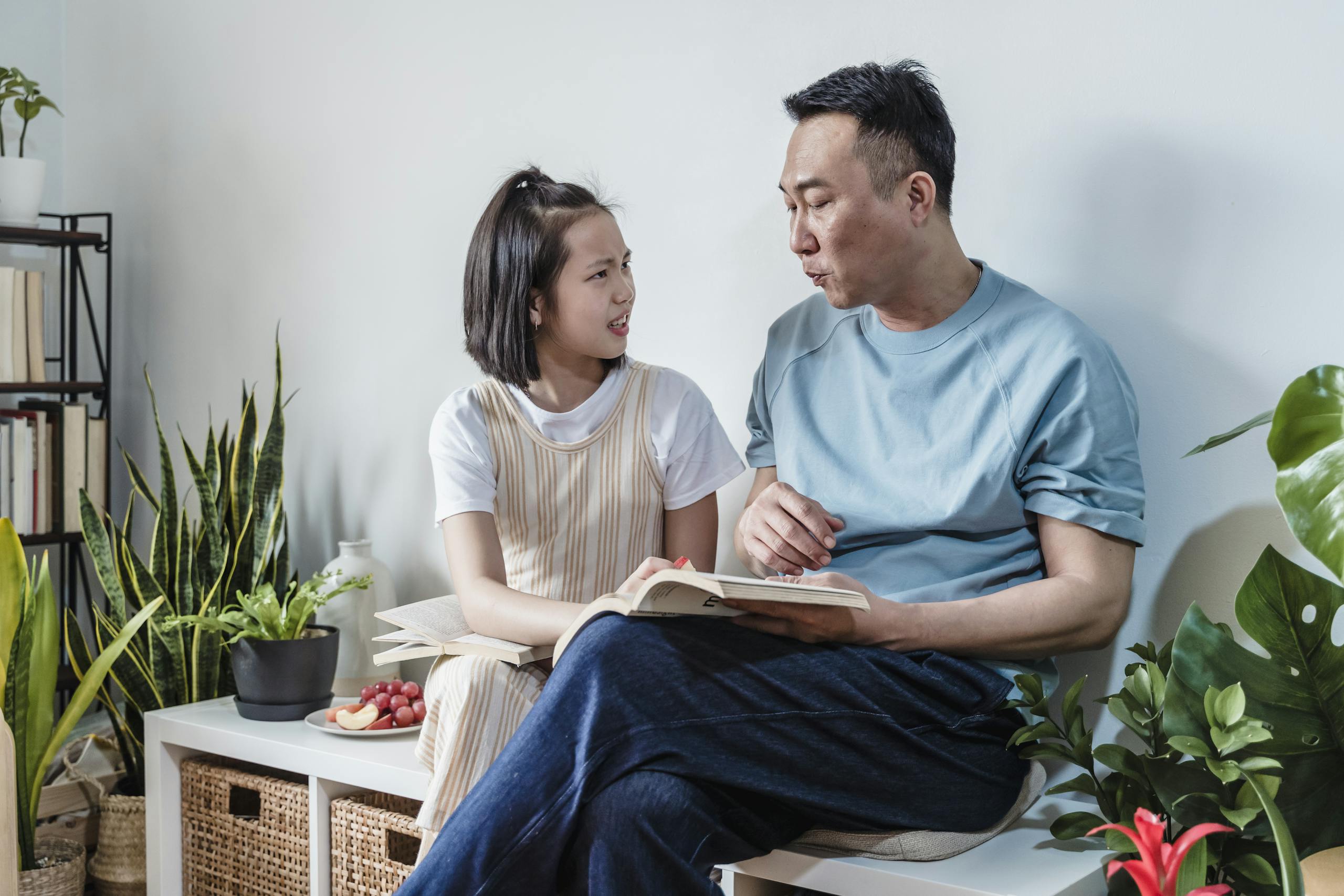
The anxious-avoidant pairing is probably the most discussed dynamic in popular attachment content, and for good reason. It’s one of the most common patterns in adult relationships, and it can be one of the most painful.
The dynamic works like this: the anxiously attached partner’s need for closeness activates the avoidant partner’s need for distance. The avoidant partner’s withdrawal activates the anxious partner’s fear of abandonment. Each person’s coping strategy triggers the other’s wound. It can feel like a magnetic pull that’s simultaneously drawing you together and pushing you apart.
I want to be clear about something that often gets lost in popular accounts of this dynamic: it can work. Anxious-avoidant couples are not doomed. Many couples with this combination develop genuinely secure functioning over time, particularly with mutual awareness of the pattern and, often, professional support. What makes the difference is whether both partners can develop enough insight to interrupt the cycle when it starts, and enough compassion to understand what’s driving the other person’s behavior.
For the anxious partner, that means learning to self-soothe rather than escalating bids for reassurance when the avoidant partner pulls back. For the avoidant partner, it means recognizing when “needing space” has crossed into emotional withdrawal, and finding ways to signal care even while maintaining some distance. Neither of these is easy. Both are learnable.
In my agency years, I managed teams where this dynamic played out in professional versions. The anxious team member who needed constant feedback and reassurance, and the avoidant senior creative who communicated only through the work itself. Getting those two people to function together required explicit structure and communication norms that neither would have naturally created on their own. Relationships need similar scaffolding sometimes.
A broader look at introvert dating and attraction shows that attachment style is just one piece of a larger picture. Values alignment, communication style, and how two people handle the ordinary friction of shared life all matter enormously alongside attachment dynamics.
How Can Introverts Use Attachment Awareness to Build Stronger Connections?
Awareness without application is just interesting information. The real value of understanding attachment styles is in what you do with that understanding in actual moments with actual people.
A few things I’ve found genuinely useful, both personally and in watching others work through this:
Notice your nervous system before you act on it. When you feel the pull to withdraw, or the urge to reach out for the fourth time in an hour, that’s your attachment system activating. You don’t have to follow every impulse. Pausing to name what’s happening, “my avoidance is up right now” or “my anxiety is spiking,” creates a small gap between the feeling and the behavior. That gap is where choice lives.
Get curious about your partner’s behavior rather than immediately interpreting it. Avoidant behavior often reads as rejection when it’s actually self-protection. Anxious behavior often reads as neediness when it’s actually fear. Neither framing is complete. Asking “what’s happening for you right now?” is almost always more productive than assuming you know.
Build explicit agreements about how you handle the moments that trigger your respective patterns. Introverts, in my experience, are actually well-suited for this kind of deliberate relational design. We think things through. We’re comfortable with structure. Creating explicit agreements about what “I need space” means, or how to signal that you need reassurance without it feeling like a demand, is exactly the kind of thoughtful approach that plays to introvert strengths.
Seek out guidance on dating as an introvert from sources that understand the specific texture of how introverts experience intimacy. Generic relationship advice often assumes an extroverted default that doesn’t quite fit.
Consider that therapy, specifically attachment-informed therapy, is one of the most direct routes to real change if you find your patterns are causing genuine suffering. There’s nothing weak about that. I’ve talked to enough high-performing professionals who eventually sought therapeutic support to know that the people who resist it longest are often the ones who need it most.
Published findings on attachment and relationship outcomes, including work available through PubMed Central’s research archive, consistently point to attachment security as one of the strongest predictors of relationship satisfaction. That’s not destiny. It’s direction.

What’s the Difference Between Introvert Depth and Emotional Avoidance?
This is a distinction I think about a lot, because it matters practically and because it’s easy to confuse the two.
Introvert depth, the tendency to process experience thoroughly, to sit with complexity, to resist surface-level engagement, is a genuine strength in relationships. It means you bring real attention and care to the people you’re close to. It means your observations are often accurate. It means you’re capable of the kind of sustained, focused intimacy that many people crave but rarely find.
Emotional avoidance is something different. It’s the active suppression of emotional experience or emotional communication as a way of managing the perceived threat of vulnerability. It can look like depth from the outside, because both involve a certain quietness and self-containment. But the internal experience is different. Depth feels rich. Avoidance feels defended.
One way to tell the difference in yourself: when you’re quiet with a partner, is it because you’re genuinely present and content, or because engaging more fully feels risky in a way you can’t quite name? That’s not always an easy question to answer honestly. But it’s the right question.
Additional perspective on how introvert emotional experience shapes relationship dynamics is worth exploring, including peer-reviewed work on personality and interpersonal functioning that helps contextualize why introverts and extroverts often experience the same relational events so differently.
There’s also a meaningful conversation to be had about how romantic introverts express love in ways that partners from different personality orientations may not immediately recognize as love at all. That recognition gap is worth closing deliberately.
Much more on the full spectrum of introvert relationship experience, from first connection to long-term partnership, lives in our Introvert Dating and Attraction hub, which continues to grow as we add new perspectives to the conversation.
About the Author
Keith Lacy is an introvert who’s learned to embrace his true self later in life. After 20 years in advertising and marketing leadership, including running agencies and managing Fortune 500 accounts, Keith now channels his experience into helping fellow introverts understand their strengths and build fulfilling careers. As an INTJ, he brings analytical depth and authentic perspective to every article, drawing from both professional expertise and personal growth.
Frequently Asked Questions
Are introverts more likely to be avoidantly attached?
No, and this is one of the most common misconceptions in this space. Introversion and avoidant attachment are independent dimensions. Introversion describes where you get your energy and how you prefer to process experience. Avoidant attachment describes an emotional defense strategy that keeps intimacy at a distance because closeness feels threatening. An introvert can be securely attached, anxiously attached, or avoidantly attached. The same is true for extroverts. Needing alone time to recharge is not the same thing as suppressing emotional connection.
Can attachment styles change over time?
Yes, meaningfully so. Attachment styles are not fixed personality traits. They can shift through corrective relationship experiences, through intentional self-development, and through therapeutic work, particularly approaches like Emotionally Focused Therapy, schema therapy, and EMDR. The concept of “earned secure” attachment is well-established and describes people who moved from insecure to secure functioning through experience and growth. Change is rarely fast or linear, but it is genuinely possible across the lifespan.
Can an online quiz accurately determine my attachment style?
Online attachment quizzes can be useful starting points that give you vocabulary and direction, but they have real limitations. Formal assessment uses tools like the Adult Attachment Interview or the Experiences in Close Relationships scale, which are more rigorous than self-report quizzes. A significant limitation is that dismissive-avoidant individuals may not recognize their own patterns on a questionnaire, because their attachment system has learned to minimize and suppress emotional needs. Treat quiz results as hypotheses worth exploring rather than definitive conclusions.
Do anxious-avoidant relationships ever work?
Yes, they can work. The anxious-avoidant dynamic is one of the more challenging combinations because each person’s coping strategy tends to activate the other’s wound. Yet many couples with this dynamic develop genuinely secure functioning over time. What makes the difference is mutual awareness of the pattern, a shared commitment to interrupting the cycle when it starts, and often professional support. Neither partner is the villain in this dynamic. Both are responding to deep-seated fears with learned coping strategies. Understanding that is where the work begins.
How does attachment style affect how introverts express love?
Attachment style shapes the emotional context in which love gets expressed, while introversion shapes the form that expression takes. A securely attached introvert might show love through consistent presence, deep listening, and thoughtful acts, from a place of genuine choice rather than anxiety or avoidance. An anxiously attached introvert might express love with intensity but struggle to feel reassured that it’s reciprocated. A dismissively avoidant introvert might care deeply while keeping emotional expression minimal, not because the feelings aren’t there, but because the attachment system has learned to suppress them. Recognizing which dynamic is at play helps both partners make sense of what they’re experiencing.