
Attachment styles shape how couples connect, conflict, and repair, often in ways neither partner fully recognizes. Rooted in early childhood experiences with caregivers, these patterns follow us into adult relationships, influencing how we respond to closeness, distance, and emotional risk. Psychology Today’s attachment style framework for couples draws on decades of research to help partners understand the invisible emotional contracts they’ve written with each other.
As an INTJ who spent two decades running advertising agencies, I came late to understanding my own attachment patterns. I thought my need for emotional distance was just efficiency. Turns out, it was something far more layered than that.

If you’ve been circling questions about why you and your partner keep having the same argument, or why closeness sometimes feels threatening instead of comforting, attachment theory offers a framework that goes deeper than communication tips. And for introverts especially, where solitude is a genuine need rather than a defense mechanism, understanding the difference between introversion and avoidant attachment can be genuinely life-changing. Our Introvert Dating and Attraction hub explores the broader emotional landscape of introvert relationships, and attachment style sits at the heart of much of it.
What Are the Four Attachment Styles, and How Do They Show Up in Couples?
Attachment theory, originally developed by John Bowlby and later expanded by Mary Ainsworth and Mary Main, describes four primary patterns adults carry into romantic relationships. Each style reflects a combination of two dimensions: anxiety about abandonment and avoidance of closeness.
What’s your personality type?
Take our free 40-question assessment and get a detailed personality profile with dimension breakdowns, context analysis, and personalised insights.
Discover Your Type8-12 minutes · 40 questions · Free
Secure attachment sits at the low end of both dimensions. People with secure attachment generally feel comfortable with emotional intimacy, can ask for support without excessive fear, and don’t panic when a partner needs space. Secure attachment doesn’t mean conflict-free relationships. Securely attached couples still argue, still face hard seasons. What they have are better tools for working through difficulty without the relationship feeling fundamentally threatened.
Anxious preoccupied attachment involves high anxiety and low avoidance. People with this pattern crave closeness intensely, often monitor their partner’s emotional availability closely, and can feel destabilized by perceived distance or silence. What looks like clinginess from the outside is actually a nervous system in a state of hypervigilance, scanning constantly for signs of rejection. It’s not a character flaw. It’s a deeply conditioned fear response.
Dismissive avoidant attachment sits at low anxiety and high avoidance. People with this pattern often appear emotionally self-sufficient, sometimes to the point where partners feel shut out. What’s critical to understand here is that dismissive avoidants do have feelings. Physiological research has shown that avoidants can experience significant internal arousal in emotional situations even when they appear outwardly calm. The emotions exist. They’ve simply been trained, over years, to suppress and deactivate them as a protective strategy.
Fearful avoidant attachment, sometimes called disorganized attachment, involves both high anxiety and high avoidance. People with this pattern simultaneously want closeness and fear it. They may oscillate between pulling partners close and pushing them away, which can feel confusing to everyone involved, including themselves. It’s worth noting that fearful avoidant attachment overlaps with but is distinct from borderline personality disorder. Not all fearful avoidants have BPD, and not all people with BPD are fearfully attached.
Why Do Introverts Often Misread Their Own Attachment Style?
Here’s something I had to reckon with honestly. For years, I told myself that my preference for quiet evenings, my discomfort with emotional processing in real time, and my tendency to withdraw when stressed were simply introvert traits. And some of that was true. But some of it wasn’t introversion at all. Some of it was avoidant attachment wearing introversion’s clothing.
Introversion and avoidant attachment are genuinely independent constructs. An introvert can be fully securely attached, comfortable with emotional intimacy, able to ask for and receive support, while still needing significant solitude to recharge. Avoidance, by contrast, is about emotional defense. It’s about keeping closeness at a manageable distance because closeness once meant pain or unpredictability. The two can coexist in the same person, but they aren’t the same thing.
I managed a creative director at my agency for several years who was a deeply introverted person. Quiet, observant, brilliant at her work. She was also one of the most securely attached people I’d ever encountered in a professional setting. When conflict arose, she didn’t flee or freeze. She’d say clearly and calmly what she needed, hear the other person out, and work toward resolution without drama. Her introversion had nothing to do with emotional avoidance. She just processed quietly before she spoke.
Contrast that with another colleague, far more extroverted on the surface, who would go completely silent and unreachable when he felt criticized. His avoidance wasn’t about needing solitude. It was about emotional shutdown. Same behavioral output on the surface. Completely different internal architecture.
Understanding how introverts fall in love and the relationship patterns that emerge helps clarify this distinction. The patterns introverts bring to love aren’t automatically avoidant. They’re shaped by temperament, yes, but also by history, by what relationships taught us about safety and closeness.
How Does the Anxious-Avoidant Dynamic Actually Work in a Relationship?
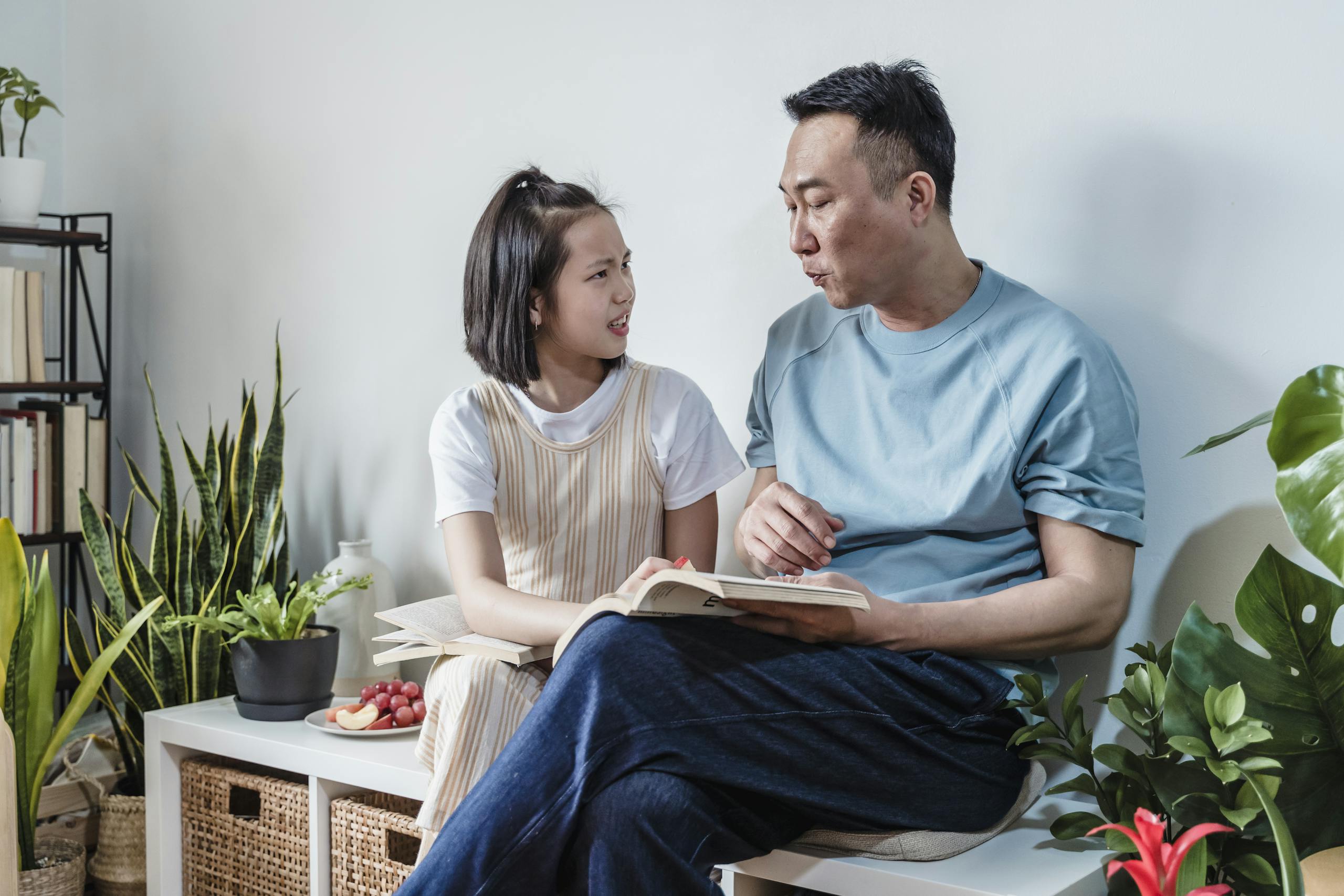
The anxious-avoidant pairing is probably the most written-about dynamic in attachment literature, and for good reason. It creates a feedback loop that feels almost designed to cause suffering. The anxious partner pursues. The avoidant partner withdraws. The withdrawal amplifies the anxious partner’s fear, which intensifies the pursuit, which triggers more withdrawal. Both partners end up feeling misunderstood and exhausted.
What makes this dynamic particularly painful is that both people are, in a sense, doing exactly what their nervous systems were trained to do. The anxious partner learned that love is uncertain and must be constantly secured. The avoidant partner learned that closeness is risky and self-sufficiency is safer. Neither response is irrational given what each person learned about relationships early in life.
The good news, and this matters enormously, is that anxious-avoidant relationships can work. They’re not doomed. Many couples with this dynamic develop what researchers call “earned secure” functioning over time, through mutual awareness, honest communication, and often professional support. The path isn’t easy, but it exists. What’s required is that both partners develop some capacity to understand their own patterns and, critically, to see their partner’s behavior as a protective response rather than a personal attack.
There’s a useful parallel here to what happens in high-pressure professional environments. When I was running a large agency account during a client crisis, I noticed that my instinct was to go quiet, to process internally, to withdraw from the team emotionally while I figured out a strategy. My anxiously attached account director read that withdrawal as abandonment. She’d escalate her communication, send more emails, request more check-ins. My response was to retreat further. We were both trying to manage the same crisis. We were doing it in ways that made the other person feel worse.
Once we named what was happening, the dynamic shifted. Not perfectly. But enough. That’s often what attachment work looks like in practice. Not transformation overnight, but small recalibrations that gradually build something more stable.
For introverts who also carry anxious attachment, the internal experience can feel particularly disorienting. The complexity of introvert love feelings often involves a layered tension between wanting deep connection and fearing the vulnerability that genuine closeness requires.
Can Attachment Styles Actually Change?
One of the most important things attachment research has established is that these patterns are not permanent. Attachment styles can and do shift across the lifespan. The concept of “earned secure” attachment describes people who began with insecure patterns but developed secure functioning through corrective experiences, often through therapy, through a particularly safe relationship, or through sustained self-awareness work.
Therapeutic approaches that have shown meaningful results in shifting attachment patterns include Emotionally Focused Therapy, which works directly with the attachment bond between partners; schema therapy, which addresses the deep belief systems formed in childhood; and EMDR, which processes the stored emotional memories that drive attachment responses. These aren’t quick fixes, but they represent real pathways.
It’s also worth being honest about the limitations of self-assessment. Online quizzes can be useful starting points for reflection, but they’re rough indicators at best. Formal attachment assessment uses tools like the Adult Attachment Interview or the Experiences in Close Relationships scale. Self-report has a particular limitation with dismissive avoidants, who may genuinely not recognize their own patterns because the emotional suppression is so thoroughly internalized. Someone can score as secure on a self-report measure while exhibiting clear avoidant behavior in their relationship.
I’ll be direct about my own experience here. I spent years reading about attachment theory with the clinical detachment I brought to most things. I could describe all four styles accurately. I could probably have taught a workshop on the subject. What I couldn’t do, for a long time, was honestly locate myself in the framework. That required a different kind of looking, slower and less comfortable than intellectual analysis.
Psychology Today’s writing on attachment for couples, including pieces drawing on how introversion intersects with relationship patterns, has been part of that broader cultural conversation that helped me start asking better questions about my own behavior in relationships.

What Happens When Two Avoidants or Two Anxious People Pair Together?
The anxious-avoidant pairing gets most of the attention, but other combinations create their own distinct challenges and, sometimes, unexpected strengths.
Two dismissive avoidants in a relationship often build something that looks stable from the outside. Both partners are comfortable with emotional distance, both prioritize self-sufficiency, and neither is pushing the other for more closeness than feels safe. The challenge is that this arrangement can calcify into emotional disconnection over time. When one partner eventually needs more, or when life circumstances demand real emotional presence, the relationship may not have the infrastructure to provide it.
Two anxiously attached people can create a dynamic that oscillates between intense closeness and explosive conflict. Both partners are hypervigilant to perceived rejection, which means minor misunderstandings can escalate quickly. Yet there’s also a quality of mutual understanding in these relationships. Both people know what it feels like to need reassurance. That shared experience can, with work, become a foundation for real empathy.
The question of what happens when two introverts build a relationship together is explored thoughtfully in this look at two introverts falling in love, which addresses how shared temperament interacts with attachment differences in ways that aren’t always obvious at first.
Attachment compatibility isn’t simply about matching styles. Two secure people have an easier foundation, certainly. But compatibility is also about whether both partners are willing to do the work of understanding their own patterns and showing up honestly for each other. A securely attached person paired with an anxiously attached partner can be extraordinarily stabilizing, provided the secure partner doesn’t become the sole emotional regulator for the relationship.
How Do Highly Sensitive People Experience Attachment Differently?
Highly sensitive people, those who process sensory and emotional information more deeply than the general population, have a particular relationship with attachment dynamics. Their nervous systems register relational cues at a higher resolution. A slight shift in a partner’s tone, a moment of distraction during a conversation, a delayed text response: these register with more intensity for an HSP than they might for someone with a less sensitive nervous system.
This depth of processing can amplify whatever attachment pattern an HSP carries. An anxiously attached HSP may experience the hypervigilance of anxious attachment with particular intensity, picking up on subtle signals that others would miss entirely. A dismissive avoidant HSP may feel the emotional weight of relationships more acutely than their behavior suggests, making the suppression required by avoidant attachment especially costly over time.
The complete guide to HSP relationships addresses how sensitivity shapes the full arc of romantic connection, from early attraction through long-term partnership. And for HSPs handling the specific friction of conflict within attachment dynamics, working through HSP conflict peacefully offers practical grounding for moments when emotional intensity peaks.
What matters for HSPs in attachment work is recognizing that their depth of feeling is not a liability. The same sensitivity that makes conflict feel overwhelming also makes connection feel profound. The capacity for deep attunement that HSPs bring to relationships is, with the right partner and the right self-understanding, one of the most powerful relational gifts there is.

How Do Attachment Styles Shape the Way Couples Express Love?
One of the places attachment patterns become most visible is in how partners give and receive affection. And for introverts especially, the way love gets expressed often differs significantly from cultural templates of what love is supposed to look like.
Securely attached people tend to be flexible in how they express love. They can adapt to what their partner needs, can ask directly for what they need themselves, and don’t require constant reassurance that the relationship is solid. Their expressions of affection feel consistent rather than contingent.
Anxiously attached people often express love through acts of service, through constant availability, through gestures designed to preemptively secure the relationship. The love is genuine. The delivery is colored by fear. Partners sometimes experience this as suffocating, even when the anxious person is simply trying to keep the connection alive.
Dismissive avoidants often express love through practical acts rather than emotional ones. They may show up reliably, solve problems, provide stability, while remaining emotionally reserved. Partners who need verbal affirmation or emotional presence can feel unseen, even when the avoidant partner is, in their own way, deeply committed.
Understanding how introverts express affection through their particular love language adds important texture here. Introvert expressions of love are often quiet, specific, and deeply intentional. They may look different from grand gestures, but they carry significant weight when you know how to read them.
A piece in Psychology Today on the signs of a romantic introvert captures some of this well, describing how introverts often express romance through presence, attention, and depth rather than volume or frequency of expression.
What Does Attachment Work Actually Look Like for Couples?
Attachment work in a relationship isn’t primarily about identifying which box you fall into. It’s about developing enough self-awareness to recognize when your attachment system is activated, and enough relational safety to communicate about it rather than simply acting from it.
In practice, this might look like an anxiously attached partner learning to distinguish between genuine warning signs and the noise of a hyperactivated nervous system. It might look like a dismissive avoidant partner practicing tolerating emotional intimacy in small doses, staying present in a difficult conversation a little longer than feels comfortable. It might look like both partners building a shared vocabulary for their patterns, so that when the familiar dynamic begins to emerge, they can name it together rather than enact it unconsciously.
Couples therapy, particularly approaches grounded in attachment theory, can be genuinely useful here. The peer-reviewed literature accessible through resources like PubMed Central’s research on adult attachment and related work on attachment and relationship quality underscores that attachment patterns, while deeply rooted, are responsive to the quality of the relational environment. A consistently safe relationship can, over time, shift what feels possible emotionally.
What I’ve found, both in my own experience and in watching people I’ve worked with over the years, is that attachment work tends to accelerate when both partners approach it with genuine curiosity rather than blame. The question shifts from “why do you always do this?” to “what is happening between us right now, and what does each of us need?” That’s a small linguistic shift. The emotional shift it requires is substantial.
It’s also worth acknowledging that attachment is one lens among several. Communication patterns, life stressors, values alignment, mental health, and practical compatibility all shape relationship quality. Attachment theory doesn’t explain everything. What it does is illuminate a specific and often overlooked layer of how people relate, one that operates largely below conscious awareness until you start paying attention to it.
Additional perspective on how personality and emotional wiring shape relationship dynamics is worth exploring in the Healthline breakdown of introvert and extrovert myths, which addresses some of the common misconceptions that complicate how introverts understand themselves in relationships.

There’s more depth to explore across all of these dimensions in the Introvert Dating and Attraction hub, which covers the full range of how introvert temperament intersects with love, connection, and long-term partnership.
About the Author
Keith Lacy is an introvert who’s learned to embrace his true self later in life. After 20 years in advertising and marketing leadership, including running agencies and managing Fortune 500 accounts, Keith now channels his experience into helping fellow introverts understand their strengths and build fulfilling careers. As an INTJ, he brings analytical depth and authentic perspective to every article, drawing from both professional expertise and personal growth.
Frequently Asked Questions
Are introverts more likely to be avoidantly attached?
No. Introversion and avoidant attachment are independent constructs. An introvert may be securely attached, comfortable with emotional closeness, while still needing significant solitude to recharge. Avoidant attachment is about emotional defense rooted in relational history, not about energy preferences. The two can coexist in the same person, but one does not cause the other. Many introverts are securely attached and build deeply connected, stable relationships.
Can an anxious-avoidant couple actually build a healthy relationship?
Yes. Anxious-avoidant relationships can develop into secure functioning with mutual awareness, honest communication, and often professional support. The pattern is challenging because it creates a feedback loop where each partner’s coping strategy triggers the other’s fear response. Yet many couples with this dynamic develop what researchers call “earned secure” functioning over time. What’s required is that both partners become willing to understand their own patterns and approach the other’s behavior with curiosity rather than blame.
Is it possible to change your attachment style as an adult?
Yes. Attachment styles are not fixed. They can shift through therapy (particularly Emotionally Focused Therapy, schema therapy, and EMDR), through corrective relationship experiences, and through sustained self-awareness work. The concept of “earned secure” attachment is well-documented and describes people who began with insecure patterns but developed secure functioning over time. Significant life events and relationships can shift attachment orientation across the lifespan, though this kind of change typically requires deliberate effort and often professional support.
How accurate are online attachment style quizzes?
Online quizzes are rough indicators at best. They can be useful starting points for reflection, but they have real limitations. Formal attachment assessment uses tools like the Adult Attachment Interview or the Experiences in Close Relationships scale, which are more rigorous. Self-report measures have a particular limitation with dismissive avoidants, who may not recognize their own patterns because emotional suppression is so thoroughly internalized. Someone can score as secure on a self-report measure while exhibiting clear avoidant behavior in their actual relationship.
Do dismissive avoidants actually have feelings for their partners?
Yes. Dismissive avoidants do experience feelings for their partners. Physiological research has shown that avoidants can have significant internal emotional arousal even when they appear outwardly calm or detached. The emotions exist but are suppressed and deactivated as a deeply conditioned defense strategy, one that developed because emotional expression once felt unsafe or unproductive. Understanding this distinction matters enormously for partners of avoidants, who often interpret emotional withdrawal as indifference when it’s more accurately described as a protective response.