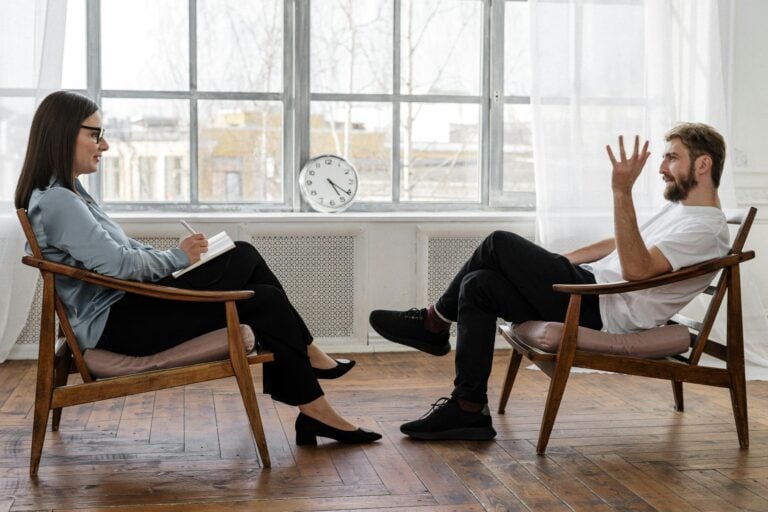

Some introverts struggle to explain why they need solitude, not because they don’t know, but because the people they love most can’t quite hear it. If your wife won’t give you alone time, you’re not dealing with a character flaw in either of you. You’re dealing with a fundamental difference in how two people recharge, and that difference, left unaddressed, quietly erodes the connection you both want to protect.
Solitude isn’t selfishness. For introverts, it’s the biological and psychological equivalent of sleep. Without it, everything suffers: patience, creativity, emotional availability, even love. The problem isn’t that your wife doesn’t care. It’s that she may genuinely not understand what happens inside you when that need goes unmet.

Much of what I write here at Ordinary Introvert traces back to a single realization: that introversion isn’t a problem to solve, it’s a wiring to understand. If you want to go deeper on how introverts experience love, attraction, and connection, our Introvert Dating and Attraction hub covers the full landscape of how people like us build and sustain meaningful relationships.
Why Does an Introvert’s Need for Alone Time Feel So Urgent?
Somewhere around year twelve of running my advertising agency, I started noticing a pattern. After a full day of client presentations, team check-ins, and phone calls, I would sit in my car in the parking garage for fifteen minutes before driving home. Not because I was avoiding anyone. Because I genuinely couldn’t form a coherent thought until the noise settled.
What’s your personality type?
Take our free 40-question assessment and get a detailed personality profile with dimension breakdowns, context analysis, and personalised insights.
Discover Your Type8-12 minutes · 40 questions · Free
My wife at the time noticed. She thought I was stressed about work. She’d meet me at the door ready to talk, ready to connect, ready to be together. And I’d walk in feeling like a phone battery at three percent, needing a wall outlet before I could do anything else. Neither of us was wrong. We were just operating on completely different internal systems.
What makes introvert solitude feel urgent rather than optional is neurological. Introverts process stimulation more deeply than extroverts. Social interaction, even enjoyable social interaction, draws on cognitive and emotional resources in a way that requires genuine recovery time. This isn’t a preference. It’s closer to a physiological need, similar to how some people run warm and need more water throughout the day. The research published in PMC exploring personality and nervous system differences helps explain why introverts and extroverts experience the same social environments so differently.
When that need goes unmet consistently, introverts don’t just feel tired. They feel irritable, mentally foggy, emotionally unavailable, and paradoxically less capable of being good partners. The very thing your wife wants, a present and engaged husband, becomes harder to deliver the longer alone time is denied.
What Does It Actually Mean When She Won’t Let You Have Space?
Before we go further, it’s worth being honest about what “won’t let me have alone time” actually means in practice. Because it rarely means a wife is deliberately controlling or malicious. In most cases, it means one of a few things.
She may interpret your need for space as rejection. When an extrovert or a person with anxious attachment sees their partner withdrawing, the brain reads it as distance, as something being wrong. Your desire to be alone in the study for two hours after dinner doesn’t signal “I need to recharge.” It signals “I don’t want to be with you.” That’s a painful misread, but it’s an understandable one.
She may not believe the need is real. This one is harder to sit with. Some partners intellectually accept that introverts need solitude but emotionally treat it as a preference that should yield to relationship needs. “Can’t you just watch TV with me? You don’t have to talk.” What she doesn’t realize is that proximity itself, even comfortable proximity, still requires a level of social awareness that costs an introvert energy.
She may have her own unmet needs that your solitude triggers. If she’s lonely in the relationship, your retreating feels like abandonment on top of existing disconnection. This is where the dynamic gets genuinely complicated. Her following you from room to room isn’t just about not understanding introversion. It may be about her own hunger for connection that isn’t being fed elsewhere.
Understanding how introverts fall in love and what they need from relationships can help clarify why these mismatches happen so often. The piece on when introverts fall in love and the patterns that emerge gets into exactly how introverts experience closeness differently, and why that difference can create friction even in deeply loving partnerships.

How Do You Explain a Need That Feels Invisible to Someone Else?
One of the most frustrating things about being an introvert in a relationship with someone who doesn’t share your wiring is the translation problem. You know exactly what you need and why. But when you try to explain it, it comes out sounding like you want less of her, less of the relationship, less of your shared life. That’s not what you mean. But it can land that way.
The most effective reframe I’ve found, both in my own life and in conversations with introverts I’ve worked with over the years, is to shift from “I need to get away from people” to “I need to come back to myself.” Those are meaningfully different statements. One is about avoidance. The other is about restoration.
Try explaining it through outcome rather than need. Instead of “I need alone time tonight,” try “I want to spend an hour by myself so I can actually be present with you later. When I don’t get that, I’m here physically but my mind is somewhere else.” You’re giving her a reason to want you to have space, because the alternative is a version of you that’s depleted and checked out.
Specificity also helps. Vague requests for “space” feel threatening. A specific request, “I’m going to take an hour after dinner on Tuesdays and Thursdays to read or walk,” feels like a schedule, not a rejection. It becomes predictable, which removes the anxiety of not knowing when you’ll “disappear” again.
The Greater Good Science Center at Berkeley has written thoughtfully about how solitude contributes not just to personal restoration but to creative capacity and emotional depth. Sharing that perspective with a skeptical partner can help reframe alone time as something that benefits the relationship rather than threatens it.
What Role Does Attachment Style Play in This Dynamic?
I managed a creative director at one of my agencies who was deeply introverted, an INFP, and brilliant at her work. She was also in a marriage that was slowly suffocating her because her husband had what I’d now recognize as anxious attachment. He needed constant reassurance that she was still there, still invested, still choosing him. Her need for solitude read as emotional withdrawal to him, and his constant pursuit read as intrusion to her. They were locked in a cycle that had nothing to do with how much they loved each other.
Attachment theory gives us a useful lens here. People with anxious attachment styles tend to interpret distance as danger. When an introvert retreats to recharge, an anxiously attached partner doesn’t experience it as neutral. They experience it as a signal that something is wrong, that they’re being pushed away, that the relationship is at risk. Their response, following, checking in, needing reassurance, is an attempt to regulate that anxiety. It’s not about controlling you. It’s about managing their own fear.
That doesn’t make it easier to live with. But it does change how you approach the conversation. Addressing her underlying anxiety about the relationship, rather than just defending your right to alone time, tends to be far more effective. She needs to feel secure. You need to feel free. Those two needs aren’t incompatible, but they require more than one conversation to align.
If your wife is also highly sensitive, the dynamic gets another layer of complexity. Highly sensitive people process emotional information intensely, and your withdrawal, even temporary and benign, may land with more weight than you intend. The complete guide to HSP relationships explores how high sensitivity shapes the way people experience closeness, conflict, and the need for emotional presence in a partnership.

How Do You Set Boundaries Without Damaging the Relationship?
Setting limits around alone time in a marriage is one of the more delicate things an introvert can do, because it requires asserting a personal need in a space where everything is supposed to be shared. It can feel selfish. It can feel like you’re choosing yourself over the relationship. You’re not. You’re choosing the version of yourself that can actually show up for the relationship.
What I’ve learned, both from my own experience and from years of managing people who struggled with similar dynamics, is that limits work best when they’re structured rather than reactive. Reactive limits, announced in the middle of feeling overwhelmed, come out defensive and create conflict. Structured limits, discussed calmly and proactively, feel like a plan rather than a wall.
A few things that tend to work:
Create predictable alone time as a standing part of your weekly routine. Not something you negotiate each time, but something both of you know is coming. Saturday mornings are mine. Tuesday evenings after dinner are mine. This removes the unpredictability that feeds her anxiety.
Pair alone time with connection time. If you take an hour for yourself, follow it with something intentional together. Not because you owe her, but because it demonstrates that the solitude was about restoration, not avoidance. You come back fuller, more present, more genuinely there.
Name what you’re doing before you do it. “I’m going to take an hour to decompress. I’ll be back and we can watch something together.” That small act of communication closes the loop she needs closed. She knows where you are, why you’re there, and when you’re coming back. The anxiety has less room to grow.
The guide to handling conflict peacefully in sensitive relationships offers some genuinely useful frameworks for having these harder conversations without them escalating into fights about who needs what more.
What Happens When the Introvert’s Love Language Gets Lost in the Friction?
One thing I’ve noticed in relationships where the alone time battle is ongoing: both people start to feel unloved. The introvert feels controlled and misunderstood. The partner feels abandoned and low priority. And both of them are expressing love in ways the other can’t quite receive.
Introverts tend to show love through quality, not quantity. A two-hour conversation that goes deep means more to them than six hours of passive coexistence. They show up with full attention when they’re present. They remember details. They think about you when you’re not in the room. They bring you ideas and observations they’ve been quietly turning over for days.
But if your wife’s primary love language is physical presence or acts of togetherness, she may not be registering any of that. She experiences love as being near you. Your need to be apart, even temporarily, feels like its opposite.
Understanding how introverts express and receive affection can help both of you see what’s actually being communicated in the relationship. The piece on how introverts show affection through their love language breaks down the specific ways introverts demonstrate care, many of which are invisible to partners who are looking for different signals.
When I ran my last agency before stepping back from that world, I had a senior account manager who was an extraordinary introvert, deeply loyal, incredibly attentive to her clients, always the person who remembered the small things. Her husband complained that she was emotionally distant. She was devastated by that. From her perspective, she was loving him constantly, just in ways he wasn’t seeing. The gap wasn’t in the love. It was in the translation.

When Does This Become a Deeper Relationship Problem?
Most of the time, the alone time conflict in a marriage is a communication and education problem. Once both partners genuinely understand each other’s needs and find a structure that honors both, the tension resolves. Not perfectly, not overnight, but substantially.
That said, there are situations where the dynamic points to something more serious. If your wife’s inability to give you space is paired with controlling behavior in other areas, jealousy, isolation from friends, monitoring your activities, that’s a different conversation. What looks like “she doesn’t understand my introversion” may actually be a relationship with unhealthy control dynamics, and that requires more than just better communication about alone time.
There’s also the question of whether your need for solitude has grown beyond what’s reasonable within a shared life. Introverts genuinely need more alone time than extroverts. But if you’re seeking to be alone for the majority of your waking hours at home, it’s worth asking honestly whether something else is driving that. Depression, burnout, and unresolved conflict can all masquerade as introversion. The Psychology Today piece on romantic introverts is a useful reference for understanding where introversion ends and emotional withdrawal begins.
The CDC’s research on social connectedness is also worth knowing about here. Sustained social isolation, even self-chosen, carries real health risks. The goal isn’t maximum solitude. It’s the right balance of solitude and connection for your specific wiring.
How Do Two Introverts Handle This Differently?
It’s worth noting that the alone time conflict isn’t exclusive to introvert-extrovert pairings. Two introverts in a marriage can run into their own version of this, particularly if one partner’s solitude needs are significantly higher than the other’s, or if one introvert has anxious attachment and interprets the other’s withdrawal as distance.
When both partners are introverted, there’s often an assumption that they’ll automatically understand each other’s needs. Sometimes they do. But introversion exists on a spectrum, and two people can both be introverts while having very different thresholds for stimulation, very different attachment styles, and very different ways of expressing love.
The dynamics that emerge in those relationships have their own texture, often quieter than the introvert-extrovert version of this conflict, but no less real. The piece on what happens when two introverts fall in love explores those patterns in depth, including how two people with similar wiring can still struggle to give each other what they need.
What Does a Healthy Balance Actually Look Like?
Healthy doesn’t mean equal. It means workable for both people. An introvert in a marriage doesn’t need the same amount of alone time as a single person living alone. But they do need enough to function well, to stay emotionally regulated, to remain genuinely present when they are with their partner.
What I’ve found, both personally and in conversations with introverts who’ve worked through this, is that the magic number is less important than the predictability. Knowing you’ll have protected time on certain days does more for your nervous system than a large but unpredictable block of solitude. Certainty is calming. Uncertainty is draining.
A healthy balance also includes genuine connection time, not just coexistence. Introverts often do their best connecting in focused, one-on-one settings rather than long evenings of ambient togetherness. A thirty-minute conversation where you’re both fully present can do more for the relationship than three hours of watching television in the same room. Proposing that kind of intentional connection can help your wife feel genuinely seen and prioritized, even on days when you’ve also needed solitude.
The broader context of introvert emotional experience, how we process feelings, how we move through love and conflict and longing, is something I explore throughout this site. The piece on understanding and working with introvert love feelings is a good companion to this one if you’re trying to help your wife understand not just what you need, but why you experience love the way you do.
And if your wife is someone who feels things deeply, who processes emotional experiences with unusual intensity, it may also help to look at things through the lens of high sensitivity. PMC research on emotional sensitivity and relationship dynamics sheds light on how deeply sensitive people experience interpersonal distance, which can help you approach these conversations with more precision and empathy.

Where Do You Go From Here?
If you’ve read this far, you’re already doing something right. You’re trying to understand the dynamic rather than just win the argument. That matters more than you might think.
The path forward isn’t about convincing your wife that you need space more than you need her. It’s about helping her see that your need for solitude and your love for her aren’t in competition. They’re connected. The version of you that gets enough time to restore is the version that can love her well.
Start with one honest conversation. Not a negotiation, not a list of grievances, just a genuine attempt to explain what happens inside you when you’re depleted and what becomes possible when you’re not. Use specific language. Use the outcome framing. Give her something to hold onto that isn’t “I need to get away from you.”
And be patient with the process. Years of misread signals don’t resolve in a single discussion. But they do resolve, when both people are willing to learn the other’s language.
If you want to keep exploring how introversion shapes the way we love and connect, the Introvert Dating and Attraction hub is the best place to continue. It covers everything from how introverts fall in love to how they handle conflict, communicate needs, and build relationships that actually work for the way they’re wired.
About the Author
Keith Lacy is an introvert who’s learned to embrace his true self later in life. After 20 years in advertising and marketing leadership, including running agencies and managing Fortune 500 accounts, Keith now channels his experience into helping fellow introverts understand their strengths and build fulfilling careers. As an INTJ, he brings analytical depth and authentic perspective to every article, drawing from both professional expertise and personal growth.
Frequently Asked Questions
Is it normal for an introvert to need alone time even from a spouse they love?
Yes, completely. Needing solitude has nothing to do with how much you love your partner. Introverts recharge through time alone, and that need doesn’t disappear inside a marriage. Many introverts find that their need for solitude actually increases in close relationships because the emotional and social proximity is constant. Loving someone deeply and needing space from them aren’t contradictory. They’re simply two true things that have to coexist in a healthy relationship.
How do I explain my need for alone time without hurting my wife’s feelings?
Frame it around restoration rather than avoidance. Instead of saying you need to get away, explain that you need to come back to yourself so you can be fully present with her. Be specific about what alone time looks like, how long, how often, and what you’ll do with it. Then follow it with intentional connection time so she experiences the benefit directly. The more she sees that your solitude makes you a better partner, the less threatening it becomes.
What if my wife takes my need for alone time personally no matter what I say?
If she consistently interprets your withdrawal as rejection despite clear communication, the issue may be rooted in her attachment style rather than a misunderstanding of introversion. People with anxious attachment patterns experience distance as danger regardless of the explanation. In that case, couples therapy can be genuinely useful, not because anything is broken, but because a neutral space helps both people hear each other differently. Addressing her underlying anxiety about the relationship often does more than any explanation of introversion.
Can a marriage between an introvert and an extrovert actually work long-term?
Yes, and many do. The introvert-extrovert pairing can actually be quite complementary when both people understand and respect each other’s needs. The introvert brings depth, focus, and emotional attentiveness. The extrovert brings energy, social connection, and a willingness to engage the world. What makes it work is communication, structure, and a shared commitment to honoring both sets of needs rather than treating one as more legitimate than the other.
How much alone time is reasonable to ask for in a marriage?
There’s no universal answer, but a useful benchmark is: enough to feel genuinely restored, not so much that your partner consistently feels alone in the relationship. For many introverts, one to two hours of protected solitude per day, plus occasional longer stretches on weekends, is enough to maintain good emotional regulation. What matters more than the specific amount is the predictability. Scheduled, consistent alone time tends to create less friction than unpredictable, reactive withdrawal.