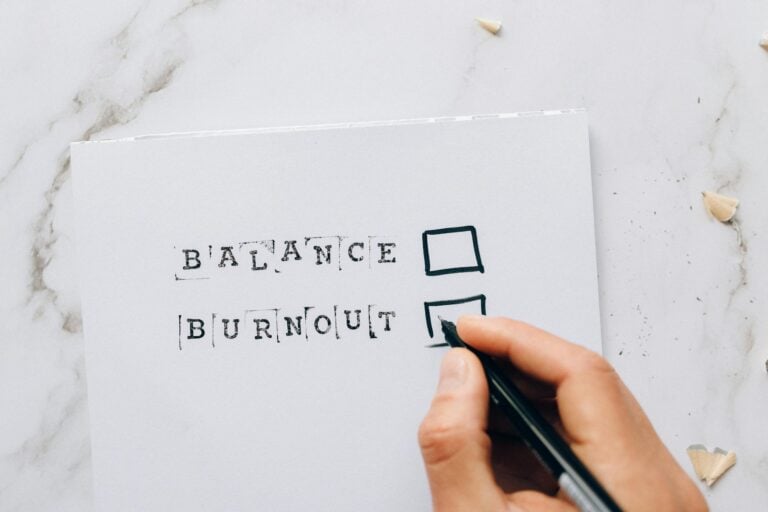

Social anxiety doesn’t just make socializing hard. It can quietly convince you that you’re failing the people you care about most. If you’ve ever canceled plans at the last minute, gone silent for weeks without explanation, or felt so overwhelmed by the pressure to “show up” that you pulled back entirely, you know exactly what it feels like to wonder whether your anxiety is turning you into a bad friend.
That feeling is real, and it’s painful. But it’s worth separating the story your anxiety tells you from what’s actually happening in your friendships.

There’s a lot written about how to make friends when anxiety gets in the way, and our Introvert Friendships hub covers the full range of what friendship looks and feels like when you’re wired for depth over breadth. But this particular angle, the shame spiral of believing your anxiety has made you a bad friend, deserves its own honest conversation.
What Does “Bad Friend” Social Anxiety Actually Feel Like?
It starts subtly. A friend invites you to something and your stomach tightens. You tell yourself you’ll respond later, and then later becomes a week, and then the guilt of not responding makes responding feel even harder. By the time you finally reach out, you’re not just apologizing for missing the event. You’re apologizing for disappearing.
What’s your personality type?
Take our free 40-question assessment and get a detailed personality profile with dimension breakdowns, context analysis, and personalised insights.
Discover Your Type8-12 minutes · 40 questions · Free
I’ve been in that spiral more times than I’d like to admit. Running advertising agencies meant I was constantly “on,” managing client relationships, leading creative teams, presenting to executives who expected energy and confidence. By the time I got home, I had nothing left for my personal relationships. Friends would reach out and I’d see their messages and feel a wave of something that wasn’t quite dread but wasn’t enthusiasm either. It was more like exhaustion mixed with guilt, a combination that made it easier to stay quiet than to respond.
What made it worse was the story I told myself about what that silence meant. Not “I’m depleted and need rest,” but “I’m a bad friend.” Those are very different things, and conflating them is one of the more damaging things social anxiety does.
Social anxiety and introversion often get tangled together in ways that complicate this further. Healthline draws a useful distinction between introversion, which is a preference for less stimulation, and social anxiety, which involves fear and avoidance rooted in worry about judgment or rejection. Many introverts don’t have social anxiety at all. And many people with social anxiety aren’t introverts. But when the two overlap, the friendship challenges compound in specific ways.
Why Anxiety Specifically Distorts How You See Yourself as a Friend
Anxiety is a meaning-making machine, and it tends to make meaning in the worst possible direction. Cancel plans once and anxiety says you’re unreliable. Go quiet for a few weeks and anxiety says you’re neglectful. Struggle to show up for someone during a hard time and anxiety says you’re selfish.
What anxiety rarely says is: you were overwhelmed. You were protecting yourself. You were doing the best you could with the resources you had.
There’s a cognitive pattern at work here that therapists who specialize in cognitive behavioral approaches to social anxiety describe as “mind reading,” the assumption that you already know what others think of you, and that what they think is negative. So when you cancel on a friend, you don’t just worry they’re disappointed. You’re certain they’re angry, certain they’ve written you off, certain you’ve permanently damaged the relationship. That certainty drives more avoidance, which creates more distance, which confirms the original fear.

One of the things I’ve noticed about myself as an INTJ is that I process social experiences internally and thoroughly, sometimes too thoroughly. After a conversation where I felt I’d been awkward or distant, I’d replay it for days, cataloging every moment I fell short. That kind of internal analysis, which can be a genuine strength in strategic contexts, becomes corrosive when it’s turned inward on your own worth as a friend.
The relationship between self-focused attention and social anxiety is well documented. The more attention you direct inward during social interactions, the more distorted your self-assessment becomes. You’re not seeing yourself clearly. You’re seeing yourself through the lens of fear.
Are You Actually a Bad Friend, or Are You a Friend Who’s Struggling?
There’s a distinction worth making carefully here, because not every friendship problem is just anxiety talking. Sometimes patterns of canceling, going silent, or failing to show up do damage relationships, even when they come from a place of genuine struggle rather than indifference. Acknowledging that is part of being honest about what anxiety costs us.
Yet there’s a meaningful difference between someone who doesn’t care about their friends and someone who cares deeply but is being held back by fear. The person who doesn’t care doesn’t lie awake worrying about whether they’re a bad friend. The person who cares, who is genuinely struggling with anxiety, often can’t stop thinking about it.
Ask yourself a few honest questions. Do you want to be present for your friends, even when anxiety makes it hard? When you pull back, is it because you don’t value the relationship, or because you’re overwhelmed? Do you feel guilt and sadness about the distance, or relief that you’ve escaped something you never wanted?
Your answers matter. They tell you whether you’re dealing with anxiety that needs compassion and management, or something else entirely.
I’ve written before about how introverts experience loneliness in ways that don’t always look like loneliness from the outside. The same is true here. Someone who is anxious about friendship often looks disinterested or cold when they’re actually aching for connection and terrified of getting it wrong.
How Social Anxiety Shows Up Differently in Close Friendships vs. Casual Ones
One of the more counterintuitive things about social anxiety in friendships is that it doesn’t always hit hardest with strangers. Sometimes it’s most intense with the people you care about most.
With a casual acquaintance, the stakes feel lower. If they judge you or pull away, it stings but it doesn’t devastate. With a close friend, someone who knows you, who has seen you at your best and your worst, the fear of disappointing them carries far more weight. The more a friendship matters to you, the more anxiety can attach itself to it.
This shows up in specific ways. You might find yourself overthinking texts to close friends, agonizing over word choice in a way you never would with a coworker. You might avoid bringing up something that’s bothering you in the friendship because you’re terrified of conflict or rejection. You might pull back right when the friendship is getting deeper, because depth means vulnerability and vulnerability feels dangerous.
Highly sensitive people often experience this pattern with particular intensity. The same emotional attunement that makes them remarkable friends also makes the fear of getting it wrong feel overwhelming. If you recognize yourself in that description, the piece on HSP friendships and building meaningful connections speaks directly to that experience.

I managed a creative director at one of my agencies who was exceptionally talented and genuinely well-liked by everyone on the team. She was also, by her own description, terrified of letting people down. She’d take on more work than she could handle rather than say no, because saying no felt like failing her colleagues. She’d stay quiet in meetings when she disagreed, then spiral afterward about whether she should have spoken up. Her anxiety didn’t make her a bad colleague. It made her an exhausted one who was slowly convincing herself she was failing everyone around her.
The parallel to friendship is direct. Anxiety often drives people to either over-give until they burn out, or under-show-up because they’re convinced they’ll disappoint anyway. Both patterns come from the same fear. Neither one means you don’t care.
What Happens When Anxiety Keeps You From Making New Friends at All
There’s another dimension to this that doesn’t get enough attention: the way social anxiety can prevent friendships from forming in the first place, leaving you with a small social circle that then carries enormous pressure.
When you have only one or two close friends, every interaction with them feels weighted. You can’t afford to get it wrong. The scarcity creates intensity, and intensity feeds anxiety. It becomes a cycle that’s hard to break from the inside.
Building new friendships as an adult is genuinely difficult, and anxiety makes it harder. The strategies that work for making new connections when anxiety is part of the picture are specific and worth knowing. The article on making friends as an adult with social anxiety goes into practical detail on this, and it’s worth reading if you recognize that your anxiety has kept your social world smaller than you’d like it to be.
Geography adds another layer. If you’re living somewhere dense and overwhelming, the anxiety of managing social interactions can feel amplified. The specific challenges of making friends in New York City as an introvert illustrate how environment shapes social anxiety in friendship contexts, and how to work with your wiring rather than against it.
Technology has also changed the landscape in ways that are genuinely useful for people whose anxiety makes in-person connection feel like too much of a leap. There are now apps designed specifically for introverts who want to make friends without the pressure of cold social situations. Using them isn’t a sign of weakness. It’s using the tools available to you.
The Guilt Cycle and How to Break It
One of the most exhausting parts of bad friend social anxiety is the guilt cycle. It works like this: anxiety causes you to avoid or withdraw. Avoidance creates distance in the friendship. Distance generates guilt. Guilt makes reaching out feel harder because now you have to address both the original issue and the silence. So you avoid again. The cycle deepens.
Breaking this cycle doesn’t require a grand gesture or a lengthy explanation. It often requires something much simpler and much harder: reaching out without the apology being the whole message.
What I mean is this. When you’ve gone quiet for a while, anxiety tells you that you need to explain yourself fully before you can reconnect. You need to account for every week of silence, justify every canceled plan, and prove that you’re not actually a bad friend before the friendship can resume. That’s an enormous barrier to re-entry, and it keeps a lot of people stuck.
Most friends, especially ones who care about you, would rather get a simple “I’ve been in my head lately, I miss you” than a formal apology that puts them in the position of having to reassure you. The reassurance-seeking that anxiety drives can actually put a burden on friendships, even when it comes from a genuine place of caring.
There’s solid evidence that avoidance behaviors in social anxiety tend to maintain and strengthen the anxiety over time rather than reduce it. The relief of not reaching out is temporary. The cost accumulates.

What helps is lowering the bar for what “reaching out” has to mean. A brief message. A shared meme. A “thinking of you” with no expectation of a full conversation. These small acts of contact interrupt the avoidance cycle without requiring you to perform a full social interaction when you don’t have the energy for one.
What Good Friendships Actually Look Like When Anxiety Is Part of the Picture
One of the things I’ve come to believe, after a lot of years getting this wrong, is that the friendships that survive anxiety aren’t the ones where you pretend the anxiety doesn’t exist. They’re the ones where there’s enough trust and honesty that you can say, “I’m not great at this sometimes, and here’s why.”
That kind of honesty is vulnerable. It requires trusting that the other person won’t use your struggle against you. Not every friendship can hold that, and that’s okay. But the ones that can are worth investing in.
Some of the most meaningful friendships I’ve had developed slowly, with long stretches of quiet between conversations, and a mutual understanding that silence didn’t mean absence. Those friendships had a quality of safety that made the anxiety quieter. Not gone, but quieter.
Research examining social connection and anxiety outcomes points toward the quality of social bonds rather than their frequency as the more significant factor in wellbeing. This aligns with something many introverts know intuitively: a few relationships with real depth matter more than a wide network of surface-level ones.
The challenge is that social anxiety can make even deep friendships feel precarious. It can take a friendship that is genuinely stable and make it feel like it’s always on the verge of collapse. Learning to trust the stability, to let the evidence of the friendship’s history outweigh the anxiety’s predictions, is a long process. But it’s possible.
Practical Ways to Manage the “Bad Friend” Feeling Without Letting It Run the Show
Awareness matters, but it’s not enough on its own. Here are approaches that have genuinely helped me and that I’ve seen help others.
Name the anxiety, not the conclusion. When you catch yourself thinking “I’m a bad friend,” try replacing it with “I’m having anxiety about this friendship.” The first statement is a verdict. The second is an observation about your current state. One closes the door. The other leaves room for something different.
Create low-stakes touchpoints. Friendship doesn’t always have to be a full social event. A brief check-in, a shared article, a voice note while you’re walking. These keep the connection alive without requiring you to perform at full capacity.
Be honest about your limits without over-explaining. “I’m having a hard week and I need to cancel, but I really want to reschedule” is enough. You don’t owe anyone a full account of your internal state. Honesty doesn’t require total transparency.
Notice when you’re seeking reassurance vs. genuine connection. There’s a difference between reaching out because you miss someone and reaching out because you need them to tell you that you’re not a bad friend. Both are human. Yet the second one, done repeatedly, can put strain on a friendship. Therapy, journaling, or self-reflection can help process the anxiety so it doesn’t all land on your friends.
Consider professional support. Social anxiety is treatable. Evidence-based approaches to social anxiety have a strong track record, and working with a therapist who understands the specific dynamics of social anxiety in relationships can make a meaningful difference. This isn’t about fixing yourself. It’s about getting support for something that’s genuinely hard.
If you have a teenager in your life who’s already showing signs of social anxiety affecting their friendships, catching it early matters. The piece on helping your introverted teenager make friends addresses the specific challenges of adolescent friendship and anxiety in ways that are relevant for parents and teens alike.

The Friendships Worth Keeping Are the Ones That Can Hold All of You
There’s a version of friendship that social anxiety sells as the only valid kind: constant availability, effortless communication, never needing space, always showing up perfectly. That version doesn’t exist for anyone, anxious or not. But anxiety convinces you that everyone else is managing it just fine and you’re the only one falling short.
The friendships worth building and protecting are the ones that have room for imperfection. Room for the week you went quiet. Room for the plans you had to cancel. Room for the version of you that’s struggling, not just the version that’s got it together.
That doesn’t mean friendships have no expectations or that anxiety excuses everything. It means that good friendships are built on enough genuine care and mutual understanding that they can absorb the hard parts of being human.
After running agencies for two decades, I learned something about relationships under pressure: the ones that last aren’t the ones where everything always went smoothly. They’re the ones where people showed up honestly, even when showing up was hard. That’s as true for friendship as it is for any professional partnership.
You’re not a bad friend because you have social anxiety. You’re a person who cares about connection and is working through something real. Those two things can be true at the same time.
If you want to keep exploring what friendship looks and feels like when you’re an introvert handling anxiety and connection, the full Introvert Friendships hub brings together everything we’ve written on the topic in one place.
About the Author
Keith Lacy is an introvert who’s learned to embrace his true self later in life. After 20 years in advertising and marketing leadership, including running agencies and managing Fortune 500 accounts, Keith now channels his experience into helping fellow introverts understand their strengths and build fulfilling careers. As an INTJ, he brings analytical depth and authentic perspective to every article, drawing from both professional expertise and personal growth.
Frequently Asked Questions
Does social anxiety make you a bad friend?
Social anxiety doesn’t make you a bad friend. It makes certain aspects of friendship harder, particularly consistency, communication during high-stress periods, and showing up in the ways that feel most visible. What separates someone struggling with anxiety from someone who simply doesn’t value their friendships is the care and intention that’s still present even when the behavior falls short. Anxiety creates real barriers, but it doesn’t erase genuine affection or commitment.
Why does social anxiety make me avoid my friends even when I miss them?
This is one of the more painful paradoxes of social anxiety. The avoidance isn’t about not wanting connection. It’s about fear: fear of saying the wrong thing, fear of being judged, fear of disappointing someone you care about. The longer the silence goes, the more the anxiety builds around breaking it, which makes reaching out feel harder rather than easier. Recognizing this cycle is the first step toward interrupting it, usually by lowering the bar for what “reaching out” has to look like.
How do I tell my friends about my social anxiety without making it weird?
You don’t need a formal disclosure conversation. Often, a simple and honest statement in context is enough. Something like “I get in my head sometimes and go quiet, it’s not about you” communicates what matters without requiring a full explanation. Friends who care about you will generally appreciate honesty over silence. success doesn’t mean make them your therapist. It’s to give them enough information to understand your patterns without having to interpret them as rejection.
Is it normal to feel more anxious around close friends than strangers?
Yes, and it’s more common than people realize. With close friends, the stakes feel higher because the relationship matters more. The fear of disappointing someone who knows you well, or of being truly seen and still found lacking, can be more intense than the fear of judgment from a stranger. This is why social anxiety in close friendships can feel confusing. You’d expect it to be easier with people who know you. Instead, the depth of the relationship sometimes amplifies the fear.
Can social anxiety permanently damage friendships?
It can strain them, and in some cases, extended periods of withdrawal or avoidance do cause lasting damage. Yet many friendships are more resilient than anxiety predicts. What matters most is whether there’s enough honesty and mutual care to work through the distance when it happens. Friendships that have a foundation of genuine connection can often absorb the hard periods that anxiety creates. The ones most at risk are those where the anxiety goes completely unaddressed and the other person has no context for understanding the withdrawal.