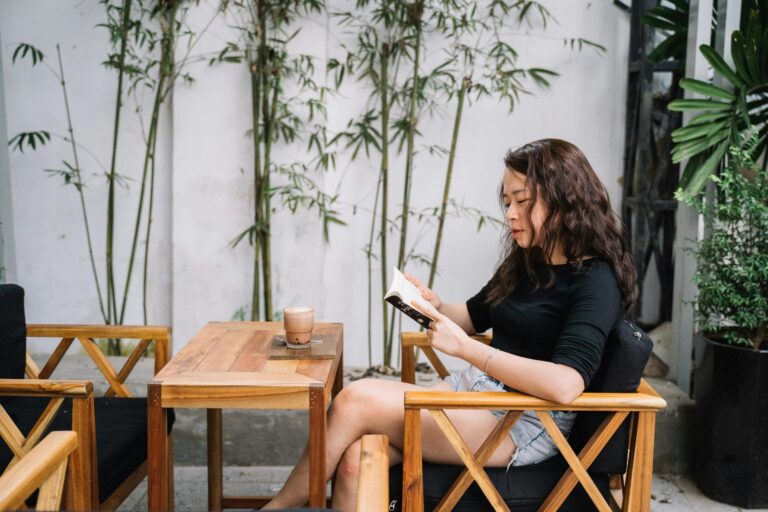

Child anxiety and shyness are not the same thing, though they often get tangled together in ways that confuse parents and children alike. Shyness tends to be a temperament trait, a natural hesitation in social situations that many children grow into and through. Anxiety, on the other hand, is a persistent pattern of worry and avoidance that can genuinely interfere with a child’s daily life, friendships, and sense of self. Knowing the difference matters, because the way you respond to each one shapes how your child understands themselves.

What makes this especially complicated for introverted parents is that we often see ourselves in our children’s hesitation. And that recognition can cloud our judgment in both directions. We might dismiss real anxiety as “just being like me,” or we might project our own painful memories of being misunderstood onto a child who is actually doing fine. Neither response serves the child in front of us.
If you’re working through these questions as a parent who is also an introvert, you’re not wading through this alone. Our Introvert Family Dynamics and Parenting hub brings together a range of perspectives on how introverted parents experience the particular challenges and gifts of raising children, including the ones who seem to share our quieter wiring.
What Does Shyness Actually Look Like in Children?
Shyness is one of those words we use casually, but it covers a wide range of behaviors. A shy child might cling to a parent’s leg at a birthday party, refuse to answer when a teacher calls on them in class, or take thirty minutes to warm up before joining a group of kids on the playground. None of that is inherently a problem. It’s a style of approaching the unfamiliar, and for many children, it’s simply how they’re built.
What’s your personality type?
Take our free 40-question assessment and get a detailed personality profile with dimension breakdowns, context analysis, and personalised insights.
Discover Your Type8-12 minutes · 40 questions · Free
I remember watching a young account coordinator on my team years ago, someone I’d hired fresh out of college. In client meetings, she’d go completely silent, even when she had genuinely good ideas. Afterward, she’d send detailed written follow-ups that were sharper than anything said in the room. I initially read her silence as lack of confidence. Over time, I realized she was observing, processing, and waiting until she had something worth saying. That wasn’t a deficit. It was a different tempo.
Children who are shy often show that same pattern. They watch before they participate. They need time to feel safe before they open up. They may seem withdrawn to adults who interpret engagement as noise and motion, but internally they can be fully present and deeply attentive. The challenge is that the adults around them, teachers, coaches, well-meaning relatives, often interpret this quiet as a problem to be fixed.
Personality research gives us useful context here. If you’ve ever taken a Big Five personality traits test, you’ll know that introversion and shyness are actually separate dimensions. Introversion is about where you get your energy. Shyness is closer to social anxiety, a fear of negative evaluation. Many introverted children are not shy at all. And some extroverted children can be quite shy. Conflating the two leads parents and educators to misread what a child actually needs.
When Does Shyness Cross Into Anxiety?
That question sits at the center of most parental worry, and it deserves a careful answer. Shyness becomes a concern when it causes significant distress to the child, not just discomfort, but genuine suffering. It also warrants attention when it consistently prevents a child from doing things they actually want to do, forming friendships, participating in activities, speaking up when they need help.

Childhood anxiety often shows up in physical ways: stomachaches before school, headaches on the morning of a social event, sleep disruptions, and an escalating avoidance of anything that triggers worry. A child with anxiety might not say “I’m scared.” They might say “I feel sick” or “I don’t want to go” or simply shut down entirely. The body often speaks what the mind doesn’t yet have words for.
There’s also a behavioral pattern worth watching. Shyness typically softens once a child becomes familiar with a situation. A shy child who takes time to warm up will eventually join the group. An anxious child may not, even after repeated exposure, because the worry itself becomes the obstacle rather than the unfamiliarity. Research published in PubMed Central has examined the neurological underpinnings of anxiety in children, pointing to how the brain’s threat-detection systems can become overactive in ways that go beyond typical temperament variation.
One thing I’ve come to appreciate from my own experience as an INTJ is how much I misread emotional signals in other people for years. I was wired to analyze systems and outcomes, not to attune to the emotional undercurrents in a room. Running an agency meant managing people who were often quite different from me, including team members who were visibly anxious in high-stakes situations. I had to learn, slowly and imperfectly, that what looked like resistance or lack of engagement was sometimes something much more vulnerable. That same recalibration is often needed in parenting.
How Introverted Parents Respond Differently to a Shy or Anxious Child
Introverted parents bring something genuinely valuable to this situation: we understand what it’s like to be misread. We’ve been told to speak up, to come out of our shells, to be more outgoing, as though our quietness was a flaw rather than a feature. That experience can make us more patient and more protective of a child who seems to share our temperament.
Yet that same protectiveness can sometimes tip into over-identification. When I think about the parents I’ve known over the years, including colleagues who came to me for advice during my agency days, the ones who struggled most with their children’s anxiety were often those who felt the child’s pain as their own. They’d catastrophize alongside the child rather than offering a steady, calm presence. Their empathy was real, but it wasn’t always helpful.
Highly sensitive parents face a particular version of this. If you’ve explored HSP parenting and raising children as a highly sensitive parent, you’ll recognize how the emotional attunement that makes sensitive parents so perceptive can also make it harder to maintain the regulated, grounded presence that anxious children need most. The child picks up on the parent’s worry, and the cycle amplifies.
On the other side of this, some introverted parents, especially those with more analytical temperaments, can underrespond. We might intellectualize what the child is experiencing, offer logical explanations for why the fear isn’t rational, or quietly assume the child will grow out of it the way we did. That response, while well-intentioned, can leave an anxious child feeling unseen and alone with their experience.
What most children with anxiety or significant shyness need is a parent who can do both: feel with them and stay steady. That’s a harder combination than it sounds.

What Actually Helps a Child With Anxiety or Shyness?
The most consistent finding across child psychology is that avoidance makes anxiety worse over time. Every time a child avoids a feared situation and feels relief, the brain learns that avoidance works. The anxiety grows stronger, not weaker, because it never gets the chance to be disconfirmed. This is why gently encouraging children to face situations they fear, at a pace they can manage, is more effective than shielding them from discomfort entirely.
That doesn’t mean pushing a child into the deep end. Gradual exposure, where a child takes small steps toward a feared situation with support, is very different from forcing them into overwhelming circumstances and hoping for the best. The former builds confidence and competence. The latter can entrench fear and erode trust.
Naming emotions also matters enormously. Children who can identify and articulate what they’re feeling are better equipped to manage those feelings. As a parent, modeling that process out loud, saying “I notice I feel nervous before big presentations, and what helps me is preparing thoroughly,” gives children a template for their own emotional awareness. It also normalizes the experience without making it seem catastrophic.
There’s an interesting parallel in professional settings. In my agency years, I managed a creative team that included several people who would now be described as high-anxiety individuals. One of the most talented designers I ever worked with would have full-blown panic responses before major client presentations. What helped him wasn’t reassurance that the presentation would go well. What helped was a detailed rehearsal process, clear expectations, and the knowledge that I wasn’t going to throw him into a situation without preparation. Structure reduced the threat. The same principle applies with children.
Some children also benefit from understanding their own personality more explicitly. Knowing that their preference for quiet or their need for warm-up time is a trait, not a defect, can be genuinely freeing. Tools like a likeable person test can open up conversations with older children about social perception and what it means to connect with others in ways that feel authentic rather than performed.
How Schools and Social Environments Shape the Experience
Schools are built, almost universally, around extroverted norms. Group work, participation grades, oral presentations, open-plan classrooms, constant social interaction. For a shy or anxious child, a typical school day can feel like running a gauntlet. The child who needs quiet to think is asked to think out loud. The child who needs time to process is expected to respond immediately.
Psychology Today’s overview of family dynamics highlights how the systems children move through, school, family, peer groups, interact with one another in ways that either support or undermine a child’s sense of security. A child who feels understood at home can often manage a more challenging school environment. A child who feels misread in both places has fewer resources to draw on.
Advocating for your child in school settings is one of the most practical things an introverted parent can do. That might mean speaking with a teacher about your child’s need for processing time, requesting that oral participation not be the primary measure of engagement, or asking about quieter spaces where your child can decompress during the school day. These aren’t accommodations for weakness. They’re conditions for a different kind of mind to function well.
I’ve had to make similar arguments in professional settings. When I restructured my agency’s meeting culture to include pre-read materials and written input before live discussions, the quality of our thinking improved across the board. The extroverts in the room still dominated the conversation, but the introverts stopped being invisible. Children need adults to build those same structures on their behalf until they’re old enough to build them for themselves.
Understanding the Role of Temperament Versus Environment
One of the most important things to hold onto when you’re worried about a shy or anxious child is that temperament is not destiny. Children are shaped by both their inborn wiring and the environments they grow up in. A child with a naturally cautious temperament who grows up in a warm, predictable, emotionally responsive household will have a very different outcome than that same child in a chaotic or critical environment.
A Springer publication on personality and anxiety explores how dispositional traits interact with environmental factors in ways that can either amplify or buffer anxious tendencies. The implication for parents is significant: the environment you create at home is one of the most powerful variables in your child’s development, even if you can’t change their underlying temperament.

This is where self-knowledge as a parent becomes genuinely useful. Understanding your own patterns, your triggers, your default responses under stress, helps you respond to your child more intentionally. An INTJ like me tends to default to problem-solving mode when someone I care about is distressed. That can be useful, but it can also come across as dismissive of the emotional experience itself. Knowing that about myself has made me a more thoughtful communicator, both professionally and personally.
Some parents find it helpful to explore their own psychological profile more formally. Understanding whether your own anxiety, emotional reactivity, or attachment patterns are playing a role in how you respond to your child’s distress can be clarifying. If you’re curious about your own emotional landscape, the Borderline Personality Disorder test is one resource that can help you reflect on emotional patterns and reactivity, though it’s always best to work through those insights with a qualified professional.
When to Seek Professional Support
There’s a point at which parental attunement and home strategies are not enough, and recognizing that point is itself a form of good parenting. If your child’s anxiety is significantly interfering with their ability to attend school, maintain friendships, sleep, eat, or engage in activities they care about, professional support is worth pursuing.
Cognitive behavioral therapy has a strong track record with childhood anxiety. It works by helping children identify anxious thought patterns and practice responding differently, building tolerance for discomfort in a structured and supported way. Many children make meaningful progress with relatively brief intervention when it’s well-matched to their specific profile.
Pediatric therapists and child psychologists are the primary professionals to look for. In some cases, school counselors can also provide support and help coordinate with teachers. If you’re exploring what kinds of support professionals are available, it can be useful to understand what different roles involve. A personal care assistant test online can offer perspective on the caregiving and support dimensions of professional roles, which can help parents think through what kind of professional relationship would suit their child best.
What I’d caution against is waiting too long because the anxiety seems manageable. Anxiety in children tends to expand if left unaddressed. The child who avoids birthday parties at seven may be avoiding school at twelve. Early, targeted support is almost always easier than trying to unwind years of avoidance patterns later.
Additional research available through PubMed Central examines how early intervention for childhood anxiety produces better long-term outcomes, reinforcing what many child therapists observe in practice: catching the pattern early makes a real difference.
Building Your Child’s Confidence Without Pushing Them Into Performance
There’s a version of “helping” a shy child that is really about managing a parent’s own discomfort. We want our children to be liked, to be included, to not suffer the way we might have suffered. So we push them into social situations before they’re ready, coach them on what to say, or hover anxiously at the edges of their interactions. The child feels the pressure and often withdraws further.
Genuine confidence building looks different. It comes from repeated experiences of competence, situations where the child tries something, manages it, and feels the satisfaction of having done so. Those experiences don’t have to be social. A child who feels capable at drawing, or building things, or caring for a pet, carries that sense of competence into social situations too. Confidence is generalized from one domain to another.
It also comes from feeling genuinely known and accepted at home. A child who knows their parent sees them clearly, not as a problem to be fixed but as a person to be understood, has a secure base to return to after difficult experiences. That security is what makes risk-taking possible.
Some parents find that physical activity and structured skill-building environments help shy or anxious children build confidence in a low-stakes way. A well-run youth sports program or martial arts class, for instance, offers clear structure, incremental challenge, and a sense of mastery. If you’re evaluating what kinds of adult support roles are involved in those environments, understanding what a certified personal trainer test covers can give you a sense of the professional standards behind fitness and coaching credentials, which matters when you’re trusting someone with your child’s development.
Springer’s research on social anxiety and behavioral patterns reinforces what many parents observe intuitively: children who experience genuine mastery in any area tend to carry that forward into social confidence over time. The domain matters less than the experience of succeeding at something hard.

What I Wish Someone Had Said to Me as a Quiet Kid
I was a quiet child. I spent a lot of time in my own head, observing rather than participating, and I absorbed the message early that this was something to overcome. Nobody said it cruelly. It was more subtle than that, a slight impatience when I didn’t respond quickly, a gentle nudge to “go make friends,” a teacher who called on me precisely because she knew I wouldn’t volunteer. The message was clear enough: the quiet was a problem.
What I wish someone had said is that the observation itself was valuable. That noticing things other people missed was a form of intelligence. That needing time to think before speaking was a sign of care, not slowness. That being comfortable alone was not the same as being lonely.
I didn’t fully make peace with my own wiring until well into my career, and even then it took years of watching extroverted colleagues burn out from constant performance before I understood that my way of operating wasn’t inferior, just different. Psychology Today’s examination of why socializing drains introverts captures something I’d felt for decades without having language for it. Naming the experience changed my relationship to it.
That’s what I want for quiet, shy, or anxious children: language for their experience, and adults who offer that language without judgment. Not “you’re so shy” as a label that sticks. Not “you need to come out of your shell” as a directive. Something closer to “I see that new situations take you a little time, and that’s okay. I’ll be right here.”
That kind of witnessing, consistent and non-anxious, is one of the most powerful things a parent can offer. It doesn’t require a degree or a program. It requires presence and patience, two things introverted parents often have in abundance, when we trust ourselves enough to offer them.
There’s more to explore on how introverted parents can support their children through these dynamics. Our complete Introvert Family Dynamics and Parenting hub covers the full range of topics, from handling different temperaments within a family to understanding how your own personality shapes your parenting style.
About the Author
Keith Lacy is an introvert who’s learned to embrace his true self later in life. After 20 years in advertising and marketing leadership, including running agencies and managing Fortune 500 accounts, Keith now channels his experience into helping fellow introverts understand their strengths and build fulfilling careers. As an INTJ, he brings analytical depth and authentic perspective to every article, drawing from both professional expertise and personal growth.
Frequently Asked Questions
Is shyness the same as introversion in children?
No, shyness and introversion are distinct traits that often get confused. Introversion describes where a child gets their energy, preferring quieter environments and needing time alone to recharge. Shyness is more specifically a social hesitation rooted in concern about how others will perceive them. A child can be introverted without being shy, and some extroverted children are quite shy in new social situations. Understanding the difference helps parents respond to what’s actually happening rather than applying a blanket label.
How can I tell if my child’s anxiety needs professional help?
The clearest signal is functional impairment: when anxiety prevents your child from doing things they want or need to do, such as attending school, making friends, or participating in activities they care about. Physical symptoms like frequent stomachaches, headaches, or sleep problems tied to social situations are also worth taking seriously. If your child’s distress is consistent, escalating, and not improving with your support at home, a conversation with a pediatrician or child psychologist is a reasonable next step.
Should I push my shy child into social situations?
Gentle encouragement is more effective than pressure. The goal is gradual exposure at a pace the child can manage, not forcing them into overwhelming situations and hoping they adapt. Avoidance reinforces anxiety over time, so some level of encouragement to engage is helpful. What matters is that the child feels supported rather than abandoned or shamed. Staying nearby, validating their feelings, and celebrating small steps forward is far more effective than pushing and hoping.
How does being an introverted parent affect how I respond to my child’s shyness?
Introverted parents often bring genuine empathy and patience to a shy or anxious child because they understand what it’s like to be misread. That’s a real strength. The risk is over-identification, where a parent projects their own painful experiences onto a child who may be having a different experience entirely, or dismisses real anxiety as “just being like me.” The most helpful stance is curious and grounded: genuinely interested in what this particular child is experiencing, rather than assuming you already know because you were once quiet too.
What are practical ways to build confidence in a shy or anxious child?
Confidence grows from repeated experiences of competence, not from reassurance alone. Helping a child develop a skill they care about, whether artistic, athletic, or creative, builds a sense of capability that generalizes into social situations over time. Naming emotions clearly and modeling how you manage your own discomfort gives children a framework for their inner experience. Creating predictable, warm routines at home provides the security from which a child can take social risks. And advocating for appropriate accommodations at school ensures the child isn’t constantly fighting an environment built for a different temperament.