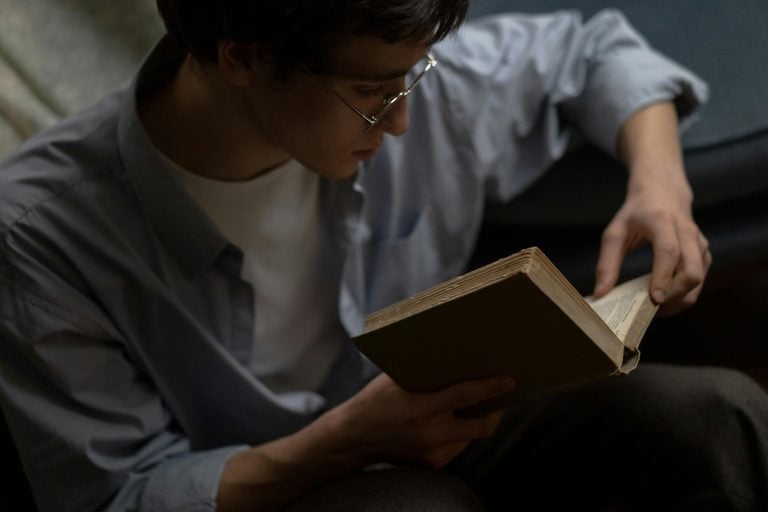

Extroverted kids are not more successful than introverted kids. What looks like an advantage in childhood, the ease of raising a hand, making friends at recess, charming every adult in the room, often reflects social confidence rather than deeper capability. Long-term success draws on qualities like focus, creativity, independent thinking, and emotional depth, qualities that introverted children frequently possess in abundance.
That said, I understand why parents worry. Our schools, our social structures, and honestly a lot of our cultural messaging reward the loudest voice in the room. If your child is quiet, observant, and slow to warm up in groups, it can feel like they’re already losing a race they didn’t choose to enter. I spent decades in advertising leadership before I understood that what I’d been treating as my own professional weakness was actually one of my sharpest assets. The same reframe applies to how we raise and understand our kids.

If you’re thinking through how your own personality shapes the way you raise your children, or how introversion and extroversion play out across your entire family, our Introvert Family Dynamics and Parenting Hub covers the full landscape of these questions. What follows is a closer look at the specific myth that extroverted children have a built-in edge, and why the evidence points in a more complicated, and in the end more encouraging, direction.
Where Does This Belief Come From?
Part of what makes this question so persistent is that the bias feels real in everyday life. Extroverted children often receive more positive feedback in classroom settings. They volunteer answers, they initiate play, they make teachers feel like the lesson landed. A child who sits quietly and processes before responding can look, from the outside, like they’re disengaged or struggling, even when they’re doing the deepest thinking in the room.
What’s your personality type?
Take our free 40-question assessment and get a detailed personality profile with dimension breakdowns, context analysis, and personalised insights.
Discover Your Type8-12 minutes · 40 questions · Free
I watched this dynamic play out in my agencies for years. The loudest person in a brainstorm wasn’t always generating the best ideas. They were generating the most audible ones. Some of my strongest creative directors were people who said almost nothing for the first twenty minutes of a meeting and then offered one observation that reframed everything. The problem was that our internal culture, like most workplaces, had been built to reward the first kind of contribution and overlook the second.
Schools face the same structural bias. Group work, participation grades, oral presentations, and social-emotional learning programs that emphasize verbal expression all tend to favor children who are naturally energized by external interaction. None of that makes extroversion a predictor of success. It makes extroversion a predictor of comfort in environments designed for extroverts.
The National Institutes of Health has noted that infant temperament shows measurable connections to adult introversion, suggesting that these traits are deeply rooted, not deficits to be corrected. A quiet child isn’t a broken extrovert. They’re a person with a different but equally valid way of engaging with the world.
What Does “Success” Actually Mean for a Child?
Before we can answer whether extroverted kids are more successful, we have to be honest about what we’re measuring. If success means getting called on in class more often, yes, extroverted kids have an edge. If success means building a meaningful career, sustaining deep relationships, finding work that matters, and developing the kind of self-awareness that holds up under pressure, the picture looks very different.
Personality research using the Big Five framework (openness, conscientiousness, extraversion, agreeableness, and neuroticism) consistently shows that extraversion correlates with social confidence and positive affect, but conscientiousness, a trait that shows up strongly in many introverted people, is one of the most reliable predictors of long-term achievement across almost every domain. If you want to understand where your child sits across all five of these dimensions, our Big Five Personality Traits Test is a good starting point for that kind of reflection.
I think about the people I’ve hired and promoted over the years. The ones who built the most durable careers weren’t the ones who lit up every room. They were the ones who followed through, who thought carefully before committing, who could sit with a problem long enough to actually solve it. Many of them were introverts who had learned to present themselves effectively without pretending to be something they weren’t.

How Introversion Shows Up in Children (And Why It’s Often Misread)
Introverted children tend to process experiences internally before responding. They often prefer one-on-one play over group settings. They may seem reserved with new people and then reveal remarkable depth once they feel safe. They can focus for extended periods on things that genuinely interest them, a quality that looks like stubbornness to some adults and like passion to others.
What these traits are frequently mistaken for is shyness, anxiety, or social difficulty. And while some introverted children do experience social anxiety, introversion itself is not a disorder or a symptom. It’s a temperament. The distinction matters enormously, because treating introversion as a problem to fix leads parents and educators to push children toward interactions that drain them, while discouraging the solitary activities where they actually thrive.
If you’re a highly sensitive parent raising a child with similar traits, the nuance here can feel especially loaded. Our article on HSP parenting and raising children as a highly sensitive parent addresses how your own sensitivity shapes the way you interpret your child’s needs, and how to tell the difference between protecting them and inadvertently limiting them.
There’s also a meaningful difference between a child who is introverted and one who is struggling with something more complex. Psychology Today’s overview of family dynamics offers useful context for how personality and environment interact, and how to recognize when a child’s withdrawal signals something beyond temperament. If you’re ever uncertain, working with a professional who understands personality differences is worth the conversation. Some parents find it helpful to start by exploring tools like our Borderline Personality Disorder Test when they’re trying to rule out other factors and understand what they’re actually observing in their child or themselves.
The Classroom Bias Is Real, But It Isn’t the Whole Story
There’s a legitimate structural challenge here that parents of introverted children should understand clearly. Many educational environments are built around participation, group collaboration, and verbal demonstration of knowledge. These structures don’t reflect a conspiracy against quiet kids. They reflect the assumptions of a culture that has historically equated speaking with thinking.
An introverted child may genuinely know more than they demonstrate in a group discussion. They may write essays that reveal sophisticated thinking while appearing disengaged during class. Their grades may not fully capture their intellectual depth, which can affect the feedback loop that shapes their own sense of what they’re capable of.
As a parent, your job isn’t to make your introverted child perform like an extrovert. It’s to help them develop the specific skills that will let their genuine strengths become visible in environments that weren’t designed with them in mind. That includes things like learning to advocate for themselves, preparing for social situations in advance rather than improvising, and finding the settings where their natural depth gets recognized rather than overlooked.
I spent a significant part of my advertising career trying to perform extroversion in client presentations and agency pitches. It worked, technically. I could do it. But it cost me something every time, and it wasn’t until I started building presentations around my actual strengths, the careful preparation, the strategic depth, the ability to listen before responding, that I started winning the kind of business I actually wanted to keep.

What Introverted Children Are Often Better At
Framing this as a competition between temperament types isn’t the point, but it’s worth being direct: introverted children often develop specific capabilities that serve them exceptionally well over time.
Deep focus is one of them. The ability to sit with a problem, resist distraction, and work through complexity without needing external stimulation is increasingly rare and increasingly valuable. Many of the careers that matter most in the coming decades, in technology, research, writing, design, and analysis, reward exactly this quality.
Careful observation is another. Introverted children often notice things that others miss. They pick up on emotional undercurrents in a room, they remember details from conversations, and they tend to think before they act in ways that reduce impulsive mistakes. These aren’t soft skills. They’re foundational to good judgment.
Independent thinking is a third. Children who are comfortable with their own company tend to develop a stronger internal compass. They’re less susceptible to peer pressure, not because they don’t care about relationships, but because they’ve spent enough time alone to know what they actually think. That quality matters enormously in adulthood, in careers, in relationships, and in the kind of ethical decision-making that defines character over time.
There’s also the dimension of likeability, which is worth addressing directly because it often gets conflated with extroversion. Being warm, attentive, and genuinely interested in other people isn’t an extrovert trait. Many introverts are deeply likeable precisely because they listen well and make people feel genuinely heard. Our Likeable Person Test explores this in more depth and may challenge some assumptions about what makes someone easy to connect with.
How Parents Can Support an Introverted Child Without Pushing Them to Change
One of the most common mistakes I see parents make, and I say this with genuine empathy because I’ve seen it come from a place of love, is trying to fix introversion. Signing a quiet child up for every social activity, pushing them to perform in group settings, expressing visible concern when they want time alone: all of this communicates, unintentionally, that something is wrong with how they’re wired.
What introverted children need instead is validation and practical scaffolding. They need to hear, explicitly, that being quiet and thoughtful is a strength, not a limitation. They need help developing specific skills like initiating conversations, managing group dynamics, and presenting their ideas confidently, without being told that their natural preference for depth over breadth is a problem.
Some introverted children will gravitate toward careers in caregiving, health, or personal support. If your child shows that kind of orientation, it’s worth knowing that there are structured paths into those fields. Our Personal Care Assistant Test Online is one resource that can help older teens or young adults explore whether that direction fits their strengths and temperament.
Other children will be drawn toward physical health and fitness. Introverted kids who find their confidence through individual sport or personal training often discover a career path that suits them remarkably well. The Certified Personal Trainer Test is a resource worth bookmarking if your child is heading in that direction and wants to understand what the credential process looks like.
More broadly, the most important thing you can do is model the kind of self-acceptance you want your child to develop. If you’re an introverted parent who has made peace with your own temperament, that’s a gift you give your child every time you choose a quiet evening at home without apology, or set a boundary around overstimulating social obligations without guilt.

The Long Arc of Introvert Success
One of the things that gets lost in the short-term framing of childhood success is that introversion tends to age well. The qualities that make introverted children seem slower to warm up, more cautious, less immediately impressive in social settings, often become significant advantages in adulthood.
The capacity for independent work matters more in professional life than it does in a classroom. The preference for depth over breadth becomes an asset in any field that rewards expertise. The tendency to think before speaking builds the kind of credibility that takes years to earn through volume alone.
There’s also the question of what happens to people who’ve been rewarded their whole lives for social performance when that performance stops being enough. Some extroverted adults who built their early success on charm and social fluency find themselves struggling when the work demands sustained independent effort, careful analysis, or the kind of quiet persistence that doesn’t get applause. The skills that carry people through the second half of a career often look more like introvert strengths than extrovert ones.
A paper published in PubMed Central examining personality and life outcomes found that the relationship between extraversion and wellbeing is more context-dependent than often assumed, with introverted individuals showing comparable or stronger outcomes in domains that reward focused effort and deep engagement. That’s not a reason to dismiss the real social advantages extroverted children enjoy. It’s a reason to hold the question of “success” more carefully and with a longer time horizon.
What I Wish Someone Had Told Me as a Kid
My own childhood was shaped by a quiet intensity that adults around me didn’t always know what to do with. I wasn’t the kid who raised his hand first. I was the kid who sat in the back and watched everything, then went home and thought about it for three days. That pattern didn’t go away. It became the foundation of how I eventually ran agencies, how I developed client relationships, and how I made the strategic decisions that kept our work grounded when everyone else was chasing the next shiny thing.
What I wish someone had told me, clearly and without qualification, is that the way I processed the world wasn’t slower or less capable. It was different. And different, in the right context, is exactly what’s needed.
I’ve managed teams that included every personality type imaginable. The extroverts brought energy and momentum. The introverts brought precision and depth. The best work always came from environments where both were genuinely valued, not where one style was treated as the default and the other as a workaround. I tried to build that kind of culture deliberately, though I won’t pretend I always got it right.
If you’re raising an introverted child, the most useful thing you can do is help them understand their own wiring before the world tries to convince them it’s a flaw. Family dynamics shape so much of how children interpret their own traits, and parents who approach introversion with curiosity rather than concern give their children a head start that no amount of forced socialization can replicate.
The American Psychological Association has documented extensively how early experiences shape long-term psychological development. The story a child hears about themselves in their formative years becomes the story they tell themselves for decades. Make sure the story your introverted child hears is one that honors who they actually are.

There’s much more to explore on this topic across our full collection of articles. If questions about introversion, parenting, and family dynamics feel relevant to your life right now, the Introvert Family Dynamics and Parenting Hub is worth spending some time in.
About the Author
Keith Lacy is an introvert who’s learned to embrace his true self later in life. After 20 years in advertising and marketing leadership, including running agencies and managing Fortune 500 accounts, Keith now channels his experience into helping fellow introverts understand their strengths and build fulfilling careers. As an INTJ, he brings analytical depth and authentic perspective to every article, drawing from both professional expertise and personal growth.
Frequently Asked Questions
Are extroverted kids more successful in school?
Extroverted children often receive more positive feedback in traditional classroom settings because those environments reward verbal participation and group engagement. Yet academic performance and long-term achievement depend far more on factors like focus, curiosity, and follow-through than on social confidence. Many introverted children excel academically, particularly in subjects that reward depth of thinking over speed of response.
Does introversion in childhood predict introversion in adulthood?
Yes, to a meaningful degree. Temperament tends to be relatively stable across a person’s life. The National Institutes of Health has noted that early temperament markers, including behavioral inhibition in infancy, show connections to introversion in adulthood. That doesn’t mean personality is fixed, but it does suggest that a quiet child is likely becoming a thoughtful adult, not going through a phase.
How can I tell if my child is introverted or just shy?
Shyness involves anxiety or discomfort around social interaction. Introversion is about energy, specifically, how a person recharges and where they feel most at ease. An introverted child may be perfectly comfortable in social settings but simply prefer smaller groups, quieter environments, or more time alone afterward. A shy child may want connection but feel held back by fear. The two can overlap, but they’re not the same thing, and treating introversion as shyness that needs to be overcome can do real harm.
What careers tend to suit introverted children as they grow up?
Introverted adults tend to thrive in careers that reward focused independent work, deep expertise, careful analysis, and meaningful one-on-one interaction. Fields like writing, research, technology, design, counseling, and many areas of science and medicine are well-suited to introverted strengths. That said, introverts succeed across virtually every career category when they understand their own working style and build environments that support it rather than fight it.
How should I talk to my introverted child about their personality?
Start by framing introversion as a strength rather than a limitation. Help your child understand that preferring quiet, thinking before speaking, and needing time alone are all signs of a particular kind of intelligence, not evidence that something is wrong. Avoid expressing worry about their social life in front of them, since children absorb that anxiety and internalize it as shame. Instead, be curious about how they experience the world and let them teach you what they need.