
The Briggs Myers most balanced personality isn’t a single type with perfect scores across every dimension. Balance, in the context of the Myers-Briggs Type Indicator, describes a person whose preferences sit closer to the middle of each spectrum, making them more adaptable across different situations and relationships. These individuals tend to blend traits from both sides of a given scale, which creates a kind of psychological flexibility that shows up especially clearly inside families.
As an INTJ who spent decades in high-pressure advertising environments, I’ve watched personality balance play out in real time, across boardrooms, creative teams, and eventually, inside my own home. What I’ve come to understand is that “balanced” doesn’t mean “without edges.” It means someone who can hold multiple needs at once without losing themselves in the process.

If you’re sorting through how personality shapes your closest relationships, our Introvert Family Dynamics and Parenting hub covers the full landscape, from how introverted parents connect with their children to how personality differences play out across generations under one roof. This article adds a specific layer to that conversation: what it actually means to be psychologically balanced, and why that quality matters more in family life than most people realize.
What Does “Balanced” Actually Mean in Myers-Briggs Terms?
The MBTI framework measures four pairs of preferences: Introversion versus Extroversion, Intuition versus Sensing, Thinking versus Feeling, and Judging versus Perceiving. Most people land somewhere on a spectrum within each pair rather than at an extreme. When someone’s scores cluster near the midpoint on several of these scales, they’re often described as having a balanced or borderline personality profile.
What’s your personality type?
Take our free 40-question assessment and get a detailed personality profile with dimension breakdowns, context analysis, and personalised insights.
Discover Your Type8-12 minutes · 40 questions · Free
This is different from being “average.” A person with balanced MBTI scores isn’t someone without strong traits. They’re someone whose preferences don’t pull them rigidly in one direction. They can read a room and adjust. They can be organized when the situation demands it and flexible when it doesn’t. They can lead a conversation or follow one, depending on what’s needed.
According to 16Personalities’ framework overview, personality dimensions exist on a spectrum rather than as binary categories, which means most people carry some degree of both sides within each pairing. The question isn’t which pole you inhabit but how far from center you sit. People closer to center tend to shift more fluidly between modes, which is one reason they often feel harder to categorize.
I’ve managed people like this throughout my agency years. They were the ones I couldn’t quite pin down in early conversations. The account manager who could run a tightly structured client presentation and then pivot to a brainstorm with the creative team without missing a beat. The strategist who seemed equally comfortable with data and with intuition. At first, I read that flexibility as a lack of depth. I was wrong.
Which MBTI Types Are Considered the Most Balanced?
No single Myers-Briggs type is officially designated as “the most balanced.” That said, certain types are more commonly described as balanced because of how their cognitive functions interact and complement each other.
INFJ and INTJ are both considered well-integrated types because their dominant and auxiliary functions work in tandem across internal and external worlds. INFJs lead with introverted intuition and support it with extroverted feeling. INTJs, which is my type, lead with introverted intuition and support it with extroverted thinking. Both types have strong internal frameworks that they can apply outward, creating a kind of coherence between inner processing and outer action.
ISFJ and ISTJ are often cited for their practical balance between structure and warmth. They tend to be reliable, grounded, and consistent without being rigid. ENFJ and ENTJ types carry a different kind of balance, one built around leading others while maintaining a clear internal vision.
That said, Truity’s breakdown of personality type rarity is worth noting here. Some of the types most commonly described as balanced, like INFJ, are also among the rarest. That rarity may itself reflect how unusual genuine psychological integration is. Most of us are more skewed toward one end of at least one spectrum.
There’s also a meaningful argument that the most balanced personality isn’t about type at all. It’s about how self-aware someone is within their type. An INTJ who understands their own blind spots, including the tendency toward emotional distance that I’ve had to work on deliberately, can be far more balanced in practice than a type that’s theoretically more centered but lacks that same self-awareness.

How Does Personality Balance Show Up Inside a Family?
Families are personality laboratories. You don’t get to choose your teammates, and you can’t exit the relationship when the dynamics get difficult. That pressure cooker quality is exactly why personality balance matters so much in a family context.
A parent with a more balanced personality profile tends to read their children’s needs with more flexibility. They’re not locked into a single mode of relating. They can be structured when a child needs boundaries and open when a child needs space to process. They can engage emotionally without losing their own footing, and they can hold firm on values without becoming inflexible about method.
Compare that to what happens when a parent’s personality leans heavily toward one pole. An extreme Judging type, for example, may create environments that feel safe and predictable but also rigid and suffocating for a child who needs more freedom to explore. An extreme Perceiving type may offer wonderful creative latitude but struggle to provide the structure some children genuinely need to feel secure.
I think about this in terms of my own parenting. As a strong INTJ, my default is to build systems. I like clarity, plans, and defined expectations. That works well in certain parenting moments and creates friction in others. My children don’t always want a framework. Sometimes they want presence. Learning to set aside the system-builder and just be there has been one of the more demanding personal growth experiences of my adult life.
For parents who identify as highly sensitive, the dynamics get even more layered. Our piece on HSP parenting and raising children as a highly sensitive parent explores how that particular trait intersects with the demands of family life in ways that standard personality type descriptions often miss.
According to Psychology Today’s overview of family dynamics, the patterns established in early family relationships shape how people relate to others across their entire lives. Personality balance within a family doesn’t just affect day-to-day interactions. It shapes the emotional templates children carry into adulthood.
Can Personality Testing Help Families Understand Each Other Better?
Personality testing inside a family context is genuinely useful when it’s used as a tool for understanding rather than a system for labeling. There’s a meaningful difference between saying “you’re an ISFP so you respond this way” and saying “I’ve noticed you tend to process things internally and need time before you can talk about something difficult. Is that accurate?”
The MBTI is one framework among several. The Big Five personality traits test offers a different lens, one grounded in decades of psychological research, that measures openness, conscientiousness, extraversion, agreeableness, and neuroticism. Where MBTI gives you a type, the Big Five gives you a profile across five independent dimensions. Both have their place in helping families understand why certain members seem to approach life so differently.
What I’ve found is that the value of any personality framework inside a family isn’t the label itself. It’s the conversation the label opens. When my team at the agency took personality assessments together, the most productive outcome wasn’t knowing who was an introvert and who wasn’t. It was having a shared vocabulary for talking about how people preferred to work, communicate, and recover. Families need that same vocabulary, maybe even more urgently than work teams do.
That said, personality testing has limits. It doesn’t diagnose mental health conditions, and it shouldn’t be used as a substitute for professional support when something more serious is present. If you’re exploring whether certain patterns in your own or a family member’s behavior might reflect something beyond personality type, a resource like our borderline personality disorder test can offer a starting point for reflection, though it’s always worth following up with a qualified professional.
What Role Does Temperament Play in Psychological Balance?
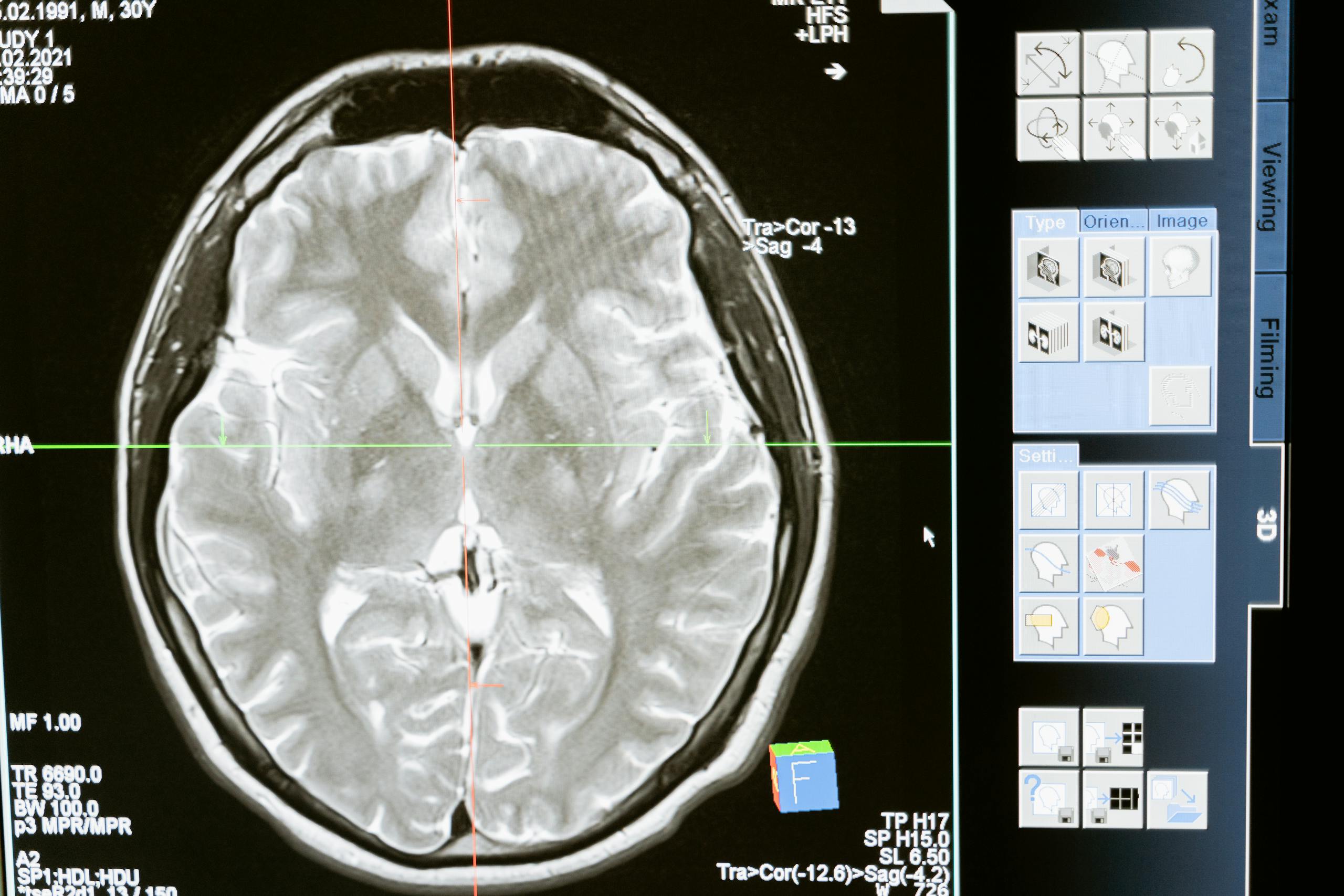
Temperament and personality aren’t the same thing, though they’re deeply connected. Temperament refers to the biologically based tendencies we’re born with, the baseline reactivity, energy level, and emotional sensitivity that show up even in infants before environment has had much chance to shape us. Personality is what develops from that foundation as experience, relationships, and choices accumulate over time.
As MedlinePlus explains in their overview of temperament, these early-appearing traits influence how children respond to new situations, how intensely they feel emotions, and how quickly they adapt to change. A child born with a reactive, sensitive temperament will develop differently than one born with a more easygoing baseline, even in the same family environment.
What this means for the question of balance is important. Some people are born with temperamental profiles that make balance more accessible. Others have to work harder to achieve it. A child born with high emotional reactivity and strong introverted tendencies will need to develop more deliberate strategies for managing their inner world before they can bring that balanced quality to their relationships. That’s not a flaw. It’s just a longer path.
I was that child. My early temperament was intensely internal, reactive to overstimulation, and prone to withdrawing under pressure. What looked like emotional unavailability in my early career was actually a coping mechanism built on a reactive temperament that nobody had ever helped me understand. The balance I’ve developed as an adult came from deliberate work, not from being naturally centered.
There’s something worth acknowledging here about how personality balance interacts with the demands of caregiving roles. Whether you’re a parent, a personal care professional, or someone supporting a family member through a difficult time, understanding your own temperament helps you recognize where you’re drawing from genuine strength and where you’re running on fumes. Our personal care assistant test online touches on some of these dynamics in the context of professional caregiving, but the underlying questions about temperament and sustainability apply just as much at home.
How Does Balance Develop Over Time in Personality?
Carl Jung, whose work forms the theoretical foundation for the MBTI, believed that psychological development across a lifetime involves gradually integrating the less dominant parts of your personality. He called this process individuation. In practical terms, it means that the qualities you’ve suppressed or underdeveloped in your earlier years tend to become more accessible as you mature.
For an INTJ like me, that meant slowly developing more comfort with the feeling dimension of experience. Not becoming a feeling-dominant type, but becoming less allergic to emotional processing, both my own and others’. In my agency years, I watched this happen in reverse too. Some of the most emotionally expressive people on my teams grew more comfortable with analytical rigor over time. The poles don’t disappear. They just become less absolute.
Findings published in Frontiers in Psychology support the idea that personality traits show meaningful development across adulthood, with many people showing increased emotional stability and agreeableness as they age. This isn’t universal, and it’s not automatic. It tends to happen more in people who actively reflect on their patterns and make deliberate choices about how they want to grow.
Inside families, this developmental arc creates interesting dynamics. Parents who are actively working on their own balance are modeling something powerful for their children. They’re showing that personality isn’t a fixed cage but a living structure that can be expanded. That’s a gift that no personality test can fully capture but that children absorb deeply through observation.

What Happens When Personality Imbalance Creates Family Friction?
Most family conflict isn’t really about the surface issue. It’s about two people with different personality profiles trying to get the same need met in incompatible ways. A Judging parent wants a decision made by Tuesday. A Perceiving child wants to keep options open until they feel ready. Neither is wrong in any fundamental sense. They’re just operating from different internal rhythms.
The friction intensifies when neither party has the self-awareness to name what’s actually happening. Without that language, the conflict becomes personal. “You’re being controlling” versus “you’re being irresponsible.” The underlying personality difference never gets addressed because the conversation never gets past the accusation.
Personality balance, in this context, isn’t just about having moderate scores on an assessment. It’s about having enough awareness of your own defaults that you can recognize when they’re creating unnecessary friction. An INTJ who knows they tend toward impatience with open-ended processes can choose to slow down in a conversation with a Perceiving family member. That choice is balance in action.
Blended family dynamics add another layer of complexity to this. When children from different households come together, they bring not just different personalities but different family cultures, different emotional vocabularies, and different expectations about how relationships work. Psychology Today’s perspective on blended family dynamics highlights how these differences can either become sources of chronic conflict or, with enough awareness and patience, genuine sources of richness.
What I’ve noticed in my own experience is that personality friction in families tends to ease not when people change their types but when they develop genuine curiosity about each other. Asking “what does this feel like from your side?” is a more powerful intervention than any personality framework. The framework just gives you a reason to ask the question in the first place.
Is Balance a Trait You Can Actively Develop?
Yes, though it requires a specific kind of effort. Developing balance isn’t about suppressing your natural preferences. It’s about expanding your range without abandoning your core. An introvert doesn’t become balanced by forcing themselves to be extroverted. They become more balanced by developing the capacity to engage socially in ways that feel authentic rather than performative, and by recovering effectively afterward.
In my advertising career, I had to develop my extroverted functions deliberately. Presenting to a room of fifty people wasn’t natural for me. Neither was the kind of spontaneous relationship-building that good client service requires. What I found was that I could develop competence in those areas without them ever becoming preferences. I could do them well. I just needed to structure my energy around them differently than an extrovert would.
Certain professions demand this kind of deliberate range-building more explicitly. A fitness professional, for example, needs to be both technically knowledgeable and interpersonally attuned, both disciplined in their own practice and patient with clients at very different stages. Our certified personal trainer test touches on some of the competency dimensions that reflect this kind of integrated balance across knowledge, communication, and motivation.
For families specifically, developing balance often means working on the dimension that feels least natural. An analytically dominant parent may need to practice sitting with emotional ambiguity rather than immediately trying to solve it. A highly feeling-oriented parent may need to develop more comfort with setting firm boundaries even when it creates temporary discomfort. Neither is abandoning who they are. Both are expanding what they can offer.
There’s also the question of how others perceive our balance, which matters in family relationships more than we sometimes acknowledge. Whether people experience us as grounded, approachable, and genuine affects the quality of every interaction. Our likeable person test explores some of the qualities that make people feel safe and connected in relationships, many of which overlap with what we’d describe as psychological balance in practice.
Research published through PubMed Central points to self-regulation as a core component of psychological well-being, and self-regulation is essentially what personality balance looks like from the inside. It’s the capacity to feel a strong pull in one direction and choose a more considered response. That capacity can be developed. It’s not fixed at birth.

What Does Balance Look Like for Introverts Specifically?
For introverts, balance tends to involve a specific tension: the need for internal processing time versus the demands of relational presence. Families are inherently relational environments. They require you to show up, engage, and be available in ways that can feel genuinely depleting if you’re wired for depth over breadth.
A balanced introvert doesn’t solve this by becoming more extroverted. They solve it by building the kind of self-knowledge that lets them show up fully when it matters most, and by creating the recovery structures that make sustained engagement possible. That’s not a compromise. It’s a strategy.
What I’ve found in my own family life is that the moments of genuine connection tend to happen in the quieter spaces. Not at the big family gatherings where I’m managing social energy all evening, but in the one-on-one conversations, the shared meals without screens, the walks where nobody has an agenda. Those are the environments where my introverted capacity for depth becomes an actual advantage rather than a limitation.
Balance, for introverts in family life, often means learning to recognize those moments and protect them rather than filling every available space with activity. It means trusting that presence doesn’t require performance. And it means being honest with the people you love about what you need in order to keep showing up, rather than quietly depleting yourself until you have nothing left to give.
There’s more to explore on all of this in our Introvert Family Dynamics and Parenting hub, where we look at the full range of ways personality shapes the experience of family life, from how introverted parents connect with their children to how different personality types handle conflict, intimacy, and the long work of raising people who feel genuinely known.
About the Author
Keith Lacy is an introvert who’s learned to embrace his true self later in life. After 20 years in advertising and marketing leadership, including running agencies and managing Fortune 500 accounts, Keith now channels his experience into helping fellow introverts understand their strengths and build fulfilling careers. As an INTJ, he brings analytical depth and authentic perspective to every article, drawing from both professional expertise and personal growth.
Frequently Asked Questions
What is the most balanced Myers-Briggs personality type?
No single MBTI type holds an official designation as the most balanced. Types like INFJ and INTJ are often described as well-integrated because their dominant and auxiliary cognitive functions complement each other across internal and external modes. That said, balance in practice depends more on self-awareness within a type than on the type itself. A person with moderate scores across multiple MBTI dimensions may also be described as balanced because their preferences don’t pull them rigidly toward one extreme.
Can an introvert have a balanced personality?
Absolutely. Introversion is a preference for internal processing and solitary recovery, not a measure of psychological health or integration. Many introverts develop highly balanced personalities precisely because their reflective nature gives them more access to self-awareness. Balance for an introvert looks different than it does for an extrovert, but it’s equally achievable. An introvert who understands their own needs and has developed the capacity to engage fully when it matters most can be among the most grounded and stable people in any family or team.
How does personality balance affect parenting?
Parents with more balanced personality profiles tend to be more adaptable in their responses to their children’s needs. They can shift between structure and flexibility, between emotional presence and practical guidance, without being locked into a single mode. This adaptability helps children feel seen across a wider range of situations. Parents with more extreme personality profiles can still be excellent parents, but they may need to develop deliberate strategies to compensate for the areas where their natural style creates friction with certain children.
Is personality balance the same as being an ambivert?
Not exactly. Ambiversion specifically describes someone whose introversion and extroversion scores fall near the middle of that single dimension. Personality balance, in the broader Myers-Briggs sense, refers to moderation or integration across multiple dimensions, including Sensing versus Intuition, Thinking versus Feeling, and Judging versus Perceiving. Someone can be a clear introvert and still have a balanced overall personality profile if their other dimensions are well-integrated. The two concepts overlap but aren’t identical.
Can personality balance be developed, or is it fixed?
Personality balance can be developed, though it requires deliberate effort and honest self-reflection. While core temperament tendencies appear to be biologically influenced and relatively stable, the range and flexibility with which people express their personality can expand significantly over time. Adults who actively reflect on their patterns, seek feedback from people they trust, and make conscious choices about how they want to grow tend to develop more psychological balance than those who don’t engage in that kind of self-examination. It’s not about changing who you are. It’s about expanding what you’re capable of.