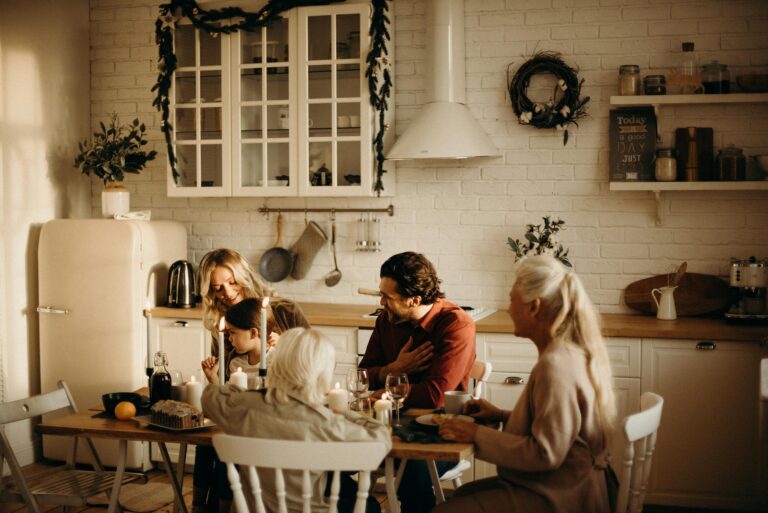

The characteristics of an introverted person go far deeper than simply preferring quiet or feeling drained by crowds. At their core, people with this personality trait are wired to process the world internally, drawing energy from reflection rather than interaction, and finding meaning in depth rather than breadth. These characteristics shape how introverts think, connect, parent, and lead, often in ways that go unrecognized by the people around them.
Quiet people are frequently misread. I spent the better part of two decades running advertising agencies before I fully understood what my own introversion actually looked like from the inside. From the outside, I probably seemed reserved in client meetings or slow to warm up in social settings. From the inside, I was processing everything, cataloguing details, forming opinions, and waiting for the right moment to speak with precision. Those are not the same thing as being shy or disengaged. They are the defining characteristics of how an introverted mind actually works.
If you’ve ever wondered whether your personality traits fit the introvert profile, or you’re trying to understand a family member who seems to live more inward than outward, this article is for you. We’ll cover what these characteristics actually look like in daily life, how they show up in relationships and parenting, and why understanding them changes everything.

Much of what I write about here connects to a broader conversation about how introversion shapes the way we parent, build families, and relate to the people closest to us. If that resonates, our Introvert Family Dynamics and Parenting Hub pulls together a full range of perspectives on exactly that, and it’s worth exploring alongside this article.
What Are the Core Characteristics of an Introverted Person?
Introversion is not a disorder, a flaw, or a social limitation. It is a personality orientation that shapes how a person processes stimulation, restores their energy, and engages with the world around them. The National Institutes of Health has noted that temperament traits associated with introversion can be observed as early as infancy, suggesting this is a deeply wired aspect of personality rather than something learned or chosen.
What’s your personality type?
Take our free 40-question assessment and get a detailed personality profile with dimension breakdowns, context analysis, and personalised insights.
Discover Your Type8-12 minutes · 40 questions · Free
Several characteristics tend to appear consistently across people who identify as introverts, regardless of culture, background, or profession.
Internal Energy Orientation
The most foundational characteristic is where a person draws their energy. Introverts restore through solitude and inner reflection. Social interaction, even enjoyable interaction, costs energy rather than generating it. After a full day of client presentations at my agency, I needed an hour alone before I could function well at home. My extroverted business partner could walk out of those same meetings buzzing. Neither of us was wrong. We were simply wired differently.
Preference for Depth Over Breadth
Introverts tend to prefer fewer, deeper relationships over a wide social network. They are drawn to meaningful conversations and often find small talk genuinely exhausting, not because they are antisocial, but because it doesn’t match how their minds want to engage. I watched this play out constantly in agency settings. My introverted team members would spend an hour in deep conversation with one colleague and feel satisfied. The extroverts needed the full room.
Thoughtful Before Verbal
Introverts typically think before they speak. They process internally, often sitting with an idea for some time before expressing it. In meetings, this can look like hesitation or disengagement. In reality, it usually means they’re forming something more considered. Some of my best creative directors were introverts who rarely spoke in brainstorms but would send a single email afterward that reframed the entire brief.
Sensitivity to Stimulation
Many introverts are more sensitive to external stimulation than their extroverted counterparts. Loud environments, crowded spaces, and constant interruptions can feel genuinely draining rather than energizing. This is particularly relevant in parenting contexts, where the sensory demands of family life can be relentless. For those who are both introverted and highly sensitive, the overlap creates a distinct parenting experience, something explored thoughtfully in our piece on HSP parenting and raising children as a highly sensitive parent.
Rich Inner World
Introverts tend to have a vivid and active internal life. They think in layers, often connecting ideas across domains, noticing patterns others miss, and returning to past experiences to extract new meaning. My INTJ wiring amplifies this. I can spend a long drive working through a strategic problem entirely in my head, arriving at a decision without having said a word to anyone. That internal processing is not withdrawal. It is how I do some of my best thinking.

How Do These Characteristics Show Up in Relationships?
Understanding the characteristics of an introverted person matters most in the context of relationships, because that’s where misunderstandings tend to do the most damage. A partner who doesn’t understand why their introverted spouse needs an hour of quiet after work may interpret that need as rejection. A parent who doesn’t recognize their child’s introversion may push them toward social situations that leave the child depleted and anxious.
Psychology Today’s overview of family dynamics highlights how personality differences within families often sit at the root of recurring conflict. When those differences go unnamed, family members tend to fill the gap with assumptions, and assumptions are rarely generous.
Introverts in relationships often bring qualities that are genuinely valuable but easy to overlook. They tend to be thoughtful listeners. They don’t speak carelessly. They are often fiercely loyal to the people they’ve chosen to let close. At the same time, they may struggle to initiate social plans, express needs verbally in the moment, or sustain the kind of constant contact that some partners or family members crave.
One pattern worth naming is what happens when two introverts are in a relationship together. There’s a temptation to assume this is automatically easier. In some ways it is. In others, it creates its own friction. Both partners may default to internal processing, meaning important conversations get delayed or avoided entirely. The 16Personalities piece on introvert-introvert relationship dynamics addresses this tension directly, and it’s worth reading if you’re in or raising a family where introversion runs through both sides.
Knowing your own personality profile, and being curious about the profiles of the people you love, changes how you interpret behavior. If you haven’t already explored your broader personality structure, the Big Five personality traits test offers a research-grounded framework that goes beyond type labels and into the dimensions that actually predict how we behave in close relationships.
What Do These Traits Look Like in Parenting?
Parenting as an introvert carries a particular texture that doesn’t get discussed enough. Children, especially young children, are relentless sources of stimulation. They need constant presence, they interrupt without warning, they want connection on their schedule, not yours. For an introverted parent, this can create a low-level exhaustion that has nothing to do with how much you love your child.
My own experience of this came not through parenting directly, but through managing large teams at my agencies. The constant availability that leadership required, the open-door culture, the expectation that I should be energized by interaction, wore me down in ways I couldn’t always explain. I eventually learned to build recovery time into my schedule deliberately. Introverted parents need to do the same thing, and doing so isn’t selfish. It’s sustainable.
What introverted parents often bring to their children is something genuinely rare: the quality of real attention. When an introverted parent is present with their child, they tend to be fully present. They notice things. They ask the kind of questions that make a child feel genuinely seen. They model the value of reflection and inner life. These are not small gifts.
The challenge comes in the moments when the parent’s need for quiet collides with the child’s need for engagement. Naming that tension honestly, both with yourself and eventually with your child, is one of the most useful things an introverted parent can do. Children who understand that a parent needs quiet time to recharge don’t experience that need as abandonment. They experience it as honesty.

Are These Characteristics Fixed, or Do They Shift Over Time?
One of the most common questions I hear is whether introversion can change. The short answer is that the underlying orientation tends to be stable, but how it expresses itself can shift considerably across a lifetime.
In my twenties, I pushed hard against my introversion. I built an agency culture around extroverted norms because I thought that was what leadership required. I was in meetings constantly, hosting events, performing energy I didn’t actually have. By my late thirties, I started paying attention to what was actually costing me and what was giving me back. The introversion hadn’t changed. My relationship to it had.
Published findings in PubMed Central on personality stability suggest that while core traits remain relatively consistent across adulthood, people do develop greater flexibility in how they express those traits as they accumulate experience and self-awareness. An introvert doesn’t become an extrovert. They become a more skillful introvert.
This matters for families because it means an introverted child isn’t broken and doesn’t need fixing. They need understanding and space to develop their own relationship with their wiring. Pushing an introverted child toward constant socialization without acknowledging their need for recovery is a bit like asking a left-handed person to write with their right hand. You can train compliance, but you can’t change the underlying orientation, and the cost of the effort shows up elsewhere.
How Do Introverted Characteristics Interact with Other Personality Factors?
Introversion doesn’t exist in isolation. It interacts with other personality dimensions in ways that create meaningfully different experiences. An introverted person who also scores high in neuroticism, for example, may experience social situations very differently from an introverted person who scores high in emotional stability. The introversion is the same. The texture of living with it is not.
This is worth keeping in mind when you’re trying to understand yourself or someone in your family. Introversion explains the energy orientation. It doesn’t explain everything. Other factors, including anxiety, sensitivity, attachment patterns, and cognitive style, all layer on top of that foundation.
Personality testing can be genuinely useful here, not as a way of boxing people in, but as a starting point for more honest conversation. If you’re exploring what drives your behavior in social and professional settings, the likeable person test offers an interesting lens on how others tend to perceive you, which can be illuminating for introverts who often wonder whether their quietness reads as warmth or distance.
It’s also worth noting that some traits that look like introversion can sometimes reflect other patterns worth understanding more carefully. Persistent social withdrawal, difficulty regulating emotions in close relationships, or intense fear of abandonment may point toward something worth exploring with a professional. Our borderline personality disorder test is one resource for people who want to better understand where their patterns might be coming from, though it’s not a substitute for clinical guidance.
A separate but related question comes up in professional contexts. Introverts often wonder whether their natural characteristics make them suited for certain career paths. Roles that involve sustained focus, deep listening, careful observation, and thoughtful communication are often a strong fit. Some introverts find that positions requiring intensive one-on-one care and support align well with their natural depth of attention. If you’re exploring that direction, the personal care assistant test online can help you assess whether your skills and temperament fit that kind of work.

What Happens When Introverted Characteristics Go Unrecognized in Families?
Families are systems. When one person’s needs go consistently unrecognized, the whole system absorbs the pressure. An introverted parent who never gets recovery time becomes irritable, withdrawn, or emotionally unavailable in ways that have nothing to do with their love for their family. An introverted child who is constantly pushed past their limits becomes anxious, avoidant, or develops a private self that they never share with the people closest to them.
Psychology Today’s perspective on blended family dynamics points out that personality differences become especially pronounced when families are handling change or stress. In those moments, people revert to their most fundamental coping patterns. Introverts withdraw. Extroverts escalate. Without a shared language for those patterns, both sides interpret the other’s behavior as indifference or aggression.
The most useful thing any introverted person can do within a family system is name what they need before they reach their limit. Not after. Not in the middle of a conflict. Before. That kind of proactive communication is genuinely hard for many introverts, who tend to process privately until they’re already depleted. But it’s also the thing that protects relationships from the slow erosion of accumulated misunderstanding.
At my agency, I eventually learned to tell my team when I was running low on social bandwidth. Not in those words, exactly. But I’d say something like, “I need to close my door for an hour to think through this.” That simple act of naming changed how people interpreted my behavior. It stopped reading as rejection and started reading as self-awareness. Families can learn the same skill.
Can Introverted Traits Become Genuine Strengths in Family Life?
Absolutely, and this is the part of the conversation I find most worth having. Introversion is not a deficit that families have to work around. It’s a set of characteristics that, when understood and channeled well, add something irreplaceable to how a family functions.
Introverted parents tend to create calm environments. They model the value of thinking before speaking. They often have a high tolerance for the kind of quiet, sustained attention that children need during homework, creative play, or difficult conversations. They tend to be careful observers of their children’s emotional states, noticing shifts that a more externally focused parent might miss.
Introverted partners tend to be deeply loyal and genuinely attentive in one-on-one settings. They may not be the life of the party at family gatherings, but they’re often the person who remembers what you said three months ago and brings it back at exactly the right moment.
Some introverts also find that their characteristics align naturally with health and wellness roles that require patience and careful attention. If you’re curious whether your personality fits a coaching or fitness support role, the certified personal trainer test is worth exploring as one measure of how your traits translate into professional practice.
The broader personality science here is worth grounding in something solid. Research published in PubMed Central on personality and wellbeing suggests that the relationship between introversion and life satisfaction is strongly mediated by self-acceptance. Introverts who understand and accept their own characteristics report significantly better outcomes than those who spend their energy trying to be someone else. That finding tracks completely with my own experience.
The personality landscape is genuinely varied. Truity’s breakdown of personality type distribution is a useful reminder that introversion exists across a wide spectrum of types, and that no two introverts are identical. What we share is the orientation. What we do with it is entirely our own.
And for those moments when introversion intersects with something harder, like trauma responses that look like withdrawal, or anxiety that masquerades as preference for solitude, the American Psychological Association’s trauma resources offer a grounded starting point for distinguishing between personality and something that deserves more targeted support.
There’s a lot more to explore on how these characteristics ripple through family life, parenting choices, and the relationships we build at home. The Introvert Family Dynamics and Parenting Hub covers this territory from multiple angles, and it’s a good place to continue if today’s article opened something up for you.
About the Author
Keith Lacy is an introvert who’s learned to embrace his true self later in life. After 20 years in advertising and marketing leadership, including running agencies and managing Fortune 500 accounts, Keith now channels his experience into helping fellow introverts understand their strengths and build fulfilling careers. As an INTJ, he brings analytical depth and authentic perspective to every article, drawing from both professional expertise and personal growth.
Frequently Asked Questions
What are the most common characteristics of an introverted person?
The most consistent characteristics include drawing energy from solitude rather than social interaction, preferring depth in conversations and relationships over breadth, processing thoughts internally before expressing them, sensitivity to overstimulation, and maintaining a rich inner life. These traits show up differently depending on other personality factors, but the core energy orientation tends to be stable across situations and over time.
Is introversion the same as being shy or antisocial?
No, and this distinction matters. Shyness involves anxiety or fear around social situations. Antisocial behavior involves a disregard for social norms or other people’s wellbeing. Introversion is simply an energy orientation. Many introverts are warm, socially skilled, and genuinely enjoy connection. They simply need recovery time afterward in a way that extroverts typically don’t. An introvert can give a keynote speech to a thousand people and still need two hours alone to recharge afterward.
How do introverted characteristics affect parenting?
Introverted parents often bring exceptional depth of attention, a calm presence, and strong observational skills to their parenting. They tend to notice emotional shifts in their children that others might miss. The challenge is that parenting is inherently high-stimulation, and introverted parents need to build deliberate recovery time into their routines to avoid cumulative depletion. Naming their need for quiet to their children, rather than disappearing without explanation, helps prevent misinterpretation and models healthy self-awareness.
Can introversion change over a person’s lifetime?
The underlying orientation tends to remain stable, but how a person expresses and manages their introversion can shift considerably with age and experience. Many introverts develop greater social fluency over time, learning to engage effectively in extroverted environments without losing their fundamental need for recovery. What changes is not the wiring itself but the relationship a person has with it. Self-acceptance and self-knowledge tend to make introversion feel less like a limitation and more like a lens.
What is the difference between introversion and high sensitivity?
Introversion and high sensitivity are related but distinct traits. Introversion refers specifically to energy orientation, where a person draws energy from internal rather than external sources. High sensitivity, sometimes called sensory processing sensitivity, refers to a deeper processing of sensory and emotional information, often accompanied by greater emotional reactivity and awareness. Many highly sensitive people are also introverts, but not all introverts are highly sensitive, and some highly sensitive people are extroverted. The overlap is common enough that understanding both traits together can be especially clarifying.