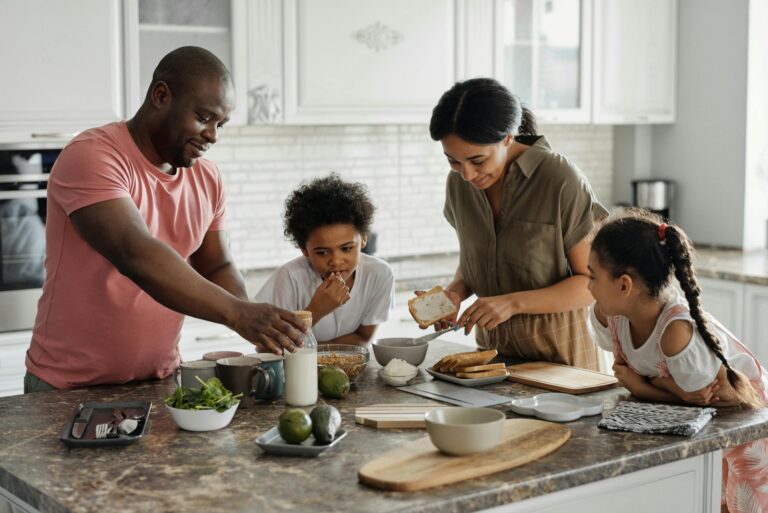

Parenting an extroverted child as an introvert, or raising a quiet child when you’re wired for constant connection, creates a specific kind of friction that most parenting books barely mention. The Center for Parenting Education recognizes that understanding the introvert-extrovert dynamic between parents and children is one of the most practical tools families can use to reduce conflict, build genuine connection, and stop misreading each other’s needs as problems to fix. At its core, this isn’t about changing who anyone is. It’s about seeing each other more clearly.

My daughter once told me I was “boring” during a family vacation because I kept retreating to the hotel room while she wanted to be at the pool, the arcade, anywhere with noise and movement. She wasn’t wrong about what I was doing. What she didn’t understand yet was why. And honestly, I hadn’t done a good enough job explaining it to her. That gap between us wasn’t a character flaw on either side. It was a personality difference we hadn’t learned to talk about yet.
If you’re working through these dynamics in your own home, our Introvert Family Dynamics and Parenting hub covers the full range of how personality shapes the parent-child relationship, from communication styles to discipline approaches to the ways introverted parents can show up fully without burning out.
Why Do Introvert-Extrovert Mismatches Create So Much Tension at Home?
There’s a particular kind of exhaustion that comes from living with someone whose energy needs are the opposite of yours. I ran advertising agencies for over two decades, and I spent enormous amounts of professional energy in rooms full of people. Brainstorming sessions, client pitches, agency-wide meetings. By the time I got home, I needed silence the way a person who’d been running needs water. My family didn’t always read that correctly. To them, my withdrawal looked like indifference.
What’s your personality type?
Take our free 40-question assessment and get a detailed personality profile with dimension breakdowns, context analysis, and personalised insights.
Discover Your Type8-12 minutes · 40 questions · Free
This is the central misreading that happens in households where introverts and extroverts share space. Extroverts tend to process externally. They think out loud, they recharge through interaction, and they interpret quiet as distance or disapproval. Introverts process internally. They think before speaking, they recharge through solitude, and they interpret constant social demands as a kind of pressure that depletes rather than energizes.
Neither wiring is a problem. Both become problems when neither person understands what the other actually needs. Psychology Today’s overview of family dynamics points out that unspoken assumptions about how family members should behave are among the most common sources of household conflict. Personality differences rarely get named directly. Instead, they show up as arguments about chores, complaints about someone being “too loud” or “too distant,” or a slow accumulation of resentment that nobody can quite trace back to its source.
Children don’t arrive with instruction manuals. And most parents don’t walk into parenthood with a clear map of their own personality either. That’s why frameworks matter, not as labels to limit people, but as tools for building a shared vocabulary inside the family.
What Does Personality Research Actually Tell Us About Introvert and Extrovert Children?
One of the things I find genuinely fascinating about introversion is how early it appears. The National Institutes of Health has published findings suggesting that infant temperament, particularly inhibited versus uninhibited responses to novelty, can predict introversion well into adulthood. Your child’s personality isn’t something they picked up from you, or from school, or from their friend group. It’s something they arrived with.
That matters enormously for parents. When an extroverted child seems exhausting to an introverted parent, or when a quiet child seems worrying to an extroverted parent, neither reaction is wrong. Both are natural responses to someone whose needs feel unfamiliar. What changes things is recognizing that the difference is constitutional, not correctable, and not something that needs correcting in the first place.
If you want a more structured way to understand your own personality profile before trying to understand your child’s, the Big Five Personality Traits test measures openness, conscientiousness, extraversion, agreeableness, and neuroticism in a way that’s grounded in decades of psychological research. It’s one of the more reliable tools for seeing yourself on paper, which is often the first step toward seeing your child more clearly too.

The introvert-extrovert spectrum also intersects with temperament dimensions that aren’t always captured in simple personality categories. Some children are highly sensitive, reacting intensely to sensory input, emotional cues, and environmental changes. If you suspect your child might fall into this category, or if you’re a parent who does, the article on HSP parenting and raising children as a highly sensitive parent addresses the specific challenges that come with that overlap. High sensitivity and introversion often travel together, but they’re not the same thing, and treating them as identical can lead to misunderstanding both.
How Does an Introvert Parent Actually Raise an Extroverted Child Well?
There’s a version of this question that sounds like a complaint. What I’m asking is something more practical: how do you genuinely meet the needs of a child whose energy runs in the opposite direction from yours, without either depleting yourself or making them feel like their enthusiasm is a burden?
I managed extroverts throughout my agency years. Some of the most talented creatives I worked with were people who needed to be in the room, talking through ideas out loud, bouncing energy off whoever was nearby. As an INTJ, I didn’t share that process. My best thinking happened alone, usually late, usually in writing. But I learned that my job wasn’t to make them work like me. My job was to create conditions where their process could produce results.
Parenting an extroverted child as an introvert asks for something similar. A few things that actually work:
Scheduled social time removes the pressure from spontaneous requests. When an extroverted child knows that Saturday afternoon is designated for a playdate or an outing, they’re less likely to be constantly lobbying for stimulation throughout the week. It gives them something to anticipate and gives you something to plan around.
Naming your own needs without apology is more effective than disappearing without explanation. When I finally told my daughter that I needed about thirty minutes of quiet after work before I could be fully present, she understood it better than I expected. Children are often more capable of accepting our needs than we give them credit for, especially when we explain them honestly instead of just acting on them silently.
Finding overlap activities matters too. Extroverted children don’t always need another person to be loud with. Sometimes they need an audience, or a companion who’s present even if not fully participatory. I could sit in the same room while my daughter talked through something, contributing occasionally, and that was often enough. Full engagement looked different from what she’d get from an extroverted parent, but it was still engagement.
A study published in PubMed Central on parenting styles and child outcomes reinforces something that parents across personality types tend to underestimate: responsiveness matters more than the specific form that responsiveness takes. An introverted parent who is genuinely present and attuned, even quietly, offers something deeply valuable to an extroverted child. success doesn’t mean become extroverted. It’s to stay connected.
What About Extroverted Parents Raising Introverted Children?
This dynamic gets less attention, partly because extroversion is culturally treated as the default, and partly because introverted children often seem easier in some surface ways. They’re quieter. They don’t demand constant stimulation. They can occupy themselves. But extroverted parents sometimes read all of that as a problem.
I’ve watched this play out from the other direction. An extroverted client of mine, a founder who ran his company the way a conductor runs an orchestra, loud, expressive, always performing, had a son who was almost painfully introverted. The boy was brilliant. He was also the kind of kid who’d rather read in his room than come to his father’s company picnic. My client took it personally for years before someone helped him see what was actually happening.

Extroverted parents of introverted children often make a few predictable mistakes. They interpret quiet as sadness. They push social situations as cures for what they perceive as shyness. They fill silences because silence feels uncomfortable to them, not realizing that their child uses silence to think. And they sometimes, without meaning to, communicate that their child’s natural way of being is something that needs to be fixed.
The American Psychological Association’s resources on trauma and stress responses are worth consulting here, because chronic experiences of feeling misunderstood or pressured to be different can accumulate in ways that affect a child’s sense of self over time. This isn’t about dramatic events. It’s about the slow erosion that happens when a child learns that who they are isn’t quite right.
What extroverted parents can offer introverted children is actually quite powerful, if it’s channeled well. Social confidence. The ability to read a room. Comfort with external expression. These are skills introverted children can genuinely benefit from observing and learning, as long as they’re offered as additions to the child’s toolkit rather than replacements for their natural temperament.
One practical shift that helps enormously: replacing “why are you so quiet?” with “what are you thinking about?” The first question treats introversion as a deficit. The second treats it as a signal that something interesting is happening internally. That reframe costs nothing and changes everything about how an introverted child experiences being seen.
How Do Introvert-Extrovert Dynamics Play Out Between Siblings?
Sibling relationships where one child is introverted and another is extroverted create their own specific friction, and parents often get caught in the middle of it without understanding what’s actually driving the conflict.
The extroverted sibling wants to play, interact, and share space constantly. The introverted sibling needs periods of genuine solitude to feel regulated and functional. When those needs collide in a shared bedroom or a long car ride, the result looks like conflict over toys or noise or personal space, but it’s really a collision of fundamentally different energy systems.
Research on family dynamics from Psychology Today notes that sibling relationships are among the most formative and most underexamined relationships in a person’s development. How children learn to negotiate difference with a sibling often becomes a template for how they handle difference with partners, colleagues, and friends later in life.
Parents who help siblings name and respect each other’s needs are doing something genuinely significant. Not just keeping the peace in the short term, but modeling a kind of relational intelligence that will serve both children across their entire lives. The introverted child learns that their need for quiet is legitimate and worth advocating for. The extroverted child learns that other people’s needs aren’t personal rejections.
Understanding how likeable and socially connected a child feels in their relationships can also be worth examining. Our likeable person test offers a useful reflection on the social qualities that tend to build connection across personality types, which can be a helpful starting point for conversations with older children and teens about how they come across to others.
What Practical Strategies Does the Center for Parenting Education Recommend?
The Center for Parenting Education’s approach to the introvert-extrovert dynamic in families is grounded in something I’ve come to believe deeply from my own experience: you cannot solve a problem you haven’t named. Most family friction around introversion and extroversion persists because the underlying personality difference is never made explicit. It stays as a vague sense that someone is being difficult, or selfish, or antisocial, when the reality is much simpler and much less charged.

Several strategies tend to work across different family configurations:
Create physical space for both needs. Families benefit from having areas where noise and activity are welcome and areas where quiet is protected. This doesn’t require a large house. It requires an agreement. In my own home, the kitchen table was always fair game for conversation and activity. My home office was understood as a space where I needed to not be interrupted unless something was urgent. Simple, explicit, respected.
Build transition rituals into daily routines. Introverted family members often need a buffer between high-stimulation environments and home. Extroverted family members often need a check-in period when everyone first arrives. Acknowledging both needs and building them into the structure of the day reduces the number of moments where one person’s need feels like a rejection of another’s.
Teach children to self-identify their energy states. Even young children can learn to say “I need some quiet time” or “I want to talk about something” when they have language for what they’re experiencing. Parents who model this kind of self-awareness, who say out loud “I’m feeling overstimulated right now, I need ten minutes,” give children permission to do the same.
Avoid treating one style as the standard. In many families, extroversion is implicitly treated as the healthy baseline and introversion as a deviation from it. Conversations like “you should come out of your shell” or “stop being so loud” both communicate that the child’s natural state is wrong. Neither does. Both need context, accommodation, and respect.
Some families find that working with a parenting educator or family therapist helps them develop these frameworks in a guided way. If you’re exploring support roles that work alongside families in this capacity, our personal care assistant test online and certified personal trainer test offer insight into how different support professionals are trained to meet individual needs, which can inform how you think about the kinds of professional guidance that might serve your family’s specific dynamics.
How Does Understanding Personality Protect Against Misdiagnosis and Misreading?
One of the more serious consequences of not understanding introversion and extroversion in children is the risk of misreading personality traits as symptoms of something clinical. Introverted children who prefer solitude and take time to warm up in social situations are sometimes flagged as anxious, depressed, or socially impaired. Extroverted children who need stimulation and struggle with quiet environments are sometimes labeled as hyperactive or oppositional.
I want to be careful here, because some children do have clinical needs that require professional attention. Personality understanding doesn’t replace that. What it does is provide a baseline, a sense of what is simply characteristic of this child, so that genuine departures from that baseline are easier to notice and take seriously.
A PubMed Central study on personality and mental health outcomes highlights how personality traits interact with environmental stressors in complex ways. A child’s introversion doesn’t cause anxiety, but an environment that chronically misunderstands and pressures that introversion can contribute to anxiety over time. The personality itself isn’t the problem. The mismatch between the child’s needs and their environment is where the risk lives.
For parents who are trying to distinguish between personality traits and potential mental health concerns, tools like our borderline personality disorder test can offer a starting point for reflection, though they’re not substitutes for professional evaluation. What matters is that parents approach their children’s behavior with curiosity rather than assumption, asking “what does this child need?” before concluding “what is wrong with this child?”
As someone who spent years in corporate environments being evaluated for traits that didn’t match the expected leadership profile, I understand what it feels like to have your natural wiring read as a deficiency. The damage that does to a person’s self-concept is real. Parents have a profound opportunity to interrupt that pattern early, by seeing their children accurately and communicating that what they see is worth respecting.
What Does Connection Actually Look Like Across the Personality Divide?
Connection between introverted and extroverted family members doesn’t require either person to become someone they’re not. What it requires is a willingness to meet in the middle, which looks different depending on which direction you’re coming from.

For introverted parents, connection often means showing up in smaller, more intentional ways. A focused twenty-minute conversation can mean more than two hours of distracted presence. Writing notes to your child, choosing activities that allow for side-by-side engagement rather than face-to-face intensity, and being explicit about your love and attention even when your energy is low. These aren’t compromises. They’re the introvert’s native language of care.
For extroverted parents, connection sometimes means learning to be still. To sit with a quiet child without filling the silence. To ask questions and wait for the answer, even when the pause feels long. To celebrate a child’s inner world rather than constantly drawing them out of it. That kind of restraint can feel unnatural to someone wired for expression, but it communicates something powerful: I see you, and I’m not trying to change you.
16Personalities offers a thoughtful look at how even introvert-introvert pairings carry their own complexity, which is a useful reminder that personality compatibility isn’t simply about matching types. Two introverts in a family can still misread each other if they have different specific needs around solitude, structure, or emotional expression. The introvert-extrovert framework is a starting point, not a complete map.
What I’ve come to believe, after years of working through these dynamics professionally and personally, is that the families who handle personality differences best aren’t the ones where everyone happens to be wired the same way. They’re the ones where difference is named, respected, and worked with rather than against. That’s a skill. It can be built. And it starts with being willing to see your child, and yourself, as you actually are.
There’s more to explore on this topic across the full range of introvert family dynamics. Our Introvert Family Dynamics and Parenting hub brings together articles on everything from communication styles to parenting approaches to the ways introversion shapes family life at every stage.
About the Author
Keith Lacy is an introvert who’s learned to embrace his true self later in life. After 20 years in advertising and marketing leadership, including running agencies and managing Fortune 500 accounts, Keith now channels his experience into helping fellow introverts understand their strengths and build fulfilling careers. As an INTJ, he brings analytical depth and authentic perspective to every article, drawing from both professional expertise and personal growth.
Frequently Asked Questions
Can an introverted parent truly meet the social needs of an extroverted child?
Yes, with intention and some structural support. Introverted parents can meet extroverted children’s needs by scheduling dedicated social time, being present even when not fully participatory, and supplementing their own engagement with playdates, group activities, and extended family connections. The quality of attunement matters more than the quantity of social energy a parent can generate.
How do I know if my child is introverted or just shy?
Introversion and shyness are different things. Introversion is about where a person draws energy, preferring internal processing and recharging through solitude. Shyness is about social anxiety, a fear of negative evaluation in social situations. An introverted child may be perfectly comfortable in social settings but simply prefer less of them, and may need recovery time afterward. A shy child may want social connection but feel held back by anxiety. Many children are one without the other, and some are both.
What’s the biggest mistake extroverted parents make with introverted children?
The most common mistake is treating introversion as a problem to solve rather than a trait to understand. Phrases like “come out of your shell” or pushing introverted children into social situations they find overwhelming communicates that their natural temperament is wrong. Over time, this can erode a child’s self-confidence and create a pattern of masking their true personality to meet others’ expectations. Extroverted parents who learn to ask “what does my child need?” rather than “why can’t my child be more like me?” build far stronger connections with their introverted kids.
How can I help my introverted and extroverted children get along better?
Give each child language for their own needs and help them understand their sibling’s. Establish household agreements around shared space, such as designated quiet areas and designated social areas. Avoid framing one child’s needs as more valid than the other’s. When conflict arises, help both children identify what they were each needing in that moment, rather than simply adjudicating who was right. Siblings who learn to negotiate personality differences early develop relational skills that serve them throughout their lives.
At what age can children understand introversion and extroversion?
Children as young as five or six can begin to understand simple versions of these concepts when they’re framed in concrete, accessible terms. Explaining that some people feel energized by being with others and some people feel energized by quiet time alone gives children a framework that makes sense to them. By middle childhood, most children can identify their own preferences fairly clearly. Adolescents can engage with more nuanced frameworks, including formal personality models, in ways that support self-understanding and empathy for others.