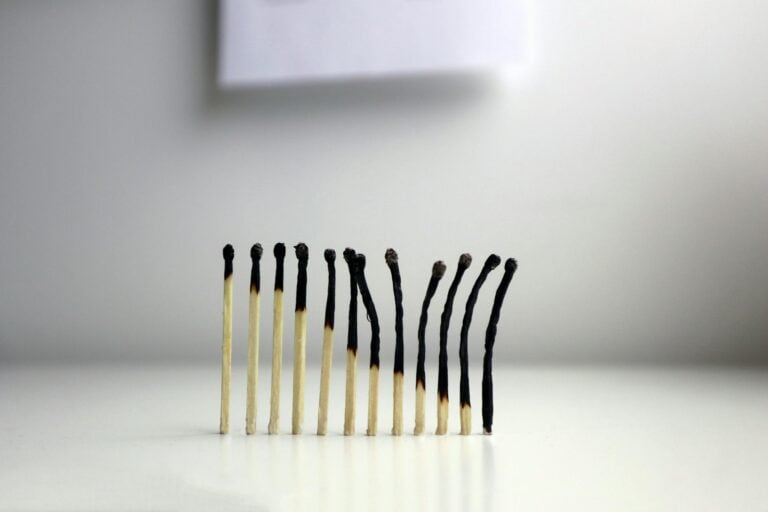

Childhood emotional neglect and social anxiety are connected in ways that rarely get discussed openly. When a child’s emotional experiences are consistently dismissed, minimized, or simply ignored, the nervous system learns a quiet but devastating lesson: your inner world is not safe to share. That early lesson doesn’t stay in childhood. It follows people into adulthood, shaping how they show up in rooms full of other people, how they interpret silence, and how much energy it costs them just to feel normal in social situations.
What makes this particularly complex for introverts is that the symptoms of emotional neglect and the natural traits of introversion can look almost identical from the outside. Both involve a preference for solitude. Both involve careful observation before speaking. Both involve a certain guardedness around strangers. But one is a personality trait and the other is a wound, and confusing the two can leave people spending decades trying to “fix” something that was never broken, while the actual source of their pain stays hidden.

If you’ve ever wondered why social situations feel so much more exhausting than they seem to for other people, or why you brace for judgment even among people who’ve given you no reason to expect it, the answer might lie further back than you’ve looked. Our Introvert Family Dynamics and Parenting hub explores how the families we grew up in shape the introverts we become, and this connection between early emotional environments and adult social anxiety sits right at the center of that conversation.
What Is Childhood Emotional Neglect, Really?
Childhood emotional neglect is different from other forms of childhood adversity because it’s defined by absence rather than presence. It’s not what happened to you. It’s what didn’t happen. No one yelled at you or hurt you. But no one asked how you were feeling either. No one named your emotions or helped you make sense of them. No one sat with you in your sadness or your fear and said, “I see you. That makes sense.”
What’s your personality type?
Take our free 40-question assessment and get a detailed personality profile with dimension breakdowns, context analysis, and personalised insights.
Discover Your Type8-12 minutes · 40 questions · Free
That absence creates a specific kind of internal confusion. Children are wired to look to caregivers to understand their own emotional experiences. When caregivers don’t respond, children don’t conclude that their parents are unavailable. They conclude that their emotions are the problem. The feelings themselves become something to hide, suppress, or feel ashamed of.
I want to be careful here because emotional neglect doesn’t always come from bad parents. Many people who grew up in emotionally neglectful homes had parents who worked hard, stayed present physically, and genuinely loved their children. They just weren’t emotionally attuned, often because no one had been emotionally attuned to them. I’ve spent a lot of time sitting with that reality about my own upbringing. My parents were good people by any reasonable measure. But emotional conversations weren’t part of the vocabulary in our house. Feelings were something you managed privately, not something you expressed and explored together.
As an INTJ, I was already inclined toward internal processing. But there’s a difference between choosing to process internally because it suits your nature and processing internally because you learned early that bringing your emotions outward wasn’t safe or welcome. One feels like a preference. The other feels like a locked door.
How Does Emotional Neglect Create Social Anxiety?
Social anxiety isn’t simply shyness or introversion. It’s a fear response, and fear responses have origins. When a child learns that their emotional expressions are met with dismissal, discomfort, or silence, they develop a core belief that their authentic self is somehow unacceptable. That belief doesn’t stay neatly contained to family interactions. It generalizes.
By the time that child becomes an adult, they’ve internalized the assumption that other people will respond to their authentic self the same way their caregivers did: with indifference, discomfort, or quiet rejection. Social situations become threatening not because of anything happening in the room, but because of what the nervous system predicts will happen based on years of early experience. That prediction runs faster than conscious thought. It’s why people with social anxiety often can’t explain their dread with specific reasons. The fear precedes the reasoning.
There’s meaningful support in the clinical literature for this connection. Research published in PubMed Central has examined how early adverse emotional environments shape attachment patterns and anxiety responses that persist well into adulthood. The nervous system essentially carries a map of early relationships and uses that map to predict the emotional safety of new ones.
What this means practically is that social anxiety rooted in emotional neglect isn’t really about the social situation at all. It’s about an old, unresolved question: “Am I acceptable as I actually am?” When the answer you received in childhood was consistently “not quite,” that question keeps surfacing in every room you walk into.

I ran advertising agencies for over two decades, and I watched this dynamic play out in conference rooms constantly. I managed a creative director once, a brilliant woman, who would go completely silent in client presentations. One on one, she was articulate, sharp, and full of ideas. Put her in a room with a client audience and she seemed to disappear into herself. We worked together for almost a year before she mentioned, almost in passing, that her mother had always told her she “talked too much” and “embarrassed herself” when she got excited about things. She’d been managing that childhood verdict in every professional room ever since.
Understanding your own personality architecture is part of untangling this. Tools like the Big Five Personality Traits test can help you see where your natural tendencies end and where anxiety-driven patterns begin. Neuroticism, one of the five dimensions, correlates with how strongly people experience negative emotions, and understanding your baseline there can be genuinely clarifying.
Why Introverts Are Particularly Vulnerable to This Pattern
Introverts process the world deeply. That’s not a weakness, it’s a feature of how our brains are wired. Cornell University research on brain chemistry has pointed to differences in how introverted and extroverted brains process stimulation and reward, which helps explain why introverts tend to think carefully before speaking and prefer depth over breadth in social interaction.
But that same depth of processing means introverts are more likely to notice and internalize emotional signals from their environment. When an emotionally neglectful parent dismisses a feeling, an introverted child doesn’t just move on. They sit with it. They analyze it. They build a story around it. And that story, repeated enough times, becomes a belief about who they are and what they can expect from other people.
Psychology Today’s writing on why socializing drains introverts speaks to how much cognitive and emotional energy introverts invest in social interactions. When social anxiety is layered on top of that natural investment, the drain becomes overwhelming. Every interaction carries not just the normal cost of social engagement but also the additional weight of vigilance, self-monitoring, and the ongoing effort to manage a fear response.
This is why introverts with histories of emotional neglect often describe social situations as exhausting in a way that goes beyond ordinary introvert recharge needs. It’s not just the stimulation. It’s the emotional labor of managing a nervous system that keeps expecting the worst.
There’s also a masking dynamic worth naming. Highly sensitive introverts, in particular, often become skilled at reading rooms and adapting their behavior to avoid triggering the same dismissal they experienced in childhood. If you grew up learning that certain expressions of your authentic self made people uncomfortable, you learn to hide those parts. That hiding is exhausting in its own right. If you’re a parent with this history, it’s worth reading about HSP parenting and raising children as a highly sensitive parent, because the patterns you carry can shape how emotionally available you are to your own kids in ways that deserve honest attention.
What Does This Look Like in Adult Life?
The manifestations of childhood emotional neglect combined with social anxiety are specific and recognizable once you know what you’re looking at. They don’t always look like obvious fear. Sometimes they look like excessive self-reliance. Sometimes they look like difficulty accepting care or compliments. Sometimes they look like a pervasive sense that you’re somehow performing normalcy rather than living it.
Some patterns that tend to show up:
A persistent sense of being fundamentally different from other people, not in an interesting way, but in a way that feels isolating. The sense that everyone else received a manual for human connection that you somehow missed.
Difficulty identifying your own emotions in real time. Emotional neglect often produces what’s sometimes called emotional numbness or alexithymia, a reduced ability to recognize and name feelings as they’re happening. This creates a strange disconnect where you can see that something is wrong but can’t quite locate what you’re feeling about it.
Hypervigilance in social situations. Constantly scanning for signs of disapproval, boredom, or rejection in other people’s faces and body language. Interpreting neutral expressions as negative ones.
A strong inner critic that sounds remarkably like criticism you never actually heard out loud but somehow absorbed anyway. This is one of the stranger aspects of emotional neglect: the criticism is often implied rather than stated, communicated through what wasn’t said or responded to rather than through direct words.

Early in my agency career, I had a mentor who told me I was “hard to read.” He meant it as a neutral observation, maybe even a compliment about my composure. But I carried that comment for years as confirmation of something I already feared: that I was somehow opaque to other people in a way that made genuine connection difficult. That’s the thing about an emotionally neglected nervous system. It takes ambiguous input and routes it through a filter that’s primed for rejection. A neutral comment becomes evidence. A missed email becomes abandonment. A quiet room becomes threat.
If some of these patterns feel uncomfortably familiar, it’s worth considering whether what you’ve been calling introversion is actually a mix of genuine personality traits and learned protective responses. They’re not mutually exclusive, and sorting them out takes time. Sometimes it also takes honest self-assessment. The likeable person test is a lighter entry point, but it can surface useful information about how you perceive your own social presence versus how others might actually experience you.
When Emotional Neglect Overlaps With Other Patterns
Childhood emotional neglect rarely exists in a vacuum. It tends to co-occur with other patterns that affect adult mental health and relationships. Understanding those overlaps matters because treating social anxiety without addressing its roots often produces limited results.
Attachment disruptions are common. When emotional attunement is absent in childhood, secure attachment becomes difficult to develop. Adults with insecure attachment styles often struggle with the same social anxiety symptoms described above, not because they’re antisocial, but because close relationships feel simultaneously necessary and threatening.
Emotional neglect also overlaps with some presentations that can look like personality disorders. People who experienced significant emotional invalidation in childhood sometimes develop traits that cluster around difficulty with emotional regulation, identity instability, or fear of abandonment. If you’ve ever wondered whether your emotional responses fall outside the typical range, the borderline personality disorder test is one resource for exploring whether professional evaluation might be helpful. It’s not a diagnostic tool, but it can point toward conversations worth having with a clinician.
Depression is another frequent companion. The chronic low-grade sense of emptiness that many adults with emotional neglect histories describe is distinct from typical sadness. It’s more like a flatness, a sense that something important is missing without being able to name exactly what. The National Institute of Mental Health provides solid foundational information on how anxiety and depression interact, which can help people understand whether what they’re experiencing warrants professional support.
There’s also a specific dynamic that can emerge in caregiving roles. People who grew up emotionally neglected sometimes become highly attuned to others’ needs while remaining disconnected from their own. This can look like exceptional empathy from the outside, but it’s often driven by anxiety rather than genuine presence. If you work in a caregiving field or are considering it, tools like the personal care assistant test online can help you assess your own tendencies and whether your caregiving impulses are coming from a healthy place or from old patterns of self-erasure.
What Actually Helps: Moving From Awareness to Change
Awareness is where recovery begins, but it’s not where it ends. Understanding the connection between your childhood emotional environment and your current social anxiety is genuinely useful information. It changes the story from “something is wrong with me” to “something happened to me, and my nervous system responded logically.” That shift matters enormously for how people relate to themselves.
Cognitive behavioral therapy has a strong track record with social anxiety. Healthline’s overview of CBT for social anxiety disorder outlines how the approach works to identify and restructure the thought patterns that maintain anxiety, which is particularly relevant when those patterns have deep roots in early experience. The work involves not just challenging anxious thoughts but understanding where they came from and why they made sense at the time.
Schema therapy is another approach worth knowing about, particularly for people whose social anxiety is connected to deep-seated beliefs about their own acceptability. Where CBT addresses surface thoughts, schema therapy goes after the core beliefs themselves, the ones formed in childhood that still run in the background of adult life.
Somatic approaches are increasingly recognized as important for trauma-adjacent presentations. Childhood emotional neglect often lives in the body as much as in the mind. Tension, hypervigilance, the physical bracing that happens in social situations: these are body-level responses that talk therapy alone sometimes can’t fully reach. Approaches that work with breath, movement, and physical sensation can be complementary to more cognitive work.

There’s also something to be said for the healing that happens through corrective relational experiences. This sounds clinical, but it simply means: relationships where you experience consistent emotional attunement can gradually update the nervous system’s predictions. This is slow work, and it requires finding people who are actually capable of that kind of presence. But it’s real. My own experience of being genuinely known by a few people, not many, a few, has done more to quiet the old social anxiety than any amount of intellectual understanding alone.
Physical health is also part of the picture in ways that are easy to underestimate. Anxiety lives in the body, and bodies respond to consistent movement, sleep, and nourishment. If you’re someone whose social anxiety has led you toward isolation and sedentary patterns, working with a fitness professional can be one concrete point of intervention. The certified personal trainer test is a useful resource if you’re evaluating credentials and looking for someone qualified to support that kind of work.
Beyond formal support, emerging work in PubMed continues to examine how emotional processing and social behavior interact at a neurological level, which is helping clinicians develop more targeted approaches for people whose social difficulties have developmental roots. The science is catching up to what many people have known experientially for years: that social anxiety isn’t always a simple phobia. Sometimes it’s a complex response to a complex history.
Reframing Introversion in the Context of Healing
One of the most important things I’ve come to understand about my own introversion is that it’s not the problem. It never was. My preference for depth over breadth, my need for solitude to recharge, my tendency to observe before I speak: these are genuine traits that I’ve come to value. They made me a better strategic thinker in the agency world. They made me a more careful listener with clients. They’re part of who I am at a level that predates any wound.
What I’ve had to do is learn to distinguish between the introversion and the anxiety. The introversion says, “I’d prefer a smaller gathering.” The anxiety says, “I’ll be rejected if I go.” The introversion says, “I need time alone to process.” The anxiety says, “I’m not safe around people.” Those are different voices, and they require different responses.
Healing from childhood emotional neglect doesn’t mean becoming someone who loves crowded parties and thrives on constant social stimulation. That’s not the goal, and it wouldn’t be authentic. The goal is to be able to choose solitude from preference rather than from fear. To walk into a room and feel curious rather than braced. To let someone know you without the automatic assumption that knowing you will lead to disappointment.
A 2024 study published in Springer’s cognitive therapy journal examined how early emotional experiences shape adult social cognition, adding to a growing body of evidence that the beliefs formed in childhood continue to influence how adults interpret social information. What the research increasingly supports is what many people already sense: that changing these patterns is possible, but it requires working at the level of belief, not just behavior.
Also worth noting: PubMed Central research on emotional regulation and social functioning has examined how developing stronger emotional awareness in adulthood can meaningfully improve social outcomes, even for people who grew up in emotionally impoverished environments. The nervous system is more adaptable than the old story suggested.

What I’ve found most useful personally is approaching my own social anxiety with the same analytical rigor I brought to client problems in the agency. Not cold analysis, but genuine curiosity. When I notice the bracing before a social situation, I’ve learned to ask: what exactly am I predicting will happen? Where did that prediction come from? What evidence do I actually have for it in this specific context? That kind of structured self-inquiry won’t work for everyone, but for an INTJ whose default mode is pattern recognition, it’s been a way to turn a strength toward a wound rather than away from it.
If you’re exploring how family history and personality intersect in your own life, the full range of resources in our Introvert Family Dynamics and Parenting hub covers everything from attachment patterns to parenting styles to how personality shapes the way families communicate across generations.
About the Author
Keith Lacy is an introvert who’s learned to embrace his true self later in life. After 20 years in advertising and marketing leadership, including running agencies and managing Fortune 500 accounts, Keith now channels his experience into helping fellow introverts understand their strengths and build fulfilling careers. As an INTJ, he brings analytical depth and authentic perspective to every article, drawing from both professional expertise and personal growth.
Frequently Asked Questions
Can childhood emotional neglect cause social anxiety in adults?
Yes. When children’s emotional experiences are consistently unacknowledged, they often develop a core belief that their authentic self is unacceptable to others. That belief generalizes beyond the family environment and shapes how adults interpret social situations, frequently producing anxiety, hypervigilance, and a persistent fear of judgment or rejection that has nothing to do with the actual people in the room.
How do I know if my social anxiety comes from emotional neglect or just introversion?
Introversion is a preference: you choose solitude because it suits you and recharges you. Social anxiety rooted in emotional neglect is a fear response: you avoid social situations because your nervous system predicts rejection or harm. If social situations feel threatening rather than simply tiring, if you feel a sense of dread that doesn’t match the actual risk of the situation, or if you feel fundamentally unacceptable to other people, those are signs that something beyond introversion may be at work.
What types of therapy work best for social anxiety connected to childhood emotional neglect?
Cognitive behavioral therapy has strong support for social anxiety broadly. For social anxiety with roots in childhood emotional neglect, schema therapy is often particularly relevant because it addresses the deep core beliefs formed in early experience rather than just the surface-level anxious thoughts. Somatic approaches that work with the body’s stored responses can also be valuable complements to talk therapy, especially when the anxiety has a strong physical component.
Is it possible to heal social anxiety that started in childhood?
Yes, meaningfully so. The nervous system retains a significant capacity for change throughout adulthood. Healing typically involves a combination of building emotional awareness, working with a skilled therapist to address underlying beliefs, and accumulating corrective relational experiences where emotional attunement is consistently present. The process takes time and is rarely linear, but many adults with significant childhood emotional neglect histories do develop substantially more comfortable and authentic social lives.
How does emotional neglect differ from emotional abuse in terms of its effects on social anxiety?
Emotional abuse involves active harmful acts: criticism, humiliation, threats, or manipulation. Emotional neglect involves the absence of emotional responsiveness. Both can produce social anxiety, but through somewhat different mechanisms. Emotional abuse often produces a specific fear of criticism or conflict. Emotional neglect tends to produce a more diffuse sense of being fundamentally unacceptable or invisible, which shows up as a generalized anxiety about being truly known by others. In practice, many people experienced elements of both, and the effects often overlap.