

Shyness affects self-esteem in early childhood by creating a feedback loop where a child’s reluctance to engage socially gets misread as aloofness or disinterest, leading to fewer positive social experiences and a growing belief that something is wrong with them. Over time, that belief can harden into a core identity, shaping how a child sees their own worth long before they have the language to question it. fortunately that understanding this process early gives parents and caregivers a real opportunity to interrupt it.
I think about this topic more personally than most people might expect from someone who spent two decades running advertising agencies. On the surface, I looked like someone who had it together socially. I pitched Fortune 500 brands, led rooms full of creative directors, and built client relationships that lasted years. What nobody saw was the quiet kid underneath all of that, the one who had spent his childhood being told he was “too serious” or “too much in his head.” That child never fully disappeared. He just learned to work around himself.
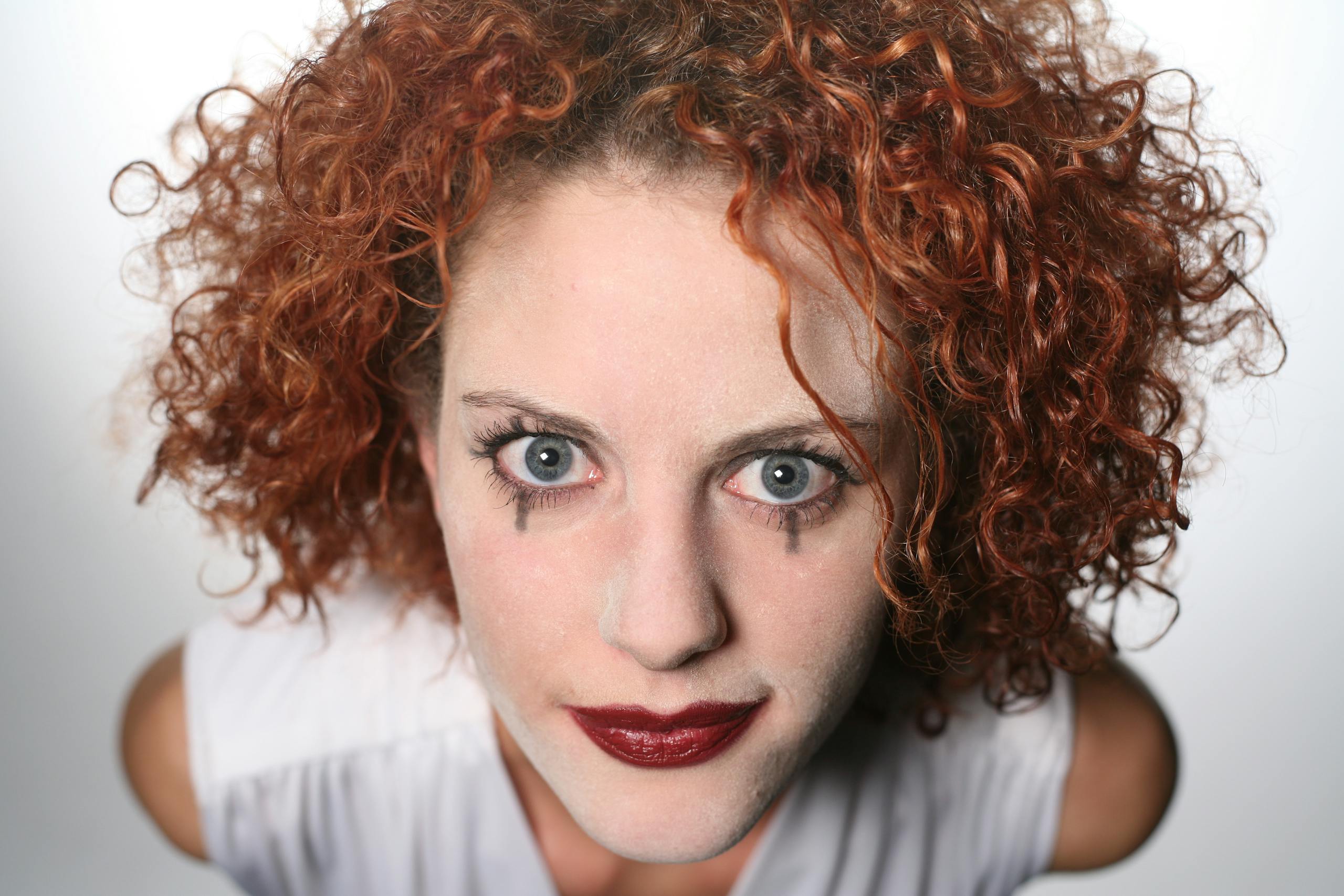
If you’re raising a shy child or trying to make sense of your own early experiences, this piece of our Introvert Family Dynamics and Parenting hub is written for you. We cover a lot of ground in that collection, from how personality shapes parenting styles to how introverted children experience family life differently. But shyness in early childhood deserves its own careful look, because the stakes are higher than most people realize.
What Is Shyness, and How Is It Different From Introversion?
Shyness and introversion get lumped together constantly, and I understand why. Both often produce the same visible behavior: a child who hangs back at the birthday party, who takes a long time to warm up to new adults, who prefers one close friend over a crowd. From the outside, they look identical. From the inside, they are completely different experiences.
What’s your personality type?
Take our free 40-question assessment and get a detailed personality profile with dimension breakdowns, context analysis, and personalised insights.
Discover Your Type8-12 minutes · 40 questions · Free
Introversion is a temperament preference. An introverted child draws energy from solitude and quiet, and social interaction, even enjoyable social interaction, costs them something. They may love their friends deeply and still need an hour alone after school to feel like themselves again. There is no distress in that. It is simply how they are wired.
Shyness, by contrast, involves fear. A shy child wants to connect but feels anxious about doing so. They may desperately wish they could join the group at recess, but something stops them, a fear of judgment, a fear of saying the wrong thing, a fear of being seen and found lacking. That gap between wanting and doing is where self-esteem begins to erode.
The National Institutes of Health has explored how infant temperament, including behavioral inhibition, which is the tendency to withdraw from unfamiliar people and situations, can predict introversion in adulthood. What matters for parents is recognizing that some children are born with a more cautious, sensitive response to novelty. That is not a flaw. It becomes a problem only when the environment treats it as one.
As an INTJ, I was never particularly shy, but I was deeply introverted and often misread as cold or disengaged. I watched colleagues who were genuinely shy struggle in ways I did not, not because they lacked ability, but because their anxiety about social performance was compounding in real time. One account manager I worked with at my agency was extraordinarily talented, but her shyness had calcified over years into a belief that she simply was not good enough for client-facing work. She had the skills. What she was missing was the early experience of being seen accurately.
How Does Shyness Affect Self-Esteem During the Early Years?
Children build their sense of self through interaction. Every time a child tries something, succeeds or fails, and receives a response from the world around them, they are collecting data about who they are and what they are worth. For shy children, this data collection process gets complicated early.
A shy three-year-old who hesitates at the edge of a group of playing children is not being antisocial. They are processing. They are watching, reading the social landscape, figuring out if it is safe to enter. But what they often receive in that moment is a well-meaning adult voice saying, “Go on, don’t be shy!” That phrase, repeated across years and situations, sends a message: the way you naturally respond to the world is wrong. Fix it.

Over time, that message accumulates. The child begins to internalize not just “I feel nervous in social situations” but “I am the kind of person who cannot handle social situations.” That shift, from a feeling to an identity, is where lasting damage to self-esteem takes root.
A piece of research published in PubMed Central examined how early social experiences shape children’s developing self-concept, finding that repeated negative social feedback, whether from peers or adults, plays a significant role in how children come to evaluate themselves. For shy children, who are already more attuned to social signals and more likely to interpret ambiguous feedback negatively, this process moves faster and cuts deeper.
There is also a peer dimension that starts becoming powerful around ages four and five. Children begin comparing themselves to others, and a shy child watching classmates move freely through social spaces starts to wonder what is wrong with them. They see the ease others seem to have and measure their own hesitation against it. The gap feels enormous, even when it is not.
If you are a highly sensitive parent raising a child who shows these patterns, you may recognize the dynamic from your own childhood. Our article on HSP parenting and raising children as a highly sensitive parent explores how your own sensitivity can become one of your greatest parenting assets, especially when your child is wired similarly to you.
What Role Do Parents and Caregivers Play in This Dynamic?
Parents are the first mirror a child looks into. What they see reflected back shapes everything. And for parents of shy children, the pressure to “fix” the shyness, often coming from family members, teachers, or their own anxiety, can lead to responses that unintentionally deepen the problem.
Overprotection is one common pattern. A parent who sees their child struggling socially may begin shielding them from situations that feel risky, pulling them out of social settings before they have a chance to find their footing, or speaking for them when they hesitate. The intention is kindness. The effect is a child who never gets to experience the small victories of managing a hard moment and coming through it. Those small victories are exactly what builds self-esteem.
Pressure is the opposite problem. Forcing a shy child into social situations without support, telling them to “just talk to people” or expressing frustration when they cannot, teaches them that their natural response is a burden. They learn to hide it, which means they also lose access to the empathy and support that might actually help.
The American Psychological Association has written about how early experiences of feeling misunderstood or unsupported can create lasting emotional patterns. For shy children, being consistently misread, either as rude, aloof, or simply difficult, can function as a kind of chronic low-grade stress that shapes their nervous system’s baseline response to social situations.
What works better is what I would call “scaffolded exposure.” You stay close, you name what is happening without judgment, and you let the child set the pace while gently expanding the edges of their comfort. You say, “I can see you’re taking your time to decide if you want to go over there. That makes sense.” You do not say, “Why can’t you just be normal?”
I did not have that kind of scaffolding as a child. My parents were good people who simply did not have the framework for it. What I got instead was a lot of “you need to put yourself out there more,” which I translated as “you are not enough as you are.” It took me until my late thirties, deep in the middle of running an agency, to start questioning that translation.

How Does Temperament Factor Into the Picture?
Temperament is the biological baseline a child brings into the world. Some children arrive wired with a more reactive nervous system, more sensitive to new stimuli, more cautious in the face of unfamiliar situations. This is not a pathology. It is a variation in human design, and it has real adaptive value.
Highly sensitive children, those who process sensory and emotional information more deeply than average, are often the ones who show the most pronounced shyness in social settings. They are picking up on more data than their peers, reading facial expressions, tone shifts, and social undercurrents that other children simply do not register. That depth of processing is a genuine strength. In early childhood, though, before they have developed the capacity to manage all that input, it can feel overwhelming.
Understanding your child’s temperament is one of the most powerful things you can do as a parent. Tools like the Big Five personality traits test can offer a useful framework for adults reflecting on their own baseline tendencies, and those insights often illuminate patterns that run in families. Knowing that you score high in neuroticism or low in extraversion does not define you. It gives you a map.
What temperament research consistently shows is that the fit between a child’s temperament and their environment matters enormously. A cautious, sensitive child who grows up in a family that values quiet, reflection, and emotional attunement will develop very differently from the same child raised in an environment that rewards loudness, speed, and social boldness. Neither environment is inherently right or wrong. The mismatch is what creates the wound.
A study available through PubMed Central examined how early temperament interacts with parenting style to produce outcomes in social competence and self-perception. The findings point toward the same conclusion that developmental psychologists have been circling for decades: it is not the child’s temperament alone that determines their trajectory. It is the relationship between that temperament and the responses it receives.
What Happens to Shy Children Who Do Not Receive Support?
Without early support, shyness can solidify into something more entrenched. A child who spends years receiving the message that their natural way of being is wrong often develops what psychologists call a “negative self-schema,” a deeply held belief system that filters all new experiences through the lens of inadequacy. They stop trying not because they lack ability, but because they have already decided the outcome.
Socially, unsupported shy children often miss out on the peer interactions that build social skills. And social skills, like any other skill, develop through practice. A child who avoids social situations because they are anxious gets less practice, which makes the next social situation feel even more daunting. The avoidance grows. The anxiety grows with it.
Academically, the effects can show up in unexpected ways. A shy child who is afraid to raise their hand, ask for help, or participate in class discussions may be misread as disengaged or slow, when in reality they are often processing deeply and holding back out of fear of judgment. Teachers who do not recognize this pattern may inadvertently reinforce it by calling on shy children publicly in ways that feel humiliating rather than encouraging.
I have seen this play out in adult professionals too. Some of the most analytically gifted people I worked with in my agency years were also the ones most likely to undersell themselves, hold back in meetings, or defer to louder colleagues even when their ideas were stronger. When I had the chance to talk with them one-on-one, the pattern was almost always traceable back to early experiences of being made to feel that their quietness was a liability.
It is worth noting that not every quiet or reserved adult has a self-esteem problem. Some people are simply introverted and have found ways to build confidence within their natural style. But for those whose quietness was consistently pathologized in childhood, the effects tend to linger in ways that are worth examining honestly.
If you are wondering whether some of what you are experiencing as an adult might connect to deeper emotional patterns, tools like the borderline personality disorder test can be a starting point for self-reflection, though any serious concerns about emotional regulation or identity should always be explored with a qualified mental health professional.

What Actually Helps Shy Children Build Healthy Self-Esteem?
Acceptance is where everything starts. Not passive acceptance that says “this is just how they are, nothing to be done,” but active acceptance that says “I see exactly who you are, and I am not trying to change your fundamental nature.” That distinction matters enormously to a child who has been receiving the opposite message.
From there, several things consistently make a difference.
Naming the experience without judgment gives children language for what they feel. “It looks like you need a little time before you feel ready to go in” is more useful than “stop being shy.” The first statement validates the child’s internal experience. The second tells them their internal experience is wrong.
Finding areas of genuine competence matters too. A shy child who discovers they are exceptionally good at drawing, building, writing, or any other skill has a foundation of self-worth that is not dependent on social performance. That foundation gives them something to stand on when social situations feel shaky.
One-on-one friendships tend to be more accessible than group settings for shy children, and they are just as developmentally valuable. Encouraging a single close friendship, rather than pushing for broad social inclusion, can give a shy child the experience of genuine connection without the overwhelm of handling a crowd.
Adults who model honest self-reflection also make a difference. A parent who says, “I felt nervous about that too, and here is how I handled it” teaches a child that discomfort is survivable and that adults are not immune to it. That kind of transparency builds trust and gives children a realistic template for managing hard feelings.
Some children also benefit from structured roles in social settings, something that gives them a defined purpose rather than open-ended social ambiguity. Being the person who hands out the snacks at a class party, or the one who shows a new student around, gives a shy child a script that reduces anxiety and often opens the door to genuine connection. This is not unlike what good managers do for introverted employees: they create conditions where the person’s strengths can show up without requiring them to perform in ways that feel unnatural.
If you work in a caregiving role and are thinking about how these dynamics play out in professional settings, the personal care assistant test online can help you reflect on your own interpersonal tendencies and how they shape the support you offer to others, whether those others are children or adults handling similar challenges.
How Do Social Perceptions of Shy Children Shape Their Identity?
Children are remarkably good at reading the room. They know when adults are frustrated with them, even when nothing explicit is said. They know when peers find them odd or hard to connect with. And they know when the social world seems to operate by rules they have not been given access to.
For shy children, the social feedback loop is particularly powerful. A child who is seen as unfriendly or aloof, even when that perception is completely inaccurate, begins to receive fewer social invitations. Fewer invitations mean fewer opportunities to practice connection. Less practice means less fluency. Less fluency confirms the original perception. The cycle is self-reinforcing, and it moves fast in childhood, where social hierarchies form and solidify within a single school year.
The family dynamics research collected by Psychology Today points to the family system as the first and most formative social environment a child experiences. How a family talks about shyness, whether it is treated as a problem to solve, a quirk to accommodate, or a strength to build on, shapes the child’s own narrative about themselves before they ever enter a classroom.
Likeability is a concept that comes up a lot in discussions of childhood social development, and it is more complicated than it sounds. A shy child may be deeply likeable, warm, funny, and loyal, but those qualities can be invisible to peers who only see the hesitation at the surface. Our likeable person test explores some of the traits that shape how others perceive us, and it is a useful reminder that likeability is not the same as loudness, even though our culture often treats them as synonymous.
What shy children need most from the adults around them is accurate witnessing. Not the projection of what the adult wishes the child were, not the anxiety about what the child’s quietness might mean for their future, but a clear-eyed, warm recognition of who the child actually is. That kind of witnessing is rarer than it should be, and its absence is one of the most common sources of early self-esteem damage I have seen, both in the people I have worked with professionally and in my own reflection on my early years.
Can Shyness Become a Strength Over Time?
Yes, and this is where I want to push back against the narrative that shyness is purely a liability to be overcome. Some of the qualities that make shy children struggle in early social settings, their careful observation, their tendency to think before speaking, their sensitivity to others’ emotional states, are exactly the qualities that make for extraordinary adults in the right contexts.
Shy children who are supported rather than shamed often develop a remarkable capacity for empathy. They have spent so much time watching and reading social situations that they become highly attuned to what others are feeling. They tend to be thoughtful communicators who do not speak carelessly. They often form fewer but deeper relationships, which many people find more satisfying over a lifetime than a wide but shallow social network.
In my agency years, I hired and mentored a lot of people who had been the quiet kid. They were consistently among my most reliable, most creative, and most emotionally intelligent team members. What they needed from me was not to be pushed into performing extroversion. What they needed was a structure that let their actual strengths show up. When I figured that out, usually later than I should have, the results were consistently better than anything I got from the loudest voices in the room.
There is also a professional dimension worth considering. Fields that reward deep focus, careful analysis, independent thinking, and one-on-one connection are often excellent fits for people who grew up shy. Whether that is writing, research, counseling, design, or any number of other paths, the traits that made childhood feel hard can become the foundation of a deeply fulfilling career. If you are in a field that involves health and wellness support, for example, the certified personal trainer test touches on some of the interpersonal dynamics that matter in client-facing roles, and many of the qualities that shy people develop, attentiveness, patience, genuine care for individuals, translate directly into that kind of work.

What matters most is not eliminating the shyness but changing the relationship a child has with it. A child who grows up understanding that their careful, observant nature is a real and valuable way of being in the world has a very different trajectory than one who spends decades trying to become someone they are not.
The family environment research from Psychology Today consistently reinforces that children’s long-term outcomes are shaped less by their individual traits than by the quality of support and attunement they receive from the people closest to them. That is both a sobering responsibility and a genuinely hopeful one.
There is more to explore on these themes across our Introvert Family Dynamics and Parenting hub, where we look at how introversion, sensitivity, and personality shape the full arc of family life, from how introverts parent to how introverted children experience the world around them.
About the Author
Keith Lacy is an introvert who’s learned to embrace his true self later in life. After 20 years in advertising and marketing leadership, including running agencies and managing Fortune 500 accounts, Keith now channels his experience into helping fellow introverts understand their strengths and build fulfilling careers. As an INTJ, he brings analytical depth and authentic perspective to every article, drawing from both professional expertise and personal growth.
Frequently Asked Questions
Is shyness the same thing as having low self-esteem?
No, shyness and low self-esteem are not the same, though they can influence each other over time. Shyness is a temperament trait involving anxiety around social situations. A child can be shy and still have a strong sense of their own worth in non-social domains. The risk is that when shyness is consistently treated as a problem or a flaw by the adults around a child, it can begin to erode self-esteem as the child internalizes the message that their natural way of being is wrong.
At what age does shyness start affecting a child’s self-perception?
Children begin forming a sense of self as early as age two or three, and social comparison, where children start measuring themselves against peers, becomes more active around ages four and five. By the time a shy child enters kindergarten, they are already receiving significant social feedback about their behavior. This makes the preschool and early elementary years particularly important windows for supportive intervention.
How can parents tell if their child’s shyness is becoming a self-esteem problem?
Watch for language that reflects a fixed negative self-belief rather than a situational feeling. A child who says “I don’t feel like talking right now” is describing a state. A child who says “I’m bad at talking to people” or “nobody likes me” is describing an identity. Other signals include persistent avoidance of situations the child previously engaged with, increasing self-criticism, or withdrawal from activities they once enjoyed. If these patterns are consistent and intensifying, speaking with a child psychologist or counselor is worth considering.
Does shyness in childhood predict shyness in adulthood?
Temperament is relatively stable, meaning a child with a cautious, sensitive baseline is likely to carry some of those tendencies into adulthood. That said, many shy children develop effective strategies for managing social anxiety over time, particularly when they receive supportive environments and accumulate positive social experiences. The outcome is shaped significantly by the relationship between the child’s temperament and the responses they receive from the world around them, not by the temperament alone.
What is the difference between supporting a shy child and enabling avoidance?
Supporting a shy child means acknowledging their experience, giving them time to process, and gently expanding their comfort zone at a pace that feels manageable. Enabling avoidance means removing all social challenge in response to the child’s anxiety, which prevents them from building the skills and confidence that come from handling hard situations successfully. The goal is not to eliminate discomfort but to help the child develop a relationship with discomfort that does not feel catastrophic. Small, supported steps forward are more useful than either forced exposure or total protection.