

Improving your introvert personality isn’t about becoming someone else. It’s about understanding the specific patterns that hold you back, strengthening the ones that already serve you, and building the kind of self-awareness that lets you move through relationships and work with far less friction than before.
That process looks different depending on where the pressure shows up most, whether it’s in family dynamics, professional settings, or the quiet internal world you carry everywhere you go. What stays consistent is this: growth for introverts tends to happen from the inside out, not the other way around.

Much of what I’ve written about introversion and family life connects back to a broader set of questions about how we show up for the people closest to us. Our Introvert Family Dynamics and Parenting hub pulls together that full picture, from raising children as an introverted parent to managing the emotional weight of extended family relationships. This article adds another layer: what it actually means to grow as an introvert, not just cope.
What Does “Improving” Your Introvert Personality Actually Mean?
There’s a version of this question that gets answered badly all the time. Someone types “how to improve introvert personality” into a search engine and gets back a list of tips for being more talkative, more assertive, more socially available. As if introversion itself is the problem that needs fixing.
What’s your personality type?
Take our free 40-question assessment and get a detailed personality profile with dimension breakdowns, context analysis, and personalised insights.
Discover Your Type8-12 minutes · 40 questions · Free
That framing frustrated me for most of my career. I ran advertising agencies for over two decades, and the implicit expectation was always that good leaders were loud, visible, and energized by constant interaction. So I spent years trying to improve myself in that direction, forcing more small talk, accepting every dinner invitation, performing enthusiasm in rooms that drained me within the first hour. None of it made me better at my job. It just made me tired.
What actually helped was something quieter and more specific. It was learning which of my introvert tendencies were genuine strengths I’d been minimizing, and which were habits born from anxiety, avoidance, or old beliefs about what I was allowed to be. That distinction matters enormously. One deserves protection. The other deserves attention.
According to MedlinePlus, temperament, including the traits that shape introversion and extroversion, has a significant genetic component and influences how we process stimulation and social interaction from very early in life. That’s not a limitation. That’s a baseline. Growth happens from that baseline, not despite it.
Why Self-Awareness Is the Starting Point, Not a Destination
Every meaningful shift I’ve made as a person started with getting clearer on what was actually happening inside me. Not what I assumed was happening. Not what the people around me believed was happening. What was actually true.
That kind of clarity is harder to build than it sounds, especially for introverts who spend a lot of time in their own heads. We can mistake rumination for reflection. We can confuse overthinking with self-knowledge. The internal monologue is loud, but that doesn’t mean it’s always accurate.
One of the most grounding exercises I’ve found is working through a structured personality assessment, not to get a label, but to surface patterns I hadn’t consciously named. The Big Five Personality Traits test is particularly useful here because it measures introversion and extroversion on a spectrum alongside other dimensions like conscientiousness and openness. Seeing those patterns laid out clearly gave me language for things I’d always sensed but couldn’t articulate.
Language matters. Once you can name a pattern, you can work with it instead of just reacting to it.

How Do Your Relationships Reveal What Needs to Grow?
If you want to know where your personality is creating friction, look at your closest relationships first. Not your professional ones, where you can manage impressions more easily. Your family relationships, where the real version of you shows up whether you planned for it or not.
Family dynamics have a way of activating every unexamined pattern we carry. The introvert who handles conflict beautifully at work might shut down completely at a family dinner when the conversation gets charged. The person who’s warm and generous with colleagues might struggle to offer the same warmth to their own children after a long day has depleted every last reserve of social energy.
As Psychology Today notes, family dynamics shape our emotional responses in ways that persist well into adulthood, often operating beneath our conscious awareness. That’s not an excuse for staying stuck. It’s useful context for understanding why certain patterns feel so entrenched.
I noticed this acutely when my kids were young. After a full day of client meetings and agency decisions, I had almost nothing left by the time I walked through the door. Not because I didn’t love being home, but because I’d spent every unit of social energy I had. My family wasn’t getting less of me because they mattered less. They were getting less of me because I hadn’t built any recovery time into my day. That was a structural problem masquerading as a personality flaw.
Fixing it required two things: honest self-assessment and a willingness to redesign my schedule around my actual energy patterns instead of the schedule I thought I was supposed to have. Neither of those things happened quickly. Both of them were worth it.
What Role Does Emotional Regulation Play for Introverts?
One of the least-discussed aspects of introvert growth is emotional regulation, specifically how introverts process and express emotion in real time versus in private reflection. Many introverts are highly attuned to their internal emotional states. The challenge isn’t feeling deeply. It’s knowing what to do with those feelings in the moment, when someone else is waiting for a response and there’s no time to retreat and process.
I managed a creative director years ago who was an INFJ, one of the rarest personality types in most populations. She was extraordinarily perceptive and deeply empathetic, but she would go completely silent under pressure. Not because she had nothing to say, but because her processing speed in high-stakes situations was slower than the room expected. Other people read her silence as disengagement. She was actually more engaged than anyone else in the room. She just needed more time to form a response she trusted.
What helped her wasn’t forcing herself to speak faster. It was developing a few bridging phrases that bought her the processing time she needed without signaling withdrawal. “Let me think about that for a second” is a complete sentence. So is “I want to give you a real answer, not just the first thing that comes to mind.” Those phrases changed how the room received her silence.
That’s emotional regulation in practice: not suppressing what you feel, but developing enough skill to communicate across the gap between your internal pace and the external world’s expectations.
For parents who are also highly sensitive, that gap can feel especially wide. The demands of parenting are immediate and constant in a way that doesn’t accommodate much internal processing time. If that resonates, the piece on HSP parenting and raising children as a highly sensitive parent explores that specific tension with a lot of care and practical grounding.

Can Introverts Genuinely Become More Likeable Without Faking It?
Likeability is a strange concept to sit with as an introvert. The qualities that tend to register as likeable in social settings, warmth, ease, expressiveness, enthusiasm, are qualities that many introverts possess in full but don’t always broadcast in ways others can read easily.
The gap isn’t usually about character. It’s about signal. Introverts often feel warmth without expressing it in the ways others expect. They care deeply without always showing it in the moment. And because social cues tend to favor extroverted expression, quieter people can come across as distant or uninterested even when the opposite is true.
One useful exercise is examining how you actually come across to others, not through anxious self-criticism, but through honest reflection. The likeable person test can surface some of those patterns in a low-stakes way, helping you see the gap between how you intend to come across and how you might actually land with people who don’t know you well yet.
What I’ve found, both in my own experience and in watching others grow, is that likeability for introverts usually comes down to small, consistent signals rather than big social performances. Making eye contact when someone is speaking. Remembering specific things people mentioned in previous conversations. Asking one genuinely curious follow-up question instead of pivoting immediately to your own point. These are quiet behaviors, but they register powerfully.
None of that requires pretending to be someone you’re not. It requires being intentional about the warmth that’s already there, just not always visible.
How Does Introvert Growth Show Up Differently in Professional Contexts?
Professional growth as an introvert has its own specific texture. The workplace tends to reward visibility, and visibility tends to favor extroversion. That’s a real structural challenge, not a personal failing. Even so, there’s meaningful room to grow within it.
One of the most valuable shifts I made in my agency years was learning to separate energy management from avoidance. Early on, I avoided certain professional situations because they were draining. Over time, I learned to enter those same situations with a clearer sense of what I was there to accomplish, which made them feel far more manageable. The energy cost didn’t disappear. My tolerance for it grew because my sense of purpose in those moments was sharper.
That shift, from avoidance to intentional engagement, is one of the most practical things any introvert can work on. It doesn’t require becoming more extroverted. It requires getting clearer on your own goals so that the social cost of showing up feels worth paying.
There’s also something worth saying about the kinds of professional roles that suit introverts well and the preparation those roles sometimes require. Positions that involve deep focus, one-on-one support, or careful attention to individual needs tend to play to introvert strengths. A personal care assistant test online might seem like an unexpected reference in this context, but it touches on something real: roles built around attentiveness, patience, and genuine presence are often where introverts thrive most naturally. Knowing that about yourself is useful career information.
Similarly, roles that require sustained physical and interpersonal presence, like personal training, demand a specific kind of stamina that introverts can absolutely develop. The certified personal trainer test reflects a profession where introverts often excel precisely because of their ability to read individual clients carefully and build trust through consistency rather than high-energy performance. Growing into those roles is about leaning into what already works, not overriding it.

What Habits Actually Move the Needle Over Time?
Growth that lasts is almost always built on small, repeated choices rather than dramatic moments of change. That’s especially true for introverts, whose development tends to happen in reflection rather than in real-time bursts of insight.
A few habits have made the biggest difference in my own experience and in conversations with others who’ve worked through similar terrain.
Building Recovery Into Your Structure, Not Just Your Intentions
Introverts need recovery time, and most of us know this in theory while consistently failing to protect it in practice. Scheduling recovery the same way you schedule commitments changes that. Thirty minutes of quiet before a demanding evening. A lunch break that’s actually solitary. A buffer between back-to-back social obligations. These aren’t luxuries. They’re the infrastructure that makes everything else possible.
Practicing Disclosure in Low-Stakes Situations
Many introverts struggle with vulnerability, not because they don’t feel things deeply, but because sharing those things with others feels risky in ways that are hard to articulate. Practicing small disclosures in safe relationships builds the muscle gradually. Telling a trusted friend something real about your week. Sharing a genuine reaction instead of a polished one. These small moments of openness make larger ones feel less impossible over time.
Distinguishing Between Discomfort and Incompatibility
Not every uncomfortable situation is wrong for you. Some discomfort signals growth. Some signals genuine incompatibility with your values or wiring. Learning to tell the difference is one of the more sophisticated skills in the introvert’s toolkit, and it takes time to develop. A useful question: after the discomfort passes, do you feel expanded or diminished? The former usually means growth. The latter usually means something worth examining more carefully.
What About the Mental Health Dimension?
Introversion is a personality trait, not a mental health condition. That distinction matters, and it’s worth being clear about it. Even so, introverts can be vulnerable to specific mental health challenges, particularly anxiety and depression, that can masquerade as personality traits or get dismissed as just being introverted.
Prolonged social withdrawal that feels compelled rather than chosen is worth paying attention to. Persistent feelings of emotional numbness, instability, or disconnection from relationships can signal something beyond introversion. The Borderline Personality Disorder test is one resource for people who are trying to understand whether what they’re experiencing is personality-based or something that might benefit from professional support. These tools aren’t diagnostic, but they can be a useful starting point for a more honest self-assessment.
There’s also meaningful evidence that social connection, even for introverts, plays an important role in wellbeing. A PubMed Central review on personality and health outcomes found consistent links between social engagement and psychological resilience across personality types. Introverts don’t need the same quantity of connection as extroverts, but the quality of a few close relationships tends to matter enormously.
Protecting those relationships, investing in them even when energy is low, is one of the most meaningful things an introvert can do for their long-term wellbeing. Not as a social obligation, but as genuine self-care.
How Do Personality Frameworks Help Without Becoming a Cage?
Personality frameworks like MBTI are genuinely useful tools for self-understanding. I’ve found my own INTJ designation illuminating in ways that took years to fully appreciate. Seeing my tendencies toward strategic thinking, my preference for depth over breadth in relationships, and my need for independence as coherent features rather than isolated quirks gave me a more integrated sense of myself.
That said, any framework becomes limiting when you use it to explain away growth rather than support it. “I’m an introvert” is not a reason to avoid every difficult conversation. “I’m an INTJ” is not a reason to dismiss emotional nuance in relationships. The framework should expand your self-understanding, not contract your sense of what’s possible.
The 16Personalities framework offers a useful perspective here, describing personality types as dynamic profiles rather than fixed categories. People grow within their types. They develop functions and capacities that don’t come naturally. They become more complete versions of themselves without becoming different people.
That’s the version of improvement worth aiming for. Not a personality transplant. A fuller expression of who you actually are.
There’s also something worth noting about how these dynamics play out across different family structures. Whether you’re handling introversion in a nuclear family, a blended household, or something in between, the relational patterns tend to share common threads. Psychology Today’s work on blended family dynamics touches on some of the specific challenges that arise when different personality types and histories have to find a shared rhythm. Introversion adds its own layer to that complexity, and it’s worth naming rather than managing around.
One thing I’ve come to believe firmly: the introverts who grow most meaningfully aren’t the ones who push hardest against their own nature. They’re the ones who get honest about it, build structures that support it, and stretch deliberately rather than constantly. There’s a kind of confidence that comes from that approach, quieter than what you’d see in an extrovert, but no less real.
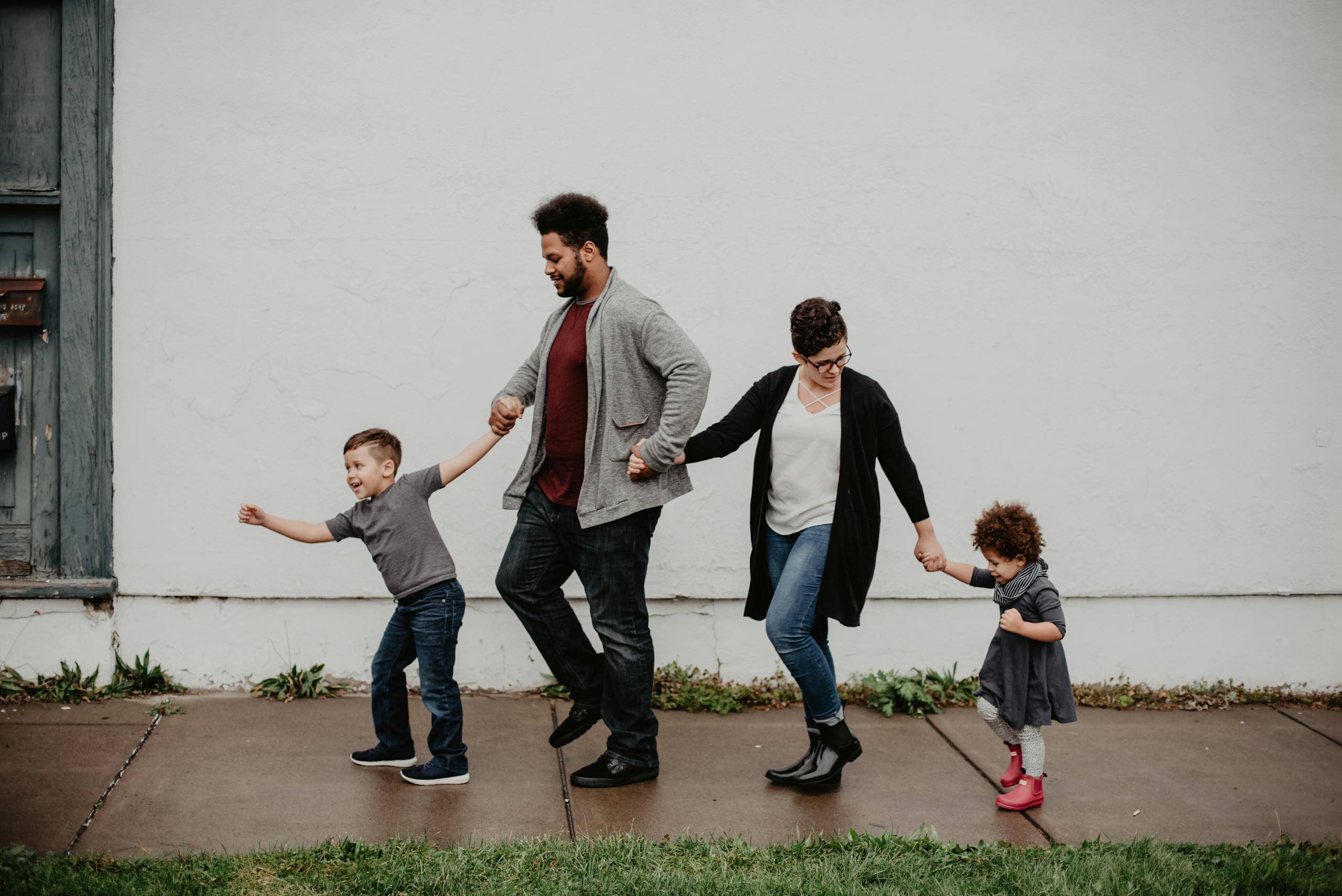
A Frontiers in Psychology study on personality and wellbeing found that self-concordance, the degree to which your goals and behaviors align with your authentic values, is a stronger predictor of life satisfaction than any specific personality trait. Introverts who grow in ways that feel true to themselves tend to report higher wellbeing than those who grow in ways that feel externally imposed. That finding aligns with everything I’ve observed, both in my own experience and in the people I’ve worked alongside.
If you’re in the middle of figuring out what that growth looks like for you, especially within the context of family life and parenting, there’s much more to explore in our complete Introvert Family Dynamics and Parenting hub. It’s built for exactly this kind of ongoing reflection.
About the Author
Keith Lacy is an introvert who’s learned to embrace his true self later in life. After 20 years in advertising and marketing leadership, including running agencies and managing Fortune 500 accounts, Keith now channels his experience into helping fellow introverts understand their strengths and build fulfilling careers. As an INTJ, he brings analytical depth and authentic perspective to every article, drawing from both professional expertise and personal growth.
Frequently Asked Questions
Can an introvert actually change their personality, or is it fixed?
Introversion itself, as a core temperament trait, is relatively stable across a lifetime. What changes is how skillfully you work with it. Introverts can develop better emotional regulation, stronger communication habits, and more intentional social strategies without becoming extroverts. Growth happens within your personality, not against it. The goal is a fuller, more capable version of who you already are.
What’s the most important first step for an introvert who wants to grow?
Honest self-assessment comes first. Before you can improve anything, you need to distinguish between introvert traits that are genuine strengths and habits that are actually anxiety or avoidance wearing introversion as a disguise. Structured tools like personality assessments can help surface those patterns. From there, growth becomes much more targeted and effective.
How does introvert personality growth affect family relationships specifically?
Family relationships tend to be where unexamined introvert patterns show up most clearly, because family members see the version of you that exists when social performance isn’t available as a coping mechanism. Growth in this context often involves building recovery structures into daily life, practicing small moments of emotional disclosure with trusted family members, and learning to communicate your needs directly rather than withdrawing when depleted.
Is there a difference between introversion and social anxiety?
Yes, and the distinction matters significantly. Introversion is a preference for less stimulation and a tendency to recharge through solitude. Social anxiety is a fear-based response to social situations that causes distress and avoidance beyond what introversion alone would explain. Many introverts have some social anxiety, but they’re not the same thing. If avoidance feels compelled rather than chosen, or if social situations trigger significant fear rather than just mild preference for quiet, that’s worth exploring with a mental health professional.
How long does meaningful personality growth actually take?
There’s no honest single answer, because it depends on what you’re working on and how consistently you practice. Small behavioral changes, like developing bridging phrases for high-pressure conversations or building recovery time into your schedule, can show results within weeks. Deeper shifts in emotional patterns or relationship dynamics typically take months to years of consistent attention. What matters more than speed is direction: small, repeated choices that move you toward a more integrated version of yourself tend to compound meaningfully over time.