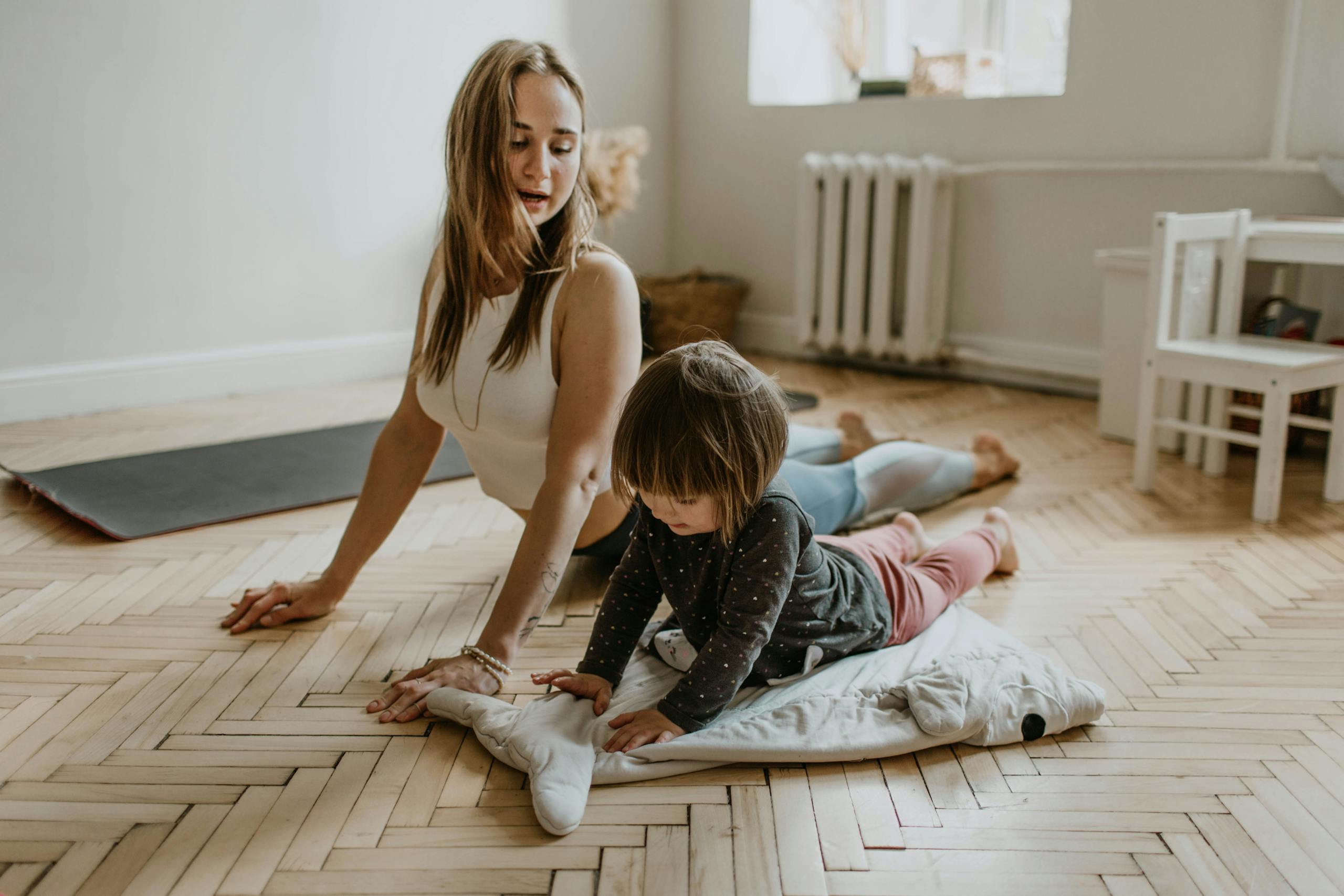

Quiet people make surprisingly powerful teachers, especially with children. An introvert’s natural tendencies toward careful observation, deep listening, and thoughtful explanation translate into exactly the kind of patient, attentive presence that kids need most when they’re trying to make sense of the world.
Making an introvert a good teacher to kids isn’t about forcing them into a louder, more performative version of themselves. It’s about understanding which of their existing strengths already work beautifully in a teaching context, and building practical habits around those strengths so the experience feels sustainable rather than draining.
If you’re an introverted parent, caregiver, or educator wondering whether your quieter nature is holding you back with the children in your life, I want to offer you a different frame entirely. What you carry into that relationship may be more valuable than you realize.
Much of what I explore in this article connects to the broader themes in our Introvert Family Dynamics and Parenting hub, where we look honestly at how introverted adults show up in family life, not by mimicking extroverted models, but by leaning into what actually comes naturally to them.

What Does an Introvert Naturally Bring to Teaching?
My advertising career ran for over two decades, and somewhere in the middle of it I started noticing something about the people on my teams who were best at explaining complex concepts to clients. They weren’t the loudest presenters in the room. They were the ones who had clearly sat with an idea long enough to understand it from multiple angles before they opened their mouths.
What’s your personality type?
Take our free 40-question assessment and get a detailed personality profile with dimension breakdowns, context analysis, and personalised insights.
Discover Your Type8-12 minutes · 40 questions · Free
That’s an introvert trait. We tend to process before we speak. We turn things over internally, test them against what we already know, and arrive at explanations that feel considered rather than improvised. With children, who are constantly asking “but why?” at every level of explanation, that kind of depth is genuinely useful.
Introverts also tend to notice things. I spent years in client meetings watching body language, tracking which ideas landed and which ones created confusion, reading the room in ways my more extroverted colleagues sometimes missed because they were focused on their own performance. With kids, that same observational instinct helps you catch the moment a child’s face shifts from understanding to confusion, often before they’ve found the words to say they’re lost.
There’s also something to be said for the introvert’s relationship with silence. Many adults, especially those who lean extroverted, feel compelled to fill every quiet moment in a teaching exchange. Introverts are more comfortable letting silence sit. And silence, it turns out, is one of the most powerful tools in a teacher’s approach. It gives children space to think, to formulate their own answers, to feel the dignity of arriving at understanding on their own terms.
The National Institutes of Health has noted that temperament traits present in infancy, including the tendency toward quiet observation and careful processing, often persist into adulthood. This means introversion isn’t a phase or a limitation to outgrow. It’s a stable orientation that shapes how a person engages with the world, including how they teach.
How Does an Introvert’s Depth of Focus Become a Teaching Strength?
One of the things I noticed early in my agency years was that I could lose myself completely in a problem. While my extroverted colleagues were energized by the brainstorm, I was energized by what came after, the quiet hours of actually working through an idea until it was something real. That capacity for sustained focus is, in a teaching context, an enormous asset.
Children learn best when they feel genuinely seen by the adult in front of them. Not managed, not entertained, but actually seen. An introverted adult who can sit with a child for thirty minutes on a single math concept, without checking their phone or glancing at the door, offers something that many children rarely experience in a world optimized for speed and distraction.
That depth of focus also means introverted teachers tend to prepare well. I’ve always been the person who over-researches before a client presentation, not because I’m anxious but because I want to understand the material well enough to handle whatever comes up. That same instinct, applied to teaching a child, produces lessons that are thoughtfully structured and genuinely responsive to where the child actually is.
If you’re curious about how your broader personality traits shape your approach to caregiving and teaching, the Big Five Personality Traits Test can give you a useful map. The Big Five framework measures openness, conscientiousness, agreeableness, extraversion, and neuroticism, and understanding where you land on each dimension can help you see which of your natural tendencies are already working in your favor with children.
What Practical Habits Help Introverts Teach Without Burning Out?
Here’s something I had to learn the hard way in my agency years: being good at something doesn’t mean it’s costless. I was good at client presentations. I could hold a room, make people laugh, build trust across a conference table. But I paid for it afterward in a way my extroverted colleagues didn’t. The energy had to come from somewhere, and recovering from it took time I didn’t always have.
Teaching children, especially over long stretches, carries a similar dynamic for introverts. The solution isn’t to do less. It’s to structure the experience so that it draws on your strengths without requiring you to sustain an energetic output that isn’t natural to you.
One practical habit is to build in what I’d call teaching rhythms. Instead of long, open-ended sessions where you’re expected to perform continuously, create a structure with clear segments. Explain, then observe. Ask a question, then wait. Let the child try something independently while you sit nearby, present but not performing. This kind of rhythm is actually better for children’s learning, and it’s far more sustainable for an introverted adult.
Another habit is to lean into written and visual communication. Introverts often express themselves more precisely in writing than in speech. If a child is struggling with a concept, writing out the explanation, drawing a diagram, or finding a book that approaches it from a different angle can be more effective than simply talking more. It also plays to your natural strengths.
A related resource worth considering is the Personal Care Assistant Test Online, which explores traits relevant to sustained caregiving. While it’s focused on professional caregiving contexts, many of the qualities it surfaces, patience, attentiveness, consistency, map directly onto what makes someone effective at teaching children over time.
Protecting your recovery time matters too. I used to schedule my most demanding client calls on Tuesdays and Thursdays, leaving Mondays and Fridays for deeper work. The same logic applies at home. If you know that Tuesday afternoon is your most depleted point in the week, that’s not the moment to attempt a challenging new concept with a frustrated eight-year-old. Timing matters, and introverts who understand their own energy cycles can use that self-knowledge to teach more effectively rather than just more exhaustedly.
How Does Emotional Attunement Shape What an Introvert Teaches?
Something I’ve observed over years of managing creative teams is that the introverts on my staff were often the first to notice when something was off with a colleague. Not because they were more emotionally expressive, but because they were more emotionally attentive. They picked up on the slight change in tone, the hesitation before answering, the body language that didn’t quite match the words.
With children, that attunement is invaluable. Kids communicate a great deal through behavior, not language. A child who suddenly doesn’t want to do math anymore may not be lazy. They may be embarrassed, confused, or afraid of failing in front of someone they respect. An introverted adult who notices that shift, and responds to what’s underneath it rather than just the surface behavior, creates a teaching relationship built on genuine safety.
That emotional attunement also connects to how introverts handle a child’s frustration. Rather than meeting it with high energy, cheerleading, or pressure, an introvert tends to respond with calm steadiness. That steadiness is regulating for children. It communicates that the frustration is survivable, that the adult isn’t threatened by it, and that the work can continue at a pace that feels manageable.
If you’re a highly sensitive person as well as an introvert, this attunement runs even deeper. HSP Parenting: Raising Children as a Highly Sensitive Parent explores how the heightened emotional perceptiveness of HSPs creates both particular gifts and particular challenges in parenting and teaching contexts. Many introverts identify with HSP traits, and understanding that overlap can help you work with your sensitivity rather than against it.
The research published in PubMed Central on emotional regulation in caregiving relationships suggests that a caregiver’s ability to remain regulated under stress has a meaningful impact on a child’s own capacity to regulate. An introvert who has learned to manage their own internal states, rather than performing external enthusiasm, may be offering children something more valuable than they realize.

What Should Introverts Stop Apologizing for in Teaching Contexts?
For most of my career, I apologized for my quietness in ways I didn’t even recognize as apologies. I’d over-explain my thinking to seem more engaged. I’d agree to social commitments I didn’t want to keep so I wouldn’t seem cold. I’d perform enthusiasm in client meetings because I thought that’s what leadership looked like. None of it was dishonest exactly, but none of it was quite me either.
Introverted adults who teach children often carry a similar low-grade apology. They worry that they’re not energetic enough, not fun enough, not spontaneous enough. They look at the loud, game-playing, high-five-giving teacher archetype and feel like they’re falling short of something important.
Stop apologizing for being calm. Children who grow up with a calm, consistent, thoughtful adult in their lives are not being shortchanged. They’re being given something rare. In a world that moves very fast and rewards very loud, a quiet adult who pays close attention and takes their questions seriously is a profound gift.
Stop apologizing for preferring one-on-one over group settings. Many introverted parents and teachers do their best work in intimate exchanges, sitting with one child at the kitchen table rather than managing a room full of them. That preference isn’t a deficiency. It’s actually aligned with how deep learning happens. Children often retain more from a single focused conversation than from a group lesson where they’re one of many.
Stop apologizing for needing to prepare. I once had a creative director on my team, an ISFP who was brilliant in spontaneous brainstorms, who used to tease me for always coming in with notes. But those notes were what made my explanations land. Preparation isn’t a sign that you don’t know your material. It’s a sign that you respect the conversation enough to show up ready for it. Children notice that respect.
Understanding your own likeability as a teacher can also be illuminating. The Likeable Person Test examines the social and relational qualities that draw people toward you, and for many introverts, the results are surprising. The qualities that make someone likeable to children, attentiveness, reliability, genuine interest, calm presence, are often exactly the qualities introverts naturally possess.
How Do You Handle the Moments When Teaching Feels Genuinely Hard?
There are days when teaching feels like too much. The child is frustrated, you’re depleted, and the lesson that seemed straightforward on paper has somehow turned into a forty-minute standoff over fractions. I’m not going to pretend those moments don’t exist, because they do, and pretending otherwise doesn’t help anyone.
What I’ve found, both in my professional life and in conversations with introverted parents, is that the hardest teaching moments usually happen when the introvert is already running on empty. The lesson itself may be fine. The child may be no more difficult than usual. But the adult’s reserves are low, and everything costs more than it should.
The practical response to this is less about teaching technique and more about self-awareness. Knowing your own warning signs, the irritability, the mental fog, the sense that everything is louder than it should be, and responding to them before they escalate is a skill that takes time to develop. It’s also a skill that, once developed, makes you a more consistent and reliable presence for the children in your life.
It’s also worth considering whether any of what you’re experiencing has roots in something deeper. Some introverts carry emotional histories that make certain kinds of relational intensity, including the demands of teaching a struggling child, genuinely activating in ways that go beyond ordinary depletion. The American Psychological Association’s resources on trauma offer a grounding starting point if you’re wondering whether past experiences are shaping your present reactions in ways that deserve attention.
For those who want to understand their own emotional patterns more precisely, the Borderline Personality Disorder Test can be a useful self-reflection tool. While BPD is a clinical diagnosis that requires professional assessment, the self-awareness questions embedded in such tools can help anyone, introverted or otherwise, get a clearer picture of how they respond to emotional intensity and relational stress.

What Teaching Styles Fit an Introvert’s Natural Approach?
Not all teaching looks the same, and the style that drains an introvert least is often the one that works best for the children in their care. Understanding which approaches align with your natural wiring can make the whole enterprise feel less like performance and more like genuine connection.
Inquiry-based teaching is a natural fit. Rather than delivering information and expecting absorption, inquiry-based approaches involve asking questions, following the child’s curiosity, and building understanding through dialogue. This plays directly to an introvert’s strength in listening and formulating thoughtful responses. It also means you’re not carrying the full weight of the lesson. The child’s questions become the engine.
Project-based learning is another strong match. Introverts tend to think in systems and structures. Setting up a longer-term project, building a model, writing a short story, designing a simple experiment, allows you to create a framework and then step back into a coaching role rather than a performance role. You’re guiding rather than presenting, which is where most introverts do their best teaching work.
Reading together, at any age, is perhaps the most introvert-friendly teaching approach of all. It requires no performance. It creates a shared reference point for conversation. It models the kind of deep engagement with ideas that introverts naturally value. And it communicates, without a word of explicit instruction, that paying close attention to something is worthwhile.
The findings published in PubMed Central on parent-child interaction quality suggest that the consistency and attentiveness of an adult’s engagement matters more to a child’s development than the volume or energy of that engagement. An introverted adult who shows up calmly and consistently, day after day, is doing something that registers deeply in a child’s developing sense of what learning feels like.
How Do You Build a Teaching Relationship That Lasts?
The most meaningful professional relationships I built over my agency years weren’t the ones that started with the biggest splash. They were the ones built slowly, through consistent follow-through, genuine interest in the other person’s thinking, and the kind of quiet reliability that people come to count on without always being able to articulate why.
Teaching relationships with children work the same way. The introverted adult who shows up reliably, who remembers what the child said last week and follows up on it, who takes a child’s ideas seriously enough to push back on them thoughtfully, builds something that no amount of high-energy performance can replicate.
Children are perceptive about authenticity in ways that adults sometimes underestimate. They know when an adult is performing enthusiasm versus genuinely interested. An introvert who is genuinely curious about what a child is thinking, who asks a follow-up question because they actually want to know the answer, registers as trustworthy in a way that matters enormously for learning.
That trust becomes the foundation for everything else. A child who trusts their teacher, whether that teacher is a parent, a formal educator, or a grandparent who spends Sunday afternoons explaining how engines work, is a child who will risk being wrong, ask the questions they’re embarrassed about, and stay with hard material longer than they would otherwise. That’s what learning actually requires.
Understanding family dynamics through Psychology Today’s framework can add useful context here. The relational patterns established in early teaching exchanges between children and the adults in their lives often echo through later relationships with teachers, mentors, and eventually colleagues. What an introverted adult builds with a child in those quiet, consistent moments carries further than either of them may realize at the time.
If you’re curious about how fitness and physical learning intersect with personality, the Certified Personal Trainer Test explores the qualities that make someone effective at teaching physical skills, many of which, patience, attentiveness to individual progress, clear cueing, translate directly to other teaching contexts. It’s a useful lens for thinking about instruction more broadly.

What Does It Actually Look Like When an Introvert Teaches Well?
Late in my agency career, I started mentoring junior strategists on my team. I didn’t set out to be a mentor. I’m not sure I would have called what I did “teaching” at the time. But looking back, those one-on-one conversations in my office, where I’d ask someone to walk me through their thinking, push back on assumptions, and then suggest a different frame, were some of the most effective teaching I’ve ever done.
What made them work wasn’t energy or charisma. It was that I was genuinely interested in how the other person thought. I asked real questions. I listened to the answers. I connected what they were saying to something broader. And I gave them the space to arrive at their own conclusions rather than handing them mine.
That’s what introvert teaching looks like at its best. It’s a conversation more than a performance. It’s presence more than production. It’s the adult who, when a child asks why the sky is blue, doesn’t just answer but asks what the child thinks first, and then builds from there.
It looks like the parent who notices their child has been staring at the same math problem for ten minutes and sits down beside them without a word, just to be there. It looks like the grandparent who tells a story about their own confusion with something similar, making the child feel less alone in their struggle. It looks like the quiet consistency of someone who shows up, pays attention, and takes the child’s inner life seriously.
None of that requires volume. None of it requires performance. All of it requires exactly what introverts, at their best, already bring.
There’s much more to explore about how introverts show up across all dimensions of family life. Our complete Introvert Family Dynamics and Parenting hub covers everything from managing energy in shared households to raising introverted children with confidence.
About the Author
Keith Lacy is an introvert who’s learned to embrace his true self later in life. After 20 years in advertising and marketing leadership, including running agencies and managing Fortune 500 accounts, Keith now channels his experience into helping fellow introverts understand their strengths and build fulfilling careers. As an INTJ, he brings analytical depth and authentic perspective to every article, drawing from both professional expertise and personal growth.
Frequently Asked Questions
Can introverts really be effective teachers, or is teaching better suited to extroverts?
Introverts can be highly effective teachers, often in ways that extroverts find more difficult to sustain. Qualities like deep listening, careful preparation, emotional attunement, and comfort with silence are genuine teaching strengths. The extroverted model of teaching, high energy, constant engagement, group dynamics, is one approach. The introverted model, quieter, more focused, more relational in a one-on-one sense, is another. Many children thrive specifically with the kind of calm, consistent presence that introverted adults naturally provide.
How can an introverted parent teach without exhausting themselves?
Sustainable teaching for introverts comes down to structure and self-awareness. Building teaching sessions with clear rhythms, alternating between explanation, observation, and independent work, reduces the demand for continuous performance. Choosing teaching approaches that play to your strengths, inquiry-based conversation, project-based learning, shared reading, also helps. Protecting recovery time and recognizing your own depletion signals before they escalate means you can show up more consistently over time rather than burning bright and crashing.
What subjects or skills are introverts particularly well-suited to teach children?
Introverts tend to excel at teaching subjects that reward depth and careful thinking, reading comprehension, writing, science concepts, history, mathematics at a conceptual level. They’re also particularly effective at teaching emotional and social skills, not through direct instruction but through modeling: showing a child what it looks like to think before speaking, to listen carefully, to sit with a difficult problem rather than rushing to an answer. Those are life skills that children absorb through observation more than lecture.
How should an introvert handle a child who is more extroverted and needs more stimulation?
An extroverted child and an introverted teacher can be a genuinely productive pairing, as long as both people’s needs are acknowledged. The introverted adult can build in more interactive elements, games, movement, verbal back-and-forth, while still structuring the session in a way that doesn’t require sustained high energy from them. Being honest with an older child about your own wiring, explaining that you do your best thinking quietly and that you need them to try something independently for a few minutes, is also reasonable. Children respect honesty, and it models healthy self-advocacy.
Is it worth understanding your personality type before trying to improve as a teacher?
Yes, with the caveat that personality frameworks are tools, not verdicts. Understanding whether you’re introverted or extroverted, where you fall on traits like openness and conscientiousness, and how you tend to respond under stress gives you useful information about what conditions help you teach well and what conditions work against you. That self-knowledge is more actionable than generic teaching advice, because it helps you design an approach that fits who you actually are rather than who you think a good teacher is supposed to be.