

The Draw a Person in the Rain test is a projective psychological assessment where a person is asked to draw someone standing in the rain, without any other prompts or guidance. What emerges from that simple request, the size of the figure, the presence or absence of an umbrella, how the rain falls, whether the person looks distressed or calm, offers a window into how someone perceives stress, emotional protection, and their sense of safety in the world.
Psychologists and therapists have used this assessment for decades as one tool among many when working with children and adults. It draws on projective testing principles, the idea that when we create something without rigid constraints, we tend to externalize our internal emotional landscape without fully realizing it. A child who draws a tiny figure with no umbrella and rain pouring down in heavy diagonal lines is telling you something different from a child who draws a large, confident figure holding an umbrella and smiling.
I want to be honest with you about something before we go any further. I’m not a psychologist. I’m an INTJ who ran advertising agencies for over two decades, and I came to this test not through clinical training but through parenthood and a deep fascination with how people communicate what they can’t quite say out loud. That’s a thread that runs through everything I write here.
If you’re exploring how introverted children, highly sensitive kids, or quieter family members express themselves, this topic fits naturally into the broader conversation we’re building in our Introvert Family Dynamics and Parenting hub, where we look at how personality shapes the way families connect, communicate, and support each other.

What Is the Draw a Person in the Rain Test Actually Measuring?
At its core, this test is measuring a person’s relationship with stress. The rain in the drawing represents environmental pressure, the demands of life that fall on all of us without warning. The person in the drawing represents the self. Everything else, the umbrella, the puddles, the expression on the figure’s face, the ground beneath their feet, represents how the individual perceives their ability to cope with that pressure.
What’s your personality type?
Take our free 40-question assessment and get a detailed personality profile with dimension breakdowns, context analysis, and personalised insights.
Discover Your Type8-12 minutes · 40 questions · Free
Clinicians look at several dimensions when interpreting the results. The size and placement of the figure on the page, whether the rain is light or torrential, the presence of protective elements like umbrellas or shelter, the emotional expression of the figure, and even how much detail the person includes in the environment around the figure all carry meaning. None of these elements should be interpreted in isolation, and no single drawing tells the whole story of a person’s psychological state.
What makes this test particularly interesting from an introvert’s perspective is that it captures something we already know intuitively: people communicate volumes through indirect expression. I spent years in client presentations watching people’s drawings on whiteboards during creative brainstorming sessions tell me more about their anxieties than their actual words did. A brand manager who kept drawing walls and barriers around product concepts wasn’t just being creative. She was showing me how she perceived the competitive landscape, as something threatening and enclosing rather than open and full of possibility.
The American Psychological Association notes that projective assessments like this one are often used in trauma-informed settings, where verbal communication about distress can be especially difficult. That’s a meaningful context for parents and caregivers trying to understand children who struggle to articulate what they’re feeling.
How Do You Interpret the Umbrella (or Its Absence)?
The umbrella is probably the most discussed element in interpretations of this test, and for good reason. It represents psychological protection, the coping resources a person perceives themselves as having when stress arrives. A large, sturdy umbrella held confidently suggests the person feels equipped. A small, torn, or tilted umbrella might suggest they feel their resources are inadequate. No umbrella at all is worth paying attention to, especially in children.
That said, the absence of an umbrella doesn’t automatically signal distress. Some people simply forget to draw one. Some draw their figure running for cover. Some draw a tree or awning nearby. Context matters enormously. A figure with no umbrella but a calm expression and light rain might reflect someone who is comfortable with uncertainty, someone who doesn’t feel the need to armor themselves against every difficulty.
As an INTJ, I’ve always been someone who processes stress internally before I show any outward response. If I’d taken this test during some of the harder years at my agency, I suspect I would have drawn a figure with a very small umbrella held at a careful angle, not because I felt overwhelmed, but because I was always calculating exactly how much protection I needed and where to direct it. That precision is very INTJ. Excess protection feels wasteful. Targeted protection feels efficient.
When you’re interpreting a child’s drawing, look at the umbrella in relation to the whole composition. Is it big enough to actually cover the figure? Is the child holding it, or has it been placed to the side? Is there anyone else under it? That last detail, whether the figure shares protection with others, can reveal a lot about how a child perceives relationships and support.

What Does the Figure’s Size and Placement Tell You?
In projective drawing interpretation, the size of the figure is generally associated with self-concept and sense of agency. A very large figure that dominates the page often reflects confidence, even boldness. A very small figure tucked into a corner of the page can suggest feelings of insignificance or a desire to minimize oneself in the world. Neither extreme is inherently alarming in isolation, but both are worth noting.
Placement on the page carries its own layer of meaning. Figures drawn in the upper portion of the page are sometimes associated with optimism or idealism. Figures drawn in the lower portion may reflect a more grounded, sometimes heavier emotional orientation. Figures placed to the far left are sometimes linked to a pull toward the past, while figures placed to the right suggest forward orientation. These are general tendencies, not diagnostic certainties.
One thing I’ve noticed in my own experience working with creative teams is that quieter, more introverted people often draw smaller figures, not because they feel diminished, but because they tend toward understatement. Highly sensitive people in particular, those who process the world with greater emotional depth, often produce drawings with remarkable detail in the environment and smaller, more carefully rendered figures. If you’re raising a child who fits that description, our piece on HSP parenting and raising children as a highly sensitive parent offers a lot of useful context for understanding how sensitivity shapes self-expression.
The National Institutes of Health has documented that temperament traits visible in infancy, including sensitivity and behavioral inhibition, tend to persist into adulthood. That means the quiet child who draws a small careful figure in the rain may be expressing a consistent temperament, not a crisis.
How Does the Rain Itself Factor Into the Interpretation?
Rain intensity is one of the most emotionally expressive elements in this test. Light, scattered drops suggest a mild perception of environmental stress. Heavy, diagonal rain lines filling the entire page suggest the person experiences their environment as relentlessly demanding. Some people draw storm clouds. Some draw puddles. Some draw lightning. Each addition changes the emotional weight of the image.
Children who fill the entire page with dense rain, especially when paired with a small or unprotected figure, are often communicating that the world feels overwhelming right now. That’s worth a gentle, non-alarming conversation. Not “what’s wrong with you” but “tell me about your drawing” and then listening carefully to what they say.
I remember sitting with a creative director at my agency during a particularly brutal pitch season. We were doing a team exercise, and I asked everyone to sketch something that represented how they were feeling about the upcoming month. He drew a tiny stick figure in the center of the page surrounded by what looked like a wall of water coming from every direction. No umbrella. No ground. Just a small person in a flood. That image told me more about his burnout than three months of one-on-ones had. We restructured his workload the following week.
That experience shaped how I think about projective expression. Sometimes people can’t find the words, or they’ve been trained to present strength in verbal contexts. Give them a pencil and a blank page, and the truth comes through.
Personality structure plays a role here too. People with certain trait profiles, particularly those high in neuroticism on the Big Five personality traits spectrum, tend to perceive environmental stressors as more intense and pervasive. That can show up directly in how they render rain in a drawing like this.
What Does the Figure’s Expression and Body Language Communicate?
Facial expression in the drawn figure is one of the clearest emotional signals in this test. A smiling figure in heavy rain suggests resilience or emotional minimization. A frowning or distressed figure in light rain might indicate that even small stressors feel significant. A blank-faced figure, no expression drawn at all, is common and worth noting, particularly in children who have learned to suppress emotional display.
Body posture matters too. A figure leaning into the rain, from here, suggests active coping. A figure turned away or hunched over suggests avoidance or overwhelm. A figure standing perfectly still might reflect a freeze response to stress, the sense of being stuck when demands pile up.
When I managed large creative teams, I worked with several people who I’d describe as emotionally flat in professional settings, not because they didn’t feel things deeply, but because they’d learned that showing feeling was a liability. In their drawings during exercises like this, the figures were almost always expressionless. It wasn’t numbness. It was trained suppression. Understanding that distinction matters enormously if you’re a parent trying to read your child’s emotional state through creative expression.
Some children who have experienced difficulty regulating emotions, or who show patterns that might warrant professional attention, will produce drawings with very fragmented figures, missing limbs, disproportionate features, or figures that seem to be falling apart under the rain. This is where the test becomes genuinely clinical territory. If you’re seeing patterns like this consistently, a conversation with a child psychologist is worth pursuing. Tools like the Borderline Personality Disorder test exist for adults exploring emotional dysregulation, and a qualified clinician can help you find age-appropriate assessments for children showing similar patterns.
Can This Test Be Used With Adults, and What Changes?
Absolutely. While the Draw a Person in the Rain test is frequently used with children, it has real value with adults as well, particularly in therapeutic and coaching contexts. Adults bring more sophisticated drawing skills and more complex emotional histories to the task, which means the symbolism tends to be richer and sometimes more deliberately constructed.
Adults are more likely to draw figures that reflect their professional identity, their social roles, or their self-image in specific contexts. A person going through a career transition might draw a figure at a crossroads in the rain. Someone processing grief might draw a figure alone on an empty street. Someone in a healthy, supported season of life might draw a figure in a coffee shop window, watching the rain from the inside.
One nuance worth understanding: adults who work in people-facing roles, caregivers, coaches, teachers, healthcare workers, tend to draw figures that are reaching out or helping others even in the rain. That orientation toward others, even under stress, is a meaningful signal about how they process their own needs relative to those they serve. If you’re exploring whether caregiving is a natural fit for your personality, something like a personal care assistant test online can help you understand your caregiving instincts more formally.
Similarly, adults in high-performance roles often draw figures that are actively doing something in the rain, running, building, carrying something. That drive to stay productive under pressure is worth examining honestly. Sometimes it’s genuine resilience. Sometimes it’s an inability to rest, which is its own form of stress response.
I’ll admit that when I imagine drawing this test during the years I was trying to lead like an extrovert, before I accepted my INTJ wiring, I would have drawn a figure doing something purposeful in the rain. Probably carrying something heavy. Probably alone. That image captures exactly what that period felt like: productive on the outside, isolated and overloaded on the inside.
How Should Parents Use This Test With Their Children?
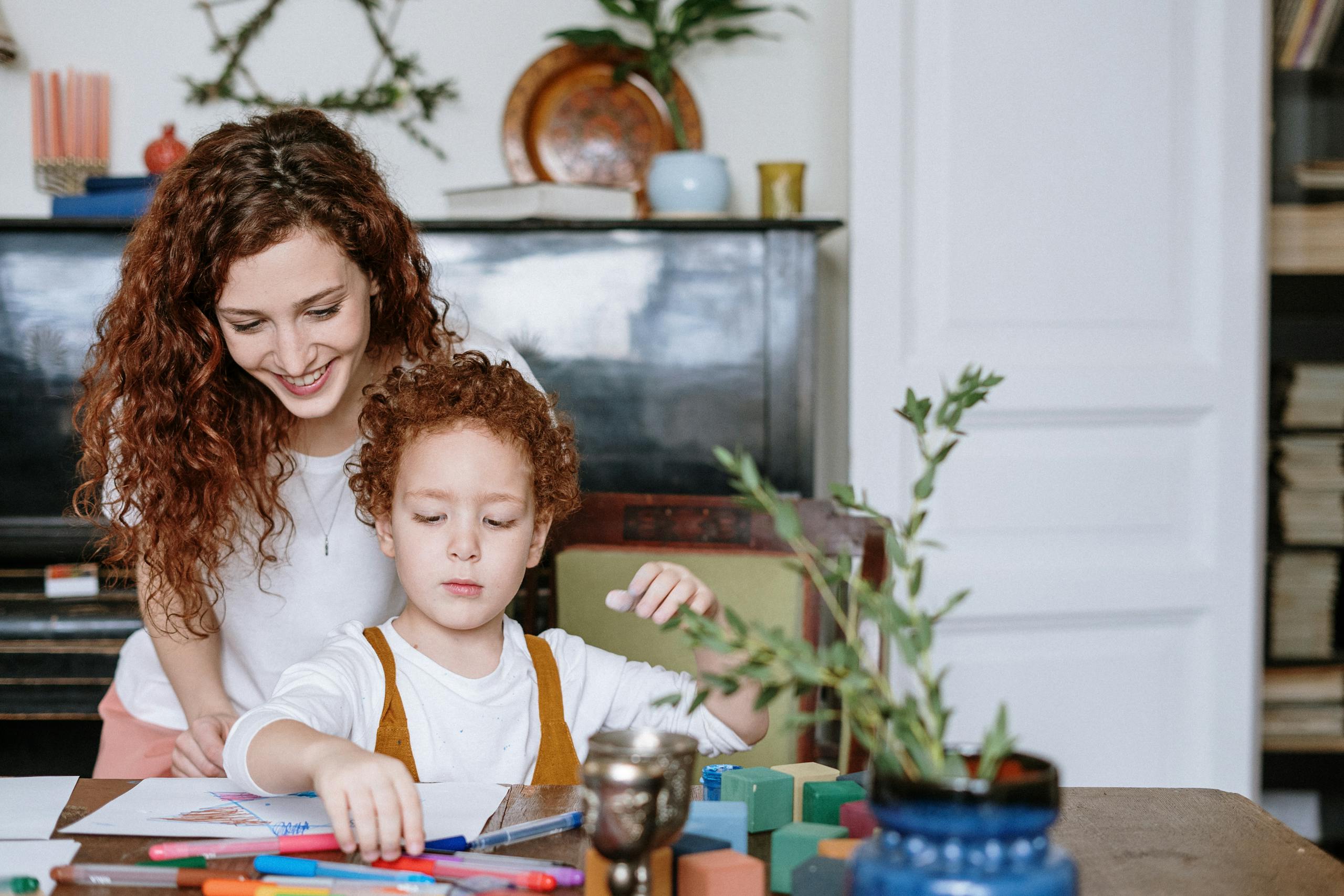
If you’re a parent curious about using this as an informal tool at home, the most important thing to understand is that this test is not a diagnostic instrument in your hands. It’s a conversation starter. What you’re doing is creating a low-pressure opportunity for your child to express something through drawing that they might not be able to express through words, and then using that expression as the beginning of a dialogue, not a conclusion.
Set it up simply. Give your child a blank piece of paper and a pencil or some crayons. Ask them to draw a person standing in the rain. Don’t add any other instructions. Don’t tell them to make it happy or sad or detailed. Just let them draw. Then, when they’re done, ask them to tell you about their drawing. “Who is this person?” and “What are they doing?” are good starting questions. Let them lead.
Pay attention to what they say as much as what they drew. A child who draws a figure with no umbrella but explains cheerfully that the person loves rain and is dancing is telling you something very different from a child who draws the same image and says the person is lost and can’t find their way home.
The research literature on children’s projective drawings consistently emphasizes that interpretation requires considering multiple drawings over time, the child’s verbal explanation, and the broader context of their behavior and environment. A single drawing is a data point, not a verdict.
What this exercise does beautifully is give introverted children, children who process internally and communicate indirectly, a medium that matches how they naturally express themselves. Many quieter children find drawing far less threatening than direct questioning. You’re meeting them in their language.
What Are the Limits of This Test and When Should You Seek Professional Help?
Projective tests like this one have real limitations, and intellectual honesty requires acknowledging them. The interpretation of drawings is inherently subjective. Two clinicians looking at the same drawing can reach different conclusions. Cultural context shapes what certain symbols mean. A child who has never seen an umbrella in real life will draw rain very differently from a child who grew up in a rainy climate where umbrellas are a daily tool.
The test also has a ceiling on what it can tell you. It can surface emotional themes worth exploring. It cannot diagnose anxiety, depression, trauma, or any other clinical condition. If you’re seeing consistent patterns in your child’s drawings that suggest significant distress, or if their behavior has changed in ways that concern you, a qualified child psychologist or therapist is the right next step.
There’s also a meaningful difference between a child who is going through a difficult season and a child who is showing signs of a more persistent emotional struggle. Situational stress, a move, a new school, a family change, will show up in drawings temporarily. Persistent patterns that don’t shift even when circumstances improve are worth professional attention.
One useful way to think about this: projective drawing is to emotional health what a basic fitness assessment is to physical health. A certified personal trainer test tells you something meaningful about someone’s fitness knowledge and methodology, but it doesn’t replace a physician’s evaluation when something is genuinely wrong. The same logic applies here. Use this tool to open conversations and observe patterns, but defer to professionals when the signals are serious.
The published literature on projective assessment validity is clear that these tools work best as part of a broader clinical picture, not as standalone diagnostic instruments. That’s true whether you’re using them with children or adults.
What Does This Test Reveal About How We Perceive Relationships and Support?
One of the most revealing aspects of this test is what it shows about a person’s sense of relational support. Does the figure in the rain appear alone, or are there others nearby? Is there a house in the background with warm light in the windows? Is there someone offering an umbrella, or is the figure clearly isolated in the storm?
These relational elements speak directly to family dynamics and attachment patterns. A child who consistently draws their figure alone in the rain, even when they have a stable, loving family, may be processing something about how connected they feel to the people around them. That’s worth exploring gently, without alarm.
Introverted children in particular often feel alone in crowds. They can be surrounded by family and still feel fundamentally separate, not because the love isn’t there, but because the connection doesn’t happen through the channels that feel most natural to them. Shared activity, quiet parallel presence, and deep one-on-one conversation tend to register as connection for introverted children in ways that big family gatherings simply don’t.
I think about this in terms of my own experience managing teams. The most introverted people on my staff didn’t feel supported by team-wide praise or group celebrations. They felt supported when I took five minutes to sit with them individually and say something specific about their work. That one-to-one quality of connection is what registers as “someone is with me in the rain” for people wired that way.
How likeable or socially connected a person perceives themselves to be also shapes these drawings in interesting ways. People who feel genuinely liked and welcomed by others tend to draw figures with more relational context. If you’re curious about your own social self-perception, the Likeable Person test offers a useful angle on how you come across to others and how that perception shapes your internal experience.

What Patterns Should You Track Over Time?
If you decide to use this exercise with your child more than once, the patterns across drawings become far more meaningful than any single image. Track changes in the intensity of the rain over time. Notice whether the figure grows larger or smaller. Pay attention to whether protective elements appear, disappear, or change in character.
A child who draws heavy rain and a small unprotected figure in September but draws a larger figure with a sturdy umbrella in March is showing you something about how their emotional resources have grown. That kind of progression is genuinely encouraging and worth acknowledging with them directly.
The reverse pattern, a child whose drawings become progressively more distressed over time, is a signal to pay closer attention to what’s happening in their environment. Changes at school, social difficulties, family stress, and transitions all leave marks in how children draw themselves in relation to the world.
From a family dynamics perspective, you might also try having multiple family members do the exercise at the same time and then share their drawings with each other. The conversations that come out of that kind of shared vulnerability can be remarkably connecting. I’ve used versions of this with leadership teams during offsite retreats, and the moments when people share their drawings honestly are almost always the most memorable of the entire session. People see each other differently afterward.
Understanding how blended family structures affect children’s sense of security and belonging adds another layer to this kind of tracking. Children handling complex family situations often show that complexity in their drawings, sometimes in ways that are easier to address once you can see them clearly on paper.
There’s more to explore on how personality and emotional wiring shape family connection in our Introvert Family Dynamics and Parenting hub, where we’ve gathered resources specifically for introverted parents and families raising quieter, more internally oriented kids.
About the Author
Keith Lacy is an introvert who’s learned to embrace his true self later in life. After 20 years in advertising and marketing leadership, including running agencies and managing Fortune 500 accounts, Keith now channels his experience into helping fellow introverts understand their strengths and build fulfilling careers. As an INTJ, he brings analytical depth and authentic perspective to every article, drawing from both professional expertise and personal growth.
Frequently Asked Questions
Is the Draw a Person in the Rain test scientifically validated?
The Draw a Person in the Rain test is a projective assessment tool used in clinical and therapeutic settings, but it is not considered a standalone diagnostic instrument with the same level of empirical validation as structured psychological tests. Its value lies in opening conversation and surfacing emotional themes, particularly with children who struggle to articulate feelings verbally. Clinicians typically use it as one element within a broader assessment process rather than as a definitive measure of psychological health.
What does it mean if a child draws no umbrella in the rain?
The absence of an umbrella in a Draw a Person in the Rain drawing is often interpreted as a potential indicator that the person perceives themselves as lacking adequate coping resources or emotional protection. That said, context matters enormously. A child who draws no umbrella but depicts a calm figure in light rain may simply feel comfortable with uncertainty. The drawing should always be discussed with the child to understand their own narrative about the image before drawing any conclusions.
Can parents use this test at home without clinical training?
Parents can use this exercise informally as a conversation starter, but should not attempt to interpret results as a clinician would. The exercise is most useful as a way to give children a low-pressure, non-verbal medium for expression, followed by an open-ended conversation about what they drew. If a parent notices consistently distressing patterns in their child’s drawings over time, consulting a qualified child psychologist or therapist is the appropriate step.
How does introversion affect how someone draws this test?
Introverted individuals often produce drawings that reflect their tendency toward internal processing and understatement. They may draw smaller figures, more carefully detailed environments, or figures that appear self-contained rather than reaching outward. This doesn’t necessarily indicate distress. It may simply reflect their natural orientation toward inner experience rather than outward expression. Highly sensitive introverts in particular tend to include rich environmental detail in their drawings, which can be a sign of perceptual depth rather than anxiety.
How often should you do this exercise with a child to track patterns?
There’s no fixed frequency that works for every family. Many parents and therapists find that doing this exercise every few months gives enough time for meaningful change to appear between drawings without making the exercise feel repetitive or clinical. The goal is to observe shifts over time, particularly during periods of transition or stress, rather than to monitor constantly. Keeping the drawings dated and stored together makes it easier to notice patterns when you look back across multiple sessions.