
Being an introvert parent during a pandemic means something very specific: you are trapped in the place that was supposed to restore you, surrounded by the people you love most, with nowhere left to go. That paradox sits at the center of what so many quiet, reflective parents experienced during lockdown, and what many are still processing years later.
The introvert parent pandemic experience is not simply about needing more alone time. It is about what happens when your primary coping mechanism, solitude, disappears entirely, and you still have to show up fully for your children every single day.
Our Introvert Family Dynamics and Parenting hub covers a wide range of experiences for quiet parents, from handling school events to raising children with different temperaments, but the pandemic chapter deserves its own honest examination. What happened to introverted parents during that period was genuinely unique, and the lessons it surfaced still matter.

What Did the Pandemic Actually Do to Introverted Parents?
There is a story that circulated early in the pandemic about introverts finally getting what they always wanted: permission to stay home. Some people genuinely believed that introverted parents must have been thriving. No school drop-offs, no social obligations, no office small talk. Just quiet family life.
What’s your personality type?
Take our free 40-question assessment and get a detailed personality profile with dimension breakdowns, context analysis, and personalised insights.
Discover Your Type8-12 minutes · 40 questions · Free
That story was wrong in almost every important way.
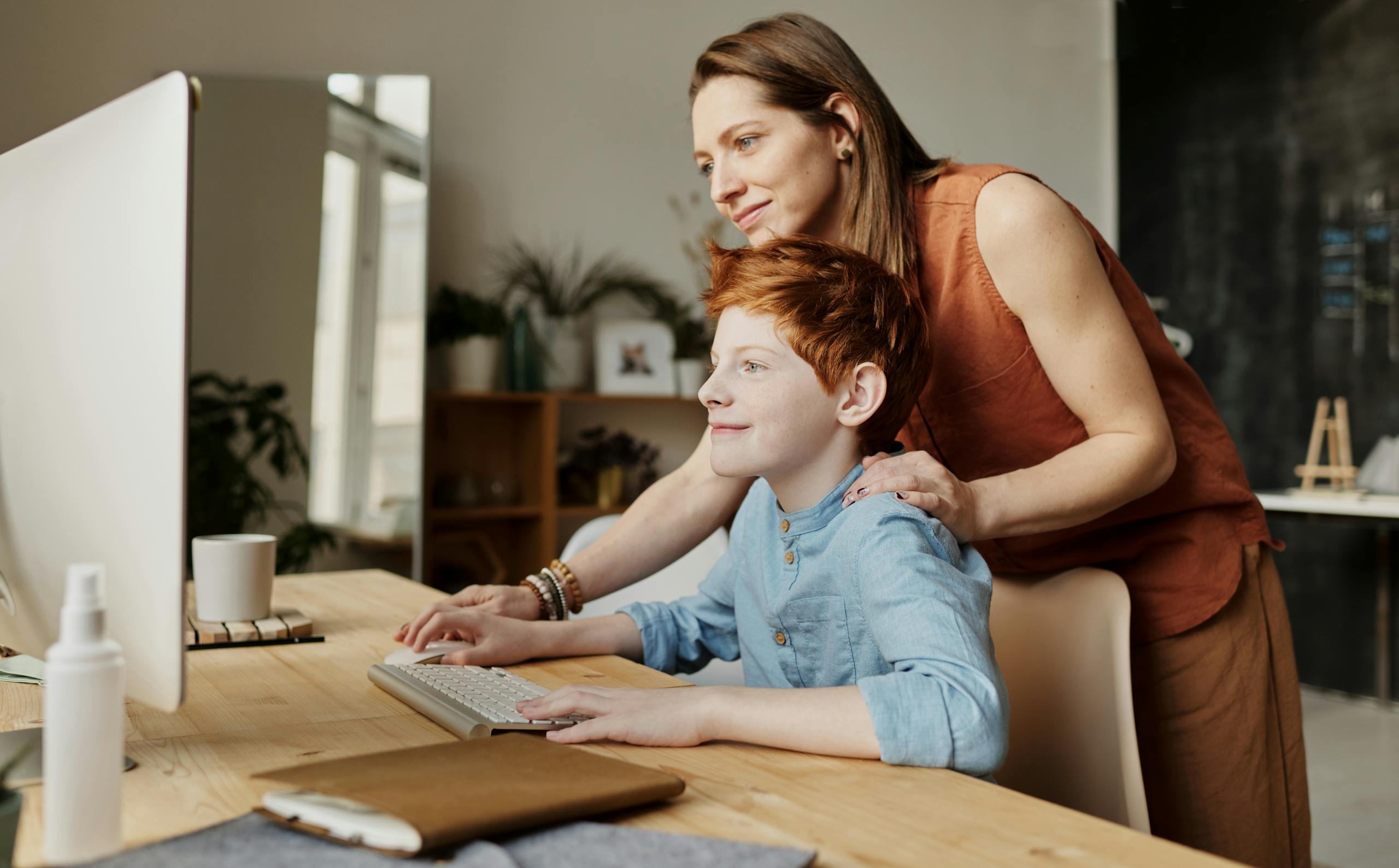
What introverted parents actually experienced was a collapse of the invisible architecture that made their lives functional. The school day was not just childcare. It was the six hours that allowed a quiet parent to think clearly, decompress, and rebuild the emotional reserves needed to be fully present in the evening. Remote work was not just a change of location. It was the merging of two worlds that introverts had carefully kept separate, because separation was how they survived.
I remember a version of this from years before the pandemic, during a particularly brutal period running my agency when a major client went into crisis mode. For three weeks, my phone never stopped. My team needed constant direction. My clients needed constant reassurance. I was “on” from seven in the morning until ten at night, and the version of me that showed up for my family in those weeks was thin and hollow. I was physically present and emotionally depleted. That is a pale shadow of what pandemic parents endured for months, sometimes years, with no end date visible.
The American Psychological Association has documented how sustained stress without recovery periods creates cumulative psychological wear that compounds over time. For introverted parents, the pandemic was essentially a prolonged version of that, with no off-ramp and very little social permission to admit how hard it was, because admitting it felt like saying you did not love your children enough.
Why Introverted Parents Felt Uniquely Guilty About Struggling
Parenting culture has a complicated relationship with parental need. There is an unspoken rule that good parents do not need space from their children. They are energized by their children. They find the chaos charming. They never count the minutes until bedtime.
For extroverted parents, this cultural script is easier to inhabit, at least partially. Social interaction with children, even noisy, demanding interaction, can genuinely restore an extrovert’s energy. The birthday party, the playdate, the family game night, these things cost extroverted parents something, but they also give something back.
Introverted parents are wired differently. Interaction, even loving interaction with their own children, draws from the same energy reserve that all social engagement draws from. This is not a character flaw. It is neurological reality. The National Institutes of Health has noted that introversion has biological roots, with temperament patterns visible in infancy that persist into adulthood. You do not choose this wiring any more than you choose your eye color.
Yet during the pandemic, introverted parents who admitted exhaustion were often met with responses that stung. “But you’re home all day.” “At least you have your family.” “Some people are completely alone right now.” All of those things were true. None of them addressed what was actually happening.
The guilt that resulted was corrosive. Many introverted parents began to wonder if their exhaustion was evidence of something broken in them, rather than evidence of a genuinely unsustainable situation. Some started taking personality assessments to try to make sense of their own experience. Tools like the Big Five Personality Traits Test can help people articulate what they already sense about themselves, giving language to the introversion-extraversion spectrum that makes it easier to explain their needs without feeling like they are making excuses.
How Introversion Intersects With Highly Sensitive Parenting Under Pressure
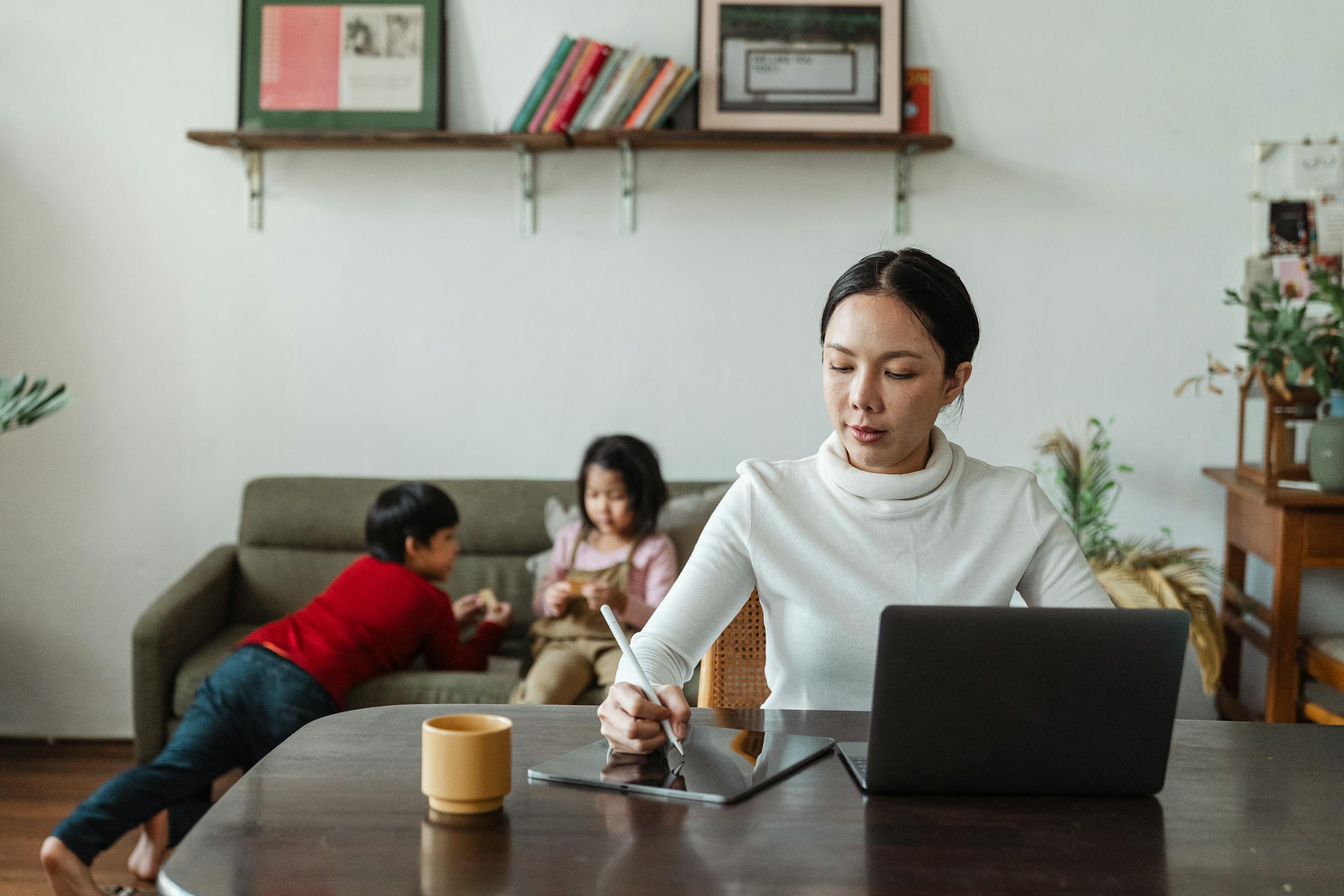
A significant portion of introverted parents also identify as highly sensitive people, and the pandemic hit that overlap particularly hard. Highly sensitive individuals process sensory and emotional information more deeply than average. They notice more, feel more, and require more recovery time. When you combine that with the constant noise, the disrupted routines, and the ambient anxiety of a global crisis, the result is a parent who is simultaneously absorbing more than others around them and recovering less than they need.
If this resonates, the piece on HSP parenting and raising children as a highly sensitive parent goes deeper into how this particular combination shapes the daily experience of family life. The pandemic amplified every challenge that piece describes.
What I noticed, both in my own experience and in conversations with people I worked with during that period, is that the highly sensitive introverts were often the ones who kept the most detailed mental models of everything happening around them. They tracked everyone’s emotional state. They noticed when a child was struggling before the child could articulate it. They absorbed the household’s collective anxiety and tried to process it quietly so others would not have to carry it.
As an INTJ, I have always processed the world through pattern recognition and internal analysis rather than emotional absorption. But I managed teams that included people with much higher sensitivity profiles, and I watched them carry invisible weight that others did not even register. One account director I worked with for years was extraordinary at reading client relationships, sensing tension before it surfaced, anticipating needs before they were expressed. That same capacity made the pandemic period extraordinarily costly for her. She was picking up signals from everywhere, her children, her spouse, the news, her clients, with no quiet space to set any of it down.
The research published in PubMed Central on sensory processing sensitivity supports what many introverted and highly sensitive parents lived through: deeper processing is not a weakness, but it does require more intentional recovery. When recovery becomes impossible, the system breaks down.
What Happened to Introverted Parents Who Were Also Caregivers?
The pandemic did not affect all introverted parents equally. Those who were also primary caregivers for elderly parents, family members with disabilities, or children with high support needs faced a compounded version of the experience.
Caregiving is one of the most demanding roles a person can hold, and it sits in interesting tension with introversion. The skills that make someone a thoughtful caregiver, patience, attentiveness, the ability to read another person’s needs, are often more developed in introverted people. Yet the sustained relational demand of caregiving is exactly what drains introverts most quickly.
If you were an introverted parent who was also providing care for someone else during the pandemic, understanding your own capacity and limits matters enormously. Resources like the Personal Care Assistant Test online can help people assess whether caregiving is a role that genuinely aligns with their strengths, or whether they are carrying it at a cost that is not sustainable long-term.
What I observed in the agency world applies here too. The people who were most effective in sustained high-demand roles were not the ones who pushed through without acknowledging the cost. They were the ones who built deliberate recovery into their structure, even when that structure was imperfect and incomplete. A fifteen-minute walk alone. A door closed for one hour. A phone call handled by someone else. Small things that preserved enough of the self to keep going.
How Did the Pandemic Affect Introverted Parents’ Relationships With Their Partners?
One of the less-discussed dimensions of the introvert parent pandemic experience is what happened inside partnerships. Couples who had developed functional rhythms around work schedules, school days, and separate social lives suddenly found themselves in constant proximity with no natural breaks and no external structure to organize their time.
For introverted parents partnered with extroverts, the tension was often explicit. The extroverted partner craved more connection, more conversation, more shared activity. The introverted partner needed more space, more quiet, more solitude. Neither need was unreasonable. Both needs were real. And in the compressed space of pandemic home life, they collided constantly.
For introverted parents partnered with other introverts, the dynamic was different but not necessarily easier. Two people who both need quiet, both need space, both need recovery time, competing for limited solitude in a house full of children, can create a specific kind of low-grade friction that is hard to name and harder to resolve.
Understanding your own personality profile helps in these situations, not to excuse behavior, but to create language for needs that otherwise feel like complaints. The Likeable Person Test is one way to examine how you come across in close relationships, which matters enormously when you are under stress and your natural social withdrawal can read as coldness or rejection to a partner who does not share your wiring.
I have thought about this through the lens of my own experience running a business with a partner for several years. We had very different energy profiles. I processed everything internally, came to meetings with conclusions already formed, and needed space between conversations to think. My partner processed externally, wanted to talk through everything in real time, and found my silence frustrating. We made it work because we built structures around our differences. The pandemic would have tested those structures severely, because the structures depended on physical separation that no longer existed.
The Psychology Today overview of family dynamics frames this well: family systems develop equilibrium over time, and sudden disruptions to that equilibrium, like a pandemic, expose the fault lines that normal life kept hidden. For introverted parents, those fault lines often ran along the introversion-extraversion divide.
What Did Introverted Parents Discover About Themselves?
Not everything that surfaced during the pandemic was painful. Some introverted parents discovered things about themselves that they had not had the stillness to notice before.
Many found that their children, stripped of the overscheduled, activity-packed version of childhood, were actually easier to connect with in certain ways. The deep, one-on-one conversations that introverted parents do best became more possible when there was nowhere else to be. The shared projects, the long afternoons, the slow meals, these suited introverted parents in ways that the constant social performance of normal school-year life did not.
There is something genuinely worth holding onto in that observation. Introverted parents are often more present in unstructured, quiet moments than in the loud, performative ones. The pandemic, for all its damage, created more of those moments than most modern families ever get.
Some introverted parents also discovered the edges of their own psychological resilience in ways that were clarifying rather than just painful. Understanding where you break down, what conditions push you past your capacity, what specific triggers accelerate your depletion, is genuinely useful information. It is the kind of self-knowledge that makes you a more intentional parent once you have the space to apply it.
For those who found themselves in genuinely dark places during the pandemic, it is worth noting that some of what people experienced went beyond ordinary introvert exhaustion. Prolonged stress, isolation from support networks, and sustained uncertainty can trigger or worsen mental health conditions that deserve professional attention. Resources like the Borderline Personality Disorder Test exist not to pathologize normal stress responses, but to help people identify when what they are experiencing might benefit from clinical support rather than just rest and recovery.
What Strategies Actually Helped Introverted Parents Survive?
Looking back at what worked for introverted parents during the pandemic, a few patterns emerge consistently. None of them are glamorous. None of them solved the fundamental problem. But they made the difference between functioning and not functioning.
The first was naming the problem clearly. Introverted parents who were able to say, out loud, to their partners or to themselves, “I am depleted because I have had no time alone, and I need to fix that,” were better positioned than those who tried to white-knuckle through without acknowledging the cause. Naming it removes the shame. It also makes it possible to problem-solve rather than just endure.
The second was protecting micro-recoveries with the same seriousness as macro ones. When a full day alone is impossible, thirty minutes of genuine solitude becomes precious. Introverted parents who treated those small windows as non-negotiable, who got up before their children, who took a solo walk at lunch, who stayed in the car for ten minutes after returning from a grocery run, reported meaningfully better functioning than those who waited for a large block of time that never came.
I learned a version of this during a period when I was managing a particularly demanding account that required constant availability. I started blocking fifteen-minute windows in my calendar labeled as “prep time” before every major meeting. No one questioned them. They were actually recovery time, moments to close my door, sit quietly, and let my mind settle before the next demand landed. It was not enough, but it was something. Something matters when nothing feels impossible.
The third was letting go of the comparison trap. Social media during the pandemic was full of parents who appeared to be thriving: baking bread, doing craft projects, running virtual family game nights. Some of those parents were genuinely doing well. Many were performing wellness for an audience. Introverted parents who measured their experience against that performance suffered unnecessarily. Your version of good enough does not have to look like anyone else’s version.
The fourth was finding community that did not require performance. This is where the introvert’s preference for depth over breadth became genuinely useful. One honest text thread with a close friend. One weekly video call with a sibling. One online community where people were allowed to say “this is really hard” without being immediately redirected toward gratitude. Those connections, low-frequency and high-quality, provided enough relational sustenance to keep going.
The PubMed Central research on social support and pandemic mental health confirms what introverted parents discovered experientially: the quality of connection matters more than the quantity. A few genuine relationships outperform many superficial ones, especially under sustained stress.
What Does the Introvert Parent Pandemic Teach Us Going Forward?
The pandemic is not the last disruption families will face. Climate events, economic instability, health crises, any of these can compress family life in ways that test introverted parents again. The question worth sitting with is not just how to survive the next crisis, but what structures to build now that make the next one less devastating.
Part of that is practical. Introverted parents who have already negotiated clear agreements with their partners about alone time, who have already modeled healthy boundary-setting for their children, who have already built recovery into their daily structure rather than treating it as a luxury, will enter the next disruption with more reserves than those who have not.
Part of it is also about identity. Introverted parents who have made peace with their own wiring, who do not spend energy fighting their nature or apologizing for it, are more resilient than those who are still trying to be someone else. That self-acceptance is not passive. It requires active work. It requires understanding your own personality deeply enough to advocate for your needs clearly and without guilt.
Some of that work involves understanding how you show up in high-stakes physical and emotional situations. Tools like the Certified Personal Trainer Test might seem unrelated to parenting, but the underlying question it addresses, whether someone has the temperament and skills for sustained one-on-one relational work, maps interestingly onto parenting. Knowing your own capacity for that kind of sustained, close engagement is genuinely useful self-knowledge.
What the pandemic in the end revealed, in its most clarifying moments, is that introverted parents are not deficient versions of extroverted parents. They are differently wired people doing one of the most demanding jobs in existence, and they deserve support systems, social narratives, and personal strategies that are built around their actual nature rather than someone else’s template.
There is more to explore across the full range of quiet parenting experiences. The Introvert Family Dynamics and Parenting hub brings together resources, perspectives, and practical guidance for introverted parents at every stage of family life.
About the Author
Keith Lacy is an introvert who’s learned to embrace his true self later in life. After 20 years in advertising and marketing leadership, including running agencies and managing Fortune 500 accounts, Keith now channels his experience into helping fellow introverts understand their strengths and build fulfilling careers. As an INTJ, he brings analytical depth and authentic perspective to every article, drawing from both professional expertise and personal growth.
Frequently Asked Questions
Why did introverts not thrive during the pandemic despite staying home?
The popular assumption that introverts would love lockdown ignored a crucial reality: introverts need solitude, not just proximity to fewer people. Being home with children, partners, and constant demands is not solitude. Introverted parents lost the structured alone time that made them functional, which is the school day, the commute, the quiet office hour, and had no way to replace it. The result was sustained depletion rather than the recharge that genuine solitude provides.
Is it normal for an introverted parent to feel exhausted by their own children?
Yes, and it does not indicate a lack of love. Introverts draw energy from solitude and expend it in social interaction, including interaction with their children. This is a neurological pattern, not a character flaw. Feeling depleted after sustained interaction with children is a predictable outcome of introvert wiring, not evidence of bad parenting. Acknowledging this honestly is the first step toward building recovery into your parenting structure.
How can introverted parents explain their need for space to their children without causing harm?
Age-appropriate honesty works well here. Telling a child “I need some quiet time to feel like myself again, and then I will be a better parent for you” models healthy self-awareness rather than teaching children that adult needs are shameful or hidden. Children who grow up watching introverted parents advocate for their own needs often develop healthier relationships with their own temperament, whatever that turns out to be.
What is the difference between introvert exhaustion and something more serious during a crisis?
Introvert exhaustion typically resolves with adequate solitude and recovery. When exhaustion persists despite rest, when it is accompanied by persistent hopelessness, difficulty functioning, or feelings of worthlessness, it may have crossed into depression or another condition that benefits from professional support. The pandemic created conditions where the line between ordinary depletion and clinical distress was genuinely blurry for many people. Seeking professional guidance is not a sign of weakness; it is a sign of self-awareness.
How can introverted parents build better resilience before the next major disruption?
The most effective preparation happens in ordinary times. Negotiating clear agreements with partners about alone time, building daily micro-recovery habits, helping children understand and respect parental boundaries, and developing a small circle of genuine support relationships all create reserves that matter enormously when a crisis compresses normal life. Introverted parents who have already normalized their need for solitude within their family system enter disruptions with significantly more capacity than those who have not.