

Shyness is not a personality trait in the same way that introversion or conscientiousness are. It is a fear-based emotional response, one rooted in anxiety about social judgment, and it sits in a fundamentally different category from the stable, enduring dimensions of personality that shape how we move through the world. That distinction matters more than most people realize, especially for parents trying to understand their children and for adults who have spent years believing something was wrong with them.
Quiet people get labeled shy. Reserved people get labeled shy. Introverts, deep thinkers, careful observers, all lumped together under a word that carries a faint whiff of inadequacy. I spent a long stretch of my career carrying that label without questioning it, and it shaped how I saw myself in ways I am still unpacking.

If you are exploring how shyness, introversion, and sensitivity shape family relationships and parenting dynamics, our Introvert Family Dynamics and Parenting Hub covers this terrain in depth. The question of whether shyness is a personality trait sits right at the intersection of all those themes, and it is worth taking seriously.
What Actually Makes Something a Personality Trait?
Before we can answer whether shyness qualifies as a personality trait, we need to be clear about what personality traits actually are. Personality traits are relatively stable patterns of thought, emotion, and behavior that persist across different situations and across time. They are not reactions to specific circumstances. They are the underlying architecture of how a person consistently engages with the world.
What’s your personality type?
Take our free 40-question assessment and get a detailed personality profile with dimension breakdowns, context analysis, and personalised insights.
Discover Your Type8-12 minutes · 40 questions · Free
The most widely accepted framework in personality psychology is the Big Five model, which identifies five broad dimensions: openness to experience, conscientiousness, extraversion, agreeableness, and neuroticism. These dimensions are considered genuine personality traits because they show up consistently across cultures, remain relatively stable across a person’s lifespan, and have measurable biological correlates. If you want a sense of where you fall on these dimensions, taking a Big Five personality traits test can give you a useful baseline for understanding your own temperament.
Shyness does not have its own dedicated dimension in the Big Five. It tends to cluster around two different areas: low extraversion and high neuroticism. That clustering tells us something important. Shyness is not a single unified trait. It is a combination of social withdrawal and anxiety, and those two components can exist independently of each other. A person can be highly introverted without being anxious. A person can be anxious in social situations without being introverted at baseline. The fact that shyness blends these two things is precisely why it is so easily confused with introversion, and why the distinction matters so much.
From a temperament perspective, MedlinePlus notes that temperament refers to the early-emerging, biologically influenced patterns of behavior and reactivity that form the foundation for later personality. Shyness, in this framework, is often described as a temperament dimension called behavioral inhibition, a tendency to withdraw from unfamiliar people and situations. That is different from saying it is a fixed personality trait in the way extraversion or conscientiousness are fixed.
How Is Shyness Different From Introversion?
This is the question I wish someone had handed me in my early thirties, when I was running a mid-sized advertising agency and spending enormous energy trying to figure out why I found certain situations so draining. I had always assumed I was shy. My team noticed I was quieter than other agency leaders. Clients occasionally remarked that I seemed reserved. I had internalized all of it as a personal limitation.
What I eventually came to understand was that I was not shy. I was introverted. Those are genuinely different things, and conflating them cost me years of unnecessary self-criticism.
Introversion is about energy. Introverts find social interaction draining and need time alone to restore themselves. It has nothing to do with fear. I could walk into a room of Fortune 500 executives and hold my own in a presentation. I could negotiate contracts and manage difficult client relationships. None of that made me anxious. What it did was exhaust me, and I needed quiet time afterward to recover. That is introversion.
Shyness is about fear. Specifically, it is the fear of negative social evaluation. A shy person wants to connect but feels held back by anxiety about how others will perceive them. The discomfort is not about energy depletion. It is about anticipated judgment. A shy extrovert, and yes, that combination absolutely exists, might crave social connection intensely but feel paralyzed by the worry that they will say the wrong thing or be found lacking.
The 16Personalities framework acknowledges this distinction by treating introversion and shyness as separate dimensions, noting that many people conflate the two because they can produce similar outward behaviors. The person who hangs back at a party might be introverted, conserving energy. Or they might be shy, managing anxiety. From the outside, it looks the same. From the inside, the experience is entirely different.
Does Shyness Have a Biological Basis?
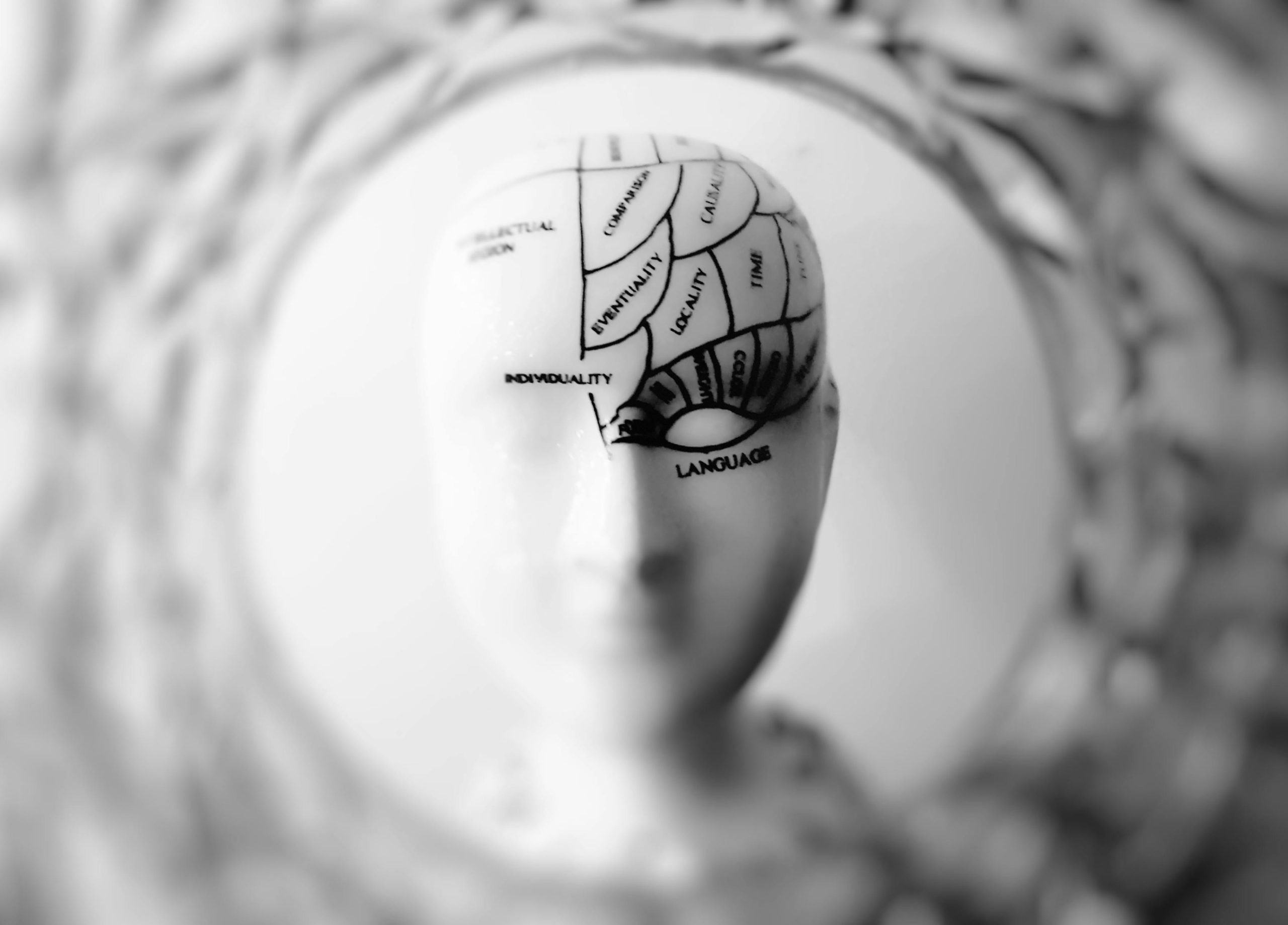
One reason people treat shyness as a personality trait is that it does seem to have some biological underpinning. Children who show behavioral inhibition early in life, that tendency to freeze and withdraw in the face of novelty, often carry that pattern into adulthood. There is genuine evidence that some people are born with a nervous system that is more reactive to unfamiliar stimuli, and that this reactivity shapes social behavior over time.
Work published in Frontiers in Psychology has examined how early temperament, including inhibited versus uninhibited behavioral styles, connects to later social anxiety and personality development. The picture that emerges is nuanced. Biology sets certain tendencies in motion, but environment, parenting, social experiences, and the stories we tell ourselves about our own nature all shape whether those tendencies develop into a stable pattern or shift over time.
That is a meaningful distinction. Personality traits, in the classical sense, are relatively fixed. Shyness, even when it has biological roots, is considerably more malleable. People who were highly inhibited as children do not inevitably become shy adults. With the right environment and experiences, that inhibition can soften substantially. That is not typically how we talk about core personality traits.
Additional research indexed through PubMed Central reinforces the idea that social anxiety and shyness, while related, are not identical constructs, and that both are shaped by a combination of genetic predisposition and environmental experience. Shyness can be a precursor to social anxiety disorder in some cases, but most shy people never develop clinical anxiety. The biological substrate is real, and so is the room for change.
What Does This Mean for Parents of Quiet or Reserved Children?
This is where the question stops being abstract and becomes genuinely urgent. Parents of quiet children carry a particular kind of worry. They watch their child hang back on the playground, decline invitations, or go silent in groups, and they wonder whether they should be doing something about it. The answer depends enormously on whether what they are seeing is shyness, introversion, or something else entirely.
If a child is introverted, the worst thing a parent can do is treat their natural disposition as a problem to be fixed. An introverted child who is repeatedly pushed to perform socially in ways that drain them will not become more extroverted. They will become more anxious. They will learn that their natural way of being is wrong, and that lesson tends to stick.
If a child is genuinely shy, meaning their hesitation is rooted in fear of judgment rather than a preference for quiet, gentle and consistent exposure to social situations, paired with warmth and validation, can help that anxiety ease over time. The goal is not to eliminate the child’s sensitivity. It is to help them build enough confidence that the fear does not run their social life.
Parents who are themselves highly sensitive have an additional layer to manage here. The experience of raising children through the lens of your own sensitivity is something our article on HSP parenting and raising children as a highly sensitive parent addresses directly. When a sensitive parent sees their child struggling socially, the empathic resonance can amplify the worry in ways that are not always helpful. Knowing whether you are responding to your child’s actual distress or your own projected anxiety is genuinely important.
I did not have children in the thick of my agency years, but I managed a lot of young creative professionals who had been labeled shy throughout their schooling. Several of them were among the most perceptive, capable people I ever worked with. They had simply spent years being told their quietness was a deficit. Watching them recalibrate their self-perception over time was one of the more meaningful parts of that work.
Can Shyness Change Over Time?
Yes, and this is one of the clearest ways shyness differs from a core personality trait. While introversion remains remarkably stable across a person’s life, shyness is considerably more responsive to experience, context, and deliberate effort. Many people who were intensely shy in childhood describe a meaningful reduction in that anxiety as they moved into adulthood, built social competence, and accumulated evidence that social situations were survivable.
That does not mean shyness simply evaporates. For some people it does ease considerably. For others it remains a persistent undercurrent, particularly in high-stakes or unfamiliar social contexts. What changes is usually the intensity of the fear and the degree to which it limits behavior, not necessarily the complete absence of the feeling.
Context matters enormously here. A person who seems shy in large group settings might be completely at ease in one-on-one conversations or in environments where they feel competent and known. That situational variability is another signal that we are dealing with something more like a learned emotional response than a fixed trait. Genuine personality traits do not switch on and off based on the size of the room or the familiarity of the faces in it.
I have watched this play out across many different professional contexts. Someone who seemed paralyzed in large client presentations would be completely fluent and confident in a small strategy session with two or three people. The underlying capability was always there. What shifted was the anxiety load. Helping people find the contexts where their natural ability could surface without being buried under social fear was one of the more practical things I learned to do as a leader.
How Do Personality Assessments Handle Shyness?
Most serious personality frameworks do not include shyness as a standalone trait. The Big Five measures extraversion and neuroticism, and shyness tends to show up as a combination of scores on those two dimensions. MBTI-based frameworks focus on cognitive preferences and do not directly measure anxiety or fear-based social hesitation. The fact that shyness does not have its own dedicated slot in these systems is telling.
That said, personality assessment can be genuinely useful for understanding the landscape of your own temperament. Knowing where you fall on dimensions like extraversion, agreeableness, and neuroticism can help you distinguish between preferences and fears, between what energizes you and what frightens you. Those are different things, and treating them as the same tends to create confusion about what actually needs attention.
Some people use assessments in contexts well beyond self-understanding. Someone exploring whether their temperament is suited to caregiving work, for example, might find value in something like a personal care assistant test online that helps them understand how their personality intersects with the demands of that role. The same logic applies in fitness and coaching contexts, where a certified personal trainer test might help someone understand how their communication style and interpersonal tendencies align with client-facing work. Personality is not destiny, but it is useful data.
What assessments cannot do is tell you whether your quietness in social situations is rooted in introversion, shyness, or some combination of both. That requires a more honest kind of self-examination, one that asks not just “do I prefer quiet?” but “am I afraid of something when I go quiet?”

Is There a Relationship Between Shyness and Other Psychological Patterns?
Shyness can overlap with several other psychological patterns, and it is worth being clear about where the boundaries are. Social anxiety disorder is the clinical version of what shyness describes in its milder form. When fear of social judgment becomes severe enough to significantly impair daily functioning, it crosses into clinical territory that benefits from professional support.
High sensitivity, as described in the HSP framework, can also be mistaken for shyness. Highly sensitive people process sensory and emotional information more deeply than average, which can lead to overstimulation in busy social environments. That overstimulation can look like shyness from the outside, but the mechanism is different. It is not primarily about fear of judgment. It is about the nervous system being flooded by input.
There are also cases where social withdrawal and fear-based hesitation are connected to more complex psychological patterns. Someone who wants to understand whether their social difficulties might be connected to something deeper might find it worth exploring tools like a borderline personality disorder test as part of a broader self-awareness process, particularly if their social experiences involve intense emotional reactivity or fear of abandonment rather than simple social anxiety.
The point is not to pathologize quietness. Most quiet, reserved, or shy people are simply wired differently, not disordered. But being precise about what is actually happening beneath the surface matters, because the response to genuine introversion, shyness rooted in anxiety, high sensitivity, and clinical social anxiety are all somewhat different.
How Does the Shy or Introverted Label Affect How Others See Us?
Labels have consequences. I learned this in the most concrete possible way during my agency years. Early in my career, I had a mentor who described me to a prospective client as “the quiet one, but the smart one.” He meant it as a compliment. What it did, without his intending it, was set up an expectation that my quietness needed to be offset by something else to be acceptable. That framing stayed with me longer than I would like to admit.
When we label a child shy, we are doing something similar. We are attaching a descriptor that carries social weight, and children internalize that weight. The child who hears “she’s shy” often stops asking whether the label is accurate and starts performing it. The label becomes a self-fulfilling frame.
Social perception research, including work connected to family dynamics frameworks explored through Psychology Today, consistently points to how early relational labels shape self-concept in lasting ways. The story a family tells about a child’s personality becomes part of how that child understands themselves, sometimes for decades.
There is also the question of likeability. Shy people are sometimes perceived as cold or disinterested, when in reality they are simply managing internal anxiety. Understanding how others read your quietness, and whether your natural reserve comes across the way you intend it to, is genuinely worth examining. Tools like a likeable person test can offer some useful perspective on how your social presence lands with others, separate from your internal experience of it.
What I eventually learned, after years of managing this in professional settings, was that the most effective thing I could do was not to perform extroversion but to be deliberate about warmth. Introverts and shy people alike can come across as distant when they are simply processing. Choosing to signal engagement, through eye contact, through asking genuine questions, through being present rather than retreating into my own head during conversations, made a measurable difference in how my quietness was received.
What Should We Actually Call It?
If shyness is not quite a personality trait in the classical sense, what is the most accurate way to describe it? Psychologists tend to treat it as a temperament dimension, a socially-oriented form of behavioral inhibition that has both biological roots and environmental influences. That framing is more precise than calling it a personality trait, and it carries different implications.
Calling something a temperament dimension rather than a fixed trait opens up more room for change without denying that the underlying tendency is real. It acknowledges that some people are genuinely more prone to social anxiety than others, that this tendency often shows up early in life, and that it has a biological component, while also recognizing that it is not immutable in the way that, say, introversion tends to be.
The complexity of family dynamics adds another layer to this conversation, particularly in households where children have different temperaments and where the shy or inhibited child may be handling a family culture that does not naturally accommodate their way of being. Naming what is actually happening, with precision and without judgment, is one of the most useful things adults can do for children who are finding their social footing.
For adults, the reframe is equally valuable. Recognizing that your social hesitation is rooted in anxiety rather than in who you fundamentally are gives you something to work with. It is not your identity. It is a pattern, and patterns can shift.

There is a lot more to explore at the intersection of personality, temperament, and family life. Our complete Introvert Family Dynamics and Parenting Hub brings together resources on how introverts experience relationships, raise children, and build families that work with their nature rather than against it.
About the Author
Keith Lacy is an introvert who’s learned to embrace his true self later in life. After 20 years in advertising and marketing leadership, including running agencies and managing Fortune 500 accounts, Keith now channels his experience into helping fellow introverts understand their strengths and build fulfilling careers. As an INTJ, he brings analytical depth and authentic perspective to every article, drawing from both professional expertise and personal growth.
Frequently Asked Questions
Is shyness considered a personality trait by psychologists?
Most personality psychologists do not classify shyness as a core personality trait in the same category as the Big Five dimensions. It is more accurately described as a temperament dimension, specifically a form of behavioral inhibition rooted in anxiety about social evaluation. It tends to correlate with low extraversion and high neuroticism in the Big Five model, but it does not occupy its own dedicated slot. That distinction matters because it means shyness is more malleable than a fixed trait, it can ease over time with experience and supportive environments, whereas core personality traits tend to remain relatively stable throughout life.
What is the difference between shyness and introversion?
Introversion is about energy preferences. Introverts find sustained social interaction draining and need solitude to restore themselves. It is not rooted in fear. Shyness, by contrast, is rooted in anxiety about social judgment and the fear of negative evaluation by others. A person can be introverted without being shy, and shy without being introverted. A shy extrovert, for example, craves social connection but feels held back by anxiety. The two can overlap, but they are distinct experiences with different underlying mechanisms.
Can shyness go away on its own, or does it need to be addressed?
Shyness often eases naturally over time, particularly as people accumulate positive social experiences and build confidence. Many adults who were shy as children describe a significant reduction in social anxiety by their twenties and thirties. That said, shyness does not always resolve on its own, and in some cases it can intensify into social anxiety disorder, which benefits from professional support. Gentle, consistent exposure to social situations combined with validation and warmth tends to help, particularly for children. The goal is not to eliminate sensitivity but to reduce the degree to which fear limits behavior.
How should parents respond to a child who seems shy?
The most important first step is distinguishing between introversion and shyness. An introverted child who prefers quiet and needs time to warm up does not need to be pushed toward more social engagement. Doing so can create anxiety where none existed before. A child whose hesitation is rooted in genuine fear of judgment benefits from gentle encouragement, consistent low-pressure social opportunities, and a parent who validates their feelings without amplifying the fear. Labeling a child as shy in front of others can reinforce the behavior, so choosing neutral or positive language about their temperament tends to serve them better over time.
Does shyness have a genetic or biological component?
Yes, there is evidence that some people are born with a nervous system that is more reactive to unfamiliar stimuli, a pattern called behavioral inhibition that shows up early in childhood and can persist into adulthood. This biological tendency does not determine outcomes, though. Environment, parenting style, social experiences, and the internal narratives people develop about their own nature all shape whether that early inhibition develops into lasting shyness or eases over time. The biological component is real, and so is the significant room for change, which is one reason shyness is better understood as a temperament dimension than as a fixed personality trait.