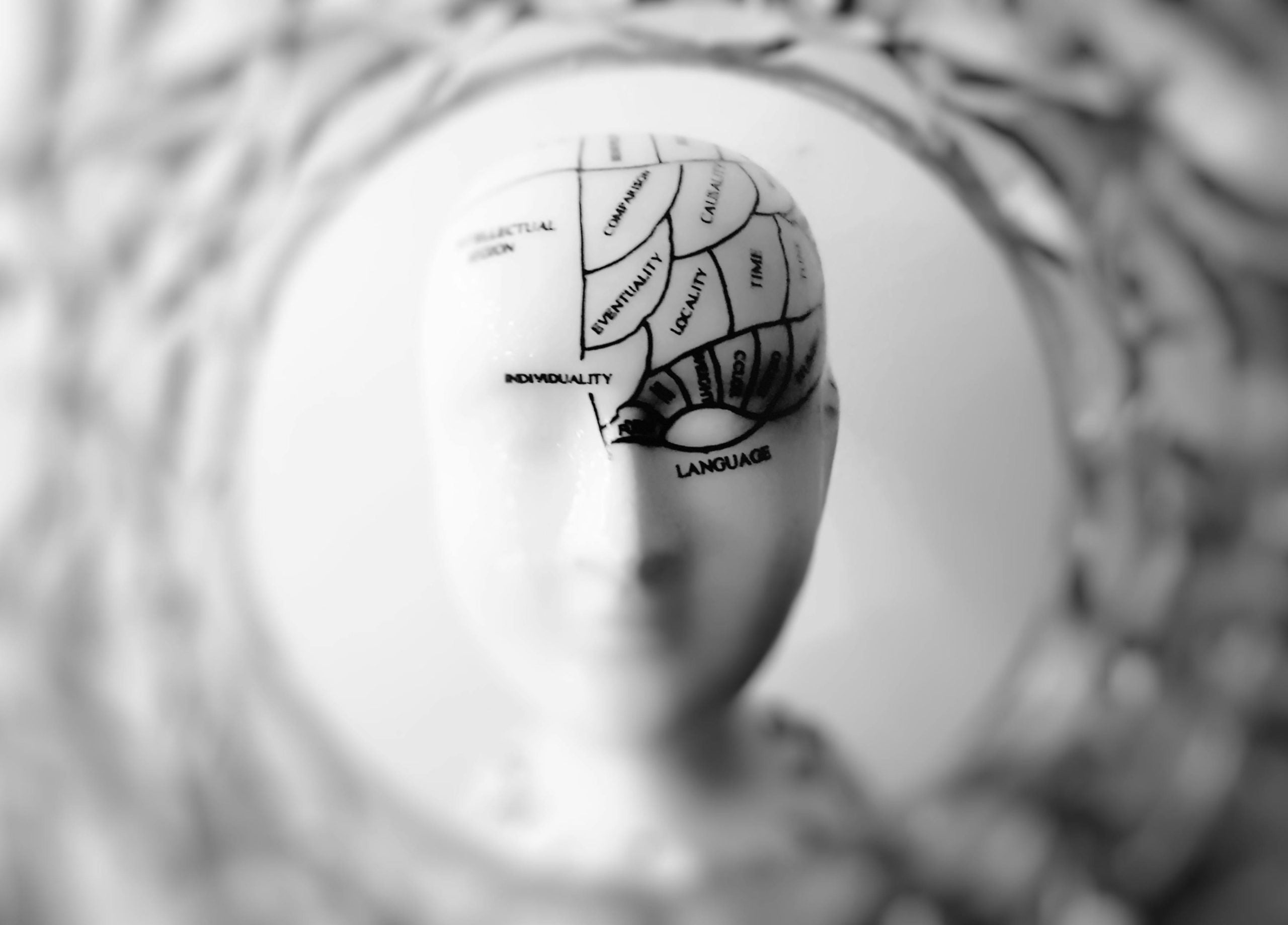

A neuroticism personality trait test measures how strongly you tend toward emotional instability, anxiety, and stress reactivity compared to emotional steadiness and calm. Scoring high doesn’t mean something is broken in you. It means your nervous system processes threat and uncertainty more intensely than average, and that pattern shapes everything from how you parent to how you handle conflict in close relationships.
As an INTJ who spent two decades running advertising agencies, I watched neuroticism play out in meeting rooms, pitch presentations, and late-night client calls long before I had a name for it. Some of the most creatively brilliant people I ever worked with were also the most emotionally volatile. Some of the calmest people I managed were quietly suffering in ways no one around them recognized. A personality test doesn’t resolve that complexity, but it gives you a vocabulary for it.
What follows is a practical look at what the neuroticism trait actually measures, how it shows up in family dynamics and parenting, and what your score might be pointing you toward rather than away from.
If you’re exploring personality and family dynamics more broadly, our Introvert Family Dynamics and Parenting hub covers the full landscape of how temperament shapes the way we connect, parent, and relate to the people closest to us.

What Does the Neuroticism Trait Actually Measure?
Neuroticism is one of the five core dimensions in the Big Five personality model, sometimes called OCEAN (Openness, Conscientiousness, Extraversion, Agreeableness, Neuroticism). It sits at one end of a spectrum that has emotional stability at the other. Where you land on that spectrum reflects how your nervous system tends to respond to stress, ambiguity, and perceived threat.
What’s your personality type?
Take our free 40-question assessment and get a detailed personality profile with dimension breakdowns, context analysis, and personalised insights.
Discover Your Type8-12 minutes · 40 questions · Free
People who score high on neuroticism tend to experience negative emotions more frequently and more intensely. Worry lingers longer. Irritability flares faster. Disappointment cuts deeper. This isn’t a character flaw or a sign of weakness. According to MedlinePlus, temperament traits like emotional reactivity have both genetic and environmental roots, meaning your baseline emotional sensitivity was shaped by factors largely outside your control.
People who score low on neuroticism tend to recover from stress more quickly. They don’t ruminate as long. They’re less likely to catastrophize. That sounds like an obvious advantage, and in many contexts it is. Yet low neuroticism can also mean missing emotional signals that matter, staying too calm in situations that genuinely warrant concern, or being less attuned to the people around you who are struggling.
If you want to see where you land across all five dimensions, the Big Five Personality Traits Test gives you a comprehensive picture rather than isolating neuroticism alone. Context matters. A high neuroticism score reads very differently when you also understand your openness, conscientiousness, and agreeableness levels.
What the neuroticism trait does not measure is mental illness. High neuroticism increases vulnerability to anxiety and depression under stress, but it is a personality dimension, not a diagnosis. That distinction matters, especially when people encounter their scores and start catastrophizing about what the number means. Which, fittingly, is something high-neuroticism individuals are particularly prone to doing.
How Does Neuroticism Show Up in Family Life?
Family systems are where personality traits become most visible, because you can’t opt out of them the way you might leave a difficult workplace. The people you live with see your patterns at their most unguarded. And neuroticism, more than almost any other trait, shapes the emotional temperature of a household.
A parent with high neuroticism might respond to a child’s minor setback with disproportionate worry. They might struggle to regulate their own anxiety in moments when a child needs calm reassurance. They might replay arguments with a partner long after the other person has moved on. None of this is intentional. It’s the nervous system doing what it was built to do, amplifying signals.
I saw a version of this in myself during a particularly brutal new business pitch season at the agency. We were chasing three major accounts simultaneously, and the stress was relentless. I brought that stress home in ways I wasn’t fully aware of at the time. My emotional state was contagious, and not in a good way. My family could feel the tension I was carrying even when I thought I was managing it. High neuroticism has a way of leaking out.
That said, the same emotional sensitivity that makes high-neuroticism parents prone to worry also makes them deeply attuned to their children’s emotional states. They notice when something is off before anyone else does. They take their children’s distress seriously rather than dismissing it. They’re often the parents who create space for emotional conversations rather than shutting them down.
Psychology Today’s overview of family dynamics points out that emotional patterns in families tend to repeat across generations unless someone becomes aware of them and actively works to change course. Neuroticism is one of those patterns. Recognizing it in yourself is the first step toward deciding which parts of it you want to pass on and which parts you want to interrupt.

What Does a Neuroticism Personality Trait Test Actually Look Like?
Most validated neuroticism assessments use a series of self-report statements that you rate on a scale, typically ranging from “strongly disagree” to “strongly agree.” You might see statements like “I often feel anxious without a clear reason,” “I get upset easily,” or “I tend to worry about things that might go wrong.” Your pattern of responses generates a score that places you somewhere on the neuroticism spectrum.
The most widely used research-backed versions include the NEO Personality Inventory and the IPIP (International Personality Item Pool) scales, both of which measure neuroticism as part of the full Big Five framework. These aren’t casual quizzes. They’ve been developed and refined over decades to produce consistent, reliable results across different populations.
Shorter versions exist for everyday use, and while they sacrifice some precision, they’re still useful for self-awareness. What matters more than the specific score is what you do with it. A number doesn’t tell you how to parent, how to manage your anxiety, or how to communicate with a partner. It tells you where your starting point is.
One thing worth knowing: neuroticism scores tend to be higher in younger adults and gradually decline across the lifespan. This aligns with what psychologists sometimes call “personality maturation,” the natural softening of extreme traits as people accumulate life experience and develop more effective coping strategies. So if you’re reading your score and feeling alarmed, consider that your current number isn’t fixed.
It’s also worth noting that neuroticism is distinct from conditions like borderline personality disorder, though they share some surface features like emotional intensity and difficulty with regulation. If you’re curious about where personality traits end and clinical presentations begin, the Borderline Personality Disorder Test offers a useful point of comparison.
Why Do Introverts Often Score Higher on Neuroticism?
There’s a common misconception that introversion and neuroticism are the same thing. They’re not. Introversion is about where you direct your energy and attention, inward versus outward. Neuroticism is about emotional stability. You can be an extroverted person who scores high on neuroticism, or an introverted person who scores very low.
That said, introverts do tend to score slightly higher on neuroticism on average, and there are plausible reasons for this. Introverts spend more time in internal reflection, which means more time with their own thoughts, including worries. They’re often more sensitive to their environment, which can amplify stress responses. And many introverts, especially those who grew up in extrovert-dominant families or workplaces, have spent years suppressing their natural tendencies, which is exhausting and emotionally costly.
As an INTJ, I’ve always processed emotion internally before it surfaces externally. That internal processing time can look like neuroticism from the outside, especially in high-stakes situations where others expect an immediate emotional response. In reality, what’s happening is a more thorough evaluation of the situation before I react. That’s not the same as emotional instability, even though it can be misread that way.
The 16Personalities framework distinguishes between “turbulent” and “assertive” identity types, which maps loosely onto the neuroticism spectrum. Many introverted types, particularly INFJs, INFPs, and INTPs, cluster in the turbulent category, not because introversion causes neuroticism, but because the combination of deep internal processing and environmental sensitivity creates conditions where emotional reactivity is more likely.
Highly sensitive people, a distinct but overlapping group, often show similar patterns. If you’re raising children as a sensitive parent, the emotional attunement that comes with high sensitivity is genuinely valuable, but it requires deliberate management. The HSP Parenting guide addresses exactly this tension, how to use your sensitivity as a strength without letting it overwhelm you or your children.

How Does Neuroticism Affect Parenting Specifically?
Parenting stress is one of the most reliable triggers for neuroticism-related patterns. Sleep deprivation, constant demands, financial pressure, and the weight of responsibility for another human being create exactly the kind of sustained stress that activates the nervous system’s threat-detection circuitry. For parents with high neuroticism, this can feel relentless.
The specific ways neuroticism shows up in parenting vary by person, but some patterns are common. Overprotective tendencies often trace back to a high-neuroticism parent’s heightened sense of threat. Difficulty tolerating a child’s distress without trying to immediately fix it is another pattern. Emotional contagion, catching and amplifying your child’s anxiety rather than absorbing and calming it, is a third.
None of these patterns are permanent, and awareness is genuinely powerful here. A parent who understands that their anxiety response is amplified relative to the actual threat level can learn to pause before reacting. They can develop what some psychologists call “the observing self,” the part of you that watches your emotional response without being fully captured by it.
One thing I’ve noticed in myself is that my neuroticism-adjacent patterns tend to surface most clearly when I feel out of control. At the agency, I was meticulous about systems and processes partly because structure reduced the number of variables that could go wrong. That same impulse in parenting can be useful, clear routines and expectations reduce chaos, but it can also tip into rigidity that doesn’t serve kids who need flexibility and spontaneity.
A publication from Frontiers in Psychology examining parental personality and child outcomes suggests that the relationship between neuroticism and parenting quality is mediated by how well parents manage their own emotional regulation. In other words, your score on a neuroticism trait test matters less than what you do with the self-awareness it generates.
Can Neuroticism Be Managed, or Is It Fixed?
Personality traits are relatively stable across adulthood, but “relatively stable” is not the same as “fixed.” Neuroticism in particular shows meaningful responsiveness to both therapeutic intervention and life circumstances. People who develop strong emotional regulation skills, whether through therapy, mindfulness practice, or deliberate habit-building, often report genuine shifts in how intensely they experience negative emotions over time.
What doesn’t change easily is the underlying sensitivity. A person with high neuroticism who does significant personal work doesn’t become someone who doesn’t notice or feel things deeply. They become someone who can sit with those feelings without being destabilized by them. That’s a meaningful difference, and it’s achievable.
Cognitive behavioral approaches are among the most well-supported for managing the anxiety and rumination patterns associated with high neuroticism. So is building what psychologists sometimes call “distress tolerance,” the capacity to experience discomfort without immediately trying to escape or fix it. Research published in PubMed Central on personality change across adulthood suggests that intentional interventions can produce measurable shifts in trait-level neuroticism, particularly when sustained over time.
Physical factors matter too. Sleep quality has a particularly strong relationship with emotional reactivity. A well-rested high-neuroticism person handles the same stressor very differently than an exhausted one. Exercise, social support, and reducing chronic stress all contribute to lowering the baseline activation level that makes neuroticism patterns more pronounced.
At the agency, I managed a creative director who scored extremely high on what I’d now recognize as neuroticism traits. He was brilliant and emotionally volatile in equal measure. What made the difference for him wasn’t suppressing his sensitivity, it was building routines and relationships that gave him enough stability to channel the intensity productively. He eventually became one of the most effective leaders I worked with, not because he changed who he was, but because he learned to work with it rather than against it.

What Neuroticism Means in Blended Families and Complex Relationships
Blended families introduce a particular kind of complexity that can amplify neuroticism-related patterns significantly. When you’re handling step-parenting relationships, co-parenting with an ex, or integrating children who have their own attachment histories and emotional needs, the number of potential stress triggers multiplies.
A parent with high neuroticism in a blended family context may find that the unpredictability of those relationships is especially difficult. Loyalty conflicts between children, boundary negotiations with former partners, and the general lack of established scripts for how blended families “should” work can all activate the threat-detection patterns that neuroticism amplifies.
Psychology Today’s writing on blended family dynamics emphasizes that the adjustment period for blended families is often longer and more emotionally demanding than people anticipate. For high-neuroticism individuals, that extended adjustment period requires deliberate support structures, whether therapy, strong social networks, or consistent personal practices that regulate the nervous system.
What I’ve found, both in my own experience and in watching people I’ve managed over the years, is that self-knowledge is protective in these complex situations. Knowing that your neuroticism score is high doesn’t make blended family life easier, but it does mean you’re less likely to interpret your emotional reactions as proof that the situation is impossible. You can distinguish between “this is genuinely hard” and “my nervous system is amplifying this beyond its actual difficulty.”
How Neuroticism Intersects With Career Choices and Professional Identity
People with high neuroticism often gravitate toward roles that offer clear structure, predictability, and defined expectations, because ambiguity is one of the primary triggers for their emotional reactivity. They may avoid leadership roles not because they lack capability, but because the interpersonal unpredictability of leadership feels genuinely overwhelming.
In caregiving professions, neuroticism can be both an asset and a liability. A personal care assistant who scores high on neuroticism may be exceptionally attentive to a client’s needs and distress signals. They may also struggle to maintain appropriate emotional distance, leading to burnout. If you’re considering whether a caregiving role suits your temperament, the Personal Care Assistant Test Online can help you assess your fit across multiple dimensions, not just emotional sensitivity.
Similarly, roles that require sustained high performance under pressure, like personal training or coaching, demand a specific emotional profile. Someone with high neuroticism may find that their own stress response interferes with their ability to project the calm confidence clients need. The Certified Personal Trainer Test covers competency areas that include client psychology and motivation, and understanding your own emotional baseline is relevant to how you’ll perform in those areas.
At the agency, I made a deliberate decision early on to surround myself with people whose temperaments complemented mine. I’m an INTJ with moderate neuroticism, high enough to be attuned to risk and quality, low enough to maintain strategic perspective under pressure. What I needed were people who could hold emotional steadiness when client relationships got turbulent, and people who could sound the alarm when I was being too calm about a genuine problem. Understanding personality traits in your team isn’t just useful for self-awareness. It’s a practical leadership tool.
Personality also intersects with how likeable we come across in professional settings. High neuroticism can sometimes create friction in social dynamics, not because neurotic people are unpleasant, but because emotional volatility can make others feel uncertain about how to approach you. The Likeable Person Test explores the social dimensions of personality in a way that complements what a neuroticism assessment tells you about your emotional baseline.

Taking Your Score Seriously Without Letting It Define You
Personality assessments are useful precisely because they give you a framework for self-understanding. They become counterproductive when people treat them as verdicts. A high neuroticism score is not a sentence. It’s a description of a tendency, one that exists on a spectrum, changes over time, and interacts with every other dimension of who you are.
What I’d encourage anyone to do after taking a neuroticism personality trait test is to sit with the results without immediately trying to fix them. High neuroticism often comes with gifts that low-neuroticism people genuinely lack: depth of emotional experience, sensitivity to injustice, attunement to others’ pain, and a drive toward meaning that comes from taking life seriously. Those aren’t consolation prizes. They’re real strengths.
The work isn’t to become someone who feels less. It’s to build the internal infrastructure that lets you feel fully without being overwhelmed by it. That’s a lifelong project, and it’s worth undertaking regardless of what your score says.
As someone who spent years in high-pressure environments learning to distinguish between the anxiety that signals a real problem and the anxiety that’s just my nervous system running its default program, I can tell you that the distinction is learnable. It doesn’t happen quickly, and it doesn’t happen by ignoring the trait. It happens by knowing it well enough to work with it.
There’s more to explore about how temperament shapes family life, parenting, and relationships in our Introvert Family Dynamics and Parenting hub, which covers everything from sensitive parenting approaches to how introverted parents can build stronger connections with their children without burning out.
About the Author
Keith Lacy is an introvert who’s learned to embrace his true self later in life. After 20 years in advertising and marketing leadership, including running agencies and managing Fortune 500 accounts, Keith now channels his experience into helping fellow introverts understand their strengths and build fulfilling careers. As an INTJ, he brings analytical depth and authentic perspective to every article, drawing from both professional expertise and personal growth.
Frequently Asked Questions
What does a high score on a neuroticism personality trait test mean?
A high neuroticism score means your nervous system tends to respond to stress, uncertainty, and perceived threat with greater intensity and for longer durations than average. You’re more likely to experience worry, irritability, and emotional reactivity. It does not indicate a mental health disorder, and it does not mean your emotional responses are wrong. It means your baseline sensitivity is higher, which carries both challenges and genuine strengths in emotional attunement and depth of experience.
Is neuroticism the same as anxiety or depression?
No. Neuroticism is a personality trait, not a clinical diagnosis. High neuroticism does increase vulnerability to anxiety and depression under sustained stress, because the nervous system is more reactive and recovery from negative emotional states takes longer. Yet many people with high neuroticism never develop anxiety disorders or depression, particularly when they have strong coping skills, supportive relationships, and manageable stress levels in their lives.
Can neuroticism change over time?
Yes, meaningfully so. Neuroticism tends to decline naturally across adulthood as people develop more effective coping strategies and accumulate life experience. Therapeutic interventions, particularly cognitive behavioral approaches, can accelerate this process. Physical factors like consistent sleep, regular exercise, and reduced chronic stress also influence how intensely neuroticism-related patterns express themselves day to day. The underlying sensitivity may remain, but its impact on your daily functioning can shift considerably.
How does neuroticism affect parenting?
Neuroticism shapes parenting in several ways. High-neuroticism parents tend to be deeply attuned to their children’s emotional states and take their distress seriously. They may also struggle with overprotective tendencies, difficulty tolerating their child’s discomfort without immediately trying to fix it, and emotional contagion where their own anxiety amplifies rather than calms a child’s distress. Awareness of these patterns is genuinely protective. Parents who understand their neuroticism can work deliberately on emotional regulation strategies that benefit both themselves and their children.
Are introverts more likely to score high on neuroticism?
Introversion and neuroticism are distinct traits, but they do show some correlation in population data. Introverts spend more time in internal reflection, which can amplify worry and rumination. Many introverts have also spent years in environments that didn’t suit their temperament, which creates chronic stress that elevates emotional reactivity over time. That said, plenty of introverts score low on neuroticism, and plenty of extroverts score high. The two traits measure different things, and one does not cause the other.