
Choosing between virtual therapy and in-person therapy for social anxiety disorder is rarely a straightforward clinical decision. It’s a deeply personal one, shaped by how your nervous system responds to proximity, observation, and the feeling of being seen. Both formats can be effective, and the research increasingly supports telehealth as a legitimate path forward, but the experience of sitting across from a stranger versus speaking through a screen touches something different in each person.
As someone who spent over two decades in high-stakes client meetings and still felt that familiar tightening in my chest before walking into a room full of people, I understand why this question matters. The setting isn’t incidental. For people managing social anxiety disorder, the setting can be everything.
Social anxiety disorder affects how people anticipate, experience, and recover from social situations. It’s not shyness. It’s not introversion, though the two often get conflated. It’s a clinical condition that can make something as ordinary as a phone call feel like a performance review. Whether therapy happens in a cozy office or on a screen matters because the therapeutic environment itself becomes part of the exposure, part of the work, and sometimes part of the barrier.
If you’re exploring how anxiety, personality, and family dynamics intersect, our Introvert Family Dynamics and Parenting Hub covers the broader landscape of how introverts and sensitive people build relationships, raise children, and manage the emotional weight of close connections. This article fits squarely into that conversation, because how we seek help is shaped by who we are at our core.
What Exactly Is Social Anxiety Disorder, and Why Does the Therapy Format Matter?
Social anxiety disorder sits in a different category from everyday nervousness. It involves persistent, intense fear of social or performance situations where a person expects to be scrutinized or judged. The fear is disproportionate to the actual threat, and yet it feels completely real, often triggering physical symptoms like racing heart, sweating, or a sudden inability to find words.
What’s your personality type?
Take our free 40-question assessment and get a detailed personality profile with dimension breakdowns, context analysis, and personalised insights.
Discover Your Type8-12 minutes · 40 questions · Free
What makes this condition particularly interesting when it comes to therapy format is that the act of going to therapy is itself a social situation. You have to call or email a stranger to schedule. You have to find a building, walk in, sit in a waiting room, and then sit face to face with someone and talk about the most vulnerable parts of yourself. For someone without social anxiety, that’s mildly uncomfortable. For someone with it, that sequence of steps can be enough to delay treatment for months or years.
The National Institute of Mental Health identifies social anxiety disorder as one of the most common anxiety disorders, and yet treatment rates remain lower than you’d expect. Part of the reason is access. Part of it is stigma. And part of it, I’d argue, is that the traditional path to therapy feels like it requires a level of social comfort that people with social anxiety simply don’t have yet.
That’s why the format question isn’t trivial. It’s actually central to whether someone gets help at all.
How Does Virtual Therapy Change the Experience of Getting Help?
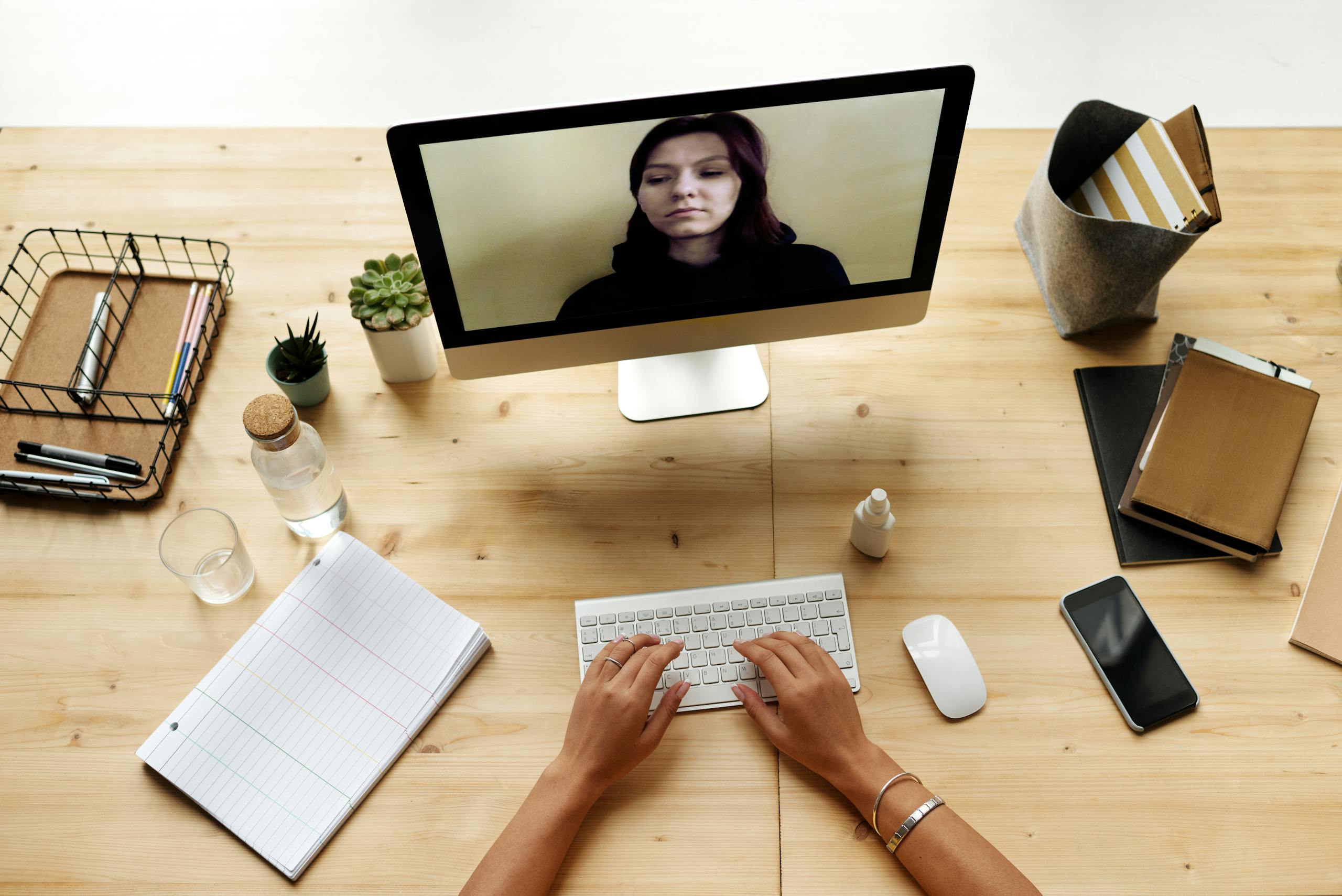
Virtual therapy removes a specific layer of social exposure. You’re in your own space. You control the lighting, the chair, the temperature. You don’t have to manage a commute while your anxiety is already running hot. You don’t have to sit in a waiting room next to strangers and wonder if they’re judging why you’re there.
For many people with social anxiety disorder, that reduction in environmental stressors makes it possible to actually show up. And showing up, consistently, is the foundation of any therapeutic progress.
I think about this through the lens of what I observed managing creative teams at my agencies. Some of my most talented people did their best thinking and their most honest communicating in writing, in Slack messages, in quiet one-on-ones rather than big brainstorms. The format shaped the quality of the output. When I gave people a channel that matched how their minds worked, I got more from them. Therapy is no different. When the format reduces friction, more of the real work can happen.

A meaningful body of clinical work has examined whether telehealth delivers comparable outcomes to in-person care for anxiety conditions. A PubMed Central review found that internet-based cognitive behavioral therapy produced meaningful symptom reduction for anxiety and depression, with effects that held up over time. That’s not a small finding. It suggests that for many people, the screen doesn’t dilute the therapy. It just changes the container.
Virtual therapy also tends to lower the logistical barriers that quietly derail treatment. Scheduling flexibility matters when you’re already managing a condition that makes planning feel overwhelming. Not having to take time off work or arrange childcare to attend a session removes friction that, for someone with social anxiety, can tip the scales toward canceling altogether.
What Does In-Person Therapy Offer That a Screen Cannot?
There’s something irreplaceable about physical presence in a therapeutic relationship. A skilled therapist reads body language, notices when you’re holding your breath, observes the way your posture shifts when a particular topic comes up. Some of that gets lost on video. Camera angles flatten nuance. Eye contact through a screen is never quite the same as eye contact across a room.
For social anxiety disorder specifically, there’s a compelling argument that in-person therapy creates a more authentic exposure opportunity. The nervousness you feel sitting across from your therapist is real. Working through that nervousness, in real time, with someone trained to help you do exactly that, is itself therapeutic. You’re not just talking about anxiety. You’re experiencing and processing it simultaneously.
Cognitive behavioral therapy, the most well-supported treatment for social anxiety disorder, often includes exposure components. According to Healthline’s overview of CBT for social anxiety, these exposure exercises help people gradually confront feared situations rather than avoid them. In-person therapy can naturally incorporate more of these moments, because the therapeutic setting itself is a social situation being faced rather than avoided.
There’s also the question of connection. I’ve spent a lot of time thinking about what makes relationships feel real versus transactional. Running agencies meant managing dozens of relationships simultaneously, and I noticed that the ones built on in-person time had a different quality. Not always better, but different. More grounded. There’s something about sharing physical space with another person that signals safety in a way screens haven’t fully replicated.
For some people with social anxiety, that grounded quality is exactly what they need. The discomfort of being in the room is the point. It’s where the growth lives.
Is One Format Clinically Superior for Social Anxiety Disorder?
The honest answer is that the evidence doesn’t declare a clear winner. What it does suggest is that both formats can work, and that individual factors matter more than the format itself.
A recent study indexed on PubMed examined outcomes across telehealth and in-person delivery of psychological treatments, finding that the therapeutic alliance, meaning the quality of the relationship between therapist and client, predicted outcomes more strongly than the delivery format. That’s a significant finding. It shifts the question from “which format is better” to “which format helps you build the best relationship with your therapist.”
For some people, that relationship builds more naturally in person. For others, the safety of their own home allows them to be more honest, more open, and more consistent in attendance. Both pathways can lead to meaningful progress.
What the research also highlights is that avoiding treatment entirely is far more costly than choosing the “less optimal” format. If virtual therapy is the format that gets you through the door and keeps you coming back, it’s better than waiting indefinitely for the “right” conditions to try in-person care.

Understanding your own personality structure can help clarify which environment might suit you better. Tools like the Big Five Personality Traits Test can give you language for your natural tendencies around social engagement, emotional openness, and stress response. Knowing whether you score high on neuroticism or low on extraversion doesn’t diagnose social anxiety, but it does help you understand why certain environments feel manageable and others feel impossible.
How Does Introversion Intersect With Social Anxiety Disorder in a Therapy Context?
This is a distinction I care about deeply, because I spent years confused about where my introversion ended and my anxiety began. They’re not the same thing, but they can look similar from the outside and feel similar from the inside.
Introversion is a preference for quieter, less stimulating environments. It’s about energy management, about how you recharge, about where your best thinking happens. Social anxiety disorder is a fear-based condition. One is a personality trait. The other is a clinical diagnosis. Yet both can make social situations feel costly, and both can make the idea of sitting in a therapist’s office feel like a significant undertaking.
As an INTJ, my preference for depth over breadth, for processing internally before speaking, for one-on-one over group settings, shaped how I experienced therapy when I first tried it in my late thirties. The in-person format felt exposing in a way I hadn’t anticipated. Not because I had social anxiety disorder, but because I’m wired to be private. Sharing in a physical space felt more permanent somehow, more witnessed.
For introverts who also carry social anxiety disorder, that layering is real. The therapy format question becomes even more significant because you’re managing both the clinical condition and the personality-based preference for reduced social exposure. Virtual therapy can feel like a more natural fit initially, while in-person therapy might offer more of the growth edge.
Some of the most sensitive, internally rich people I’ve worked with over the years carried both traits simultaneously. I once managed a senior account director who was brilliant at strategy but would physically freeze before client presentations. We worked out a system where she prepared extensively in writing, presented via video whenever possible, and built in recovery time after high-stakes meetings. She thrived. The format accommodated her wiring without letting her avoid the work entirely.
Parenting adds another layer to this. If you’re raising children while managing social anxiety disorder yourself, the way you model help-seeking behavior matters. Our resources on HSP parenting and raising children as a highly sensitive parent explore how your own emotional wiring shapes your child’s relationship with the world. Choosing therapy, in whatever format works for you, is part of that modeling.
What Practical Factors Should Guide Your Format Decision?
Beyond clinical considerations, several practical factors genuinely influence which format will serve you best. These aren’t soft considerations. They’re real variables that determine whether treatment happens at all.
Geography matters. Rural areas often have limited access to therapists who specialize in social anxiety disorder. Virtual therapy expands your pool of potential providers dramatically, which means you’re more likely to find someone whose approach actually fits your needs. A mediocre in-person match is not automatically better than an excellent virtual one.
Cost and insurance coverage vary by format. Some insurance plans cover telehealth at the same rate as in-person visits. Others don’t. That financial reality shapes what’s sustainable over the months of consistent work that meaningful progress requires.
Your living situation matters too. If you share a small apartment with roommates or a family with thin walls, the privacy of a virtual session might actually be less than what you’d get in a therapist’s office. Some people find it easier to be honest when they’re physically removed from their home environment.
Severity of symptoms is worth considering honestly. Clinical research published in Springer has examined how symptom severity interacts with treatment delivery, suggesting that people with more severe presentations may benefit from the additional structure and relational depth that in-person care provides. That’s not a rule, but it’s worth discussing with a provider.
Your history with technology also plays a role. If video calls already trigger anxiety for you, adding that layer to a therapeutic conversation might create interference. Some people find that the slight awkwardness of video technology keeps them slightly outside the emotional content of sessions, which reduces their effectiveness.
How Do You Know If Your Current Format Is Actually Working?
Progress in therapy for social anxiety disorder isn’t always linear, and it’s not always obvious. But there are signs worth paying attention to.
You’re making progress if the situations that once felt impossible are starting to feel merely uncomfortable. Discomfort is appropriate. It means you’re engaging rather than avoiding. The shift from impossible to uncomfortable is significant.
You’re making progress if you’re able to be honest with your therapist. That sounds obvious, but many people with social anxiety spend sessions managing their therapist’s impression of them rather than actually working. If the format you’ve chosen allows you to say the true thing rather than the acceptable thing, it’s working.
You’re making progress if your avoidance behaviors are shrinking. Social anxiety disorder maintains itself through avoidance. Every time you avoid a feared situation, the fear gets reinforced. When you start noticing that you’re avoiding less, that you’re staying in situations longer, that you’re recovering faster after difficult social experiences, the therapy is doing something real.

If you’re not making progress after a reasonable trial period, the format might be a factor, but so might the therapeutic approach, the fit with your therapist, or the presence of other conditions that need attention. A PubMed Central analysis of anxiety treatment outcomes highlights that comorbid conditions, things like depression, ADHD, or other anxiety disorders, can complicate treatment and may require adjusted approaches regardless of format.
Speaking of understanding yourself more completely, it’s worth knowing that some people exploring social anxiety also benefit from ruling out other conditions that can look similar. The Borderline Personality Disorder Test on this site isn’t a diagnostic tool, but it can help you identify patterns worth discussing with a professional. Self-knowledge is never wasted in this process.
Can You Switch Formats Mid-Treatment, and Should You?
Yes, and sometimes you should. Treatment isn’t a contract with a fixed format. Many people start with virtual therapy because it’s accessible and lower-stakes, then transition to in-person work as their comfort level grows. Others do the opposite, starting in person and shifting to virtual when life circumstances change.
What matters is that the switch is intentional rather than avoidant. Switching from in-person to virtual because in-person sessions are producing useful discomfort you’d rather not feel is avoidance. Switching from in-person to virtual because you’ve relocated, your schedule has changed, or you’ve found a specialist who only works online is practical adaptation.
Have that conversation explicitly with your therapist. A good therapist will help you examine your motivation for wanting to switch and will support the decision if it’s clinically sound. That conversation itself, advocating for your own needs in a therapeutic relationship, is practice for advocating for yourself in other relationships.
I’ve found that the people who do best in any kind of growth process, whether it’s therapy, career development, or personal work, are the ones who stay curious about their own patterns. They notice when they’re avoiding. They ask why. They make adjustments without abandoning the process. That quality of honest self-observation is something introverts often have in abundance, because we spend a lot of time inside our own heads. The work is learning to direct that observation productively rather than ruminatively.
If you’re also thinking about other kinds of support beyond therapy, it can be helpful to understand what different helping roles actually involve. Our Personal Care Assistant Test Online and the Certified Personal Trainer Test are useful if you’re exploring whether physical health support might complement your mental health work. There’s real evidence that physical activity and structured support systems reduce anxiety symptoms, and knowing your options helps you build a fuller picture of what recovery can look like.
Social connection, even in small doses, also plays a role in recovery from social anxiety disorder. Understanding how likeable you come across, and more importantly, how you perceive yourself in social situations, can be illuminating. The Likeable Person Test isn’t a clinical instrument, but it can surface assumptions you’re carrying about how others see you, assumptions that social anxiety often distorts in a negative direction.
What Should You Actually Do If You’re Trying to Decide?
Start somewhere. That’s the most important thing I can offer, and I mean it with full awareness of how inadequate it sounds when you’re in the middle of anxiety that makes starting feel impossible.
When I finally sought support for the anxiety that had been quietly running underneath my career for years, I almost talked myself out of it three times. Too busy. Not that bad. Will figure it out myself. The INTJ in me was convinced I could think my way through it without outside help. I was wrong. The thinking was part of the problem. I needed a different kind of input.
If virtual therapy is what makes starting possible, start there. If your area has a specialist in social anxiety disorder who only works in person, and you can get yourself to that office, start there. The format is a variable you can adjust. Not starting is a choice that forecloses all other options.
Ask potential therapists directly how they approach social anxiety disorder. Ask whether they use exposure-based techniques. Ask whether they’ve worked with introverts or highly sensitive people. Ask what the first few sessions typically look like. That conversation, before you’ve even committed to anything, is already a small act of facing social anxiety rather than avoiding it.
According to Psychology Today’s exploration of why socializing costs introverts more, the neurological differences in how introverts process social stimulation are real. That context matters when you’re choosing a therapeutic environment, because it means you’re not being dramatic or difficult when you say that certain settings feel genuinely costly. You’re describing something accurate about your wiring. A good therapist will work with that, not against it.
success doesn’t mean find the perfect format. The goal is to find a path that gets you into consistent therapeutic work with a skilled provider. Everything else is refinement.
There’s a lot more to explore about how introverted and sensitive people build lives that work for them, including how they parent, how they form close relationships, and how they manage the emotional complexity of family dynamics. Our Introvert Family Dynamics and Parenting Hub is a good place to continue that exploration when you’re ready.
About the Author
Keith Lacy is an introvert who’s learned to embrace his true self later in life. After 20 years in advertising and marketing leadership, including running agencies and managing Fortune 500 accounts, Keith now channels his experience into helping fellow introverts understand their strengths and build fulfilling careers. As an INTJ, he brings analytical depth and authentic perspective to every article, drawing from both professional expertise and personal growth.
Frequently Asked Questions
Is virtual therapy as effective as in-person therapy for social anxiety disorder?
For many people, yes. Clinical evidence supports that internet-based and telehealth delivery of cognitive behavioral therapy produces meaningful symptom reduction for social anxiety disorder, with outcomes that compare favorably to in-person treatment. The quality of the therapeutic relationship and consistency of attendance tend to predict outcomes more strongly than the format itself. That said, individuals with more severe symptoms or those who benefit from real-time exposure within the therapy setting may find in-person care more effective for their specific needs.
Can social anxiety disorder make it hard to start therapy in the first place?
Absolutely, and this is one of the most underappreciated barriers to treatment. The process of finding a therapist, making contact, scheduling, and attending a first session involves multiple social steps that can feel overwhelming when social anxiety is already high. Virtual therapy lowers several of these barriers by removing the need to physically enter a new space and sit in a waiting room. Starting with whatever format feels most accessible is more important than waiting for conditions that feel perfectly manageable.
How is social anxiety disorder different from introversion?
Introversion is a personality trait describing a preference for quieter, less stimulating environments and a tendency to recharge through solitude. Social anxiety disorder is a clinical condition characterized by intense, persistent fear of social situations where one might be judged or scrutinized. An introvert may prefer smaller gatherings but feels fine once they’re there. Someone with social anxiety disorder experiences significant distress and often avoids social situations entirely, even ones they genuinely want to participate in. The two can coexist, but they’re distinct in origin, nature, and treatment.
What type of therapy works best for social anxiety disorder?
Cognitive behavioral therapy is the most well-supported treatment for social anxiety disorder, and it’s effective in both virtual and in-person formats. CBT for social anxiety typically includes identifying and challenging distorted thoughts about social situations, gradual exposure to feared scenarios, and developing skills for managing physical anxiety symptoms. Some therapists also incorporate acceptance-based approaches or social skills training depending on the individual’s presentation. Finding a therapist who specializes in anxiety disorders and uses evidence-based methods matters more than any single therapeutic modality.
Should introverts choose virtual therapy over in-person therapy?
Not necessarily. While virtual therapy removes some of the environmental stressors that introverts find costly, in-person therapy offers relational depth and natural exposure opportunities that can be genuinely valuable, especially for social anxiety disorder. Many introverts find that in-person therapy, though initially more demanding, produces a stronger therapeutic alliance over time. The better question is which format allows you to be most honest, most consistent, and most engaged in the work. That answer varies by person, and it can change as treatment progresses.