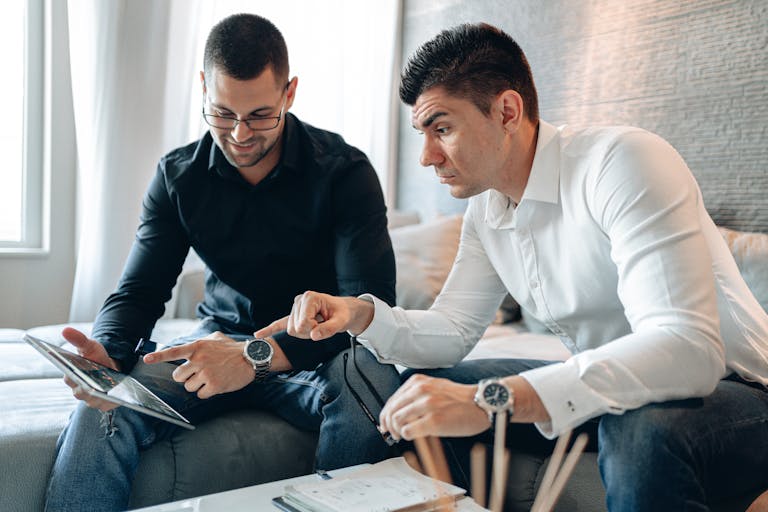

Paralanguage cues that indicate an extroverted personality include a louder baseline volume, faster speech pace, frequent vocal variety, animated pitch shifts, and minimal pause time between thoughts. These vocal and nonverbal signals reflect how extroverts process energy outwardly, using their voice and body as natural extensions of their engagement with the world around them.
You don’t need a personality test to recognize an extrovert in a room. Long before someone introduces themselves, their voice, posture, and physical presence have already told you quite a bit about how they’re wired. As someone who spent decades in advertising agencies observing every personality type imaginable, I became quietly fascinated by these signals, not because I shared them, but precisely because I didn’t.
Our Introvert Family Dynamics and Parenting hub covers a wide range of topics about how personality shapes our relationships at home and with the people we love most. Understanding how extroversion expresses itself through paralanguage adds another layer to that picture, especially when you’re raising kids or sharing a household with someone whose communication style feels fundamentally different from your own.

What Exactly Is Paralanguage, and Why Does It Matter?
Paralanguage refers to the vocal and nonverbal elements that accompany spoken words. It’s not what you say. It’s how you say it. Pitch, pace, volume, tone, rhythm, pausing, and even silence all fall under the paralanguage umbrella. So does physical behavior that accompanies speech: gestures, facial expressions, eye contact patterns, and proximity to others.
What’s your personality type?
Take our free 40-question assessment and get a detailed personality profile with dimension breakdowns, context analysis, and personalised insights.
Discover Your Type8-12 minutes · 40 questions · Free
These signals carry enormous communicative weight. Some communication researchers estimate that the emotional impact of a message is shaped more by paralanguage than by the actual words used, though the exact proportions are debated and context-dependent. What’s less debatable is this: when someone walks into a room and immediately commands attention without saying a word, paralanguage is doing the heavy lifting.
Personality traits, including the introversion-extroversion spectrum, are partly rooted in biology. MedlinePlus notes that temperament traits like sociability and reactivity have genetic components that shape how people naturally engage with their environment. That biological wiring shows up in communication style in ways that are remarkably consistent across cultures and contexts.
For those who want a deeper look at how personality traits cluster together, the Big Five Personality Traits Test offers a thorough breakdown of extraversion alongside openness, conscientiousness, agreeableness, and neuroticism. It’s one of the most widely validated models in personality psychology, and the extraversion dimension maps closely onto many of the paralanguage patterns I’ll describe here.
How Does Volume and Vocal Projection Signal Extroversion?
One of the most immediately noticeable paralanguage cues in extroverted individuals is volume. Extroverts tend to project their voice outward with a kind of natural confidence, not necessarily because they’re trying to dominate a room, but because their baseline energy level and comfort with being heard defaults to louder.
I noticed this pattern constantly in my agency years. We’d bring in a new account team member, and within the first hour of a kickoff meeting, I could identify who would be pitching to clients and who would be doing the deep strategic work in the background. The people who leaned forward and filled the room with their voice without any apparent self-consciousness were almost always the ones who thrived in client-facing roles. The ones who measured their words and spoke at a more contained volume, myself included, tended to be the architects behind the scenes.
Extroverts don’t just speak louder in isolation. They project toward their audience. Their voice carries an implicit invitation: “I want you to hear this.” Contrast that with many introverts, who often speak at a volume calibrated for the person directly in front of them, not the entire room.
Volume also fluctuates more dramatically in extroverted speakers. They’ll drop to a near-whisper for emphasis, then surge back up to full projection, using dynamic range as a storytelling tool. That kind of vocal flexibility is a form of performance, and extroverts tend to be comfortable with performance in a way that many introverts simply aren’t wired for.

What Does Speech Rate Reveal About Extroverted Personality?
Extroverts tend to speak faster. Not always, and not in every context, but as a general pattern, their speech rate reflects the outward momentum of their thinking. Where introverts often process internally before speaking, extroverts frequently process through speaking. Their thoughts take shape in real time, which means the words come quickly and continuously.
This is one of the most misread paralanguage differences in mixed-personality households and workplaces. An extroverted child or partner who speaks rapidly isn’t being dismissive or failing to think things through. They’re actually doing their thinking out loud, in real time, and the speed is a reflection of how their cognitive processing works externally rather than internally.
A piece published in Frontiers in Psychology examining personality and communication patterns highlights how extraversion correlates with more spontaneous verbal output and a higher comfort level with unstructured conversation. That spontaneity shows up directly in pace.
Pausing is the flip side of this. Extroverts tend to fill silence quickly, sometimes before the previous speaker has fully finished their thought. In agency presentations, I learned to watch for this. The extroverted team members would jump in the moment a client paused, interpreting silence as an opening. My introverted strategists would wait, sometimes too long by client standards, because they were still processing what had been said before forming a response. Neither approach was wrong. They were just different operating systems running on different timelines.
That said, fast speech isn’t exclusively an extrovert trait. Anxiety, cultural background, and context all influence pace. What distinguishes extroverted fast speech is that it typically sounds energized rather than nervous, forward-leaning rather than rushed.
How Do Pitch and Vocal Variety Reflect Extroverted Energy?
Pitch variation is one of the richest paralanguage signals available, and extroverts tend to use it more expressively. Their vocal range shifts more frequently and dramatically across a conversation, rising at moments of excitement, dropping for emphasis, and moving through a wider emotional register overall.
This expressiveness serves a social function. Pitch variation keeps listeners engaged. It signals emotional investment. It creates a kind of auditory texture that draws people in and holds their attention. Extroverts, who tend to gain energy from social interaction, are often naturally inclined toward communication styles that sustain and deepen that interaction.
Compare this to the more measured pitch patterns common in introverted speakers. Many introverts, myself included for most of my career, tend toward a flatter vocal delivery that can read as calm, analytical, and controlled. In client pitches, I had to consciously work on adding pitch variation because I understood intellectually that monotone delivery loses rooms. But it never felt natural the way it clearly did for my extroverted colleagues, who seemed to modulate their voices without any conscious effort at all.
Vocal variety in extroverts also extends to tonal warmth. Their voices often carry an inherent friendliness, an openness in the tone that communicates approachability before the words themselves do. Psychology Today’s overview of family dynamics touches on how communication styles within families shape connection and conflict, and this tonal warmth plays a significant role in how extroverted family members establish and maintain their relational bonds.
If you’re curious how your own vocal and social tendencies come across to others, the Likeable Person Test offers some interesting self-reflection prompts around warmth, approachability, and social presence.

What Physical and Gestural Cues Accompany Extroverted Speech?
Paralanguage extends beyond the voice into the body. Extroverts tend to use more expansive physical gestures when speaking. Their hands move more frequently and cover more spatial territory. They lean forward. They make sustained eye contact. They reduce the physical distance between themselves and their conversation partner in ways that signal engagement and comfort with closeness.
These physical signals aren’t random. They’re an extension of the same outward energy that drives louder volume and faster pace. Extroverts inhabit more physical space in conversation because they’re genuinely energized by the interaction and their body reflects that energy.
Touch is another dimension. Extroverts are generally more comfortable with incidental physical contact during conversation, a hand on the arm to emphasize a point, a pat on the back after a shared laugh. These gestures reinforce connection and are often deployed unconsciously. In my agency, I had one extroverted creative director who would grab your forearm every time he made a point he was excited about. It took me years to stop flinching. For him, it was just how conversation worked. For me, it was a physical intrusion I had to mentally prepare for.
Facial expressiveness is also more pronounced. Extroverts tend to display emotions more openly on their face during conversation, smiling more broadly, furrowing their brow more visibly, raising their eyebrows in exaggerated surprise. This facial animation serves as a continuous feedback loop in conversation, signaling to the other person that they’re engaged, responsive, and present.
This contrasts with the more contained facial expressions many introverts default to. I’ve been told more than once that I look like I’m analyzing a problem even when I’m enjoying myself. That’s not emotional absence. It’s just a different paralanguage baseline.
How Do Extroverted Paralanguage Cues Show Up in Family Settings?
Understanding these patterns becomes especially important in family contexts, where different personality types share close quarters and have to find ways to communicate effectively across those differences. An extroverted child in an introverted household, or an extroverted parent raising introverted kids, creates a specific kind of communication friction that can feel personal even when it isn’t.
Extroverted children tend to talk more, louder, and faster from an early age. They interrupt not out of rudeness but because their processing happens externally and they’re genuinely excited to contribute. They fill silence in the car, at the dinner table, and during quiet moments that introverted family members might be cherishing. Their paralanguage is amplified: more gesturing, more eye contact demands, more physical proximity seeking.
For introverted parents, this can be genuinely exhausting. Not because the child is doing anything wrong, but because sustaining that level of vocal and physical engagement requires energy that introverts don’t replenish through social interaction. HSP Parenting: Raising Children as a Highly Sensitive Parent explores a related dimension of this challenge, looking at how highly sensitive parents manage their own sensory and emotional bandwidth while meeting their children’s communication needs.
Extroverted parents, on the other hand, may misread an introverted child’s quiet paralanguage as disengagement, sadness, or even defiance. When a child speaks softly, pauses long before answering, and avoids eye contact during emotionally charged conversations, an extroverted parent’s instinct may be to push for more, louder, faster. That instinct, however well-meaning, can actually cause an introverted child to withdraw further.
Blended family dynamics add another layer of complexity here. When children from different households with different personality cultures come together, the paralanguage norms they’ve each absorbed can clash in ways that feel like personality conflicts but are really just communication style differences playing out in real time.

Can Extroverted Paralanguage Cues Be Misread or Misused?
Here’s where things get more complicated. Paralanguage cues are probabilistic, not deterministic. Loud volume, fast pace, and expansive gestures are more common in extroverts, but they’re not exclusive to them. Introverts can learn to deploy extroverted paralanguage, and many do, especially in professional contexts where those signals are rewarded.
I spent the better part of my first decade in advertising doing exactly that. I trained myself to speak louder in meetings, to vary my pitch during presentations, to gesture more openly and make more sustained eye contact during client pitches. It worked, in the sense that I was perceived as more confident and engaging. But it cost me. After a full day of performing extroverted paralanguage, I needed significant recovery time that my genuinely extroverted colleagues didn’t seem to require at all.
There’s also the issue of conflation. Extroverted paralanguage cues can be confused with other psychological patterns. Someone who speaks very rapidly, interrupts frequently, and uses dramatic vocal variation might be extroverted, or they might be experiencing anxiety, a manic episode, or simply operating within a cultural communication norm where those behaviors are standard. Accurate reading of paralanguage requires context, not just pattern recognition.
It’s also worth noting that some personality assessments look at behavioral patterns in combination with emotional and cognitive tendencies. The Borderline Personality Disorder Test is one example of how certain emotional expressiveness patterns that might superficially resemble extroversion can actually reflect something quite different when examined more carefully. Paralanguage alone doesn’t tell the whole story.
The 16Personalities framework offers useful context here, distinguishing between the mind (introversion vs. extroversion), energy (intuitive vs. observant), nature (thinking vs. feeling), and tactics (judging vs. prospecting) as separate dimensions. An extroverted person who leads with feeling will display different paralanguage patterns than an extroverted person who leads with thinking, even though both share that outward energy orientation.
How Do Extroverted Paralanguage Cues Function in Professional Contexts?
Professional environments have traditionally rewarded extroverted paralanguage. The confident, projecting voice. The energetic pace. The expansive gestures and sustained eye contact. These signals are often read as competence, leadership potential, and social intelligence, even when the underlying content doesn’t necessarily support those conclusions.
I watched this play out in hiring decisions throughout my agency career. Candidates who presented with extroverted paralanguage, regardless of their actual portfolio strength, were consistently rated more favorably in initial interviews. The introverted candidates who brought deeper strategic thinking often had to work harder to overcome the first impression created by their quieter, more measured vocal presence.
This matters for introverts in professional settings because it means the playing field isn’t level from a communication standpoint. Extroverted paralanguage is the default signal for competence in most Western professional cultures, and introverts who don’t naturally produce those signals often have to make a conscious choice: adapt their communication style, or find environments where depth and precision are valued over performance.
Roles that involve direct client service or caregiving add another dimension. Professionals in those fields often rely heavily on paralanguage to build trust and rapport quickly. The Personal Care Assistant Test Online touches on some of the interpersonal and communication competencies that matter in caregiving contexts, where warmth and responsiveness in voice and manner directly affect the quality of care.
Similarly, fitness professionals who work directly with clients depend on motivating, energetic communication. The paralanguage of encouragement, volume, pace, and physical presence, is a genuine professional skill in that context. Certified Personal Trainer Test resources often address communication competencies alongside technical fitness knowledge, recognizing that how you deliver instruction matters as much as what you know.
Research published through PubMed Central examining personality and social behavior highlights how extroversion-linked traits correlate with positive social outcomes in group settings, partly because the paralanguage signals extroverts naturally produce are aligned with what groups typically read as leadership and engagement.

What Should Introverts Do With This Information?
Recognizing extroverted paralanguage cues isn’t about ranking communication styles or deciding which one is better. It’s about developing a more accurate read of the people around you, whether that’s a partner, a child, a colleague, or a client.
When you understand that an extroverted family member’s loud, fast, gesture-heavy communication style is an expression of genuine engagement rather than aggression or dominance, it changes how you respond. When you recognize that your introverted child’s quiet voice and long pauses aren’t signs of disinterest but of deep internal processing, you stop trying to speed them up and start creating space for them to arrive at their own pace.
For introverts who work in extrovert-dominant environments, some selective adoption of extroverted paralanguage cues can be genuinely useful. Not as a permanent performance, but as a strategic tool for specific high-stakes moments. I learned to turn up my vocal projection and pace during client presentations, knowing that those signals helped my ideas land more effectively. But I also learned to protect the recovery time that performance required, which is something extroverts rarely need to budget for.
Personality type distributions vary more than most people assume. Truity’s breakdown of personality type rarity offers a useful reminder that the people around us are spread across a wide spectrum, and the communication styles we encounter reflect that diversity.
What I’ve come to appreciate most, after years of observing and occasionally envying extroverted paralanguage, is that my own quieter signals carry their own weight. The measured pace that reads as thoughtfulness. The contained volume that signals precision. The longer pauses that communicate that I’m actually listening rather than just waiting for my turn. Those aren’t deficits. They’re a different vocabulary, and they communicate things that extroverted paralanguage sometimes can’t.
There’s a whole landscape of related topics worth exploring at the intersection of personality and family life. The Introvert Family Dynamics and Parenting hub brings together articles on communication, parenting styles, relationship patterns, and the everyday work of building connection across personality differences.
About the Author
Keith Lacy is an introvert who’s learned to embrace his true self later in life. After 20 years in advertising and marketing leadership, including running agencies and managing Fortune 500 accounts, Keith now channels his experience into helping fellow introverts understand their strengths and build fulfilling careers. As an INTJ, he brings analytical depth and authentic perspective to every article, drawing from both professional expertise and personal growth.
Frequently Asked Questions
What are the most reliable paralanguage cues that indicate an extroverted personality?
The most consistent paralanguage cues associated with extroversion include louder baseline vocal volume, faster speech pace, more frequent and dramatic pitch variation, minimal pause time between conversational turns, expansive physical gestures, sustained eye contact, and a tendency to reduce physical distance during interaction. These signals reflect the outward energy orientation that characterizes extroverted personality, where engagement with the external world generates rather than depletes energy.
Can introverts display extroverted paralanguage cues?
Yes. Introverts can learn to produce extroverted paralanguage cues, and many do in professional or social contexts where those signals are expected or rewarded. The difference is that for introverts, performing these cues typically requires conscious effort and results in energy depletion rather than energy gain. An introvert who spends a day projecting louder, speaking faster, and gesturing more broadly will usually need significant recovery time that an extrovert performing the same behaviors won’t require.
How do extroverted paralanguage cues affect family dynamics?
Extroverted paralanguage can create friction in families where personality types differ significantly. An extroverted child’s loud, fast, physically expressive communication style can overwhelm introverted parents, while an extroverted parent’s high-energy vocal presence can cause introverted children to withdraw rather than open up. Recognizing these differences as personality-based rather than behavioral problems is the first step toward more effective communication across the introvert-extrovert divide within families.
Is extroverted paralanguage the same across all cultures?
No. While the broad association between extroversion and more outwardly expressive paralanguage appears across cultures, the specific norms for volume, gesture, eye contact, and personal space vary significantly by cultural context. What reads as confident and engaged in one cultural setting might read as aggressive or disrespectful in another. Personality type shapes the baseline tendency, but cultural norms calibrate how those tendencies are expressed and interpreted in practice.
Should introverts try to adopt extroverted paralanguage cues at work?
Selectively, yes, in specific high-stakes situations where those signals help important ideas land more effectively. Projecting more volume during a presentation, adding more vocal variety during a client pitch, or making more deliberate eye contact in a key meeting can all improve how an introvert’s contributions are received. The caution is against treating this as a permanent performance rather than a strategic tool, because sustained performance of a communication style that doesn’t match your natural wiring carries a real energy cost that needs to be accounted for.