
A key characteristic associated with social physique anxiety is the persistent belief that others are critically evaluating your body, which triggers a cascade of self-monitoring, avoidance, and shame that goes far beyond ordinary self-consciousness. Unlike general social anxiety, this particular form zeroes in on physical appearance as the source of perceived judgment, making the body itself feel like a liability in social settings. For introverts and highly sensitive people, this experience often runs deeper and quieter than most people realize.
Social physique anxiety sits at the intersection of body image, social evaluation, and emotional sensitivity. It shapes how people move through gyms, pools, professional environments, and even casual gatherings, not because of vanity, but because of a deeply internalized fear that the physical self is being watched, measured, and found lacking. That fear can become paralyzing, especially when you’re already wired to process the world through careful observation and deep internal filtering.
My own relationship with this kind of anxiety surprised me when I first recognized it. As an INTJ running advertising agencies, I spent years in rooms where appearance, confidence, and presence were all being silently graded. I was good at projecting calm authority. What I was less good at was escaping the quiet, relentless internal commentary about how I was being perceived physically, particularly in high-stakes client settings where I felt exposed in ways that had nothing to do with my ideas.
If you’re exploring the broader landscape of introvert mental health, including anxiety, emotional processing, and the unique pressures sensitive people carry, the Introvert Mental Health Hub covers the full range of these experiences with depth and honesty. Social physique anxiety is one piece of that larger picture, and it’s worth examining closely.

What Exactly Is Social Physique Anxiety, and Why Does It Hit Differently for Sensitive People?
Social physique anxiety, often abbreviated as SPA in psychological literature, refers specifically to the apprehension people feel when they believe others are scrutinizing their physical appearance. It’s not the same as general body dissatisfaction, which is a private internal experience. Social physique anxiety is inherently relational. It requires an imagined or actual audience, a perceived evaluator whose judgment feels threatening.
What’s your personality type?
Take our free 40-question assessment and get a detailed personality profile with dimension breakdowns, context analysis, and personalised insights.
Discover Your Type8-12 minutes · 40 questions · Free
The American Psychological Association frames anxiety broadly as a state of worry and tension that can become disproportionate to the actual threat. Social physique anxiety fits this framework well. The perceived threat, that someone is silently judging your body, often has no basis in reality. Yet the emotional and physiological response can be intense: flushing, avoidance behaviors, hypervigilance, and a constant background hum of self-monitoring.
For highly sensitive people, this anxiety amplifies in specific ways. HSPs process sensory and emotional information more deeply than average, which means they pick up on subtle social cues, real or imagined, with extraordinary precision. A glance that lasts a half-second too long. A pause in conversation that feels loaded. These micro-signals get filtered through an already active threat-detection system, and the result is an anxiety experience that’s richer, more layered, and harder to dismiss than it might be for someone with a less sensitive nervous system.
I managed several highly sensitive creatives during my agency years. One of them, a brilliant art director, would physically tense up before client presentations, not because she doubted her work, but because she was acutely aware of being watched. She’d describe it as feeling “on display” in a way that made her want to disappear. At the time, I recognized something of myself in that description, though I didn’t have language for it yet.
Understanding HSP anxiety, including its roots and coping strategies, helps clarify why social physique anxiety doesn’t operate the same way for sensitive introverts as it does for others. The emotional volume is simply turned up higher, and the internal processing that follows any perceived social threat is far more exhausting.
The Self-Objectification Loop: How Social Physique Anxiety Sustains Itself
One of the most important things to understand about social physique anxiety is that it tends to feed itself through a mechanism psychologists sometimes describe as self-objectification. When you’re anxious about how your body is being perceived, you begin to observe yourself from the outside, as if you’re simultaneously the person in the room and the audience watching that person. You track your posture, your movements, the way your clothes fit, the space your body takes up.
This split attention is cognitively expensive. It pulls mental resources away from the actual conversation, the task at hand, or the creative work you’re supposed to be doing. And paradoxically, the more you monitor yourself, the more anxious you become, because self-monitoring increases the sense that something must be wrong, otherwise why would you be watching so closely?
A review published in PubMed Central examining anxiety-related self-monitoring highlights how this internal surveillance loop can sustain and intensify anxious states rather than providing the reassurance people hope for. Checking doesn’t calm the anxiety. It confirms that anxiety is warranted.
For introverts, this loop has a particular texture. We’re already internal processors. We already spend significant energy analyzing our own thoughts, motivations, and responses. Adding a layer of physical self-surveillance on top of that existing cognitive load creates a kind of mental gridlock. I experienced this acutely during new business pitches in my agency days. My mind would split between presenting our strategy and monitoring how I was being perceived physically, and both tracks would suffer for it.
The self-objectification loop also connects directly to sensory overload. When you’re simultaneously managing external social cues, internal emotional responses, and a running commentary on your own physical presence, the sensory system gets overwhelmed. If you’ve ever walked out of a social event feeling completely depleted for reasons you couldn’t quite name, this might be part of the explanation. The piece on HSP overwhelm and managing sensory overload explores how this kind of cumulative input affects the sensitive nervous system in ways that go well beyond simple tiredness.
Where Does Social Physique Anxiety Show Up in Real Life?
Social physique anxiety isn’t confined to gyms and fitness settings, even though that’s where it’s most commonly studied. It surfaces anywhere the body feels visible and potentially subject to evaluation. That’s a wider category than most people initially assume.
Professional environments are a significant arena. Boardrooms, conference stages, client dinners, and networking events all carry an implicit physical dimension. How you look, how you carry yourself, how much space you take up, these things get noticed and interpreted, whether or not anyone consciously intends to judge. For someone with social physique anxiety, this awareness doesn’t stay background noise. It moves to the foreground and stays there.
Social gatherings, particularly those involving swimwear, athletic activity, or any setting where the body is more exposed than usual, can become genuinely distressing. The anticipatory anxiety alone, the dread that builds before the event, can be as exhausting as the event itself. Many people with social physique anxiety begin avoiding situations that trigger it, which creates a narrowing life over time.
Dating and intimate relationships carry their own version of this anxiety. The fear of being seen, really seen, physically, can make vulnerability feel impossible. And vulnerability is already a complex territory for introverts who tend to share themselves selectively and carefully.
What makes social physique anxiety particularly insidious is that it’s often invisible to others. People around you may have no idea you’re running this internal evaluation loop. You look composed. You’re engaging in conversation. You’re doing what’s expected. Inside, though, you’re managing a level of self-consciousness that takes real effort. The Psychology Today piece on introversion and social anxiety makes an important distinction worth sitting with: being introverted doesn’t automatically mean being socially anxious, but the two can coexist, and when they do, experiences like social physique anxiety tend to be more pronounced.
The Empathy Dimension: When You Feel Others’ Judgments Before They’re Even Made
Here’s something that doesn’t get discussed often enough in conversations about social physique anxiety: the role of empathy in amplifying it. For highly sensitive introverts with strong empathic attunement, the anxiety isn’t just about how you think you look. It’s about what you imagine others are feeling when they look at you.
This is a meaningful distinction. Someone with average empathic sensitivity might worry about being judged. Someone with heightened empathy might actually feel, or believe they feel, the judgment itself, as if they’re picking up emotional signals from the people around them. Whether those signals are real or constructed by an anxious mind is almost beside the point. The emotional experience is the same.
I watched this dynamic play out repeatedly in client-facing roles. The people on my teams who were most empathically attuned were also the ones most likely to absorb the emotional temperature of a room and interpret it as feedback about themselves. One senior account manager I worked with was extraordinarily gifted at reading client needs, but that same sensitivity meant she often came out of meetings convinced she’d been judged harshly, even when the client feedback was positive. Her empathy was both her professional superpower and her personal burden.
HSP empathy operates as a double-edged sword in exactly this way. The capacity to sense and understand others’ emotional states is genuinely valuable. When that same sensitivity turns inward and starts generating imagined judgments from the people around you, it becomes a source of real suffering.

The empathy dimension of social physique anxiety also connects to what happens after social events. Sensitive people tend to replay interactions in detail, examining what was said, how it landed, what the other person’s expression might have meant. When the body is part of what feels exposed in those interactions, the replay includes physical self-evaluation as well. This kind of deep emotional processing, as explored in the piece on HSP emotional processing and feeling deeply, can be both a strength and a source of prolonged distress when anxiety is the primary emotion being processed.
Perfectionism’s Role in Making Social Physique Anxiety Worse
Social physique anxiety and perfectionism are close companions. The belief that your body must meet a certain standard before it’s acceptable in social spaces is, at its core, a perfectionist belief. It assumes a threshold that must be crossed before you’re allowed to feel comfortable, confident, or worthy of positive attention.
Perfectionism of this kind is particularly common among introverts who already hold themselves to high internal standards. As an INTJ, I’ve spent most of my professional life operating from a framework of excellence and precision. That’s served me well in strategy and problem-solving. Applied to my physical self in social contexts, though, it created a moving goalpost that I could never quite reach. There was always a reason why now wasn’t the right time to feel comfortable in my own skin.
The American Psychological Association’s overview of shyness and social discomfort notes that high self-standards combined with fear of negative evaluation create a particularly difficult cycle. You want to present well. You fear you won’t. That fear itself interferes with your ability to present well, which then confirms the fear. Perfectionism is the engine that keeps this cycle running.
What makes perfectionism so stubborn in this context is that it masquerades as reasonable self-improvement. Wanting to take care of your body is healthy. Believing your body must look a certain way before you’re entitled to social comfort is not. The line between those two positions isn’t always obvious from the inside, especially when your internal standards are high across every domain of your life.
The work of breaking the high standards trap that HSP perfectionism creates is genuinely difficult, but it’s one of the most important things a sensitive person can do. Recognizing that your worth in social spaces isn’t contingent on meeting an imagined physical standard is a shift that has to happen at the belief level, not just the behavioral one.
How Social Physique Anxiety Intersects with Rejection Sensitivity
Underneath social physique anxiety is often a fear that’s even more fundamental: the fear of being rejected because of how you look. This connects social physique anxiety directly to rejection sensitivity, which is the heightened emotional response to perceived or actual rejection that many introverts and sensitive people experience.
When your body feels like the reason you might be excluded, judged, or dismissed, the stakes of social situations rise considerably. Every gathering becomes a potential site of rejection. Every glance carries possible meaning. The body stops being just a body and becomes evidence, evidence that you might not belong, that you might not be enough.
A study in PubMed Central examining social evaluation and emotional response found that individuals who score higher on measures of rejection sensitivity tend to interpret ambiguous social cues more negatively, a pattern that maps directly onto the experience of social physique anxiety. When you’re already primed to expect rejection, a neutral glance reads as criticism and a momentary silence reads as disapproval.
The healing work here is slow and requires real self-compassion. Processing the fear of physical rejection, understanding where it came from, and learning to separate your body’s appearance from your social worth doesn’t happen in a single insight. It happens through consistent, gentle work over time. The piece on HSP rejection, processing, and healing offers a thoughtful framework for approaching this kind of deep emotional work without bypassing the pain that makes it necessary in the first place.

What Actually Helps: Practical Approaches That Respect How Introverts Are Wired
Managing social physique anxiety isn’t about forcing yourself to love your body through sheer willpower, or pushing yourself into uncomfortable situations until the anxiety magically disappears. Those approaches tend to create more distress, not less. What actually helps is a combination of cognitive work, behavioral practice, and genuine self-compassion, applied in ways that fit how introverted and sensitive people actually function.
Cognitive reframing is a starting point. The core belief driving social physique anxiety is that others are actively evaluating and judging your body. Challenging that belief, not dismissing it, but genuinely examining the evidence for and against it, can begin to loosen its grip. Most people in any given room are far more focused on their own experience than on scrutinizing yours. That’s not a platitude. It’s a cognitive reality worth returning to repeatedly.
Harvard Health’s overview of social anxiety treatment highlights cognitive-behavioral approaches as among the most effective interventions, particularly when combined with gradual exposure to feared social situations. For introverts, the “gradual” part matters enormously. Incremental exposure, on your own terms and timeline, is far more sustainable than throwing yourself into high-stakes situations and hoping for the best.
Mindfulness practices help interrupt the self-objectification loop. When you notice yourself watching yourself from the outside, gently redirecting attention back to the present moment, the actual conversation, the physical sensation of your feet on the floor, the sound in the room, can break the surveillance cycle before it spirals. This isn’t about suppressing the anxiety. It’s about giving your attention something concrete to anchor to instead of the internal commentary.
Movement practices done for enjoyment rather than appearance can gradually shift the relationship with the body. When the body becomes a source of capability and pleasure rather than a performance object, the anxiety associated with having it seen begins to soften. This takes time, and it requires finding movement you actually enjoy, not movement you endure because you believe you should.
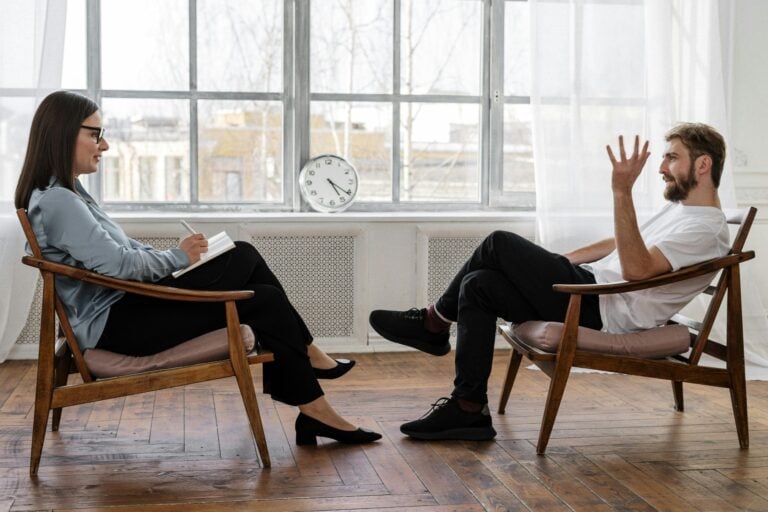
Therapy, particularly with someone familiar with body image and social anxiety, can be genuinely valuable. The Psychology Today exploration of psychological typology and therapy is a useful reminder that effective therapeutic work often benefits from understanding how someone’s personality type shapes the way they experience and process distress. An introverted, sensitive person needs a therapist who understands that the anxiety isn’t a character flaw and that the internal processing style is an asset, not an obstacle.
In my own experience, what shifted things most wasn’t a single technique. It was the accumulation of evidence, gathered slowly over years, that I could be present in social and professional situations without my body being the thing that determined my value in those spaces. That evidence came from client relationships that deepened despite my self-consciousness, from creative work that landed powerfully regardless of how I felt about how I looked presenting it, and from quieter personal moments where I simply stopped monitoring and discovered I was still standing.

Recognizing When Social Physique Anxiety Has Become Something More
Social physique anxiety exists on a spectrum. At its milder end, it’s a form of self-consciousness that most people experience to some degree. At its more severe end, it can significantly impair quality of life, driving avoidance of social situations, exercise, intimacy, and professional opportunities. Knowing where you fall on that spectrum matters.
If social physique anxiety is causing you to regularly avoid situations you’d otherwise want to participate in, if it’s affecting your relationships, your health habits, or your professional life, it’s worth taking seriously as something that merits real attention, not just self-help reading.
The distinction between manageable self-consciousness and clinically significant anxiety isn’t always obvious from the inside. The American Psychiatric Association’s DSM framework provides clinical criteria for anxiety disorders that can help contextualize whether what you’re experiencing crosses into territory where professional support would be genuinely helpful. There’s no shame in that assessment. Recognizing the severity of something is the first step toward addressing it effectively.
For introverts especially, there’s a tendency to manage anxiety privately, to process it internally and assume that’s sufficient. Sometimes it is. Sometimes the internal processing alone isn’t enough, and external support, whether therapeutic, community-based, or both, makes a real difference.
If you’ve found this article useful, the broader collection of resources in the Introvert Mental Health Hub covers everything from anxiety and emotional processing to perfectionism and rejection sensitivity, all through the lens of how introverted and sensitive people actually experience these challenges.
About the Author
Keith Lacy is an introvert who’s learned to embrace his true self later in life. After 20 years in advertising and marketing leadership, including running agencies and managing Fortune 500 accounts, Keith now channels his experience into helping fellow introverts understand their strengths and build fulfilling careers. As an INTJ, he brings analytical depth and authentic perspective to every article, drawing from both professional expertise and personal growth.
Frequently Asked Questions
What is the key characteristic associated with social physique anxiety?
The defining characteristic of social physique anxiety is the persistent belief that others are critically evaluating your body in social situations. Unlike private body dissatisfaction, social physique anxiety is inherently relational. It requires a perceived audience whose judgment feels threatening, and it triggers self-monitoring, avoidance, and shame as a result. For sensitive and introverted people, this experience tends to be more intense and more difficult to dismiss than it is for others.
Is social physique anxiety the same as social anxiety disorder?
They overlap but aren’t identical. Social anxiety disorder involves a broad fear of negative evaluation across many social situations, while social physique anxiety specifically centers on the body as the target of perceived judgment. Someone can experience social physique anxiety without meeting the clinical criteria for social anxiety disorder, though the two frequently coexist, particularly in people who are also highly sensitive or strongly introverted.
Why do introverts and HSPs seem more vulnerable to social physique anxiety?
Introverts and highly sensitive people process social and emotional information more deeply than average. This means they’re more attuned to subtle social cues, more likely to replay social interactions in detail afterward, and more sensitive to the emotional temperature of any given room. When social physique anxiety is part of the picture, that heightened processing amplifies the experience significantly. The anxiety doesn’t stay surface-level. It gets filtered through layers of observation, emotional sensitivity, and internal analysis, making it richer and more exhausting than it might be for someone with a less sensitive nervous system.
How does perfectionism connect to social physique anxiety?
Perfectionism fuels social physique anxiety by creating a threshold that must be met before social comfort feels permissible. The belief that your body must look a certain way before you’re entitled to feel at ease in social spaces is a perfectionist belief, and it creates a moving goalpost that’s nearly impossible to reach. For introverts who already hold themselves to high internal standards across multiple domains, this perfectionist dimension of social physique anxiety can be particularly persistent and difficult to challenge.
What are the most effective ways to manage social physique anxiety?
The most effective approaches combine cognitive work with gradual behavioral practice and genuine self-compassion. Cognitive reframing helps challenge the core belief that others are actively judging your body. Mindfulness practices interrupt the self-objectification loop before it spirals. Movement done for enjoyment rather than appearance can gradually shift the body’s meaning from performance object to source of capability. For more severe social physique anxiety, working with a therapist familiar with body image and social anxiety provides structured support that self-help alone may not offer. The important thing is finding an approach that respects the introvert’s need for gradual, internally-driven progress rather than forced exposure.