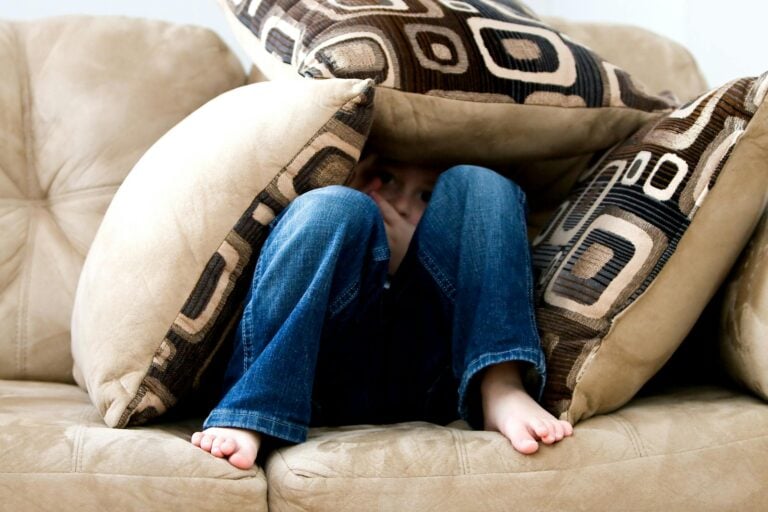

Acting differently in social situations than you do in private is not a character flaw or a sign that something is broken inside you. For many introverts and sensitive people, the version of themselves that shows up at a party, a work event, or even a casual lunch feels genuinely foreign, a performance that drains energy and leaves them wondering who they actually are. Social anxiety can amplify this gap between your inner self and your outer presentation until the distance feels unbridgeable.
My name is Keith Lacy, and I ran advertising agencies for more than twenty years. I pitched Fortune 500 brands, managed large creative teams, and spent decades in rooms where confidence was currency. On the outside, I looked like someone who had it together socially. On the inside, I was often running a quiet internal audit of every word I had just said, every reaction I had just missed, every moment I might have come across as too distant or too intense. That gap between how I acted and how I felt was exhausting. And for a long time, I did not have a name for it.
What I eventually came to understand is that acting differently in social situations is not always about dishonesty or inauthenticity. Sometimes it is a survival response. Sometimes it is anxiety doing its job, which is to protect you from perceived threat, even when the threat is just a crowded conference room or a first impression that might go wrong.

If you have ever felt like two different people depending on who is watching, this piece is for you. The Introvert Mental Health Hub covers the full spectrum of emotional experiences that come with being wired for depth and quiet, and the phenomenon of acting differently in social situations sits right at the intersection of identity, anxiety, and self-understanding.
Why Do You Become a Different Person in Social Situations?
There is a specific kind of disorientation that comes from watching yourself perform in a social setting while your internal observer takes notes from a distance. You laugh louder than you normally would. You agree with things you are not sure you agree with. You fill silences that do not actually need filling. And afterward, you sit in your car or your bedroom and feel like you have just returned from a country where you do not speak the language.
What’s your personality type?
Take our free 40-question assessment and get a detailed personality profile with dimension breakdowns, context analysis, and personalised insights.
Discover Your Type8-12 minutes · 40 questions · Free
This behavioral shift has several possible roots, and they often overlap. One is temperament. Introverts process information more deeply and are more sensitive to external stimulation, which means social environments demand more cognitive and emotional resources than they do for extroverts. When you are already running high on input, your brain may default to a kind of social autopilot, producing behaviors that feel safe or expected rather than authentic.
Another root is anxiety. The American Psychological Association draws a clear distinction between introversion and social anxiety, noting that introversion is a personality trait while social anxiety involves fear of negative evaluation and avoidance of social situations due to that fear. Many people carry both. Being introverted does not cause social anxiety, but the two can reinforce each other in ways that make social situations feel genuinely threatening rather than simply tiring.
A third root is learned behavior. If you grew up being told you were too quiet, too serious, or too much inside your own head, you may have developed social habits designed to preempt that criticism. You became the person who laughs first, agrees quickly, and keeps things light, not because that is who you are, but because that version of you seemed to cause fewer problems.
I watched this dynamic play out in my agencies constantly. One of my senior account managers, a deeply thoughtful woman who was also a highly sensitive person, would walk into client meetings as a completely different version of herself. Animated, quick with jokes, effortlessly charming. Then she would come back to her office and spend an hour in silence. She was not being fake. She was managing an enormous internal load, and the performance was the cost of entry.
What Does Social Anxiety Actually Do to Your Behavior?
Social anxiety is not just nervousness before a big presentation. According to the American Psychological Association’s overview of anxiety disorders, social anxiety disorder involves a persistent, intense fear of being watched, judged, or embarrassed in social situations. That fear shapes behavior in ways that are often invisible to the people around you and deeply visible to you.
One of the most common behavioral effects is over-monitoring. You become acutely aware of your own facial expressions, your posture, the timing of your responses. You are simultaneously trying to participate in a conversation and evaluate your participation in real time. This dual processing is exhausting, and it often produces behavior that feels stiff, delayed, or oddly formal, which then becomes new material for your internal critic to work with.
Another effect is avoidance, which is more subtle than simply not showing up. You might attend the event but stay on the edges. You might contribute to the meeting but only after someone else has established the direction. You might agree with the group consensus rather than share a dissenting view that might draw attention. These micro-avoidances add up to a version of yourself that consistently underrepresents what you actually think and feel.
Highly sensitive people often experience this with particular intensity. The same nervous system that makes them perceptive and empathetic also picks up on every subtle social cue, every shift in tone, every potential misread. For a deeper look at how that sensitivity intersects with anxiety, the piece on HSP anxiety and coping strategies offers a useful framework for understanding what is happening beneath the surface.

There is also the phenomenon of masking, which goes beyond ordinary social adaptation. Masking is when you consciously or unconsciously suppress your natural responses and replace them with ones you believe are more socially acceptable. It is performance in the deepest sense, and it carries a real cost. A PubMed Central study on social camouflaging found that sustained masking is associated with higher rates of anxiety, depression, and autistic burnout, though the findings have broader implications for anyone who consistently suppresses authentic social behavior over time.
How Does Sensory Overload Shape the Way You Act in Groups?
There is a physical dimension to acting differently in social situations that does not get enough attention. For introverts and highly sensitive people, crowded or noisy environments do not just feel uncomfortable. They create a kind of sensory pressure that genuinely affects how you think and communicate.
When your nervous system is processing too much stimulation at once, the parts of your brain responsible for nuanced communication and authentic self-expression become harder to access. You default to scripts. You fall back on pleasantries. You say “I’m good” when you are actually overwhelmed, not because you are dishonest, but because finding the real answer requires more cognitive resources than you currently have available.
This is sensory overload at work, and it is a legitimate physiological experience, not a weakness of character. The article on HSP overwhelm and managing sensory overload goes into specific detail about what happens in the body during these moments and how to work with your nervous system rather than against it.
I remember a particular industry conference in Chicago, maybe fifteen years into running my agency. It was the kind of event where every conversation was a potential business development opportunity, and the pressure to be “on” was relentless. By day two, I was not just tired. I was genuinely struggling to access my own thoughts. I would start a sentence and lose the thread. I would hear someone ask me a question and need an extra beat to process what they had actually said. From the outside, I probably looked distracted. From the inside, I was watching my own cognitive function degrade in real time under the weight of too much input.
What I did not understand then was that this was not a personal failure. It was my nervous system doing exactly what it was designed to do: prioritizing survival-level processing over everything else when the environment demanded too much. The behavior that resulted, the shorter answers, the reduced eye contact, the polite excuses to step outside, looked like social anxiety to everyone watching. And in that moment, functionally, it was.
Is the “Different Version” of You Actually Protecting Something Real?
One question worth sitting with is whether the social version of yourself that feels inauthentic might actually be serving a legitimate function. Not all behavioral adaptation is pathological. Human beings have always modulated their presentation depending on context. The version of you that exists in a job interview is not the same as the version that exists at home on a Sunday morning, and that is not a problem.
The distinction worth paying attention to is whether your social adaptation is flexible or rigid. Flexible adaptation means you can shift your presentation while still feeling anchored to your core self. You might be more formal in a client meeting than you are with close friends, but you still feel like yourself in both contexts. Rigid adaptation means the social version of you feels completely disconnected from your inner experience, and the gap between them produces shame, exhaustion, or a persistent sense of fraudulence.
That sense of fraudulence is worth examining carefully. Many introverts and sensitive people internalize the message that their natural way of being is insufficient, and the social performance they develop is an attempt to compensate for a perceived deficit. As Psychology Today notes, introverts and socially anxious people are often conflated, but the underlying experiences are meaningfully different. Introversion is not a problem to be solved. Social anxiety, when it is significantly limiting your life, is something that can be addressed with the right support.
Highly sensitive people add another layer to this. Their capacity for deep emotional processing means they are often acutely aware of the gap between how they feel and how they are presenting. That awareness itself becomes a source of anxiety. They are not just performing. They are watching themselves perform, evaluating the performance, feeling guilty about the performance, and processing all of that in real time while also trying to participate in a normal conversation.
Perfectionism often enters here too. The belief that you need to say exactly the right thing, make exactly the right impression, and manage exactly the right emotional tone can turn any social situation into a minefield. The article on HSP perfectionism and breaking the high standards trap addresses this cycle directly and offers a more compassionate framework for what “good enough” actually looks like in social contexts.
How Does Empathy Complicate the Social Performance?
One thing that makes this whole dynamic more complicated for sensitive introverts is the role of empathy. When you are highly attuned to other people’s emotional states, social situations become not just about managing your own presentation but about absorbing and responding to everyone else’s experience simultaneously.
You notice the colleague who is putting on a brave face after a difficult week. You pick up on the subtle tension between two people at the dinner table before anyone has said anything directly. You feel the weight of someone’s disappointment even when they insist they are fine. And all of that emotional information arrives whether you want it or not, shaping your behavior in ways that can look strange or inconsistent to people who do not share this sensitivity.
This is the double-edged nature of empathy that the piece on HSP empathy describes so well. The same quality that makes you a perceptive friend, a skilled listener, and a deeply caring colleague also makes social situations significantly more demanding. You are not just managing your own anxiety. You are managing everyone else’s emotional field as well.
In my agency years, I had a creative director who was extraordinarily empathetic. She could read a room faster than anyone I have ever worked with. She knew before a client presentation whether the energy was right, whether someone was holding a concern they had not voiced, whether the team was aligned or quietly fractured. That gift made her invaluable. It also meant that every social situation, every meeting, every team lunch cost her something real. She was not just present. She was absorbing.
When someone with that level of empathic sensitivity also carries social anxiety, the combination produces behavior that can look contradictory from the outside. They are warm and perceptive in one-on-one settings, then visibly withdrawn in groups. They are articulate and insightful in writing, then halting and uncertain in verbal conversation. The inconsistency is not performance or mood. It is the result of a nervous system that is doing too many things at once.
What Happens When Rejection Fear Drives the Performance?
At the center of a lot of social anxiety is a fear of rejection. Not just the fear of being disliked, but the fear of being seen clearly and found wanting. For sensitive introverts, this fear can be particularly acute because their capacity for emotional processing means rejection does not just sting. It reverberates.
When rejection fear is driving the social performance, the behavior it produces is often oriented around minimizing risk rather than maximizing connection. You do not share the opinion that might be controversial. You do not pursue the conversation that might not go well. You do not show the part of yourself that feels most vulnerable. And so the social version of you becomes progressively more cautious, more contained, and more disconnected from who you actually are.
The work of processing rejection, and learning to hold it without letting it define your social behavior, is significant. The piece on HSP rejection and healing approaches this from the perspective of highly sensitive people, but the underlying principles apply broadly. Rejection is information, not verdict. And the social anxiety that builds up around the fear of it can be gradually, carefully reduced.

A PubMed Central review on social anxiety and cognitive processes found that people with social anxiety tend to overestimate the likelihood of negative social outcomes and underestimate their ability to cope with them. That cognitive distortion is worth naming, because it is not a character flaw. It is a pattern that can be identified and gradually shifted with the right tools and support.
What helped me most was not learning to stop caring what people thought. That advice always felt both impossible and slightly cold. What helped was developing enough self-knowledge to distinguish between feedback that was genuinely useful and noise that was just my anxiety doing its job. When I could make that distinction, I could start showing up a little more honestly without feeling like I was walking into traffic.
How Do You Start Closing the Gap Between Your Inner Self and Your Social Behavior?
Closing the gap between who you are internally and how you present socially is not about forcing yourself to be more extroverted or more comfortable in situations that genuinely do not suit you. It is about reducing the anxiety-driven distortions that cause you to underrepresent yourself, and building enough safety in your own skin that authentic expression becomes more available to you.
One place to start is with low-stakes social contexts. Not the networking event or the work conference, but the situations where the consequences of being yourself feel genuinely manageable. A conversation with a neighbor. A brief exchange at a coffee shop. A question asked in a small group you already trust. These micro-moments of authentic engagement build a kind of social confidence that does not depend on performing well. They depend on being present.
Another useful practice is post-social reflection without judgment. Most anxious introverts are already doing post-social reflection, but it tends to function as a debrief of everything that went wrong. What shifts the pattern is deliberately noting what felt genuine, what felt energizing, what moments of real connection happened even briefly. Your nervous system needs evidence that social situations can end without catastrophe, and you have to be the one to collect that evidence consciously.
Harvard Health outlines several evidence-based approaches to managing social anxiety, including cognitive behavioral therapy, which helps identify and reframe the thought patterns that sustain anxious social behavior, and gradual exposure, which involves systematically increasing engagement with feared social situations in a controlled way. These are not quick fixes, but they have a strong track record for people whose social anxiety is significantly affecting their quality of life.
What I would add from personal experience is that self-knowledge is its own form of treatment. When I finally understood that my INTJ temperament meant I processed information internally before I could express it externally, I stopped interpreting my social hesitation as weakness. It was not anxiety about being wrong. It was my natural processing style running up against social contexts that rewarded speed over depth. That reframe did not eliminate the anxiety, but it changed my relationship to it significantly.
When Should You Consider Professional Support?
There is a meaningful difference between finding social situations tiring and finding them genuinely limiting. Many introverts experience the former and manage it reasonably well with self-awareness, good boundaries, and adequate recovery time. Social anxiety disorder, as defined in clinical frameworks including the DSM, involves significant distress or functional impairment that goes beyond ordinary discomfort.
Signs that professional support might be worth considering include avoiding social situations that matter to you, like career opportunities or important relationships, because the anxiety feels unmanageable. Physical symptoms like racing heart, sweating, or nausea in anticipation of social events. A persistent sense that you are fundamentally flawed or unacceptable to others. And the feeling that the gap between your inner self and your social behavior has become so wide that you have lost track of who you actually are.
None of these experiences are shameful, and none of them mean you are beyond help. The Harvard Health overview of social anxiety treatments is a good starting point for understanding what options exist. A therapist who understands introversion and high sensitivity can be particularly valuable, because they will not treat your temperament as the problem. They will help you work with it.
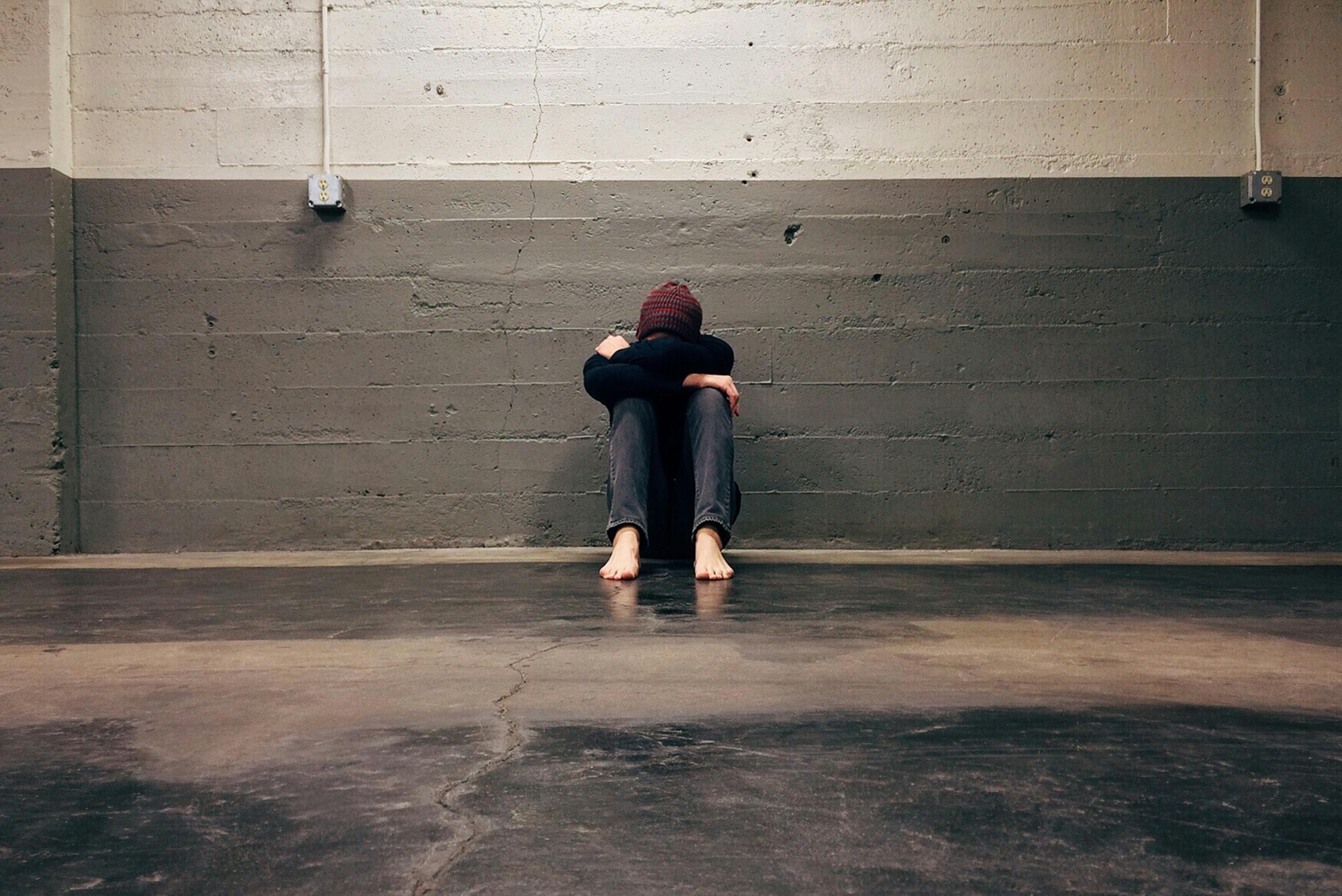
I spent years treating my social discomfort as a professional liability to be managed rather than an experience to be understood. The shift that mattered most was not learning better social techniques. It was developing enough self-compassion to stop treating my own nature as the enemy. That work took time, and it would have gone faster with better support earlier on.
If you are carrying a lot of this quietly, you are not alone in that. Many people who look socially capable from the outside are managing a significant internal experience that nobody around them fully sees. The performance can be convincing. The cost of it is real.
There is much more to explore on this topic and related ones in the Introvert Mental Health Hub, which brings together resources on anxiety, sensitivity, emotional processing, and the specific mental health landscape of people who are wired for depth rather than breadth.
About the Author
Keith Lacy is an introvert who’s learned to embrace his true self later in life. After 20 years in advertising and marketing leadership, including running agencies and managing Fortune 500 accounts, Keith now channels his experience into helping fellow introverts understand their strengths and build fulfilling careers. As an INTJ, he brings analytical depth and authentic perspective to every article, drawing from both professional expertise and personal growth.
Frequently Asked Questions
Is acting differently in social situations a sign of social anxiety?
Not necessarily. Some degree of behavioral adaptation in social contexts is normal and healthy. The distinction worth paying attention to is whether the difference between your private self and your social self feels flexible or rigid. Flexible adaptation means you can shift your presentation while still feeling connected to who you are. When the gap feels extreme, produces significant distress, or causes you to consistently avoid situations that matter to you, it may be worth exploring whether social anxiety is playing a role.
What is the difference between introversion and social anxiety?
Introversion is a personality trait characterized by a preference for quieter, less stimulating environments and a tendency to process information internally. Social anxiety is a clinical condition involving fear of negative evaluation in social situations, often accompanied by avoidance behaviors and significant distress. The two are not the same, though they can coexist. An introvert may find social situations tiring without fearing them. Someone with social anxiety may fear social situations regardless of whether they are introverted or extroverted.
Why do I become a completely different person at social events?
Several factors can contribute to this experience. Sensory overload in busy environments can reduce your access to authentic self-expression, causing you to default to social scripts. Anxiety about negative evaluation can produce over-monitoring of your own behavior, which makes responses feel stilted or delayed. Learned behavior from years of being told your natural temperament was insufficient can create a social persona designed to preempt criticism. Understanding which of these is most active for you is a useful starting point for closing the gap between your inner experience and your outward presentation.
How can highly sensitive people manage social anxiety in group settings?
Highly sensitive people often benefit from managing their sensory environment before and during social situations, which might mean arriving early to acclimate, choosing seats with less stimulation, or building in planned recovery time afterward. Grounding techniques that bring attention back to the body can help interrupt the cycle of over-monitoring and self-evaluation. Working with a therapist familiar with high sensitivity can also be valuable, as it allows you to develop strategies that work with your nervous system rather than against it. Gradual, intentional exposure to social situations in low-stakes contexts can build genuine confidence over time.
When does social discomfort become something that needs professional attention?
Social discomfort rises to the level of something worth addressing professionally when it begins to significantly limit your life. Specific indicators include avoiding career opportunities or important relationships because the anxiety feels unmanageable, experiencing physical symptoms like nausea or heart pounding in anticipation of social events, a persistent belief that you are fundamentally flawed or unacceptable to others, and a sense that the gap between your inner self and your social behavior has become so wide that you have lost track of who you actually are. A therapist who understands introversion and high sensitivity can help you address the anxiety without treating your temperament as the problem.