
Feeling agitated around large crowds is more than simple discomfort. For many introverts and highly sensitive people, crowded environments trigger a cascade of physical and emotional responses that go well beyond preference, often crossing into genuine social anxiety territory. Understanding the difference between introvert overwhelm and clinical social anxiety can change how you approach these situations and how much compassion you extend to yourself in the process.
There was a period in my agency career when I genuinely believed something was wrong with me. I could walk into a boardroom with three people and feel completely composed. Put me in a client reception with two hundred people, and something would shift in my chest about twenty minutes in. My jaw would tighten. My thinking would go foggy. I’d find myself calculating the distance to the nearest exit while nodding politely at conversations I’d stopped actually hearing. I didn’t call it anxiety then. I called it being tired, or being professional, or needing air. It took years before I was willing to name what was actually happening.
If you’ve found yourself agitated around large crowds and wondered whether that reaction is introversion, social anxiety, or something else entirely, you’re in the right place. These experiences overlap in ways that can make them genuinely hard to separate. Our Introvert Mental Health hub covers the full terrain of emotional wellbeing for people wired like us, and this particular angle, the physical and psychological agitation that crowds produce, deserves its own honest examination.
What Does It Actually Mean to Feel Agitated Around Large Crowds?
Agitation isn’t a word people usually reach for first. They say they’re anxious, or drained, or that they just don’t like parties. But agitation captures something more precise: a restless, irritable, on-edge quality that makes it hard to stay present. Your body wants to move even when you’re standing still. Your mind is scanning for threats even when there are none. You might feel short-tempered with people you genuinely like, not because of them, but because your nervous system is already at capacity.
What’s your personality type?
Take our free 40-question assessment and get a detailed personality profile with dimension breakdowns, context analysis, and personalised insights.
Discover Your Type8-12 minutes · 40 questions · Free
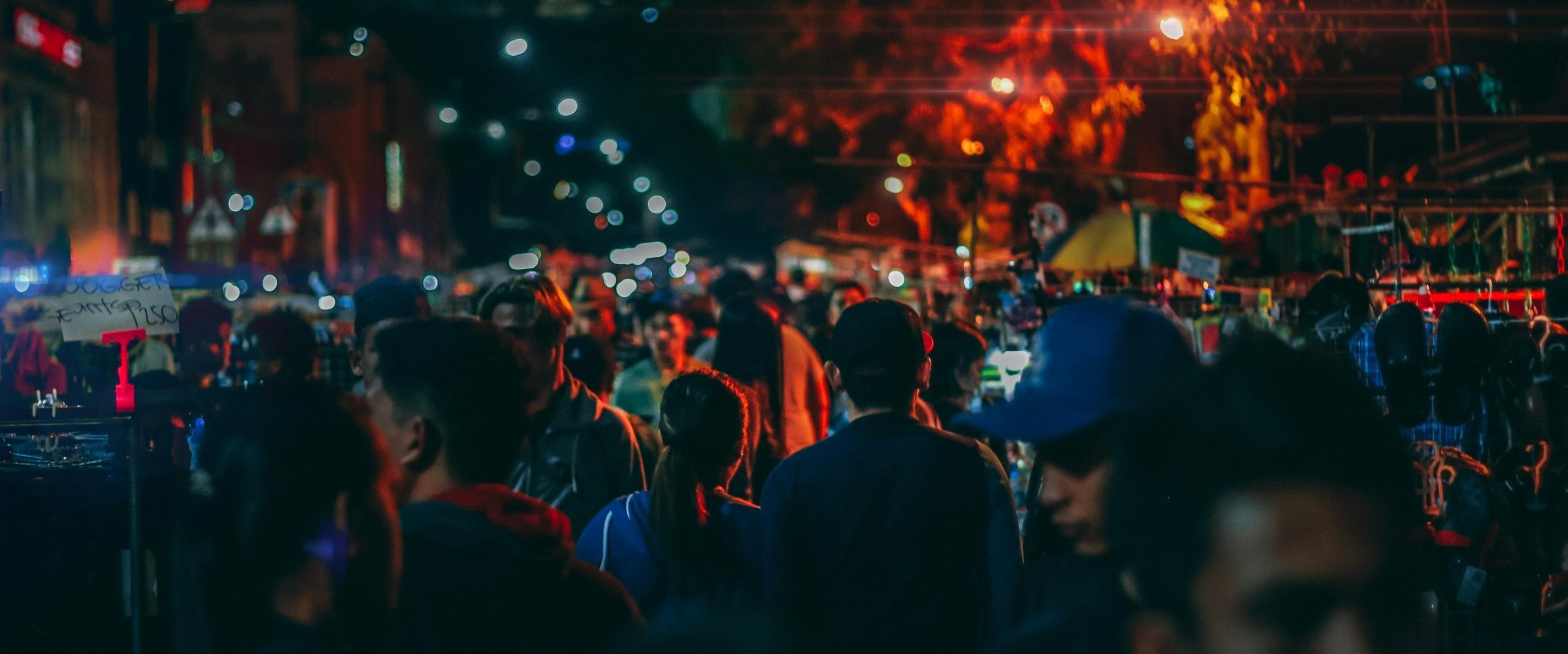
Crowds create a specific kind of sensory and social pressure that compounds quickly. There’s the noise, the unpredictability of movement around you, the constant low-level demand to read social cues from multiple people at once. For someone whose nervous system processes information deeply, all of that input doesn’t just pass through. It accumulates. The distinction between introversion and social anxiety, as Psychology Today notes, matters here because the two can look identical from the outside while feeling very different from the inside.
Introverts find crowds draining because of how they process stimulation. Social anxiety adds a fear layer on top of that drain, a worry about being judged, humiliated, or doing something wrong in front of others. Many people experience both simultaneously, which is why the agitation can feel so layered and confusing. You’re not just tired. You’re tired and afraid, and those two things are feeding each other.
Why Does the Body Respond So Physically to Crowd Environments?
One thing I wish someone had explained to me earlier is that what I experienced in those crowded reception halls wasn’t weakness or poor professionalism. It was a nervous system doing exactly what it was designed to do, just in a context where that design didn’t serve me well.
The physical symptoms of crowd-related agitation are real and measurable. Muscle tension, a racing heart, shallow breathing, a feeling of heat rising through the chest or face, difficulty concentrating, a strong urge to find space. These aren’t personality quirks. They’re physiological responses. The American Psychological Association’s overview of anxiety disorders describes how the body’s threat-response system can activate in social situations even when no physical danger is present, creating a feedback loop that’s hard to interrupt once it starts.
For highly sensitive people, this response can be even more pronounced. The concept of high sensitivity, developed by psychologist Elaine Aron, describes a trait where the nervous system processes sensory and emotional information more deeply than average. That depth is a genuine strength in many contexts. In a crowded room with competing sounds, lights, conversations, and emotional undercurrents, it becomes a significant source of strain. I’ve written about this in the context of HSP overwhelm and sensory overload, and the connection between that kind of overload and crowd agitation is direct.

What makes crowds particularly activating is their unpredictability. In a one-on-one conversation, I can track the dynamics, anticipate where things are going, and manage my responses. In a room of fifty or two hundred people, the social environment becomes genuinely chaotic. You can’t prepare for it the way an INTJ like me wants to prepare for things. That loss of predictability, combined with the sensory load, is often what tips agitation into something that feels closer to anxiety.
How Do You Know When Crowd Agitation Has Crossed Into Social Anxiety?
Not every uncomfortable experience in a crowd is social anxiety. Distinguishing between introvert overwhelm and a clinical anxiety response matters because the approaches to each are different, and conflating them can leave you using the wrong tools for the wrong problem.
Social anxiety disorder, as described in clinical frameworks, involves a marked and persistent fear of social situations where one might be scrutinized or evaluated by others. The DSM-5 criteria from the American Psychiatric Association specify that the fear must be disproportionate to the actual threat, must persist for six months or more, and must cause significant distress or impairment in daily functioning. That last part is important. Discomfort alone doesn’t meet the threshold. It’s when the discomfort starts shaping your decisions, limiting your life, or causing you real suffering that it warrants a different level of attention.
Some markers that suggest crowd agitation may have moved into anxiety territory: avoiding social events you genuinely want to attend, spending significant time before or after a crowd event in dread or self-criticism, physical symptoms that feel uncontrollable once they start, or a pattern of relief that becomes its own reward, making avoidance feel necessary rather than optional. The APA’s resources on shyness and social anxiety draw a useful line between social discomfort, which is common and manageable, and social anxiety, which has a more entrenched quality.
For sensitive people, there’s also a layer of what I’d call anticipatory processing. The anxiety doesn’t just happen at the event. It starts days before, running through scenarios, rehearsing conversations, imagining what could go wrong. That pre-event mental labor is exhausting in its own right, and it’s often what makes the actual event feel like a letdown even when nothing bad happens. The dread was bigger than the reality, but the dread still cost something.
Understanding HSP anxiety and its unique characteristics helped me recognize this pattern in myself. The anticipatory spiral I’d run before large client events wasn’t just introvert caution. There was genuine fear woven through it, fear of saying something wrong in front of the wrong person, fear of being seen as socially inadequate despite twenty years of professional success.
What Role Does Emotional Processing Play in Crowd-Related Agitation?
Crowds aren’t just loud. They’re emotionally complex. Dozens of people in a room means dozens of emotional states, interpersonal tensions, unspoken dynamics, and social performances happening simultaneously. For someone who processes emotion deeply, that environment isn’t neutral background noise. It’s active information that demands attention.
I remember a particular industry conference early in my agency years. I’d been looking forward to it, genuinely. Good speakers, people I respected, a chance to think about the future of the field. By the second afternoon, I was so saturated with other people’s energy that I couldn’t form a coherent thought. I sat through a panel I’d been anticipating for weeks and retained almost nothing. My brain had simply run out of processing capacity.
What I didn’t understand then was that I wasn’t just processing my own experience of the conference. I was processing everyone else’s too, at least partially. The undercurrent of competitive energy in the room, the colleague who seemed off and whose mood I kept trying to read, the presenter whose nervousness I could feel from the third row. All of that was coming in, and none of it was being filtered out. The piece on HSP emotional processing and what it means to feel deeply gets at exactly this phenomenon, the way deep processors absorb not just their own emotional experience but the emotional texture of the environment around them.
This is also why the agitation that follows a crowded event can linger well past the event itself. You’re not just recovering from noise and stimulation. You’re processing a significant volume of emotional information that got taken in during those hours. That processing takes time, and it often happens in the quiet afterward, which is why many introverts and sensitive people feel a strong need for genuine solitude after social exposure, not just downtime, but actual aloneness.
How Does Empathy Amplify the Agitation in Crowded Settings?
There’s a specific dynamic in crowds that doesn’t get discussed enough in the context of social anxiety, and it’s the role of empathy. For people who feel others’ emotions acutely, a crowded room isn’t just a sensory experience. It’s an empathic one. You’re not just aware that the room is loud. You’re aware that the woman near the door looks like she’s forcing her smile, that the group in the corner has some unresolved tension in it, that someone across the room is working very hard to appear confident.
That kind of awareness is genuinely useful in smaller, more controlled contexts. In a crowded room, it becomes a source of overload. The double-edged nature of HSP empathy is precisely this: the same capacity that makes you perceptive and caring in close relationships becomes a liability when the social environment scales beyond what you can meaningfully hold.
What this produces in practice is a kind of agitation that feels almost moral in character. You’re not just uncomfortable. You’re picking up on suffering or tension around you and feeling some pull to respond to it, even when you have no relationship to the people involved and no capacity to help. That pull, combined with the impossibility of acting on it in a crowd, creates a particular kind of frustration that sits differently from simple sensory overload.
I managed a creative director at one of my agencies who was extraordinarily empathic, the kind of person who could read a client’s emotional state before the client had said a word. She was brilliant in client meetings of four or five people. Put her in a large agency-wide gathering and she’d come out of it visibly shaken, unable to explain exactly why. She’d absorb the collective anxiety of the room without realizing it was happening, and then spend the next day wondering why she felt so irritable and depleted. She thought something was wrong with her. What was actually happening was that her empathy was doing exactly what it always did, just at a scale that overwhelmed her capacity to regulate it.
What Practical Strategies Actually Help When Crowds Trigger Agitation?
After enough years of white-knuckling my way through large events, I started paying attention to what actually helped versus what I’d been telling myself should help. The gap between those two lists was significant.
What I’d been told should help: push through it, practice exposure, just talk to people, have a drink to take the edge off, focus on the positive. What actually helped: arriving early before the crowd density peaked, identifying one or two people to anchor to, giving myself explicit permission to leave after a defined time, and building genuine recovery time into the day after, not just the evening of.
The early arrival strategy changed things considerably for me. Walking into a room that already contains two hundred people is a fundamentally different experience from arriving when there are twenty and watching the room fill. The sensory and social information comes in gradually rather than all at once, and you have time to orient yourself before the stimulation peaks. It sounds almost too simple, but it consistently made a difference across years of client events and industry gatherings.
For the anxiety component specifically, Harvard Health’s guidance on social anxiety disorder points toward cognitive behavioral approaches as particularly effective, specifically the work of identifying and challenging the thoughts that fuel the fear response. That anticipatory spiral I mentioned earlier, the one that runs disaster scenarios before an event even starts, is a thinking pattern, not a fixed reality. It can be interrupted and redirected, though that work takes time and often benefits from professional support.
Grounding techniques help in the moment. Something as straightforward as pressing your feet firmly into the floor, noticing five things you can see, or taking a deliberate slow breath can interrupt the body’s escalating response before it peaks. These aren’t cures. They’re circuit breakers, and they work better when practiced before you need them rather than attempted for the first time in the middle of a crowded conference hall.
There’s also something to be said for reframing the exit. Leaving a crowded event isn’t failure. It’s information. When I started treating my departure from overwhelming situations as a data point rather than a defeat, the shame that used to follow me home diminished considerably. What I needed wasn’t to stay longer. What I needed was to understand my actual limits and build my professional and social life around them with more honesty.
What Does the Science Tell Us About Introversion, Sensitivity, and Social Anxiety Overlap?
These three traits, introversion, high sensitivity, and social anxiety, are genuinely distinct from one another, yet they frequently co-occur and influence each other in ways that make the experience of crowded environments particularly complex for some people.
Introversion describes a preference for less stimulating environments and a tendency to restore energy through solitude. High sensitivity describes a nervous system trait involving deeper processing of sensory and emotional information. Social anxiety describes a fear-based response to social evaluation that causes significant distress. You can be introverted without being highly sensitive. You can be highly sensitive without having social anxiety. Yet the overlap is common enough that many people who struggle with crowds are dealing with some combination of all three.
Published work in peer-reviewed literature has examined how these traits interact. One area of interest involves the neurological underpinnings of both introversion and anxiety, particularly around arousal regulation and threat sensitivity. Research published via PubMed Central has explored the neurobiological factors that connect introversion with heightened sensitivity to environmental stimulation, which helps explain why the same crowded room that energizes an extrovert can genuinely dysregulate an introvert’s nervous system.
Additional work available through PubMed Central’s research on social anxiety points to the role of cognitive patterns in maintaining social anxiety over time, particularly the tendency to focus attention inward during social situations, monitoring one’s own performance rather than engaging with the environment. For introverts who already have a strong inward orientation, this pattern can be especially self-reinforcing. The more you monitor yourself, the more aware you become of your own discomfort, which increases the discomfort, which increases the monitoring.
What this means practically is that crowd agitation for sensitive introverts often has multiple reinforcing loops running simultaneously: sensory overload feeding emotional exhaustion, emotional exhaustion feeding anxious self-monitoring, anxious self-monitoring feeding more sensory sensitivity. Breaking one loop helps, but understanding that they’re interconnected explains why simple willpower rarely solves the problem on its own.
How Does Self-Criticism After Crowd Experiences Compound the Problem?
One of the quieter costs of crowd agitation is what happens in the hours and days after. The event is over, the stimulation has faded, and what’s left is often a detailed internal review of everything you did, said, or failed to do. You replay the conversation where you went quiet too quickly, or the moment you excused yourself earlier than felt socially acceptable, or the person you meant to speak to but avoided because the room felt too full.
That post-event processing is a common feature of both high sensitivity and social anxiety, and it tends to be harsh. The standards applied to your own social performance are often far more exacting than anything you’d apply to someone else. This connects directly to the perfectionism that many sensitive introverts carry, a sense that there was a right way to handle the situation and that you fell short of it. The piece on HSP perfectionism and high standards addresses this pattern with more depth, but in the context of crowds, it’s worth naming directly: the agitation doesn’t end when you leave the room. For many people, the self-critical processing that follows is its own form of suffering.
I spent years conducting what I privately called post-mortems on social events. Not the professional kind we did after campaigns, where the goal was genuine learning. These were more like prosecutions, where I was both the accused and the judge, and the verdict was always some version of not good enough. I left a particularly large industry gala once and spent the entire drive home cataloguing every moment where I’d been less charming, less present, less socially fluent than I thought I should have been. By the time I got home, I felt worse than I had at the event itself.
What helped, eventually, was recognizing that this post-event review was a habit, not a truth. The harsh assessments I was making weren’t accurate reflections of how the evening had actually gone. They were the output of a nervous system that was still activated and looking for threats, turning that threat-scanning inward when the external environment was no longer available. Understanding that reframed the self-criticism from moral fact to neurological artifact, and that reframing, while it didn’t eliminate the habit immediately, gave me something to push back against.
When Does Crowd Agitation Connect to Rejection Sensitivity?
There’s a specific fear that lives inside crowd anxiety for many sensitive people, and it’s the fear of being rejected, excluded, or judged and found wanting. Crowds create countless micro-moments where this fear can activate: the person who doesn’t return your smile, the group conversation where you can’t find your entry point, the moment where you said something and watched it land flat. Each of these is a small rejection, or at least can be read as one.
For people with heightened rejection sensitivity, those micro-moments don’t stay micro. They get processed with the same emotional weight as more significant rejections, and they accumulate over the course of a long crowded event into something that feels genuinely painful. The piece on HSP rejection sensitivity and healing explores this in detail, but the crowd context adds a particular dimension: when rejection-triggering moments are happening constantly, in rapid succession, the nervous system never gets a chance to reset between them.
This is one reason why some people find small rejections in large crowds more distressing than more significant rejections in private contexts. It’s not that the individual moment is more painful. It’s that the cumulative load is higher, and the capacity to process each moment thoughtfully is overwhelmed by the sheer volume of social information coming in.
Recognizing this pattern doesn’t make it disappear, but it does change the relationship to it. Instead of concluding that you’re socially defective because a crowded party left you feeling rejected and raw, you can recognize that your nervous system was doing a great deal of work in a short period of time and that the emotional residue is proportional to that effort, not to any actual social failure on your part.
There’s more on the full landscape of introvert mental health, from anxiety and overwhelm to perfectionism and emotional processing, in our complete Introvert Mental Health hub, which brings together resources specifically for people wired like us.
About the Author
Keith Lacy is an introvert who’s learned to embrace his true self later in life. After 20 years in advertising and marketing leadership, including running agencies and managing Fortune 500 accounts, Keith now channels his experience into helping fellow introverts understand their strengths and build fulfilling careers. As an INTJ, he brings analytical depth and authentic perspective to every article, drawing from both professional expertise and personal growth.
Frequently Asked Questions
Is feeling agitated around large crowds a sign of social anxiety?
Not necessarily, though it can be. Feeling drained, irritable, or overwhelmed in crowded environments is common for introverts and highly sensitive people due to how their nervous systems process stimulation. Social anxiety involves a fear-based component, specifically a worry about being judged or evaluated negatively, that goes beyond simple overstimulation. Many people experience both simultaneously, which is why the agitation can feel so layered. If crowd-related distress is causing you to avoid situations you’d otherwise want to attend, or if it’s significantly affecting your quality of life, speaking with a mental health professional can help clarify what’s driving the response.
What is the difference between introversion and social anxiety when it comes to crowds?
Introversion is a personality trait describing how people gain and spend energy. Introverts find social stimulation, especially in large groups, draining rather than energizing. Social anxiety is a clinical condition involving fear of social evaluation and significant distress in social situations. An introvert might leave a crowded party early because they’re tired and prefer quiet. Someone with social anxiety might leave because they’re afraid of being judged, or might avoid going altogether. The key distinction is the presence of fear and avoidance driven by that fear, rather than simple preference for less stimulation.
Why do highly sensitive people feel more agitated in crowds than others?
Highly sensitive people process sensory and emotional information more deeply than average. In a crowded environment, this means more sensory input is being registered and more emotional information from surrounding people is being absorbed. The nervous system of a highly sensitive person isn’t filtering out background stimulation the way other nervous systems do. Everything comes in with more intensity and requires more processing. This creates a faster path to overload and a more pronounced agitation response, even in situations that others find unremarkable or even enjoyable.
What are practical strategies for managing crowd agitation in professional settings?
Several approaches can help. Arriving early allows you to orient to the space before it reaches peak stimulation. Identifying one or two people to anchor to gives you social footing without requiring constant open-ended interaction. Setting a defined time limit before you arrive reduces the open-ended dread of not knowing when you can leave. Building genuine recovery time into the day after a large event, not just the evening of, allows your nervous system to complete its processing. Grounding techniques like slow breathing or sensory awareness exercises can interrupt escalating agitation in the moment. For anxiety specifically, cognitive behavioral approaches that challenge anticipatory fear patterns have strong support in clinical literature.
Should introverts try to push through crowd discomfort or avoid large gatherings?
Neither extreme serves most people well. Constant avoidance can reinforce anxiety and narrow your life in ways that create their own costs. Chronic pushing through without accommodation ignores genuine limits and leads to burnout and resentment. A more useful approach involves understanding your actual capacity, building strategies that extend it when needed, and making conscious choices about which large events are worth the cost and which aren’t. Not every professional gathering or social occasion requires your attendance. Choosing deliberately, rather than avoiding out of fear or attending out of obligation, gives you agency over your social life rather than leaving it to be managed by anxiety or external pressure.