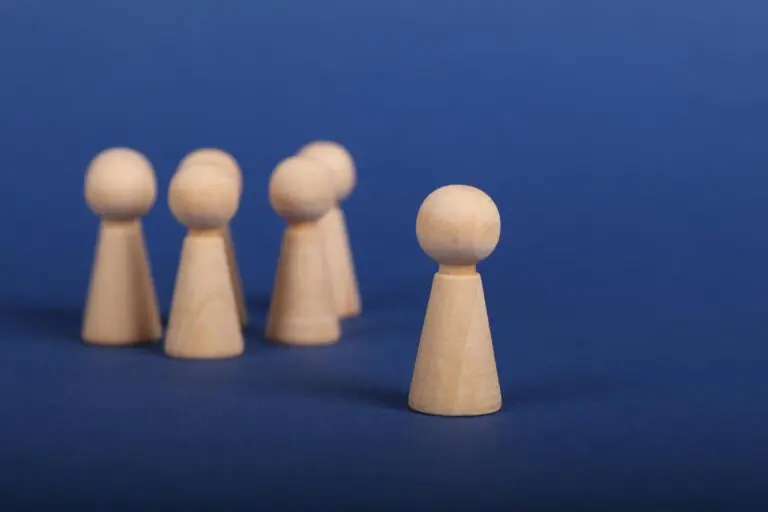

Autism and social anxiety share enough surface-level traits that they’re frequently confused, misdiagnosed, or treated as interchangeable. Both can make social situations feel exhausting, unpredictable, or overwhelming. Yet the reasons behind that experience are genuinely different, and understanding that difference matters if you’re trying to figure out what’s actually going on for you or someone you care about.
Autism is a neurodevelopmental condition that affects how the brain processes social information, sensory input, and communication. Social anxiety is a mental health condition rooted in fear of negative evaluation. These two things can coexist, they often do, but they’re not the same thing, and collapsing them into one label doesn’t serve anyone well.
There’s also a third thread worth pulling on here: introversion. I spent years in advertising leadership wondering why certain social environments left me depleted in ways my colleagues never seemed to experience. As an INTJ, I processed the world differently, and I didn’t have language for it until much later. The overlap between introversion, autism, and social anxiety is real, and it’s worth examining carefully rather than treating any one of them as the whole story.
If you’ve been working through questions about your mental health as an introvert, our Introvert Mental Health Hub brings together a wide range of articles on anxiety, emotional processing, sensory sensitivity, and more. It’s a good place to orient yourself before going deeper on any single topic.
Why Do Autism and Social Anxiety Get Confused So Often?
From the outside, someone who is autistic and someone with social anxiety can look remarkably similar. Both might avoid parties. Both might struggle with small talk. Both might appear withdrawn in group settings or seem to freeze when put on the spot. The behavioral overlap is real enough that clinicians, teachers, and even therapists sometimes miss the distinction.
What’s your personality type?
Take our free 40-question assessment and get a detailed personality profile with dimension breakdowns, context analysis, and personalised insights.
Discover Your Type8-12 minutes · 40 questions · Free
Part of what makes this complicated is that the discomfort is genuine in both cases, but it comes from different places. For many autistic people, social situations are cognitively demanding in ways that neurotypical people don’t experience. Reading unspoken social cues, tracking multiple conversations, adjusting tone and body language in real time, these require active processing effort rather than happening automatically. The exhaustion that follows isn’t fear-based. It’s more like running a program that wasn’t designed for the operating system.
Social anxiety, by contrast, is organized around anticipated judgment. The American Psychological Association describes anxiety disorders as involving persistent, excessive fear or worry in situations that aren’t objectively threatening. With social anxiety specifically, the core fear is that others will evaluate you negatively, that you’ll say something wrong, embarrass yourself, or be rejected. The avoidance that follows is driven by that anticipatory dread.
One way I’ve come to think about this distinction: autistic social difficulty is often about processing load, while social anxiety is about threat perception. They can both make someone leave a party early, but the internal experience driving that exit is quite different.
Can Someone Be Both Autistic and Socially Anxious?
Yes, and this is more common than many people realize. Autistic people experience social anxiety at higher rates than the general population, which makes clinical sense when you think about it. If you’ve spent years in environments where your natural way of communicating and connecting doesn’t match what’s expected, you accumulate experiences of confusion, rejection, and misunderstanding. Over time, that history can build into genuine anxiety about social situations, layered on top of the underlying neurological differences.
This layering is part of what makes diagnosis so complex. When both are present, each condition can mask or amplify the other. An autistic person with significant social anxiety might appear more anxious than autistic in some settings, or their autism might be interpreted as “just” anxiety by clinicians who aren’t looking for both. The DSM-5 changes from previous editions acknowledged that autism and anxiety disorders can be co-occurring conditions, which was an important shift in how the clinical field approaches these presentations.
I think about a creative director I worked with at one of my agencies. She was extraordinarily talented, meticulous in her thinking, and deeply uncomfortable in client-facing meetings. For years, everyone assumed she had stage fright or social anxiety. It wasn’t until much later, after she sought her own answers, that she understood her experience as autistic. The anxiety was real, but it had been building for decades on top of a neurology that had never been properly understood or accommodated.

For those who also identify as highly sensitive, the picture can become even more layered. Sensory sensitivity is common in autism, and it’s also a core feature of the highly sensitive person trait. When sensory input is amplified, social environments become harder to tolerate, which can look like avoidance, withdrawal, or what gets labeled as anxiety. I’ve written more about this in the context of HSP overwhelm and managing sensory overload, and many of those dynamics apply here as well.
What Does the Experience of Masking Actually Feel Like?
One concept that’s central to understanding autism in social contexts is masking, the practice of suppressing or hiding autistic traits to fit into neurotypical social expectations. Autistic people, particularly those who weren’t diagnosed until adulthood, often develop elaborate masking strategies over years of trying to pass as neurotypical. They learn to mimic social scripts, force eye contact, mirror body language, and perform emotional responses that feel natural to others but require deliberate effort for them.
Masking is exhausting in a way that’s hard to convey to someone who doesn’t experience it. It’s not just being a little tired after socializing. It can mean complete depletion after a workday, the kind of bone-deep fatigue that requires hours of solitude to recover from. And because masking is often so successful, the people around you may have no idea anything is happening beneath the surface.
This connects to something I understand from my own experience as an INTJ, though the mechanism is different. I spent years in agency leadership performing a version of extroverted confidence that wasn’t entirely natural to me. Pitching to Fortune 500 clients, running all-hands meetings, doing the relentless networking that the industry expected, I did all of it, and I did it well. But I was managing energy the entire time, calculating what I had left, rationing my presence. When I finally stopped trying to perform extroversion and started working with my actual wiring, the relief was significant.
Autistic masking is a more profound version of this, with higher stakes and often no recognized framework for understanding what’s happening. The anxiety that accompanies masking is real, and it frequently gets diagnosed as social anxiety without anyone asking whether something else might be driving it. A PubMed Central study on camouflaging in autistic adults found meaningful connections between masking behaviors and mental health outcomes, including anxiety and depression.
How Does Emotional Processing Differ Across These Conditions?
Emotional processing is another area where autism and social anxiety diverge in ways that matter. Social anxiety tends to involve hyperawareness of social cues and a tendency to interpret ambiguous signals as threatening. Someone with social anxiety might replay a conversation for hours, convinced they said something wrong, even when the other person didn’t notice anything unusual. The emotional processing is intense and often self-critical.
Autistic emotional processing can look quite different. Some autistic people experience emotions very intensely but have difficulty identifying or labeling them in the moment, a phenomenon sometimes called alexithymia. Others experience what’s called delayed emotional processing, where the full weight of an emotional experience arrives hours after the event itself. This can make real-time social interaction feel confusing, because the emotional data doesn’t arrive on the same schedule as the social situation.
There’s also a concept worth understanding here: interoception, the ability to sense what’s happening inside your own body. Many autistic people have differences in interoceptive awareness, which can affect how they recognize and respond to their own emotional states. This isn’t the same as not having emotions. It’s a difference in how those emotions are accessed and communicated.
For highly sensitive people, emotional processing tends to be deep and thorough, sometimes to the point of being overwhelming. I’ve explored this in more depth in the piece on HSP emotional processing and feeling deeply, and there’s genuine overlap between HSP emotional depth and some autistic emotional experiences, even though the underlying mechanisms differ.
What Role Does Empathy Play in This Picture?
One of the most persistent and damaging myths about autism is that autistic people lack empathy. This isn’t accurate, and it’s worth addressing directly. What’s more nuanced is that autistic people may experience and express empathy differently than neurotypical people expect.
Some autistic people experience what researchers describe as affective empathy, feeling others’ emotions deeply, while having more difficulty with cognitive empathy, understanding what another person is likely thinking or feeling based on social cues. Others experience intense empathy that becomes overwhelming precisely because they can’t easily regulate or contextualize it. This is sometimes called the double empathy problem, the idea that the communication difficulty between autistic and neurotypical people runs in both directions.
Social anxiety doesn’t follow the same pattern. People with social anxiety are often hyperaware of others’ emotional states, particularly anything that might signal disapproval or judgment. They may be excellent at reading social cues, perhaps too good, in the sense that they’re constantly scanning for threat signals. The empathy is present and often acute, but it’s filtered through a lens of self-protection.
The highly sensitive person framework offers another angle on empathy that’s worth considering alongside these. As I’ve written about in the piece on HSP empathy as a double-edged sword, deep empathic responsiveness can be both a genuine strength and a source of significant strain. That dynamic shows up across introversion, HSP traits, autism, and social anxiety in different but related ways.
What the Psychology Today discussion on introversion and social anxiety gets right is that these traits interact with each other. Being introverted doesn’t cause social anxiety, but the two can reinforce each other in certain environments, particularly ones that consistently reward extroverted behavior and penalize the need for solitude or quieter forms of engagement.
How Do Anxiety Responses Show Up Differently in Autism?
Anxiety in autistic people often presents differently than what clinicians and diagnostic tools are calibrated to recognize. Standard anxiety assessments were largely developed and normed on neurotypical populations, which means they may not capture the specific ways anxiety manifests in autistic individuals.
For example, autistic anxiety is frequently tied to unpredictability and change rather than primarily to social evaluation. A disruption to routine, an unexpected schedule change, or sensory overload can trigger anxiety responses that look different from the anticipatory social dread that characterizes social anxiety disorder. The physiological response, elevated heart rate, muscle tension, difficulty concentrating, can be identical. The trigger and the meaning behind it differ significantly.
There’s also the matter of what happens after a difficult social experience. Someone with social anxiety tends to ruminate in a way that’s organized around self-judgment: what did I say, how did I come across, what do they think of me now. An autistic person’s post-social processing might focus more on confusion: what just happened, what did that person mean, why did the conversation shift in that direction. Both experiences can be painful and exhausting, but the content of the distress differs.
The research published in PubMed Central on autism and anxiety co-occurrence points to how frequently anxiety goes unrecognized or misattributed in autistic populations, partly because the presentation doesn’t match standard clinical expectations. Getting the right support often depends on clinicians who understand both conditions well enough to distinguish between them.
For those dealing with anxiety that feels tied to social and sensory sensitivity, the piece on HSP anxiety and coping strategies covers some approaches that translate well across these different presentations, even when the root causes differ.
What About the Intersection With Perfectionism and Rejection?
Both autism and social anxiety can intersect in meaningful ways with perfectionism and sensitivity to rejection, though again the underlying dynamics differ.
Perfectionism in autistic people often shows up as a need for things to be done in a specific, correct way, sometimes connected to a strong sense of fairness or justice, and sometimes tied to managing unpredictability. If everything is done exactly right, there’s less chance of unexpected negative outcomes. This kind of perfectionism isn’t primarily about what others think. It’s about internal standards and the discomfort of deviation from them.
Perfectionism driven by social anxiety is more explicitly other-directed. It’s rooted in the belief that being anything less than flawless will invite criticism or rejection. I managed a senior account director at one of my agencies who was brilliant but would revise client presentations endlessly, not because she thought they were wrong, but because she was terrified of what would happen if a client found fault. That’s a different kind of perfectionism, one organized around threat avoidance rather than internal standards. The piece on HSP perfectionism and breaking the high standards trap addresses this pattern directly, and it applies across several of these overlapping traits.
Rejection sensitivity is also worth examining separately. Many autistic people experience what’s sometimes described as rejection sensitive dysphoria, an intense emotional response to perceived rejection or criticism that can feel disproportionate to the situation. Social anxiety also involves heightened sensitivity to rejection, but the experience tends to be more anticipatory, organized around avoiding rejection before it happens rather than responding intensely when it does.
Processing and healing from rejection looks different depending on which of these dynamics is at play. The piece on HSP rejection and healing covers some of the emotional work involved, and many of those insights carry over into both autistic and socially anxious experiences of being misunderstood or excluded.
What Actually Helps When These Conditions Overlap?
Getting the right kind of support starts with accurate understanding. If social anxiety is treated without recognizing an underlying autistic profile, the interventions may not fit well. Standard cognitive behavioral therapy for social anxiety, for example, often focuses on challenging negative thoughts about social situations and gradually increasing exposure. That can be useful, but if someone’s social difficulty is rooted in genuine processing differences rather than distorted thinking, the approach needs to be adapted.
Autistic-affirming therapy approaches focus less on trying to make someone’s social behavior look more neurotypical and more on helping them understand their own wiring, build self-advocacy skills, and find environments where they can function authentically. The goal shifts from fixing perceived deficits to building genuine self-knowledge and sustainable strategies.
For social anxiety specifically, Harvard Health’s overview of social anxiety treatments outlines several evidence-based approaches including therapy, medication, and lifestyle factors. What matters is that any treatment plan accounts for the full picture of what’s actually driving the social difficulty.
There are also practical environmental adjustments that help across both conditions. Reducing unnecessary sensory demands, building in recovery time after social engagement, having clear advance information about what to expect in social situations, these aren’t accommodations that make someone weaker. They’re strategies that allow someone to show up more fully because they’re not burning all their resources just getting through the environment.
I learned this in my own way running agencies. When I stopped scheduling back-to-back client calls and gave myself transition time between intensive meetings, my thinking got sharper and my work got better. The accommodation wasn’t a concession. It was a structural adjustment that matched how I actually function. The same principle applies here, scaled to the specific needs of autistic individuals and those managing social anxiety.
The APA’s resource on shyness is also worth noting here, because shyness is yet another trait that often gets conflated with both social anxiety and introversion. Understanding where shyness ends and anxiety begins is part of the broader work of accurate self-knowledge.

Why Does Getting the Language Right Matter?
Language shapes how we understand ourselves. When someone spends years believing they have social anxiety, organizing their self-concept around fear and avoidance, and then discovers that autism is a more accurate frame for their experience, the shift can be profound. Not because the label changes who they are, but because it changes what they think is possible and what kind of support actually makes sense.
The reverse is also true. Someone who has been told they’re autistic but whose primary struggle is actually anxiety-driven may miss out on interventions that would genuinely help. Getting the language right isn’t about putting people in boxes. It’s about giving people accurate maps of their own terrain.
I came to understand my own introversion properly in my late thirties, after years of misreading my energy patterns as a character flaw or a professional liability. The INTJ framework gave me language for something I’d always experienced but never named. That naming mattered. It let me stop fighting my wiring and start working with it. The same kind of clarity is available around autism and social anxiety, and it’s worth pursuing even when the path to it is complicated.
What I’d say to anyone sitting with these questions is this: the overlap between these conditions is real, the distinctions are also real, and you deserve support from someone who understands both well enough to help you figure out what’s actually going on. That clarity is worth working toward.
There’s much more to explore across these intersecting topics. Our full Introvert Mental Health Hub covers anxiety, emotional sensitivity, sensory overwhelm, and the psychological dimensions of introversion in depth. It’s a good companion resource as you continue working through these questions.
About the Author
Keith Lacy is an introvert who’s learned to embrace his true self later in life. After 20 years in advertising and marketing leadership, including running agencies and managing Fortune 500 accounts, Keith now channels his experience into helping fellow introverts understand their strengths and build fulfilling careers. As an INTJ, he brings analytical depth and authentic perspective to every article, drawing from both professional expertise and personal growth.
Frequently Asked Questions
What is the main difference between autism and social anxiety?
Autism is a neurodevelopmental condition that affects how the brain processes social information, sensory input, and communication. Social anxiety is a mental health condition centered on fear of negative evaluation from others. Both can make social situations feel difficult or exhausting, but the reasons differ. Autistic social difficulty is often about processing load and cognitive effort. Social anxiety is organized around anticipated judgment and the fear of embarrassment or rejection. These two conditions can and do coexist, but they require different kinds of understanding and support.
Can someone be autistic and have social anxiety at the same time?
Yes. Autistic people experience social anxiety at higher rates than the general population, and this co-occurrence makes clinical sense. Years of handling environments where your natural communication style doesn’t match what’s expected can build into genuine anxiety over time. When both are present, each condition can mask or amplify the other, making accurate diagnosis more complex. The DSM-5 recognizes that autism and anxiety disorders can be co-occurring conditions, which was an important shift in how the clinical field approaches these presentations.
What is masking and how does it relate to social anxiety in autistic people?
Masking refers to the practice of suppressing or hiding autistic traits to fit into neurotypical social expectations. Autistic people, particularly those not diagnosed until adulthood, often develop masking strategies over years of trying to pass as neurotypical. This involves mimicking social scripts, forcing eye contact, and performing emotional responses that feel natural to others but require deliberate effort for them. Masking is deeply exhausting and can generate or worsen anxiety over time. Because masking is often successful, the anxiety it produces may be misidentified as social anxiety disorder rather than recognized as a response to sustained neurological effort.
Is introversion the same as autism or social anxiety?
No. Introversion is a personality trait describing a preference for quieter, less stimulating environments and a tendency to recharge through solitude rather than social interaction. It is not a disorder or a condition. Social anxiety is a mental health condition involving fear of social judgment. Autism is a neurodevelopmental condition affecting social processing and sensory experience. An introvert can have social anxiety, can be autistic, or can be neither. The traits can overlap in how they appear on the surface, but the internal experiences and the appropriate responses to them differ significantly.
What kind of support is most helpful when autism and social anxiety overlap?
Accurate diagnosis is the starting point. When both conditions are present, treatment approaches need to account for both. Standard cognitive behavioral therapy for social anxiety can be useful but may need adaptation if the social difficulty is rooted in autistic processing differences rather than distorted thinking. Autistic-affirming therapy focuses on self-understanding, self-advocacy, and finding sustainable strategies rather than trying to make behavior look more neurotypical. Practical environmental adjustments, such as reducing sensory demands and building in recovery time after social engagement, also help significantly. Finding clinicians who understand both autism and anxiety is worth the effort.