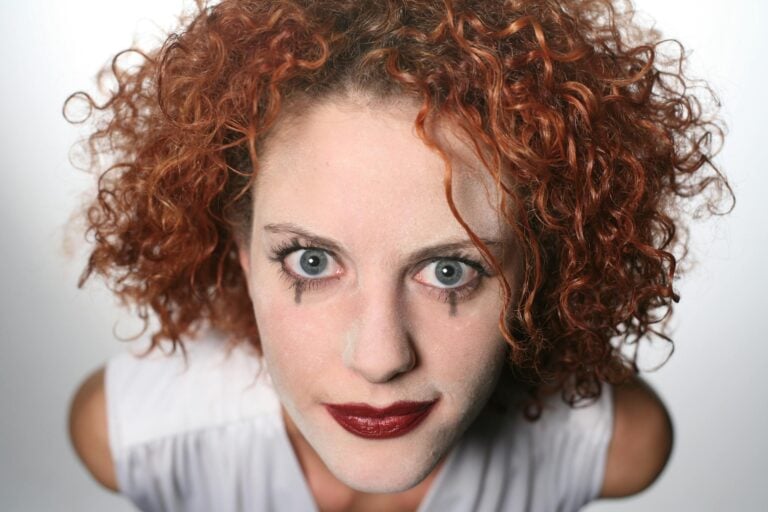

Overcompensating for social anxiety means pushing yourself to perform socially in ways that feel forced, exhausting, and in the end disconnected from who you actually are. It’s the pattern of talking too much, agreeing too readily, or filling silence with noise, not because you want to, but because the fear of being judged as awkward or withdrawn feels unbearable. For many introverts, this compensation loop is so automatic that it’s hard to recognize it’s even happening.
What makes overcompensation particularly tricky is that it can look like confidence from the outside. But on the inside, it’s a performance that drains you faster than almost anything else. And the more you rely on it, the more disconnected you feel from your own instincts about how to show up in the world.

If this pattern feels familiar, you’re in good company. Our Introvert Mental Health Hub explores the full range of emotional experiences that come with being wired for depth and quiet, and overcompensation adds a particularly layered dimension to that conversation.
What Does Overcompensating for Social Anxiety Actually Look Like?
Most people think of social anxiety as the person in the corner at the party, visibly uncomfortable, avoiding eye contact. And yes, that’s one version. But overcompensation is the other version, the one that hides in plain sight.
What’s your personality type?
Take our free 40-question assessment and get a detailed personality profile with dimension breakdowns, context analysis, and personalised insights.
Discover Your Type8-12 minutes · 40 questions · Free
Overcompensating means overcorrecting. You feel the pull of anxiety and instead of withdrawing, you swing hard in the opposite direction. You become the loudest person in the room. You volunteer for things you don’t want to do. You laugh at jokes that aren’t funny. You perform enthusiasm you don’t feel. You say yes when every fiber of your being wants to say no.
Early in my agency career, I did this constantly. I was running client meetings with major brands, and the pressure to project confidence was relentless. My internal experience was one of hyper-vigilance, watching every face, reading every micro-expression, calculating whether I’d said something that landed wrong. But externally? I was expansive. I cracked jokes. I leaned into the room. I became a version of myself that felt nothing like me.
The exhaustion afterward was staggering. I’d get home and feel hollowed out in a way that a good night’s sleep couldn’t fix. At the time, I told myself that was just the cost of leadership. It took years to understand that I wasn’t experiencing normal professional fatigue. I was recovering from performing a character.
The American Psychological Association draws a useful distinction between shyness, introversion, and social anxiety, and understanding those differences matters here. Overcompensation tends to emerge most strongly when social anxiety is in the mix, because anxiety creates a threat response that introversion alone doesn’t necessarily trigger. Shyness and anxiety can overlap with introversion, but they’re not the same thing, and the strategies that help are different depending on which is driving the behavior.
Why Does the Brain Choose Performance Over Withdrawal?
Withdrawal is the more obvious anxiety response. But overcompensation is equally common, and it makes sense when you think about what the anxious brain is actually trying to do.
Social anxiety is rooted in fear of negative evaluation. The brain perceives social rejection as a genuine threat, and it mobilizes to prevent that outcome. For some people, that means avoidance. For others, it means attack, not aggression, but effort. Intense, sustained, exhausting effort to control how others perceive you.
The logic, if you could slow it down and examine it, goes something like this: if I can just be entertaining enough, agreeable enough, impressive enough, then the threat of rejection disappears. The problem is that “enough” is a moving target. Anxiety doesn’t have a satisfaction point. You can perform brilliantly and still walk away convinced you said something wrong in the third minute of the conversation.

There’s also a reinforcement loop at work. When overcompensation appears to “work,” meaning people respond warmly and you don’t experience the rejection you feared, the brain files that away as evidence that the performance was necessary. So the next time anxiety spikes, the pull toward overcompensation gets stronger. You’ve essentially trained yourself to believe the mask is what’s keeping you safe.
For those who also identify as highly sensitive, this loop can be especially intense. The experience of HSP anxiety often includes a heightened awareness of social cues and a stronger emotional response to perceived disapproval, which can make the drive to overcompensate feel almost irresistible. When you’re processing the room at a deeper level than most people around you, the threat signals come in louder and more frequent.
How Perfectionism Feeds the Overcompensation Cycle
There’s a particular flavor of overcompensation that I recognize in myself and in many introverts I’ve spoken with over the years. It’s not just about managing anxiety in the moment. It’s about preparing so thoroughly, performing so carefully, and analyzing so relentlessly afterward that the social interaction becomes a kind of project.
Perfectionism and social anxiety are a combustible combination. When you’re already anxious about how you’ll come across, perfectionism adds the demand that you come across flawlessly. Not just okay. Not just acceptable. Perfect. And when the inevitable imperfection happens, because it always does, the post-event analysis can be brutal.
I had a creative director at one of my agencies who was brilliant and deeply anxious about client presentations. She would over-prepare to the point of memorizing entire scripts. In the room, she was polished and confident. But she’d spend days afterward dissecting every moment, convinced she’d lost the client’s trust over a single hesitation in her delivery. The overcompensation was visible in her preparation. The perfectionism was visible in the aftermath. They fed each other.
This pattern is worth examining carefully, and the piece on HSP perfectionism and high standards gets into exactly why the drive for flawlessness can become its own form of suffering. Perfectionism doesn’t protect you from judgment. It just raises the stakes of every performance.
The Harvard Health resource on social anxiety notes that avoidance behaviors, including the kind of behavioral rigidity that perfectionism creates, tend to maintain anxiety rather than reduce it. The more you manage every variable, the more dependent you become on that management, and the more terrifying it feels when something falls outside your control.
The Sensory Cost of Sustained Social Performance
One thing that rarely gets discussed in conversations about overcompensation is the physical dimension. Performing a social self that doesn’t match your internal experience isn’t just emotionally draining. It’s sensorially exhausting in a way that compounds over time.
When you’re overcompensating, you’re holding more in your body than most people around you realize. You’re monitoring your own expression, your volume, your pacing. You’re reading the room. You’re tracking multiple conversations simultaneously. You’re managing the gap between what you feel and what you’re projecting. That’s an enormous amount of simultaneous processing.

For those who process sensory input more intensely, this cost is magnified. The experience of HSP overwhelm and sensory overload captures something important here: when the environment itself is already demanding, adding the cognitive load of social performance on top of it can push you past a threshold that’s genuinely hard to recover from.
I remember a particular industry conference, one of those three-day affairs with back-to-back sessions and evening networking events. By day two, I was running on pure adrenaline and performance. I was charming, engaged, and completely disconnected from myself. On the flight home, I sat in silence for four hours and felt something close to grief, not because anything had gone wrong, but because I’d spent three days being someone else and wasn’t sure how to find my way back.
That’s what sustained overcompensation costs. It’s not just tiredness. It’s a kind of self-estrangement.
When Empathy Becomes Part of the Problem
Many introverts who struggle with social anxiety are also highly attuned to the emotional states of the people around them. That attunement is genuinely valuable. But in the context of overcompensation, it can become a liability.
When you’re anxious and also highly empathic, you pick up on every shift in someone’s mood or energy and immediately run it through the filter of “is this my fault?” A colleague who seems distracted becomes evidence that you said something wrong. A client who doesn’t laugh at your comment becomes proof that you’ve lost the room. You’re not just managing your own anxiety. You’re absorbing the emotional weather of everyone around you and treating it as data about your own performance.
The piece on HSP empathy as a double-edged sword describes this dynamic with real precision. Empathy is a strength, but when it’s filtered through anxiety, it becomes a source of constant, unverifiable threat signals. You end up responding to things that may not even be real.
I watched this play out in real time with a senior account manager on my team. She was extraordinarily good at reading clients, which made her exceptional at her job. But in high-stakes pitches, her empathy would turn against her. She’d pick up on a flicker of uncertainty in the room and immediately escalate her performance, talking faster, adding more detail, filling every silence. The clients would sometimes feel overwhelmed. She’d interpret their overwhelm as disapproval, which would trigger more performance. It was a loop that was painful to watch and very hard to interrupt.
The PubMed Central research on emotional regulation and social anxiety points toward something important: the ability to tolerate uncertainty in social situations, rather than trying to control your way out of it, is one of the core skills that actually reduces anxiety over time. Overcompensation is, at its heart, an attempt to eliminate uncertainty. And it never quite works.
The Rejection Spiral That Keeps Overcompensation Going
One of the most painful aspects of the overcompensation pattern is what happens when it fails. Because it does fail, not always, but often enough to confirm the anxiety’s worst predictions.
You perform. You try hard. And sometimes, despite all of that effort, you still feel rejected. Maybe a conversation ends abruptly. Maybe you don’t get the response you were hoping for. Maybe someone simply seems uninterested. For someone without social anxiety, that’s a minor social event. For someone who has been working hard to prevent exactly that outcome, it can feel devastating.

The aftermath of perceived rejection, when you’ve been overcompensating, is particularly brutal because there’s a layer of shame on top of the hurt. You tried so hard. You performed so carefully. And it still wasn’t enough. The brain’s conclusion, if left unchallenged, is that you need to try harder next time. More effort. Better performance. Tighter control.
That’s the spiral. And it’s worth understanding how to step out of it rather than spin faster. The exploration of HSP rejection and the healing process offers a framework for processing that kind of hurt without letting it calcify into a belief that you are fundamentally unacceptable. Because that belief is the engine that keeps overcompensation running.
There’s also something worth naming here about the difference between rejection and misalignment. Not every social interaction that doesn’t go well is a rejection of you as a person. Sometimes it’s just a mismatch of energy, timing, or context. When anxiety is high, the brain tends to personalize everything. Developing the capacity to hold a more nuanced interpretation of social outcomes is genuinely protective.
What Happens When You Stop Overcompensating
At some point in my mid-forties, I stopped performing. Not all at once, and not without discomfort. But I made a deliberate decision to stop trying to be the loudest or most energetic version of myself in rooms where that wasn’t natural to me.
The first few times I did this, it felt terrifying. Sitting quietly in a meeting instead of filling the space. Letting a pause exist in a conversation without rushing to eliminate it. Saying “I need to think about that” instead of offering an immediate, polished response. Everything in my anxiety-trained brain was screaming that I was failing. That people were noticing. That I was losing ground.
What actually happened was different. Some people didn’t notice at all. Some people responded to the quieter version of me with more genuine curiosity than they’d ever shown the performer. A few clients told me, years later, that they’d always trusted me most in the moments when I’d been direct and measured rather than expansive and energetic. The performance, it turned out, hadn’t been doing what I thought it was doing.
Stopping overcompensation doesn’t mean becoming passive or disengaged. It means letting your actual social style, which for many introverts involves thoughtful listening, careful observation, and depth over breadth, do the work instead of a performance layered on top of it. As Psychology Today explores in its piece on introversion and social anxiety, these two experiences overlap but are distinct, and treating them as the same thing leads to strategies that don’t actually fit.
The deeper emotional processing that comes naturally to many introverts, the kind described in the piece on HSP emotional processing and feeling deeply, is actually an asset in authentic social connection. When you stop using that processing capacity to manage your performance and start using it to genuinely engage with the people in front of you, something shifts. Conversations feel less like tests and more like exchanges.
Practical Ways to Interrupt the Overcompensation Pattern
Awareness is the entry point, but it’s not enough on its own. Once you recognize that you’re overcompensating, you need some practical ways to interrupt the pattern without swinging into avoidance.
One approach that helped me was what I started calling “the honest pause.” Instead of filling silence or rushing to perform, I’d give myself permission to pause genuinely before responding. Not a theatrical pause, just a real one. It felt uncomfortable at first. Over time, it became a signal to myself that I was operating from my actual thinking rather than my anxiety.
Another strategy involves pre-deciding your social budget. Rather than arriving at an event with the vague goal of “doing well,” decide in advance how long you’ll stay and what kind of engagement feels sustainable. This isn’t avoidance. It’s honest self-management. When you know you have a defined window, the pressure to perform indefinitely drops, and genuine connection becomes more possible within that window.
The PubMed Central literature on cognitive behavioral approaches to social anxiety consistently points toward graduated exposure as more effective than either avoidance or forced performance. success doesn’t mean eliminate discomfort but to tolerate it without escalating into overcompensation. That tolerance builds slowly and unevenly, but it does build.

It’s also worth examining what you’re actually afraid of. Not in the abstract, but specifically. When I finally did that work, I realized my deepest fear wasn’t being disliked. It was being seen as intellectually unimpressive. All of my social performance was calibrated around that specific fear. Once I named it clearly, I could start questioning whether it was actually true and whether the performance was actually addressing it or just masking it.
The American Psychological Association’s overview of anxiety disorders is a useful grounding resource for understanding when anxiety has crossed from a manageable experience into something that warrants professional support. There’s no shame in that threshold. Sometimes the patterns are too entrenched to shift without skilled help, and recognizing that is its own form of self-awareness.
Finally, consider what your authentic social style actually looks like when anxiety isn’t running the show. For most introverts, it involves one-on-one or small-group connection, conversations with real substance, listening more than talking, and engaging with ideas rather than performing for an audience. That style is not a deficit. It’s a different kind of social competence, and it’s worth building toward rather than away from.
There’s more to explore across all of these themes in the Introvert Mental Health Hub, where the full collection of resources on anxiety, emotional processing, and self-understanding lives together in one place.
About the Author
Keith Lacy is an introvert who’s learned to embrace his true self later in life. After 20 years in advertising and marketing leadership, including running agencies and managing Fortune 500 accounts, Keith now channels his experience into helping fellow introverts understand their strengths and build fulfilling careers. As an INTJ, he brings analytical depth and authentic perspective to every article, drawing from both professional expertise and personal growth.
Frequently Asked Questions
Is overcompensating for social anxiety the same as being an extrovert?
No. Overcompensating for social anxiety means performing social behaviors that feel forced and disconnected from your natural style, often to prevent perceived rejection. Extroversion is a genuine orientation toward social energy, where interaction feels naturally energizing. An introvert who overcompensates may look extroverted from the outside, but the internal experience is one of effort, depletion, and anxiety rather than genuine engagement.
How do I know if I’m overcompensating or just pushing through discomfort?
The distinction often comes down to what’s driving the behavior and how you feel afterward. Pushing through discomfort in service of something meaningful, like having a hard conversation or presenting an important idea, tends to leave you feeling stretched but intact. Overcompensating tends to leave you feeling hollow, exhausted in a way that goes beyond tiredness, and disconnected from yourself. If you regularly feel like you’ve been performing a character rather than showing up as yourself, overcompensation is likely in the mix.
Can overcompensating for social anxiety actually make anxiety worse over time?
Yes, and this is one of the more important things to understand about the pattern. When overcompensation appears to “work,” meaning you avoid rejection in the moment, it reinforces the belief that the performance was necessary and that your authentic self isn’t safe to show. Over time, this can deepen the anxiety rather than reduce it, because you become more dependent on the performance and more convinced that without it, social failure is inevitable. Gradual, supported exposure to authentic self-expression tends to be more effective for long-term anxiety reduction.
What’s the difference between social anxiety and introversion when it comes to social behavior?
Introversion is a preference for less stimulating social environments and a tendency to recharge through solitude. It doesn’t inherently involve fear or avoidance. Social anxiety involves a fear of negative evaluation and a threat response to social situations that can lead to either avoidance or overcompensation. Many introverts don’t experience social anxiety at all. Others experience both. The overlap can be confusing, but the distinction matters because the strategies that help are different depending on which is actually driving the behavior.
When should someone seek professional support for social anxiety?
Professional support is worth considering when social anxiety is significantly interfering with your work, relationships, or daily life, when avoidance or overcompensation has become your primary way of managing social situations, or when the anxiety feels too entrenched to shift through self-awareness and practice alone. Cognitive behavioral therapy has a strong track record for social anxiety, and there are also medication options worth discussing with a healthcare provider. Seeking help isn’t a sign that you’ve failed at managing yourself. It’s a sign that you understand the limits of what self-help can address.