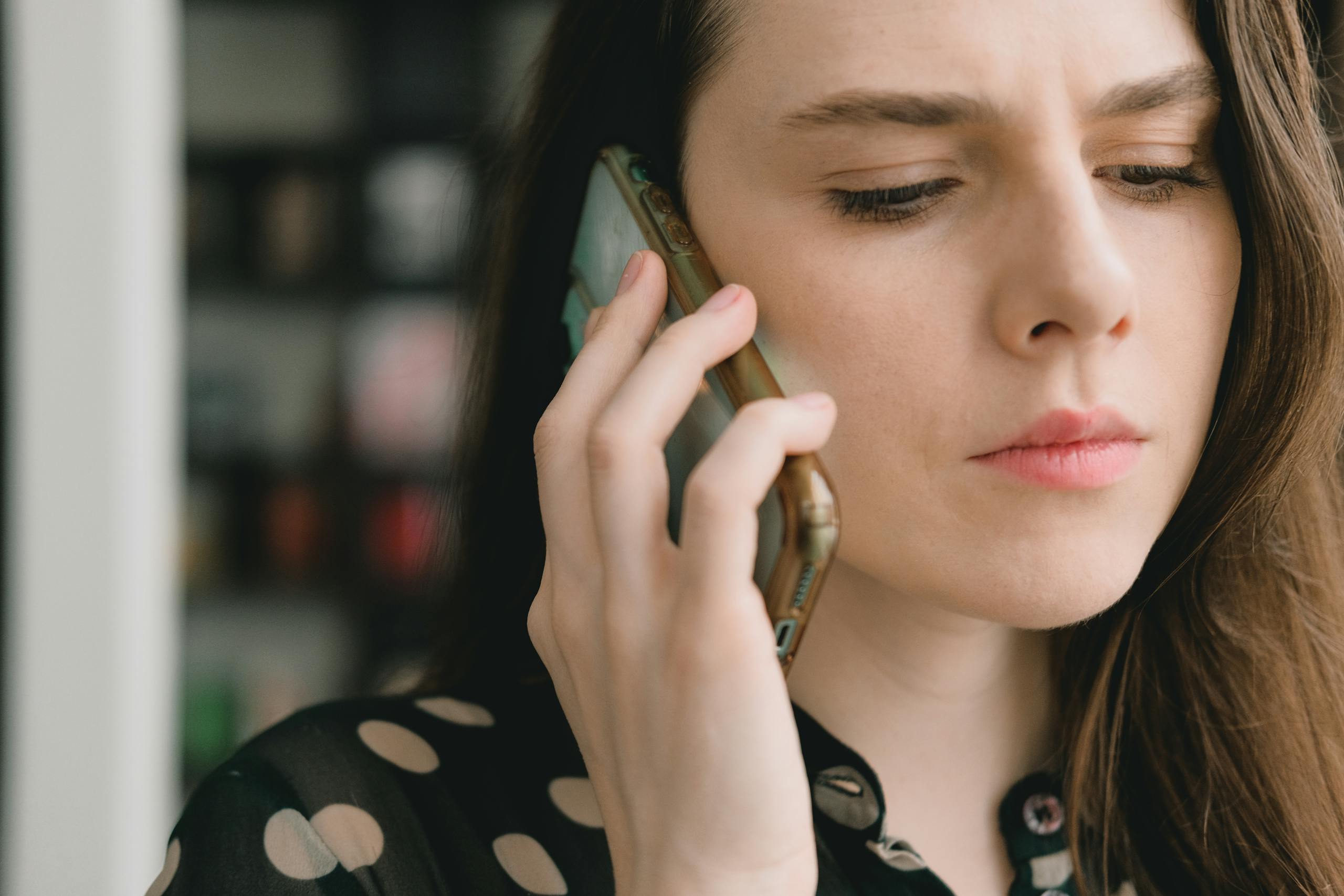

Can sociopaths have social anxiety? Yes, they can, though the experience looks fundamentally different from what most people mean when they talk about anxiety in social settings. Where social anxiety typically stems from a deep fear of judgment, rejection, or emotional humiliation, the anxiety a person with antisocial personality disorder might feel in social situations tends to be more strategic in nature, rooted in the fear of exposure, loss of control, or failed manipulation rather than genuine emotional vulnerability.
That distinction matters more than it might seem at first glance. It changes everything about how these two experiences are treated, understood, and lived from the inside.
I want to be honest about something before we go further. I’m not a psychologist or a clinician. I’m an INTJ who spent over two decades running advertising agencies, and I’ve spent a lot of time thinking carefully about how different people process the social world. This topic pulled me in because I’ve watched colleagues, clients, and even a few people in leadership positions who seemed to operate without the emotional wiring the rest of us take for granted. And yet some of them appeared uncomfortable in certain social situations. It made me curious about what was actually happening beneath the surface.

If you’ve found yourself asking this question, you’re probably working through something real. Maybe you’re trying to understand someone in your life. Maybe you’re a mental health professional looking for accessible context. Or maybe, like me, you’re simply someone who finds the complexity of human psychology endlessly worth examining. Whatever brought you here, the Introvert Mental Health Hub at Ordinary Introvert covers the full landscape of how personality, anxiety, and emotional experience intersect. This article adds a particularly unusual layer to that conversation.
What Does Antisocial Personality Disorder Actually Mean?
The word “sociopath” gets thrown around casually, often as a shorthand for someone who’s manipulative, cold, or ruthless. Popular culture has done a lot of damage here. The clinical reality is more precise and more nuanced.
What’s your personality type?
Take our free 40-question assessment and get a detailed personality profile with dimension breakdowns, context analysis, and personalised insights.
Discover Your Type8-12 minutes · 40 questions · Free
Antisocial personality disorder, or ASPD, is a diagnosable condition outlined in the DSM-5. According to the American Psychiatric Association’s DSM-5 documentation, ASPD is characterized by a persistent pattern of disregard for and violation of the rights of others. This includes deceitfulness, impulsivity, irritability, reckless disregard for safety, and consistent irresponsibility, with symptoms present since adolescence.
Crucially, ASPD does not mean the complete absence of all emotion. It means a significant deficit in empathy, remorse, and genuine emotional connection. The emotional range of someone with ASPD is narrowed and distorted, not entirely switched off. And that distinction is exactly where the question of social anxiety becomes interesting.
People with ASPD can and do experience certain emotions: frustration, boredom, anger, excitement, and even something that functions like anxiety. What they typically don’t experience is the deep empathic resonance, the fear of hurting others, or the shame-based self-consciousness that drives social anxiety in most people. The American Psychological Association notes that anxiety disorders involve excessive fear or worry that interferes with daily functioning. For someone with ASPD, any anxiety that appears tends to serve a different psychological function entirely.
What Drives Social Anxiety in Most People?
To understand why the sociopath question is so complicated, it helps to be clear about what social anxiety actually is at its core.
Social anxiety, at its most fundamental level, is a threat response. The brain perceives social evaluation as dangerous. Being judged negatively, being rejected, being seen as inadequate or embarrassing, these register as genuine threats that activate the same fear circuitry as physical danger. The emotional experience is real, visceral, and often overwhelming.
I know this terrain personally. As an INTJ running agencies full of extroverts, I spent years managing the gap between how I processed social situations internally and how I was expected to show up externally. My discomfort in large networking events wasn’t performance anxiety exactly. It was something quieter and more persistent: a sense that the surface-level social exchange happening around me was missing the depth I needed to feel genuinely connected. That’s different from social anxiety, but it gave me a window into understanding how much the social world can feel threatening when you’re not wired to thrive in it automatically.
For people with genuine social anxiety, the fear is often rooted in deep emotional vulnerability. They care intensely about what others think. They feel the sting of perceived rejection acutely. If you’ve read about HSP rejection processing and healing, you’ll recognize how deeply some people feel the social world’s sharp edges. That depth of feeling, that sensitivity to relational rupture, is precisely what makes social anxiety so painful for most people who experience it.

Someone with ASPD, by definition, lacks that emotional substrate. The fear of genuine rejection, the pain of being truly seen and found wanting, these don’t register the same way. So if social discomfort shows up, it has to be coming from somewhere else.
Where Does Social Discomfort Come From in Someone With ASPD?
This is where the psychology gets genuinely fascinating, and where I think a lot of popular writing gets it wrong.
People with antisocial personality disorder are often highly attuned to social dynamics, not because they care about others emotionally, but because social situations are environments they need to read and control. A person with ASPD who enters a room full of people is often running a rapid assessment: Who has power here? Who is vulnerable? Where are the exits from this interaction if it goes wrong? What does this person want, and how can I use that?
That kind of hypervigilant social scanning can produce something that looks like anxiety from the outside. But the internal driver is fundamentally different. It’s not “What if they judge me?” It’s closer to “What if I lose control of this situation?” or “What if someone here sees through what I’m doing?”
There’s clinical support for the idea that ASPD and anxiety can co-occur. Research published in PubMed Central has explored the significant overlap between personality disorders and anxiety conditions, noting that comorbidity is common across diagnostic categories. ASPD doesn’t exist in a vacuum. Someone can carry that diagnosis alongside other conditions, including anxiety disorders, mood disorders, or substance use issues.
What’s more, some people who meet criteria for ASPD also show traits associated with high sensitivity to environmental stimulation, though they process that stimulation very differently from someone who is highly sensitive in the HSP sense. Where a highly sensitive person might feel overwhelmed by social environments because they’re absorbing everyone’s emotional states, a person with ASPD might feel uncomfortable in those same environments because they can’t easily read or manipulate a chaotic social field. The discomfort has the same external appearance but a completely different internal architecture.
Those of us who’ve spent time thinking about HSP overwhelm and sensory overload understand how the nervous system can make certain social environments genuinely difficult to tolerate. But for the highly sensitive person, that difficulty comes from feeling too much. For someone with ASPD, the difficulty, when it exists, tends to come from a different kind of threat perception entirely.
Can the Two Conditions Genuinely Co-Exist?
Yes. And this is probably the most important thing to understand if you’re trying to make sense of this topic.
Comorbidity in mental health is the rule rather than the exception. The human mind doesn’t sort itself neatly into single diagnostic boxes. Someone can have ASPD and also experience clinically significant social anxiety. The American Psychological Association’s overview of shyness and social anxiety makes clear that social anxiety exists on a spectrum and can appear alongside many other psychological conditions.
What makes the co-occurrence of ASPD and social anxiety so unusual is the internal contradiction it creates. Social anxiety is fundamentally about caring too much what others think. ASPD is fundamentally about not caring enough. When both are present, you end up with a person who intellectually understands they’re being evaluated, who may even feel a form of discomfort about that evaluation, but who doesn’t process that discomfort through the same empathic and emotional channels that most people use.

I’ve thought about this through the lens of people I observed in high-stakes business environments. In over twenty years running agencies and working with major brands, I encountered a handful of individuals who seemed to experience something like social discomfort, but whose discomfort never seemed to be about the things that make most people uncomfortable. They weren’t worried about whether people liked them. They were worried about whether their performance was convincing. That’s a meaningful difference.
One senior executive I worked with on a major account could walk into a room of fifty people and appear completely at ease, charming and socially fluent. But in smaller, more intimate settings where people were sharing genuine feelings or having real conversations about vulnerability, he became visibly uncomfortable. Not because he was overwhelmed, but because he didn’t have a script for authentic connection. The intimacy wasn’t threatening to his ego. It was threatening to his control.
That experience taught me something about how differently people can inhabit the same social spaces. Where I was processing the room through layers of observation and quiet analysis, he was processing it through an entirely different filter. And where I might feel socially tired after a long meeting, he seemed almost energized by performance and unsettled by sincerity.
How Does Emotional Processing Differ Across This Spectrum?
One of the most striking contrasts between social anxiety in neurotypical people and whatever social discomfort might exist in someone with ASPD is the role of emotional processing.
For most people who experience social anxiety, the aftermath of a difficult social situation involves a lot of emotional processing. Replaying conversations, analyzing what was said, feeling the residue of embarrassment or worry. There’s a richness to that processing, even when it’s painful. It reflects genuine emotional investment in relationships and how we’re perceived within them.
People who are highly sensitive, in particular, often find themselves doing this kind of deep processing long after a social event has ended. The article on HSP emotional processing and feeling deeply captures this beautifully. That capacity to feel deeply is both a gift and a weight. It makes connection richer and social pain sharper at the same time.
For someone with ASPD, post-social processing tends to be more analytical than emotional. They’re not replaying conversations to figure out if they hurt someone’s feelings. They’re evaluating whether their performance achieved the desired outcome. The internal monologue is strategic rather than empathic.
This distinction has real implications for treatment and support. Harvard Health outlines that social anxiety disorder responds well to cognitive behavioral therapy and, in some cases, medication. Those approaches work because they address the underlying emotional and cognitive patterns that drive the fear response. For someone with ASPD, those same approaches are significantly less effective because the underlying architecture is different. The fear, when present, isn’t rooted in the same emotional soil.
What About Empathy, or the Lack of It?
Empathy is the thread that runs through almost every conversation about social anxiety, highly sensitive people, and antisocial personality disorder. And it’s where the contrast becomes most stark.
Social anxiety is often amplified by empathy. When you’re deeply attuned to how others are feeling, you become hyperaware of how your own behavior might be affecting them. You worry about making someone uncomfortable, about being perceived as boring or awkward, about taking up too much space. That kind of empathic self-consciousness is central to how social anxiety operates for many people.
Highly sensitive people often experience this in particularly intense ways. The piece on HSP empathy as a double-edged sword speaks directly to how that attunement to others can become a source of genuine suffering. Feeling what others feel, absorbing the emotional atmosphere of a room, these capacities are profound, but they also make social situations more emotionally demanding.
Someone with ASPD, by contrast, has a significantly impaired capacity for this kind of empathic attunement. They may be cognitively skilled at reading social cues, at understanding what others want or feel on an intellectual level. But the felt sense of another person’s experience, the resonance that makes empathy genuinely empathic, is largely absent. This is part of what makes ASPD so clinically distinct from introversion, shyness, or social anxiety.
It also means that when someone with ASPD appears socially anxious, the anxiety isn’t about the impact they’re having on others. It’s about something else entirely: performance, exposure, or loss of advantage.
Why This Question Matters for How We Understand Anxiety
Asking whether sociopaths can have social anxiety isn’t just an academic exercise. It pushes us to think more carefully about what anxiety actually is, what it’s protecting us from, and how personality structure shapes the entire experience of being in the social world.
For introverts, and especially for those of us who’ve spent years trying to understand why social situations drain us differently than they drain other people, these questions have real personal weight. I spent a long time in my career wondering whether my discomfort in certain social settings was a weakness. It wasn’t. It was information. My brain was telling me something about how I was wired and what I needed to function well.
Social anxiety, when it’s present in someone who is also highly sensitive or introverted, often intersects with patterns like perfectionism and the fear of being seen as inadequate. The work on HSP perfectionism and breaking the high standards trap resonates deeply here. When you hold yourself to impossible standards and then put yourself in social situations where you might fall short of them, anxiety is almost inevitable.
None of that dynamic applies in the same way to someone with ASPD. Their relationship to standards, to failure, to being seen, is structured around a completely different set of concerns. And that’s precisely why the co-occurrence of ASPD and social anxiety, while possible, looks so different from the inside.
Understanding these distinctions also matters for those of us who have encountered people in our lives, personally or professionally, who seemed to have the social fluency of someone without anxiety while also displaying moments of social discomfort that didn’t quite fit. It can be disorienting to watch someone who appears emotionally impervious suddenly become unsettled in a particular kind of social setting. Knowing what might be driving that can help make sense of confusing interpersonal dynamics.
The Difference Between Anxiety and the Fear of Being Caught
There’s a distinction worth naming directly: anxiety and the fear of exposure are not the same thing, even though they can look similar from the outside.
Genuine social anxiety involves a fear that others will perceive you negatively, that your authentic self, when seen, will be found lacking. It’s painful precisely because it involves caring deeply about connection and belonging. The vulnerability is real.
The fear of being caught, which is more characteristic of what someone with ASPD might experience in social situations, is something different. It’s not about authentic self-disclosure. It’s about the collapse of a constructed persona. The discomfort isn’t “What if they see who I really am and don’t like me?” It’s “What if they see through what I’m presenting and realize it’s not real?”
That’s a fundamentally different psychological experience, even if the physiological symptoms, elevated heart rate, heightened alertness, desire to exit the situation, might look similar from the outside.
A study published through PubMed Central examining personality disorders and their relationship to anxiety conditions found meaningful differences in how different personality structures generate and process anxious states. The mechanisms are distinct even when the surface presentation overlaps.
For those of us who process the social world with depth and sensitivity, this distinction is clarifying rather than alarming. Social anxiety, even when it’s painful, is evidence of something real: genuine care about connection, authentic vulnerability, and the desire to be truly seen. That’s worth holding onto, even on the hard days.
The piece on HSP anxiety and coping strategies is a good place to explore how that kind of deep, empathy-driven anxiety can be worked with rather than simply endured. The strategies that help are built on understanding the real emotional needs underneath the anxiety, something that simply doesn’t apply in the same way to someone whose social discomfort is rooted in strategic rather than emotional concerns.

What This Means If You’re Trying to Understand Someone in Your Life
If you’re reading this because you’re trying to make sense of someone in your personal or professional world, I want to offer something honest: diagnosing people around you, even informally, is a risky business. I’ve been in rooms with people who seemed cold, calculating, and emotionally unavailable, and some of them were simply introverts who hadn’t been given the space to show up authentically. Others were genuinely struggling with something more complex.
The more useful question isn’t “Is this person a sociopath?” It’s “What is this person’s relationship to empathy, to accountability, and to genuine connection?” Those observations are more accessible and more actionable than a diagnostic label.
What I can say from my own experience is that the people who made me most uncomfortable in professional settings weren’t always the loudest or the most aggressive. Sometimes they were the ones who seemed perfectly socially calibrated on the surface but who never seemed to be genuinely affected by anything. No real warmth, no authentic reaction to others’ pain, no apparent residue from difficult conversations. That absence of emotional texture, more than any specific behavior, was what eventually felt off.
As an INTJ, I’m not the most emotionally expressive person in the room. I know that. But there’s a difference between processing emotion quietly and not processing it at all. The people I’m describing weren’t quiet about their emotions. They simply didn’t seem to have the same emotional stakes in their relationships that the rest of us carry.
Psychology Today offers a thoughtful look at how introversion and social anxiety can be confused with one another, and it’s worth reading if you’re trying to sort out where social discomfort ends and something more complex begins. This piece on introversion, social anxiety, and the overlap between them is a good starting point for that kind of reflection.
If you want to go deeper into the full range of how personality, anxiety, and emotional experience connect, the Introvert Mental Health Hub at Ordinary Introvert is a comprehensive resource worth spending time with.
About the Author
Keith Lacy is an introvert who’s learned to embrace his true self later in life. After 20 years in advertising and marketing leadership, including running agencies and managing Fortune 500 accounts, Keith now channels his experience into helping fellow introverts understand their strengths and build fulfilling careers. As an INTJ, he brings analytical depth and authentic perspective to every article, drawing from both professional expertise and personal growth.
Frequently Asked Questions
Can someone with antisocial personality disorder genuinely experience social anxiety?
Yes, though the experience differs significantly from typical social anxiety. Someone with ASPD can experience social discomfort, but it tends to be rooted in fear of exposure or loss of control rather than the empathy-driven fear of judgment that characterizes social anxiety in most people. Comorbidity between ASPD and anxiety conditions is clinically documented, meaning both can be present simultaneously even when they seem contradictory.
What is the main difference between social anxiety in neurotypical people and in those with ASPD?
The core difference lies in what the anxiety is protecting. In most people, social anxiety is driven by genuine emotional vulnerability, the fear of being judged, rejected, or seen as inadequate. In someone with ASPD, social discomfort, when present, tends to be more strategic: a concern about losing control of a social situation, being exposed as deceptive, or failing to achieve a desired outcome. The surface symptoms may look similar, but the internal drivers are structurally different.
Is sociopathy the same as antisocial personality disorder?
“Sociopath” is a colloquial term, not a clinical diagnosis. In clinical settings, the relevant diagnosis is antisocial personality disorder (ASPD), as defined in the DSM-5. The term sociopath is sometimes used informally to describe a subset of ASPD characterized by more reactive and impulsive behavior, while “psychopath” is sometimes used for a more calculated presentation. Neither sociopath nor psychopath is a formal diagnostic category in current psychiatric practice.
Could someone with ASPD be misidentified as having social anxiety?
In some contexts, yes. Someone with ASPD who becomes uncomfortable in situations where they feel exposed or out of control might display behaviors that superficially resemble social anxiety: avoidance, heightened alertness, or visible discomfort. A skilled clinician would look at the underlying motivation and the broader pattern of behavior across contexts to distinguish between the two. Self-report alone is often unreliable because people with ASPD may not accurately describe their internal experience, or may deliberately misrepresent it.
How should introverts think about this topic in relation to their own experience?
Introversion, social anxiety, and antisocial personality disorder are three distinct experiences that often get conflated in popular conversation. Introverts prefer less social stimulation and process the social world internally, but they typically have intact empathy and genuine emotional investment in relationships. Social anxiety involves fear of social evaluation that goes beyond normal discomfort. ASPD involves a persistent pattern of disregard for others that is categorically different from either introversion or anxiety. Understanding these distinctions helps introverts recognize that their social preferences are a personality trait, not a disorder, and are nothing like the emotional detachment associated with ASPD.