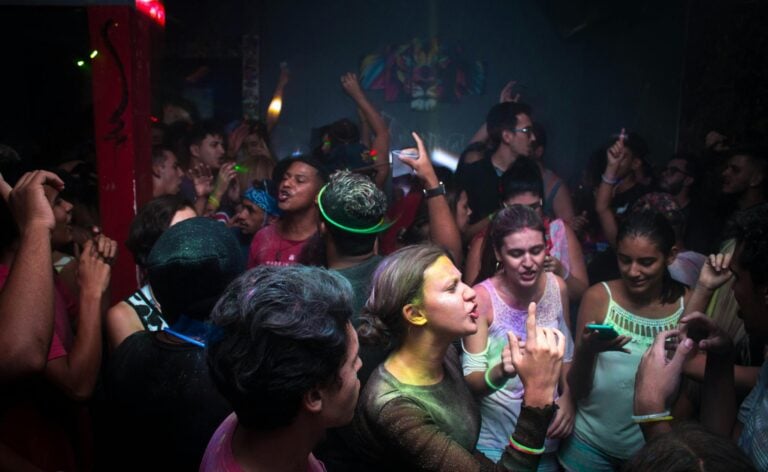

Yes, autistic women do struggle with social anxiety, and at rates that are significantly higher than the general population. What makes this particularly complex is that many autistic women spend years, sometimes decades, masking their neurological differences so effectively that neither they nor the people around them recognize what’s actually happening beneath the surface.
Social anxiety in autistic women often looks different from the textbook version. It isn’t always the visible trembling before a presentation or the obvious avoidance of crowds. Sometimes it’s the quiet exhaustion after a dinner party where you performed every social script flawlessly but felt completely hollow afterward. Sometimes it’s the dread that builds not from shyness but from the cognitive labor of decoding what everyone around you seems to understand intuitively.
Understanding this overlap matters because misidentification leads to the wrong support, the wrong treatment, and a lot of unnecessary suffering. Getting the picture right changes everything for the women living inside it.

If you’re exploring the broader territory of anxiety, sensory sensitivity, and emotional experience as an introvert or neurodivergent person, our Introvert Mental Health Hub is a good place to orient yourself. The articles there cover a range of overlapping experiences that often get conflated or missed entirely.
Why Autistic Women Are Especially Vulnerable to Social Anxiety
Autism presents differently across genders, and that difference has real consequences for how women experience social settings. Many autistic women develop what researchers call “camouflaging” or “masking,” a learned set of behaviors that allow them to blend into neurotypical social environments. They study social cues the way someone might study a foreign language, building mental scripts for conversations, mirroring body language, and suppressing behaviors that might draw attention.
What’s your personality type?
Take our free 40-question assessment and get a detailed personality profile with dimension breakdowns, context analysis, and personalised insights.
Discover Your Type8-12 minutes · 40 questions · Free
On the surface, this looks like social competence. Underneath, it’s an enormous cognitive load. And when the performance ends, the cost becomes visible: exhaustion, emotional flatness, sometimes a kind of identity confusion from spending so many hours being someone slightly different from who you actually are.
I think about this from my own experience as an INTJ who spent the better part of two decades running advertising agencies. I wasn’t autistic, but I understood the performance. Every client meeting, every new business pitch, every team offsite required me to show up in a mode that didn’t come naturally. I’d watch extroverted colleagues move through those rooms with what looked like genuine ease, and I’d construct my version of that ease from the outside in. I was good at it. But I was also exhausted by it in ways I couldn’t fully explain to people who found those environments energizing.
For autistic women, that performance is more fundamental and more constant. It’s not just professional code-switching. It’s a baseline requirement for getting through the day without being misread, judged, or excluded. That sustained effort creates a specific kind of anxiety: not the fear of failure exactly, but the fear of the mask slipping.
What Does Social Anxiety Actually Look Like in Autistic Women?
Social anxiety in the clinical sense involves persistent fear of social situations where one might be scrutinized or judged negatively. The American Psychological Association describes it as more than ordinary shyness, a pattern of avoidance and distress that interferes meaningfully with daily life. In autistic women, that pattern often gets complicated by the masking layer.
An autistic woman with social anxiety might not avoid social situations at all. She might attend every event, participate in every meeting, and appear entirely comfortable. What’s invisible is the preparation that preceded it, the mental rehearsal of likely conversations, the exit strategies mapped out in advance, the recovery time needed afterward. The anxiety isn’t absent. It’s been routed underground.
Some common presentations include:
- Intense post-social exhaustion that goes beyond ordinary introvert recharge time
- Rumination after social interactions, replaying conversations for signs of having said the wrong thing
- A specific fear of being “found out” as different, rather than a general fear of judgment
- Physical symptoms (nausea, heart racing, sleep disruption) before anticipated social events
- Avoidance of unscripted social situations, like spontaneous phone calls or drop-in visits
- Difficulty distinguishing between genuine social preference and anxiety-driven avoidance
That last point is one of the more painful ones. Many autistic women genuinely enjoy solitude and genuinely prefer smaller, deeper social connections. But when anxiety is layered on top of those authentic preferences, it becomes hard to know which is which. Am I staying home because I want to, or because I’m afraid? That ambiguity itself becomes a source of distress.
The Sensory Dimension That Gets Overlooked
One thing that distinguishes social anxiety in autistic women from the standard clinical picture is the sensory component. Many autistic women experience heightened sensory sensitivity, meaning that the physical environment of social situations adds a layer of overwhelm that has nothing to do with fear of judgment and everything to do with nervous system load.
A crowded restaurant isn’t just socially demanding. It’s loud, brightly lit, full of competing smells, and requires tracking multiple conversations simultaneously. By the time the social performance begins, the sensory system is already working overtime. What looks like social anxiety from the outside may partly be sensory overload that makes the social component feel impossible to manage.
This intersection is something I’ve explored in the context of highly sensitive people as well. The experience of HSP overwhelm and sensory overload shares significant terrain with what autistic women describe, even though the underlying neurological mechanisms differ. Both involve a nervous system that processes environmental input more intensely than average, and both require deliberate management strategies rather than simple willpower.
When I was running a mid-sized agency in Chicago, we had an open-plan office that was considered progressive at the time. Glass walls, communal tables, music playing in the creative department. I watched several people on my team, particularly the women who were quieter and more internally oriented, become visibly depleted by midafternoon in ways that their louder colleagues didn’t. I didn’t have the vocabulary for it then. I thought it was about personality or work style. Now I understand that the environment itself was a source of drain, and for some people, that drain was substantial enough to affect everything else.
How Masking Creates a Feedback Loop of Anxiety
Here’s something worth sitting with: masking doesn’t just hide anxiety. It generates it.
When an autistic woman spends years suppressing her natural responses, modulating her reactions, and performing a version of herself that fits neurotypical expectations, she’s essentially training herself to distrust her own instincts. The internal message becomes: how I naturally respond is wrong, so I must always monitor and correct. That’s not a neutral cognitive habit. It’s a setup for chronic self-surveillance, which is one of the core features of social anxiety.
The published literature on autistic masking points to significant links between camouflaging behaviors and poorer mental health outcomes, including higher rates of anxiety and depression. The effort of sustained masking is correlated with burnout, a state where the ability to maintain the performance collapses entirely, often leaving autistic women unable to function in the ways they previously could.
Autistic burnout looks different from ordinary stress. It’s not fixed by a weekend off or a vacation. It’s a deeper depletion that requires extended recovery, and it often arrives after a period where the person appeared to be functioning well. From the outside, the collapse seems sudden. From the inside, it’s been building for a long time.
The anxiety that precedes burnout often includes a quality that’s worth naming: it’s not just fear of what might happen socially. It’s a deeper fear about sustainability. Can I keep doing this? What happens if I can’t? Those questions carry a weight that ordinary social anxiety doesn’t typically involve.
The Emotional Processing Layer
Autistic women often have rich, intense emotional lives that don’t always match the stereotype of flat affect or emotional disconnection. Many experience emotions deeply and process them extensively, sometimes long after the triggering event has passed. This creates a particular relationship with social anxiety because every difficult social interaction gets replayed, analyzed, and felt again.
That kind of thorough emotional processing can be a genuine strength. It supports empathy, self-awareness, and the ability to understand situations from multiple angles. But when it’s fueled by anxiety, it becomes rumination: the same conversation reviewed dozens of times not to understand it better but because the nervous system won’t release it.
One of the more painful aspects of this pattern is that autistic women are often exquisitely attuned to social dynamics, even when they struggle to participate in them fluently. They notice things. They pick up on subtle shifts in tone, small inconsistencies between what someone says and how they say it, the slight change in a colleague’s expression that signals something has shifted. That attunement is real and often accurate. But without a way to process or act on those observations, it feeds anxiety rather than relieving it.
I managed a creative director once who had this quality in a striking way. She could read a client room better than anyone I’d worked with, sensing when enthusiasm was genuine versus polite, when a decision had already been made before the meeting started. She described it as exhausting, knowing things she couldn’t always explain or act on. Her social awareness was high but her confidence in social situations was low, and that gap created a specific kind of distress that I didn’t fully understand at the time.

Empathy, Social Reading, and the Anxiety That Follows
There’s a persistent misconception that autistic people lack empathy. The reality is considerably more complicated. Many autistic women experience what’s sometimes called hyperempathy: an intense emotional response to the feelings of others that can be overwhelming rather than absent. They absorb the emotional temperature of a room, feel other people’s distress acutely, and often struggle to separate their own emotional state from the states of those around them.
This is a quality that empathy as a double-edged experience captures well: the same sensitivity that allows deep connection also creates vulnerability to emotional flooding. In social situations, this means that an autistic woman isn’t just managing her own anxiety. She’s also absorbing and processing the emotional states of everyone in the room, often without the ability to turn that off.
The research on autism and emotional processing suggests that the relationship between autism and empathy is far more nuanced than early clinical descriptions implied. The difficulty isn’t typically in feeling what others feel. It’s often in the cognitive translation, understanding the social rules and expectations that govern how those feelings should be expressed and responded to.
For autistic women with social anxiety, this creates a specific bind: they feel the social situation intensely, they care deeply about getting it right, and they’re uncertain about the rules. That combination is an anxiety generator. The caring without the certainty produces constant vigilance, and constant vigilance is exhausting.
When Perfectionism Becomes Part of the Pattern
Many autistic women develop perfectionism as a coping mechanism. If the social rules are unclear, one response is to try to execute them flawlessly. If you can’t be certain you’re reading the situation correctly, you can at least ensure that your performance is technically impeccable. This produces a kind of anxious striving that looks like high standards from the outside but feels like survival from the inside.
The perfectionism trap is something many sensitive, high-achieving people fall into, and autistic women are particularly susceptible because their perfectionism often has a specific social function. It’s not about achievement for its own sake. It’s about reducing the risk of exposure, of being seen as different, of having the mask slip at the wrong moment.
In my agency years, I saw this pattern in some of the most talented people I worked with. The ones who reviewed their work obsessively before sharing it, who prepared for client calls with a thoroughness that went beyond what the situation required, who seemed to need everything to be right before they could feel safe presenting it. I understood that impulse. My own INTJ tendency toward thoroughness had a similar flavor, though mine was more about intellectual standards than social safety. For them, the stakes felt more personal and more fragile.
Perfectionism in this context is worth treating with compassion rather than simply reframing as a cognitive distortion. It developed for a reason. It served a protective function. The work of addressing it involves understanding what it was protecting against, not just challenging the thinking patterns it produces.
Rejection Sensitivity and Its Particular Weight
Rejection sensitivity is common in autistic women and adds another dimension to how social anxiety operates. The fear isn’t just of performing poorly in social situations. It’s of being excluded, dismissed, or seen as fundamentally wrong in some way that can’t be corrected.
Many autistic women describe a history of social rejection that began early, often before they understood why they were different or what that difference meant. Childhood experiences of being left out, misread, or bullied for responses that felt natural to them leave marks that shape how adult social situations feel. Every new social environment carries an echo of those earlier ones.
The process of processing and healing from rejection is genuinely difficult when the rejection has been chronic and identity-level. It’s one thing to recover from a single painful social experience. It’s another to work through a pattern that has reinforced the message, again and again, that who you are doesn’t quite fit.
What makes this particularly complex for autistic women is that the rejection often came not from cruelty but from incomprehension. People didn’t understand them. They responded to their differences with confusion, avoidance, or mild hostility, not necessarily with malice. That doesn’t make the impact less significant. If anything, it makes it harder to process, because there’s no clear villain, just a world that didn’t have room for the way you were wired.

Late Diagnosis and the Anxiety It Explains
A significant number of autistic women receive their diagnosis in adulthood, sometimes in their thirties, forties, or later. Before that diagnosis, they’ve often spent years trying to understand why social situations feel so much harder for them than they appear to be for others, why they need so much recovery time, why they feel perpetually on the edge of getting something wrong.
The distinction between introversion, social anxiety, and other neurological differences matters enormously for this population. Many autistic women have been told they’re just shy, or that they have anxiety, or that they’re too sensitive, or that they need to push themselves more. Those framings aren’t wrong exactly, but they’re incomplete. They describe symptoms without addressing the underlying structure.
A late autism diagnosis often brings a complicated mixture of relief and grief. Relief because things finally make sense. Grief because of all the years spent trying to fix something that wasn’t broken, just different. And sometimes anger at the systems and people who should have recognized what was happening sooner.
The anxiety that followed many of these women into adulthood often had a specific quality: it was the anxiety of someone who doesn’t understand the rules of the game but is expected to play it anyway. Once the diagnosis arrives, the anxiety doesn’t disappear, but it becomes possible to address it more accurately. You’re not anxious because you’re weak or broken. You’re anxious because you’ve been running a complex adaptive system under conditions it wasn’t designed for, without adequate support.
What Actually Helps: Approaches Worth Knowing
Support for autistic women with social anxiety works best when it addresses both the autism and the anxiety, rather than treating them as separate problems requiring separate solutions. Approaches that work well for neurotypical social anxiety may need significant adaptation to be useful here.
Cognitive behavioral approaches can be helpful, but they need to account for the fact that some of the “irrational” fears autistic women hold about social situations are grounded in real past experiences. Telling someone that their fear of social judgment is distorted when they’ve experienced actual social rejection repeatedly isn’t just unhelpful. It can feel invalidating in ways that make engagement with treatment harder.
What tends to be more useful:
- Working with a therapist who understands autism in women specifically, not just the male-presenting model that dominated early research
- Addressing masking directly, exploring which behaviors are genuinely protective and which are simply exhausting without significant benefit
- Building in structured recovery time after social demands, not as a luxury but as a non-negotiable requirement
- Finding social environments that are better matched to sensory and processing needs
- Connecting with other autistic women, which can significantly reduce the isolation that feeds anxiety
- Exploring evidence-based treatments for social anxiety in consultation with providers who understand neurodivergence
The frameworks developed for HSP anxiety offer some useful starting points as well, particularly around nervous system regulation and the importance of pacing social engagement rather than forcing through it. The underlying neurology differs, but many of the practical strategies translate.
One thing I’d add from my own experience managing teams of people with varying sensory and social needs: the environment matters as much as the individual. I’ve seen people who struggled in one setting flourish completely in another, not because they changed but because the conditions finally matched how they were built. That’s not a therapeutic insight exactly. It’s an organizational one. But it applies to personal life just as much.
The Overlap with Introversion and High Sensitivity
Autism, introversion, and high sensitivity are distinct experiences, but they share enough overlapping features that they’re frequently confused with each other, and frequently co-occur. An autistic woman may also be introverted. She may also be highly sensitive. Those aren’t contradictions. They’re layers.
What they share is a nervous system that processes input more thoroughly and more intensely than average. Social situations are demanding for all three groups, though for different reasons. Introverts find them draining because they require extraverted energy. Highly sensitive people find them overwhelming because of the sensory and emotional intensity. Autistic women find them demanding because of the cognitive load of decoding and performing social norms, on top of whatever sensory and energy factors are also present.
Understanding these distinctions matters because the support that helps in each case is somewhat different. What works for introvert energy management may not address the specific anxiety patterns of autism. What works for HSP emotional processing may not account for the social decoding challenges that autistic women face. Getting specific about which experience is driving which symptom makes it possible to find support that actually fits.
At the same time, there’s value in recognizing the shared ground. The broader conversation about neurodivergence and mental health has expanded significantly in recent years, and autistic women have been part of pushing that conversation toward more nuance. Their experiences have helped illuminate how much of what gets labeled as anxiety or social difficulty is actually a mismatch between neurological wiring and social environment, not a personal failing.

Moving Toward Recognition Rather Than Performance
The most meaningful shift for many autistic women with social anxiety isn’t learning to perform better. It’s learning to recognize themselves more clearly. That recognition involves understanding which social discomfort is anxiety-driven and which is simply a natural response to environments that don’t suit their neurology. It involves identifying which social connections feel genuinely nourishing versus which feel like obligations to be survived.
It also involves, eventually, some degree of reducing the mask. Not eliminating it entirely, because some social adaptation is practical and appropriate, but loosening it enough to allow for genuine self-expression in at least some contexts. That loosening tends to reduce anxiety over time, even though it can feel terrifying at first. The fear of being seen as different is real. But the cost of never being seen at all is also real, and for many autistic women, that cost has been paid for a very long time.
The APA’s work on shyness and social discomfort makes an important point: social anxiety is not a character trait. It’s a pattern that developed for reasons, and it can change. For autistic women, that change looks different than it does for neurotypical people with social anxiety. It’s less about challenging irrational thoughts and more about building a life that requires less constant performance, finding communities that understand rather than require translation, and developing a relationship with their own neurology that is characterized by understanding rather than shame.
That’s not a small thing. But it’s possible. And for many autistic women, the path there begins with simply having their experience named accurately for the first time.
There’s much more to explore across the territory of introvert mental health, anxiety, and emotional sensitivity. Our Introvert Mental Health Hub brings together articles on the full range of these experiences, including the overlapping spaces where introversion, high sensitivity, and neurodivergence meet.
About the Author
Keith Lacy is an introvert who’s learned to embrace his true self later in life. After 20 years in advertising and marketing leadership, including running agencies and managing Fortune 500 accounts, Keith now channels his experience into helping fellow introverts understand their strengths and build fulfilling careers. As an INTJ, he brings analytical depth and authentic perspective to every article, drawing from both professional expertise and personal growth.
Frequently Asked Questions
Do autistic women struggle with social anxiety more than autistic men?
Many autistic women experience social anxiety at high rates, and some evidence suggests they may be particularly affected because of the additional burden of masking. Autistic women often feel greater pressure to conform to social expectations and spend more energy performing neurotypical behaviors, which compounds the anxiety that social situations already generate. Autistic men are certainly not immune to social anxiety, but the specific dynamics of masking and late diagnosis tend to be more pronounced in women, which shapes how social anxiety develops and presents.
Can social anxiety in autistic women be mistaken for something else?
Yes, frequently. Autistic women with social anxiety are often misdiagnosed with generalized anxiety disorder, depression, borderline personality disorder, or simply labeled as shy or highly sensitive. Because autistic women often mask effectively, clinicians may not recognize the underlying autism, and without that piece of the picture, the anxiety treatment they receive may not address its actual sources. Accurate diagnosis requires clinicians who understand how autism presents in women specifically, which differs considerably from the male-presenting model that dominated early autism research.
What is autistic masking and how does it relate to anxiety?
Autistic masking refers to the learned behavior of suppressing or hiding autistic traits in order to appear neurotypical in social settings. It includes things like scripting conversations in advance, forcing eye contact, mirroring others’ body language, and suppressing stimming behaviors. Masking is cognitively demanding and emotionally costly. Over time, it generates anxiety rather than relieving it, because it requires constant self-monitoring and creates a persistent fear of the mask slipping. Many autistic women who mask extensively experience burnout, a state of deep depletion that can take extended time to recover from.
Is there a connection between sensory sensitivity and social anxiety in autistic women?
Yes, and it’s an important one that often gets overlooked in standard social anxiety discussions. Many autistic women experience heightened sensory sensitivity, meaning that the physical environment of social situations adds significant nervous system load before the social performance even begins. A loud restaurant, a crowded event, or a brightly lit office can push the sensory system into overwhelm, making the social demands of those environments feel impossible to manage. What looks like social anxiety from the outside may partly or substantially be sensory overload, and addressing that sensory dimension is an important part of effective support.
What kind of support helps autistic women with social anxiety?
Support works best when it addresses both the autism and the anxiety together, rather than treating them separately. Working with therapists who understand autism in women is important, as is exploring how masking contributes to anxiety and identifying which masking behaviors are genuinely useful versus simply exhausting. Building in structured recovery time after social demands, finding social environments better matched to sensory needs, and connecting with other autistic women can all be meaningful. Standard cognitive behavioral approaches for social anxiety may need adaptation to account for the fact that many autistic women’s social fears are grounded in real past experiences rather than distorted thinking.