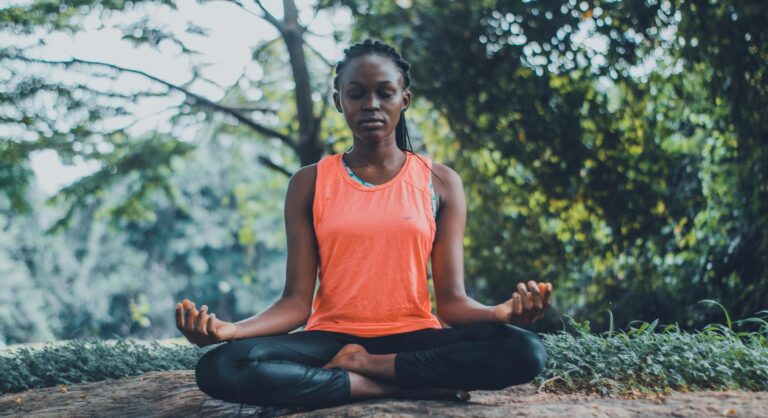

CBD may help reduce some symptoms of social anxiety disorder by interacting with serotonin receptors in the brain, which play a role in regulating mood and fear responses. Early evidence suggests it could take the edge off acute anxiety in social situations, though it is not a replacement for therapy or other established treatments. What it actually does, and whether it is right for you, depends on factors most quick-answer articles tend to gloss over.
Social anxiety disorder is not the same as being shy or introverted. It is a clinical condition that can make ordinary interactions feel genuinely threatening, and for many people who also happen to be introverts or highly sensitive, the overlap gets complicated fast. Over the years I have watched colleagues, team members, and people in my own community struggle with this in ways that were invisible to everyone around them, including me, until I started paying closer attention to my own internal experience.
If you are exploring whether CBD might be part of managing social anxiety, this article is meant to give you an honest, grounded look at what the evidence actually says, how it might interact with the introvert or HSP experience, and what else deserves your attention alongside it.
Much of what I write about here connects to a broader conversation about mental health and personality. Our Introvert Mental Health Hub covers anxiety, sensory sensitivity, emotional processing, and more, and it is worth bookmarking if you are doing deeper reading on any of these topics.

What Is Social Anxiety Disorder, Really?
Social anxiety disorder goes well beyond feeling nervous before a big presentation. According to the American Psychological Association, it involves persistent, intense fear of social situations where a person might be scrutinized, judged, or embarrassed. That fear is disproportionate to the actual situation, and it tends to interfere significantly with daily life.
What’s your personality type?
Take our free 40-question assessment and get a detailed personality profile with dimension breakdowns, context analysis, and personalised insights.
Discover Your Type8-12 minutes · 40 questions · Free
What makes it particularly confusing for introverts is that some of the surface behaviors look similar. Avoiding parties, preferring one-on-one conversations, needing time alone to recharge. But introversion is a preference, not a fear. Social anxiety is a fear response. The distinction matters enormously when you are trying to figure out what kind of support you actually need.
Early in my advertising career, I managed a team of about twelve people. One of my account directors was brilliant at strategy but would go completely silent in client presentations. I assumed she was introverted and needed encouragement. It took me an embarrassingly long time to recognize that what she was experiencing was closer to dread than preference. She was not conserving energy. She was managing a threat response. Once I understood that difference, I approached her development completely differently, and she eventually became one of the most effective client-facing people on my team, with the right support in place.
The APA’s overview of shyness and social anxiety makes clear that these are related but distinct experiences, and that social anxiety disorder is a diagnosable condition with specific clinical criteria. If you are unsure which category your experience falls into, a conversation with a mental health professional is genuinely worth having.
How Does CBD Interact With Anxiety in the Brain?
CBD, short for cannabidiol, is a compound derived from the cannabis plant. Unlike THC, it does not produce a high. What it does do is interact with the body’s endocannabinoid system, a network of receptors involved in regulating mood, stress, sleep, and immune function.
One of the more studied mechanisms involves CBD’s interaction with 5-HT1A serotonin receptors. Serotonin plays a significant role in mood regulation, and many conventional anxiety medications work on similar pathways. CBD appears to act as a partial agonist at these receptors, which means it may help modulate the anxiety response without the more aggressive pharmacological profile of prescription medications.
A review published in PubMed Central examined the available evidence on CBD and anxiety-related disorders. The findings were cautiously promising. CBD showed potential for reducing anxiety in both animal models and in some human trials, particularly for acute situational anxiety. The authors were careful to note that most human studies have been small, and that long-term effects and optimal dosing remain poorly understood.
Another PubMed Central review looked specifically at CBD’s effects on social anxiety disorder. Participants who received CBD before a simulated public speaking test showed reduced anxiety, cognitive impairment, and discomfort compared to placebo. That is a meaningful finding, even if it comes with the usual caveats about sample size and controlled conditions.
What this means practically is that CBD may help take the acute edge off social anxiety in specific situations. It is probably not rewiring anything at a deep neurological level, and it is certainly not addressing the underlying patterns of thought and avoidance that maintain social anxiety over time.

Why Introverts and HSPs May Experience This Differently
Here is where I want to slow down, because this is the part that most articles on CBD and anxiety skip entirely.
Highly sensitive people, those who process sensory and emotional information more deeply than average, often carry a nervous system that is already running at a higher baseline. Social situations that feel mildly uncomfortable to someone with average sensitivity can feel genuinely overwhelming to an HSP. That is not weakness. It is wiring. But it does mean that the experience of social anxiety, and the experience of any intervention including CBD, may feel more intense and more layered.
If you have ever walked into a loud networking event and felt your entire system go into overload within minutes, you probably understand what I mean. That kind of HSP overwhelm and sensory overload is not the same as social anxiety disorder, but the two can stack on top of each other in ways that are genuinely hard to untangle.
As an INTJ, I tend to process internally and quietly. My anxiety, when it shows up, is rarely visible from the outside. I am not the person visibly shaking before a pitch meeting. I am the one who has run every possible failure scenario through my head three days in advance and arrived at the meeting looking calm while internally managing a fairly elaborate threat assessment. What I have noticed over the years is that my sensitivity to stimulation, both environmental and interpersonal, means I need to be thoughtful about anything I put into my system, including supplements and compounds like CBD.
For HSPs specifically, the anxiety piece is often deeply connected to emotional processing. The way HSP anxiety tends to work is that it is not just situational. It is woven into how the nervous system absorbs and holds experience. CBD might soften the edges of a particular moment, but it does not change the underlying depth of processing that makes HSPs both extraordinarily perceptive and sometimes exhausted by their own inner world.
That depth of processing is also connected to something that is genuinely a strength. The way HSPs engage in emotional processing and feeling deeply gives them a capacity for empathy and insight that most people never develop. Any conversation about managing anxiety in this population has to hold both truths at once: the difficulty and the gift.
What the Evidence Actually Supports (And What It Doesn’t)
Being honest about the limits of the evidence matters here, because the CBD market is full of overclaiming.
What the evidence reasonably supports: CBD may reduce acute anxiety in controlled social situations. It appears to be well-tolerated by most people. It does not produce the dependency concerns associated with benzodiazepines. Some people report subjective improvement in their ability to engage socially after using CBD, particularly at moderate doses.
What the evidence does not support: CBD as a standalone treatment for social anxiety disorder. CBD as a replacement for cognitive behavioral therapy, which remains the most evidence-backed approach for this condition. CBD as something that works the same way for everyone, at every dose, in every context.
Harvard Health has a useful overview of social anxiety disorder treatments that puts CBD in appropriate context alongside therapy, medication, and lifestyle strategies. It is a grounding read if you are early in the process of figuring out what kind of support makes sense for you.
One thing I have learned from two decades of making decisions in high-stakes environments is that the most dangerous choices are the ones that feel like complete solutions. CBD might be a useful tool. Treating it as a cure would be a mistake.

The Empathy Layer: When Social Anxiety Meets High Sensitivity
Something I have observed in myself and in people I have worked closely with over the years is that social anxiety often gets amplified when it intersects with high empathy. When you are acutely tuned in to other people’s emotional states, social situations carry more information and more weight. You are not just managing your own anxiety. You are absorbing the room.
I once managed a creative director who had this quality in abundance. She was one of the most gifted people I have worked with, but client meetings cost her enormously. She was not just presenting work. She was tracking every micro-expression, every shift in tone, every moment of hesitation from the client side. That level of attunement is extraordinary in a creative context and genuinely exhausting in a social performance context.
That experience reflects something worth understanding about HSP empathy as a double-edged sword. The same capacity that makes highly sensitive people exceptional collaborators and communicators can make social situations feel like running a marathon while everyone else is taking a casual walk.
For people in this category, CBD might offer some relief from the physiological arousal that accompanies social situations. But the empathy piece, the depth of attunement that makes social interaction so rich and so tiring, is not something a compound is going to change. That requires a different kind of work, including setting clearer limits on social exposure and building recovery time into your life with genuine intention.
There is also a perfectionism dimension worth naming. Many people with social anxiety carry an internal standard for how they should perform socially that is essentially impossible to meet. The fear of falling short of that standard is part of what drives the avoidance. For HSPs, that tendency toward HSP perfectionism and high standards can make social anxiety significantly worse, because every interaction becomes a test they are terrified of failing.
CBD does not address perfectionism. Therapy does. That distinction is important.
Rejection Sensitivity and Why It Matters in This Conversation
One of the core features of social anxiety disorder is the fear of negative evaluation. What that often means in practice is an acute sensitivity to rejection, real or perceived. A slightly flat response from a colleague, a conversation that ends abruptly, an email that takes longer than expected to get a reply. For someone with social anxiety, these moments can trigger a cascade of self-doubt that takes hours or days to settle.
For HSPs, this is compounded by the depth of emotional processing I mentioned earlier. Understanding how HSP rejection sensitivity works, and building specific strategies for processing those moments, is a meaningful part of managing social anxiety over the long term.
I am not immune to this. Running agencies means pitching constantly, and pitching means losing sometimes. Early in my career, a lost pitch would sit with me for days. I would replay every moment, looking for where I had misread the room or said the wrong thing. Over time I got better at separating the professional analysis, which is useful, from the personal wound, which is not. But that took deliberate work, not a supplement.
CBD might reduce the physiological spike of anxiety in the moment of rejection. What it cannot do is help you build a more grounded relationship with your own worth that does not depend on external validation. That is the harder and more important work.
Psychology Today has a thoughtful piece on introversion, social anxiety, and the overlap between them that is worth reading if you are trying to sort out which parts of your experience belong to which category.

Practical Considerations If You Are Thinking About Trying CBD
If you are considering CBD as part of your approach to social anxiety, a few things are worth keeping in mind.
Quality varies enormously. The CBD market is largely unregulated, and what is on the label is not always what is in the bottle. Look for products that have third-party lab testing and a clear certificate of analysis. Full-spectrum, broad-spectrum, and isolate products behave differently, and the research that exists is mostly on CBD isolate or pharmaceutical-grade CBD, not the full range of retail products.
Dosing is genuinely unclear. The studies that have shown anxiolytic effects have used a wide range of doses, and what works for one person may not work for another. Starting low and adjusting slowly is a reasonable approach, and doing it in consultation with a healthcare provider is better still.
Timing matters. Some people use CBD as a daily supplement. Others use it situationally before high-anxiety events. The research on acute situational use is somewhat stronger than the research on daily maintenance use for social anxiety specifically.
It interacts with other medications. CBD can affect how your liver processes certain drugs, including some commonly prescribed for anxiety and depression. If you are on any medication, this is not optional information to discuss with your doctor. It is essential.
And perhaps most importantly: CBD works best as a complement to evidence-based treatment, not a replacement for it. Cognitive behavioral therapy, particularly exposure-based approaches, has the strongest track record for social anxiety disorder. Medication options including SSRIs and SNRIs have established evidence behind them. CBD sits in a different category, promising but not yet proven at the level those treatments are.
Building a Broader Approach That Actually Works
What I have come to believe, both from my own experience and from watching many people work through anxiety over the years, is that the most effective approaches are layered. No single intervention does everything. The people I have seen make real progress with social anxiety are the ones who combine professional support with lifestyle changes, self-awareness practices, and sometimes supplementary tools like CBD in a thoughtful way.
As an INTJ, I am naturally inclined toward systems thinking. My approach to my own anxiety has always been analytical: identify the pattern, understand the mechanism, test an intervention, evaluate the result. That works reasonably well for some things. What it took me longer to accept is that anxiety, especially the kind rooted in deep sensitivity and social threat perception, does not always respond to logic. Sometimes the body needs to be worked with directly, through movement, rest, breath, and yes, sometimes through compounds that help regulate the physiological response.
The introvert and HSP community has a particular tendency toward intellectualizing anxiety, thinking our way around it rather than through it. CBD, at its best, might help interrupt the physiological loop long enough to do the deeper work. At its worst, it becomes another way of managing symptoms without addressing the underlying patterns.
What the DSM-5 criteria for social anxiety disorder, outlined in the American Psychiatric Association’s documentation, make clear is that this is a clinical condition with specific diagnostic thresholds. If you meet those criteria, you deserve clinical-level support, not just a supplement and a coping strategy list.
For a broader look at how introversion, sensitivity, and anxiety intersect across different life experiences, the full collection of articles in our Introvert Mental Health Hub covers the territory in depth and is a useful resource to return to as your understanding develops.
About the Author
Keith Lacy is an introvert who’s learned to embrace his true self later in life. After 20 years in advertising and marketing leadership, including running agencies and managing Fortune 500 accounts, Keith now channels his experience into helping fellow introverts understand their strengths and build fulfilling careers. As an INTJ, he brings analytical depth and authentic perspective to every article, drawing from both professional expertise and personal growth.
Frequently Asked Questions
Does CBD actually help with social anxiety disorder?
CBD shows early promise for reducing acute anxiety in social situations, based on small human trials and animal studies. It appears to interact with serotonin receptors in ways that may soften the fear response. That said, it is not a clinically proven treatment for social anxiety disorder, and it works best as a complement to therapy rather than a standalone solution.
Is social anxiety disorder the same thing as introversion?
No. Introversion is a preference for quieter, less stimulating environments and a tendency to recharge through solitude. Social anxiety disorder is a clinical condition involving intense fear of social situations and significant impairment in daily functioning. The two can coexist, and many introverts do experience social anxiety, but they are distinct experiences with different causes and different needs.
How much CBD would someone take for social anxiety?
There is no established standard dose for social anxiety specifically. Studies have used a wide range of doses, and individual responses vary considerably. Starting with a low dose and adjusting gradually, ideally with guidance from a healthcare provider, is the most sensible approach. CBD also varies significantly by product type and quality, which affects how it behaves in the body.
Can highly sensitive people use CBD safely?
HSPs often have a more reactive nervous system, which can mean greater sensitivity to supplements and compounds including CBD. Some HSPs report that lower doses are more effective for them, while others find certain CBD products overstimulating. As with any supplement, starting low and paying close attention to your own response is important. Consulting a healthcare provider is especially worthwhile if you are on any existing medications.
What treatments have the strongest evidence for social anxiety disorder?
Cognitive behavioral therapy, particularly exposure-based approaches, has the most consistent evidence base for social anxiety disorder. Certain medications including SSRIs and SNRIs also have strong clinical support. Lifestyle factors including regular physical activity, sleep quality, and stress management contribute meaningfully. CBD sits in a supplementary role, potentially useful for some people in specific situations, but not at the same level of evidence as therapy or established medications.