
Social anxiety is far more widespread than most people realize. Estimates from major health organizations suggest it affects roughly 7 to 13 percent of the global population at some point in their lives, making it one of the most common anxiety-related conditions in the world. For introverts especially, those numbers carry a particular weight, because the line between “I prefer quiet” and “I’m genuinely afraid of social situations” can feel blurry in ways that matter deeply to how we understand ourselves.
Sitting with that statistic for a moment, I think about how many people I’ve worked alongside over two decades in advertising who were quietly managing something much heavier than shyness. I was one of them, though I didn’t have language for it at the time.
If you’ve ever wondered whether what you feel in social situations is “normal” or something more, you’re asking exactly the right question. Our Introvert Mental Health hub exists precisely because these questions deserve real, thoughtful answers, not dismissal or oversimplification. Social anxiety touches an enormous portion of the population, and introverts are often left to sort through it without adequate context for their specific experience.
Why Are the Numbers So Much Higher Than People Expect?
When most people think about social anxiety, they picture someone who can barely leave the house or who freezes completely in conversation. That image, while real for some, captures only the most visible end of the spectrum. The actual reach of social anxiety is considerably broader, and that’s part of why the numbers surprise so many people when they first encounter them.
What’s your personality type?
Take our free 40-question assessment and get a detailed personality profile with dimension breakdowns, context analysis, and personalised insights.
Discover Your Type8-12 minutes · 40 questions · Free
Social anxiety disorder, as defined by the American Psychiatric Association’s DSM-5, involves a marked and persistent fear of social or performance situations where a person might be scrutinized by others. The fear is disproportionate to the actual threat, and it causes significant distress or impairment in daily functioning. That last part is important: the condition spans a wide range of presentations, from someone who avoids all social contact to someone who pushes through every obligation but pays an enormous internal cost afterward.
I managed a creative director at one of my agencies who fit that second description almost perfectly. She showed up to every client presentation, delivered brilliant work, and then went home and, by her own account, spent the rest of the evening in a kind of recovery state that she couldn’t fully explain. From the outside, she looked confident. From the inside, she was exhausted in a way that went well beyond tiredness. That gap between performance and internal experience is where a lot of social anxiety lives, and it’s why prevalence figures tend to catch people off guard.
The American Psychological Association notes that anxiety disorders as a category are among the most common mental health concerns in the United States. Social anxiety disorder specifically tends to emerge in adolescence, which means many adults have been carrying it for years, often without a name for what they’re experiencing.
Who Is Most Likely to Be Affected?
Social anxiety does not discriminate cleanly by personality type, but certain traits do appear to cluster with higher rates of social anxiety. Highly sensitive people are one group worth examining closely here. The trait of high sensitivity, characterized by deeper processing of sensory and emotional information, can amplify the social threat response in ways that create fertile ground for anxiety.
If you’re someone who processes emotions with particular depth and intensity, social situations carry more weight. Every glance, pause, or shift in tone gets filtered through a more finely tuned internal system. That’s not a flaw, but it does mean the stakes of social interaction feel higher, and higher stakes can feed anxiety over time.
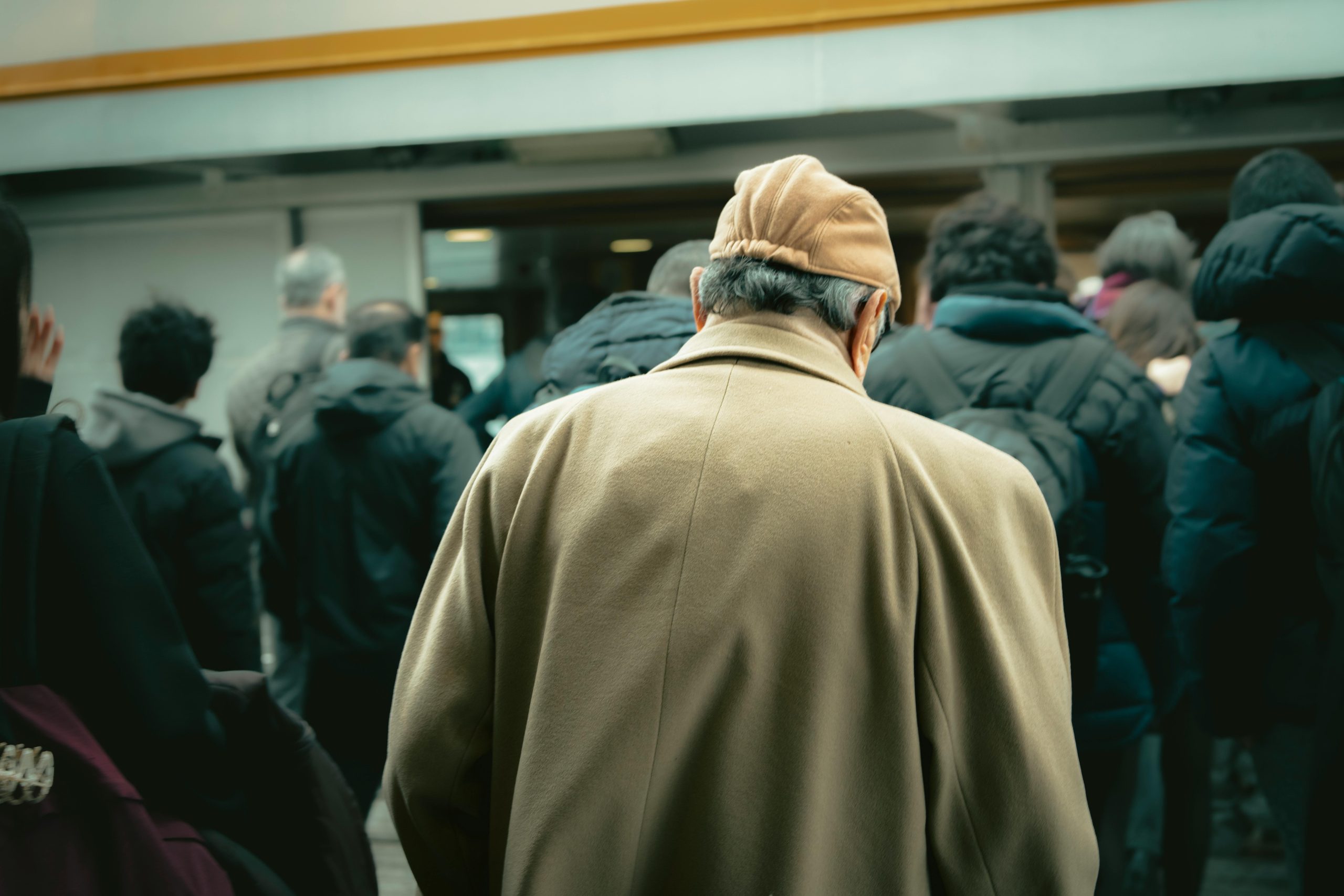
Highly sensitive people also tend to experience sensory and emotional overwhelm in crowded or stimulating environments, which can make social settings feel genuinely threatening rather than merely tiring. The overlap between high sensitivity and social anxiety is real, though the two are distinct. Not every HSP has social anxiety, and not every person with social anxiety is highly sensitive. Still, the intersection is significant enough that it deserves attention when we talk about who carries this condition.
Gender patterns show up in the data too. Women are diagnosed with social anxiety disorder at higher rates than men in most population studies, though some researchers suggest men may underreport symptoms due to social expectations around vulnerability. Age of onset tends to fall in the early teenage years, which means the condition often shapes people’s formative social experiences before they have any framework for understanding what’s happening.
Introverts as a group don’t have higher rates of social anxiety simply because they’re introverted. The distinction between introversion and social anxiety is real and meaningful. Introverts prefer less stimulation and recharge through solitude. People with social anxiety fear negative evaluation and feel distress in social situations. Those are genuinely different things. Yet because introverts often avoid large social gatherings and need time alone after socializing, the symptoms can look similar from the outside, which sometimes leads to misidentification in both directions.
What Does Living With Social Anxiety Actually Cost?
Prevalence numbers tell part of the story. What they don’t always capture is the cumulative weight of living with social anxiety across a career, a relationship, a life. I’ve thought about this a lot, particularly in relation to my own years of performing extroversion in a role that demanded constant client contact, team leadership, and public presentation.
Running an advertising agency means you’re always on. New business pitches, client dinners, industry conferences, award ceremonies. For someone who is already wired to process the world deeply and quietly, that volume of social performance is taxing in a baseline sense. Add genuine anxiety about how you’re being perceived, and the cost compounds quickly. I didn’t always distinguish between introvert fatigue and something closer to anxiety. Looking back, there were periods when what I felt before major presentations wasn’t just preference-based discomfort. It had a sharper edge.
Social anxiety carries real professional consequences. People avoid opportunities that require visibility. They decline to speak up in meetings, pass on leadership roles, or steer away from careers that might otherwise suit them. One of the most quietly painful aspects of social anxiety is that it often targets the exact moments that matter most, presentations, interviews, introductions, the moments where showing up fully would actually move your life forward.
There’s also an empathy dimension worth naming. Many people with social anxiety are acutely attuned to others, picking up on subtle social cues with considerable precision. That attunement can be a genuine strength, but it can also mean that empathy becomes a source of exhaustion rather than connection. When you’re simultaneously managing your own anxiety and absorbing the emotional states of everyone around you, social situations become genuinely depleting in ways that are hard to explain to people who don’t experience them.
How Social Anxiety Intersects With Other Traits Common in Introverts
One thing I’ve noticed, both in my own experience and in watching people I’ve managed over the years, is that social anxiety rarely travels alone. It tends to show up alongside other traits that are themselves common in introverts and highly sensitive people.

Perfectionism is one of the most common companions. When you’re already worried about how others perceive you, the pressure to perform flawlessly in social situations intensifies. The trap of impossibly high standards and social anxiety reinforce each other in a loop that’s genuinely difficult to break. You fear judgment, so you try to be perfect. Perfection is impossible, so you fear judgment more. I watched this pattern play out in a junior copywriter I managed early in my career. Brilliant thinker, almost paralyzed before client reviews. The anxiety wasn’t about the work. It was about the moment of being seen.
Rejection sensitivity is another significant factor. For many people with social anxiety, the anticipated pain of rejection is so vivid and so immediate that it shapes behavior well before any actual rejection occurs. The brain essentially rehearses the worst outcome so thoroughly that avoidance starts to feel like the only rational response. Processing and healing from rejection is a distinct skill, and one that doesn’t come naturally to people whose nervous systems are already primed for threat detection in social contexts.
There’s also the anxiety that comes specifically from being misread. Introverts who are quiet in group settings are often perceived as aloof, arrogant, or disengaged. For someone with social anxiety, that misreading isn’t just annoying. It’s evidence that their fear of negative evaluation was justified. That confirmation loop can make social anxiety progressively harder to challenge over time.
The American Psychological Association’s overview of shyness and social anxiety draws useful distinctions between shyness (a temperament trait), introversion (a preference for lower stimulation), and social anxiety disorder (a clinical condition involving fear and impairment). Understanding which category applies, or whether multiple factors are at play, matters for how a person approaches their own experience.
Why Do So Many Cases Go Unrecognized for Years?
One of the most striking things about social anxiety prevalence is not just how many people have it, but how long many of them carry it without recognition or support. There are several reasons this happens, and most of them are rooted in how the condition presents in real life rather than in clinical descriptions.
First, high-functioning social anxiety is genuinely hard to spot from the outside. People develop coping strategies, sometimes very effective ones, that allow them to participate in social life while managing significant internal distress. They show up. They perform. They even appear confident. The cost is invisible to everyone except themselves.
Second, for introverts especially, the symptoms can be attributed to personality rather than condition. “I’m just an introvert” becomes a complete explanation for behavior that might actually reflect anxiety. That’s not to say introversion isn’t a real and valid explanation for many preferences. It absolutely is. But when introversion becomes a catch-all that prevents someone from examining whether something more is happening, it can delay recognition for years.
Third, anxiety in highly sensitive people often looks different from the textbook presentation. It may show up as physical symptoms, chronic overthinking, difficulty making decisions in social contexts, or a pervasive sense of dread before ordinary interactions. Without a framework that accounts for the HSP dimension, these presentations can be easily missed or misattributed.
I spent the better part of my thirties attributing what I now recognize as anxiety-adjacent responses to simply being an introvert in an extroverted industry. Some of that was accurate. Some of it was a convenient story that kept me from looking more closely. Honest self-examination is uncomfortable, particularly when the thing you might be examining has been your identity for years.

What the Scale of Social Anxiety Tells Us About How We’re Built
When something affects this many people, it’s worth asking what that prevalence actually means. Social anxiety isn’t a modern invention or a symptom of our hyperconnected world, though digital social performance has certainly added new layers to it. The underlying mechanisms are ancient, rooted in the same threat-detection systems that kept our ancestors safe in group contexts where social rejection had genuine survival consequences.
That evolutionary framing doesn’t minimize the suffering that social anxiety causes. It does, though, reframe the experience slightly. A nervous system that is highly attuned to social threat isn’t broken. It’s running a program that was once adaptive, even if that program is now calibrated for a world that no longer exists in the same form. Understanding that distinction can be genuinely useful when you’re trying to relate to your own anxiety with some degree of compassion rather than frustration.
Published work in peer-reviewed psychiatric research has examined how social anxiety disorder affects quality of life across multiple domains, including occupational functioning, relationships, and overall wellbeing. The findings consistently show that the impact extends well beyond the moments of acute anxiety themselves. It shapes how people build careers, form connections, and understand their own potential.
Additional research published through PubMed Central has explored treatment outcomes and the factors that predict whether social anxiety improves over time. One consistent finding is that early recognition and appropriate support significantly improve long-term outcomes. That’s not a small thing when you consider how many people spend years, sometimes decades, managing this condition without either.
What Actually Helps When Social Anxiety Is Part of Your Life
Knowing that social anxiety is widespread doesn’t make it easier to live with, but it does change the context. You’re not uniquely fragile. You’re not failing at something that everyone else finds effortless. You’re part of a much larger group of people whose nervous systems respond to social situations with a level of activation that requires active management.
Cognitive behavioral approaches have the strongest evidence base for social anxiety disorder. The core work involves gradually challenging the avoidance behaviors and cognitive distortions that maintain the anxiety, not by forcing yourself into overwhelming situations, but by building exposure in measured, supported ways. Harvard Health’s overview of social anxiety treatment offers a clear summary of the approaches that have demonstrated effectiveness, including therapy, medication, and combination approaches.
Beyond clinical treatment, there are practical frameworks that many introverts find genuinely useful. Preparation is one of them. As an INTJ, I’ve always leaned heavily on preparation as a tool for managing the uncertainty that social situations carry. Knowing your material, knowing the room, knowing who will be there and what the purpose of the interaction is, all of that reduces the cognitive load in the moment and gives the anxious part of your brain fewer unknowns to fixate on.
Recovery time is another. Social anxiety is exhausting in a way that compounds if you don’t build in genuine restoration. This isn’t weakness. It’s maintenance. The introverts I’ve seen thrive in high-visibility roles over the long term are almost universally good at protecting their recovery time, not as indulgence, but as a strategic necessity.
Community also matters. Finding people who understand the intersection of introversion and anxiety, who don’t push you to “just put yourself out there” as though the solution were simply a matter of willpower, changes the texture of the experience. That kind of understanding is part of what I hope this space provides.

There’s a broader conversation about introversion, anxiety, sensitivity, and mental health worth having, and it’s one we return to regularly across the Introvert Mental Health hub. If this article opened a door for you, there’s considerably more waiting on the other side.
About the Author
Keith Lacy is an introvert who’s learned to embrace his true self later in life. After 20 years in advertising and marketing leadership, including running agencies and managing Fortune 500 accounts, Keith now channels his experience into helping fellow introverts understand their strengths and build fulfilling careers. As an INTJ, he brings analytical depth and authentic perspective to every article, drawing from both professional expertise and personal growth.
Frequently Asked Questions
How many people are affected by social anxiety worldwide?
Estimates vary depending on the population studied and the diagnostic criteria used, but major health organizations generally place the lifetime prevalence of social anxiety disorder between 7 and 13 percent of the global population. That makes it one of the most common anxiety-related conditions in the world. Many more people experience subclinical social anxiety, meaning significant distress and avoidance that doesn’t meet the full diagnostic threshold but still meaningfully affects their lives.
Is social anxiety more common in introverts?
Introversion and social anxiety are distinct traits, and introversion alone does not cause social anxiety. Introverts prefer less stimulation and recharge through solitude, but they don’t necessarily fear social situations or dread negative evaluation. That said, the two can co-occur, and the overlap in some behaviors (avoiding large gatherings, needing time alone after socializing) can make it harder for introverts to recognize when something beyond personality preference is at play. Honest self-examination, and sometimes professional support, helps clarify the distinction.
Why does social anxiety often go undiagnosed for so long?
Several factors contribute to delayed recognition. High-functioning social anxiety can be effectively masked by coping strategies, making it invisible to others. For introverts, symptoms are often attributed to personality rather than condition. In highly sensitive people, anxiety may present through physical symptoms or chronic overthinking rather than obvious social avoidance. And because social anxiety typically emerges in adolescence, many adults have spent years normalizing their experience without ever examining it through a clinical lens.
What is the difference between shyness, introversion, and social anxiety?
Shyness is a temperament trait involving discomfort or inhibition in social situations, particularly with new people. Introversion is a personality orientation involving a preference for lower stimulation and a tendency to recharge through solitude. Social anxiety disorder is a clinical condition involving marked fear of negative evaluation in social or performance situations, causing significant distress or functional impairment. A person can be introverted without being shy, shy without having social anxiety, or any combination of the three. The distinctions matter because they point toward different kinds of support.
What approaches are most effective for managing social anxiety?
Cognitive behavioral therapy has the strongest evidence base for social anxiety disorder, with exposure-based approaches showing particular effectiveness in helping people gradually reduce avoidance and challenge the thought patterns that maintain anxiety. Medication can also be helpful, particularly for more severe presentations, and is often used alongside therapy. Beyond clinical treatment, practical strategies like thorough preparation before social situations, deliberate recovery time afterward, and building community with people who understand the introvert experience can meaningfully reduce the daily burden of social anxiety.