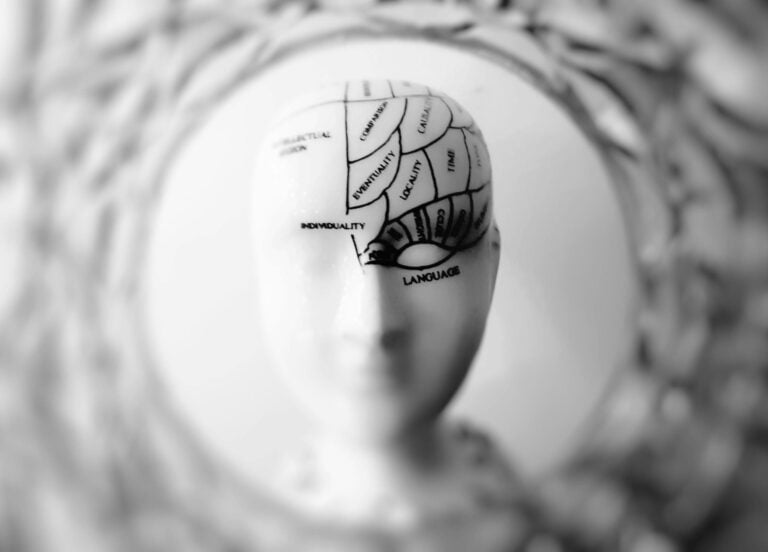

Shyness and social anxiety are not the same thing, even though they can look identical from the outside. Shyness is a personality trait rooted in discomfort and hesitation around unfamiliar people or situations, while social anxiety is a clinical condition defined by intense fear of being judged, humiliated, or rejected in social settings. One is a temperament; the other is a mental health experience that can significantly disrupt daily life.
That distinction matters more than most people realize. Conflating the two leads to misunderstanding, misdiagnosis, and a lot of unnecessary shame. I spent years in advertising leadership assuming my discomfort in certain social situations was just shyness, something to push through. It took much longer to recognize that some of what I was experiencing had a different texture entirely.

If you’ve ever wondered whether what you feel in social situations is normal introvert discomfort, shyness, or something that deserves more attention, you’re asking exactly the right question. Our Introvert Mental Health Hub covers this full spectrum of inner experience, and this article adds a layer that doesn’t get examined nearly enough: the real, practical difference between shyness and social anxiety, and why getting it right changes everything.
What Does Shyness Actually Mean?
Shyness has a long history of being treated as a character flaw, something to fix, overcome, or apologize for. That framing has always bothered me. The American Psychological Association describes shyness as a tendency toward discomfort, inhibition, or awkwardness in social situations, particularly with unfamiliar people. It’s a temperament trait, not a disorder. Shy people feel nervous in new social settings, but that nervousness typically fades once they warm up. They can function. They can connect. They just need a little more time and a little less pressure.
What’s your personality type?
Take our free 40-question assessment and get a detailed personality profile with dimension breakdowns, context analysis, and personalised insights.
Discover Your Type8-12 minutes · 40 questions · Free
I remember hiring a junior copywriter early in my agency career who barely spoke in her first week. In client presentations she’d go quiet, staring at her notes. My first instinct was to worry about her fit for the role. My second instinct, thankfully, was to give her time. Within a month she was one of the sharpest voices in the room. She was shy, not avoidant. She needed familiarity, not therapy. That distinction shaped how I managed people for the next two decades.
Shyness exists on a spectrum. Some people feel mild butterflies before meeting a new client. Others feel genuinely uncomfortable at parties for the first hour before relaxing into the evening. What ties these experiences together is that the discomfort is situational and temporary. It doesn’t spiral. It doesn’t follow you home and replay in your mind at 2 AM. It settles.
Where Does Social Anxiety Begin?
Social anxiety disorder, sometimes called social phobia, operates on a different level entirely. The APA’s clinical framework for anxiety disorders describes social anxiety as a marked and persistent fear of social or performance situations where embarrassment or judgment might occur. The fear is disproportionate to the actual threat. And critically, it doesn’t just fade with familiarity. It can intensify over time as avoidance behaviors build on themselves.
What makes social anxiety distinct from shyness isn’t just the intensity of the discomfort. It’s the anticipatory dread, the physical symptoms, the post-event rumination, and the way it begins to shape your choices in ways that quietly shrink your world. A shy person might feel nervous before a networking event. Someone with social anxiety might cancel the event three times, feel sick with dread in the days leading up to it, and then spend the next week replaying everything they said, certain they made a terrible impression.
That post-event processing loop is something I’ve seen described by people who eventually sought treatment. The event ends, but the anxiety doesn’t. It shifts into a different gear. That’s a meaningful clinical marker, and it’s worth paying attention to.

Can You Be Shy and Have Social Anxiety at the Same Time?
Yes, and this is where it gets genuinely complicated. Shyness is a risk factor for developing social anxiety, but it doesn’t cause it, and plenty of shy people never develop social anxiety at all. At the same time, someone can have social anxiety without being particularly shy in the traditional sense. They might be warm, outgoing, even funny in familiar company, and still experience crushing fear in specific performance situations like public speaking or meeting authority figures.
A peer-reviewed analysis published in PubMed Central examining the relationship between temperament and anxiety disorders found that while inhibited temperament in childhood is associated with higher rates of social anxiety, the connection is probabilistic, not deterministic. Temperament sets a stage. It doesn’t write the script.
What I’ve come to understand, both through my own experience and through years of watching people in high-pressure professional environments, is that the overlap between shyness and social anxiety is real but not total. They share surface features. They diverge dramatically in their roots, their mechanisms, and what actually helps.
Many highly sensitive people find themselves sitting at exactly this intersection. The experience of HSP anxiety often involves a nervous system that’s already running at a higher baseline, making it harder to distinguish between temperamental sensitivity and something that’s crossed into clinical territory. That distinction is worth exploring carefully, ideally with someone qualified to help you sort through it.
The Role of Judgment Fear in Separating the Two
One of the clearest clinical markers separating shyness from social anxiety is the specific fear of negative evaluation. Shy people might feel awkward. People with social anxiety are often consumed by the fear of being judged, humiliated, or exposed as somehow inadequate. That fear has a particular quality to it. It’s not just discomfort. It’s threat perception.
Early in my career, I had a senior account manager who was brilliant at strategy and nearly paralyzed in client meetings. He’d prepare obsessively, stay late rehearsing presentations, and then deliver them with a kind of frozen formality that confused clients who’d been charmed by him over email. After he left the agency, I learned he’d been managing significant social anxiety for years. What I’d misread as professional stiffness was actually a person working incredibly hard just to stay in the room.
That fear of being judged and found wanting has a particular relationship with perfectionism. People who are already wired for high standards, and many introverts and highly sensitive people are, can find that social anxiety latches onto that tendency and amplifies it. The cycle of HSP perfectionism can feed directly into social anxiety when the fear of making a mistake becomes fused with the fear of social exposure. One reinforces the other in ways that are genuinely exhausting to live with.
How Introversion Fits Into This Picture
Introversion, shyness, and social anxiety are three distinct things that get collapsed into one category constantly, especially in workplace settings. As an INTJ, I’ve had all three confused with each other by colleagues, managers, and sometimes myself. Introversion is about energy, specifically where you draw it from and where it gets depleted. Shyness is about social discomfort. Social anxiety is about fear. They can coexist, but none of them causes the others.
A Psychology Today article examining the overlap between introversion and social anxiety makes the point that introverts can be socially confident while still preferring solitude, and extroverts can have social anxiety while craving connection. The desire for social interaction and the fear of it are independent dimensions. Conflating them does a disservice to everyone.
What makes this particularly tricky for introverts is that the preference for smaller gatherings, deeper conversations, and more deliberate social engagement can look like avoidance to someone who doesn’t understand introversion. And sometimes, if we’re honest, it is avoidance, but not always the anxious kind. Sometimes it’s just preference. Sorting out which is which requires a level of self-awareness that takes time to develop.
Highly sensitive introverts carry an additional layer of complexity here. The capacity for deep emotional processing that many HSPs experience means social interactions carry more weight, more information, and more residue than they might for others. That’s not pathology. It’s a different way of being in the world. But it does mean the line between “I felt a lot during that conversation” and “I’m afraid of that conversation” can blur more easily.
What the Body Knows That the Mind Tries to Explain Away
One of the most reliable ways to distinguish shyness from social anxiety is to pay attention to physical symptoms. Shyness might produce a flutter of nervousness. Social anxiety often produces a full physiological response: racing heart, sweating, trembling, nausea, difficulty breathing, or the sensation that your mind has gone completely blank. These aren’t metaphors. They’re the body’s threat response activating in situations that don’t objectively warrant it.
I’ve had moments in high-stakes client presentations where my body was doing things my mind was actively trying to override. That gap between what I knew intellectually (“this is a normal business meeting”) and what my nervous system was insisting (“this is a crisis”) was disorienting. For most people in those situations, the symptoms settle once the event begins. For someone with social anxiety, they may not settle at all, and the effort of managing them through the entire interaction is genuinely depleting.
Highly sensitive people often experience this kind of sensory and physiological intensity in social settings at a baseline level that others don’t. The experience of HSP overwhelm and sensory overload in crowded or stimulating environments can mimic some of the physical features of social anxiety, which makes self-assessment genuinely difficult. The physical experience alone isn’t enough to make the distinction. Context, pattern, and duration matter enormously.
The Empathy Dimension That Complicates Everything
There’s another layer worth examining, particularly for people who identify as highly sensitive or empathic. Social anxiety doesn’t always originate from fear about oneself. Sometimes it’s tangled up with an acute awareness of others, a hypervigilance to social cues, emotional atmospheres, and the unspoken dynamics in a room.
I managed a creative director at one of my agencies who was extraordinarily attuned to client mood. She could read a room before anyone else had finished their coffee. That sensitivity was an asset in her work, but it also meant she absorbed social friction that other people didn’t even register. What looked like social anxiety in some settings was actually empathic overwhelm, a different phenomenon with different roots and different responses.
The double-edged nature of HSP empathy means that some people who appear socially anxious are actually experiencing something closer to emotional saturation. They’re not afraid of being judged. They’re overwhelmed by what they’re picking up from others. Treating that as social anxiety, with interventions designed to reduce avoidance and challenge fear-based thinking, may not address what’s actually happening.

How Rejection Sensitivity Sits at the Crossroads
One of the most painful features shared by shyness and social anxiety, though expressed differently in each, is sensitivity to rejection. Shy people may avoid putting themselves forward partly because they anticipate rejection and want to sidestep the sting. People with social anxiety often experience rejection fear as something more acute, a core belief that they are fundamentally unacceptable to others, and that any social misstep will confirm it.
A study in PubMed Central examining social threat processing found that individuals with social anxiety disorder show heightened neural responses to social rejection cues, suggesting the fear isn’t simply cognitive but is wired into how the brain processes social information. That’s not a character weakness. It’s a pattern that can be worked with, but first it has to be recognized for what it is.
Processing rejection is something many introverts and highly sensitive people find particularly difficult. The experience of HSP rejection often involves a depth of feeling that others find disproportionate, which can itself become a source of shame. Understanding whether that depth is rooted in temperament, in anxiety, or in both, is part of the work of knowing yourself well enough to get the right kind of support.
What Actually Helps, and Why the Distinction Matters for Treatment
Getting this distinction right isn’t just an academic exercise. It has direct implications for what actually helps. Shyness generally responds well to gradual exposure, positive social experiences that build confidence, and environments that allow people to warm up at their own pace. You don’t treat shyness. You accommodate it, and you give people the conditions to grow if they want to.
Social anxiety, particularly when it’s significantly interfering with someone’s life, often warrants professional support. Harvard Health’s overview of social anxiety disorder treatment notes that cognitive behavioral therapy has strong evidence behind it for this condition, as do certain medications in appropriate cases. The point isn’t that everyone with social anxiety needs medication, but that there are evidence-based options that go beyond “just push through it,” which is advice that can actually make social anxiety worse by reinforcing the idea that something is wrong with the person for struggling.
Pushing through shyness can build confidence. Pushing through social anxiety without proper support can entrench avoidance patterns and deepen the fear. That’s a meaningful difference in approach, and it’s why getting the framing right matters so much at the outset.
What I’ve observed in my own life is that self-knowledge is the starting point for everything else. Knowing that I’m an INTJ who processes information internally, who needs time to formulate thoughts before speaking, who finds large social gatherings genuinely draining rather than just mildly inconvenient, that self-knowledge changed how I designed my professional life. It also helped me distinguish between the discomfort that was simply part of my wiring and the moments when something more was happening that deserved more careful attention.

Giving Yourself an Honest Assessment
Most people who are trying to figure out whether they’re shy, socially anxious, or some combination of both are doing so without a clinical framework. That’s fine. A clinical diagnosis isn’t required to start paying attention to your own patterns. A few questions worth sitting with honestly:
Does your discomfort in social situations fade once you’re actually in them, or does it stay elevated throughout? Do you replay social interactions afterward, looking for evidence that you made a bad impression? Have you started avoiding situations or opportunities because the anticipatory anxiety feels too heavy? Are your social fears affecting your work, your relationships, or your sense of who you are? Has the pattern been getting more restrictive over time rather than less?
None of these questions diagnoses anything. But they point toward a clearer picture of whether what you’re dealing with is temperament or something that deserves more structured attention. If the answers are consistently pointing toward significant interference with your daily life, talking to a mental health professional isn’t a sign that something is wrong with you. It’s a sign that you’re taking yourself seriously.
The Jungian framework for personality typology, which underlies much of modern personality psychology, has always emphasized that self-understanding is not a destination but an ongoing process. Knowing your type, your temperament, your sensitivities, that’s not about putting yourself in a box. It’s about having a map that helps you make sense of your experience and make better decisions about how to care for yourself.
There’s more to explore on all of these threads. Our Introvert Mental Health Hub brings together articles on anxiety, sensitivity, emotional depth, and the inner life of introverts in one place, worth bookmarking if this is territory you’re actively working through.
About the Author
Keith Lacy is an introvert who’s learned to embrace his true self later in life. After 20 years in advertising and marketing leadership, including running agencies and managing Fortune 500 accounts, Keith now channels his experience into helping fellow introverts understand their strengths and build fulfilling careers. As an INTJ, he brings analytical depth and authentic perspective to every article, drawing from both professional expertise and personal growth.
Frequently Asked Questions
Is being shy the same as having social anxiety?
No. Shyness is a personality trait involving discomfort or hesitation in unfamiliar social situations, and it typically eases with time and familiarity. Social anxiety disorder is a clinical condition characterized by intense, persistent fear of being judged or humiliated in social settings. The discomfort in social anxiety doesn’t simply fade with exposure; it often involves anticipatory dread, physical symptoms, and post-event rumination that can significantly interfere with daily functioning.
Can an introvert have social anxiety?
Yes, introversion and social anxiety are separate things that can coexist. Introversion is about where you draw energy from, with introverts recharging through solitude rather than social interaction. Social anxiety is about fear of judgment and social situations. An introvert may prefer quiet environments and smaller gatherings without experiencing clinical anxiety, while someone with social anxiety may actually crave social connection but feel prevented from pursuing it by fear. The two are independent dimensions of personality and mental health.
How do I know if what I experience is shyness or social anxiety?
A useful starting point is to notice whether your social discomfort fades once you’re in a situation or stays elevated throughout. Shyness typically settles with familiarity. Social anxiety often involves anticipatory dread before events, physical symptoms during them, and prolonged rumination afterward. If your social fears are causing you to avoid opportunities, affecting your relationships or work, or feel like they’re getting more restrictive over time rather than less, those are signals worth taking seriously and discussing with a mental health professional.
Does shyness lead to social anxiety?
Shyness is considered a risk factor for social anxiety, but it doesn’t cause it, and many shy people never develop social anxiety at all. The relationship is probabilistic. An inhibited temperament in childhood or adolescence may make someone more vulnerable to anxiety in social situations, but genetics, life experiences, environment, and other factors all play significant roles. Shyness and social anxiety share some surface features but differ substantially in their intensity, mechanisms, and what helps address them.
What kind of support helps with social anxiety versus shyness?
Shyness generally responds well to gradual positive social experiences, environments that allow time to warm up, and building familiarity at a comfortable pace. Social anxiety, particularly when it significantly interferes with daily life, often benefits from structured professional support. Cognitive behavioral therapy has strong evidence behind it for social anxiety disorder, and in some cases medication may also be appropriate. The critical difference is that simply pushing through social anxiety without support can reinforce avoidance patterns, while shyness can often be gently stretched through positive exposure over time.