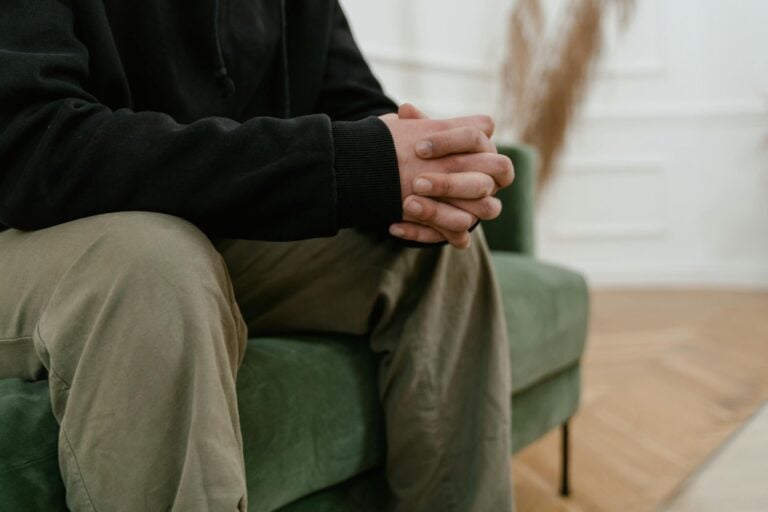

Social anxiety and caring deeply about others’ opinions are not the same thing, but they are deeply connected. Social anxiety amplifies the fear of negative evaluation to the point where it shapes decisions, shrinks opportunities, and quietly erodes confidence over time. For many introverts, this fear doesn’t announce itself loudly. It operates beneath the surface, filtering every interaction through a persistent question: what do they think of me?
My name is Keith Lacy. I ran advertising agencies for over two decades, managing creative teams, pitching Fortune 500 clients, and leading rooms full of people. From the outside, that probably sounds like an extrovert’s career. From the inside, I was constantly managing an undercurrent of worry about how I was being perceived, whether my ideas landed right, whether I said the wrong thing in a meeting, whether the silence after my pitch meant something bad. What I eventually understood was that my sensitivity to others’ opinions wasn’t a character flaw. It was a signal worth paying attention to, and one that needed context to make sense of.

If you’ve ever replayed a conversation for hours afterward, rehearsed what you’d say before a simple phone call, or felt your chest tighten before walking into a group setting, you’re not imagining things. That pattern has a name, and understanding it changes how you relate to yourself. Our Introvert Mental Health Hub covers a wide range of experiences like this, because the internal world of an introvert deserves the same attention we give the external one.
Why Does Caring What Others Think Feel So Overwhelming?
There’s a difference between caring what others think in a healthy, socially adaptive way and being consumed by it. Most of us calibrate our behavior based on social feedback. That’s normal. Social anxiety tips that calibration into overdrive, making the fear of disapproval feel as urgent as a physical threat.
What’s your personality type?
Take our free 40-question assessment and get a detailed personality profile with dimension breakdowns, context analysis, and personalised insights.
Discover Your Type8-12 minutes · 40 questions · Free
The American Psychological Association describes anxiety disorders as involving excessive fear and anxiety that interferes with daily functioning. In the social context, this interference shows up in ways that are easy to dismiss or rationalize. You cancel plans because you’re “tired.” You avoid speaking up in meetings because you “don’t have anything useful to add.” You rehearse a simple email for twenty minutes because you’re worried about the tone. Each individual instance seems manageable. The accumulated weight of it is exhausting.
What makes this particularly complicated for introverts is that we already process information more deeply than most. We notice subtleties in tone, body language, and word choice that others miss. That depth of perception is genuinely valuable. But when social anxiety is layered on top of it, every perceived signal becomes potential evidence of rejection or failure. The same sensitivity that makes us perceptive makes us vulnerable to over-interpreting neutral information as negative.
Many introverts who are also highly sensitive people experience this in a particularly intense way. The connection between HSP traits and anxiety is worth understanding, because the mechanisms overlap significantly. A nervous system that processes deeply is also one that registers social threat more acutely.
What Is the Fear of Negative Evaluation, Really?
Psychologists use the term “fear of negative evaluation” to describe the core cognitive feature of social anxiety. It’s the anticipation that others will judge you harshly, and the belief that this judgment will have serious consequences. That belief doesn’t have to be conscious to be powerful.
In my agency years, I watched this play out constantly, both in myself and in the people I managed. I had a senior copywriter, genuinely one of the most talented people I’ve worked with, who would physically shake before presenting work to clients. Her ideas were brilliant. Her execution was flawless. But the moment she had to stand in a room and defend her creative choices, something shifted. She’d qualify everything. She’d preemptively apologize for choices that needed no apology. She was managing a fear of evaluation that had nothing to do with the quality of her work and everything to do with what she believed the judgment meant about her as a person.
That’s the pattern worth examining. Social anxiety doesn’t just make us nervous in social situations. It convinces us that the outcome of any social evaluation is a verdict on our worth. When someone doesn’t laugh at our comment, we don’t think “they didn’t hear it” or “they were distracted.” We think “I’m not funny” or “I’m awkward” or “they don’t like me.” The leap from a single data point to a global conclusion about ourselves happens so fast it feels automatic, because for many of us, it is.

How Does This Connect to Empathy and Emotional Sensitivity?
One thing that rarely gets discussed honestly is how empathy feeds social anxiety. We tend to frame empathy as an unqualified gift, and in many ways it is. But the same capacity that allows us to genuinely feel what others are experiencing also makes us hyperaware of how we’re affecting them.
When you’re wired to pick up on emotional undercurrents, you’re also picking up on ambiguity. And ambiguity, in the context of social anxiety, almost always gets interpreted as a warning sign. A colleague who seems slightly distracted during your presentation. A friend who takes longer than usual to reply to a message. A manager whose expression shifts almost imperceptibly when you suggest an idea. For someone without social anxiety, these are background noise. For someone with it, they’re data points that demand explanation.
The double-edged nature of HSP empathy speaks directly to this. The capacity to feel deeply and read others accurately is real and valuable. But without the tools to regulate the anxiety that comes with it, that same capacity becomes a source of chronic stress rather than connection.
I’ve sat in enough client meetings to know that reading the room is a skill. As an INTJ, I’m naturally inclined to observe before I speak, to assess the emotional temperature of a group before I commit to a position. That served me well in negotiations and pitches. What it didn’t serve well was the internal aftermath, the hours spent afterward parsing whether a client’s hesitation meant they hated the campaign or were just having a bad day. The observation was useful. The rumination was not.
Is Social Anxiety About the Present Moment or the Story We Tell Afterward?
Most people think of social anxiety as something that happens in the moment: the racing heart before a presentation, the blank mind when asked a question in a meeting. Those experiences are real. But a significant part of what makes social anxiety so persistent is what happens before and after the event, not just during it.
Before a social situation, anticipatory anxiety builds a case for why things will go wrong. You rehearse potential disasters. You imagine specific ways you might embarrass yourself. You consider exit strategies. By the time you arrive at the actual situation, you’re already depleted from managing a threat that hasn’t happened yet.
After the situation, post-event processing takes over. This is the mental replay, the detailed review of everything you said and did, searching for evidence of failure. Research published in PubMed Central has examined how this post-event processing maintains and intensifies social anxiety over time, because the review tends to be biased toward negative information and away from neutral or positive moments.
After a particularly difficult pitch early in my career, I spent the entire drive home cataloguing every pause, every stumble, every moment where I felt the energy in the room shift. I barely registered that we’d won the account. The client called the next morning to confirm. My team was celebrating. I was still mentally editing the version of myself that had stood in that room. That gap between external reality and internal experience is one of the most disorienting aspects of living with social anxiety.
How Does Perfectionism Make the Fear of Judgment Worse?
Social anxiety and perfectionism have a particularly tight relationship. Perfectionism tells you that if you do everything right, you’ll be safe from criticism. Social anxiety tells you that criticism is always possible and always devastating. Together, they create a cycle that’s hard to step out of.
The logic runs something like this: if I prepare enough, if I say exactly the right thing, if I present myself perfectly, people won’t have anything negative to think about me. So you over-prepare. You revise the email fifteen times. You rehearse the conversation in your head until you’ve covered every possible direction it might go. And then something unexpected happens anyway, because it always does, and the anxiety spikes because your safety strategy has failed.

The perfectionism trap that many highly sensitive people fall into is worth examining closely here, because it’s not about having high standards. High standards are fine. The trap is believing that perfect execution is the price of social safety, and that anything less than perfect invites judgment that you won’t be able to tolerate.
I built entire agency processes around perfectionism that I convinced myself were about quality control. Endless revision cycles. Approval chains that were longer than they needed to be. Presentations rehearsed so thoroughly that they felt scripted rather than genuine. Some of that produced good work. Some of it was anxiety management wearing the costume of professional standards. Knowing the difference took me longer than I’d like to admit.
The Harvard Medical School’s overview of social anxiety notes that avoidance and over-preparation are both safety behaviors, and that while they reduce anxiety in the short term, they reinforce the underlying belief that social situations are genuinely dangerous. That reinforcement is what keeps the cycle running.
What Role Does Rejection Play in Shaping How We Seek Approval?
Caring what others think isn’t random. For most people with social anxiety, it’s rooted in a history of experiences where disapproval had real consequences. Childhood environments where approval was conditional. School experiences where standing out meant being targeted. Workplaces where vulnerability was exploited. The nervous system learns from these experiences and builds a model of social interaction that prioritizes threat detection.
What’s worth understanding is that rejection doesn’t have to be dramatic or traumatic to leave a mark. Subtle, repeated experiences of being dismissed, overlooked, or subtly ridiculed can shape the same patterns as more obvious rejection. The brain doesn’t always distinguish between a significant social wound and a hundred small ones. It just registers the cumulative signal: social situations carry risk.
The process of processing and healing from rejection as a highly sensitive person is genuinely different from how others experience it. The emotional depth of the experience, and the length of time it takes to metabolize, isn’t weakness. It’s a feature of how some nervous systems are wired. Understanding that distinction matters for how you treat yourself in the aftermath.
I lost a major account in my second year running my own agency. The client left without much explanation, just a brief email thanking us for our work. I spent months afterward trying to decode what had gone wrong, who I had failed to read correctly, what I should have done differently. Some of that analysis was useful. A lot of it was my nervous system processing a rejection that felt much larger than a business loss. It felt like a verdict on whether I was capable of doing this at all.
Can You Change How Much You Care What Others Think?
This is the question that most people with social anxiety eventually arrive at. And the honest answer is: yes, but not in the way you might expect. success doesn’t mean stop caring what others think entirely. That’s not realistic, and it’s probably not even desirable. Caring about how we’re perceived is part of how we maintain relationships and function in social groups. The goal is to bring that caring into proportion, to make it informative rather than controlling.
Psychology Today’s exploration of the overlap between introversion and social anxiety makes a useful distinction: introverts can be perfectly comfortable with who they are and still prefer limited social interaction. Social anxiety, by contrast, involves genuine distress about social situations and a fear of judgment that causes avoidance. Knowing which one you’re dealing with, or whether you’re dealing with both, shapes what kind of support is actually helpful.
Cognitive behavioral approaches have a strong track record with social anxiety specifically. The American Psychological Association’s resources on shyness and social anxiety point toward the value of gradually facing feared situations rather than avoiding them, combined with examining the automatic thoughts that fuel the fear. That combination, behavioral exposure and cognitive restructuring, addresses both the behavioral patterns and the underlying belief system.

What shifted things for me, slowly and imperfectly, was learning to separate observation from interpretation. My mind is wired to observe. That’s not going away. But I started asking a different question after social situations: what actually happened, as opposed to what I concluded happened. The client paused after my pitch. What actually happened: they paused. What I concluded: they hated it. Keeping those two things separate gave me room to breathe.
How Does Sensory Overload Intensify Social Anxiety in Crowds and Groups?
There’s a physical dimension to social anxiety that doesn’t get enough attention. For introverts, and especially for those who are also highly sensitive, the sensory environment of a social situation adds a layer of stress that compounds the psychological one. Loud venues, crowded rooms, overlapping conversations, bright lighting, all of these create a kind of sensory load that makes it harder to regulate emotion and easier to feel overwhelmed.
When you’re already managing anxiety about how you’re being perceived, and you’re also managing a nervous system that’s registering too much sensory input at once, the combination is genuinely taxing. The experience of HSP sensory overload is closely related to this, because the same nervous system sensitivity that makes social judgment feel so acute also makes the physical environment of social situations harder to tolerate.
Agency life meant a lot of loud restaurants, crowded industry events, and open-plan offices that were designed for collaboration and absolutely not designed for people who process deeply. I learned to build in buffers: arriving early before a venue filled up, finding a quieter corner during networking events, scheduling recovery time after high-stimulation days. Not as avoidance, but as management. There’s a real difference between structuring your environment to function well and hiding from situations that make you anxious.
The depth of emotional processing that many sensitive people experience means that social situations leave a longer trace. The feelings generated in a difficult interaction don’t evaporate when the interaction ends. They continue to be processed, sometimes for hours or days. Knowing that about yourself isn’t a reason to avoid social situations. It’s information about how to pace yourself and what kind of recovery you genuinely need.
Understanding the full picture of how social anxiety operates, across the cognitive, emotional, and sensory dimensions, is part of what our Introvert Mental Health Hub is built to support. These experiences don’t exist in isolation, and neither should the resources for working through them.
What Does It Actually Mean to Stop Letting Others’ Opinions Run the Show?
There’s a version of “stop caring what others think” that gets sold as liberation and lands as another thing to fail at. If you have social anxiety, being told to simply care less is about as useful as being told to simply be taller. The caring isn’t a choice you’re making. It’s a pattern your nervous system has developed, often over many years, for reasons that made sense at the time.
What actually shifts things is not caring less, but building a more stable internal reference point. When your sense of your own worth depends heavily on external validation, every interaction becomes a referendum on whether you’re okay. When you have a clearer, more grounded sense of who you are and what you value, external feedback becomes information rather than verdict. It still matters. It just doesn’t have final say.
Work published in PubMed Central on self-compassion and social anxiety suggests that how we relate to ourselves during moments of perceived failure or judgment significantly affects how intensely social anxiety is experienced. A harsh internal critic amplifies the fear. A more compassionate internal stance doesn’t eliminate the anxiety, but it reduces the secondary suffering that comes from judging yourself for having it.
That’s not a quick fix. It’s a gradual reorientation. In my own experience, it came through a combination of therapy, honest conversations with people I trusted, and enough accumulated evidence that I could survive social situations that didn’t go perfectly. The evidence mattered. My nervous system needed proof, not just reassurance. Every time I said something imperfect in a meeting and the world continued, every time I sent an email that wasn’t quite right and the relationship survived, I was adding to a body of evidence that contradicted the catastrophic predictions my anxiety was making.

Social anxiety doesn’t disappear. For many people, it becomes something they understand well enough to work with rather than something that runs the show. That’s a meaningful distinction. You don’t have to be free of the anxiety to stop letting it make your decisions. You just have to build enough of a relationship with yourself that you can hear the anxiety’s warnings without automatically obeying them.
The path isn’t linear, and it isn’t the same for everyone. But it starts with taking seriously the experience you’re actually having, not the one you think you should be having. Your sensitivity to others’ opinions isn’t a design flaw. It’s a signal that deserves honest attention, compassionate interpretation, and, when needed, professional support.
About the Author
Keith Lacy is an introvert who’s learned to embrace his true self later in life. After 20 years in advertising and marketing leadership, including running agencies and managing Fortune 500 accounts, Keith now channels his experience into helping fellow introverts understand their strengths and build fulfilling careers. As an INTJ, he brings analytical depth and authentic perspective to every article, drawing from both professional expertise and personal growth.
Frequently Asked Questions
Is caring what others think the same as social anxiety?
Caring what others think is a normal part of social life. Social anxiety is a more intense pattern where the fear of negative judgment becomes persistent, distressing, and begins to interfere with daily functioning. Many people with social anxiety care deeply about others’ opinions in a way that feels uncontrollable, shapes their decisions significantly, and generates ongoing distress even in low-stakes situations. The distinction matters because social anxiety often benefits from specific support, while ordinary social awareness generally doesn’t require treatment.
Why do introverts seem more prone to social anxiety?
Introversion and social anxiety are different things, but they do overlap in some individuals. Introverts tend to process information more deeply, which can mean that social experiences, including perceived judgments or rejections, are felt more intensely and processed for longer. That depth of processing doesn’t cause social anxiety, but it can amplify it when anxiety is already present. Many introverts have no social anxiety at all. Others experience both, and understanding the difference helps clarify what kind of support is actually useful.
Can social anxiety improve without therapy?
Some people see meaningful improvement through self-directed strategies: gradually facing feared situations, examining automatic thoughts, building self-compassion, and developing a stronger internal sense of worth. For others, particularly when social anxiety is severe or has been present for many years, working with a therapist who specializes in cognitive behavioral approaches tends to produce more reliable results. Both paths are valid. What matters is honest assessment of how much the anxiety is affecting your life and whether self-directed efforts are actually moving things forward.
What is post-event processing and why does it maintain social anxiety?
Post-event processing is the mental replay that happens after a social situation, where you review what you said and did in search of mistakes or evidence of failure. This review tends to be biased: it focuses on negative moments and discounts neutral or positive ones. Over time, this pattern reinforces the belief that social situations are dangerous and that you performed poorly, even when the objective evidence doesn’t support that conclusion. Recognizing this pattern is a useful first step, because it allows you to question the review rather than simply accepting its conclusions.
How do I know if my sensitivity to judgment is social anxiety or just introversion?
A useful question to ask is whether the discomfort is about preference or fear. Introverts often prefer smaller social settings and find large gatherings draining, but they don’t necessarily fear judgment or feel significant distress in social situations. Social anxiety involves a more specific fear: that others will evaluate you negatively, and that this evaluation will have serious consequences. If you find yourself avoiding situations not because they drain you but because you’re afraid of how you’ll be perceived, or if you spend significant time before and after social events managing anxiety about judgment, that pattern is worth exploring with a professional.