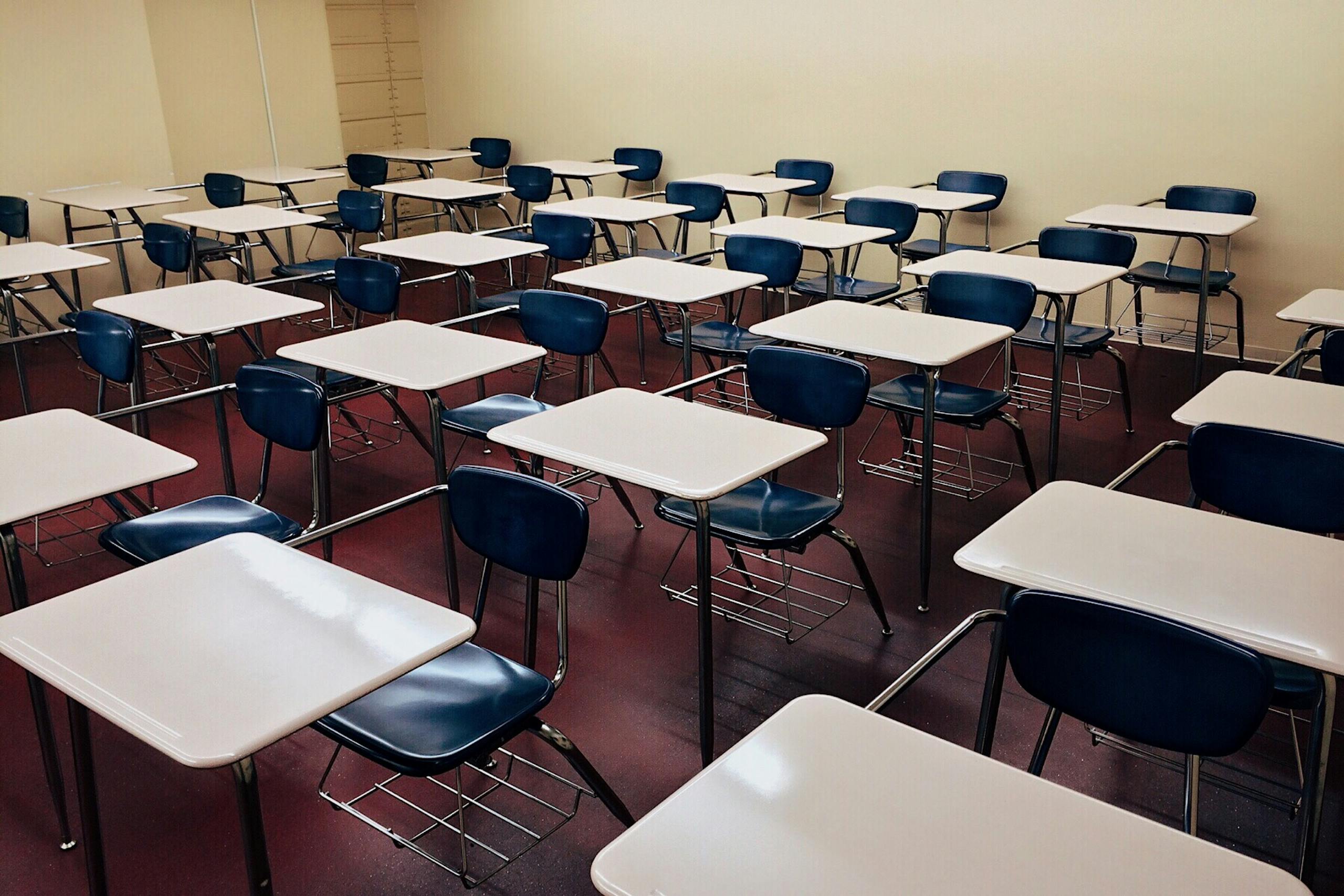

Social anxiety and class participation exist in a painful collision that millions of students know intimately: the raised hand that never quite goes up, the answer forming perfectly in your mind while someone else speaks it aloud, the physical dread of hearing your name called. On Reddit, thousands of people have named this experience with raw honesty, and what emerges from those threads is something more useful than most textbooks offer.
Reddit’s social anxiety communities have become an unexpected archive of lived experience, where people describe class participation fear not as shyness or laziness but as a specific, physiological response that overrides even their best intentions. What they’re describing aligns closely with what we understand about anxiety as a clinical phenomenon, and reading those threads carefully reveals patterns worth taking seriously.
If you’ve ever sat in a classroom or a meeting room feeling completely capable and completely frozen at the same time, this is for you.

Social anxiety around class participation is worth exploring in the broader context of introvert mental health. Our Introvert Mental Health Hub covers the full spectrum of how introverts experience anxiety, overwhelm, and emotional intensity, and class participation fear sits squarely within that territory.
What Are People Actually Saying on Reddit About This?
Spend an hour reading through r/socialanxiety or r/introvert and you’ll find a consistent thread running through posts about class participation. People aren’t describing mild discomfort. They’re describing dissociation, shaking voices, complete memory blanks, and the surreal experience of watching their own hand refuse to move despite a fully formed thought sitting ready in their mind.
What’s your personality type?
Take our free 40-question assessment and get a detailed personality profile with dimension breakdowns, context analysis, and personalised insights.
Discover Your Type8-12 minutes · 40 questions · Free
One pattern that appears repeatedly is what many posters call the “preparation trap.” They spend so much energy rehearsing what they want to say that by the time a natural opening arrives, the moment has passed. Or they’ve rehearsed so thoroughly that the words feel robotic when they finally do speak, which triggers a new wave of self-consciousness about how they sound.
Another recurring theme is the aftermath. Many people report that the anxiety doesn’t end when class ends. They replay the moment for hours, analyzing tone, word choice, whether they stumbled, what the professor’s expression meant. That rumination cycle is something I recognize from my own professional life, even in contexts far removed from a classroom.
Running advertising agencies for over two decades, I sat in countless client presentations where I knew the material cold. I had prepared, I had the data, I believed in the work. And still, certain rooms activated something in me that felt completely disproportionate to the stakes. A skeptical look from a CFO. A long pause after I’d finished speaking. My mind would immediately start auditing everything I’d just said, looking for the flaw that caused the pause. That internal audit, that hypervigilance about how you’re being received, is exactly what Reddit’s social anxiety threads are describing.
The American Psychological Association distinguishes shyness from social anxiety disorder, and that distinction matters here. What many Reddit users are describing goes beyond introversion or shyness. It’s a fear response that has attached itself specifically to the act of speaking in front of others, and it often feels completely outside their control.
Why Does Class Participation Specifically Trigger This Response?
Class participation has a particular architecture that makes it especially threatening to people with social anxiety. Consider what it actually requires: you must generate a response in real time, in front of an audience that includes an authority figure who is explicitly evaluating you, with no ability to revise or retract once you’ve spoken. That’s a genuinely high-pressure performance format, even before anxiety enters the picture.
Add a graded participation requirement and the stakes become concrete. Your social performance is now attached to your academic standing. For someone whose anxiety already makes speaking feel dangerous, knowing that silence also has consequences creates a double bind that’s genuinely cruel in its design.
Many people who are highly sensitive find that classroom environments compound this pressure through sensory and emotional channels. The fluorescent lighting, the ambient noise of thirty people shifting in their seats, the feeling of being watched from multiple directions simultaneously. If you’re someone who processes environmental input deeply, all of that is happening at once while you’re also trying to formulate a coherent response. For those who identify as highly sensitive, HSP overwhelm and sensory overload can make the classroom feel genuinely hostile before a single word is spoken.
There’s also the evaluation component. Class participation isn’t just about answering a question correctly. It’s about being seen thinking, being seen uncertain, being seen wrong in real time. For people whose anxiety is rooted in fear of negative evaluation, that visibility is the threat itself, not the content of what they’re saying.
Research published in PubMed Central examining social anxiety and academic performance points to a significant relationship between fear of negative evaluation and avoidance behaviors in educational settings. The avoidance makes sense as a short-term coping mechanism. It’s the long-term cost that creates the problem.

Is This Social Anxiety, Introversion, or Both?
Reddit threads on this topic often surface a question that genuinely matters: am I introverted, or do I have social anxiety? The answer is that these are separate things that frequently overlap, and the overlap creates confusion.
Introversion is a preference for internal processing and a tendency to find social interaction draining rather than energizing. It’s not fear. An introvert might prefer not to speak in class because they process better in writing, or because they find the rapid-fire format of discussion exhausting, or because they need more time to formulate thoughts than the format allows. None of that is anxiety.
Social anxiety is fear. It’s a physiological threat response that activates in social situations, producing symptoms like racing heart, dry mouth, voice tremor, and cognitive disruption. Psychology Today has explored this distinction thoughtfully, noting that many people carry both traits simultaneously, which is why separating them matters for finding the right kind of support.
As an INTJ, I’ve spent a lot of time sitting with this distinction in my own experience. My preference for internal processing is real and consistent. I genuinely do my best thinking alone, before or after a meeting rather than in the middle of one. But some of what I experienced in high-stakes presentations early in my career wasn’t just introversion. It was anxiety that had attached itself to specific performance contexts, and those required different tools to address.
The distinction matters because the interventions differ. If class participation is hard because you’re introverted, strategies that work with your processing style (written contributions, preparation time, smaller group formats) can make a real difference. If anxiety is driving the avoidance, those same strategies may help at the margins, but the underlying fear response needs direct attention.
For many highly sensitive people, anxiety and deep emotional processing are intertwined in ways that make this distinction even more complex. Understanding HSP anxiety and its particular coping strategies can help clarify which thread you’re actually pulling on.
What Reddit Gets Right That Traditional Advice Gets Wrong
Most traditional advice about class participation anxiety sounds something like: just raise your hand more, start with small contributions, fake it until you make it. Reddit communities largely reject this framing, and I think they’re right to.
The problem with “just do it more” advice is that it treats the behavior as the problem rather than the underlying anxiety response. Forcing yourself to participate repeatedly without addressing the fear doesn’t necessarily reduce the fear. For some people it does, through a process of gradual exposure. For others, repeated forced participation while the anxiety remains high actually reinforces the association between speaking and threat.
What Reddit threads get right is validation of the experience itself. People describe their symptoms in detail, others recognize them, and something important happens in that recognition. The experience stops being evidence of personal deficiency and becomes a named, shared phenomenon. That reframe matters more than it might seem.
Early in my agency career, I managed a creative team that included several people who struggled visibly in client presentations. My initial instinct, shaped by the extroverted leadership culture I’d absorbed, was to push them into more presentation opportunities. More exposure, more practice, more visibility. What I eventually understood was that for some of them, the issue wasn’t lack of practice. It was that the presentation format itself activated something that practice alone wasn’t going to fix. Once I stopped treating their struggle as a skill gap and started treating it as a genuine response worth accommodating, we found formats that actually worked.
Reddit communities arrive at this insight organically. They stop asking “how do I force myself to participate” and start asking “how do I communicate my needs to professors” or “what accommodations exist for this” or “how do I build the skills to manage this over time rather than white-knuckling through every class.”
That shift from forcing to understanding is where real progress tends to begin.

The Perfectionism Layer That Makes This Worse
One thing Reddit threads surface consistently is how perfectionism amplifies class participation anxiety. Many posters describe not just fear of being wrong, but an inability to speak unless they’re certain they’re right. The bar for speaking isn’t “I have something worth contributing.” It’s “I have something flawless to contribute.”
That standard is impossible to meet in real-time discussion, which means the bar effectively becomes “never speak.” And then the silence itself becomes evidence of inadequacy, which feeds the anxiety further.
Perfectionism and social anxiety are frequent companions. The fear of being negatively evaluated combines with a high internal standard to create a situation where speaking feels both necessary and impossible. For people who process deeply and feel things intensely, the emotional weight of getting something wrong in public carries a charge that others might not fully understand. There’s real work to be done in breaking the high standards trap that drives HSP perfectionism, and class participation is one of the most visible places where that trap closes.
I watched this play out in my own team repeatedly. Some of my most analytically gifted people would sit through entire strategy sessions without speaking, not because they had nothing to offer, but because they were waiting until their contribution was fully formed and certain. By the time they’d reached that point internally, the conversation had moved on. Their silence read as disengagement to clients who didn’t know them. It frustrated me until I recognized the pattern in myself.
As an INTJ, I have a strong preference for precision. I don’t like speaking until I’m confident in what I’m saying. In a fast-moving meeting, that preference can look like silence. What I had to develop, over years of practice, was the ability to contribute a partially formed thought and let it be refined in conversation rather than arriving fully polished. That’s a skill, not a personality trait, and it’s learnable even when it goes against your instincts.
How Rejection Sensitivity Shapes the Fear of Speaking Up
Several Reddit threads touch on something that doesn’t always get named directly: rejection sensitivity. The fear isn’t just of being wrong. It’s of being dismissed, laughed at, corrected in a way that feels humiliating, or simply ignored. For people with heightened rejection sensitivity, even a neutral response from a professor can register as rejection.
This is where the social anxiety around class participation connects to something deeper than academic performance. Speaking up in class requires a willingness to be seen, and being seen creates the possibility of being rejected. For people who feel that possibility acutely, the risk calculation tips strongly toward silence.
Understanding how highly sensitive people process and heal from rejection offers a useful lens here, because the fear of class participation rejection often isn’t proportionate to the actual stakes. A professor moving on from your comment without elaborating isn’t rejection. But it can feel like it, and that feeling is real even when the interpretation isn’t accurate.
One thing Reddit communities do well is help people reality-check these interpretations. When someone posts “I said something in class and the professor just nodded and moved on, I’m mortified,” the responses tend to normalize the experience rather than amplify the catastrophic reading. That kind of collective recalibration is genuinely helpful.
The American Psychological Association’s overview of anxiety disorders describes social anxiety disorder as involving a marked fear of social situations where one might be scrutinized. The classroom is one of the most explicitly scrutinizing environments most people regularly inhabit, which explains why it’s such a common trigger.
What Actually Helps, Based on What Reddit Communities Have Found
Across hundreds of threads, certain strategies appear repeatedly as genuinely useful rather than just theoretically sound. These aren’t cures. They’re tools that reduce the intensity of the experience enough to make participation possible.
Talking to professors directly, outside of class, comes up constantly. Many people find that a brief conversation before a semester starts, explaining that they struggle with verbal participation and asking whether written alternatives exist, changes the dynamic significantly. Professors who know about the struggle often respond differently in class, sometimes calling on the person in lower-stakes moments or accepting written contributions as equivalent.
Preparation rituals matter too. People describe arriving early to get comfortable in the physical space, sitting in consistent spots that feel manageable, and having one or two contributions prepared before class starts rather than trying to generate them in real time. The preparation reduces the cognitive load in the moment.
Some people find that contributing in writing, through class discussion boards, emails to professors, or written responses, allows them to demonstrate their engagement without the performance component. Where professors accept this, it can be a meaningful accommodation.
Professional support comes up frequently in the more serious threads. Harvard Health’s overview of social anxiety disorder treatments covers the evidence base for cognitive behavioral therapy and, in some cases, medication as tools that can reduce the intensity of the anxiety response itself. Reddit communities are generally good at pointing people toward professional resources when the anxiety is significantly impacting their academic or professional lives.
Gradual exposure, done intentionally rather than through forced participation, also appears as a helpful approach. Starting with lower-stakes speaking situations and building tolerance over time, rather than jumping directly into the most threatening context, tends to produce more sustainable results.

The Empathy Dimension: Why You Feel Everyone Else’s Judgment So Acutely
Something that emerges from Reddit threads but rarely gets named precisely is how much social anxiety in class is driven by an acute sensitivity to others’ emotional states. People describe not just fearing judgment but feeling the judgment of others as a physical sensation, scanning the room for reactions, reading faces, interpreting every micro-expression as evidence of how their contribution was received.
This heightened attunement to others isn’t a flaw. Many people who struggle with class participation are also the most perceptive people in the room, picking up on relational dynamics and emotional undercurrents that others miss entirely. That capacity is genuinely valuable. In the classroom context, though, it can amplify anxiety by flooding the person with information about how they’re being perceived, most of which is interpretation rather than fact.
The experience of HSP empathy as a double-edged sword is particularly relevant here. The same sensitivity that makes someone deeply attuned to others’ needs can make a classroom feel like a constant stream of social feedback that’s impossible to tune out.
I managed a team member early in my agency years who was extraordinarily perceptive about client relationships. She could read a room better than anyone I’ve worked with, sensing shifts in client mood before they surfaced in conversation. In presentations, though, that same sensitivity made her acutely aware of every skeptical expression, every moment of disengagement, every subtle shift in body language. She’d internalize all of it as evidence that the work was failing, even when the client feedback was positive. Her gift and her anxiety were drawing from the same well.
For people in this situation, the work isn’t about becoming less perceptive. It’s about developing the capacity to observe social information without being governed by it. That’s a long process, and it’s worth pursuing with professional support rather than trying to manage alone.
When the Classroom Becomes a Place for Deep Processing
One angle that Reddit threads occasionally surface, and that I find genuinely interesting, is the experience of people who participate rarely but process deeply. They absorb everything said in class, make connections others miss, and often have the most sophisticated understanding of the material. Their silence isn’t absence. It’s a different mode of engagement.
The challenge is that participation grades don’t measure depth of engagement. They measure frequency of verbal output. That mismatch disadvantages people whose natural mode is to process thoroughly before speaking, or to integrate information over time rather than in real-time discussion.
For highly sensitive people especially, the experience of processing and feeling deeply extends to intellectual content as well as emotional experience. A classroom discussion might generate ideas and connections that take days to fully form. The expectation that those ideas should be available for immediate verbal expression runs counter to how that processing actually works.
This doesn’t mean the expectation is wrong. Verbal communication is a real skill with real professional value, and developing comfort with it matters. It does mean that “participates frequently in class” is measuring something specific, not intelligence or engagement or depth of understanding, and conflating those things does a disservice to students whose strengths show up differently.
What I’ve found, both in my own experience and in managing introverted team members, is that the goal worth working toward isn’t performing extroversion. It’s developing enough range to express your thinking in the formats that matter, without the anxiety response hijacking the process.
Research examining anxiety interventions in academic contexts suggests that approaches addressing both the cognitive and behavioral dimensions of anxiety tend to produce more durable results than behavioral approaches alone. That tracks with what Reddit communities seem to discover through trial and error: managing the thoughts and the physical response together works better than just pushing through the behavior.

What I’d Tell My Younger Self About This
There’s a version of me that sat in graduate school seminars with fully formed thoughts that never made it out of my head. I’d rehearse a contribution, talk myself out of it, watch someone else make a similar point, and spend the rest of the class in a low-grade internal argument about whether I should have spoken. By the time I’d resolved it, we were on to the next topic.
What I didn’t understand then was that the problem wasn’t my ideas. The problem was that I’d attached enormous significance to the act of speaking, as if each contribution was being permanently filed under my name and would define how the room perceived me forever. That’s not how it works. People in classrooms and meeting rooms are largely focused on their own experience, their own contributions, their own anxiety. The attention I imagined directed at me was mostly projection.
What actually helped, over years of professional practice, was developing a relationship with imperfect output. Learning to say something partially formed and let it be refined in conversation. Learning that a wrong answer in a meeting isn’t a permanent mark against you. Learning that silence has costs too, even if they’re less immediately visible than the cost of speaking awkwardly.
None of that happened quickly. And it happened more through intentional professional development than through white-knuckling my way through uncomfortable situations. The situations helped, but only in combination with understanding what was actually driving the discomfort.
Reddit communities are doing something valuable by creating space for people to name this experience honestly, compare notes, and find their way toward strategies that actually fit how they’re wired. That kind of peer knowledge isn’t a replacement for professional support when anxiety is significantly impairing someone’s life. But as a starting point for understanding what you’re dealing with, it has real value.
If class participation anxiety is part of your experience, more resources on the intersection of introversion and mental health are available in our Introvert Mental Health Hub, where we cover anxiety, emotional processing, overwhelm, and the specific challenges introverts face in high-performance environments.
About the Author
Keith Lacy is an introvert who’s learned to embrace his true self later in life. After 20 years in advertising and marketing leadership, including running agencies and managing Fortune 500 accounts, Keith now channels his experience into helping fellow introverts understand their strengths and build fulfilling careers. As an INTJ, he brings analytical depth and authentic perspective to every article, drawing from both professional expertise and personal growth.
Frequently Asked Questions
Is it normal to feel physically ill before having to speak in class?
Yes, and it’s more common than most people realize. Social anxiety produces genuine physiological responses including nausea, racing heart, dry mouth, and trembling. These aren’t signs of weakness or irrationality. They’re the body’s threat response activating in a social performance context. Many people who appear confident in class have developed strategies for managing these physical symptoms rather than eliminating them entirely. If these physical responses are significantly disrupting your academic experience, speaking with a counselor or therapist who specializes in anxiety is worth considering.
Can I ask my professor for accommodations related to class participation anxiety?
Many professors are more flexible than their syllabi suggest, particularly when students approach them directly and honestly outside of class time. Some will accept written contributions as alternatives to verbal participation. Others will create lower-stakes opportunities for you to participate, such as small group discussions rather than whole-class formats. If your anxiety meets clinical criteria, formal accommodations through your institution’s disability services office may also be available. Social anxiety disorder is a recognized condition, and academic accommodations exist for it at many institutions.
What’s the difference between being introverted and having social anxiety about class participation?
Introversion is a preference for internal processing and a tendency to find social interaction draining. It’s not fear. An introverted student might prefer not to speak in class because they process better in writing or need more time to formulate thoughts, but they don’t experience a fear response when they do speak. Social anxiety involves a genuine fear of negative evaluation in social situations, producing physical anxiety symptoms and often leading to avoidance. Many people carry both traits simultaneously. The distinction matters because the strategies that help with each are somewhat different, and conflating them can lead to trying solutions that address the wrong underlying issue.
Why do I know exactly what I want to say but freeze completely when I try to speak?
This is one of the most commonly described experiences in social anxiety communities, and it has a real explanation. When the anxiety response activates, it can interfere with the cognitive processes involved in translating internal thought into external speech. The thought is there, but the pathway between having it and expressing it gets disrupted by the physiological state of anxiety. It’s not a sign that you’re less capable than you think. It’s a sign that the anxiety response is interfering with a process that works fine in lower-stakes contexts. Strategies that reduce the intensity of the anxiety response before speaking, rather than trying to override it in the moment, tend to be more effective for this specific experience.
Does avoiding class participation make the anxiety worse over time?
Avoidance provides immediate relief, which is why it’s so compelling. In the short term, staying silent ends the discomfort of the anticipated threat. Over time, though, avoidance tends to maintain and sometimes strengthen anxiety rather than reducing it. Each avoided situation confirms to the nervous system that the threat was real and the avoidance was necessary, which makes the next situation feel equally threatening. Gradual, intentional exposure to speaking situations, ideally with support from a therapist who works with anxiety, tends to produce better long-term outcomes than either forced participation or consistent avoidance. The goal is reducing the threat response itself, not just tolerating it repeatedly.