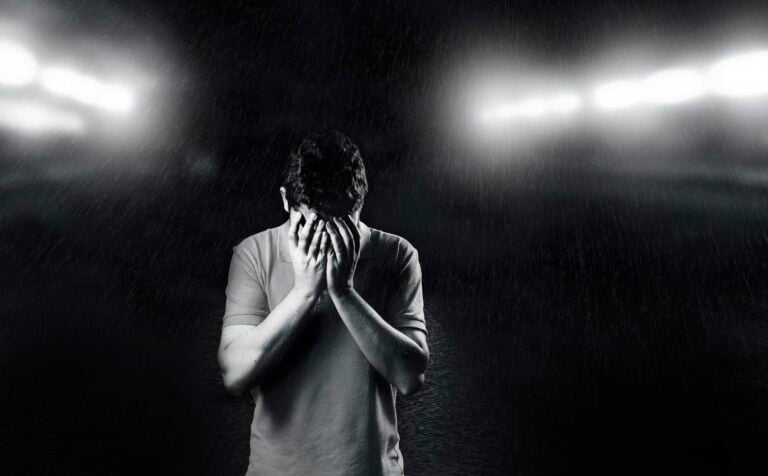

Social anxiety disorder and shyness can look identical from the outside, but they operate on completely different levels inside a person. Shyness is a temperament trait, a tendency toward caution in new social situations that often softens with familiarity. Social anxiety disorder is a clinical condition where fear of judgment becomes so intense and persistent that it interferes with daily life, relationships, and work, regardless of how familiar the situation is.
Knowing the difference between social anxiety disorder and normal shyness matters because the path forward is different for each. One responds to gradual exposure and confidence-building. The other often requires structured support, and sometimes professional help, to shift the underlying patterns driving that fear.
As someone who spent two decades running advertising agencies, I existed in a world that rewarded extroversion loudly and constantly. Pitches, presentations, client dinners, team rallies. And for years, I told myself that the discomfort I felt before all of it was just shyness, something I could push through with enough preparation. What I didn’t understand then was that not everyone who dreads a room full of people is experiencing the same thing. Some people are shy. Some are introverted. And some are carrying something heavier that deserves a name and proper attention.

Mental health sits at the intersection of personality, experience, and biology in ways that are rarely clean or simple. Our Introvert Mental Health hub explores the full range of how introverts experience anxiety, emotional depth, and the nervous system, because understanding your inner world is the first step toward working with it rather than against it.
What Does Shyness Actually Mean?
Shyness gets used loosely in everyday language, often as a synonym for introversion or quietness. But psychologically, shyness refers specifically to discomfort and inhibition in social situations, particularly unfamiliar ones. A shy person might feel nervous meeting new people, hesitate to speak up in groups, or take time to warm up in new environments. None of that is pathological. It’s a personality trait that shows up on a spectrum, and many shy people lead full, connected, satisfying lives.
What’s your personality type?
Take our free 40-question assessment and get a detailed personality profile with dimension breakdowns, context analysis, and personalised insights.
Discover Your Type8-12 minutes · 40 questions · Free
The American Psychological Association describes shyness as a tendency toward wariness, discomfort, or awkwardness in social situations, especially with unfamiliar people. Crucially, shyness typically fades as a situation becomes familiar. The nervous energy before a first meeting often dissolves once conversation gets going. The dread of a new job softens after the first few weeks. That adaptability is the hallmark of shyness as a trait rather than a disorder.
Early in my agency career, I hired a junior copywriter who was visibly uncomfortable in our weekly team meetings. She sat near the back, rarely spoke unprompted, and turned red when asked direct questions in front of the group. Within three months, she was one of the most vocal contributors in those same rooms. She was shy, not anxious in a clinical sense. She needed time and familiarity, and once she had both, the discomfort largely disappeared.
Where Does Social Anxiety Disorder Begin?
Social anxiety disorder, sometimes called social phobia, is something categorically different. According to the American Psychological Association’s overview of anxiety disorders, social anxiety disorder involves a marked and persistent fear of social or performance situations where a person expects to be scrutinized or judged by others. The fear is out of proportion to any actual threat, and it doesn’t resolve with familiarity the way shyness does.
Someone with social anxiety disorder doesn’t just feel nervous before a presentation. They may spend days or weeks in anticipatory dread, replay the event afterward for hours looking for evidence of humiliation, and actively avoid situations that might trigger the fear cycle. The avoidance itself becomes a problem because it reinforces the belief that those situations are genuinely dangerous.
The DSM-5 diagnostic criteria from the American Psychiatric Association specify that the fear or anxiety must be persistent (typically lasting six months or more), cause significant distress, and interfere with normal functioning in social, occupational, or other important areas of life. That interference piece is critical. Shyness might make someone slightly uncomfortable. Social anxiety disorder can make someone cancel job interviews, avoid phone calls, or stop eating in public.

Why Highly Sensitive People Often Sit at This Crossroads
One thing I’ve noticed in years of writing about introversion is how often highly sensitive people find themselves uncertain about where they fall on this spectrum. HSPs process sensory and emotional information more deeply than most, and that depth can amplify social discomfort in ways that look a lot like anxiety even when the underlying cause is different.
If you’ve ever found yourself overwhelmed after a long day of social interaction, you might recognize the pattern described in our piece on HSP overwhelm and managing sensory overload. That overwhelm is real and physiological, but it isn’t necessarily social anxiety disorder. Distinguishing between a nervous system that processes deeply and one that has developed a fear response around social evaluation is genuinely important work.
HSPs are also more prone to anxiety in general, partly because their nervous systems are wired to detect and respond to subtle signals that others miss. That heightened detection can be a strength in many contexts, but it also means social environments carry more data, more potential signals of disapproval or tension, more to process and respond to. That’s a different mechanism than social anxiety disorder, even though the surface experience can feel similar.
What makes this especially complicated is the depth of emotional processing that HSPs bring to every social encounter. Where a non-HSP might shake off an awkward exchange in minutes, an HSP may carry it for hours, turning it over and examining it from every angle. That processing style can look like rumination from the outside, and in some cases it crosses into it. Yet the presence of deep emotional processing doesn’t automatically indicate a disorder. It’s a trait, and like all traits, it becomes clinically significant only when it consistently interferes with functioning.
The Fear of Judgment Versus the Preference for Quiet
One of the clearest distinctions between social anxiety disorder and introversion or shyness involves what’s actually driving the behavior. An introvert who declines a party invitation does so because they genuinely prefer a quiet evening and know they’ll feel depleted by a crowd. A person with social anxiety disorder may want to go to the party but feel paralyzed by fear of saying something wrong, being judged, or embarrassing themselves. The outcome looks the same from outside. The internal experience is completely different.
A Psychology Today piece on introversion and social anxiety makes this distinction well: introverts are energized by solitude, not driven away from people by fear. Social anxiety disorder is specifically about fear of negative evaluation. An introvert at a party might feel drained but comfortable. A person with social anxiety disorder at the same party may feel their heart racing, their mind cataloging every possible way the evening could go wrong.
I’ve been in both states, though I didn’t have language for the difference for a long time. There were client events I avoided because I genuinely preferred a quiet evening with a book and a problem to solve. And there were presentations I dreaded not because I lacked energy for them but because some part of me was convinced I would fail publicly and that failure would be permanent and defining. The first was introversion. The second was something closer to anxiety, and it took years to recognize the difference in myself.

How Empathy and Social Reading Complicate the Picture
Many introverts, and especially HSPs, are highly attuned to the emotional states of people around them. That attunement can become a liability in social situations when it feeds a constant background scan for signs of disapproval, boredom, or irritation in others. What starts as a natural social intelligence can, under certain conditions, become a source of ongoing distress.
Our piece on HSP empathy as a double-edged sword gets into exactly this tension. The same capacity that makes highly sensitive people remarkable listeners and perceptive collaborators can also make social situations feel like a continuous emotional audit. When that audit is filtered through a fear of negative judgment, it starts to look and feel like social anxiety.
Running an agency meant I was constantly reading rooms. Watching a client’s posture shift during a pitch, noticing when a team member’s energy dropped in a meeting, picking up on the subtle signals that told me whether a relationship was solid or fraying. That skill served me well professionally. But in personal social situations, the same pattern sometimes worked against me. I’d walk out of a dinner party and spend an hour mentally reviewing every exchange, wondering what I’d gotten wrong. That kind of post-event processing is worth paying attention to, because when it becomes habitual and distressing, it’s worth asking whether it’s crossed a line.
When Perfectionism Becomes a Social Liability
Social anxiety disorder and perfectionism have a complicated relationship. Many people with social anxiety hold themselves to impossible standards in social situations, believing that any misstep will result in rejection or humiliation. That belief keeps the fear cycle running even when the objective evidence doesn’t support it.
This is territory that resonates deeply with many introverts and HSPs. Our piece on HSP perfectionism and breaking the high standards trap explores how the drive for flawless performance can become its own source of suffering. In a social context, perfectionism translates to a belief that you must come across as articulate, likable, and impressive at all times, and that failing to do so will have serious consequences.
The difference between a shy person who wants to make a good impression and someone whose anxiety is clinically significant often comes down to the stakes they’ve assigned to social performance. A shy person might hope the conversation goes well. Someone with social anxiety disorder may feel their worth as a person depends on it.
I watched this play out in a senior account director I managed for several years. Brilliant, thorough, deeply conscientious. Before every client presentation, she would rehearse her sections so many times that she’d arrive exhausted. After presentations, she’d dissect every moment of client feedback looking for signs she’d fallen short. Her work was excellent. Her internal experience of that work was relentless. She wasn’t just shy or introverted. She was carrying a weight that went beyond normal professional nerves.
Rejection Sensitivity and the Social Anxiety Spiral
One of the more painful features of social anxiety disorder is how it intersects with rejection sensitivity. The fear isn’t just of current judgment, it’s of the anticipated pain of being found wanting, excluded, or dismissed. That anticipation can become so acute that people begin avoiding any situation where rejection is possible, which eventually means avoiding most meaningful social connection.
Our piece on HSP rejection processing and healing addresses how deeply some people feel the sting of social exclusion or criticism. For those who are both highly sensitive and carrying social anxiety, rejection doesn’t just hurt, it confirms a story they’ve been telling themselves about their social worth. That confirmation bias is one of the reasons social anxiety disorder tends to be self-reinforcing without intervention.
Shyness, by contrast, doesn’t typically come with the same catastrophic interpretation of rejection. A shy person might feel disappointed if a social interaction doesn’t go well. They might feel awkward or embarrassed. But they’re less likely to interpret that outcome as evidence of a fundamental flaw that will define all future interactions.
What the Research Community Understands About These Distinctions
The clinical and research communities have spent considerable effort trying to draw cleaner lines between shyness, introversion, and social anxiety disorder, partly because the overlap creates real diagnostic challenges. A paper published in PubMed Central examining social anxiety and related constructs highlights that while these categories share surface features, their underlying mechanisms, developmental trajectories, and responses to intervention differ meaningfully.
Another angle worth considering comes from this PubMed Central study on social anxiety, which examines how avoidance behaviors develop and maintain the disorder over time. Avoidance is a key differentiator. Shy people may hesitate or delay social engagement, but they typically don’t organize their lives around avoiding entire categories of social interaction. People with social anxiety disorder often do, and that avoidance gradually narrows their world.
What strikes me about this body of work is how consistently it returns to the theme of functional impairment. The question isn’t whether someone feels uncomfortable in social situations. Most people feel uncomfortable sometimes. The question is whether that discomfort is persistent, disproportionate, and limiting in ways the person cannot resolve on their own through normal adaptation.
Can You Be Introverted and Have Social Anxiety at the Same Time?
Absolutely, and this is where things get genuinely complex. Introversion and social anxiety disorder are not mutually exclusive. An introverted person can develop social anxiety, just as an extrovert can. The two conditions operate on different dimensions: one is about energy and processing style, the other is about fear and avoidance.
What makes the combination particularly tricky is that introversion can provide cover for social anxiety in ways that delay recognition and help-seeking. An introvert who avoids social events can always attribute that avoidance to their personality rather than examining whether fear is also playing a role. I did this for years. “I’m just an introvert” became a convenient explanation that sometimes obscured a more uncomfortable truth.
The Psychology Today exploration of Jungian typology touches on this tension, noting that personality type doesn’t determine mental health outcomes. An INTJ like me can be perfectly well-adjusted in solitude and still carry anxiety about specific social performance contexts. Type explains preferences. It doesn’t explain pathology.
What Actually Helps Each One
Shyness often responds well to gradual exposure, skill-building, and environments that allow for warm-up time. Creating low-pressure opportunities to connect, building social confidence through repeated positive experiences, and finding communities where a quieter presence is welcomed rather than pressured. These approaches work because shyness is a temperament trait, not a fear disorder.
Social anxiety disorder typically requires more structured support. Harvard Health outlines evidence-based approaches for social anxiety disorder, including cognitive behavioral therapy, which directly addresses the distorted thinking patterns that maintain the fear cycle, and in some cases medication. The goal of treatment isn’t to turn an anxious introvert into a social butterfly. It’s to remove the barrier of fear so that the person can make genuine choices about how they want to engage with the world.
That distinction matters deeply to me. My goal was never to become someone who loved networking events or thrived on large group dynamics. My goal was to stop letting fear make decisions that should have been mine to make freely. There’s a real difference between choosing quiet and being trapped in it.

Recognizing the Difference in Yourself
If you’re trying to figure out where you fall, a few honest questions can help orient you. Does your discomfort in social situations ease once you’re in them and engaged, or does it persist and intensify? Does avoiding social events feel like a preference or a relief from fear? Do you spend significant time before or after social interactions in dread or self-critical replay? Does the anticipation of social situations regularly interfere with your sleep, concentration, or ability to function?
Answering yes to the latter questions more consistently than the former is worth taking seriously. Not as a verdict, but as information. Information that might point toward getting support rather than simply pushing through or reframing your personality.
One thing I’ve come to believe firmly after years of working through my own relationship with social discomfort: self-knowledge is only useful if it’s honest. Calling everything “introversion” when some of it is anxiety doesn’t serve you. Neither does pathologizing every moment of social discomfort. The goal is accuracy, because accurate self-understanding is what leads to the right kind of help.
Whether you’re exploring the edges of shyness, working through deep anxiety, or simply trying to understand how your nervous system works in social contexts, there’s a wealth of grounded perspective in our Introvert Mental Health hub to help you make sense of what you’re experiencing.
About the Author
Keith Lacy is an introvert who’s learned to embrace his true self later in life. After 20 years in advertising and marketing leadership, including running agencies and managing Fortune 500 accounts, Keith now channels his experience into helping fellow introverts understand their strengths and build fulfilling careers. As an INTJ, he brings analytical depth and authentic perspective to every article, drawing from both professional expertise and personal growth.
Frequently Asked Questions
Is shyness the same as social anxiety disorder?
No. Shyness is a temperament trait involving caution or discomfort in new social situations that typically eases with familiarity. Social anxiety disorder is a clinical condition where fear of negative judgment is persistent, disproportionate to any real threat, and interferes significantly with daily functioning. The two can overlap, but they have different causes and respond to different approaches.
Can an introvert also have social anxiety disorder?
Yes. Introversion and social anxiety disorder are distinct and can coexist. Introversion describes how a person gains and loses energy, with introverts preferring less stimulating environments and recharging through solitude. Social anxiety disorder is about fear of social judgment and evaluation. An introverted person can carry both, and introversion can sometimes mask social anxiety by providing a socially acceptable explanation for avoidance behaviors.
How do I know if my social discomfort is normal or a disorder?
The clearest indicators are persistence, proportion, and functional impact. Normal social discomfort fades with familiarity and doesn’t significantly limit your life. Social anxiety disorder persists even in familiar situations, involves fear that feels out of proportion to actual risk, and regularly interferes with work, relationships, or daily activities. If you’re organizing significant parts of your life around avoiding social situations, or if the anticipation of social events causes lasting distress, speaking with a mental health professional is worth considering.
Are highly sensitive people more likely to develop social anxiety?
Highly sensitive people process emotional and sensory information more deeply than most, which can make social environments more intense and sometimes more exhausting. That sensitivity doesn’t automatically lead to social anxiety disorder, but it can make the line between deep processing and anxious rumination harder to identify. HSPs benefit from understanding their own nervous system responses and distinguishing between healthy depth of processing and fear-driven avoidance patterns.
What treatment options exist for social anxiety disorder?
Cognitive behavioral therapy is among the most well-supported approaches, helping people identify and challenge the distorted thinking patterns that maintain social fear. Exposure-based techniques, which involve gradually and systematically engaging with feared situations in a controlled way, are also commonly used. In some cases, medication may be recommended alongside therapy. The goal of treatment is not to change someone’s personality but to remove the barrier of disproportionate fear so they can make genuine choices about how they engage socially.