The open-plan office was someone else’s idea of productivity. I spent three years inside one, running a mid-size advertising agency, and I can still feel the specific misery of a Tuesday afternoon around 2 p.m. when the sales team would get on their phones simultaneously. There was a guy named Marcus who laughed like a foghorn. A woman near the window who typed with two index fingers, hard, like she was punishing the keyboard. The HVAC would cycle on with a low metallic groan, and the espresso machine in the kitchen would fire up every twenty minutes. None of these sounds were loud, exactly. But together, layered, constant, they created something that felt less like background noise and more like a slow leak in my ability to think. I’d find myself reading the same brief four times and retaining nothing. I’d come home and need two hours of silence before I could form a complete sentence. I didn’t have a name for what was happening to me then. I just thought I was bad at my job.
If you’re an introvert, and especially if you discovered that about yourself later in life the way I did, you probably recognize that feeling. Noise doesn’t just annoy us. It interrupts the specific kind of internal processing that we depend on to do our best thinking, to regulate our moods, and to feel like ourselves. A white noise machine isn’t a luxury item or a sleep gadget. For a lot of introverts, it’s closer to a cognitive tool, something that creates the acoustic conditions you need to actually function. This guide covers the seven best white noise machines I’ve tested and lived with, what they do well, where they fall short, and which one is likely right for your specific situation. You can read more about setting up your space for genuine recovery in the introvert home environment hub.
Some links on this page are affiliate links. As an Amazon Associate I earn from qualifying purchases, at no extra cost to you.
Why Introverts Need White Noise Differently
There’s a neurological basis for why noise hits introverts harder, and it has nothing to do with being fragile or oversensitive. The prevailing model, developed largely from the work of psychologist Hans Eysenck and later refined by subsequent researchers, holds that introverts have a higher baseline level of cortical arousal. We’re already running closer to our stimulation threshold before the day even starts. This is connected to how our brains process and respond to dopamine: where extroverts tend to respond strongly to dopamine reward signals and seek out stimulation to activate them, introverts are more sensitive to that stimulation and tend to favor the quieter acetylcholine pathway, which is associated with calm focus, internal reflection, and careful processing. You can read a solid breakdown of this in this peer-reviewed piece in Frontiers in Human Neuroscience.
What’s your personality type?
Take our free 40-question assessment and get a detailed personality profile with dimension breakdowns, context analysis, and personalised insights.
Discover Your Type8-12 minutes · 40 questions · Free
What this means practically: ambient noise doesn’t just distract an introvert the way it might distract anyone. It compounds existing arousal and pushes us past the threshold where focused, generative thinking becomes possible. Conversational noise is especially disruptive because language centers in the brain automatically begin parsing speech, even when you’re actively trying to ignore it. This is sometimes called the cocktail party effect, and for introverts it’s not a party, it’s an ambush.
White noise, pink noise, and brown noise all work by creating a consistent broadband sound that masks these irregular intrusions. The brain stops trying to process incoming acoustic signals because the auditory environment becomes predictable and uniform. For introverts specifically, this is meaningful: it’s not about blocking out the world so much as creating a stable acoustic container that stops the world from pulling your attention away from where you’ve put it. If you’ve ever wondered why your social battery drains faster in noisy environments, this is a big part of it. The social battery piece on this site goes deeper on that.
Quick Picks at a Glance
Some links on this page are affiliate links. As an Amazon Associate I earn from qualifying purchases, at no extra cost to you.
- LectroFan Classic: Best all-around for focus and versatility, my personal daily driver.
- Marpac Dohm Classic: Best mechanical white noise, warm and analog, ideal for light sleepers.
- Hatch Restore 2: Best for sleep routines with light sensitivity, good if you want a bedside system.
- Yogasleep Duet: Best for shared spaces, independent volume controls for two sound types.
- Sound+Sleep SE: Best for richness and variety, perfect if you get bored of the same tone.
- Dreamegg D3 Pro: Best budget option with real portability, solid for travel or a desk.
- LectroFan Micro2: Best ultraportable, Bluetooth plus white noise in one small unit.
LectroFan Classic: The One I Actually Use Every Day
The LectroFan Classic produces ten fan sounds and ten white, pink, or brown noise variations, all digitally generated, which means there are no mechanical loops and no subtle repetition your brain can latch onto and track. That matters more than it sounds. I used a looping sleep app for years and couldn’t figure out why it never quite worked the way I wanted. The moment I started using a machine that genuinely produces non-repeating sound, the cognitive effect was noticeably different. My attention stopped drifting toward the sound itself and just settled into it.
For introvert-specific use, the LectroFan Classic earns its place at the top of my list because it covers the two situations that matter most: focused work during the day and sleep at night. I keep mine on my desk. When I’m writing or doing anything that requires consecutive logical thought, I run it at a moderate volume on pink noise. Pink noise sits between white and brown on the frequency spectrum. It’s warmer than white noise (which can feel slightly harsh at higher volumes) and brighter than brown noise (which can feel a little like being inside a rainstorm). Pink noise for most people, myself included, hits the right balance for sustained cognitive work. If you’re building out your home office as an introvert sanctuary, this would be my first recommendation. The introvert tools and products hub has more context on the kinds of gear worth investing in.
The honest drawback is that the LectroFan Classic doesn’t look particularly interesting. It’s a white disc that sits on your desk. There’s no app, no smart home integration, no ambient light feature. If those things matter to you, another machine on this list will serve you better. If you want a reliable, acoustically excellent machine that just does its job without requiring a setup process, this is it. It also has no auto-shutoff, which I consider a feature, not a gap.
Marpac Dohm Classic: The Analog Option That’s Been Around Forever
The Marpac Dohm Classic is a mechanical white noise machine, which means it produces sound through an actual fan inside the housing rather than through a digital speaker. The result is a sound that audiophiles might describe as more organic. It’s not identical to digital white noise. It has a kind of breath to it, a slightly variable texture that many people find easier to sleep to than the flat consistency of a digital machine. This is the machine that has been on nightstands since the 1960s, and there’s a reason it’s still around.
The introvert use case here is specifically sleep and wind-down. I’ve talked to a lot of introverts who struggle to transition from the noise of the day into actual rest. The brain stays activated, keeps processing, keeps replaying conversations or planning tomorrow’s interactions. The Marpac Dohm creates what I can only describe as a sound ceiling: a consistent acoustic texture that gives your auditory system something to rest against while your mind starts to slow down. Sleep Foundation has useful context on how consistent ambient sound affects sleep latency, and the Dohm fits that profile well. It has two speed settings, which gives you some volume control, and you can rotate the outer housing to adjust the tonal quality slightly.
The drawback is real: it has two settings. That’s it. If you want precise volume control, multiple sound types, or the ability to dial in a specific frequency, the Dohm isn’t your machine. It also runs slightly warm to the touch after extended use, which is expected for a mechanical device but worth knowing. Some people also find the mechanical fan sound too narrow in frequency range compared to digital options. For sleep specifically, though, many introverts prefer it to anything digital. I keep one in the bedroom and the LectroFan Classic at my desk, and the two coexist well in that division of purpose.
Hatch Restore 2: When You Need More Than Just Sound
The Hatch Restore 2 is the most complete bedside device on this list. It combines a white noise machine, a sunrise alarm, a reading light, and a meditation and sleep content library (subscription required for full access) into a single unit. It’s controlled primarily through an app, which means setup is more involved than plugging in a machine and pressing a button. If that sounds like friction, it is. But if you’re an introvert who is also light-sensitive and has been struggling to build a consistent sleep routine, the Hatch Restore 2 addresses several of those problems simultaneously.
The light component is worth taking seriously. Many introverts, particularly those who are also highly sensitive people, find that harsh light in the morning is as disruptive as noise. Waking to a gradually brightening warm light rather than an alarm sound is meaningfully different in terms of how the first fifteen minutes of your day feel. The Hatch Restore 2 handles this well. The light is warm and dimmable, the sunrise simulation is gradual enough to feel natural, and the sound library covers white noise, pink noise, brown noise, and a range of nature sounds. The sound quality through its speaker is genuinely good, better than most machines in this category.
The honest drawback is the subscription. The Hatch Restore 2 works without a Hatch+ subscription, but some content is locked behind it. The free tier is functional. The subscription unlocks sleep meditations and additional soundscapes, none of which are essential but some of which are quite good. For introverts who are already paying for Calm or Headspace, adding another subscription may feel unnecessary. Decide whether you want the full system before committing. At its price point, it’s the most expensive machine on this list, and you should know what you’re buying.
Yogasleep Duet: Built for When You Share Your Space
One of the less-discussed challenges for introverts in relationships is the acoustic negotiation that happens around sleep and home environment. You might need complete quiet and consistent white noise to feel rested. Your partner might prefer silence or a different sound profile entirely. The Yogasleep Duet was built for exactly this situation. It has two independent speakers on opposite sides of the unit, each with its own volume control, allowing two people to set different sound levels from their respective sides of the bed.
It also offers two independent sound channels, so in theory one person could run white noise while the other runs a fan sound, both at their preferred volume, without either person having to compromise. In practice, the sound separation isn’t perfect since you’re sharing a room, but it’s surprisingly effective. The machine produces both digital noise and a mechanical fan sound option, giving you more range than most single-unit machines. For introverts who have spent years waking to a partner’s preferred sound setting and wondering why they never feel fully rested, this is worth serious consideration. Sleep quality is foundational to everything else, including how much energy you have for social interaction and how quickly your social battery depletes. That connection is explored more in the burnout and stress management hub.
The drawback is size. The Yogasleep Duet is notably larger than a standard white noise machine, which is a natural consequence of housing two speaker systems. It takes up real estate on a nightstand. If your bedroom is small or your nightstand is cluttered, this matters. The app control is also somewhat clunky compared to the Hatch Restore 2, and I’ve seen reports of Bluetooth connectivity issues in units more than a year old. The concept is excellent. The execution is good but not perfect.
Sound+Sleep SE: The Most Acoustic Variety in One Machine
The Sound+Sleep SE from Adaptive Sound Technologies offers more sound profiles than almost anything else in this category: over 30 sound environments, including white, pink, and brown noise alongside nature sounds, city sounds, and specialty environments like “fireplace” or “train.” More importantly, it has an adaptive microphone that detects changes in your ambient noise environment and adjusts the machine’s volume automatically to compensate. If a truck goes by outside or someone starts talking in the next room, the machine gets slightly louder to maintain its masking effect. When things quiet down, it recalibrates.
For introverts who work from home in environments with unpredictable noise patterns, this adaptive feature is genuinely useful. I’ve tested it in a home with street noise that comes and goes, and it does what it claims. You stop noticing the spikes of outside noise not because they’re gone, but because the machine’s response keeps pace with them. The richness of the sound library is also relevant for introverts who have sensory variety needs. Some people, myself included on certain days, find a fixed noise tone slightly maddening after several hours. The Sound+Sleep SE gives you enough options to shift without losing the masking benefit.
The drawback is price relative to feature use. You’re paying for the adaptive technology and the sound library, and if you end up using three or four of the thirty-plus profiles regularly, the rest of that investment sits idle. The machine is also bulkier than the LectroFan Classic and not designed for portability. Some users have also reported that the adaptive volume feature, while clever, can occasionally overcorrect, becoming slightly too loud in response to brief noise spikes. It’s a minor complaint, and most people adapt to it quickly. For a home office or bedroom where you stay put, it’s a strong choice.
Dreamegg D3 Pro: Serious Performance at a Lower Price
The Dreamegg D3 Pro punches well above its price point. It offers 29 sounds across white noise, fan noise, nature sounds, and lullabies, has a legitimate volume range, includes a night light with multiple color settings, and runs on USB-C so it charges from any standard cable you likely already own. For introverts who are setting up a travel kit or want a secondary machine for a desk without spending what the premium options cost, the Dreamegg D3 Pro is the right call. I’ve taken one on work trips and it handles the acoustic anonymity of a hotel room better than I expected something at this price to manage.
The portability factor matters more for introverts than it might for others, because we often need to recreate our preferred acoustic environment wherever we are. A hotel room in a city you don’t know, with unfamiliar traffic noise and thin walls, is a particular kind of misery when you’re already drained from a day of client meetings or conference sessions. Having a machine you can drop in a bag and reliably set up in ten seconds provides more psychological comfort than the machine alone suggests. It’s partly about the sound and partly about the signal you’re sending yourself: this is my space now, I’ve set my conditions, I can recover here. Psychology Today’s introversion overview touches on why environmental control matters so much for introverts, and this is a concrete example of that principle in action.
The honest drawback is that the speaker quality, while good for the price, doesn’t match the LectroFan Classic or the Sound+Sleep SE at higher volumes. Some of the nature sounds feel slightly compressed. The night light, while a nice feature, is fairly basic compared to the Hatch Restore 2’s sunrise simulation. None of this is surprising for the price. If you know what you’re getting, a capable portable machine with real volume range and good white noise quality, the Dreamegg D3 Pro delivers that clearly and without pretending to be something it isn’t.
LectroFan Micro2: Maximum Portability, Minimum Compromise
The LectroFan Micro2 is small enough to sit in your palm and runs on a rechargeable battery, which means it goes everywhere without needing a power outlet. It produces ten sounds including white, pink, and brown noise alongside fan variations, and it also functions as a Bluetooth speaker if you want to play your own audio through it. The battery life is solid, around 40 hours on lower volume settings, which covers multiple nights of travel without needing a charge. For introverts who spend time in offices, libraries, shared work spaces, or on airplanes, this is the machine that fits in a bag pocket.
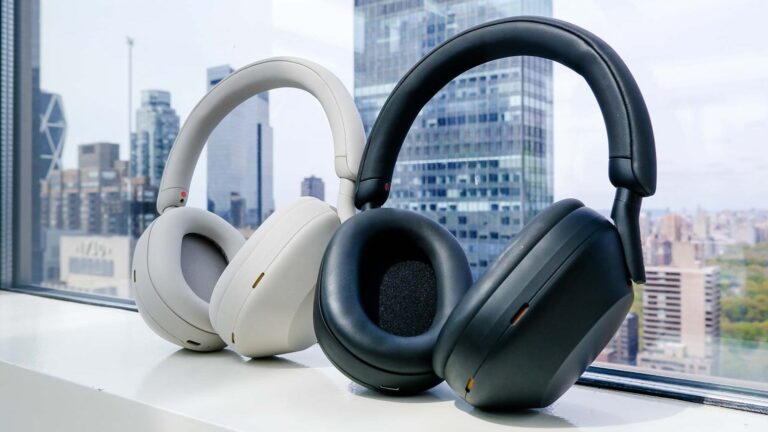
The use case I hear most from other introverts is open office work, specifically the problem of needing acoustic relief in a shared environment without wearing headphones for eight hours straight. The LectroFan Micro2 sits on a desk and creates a modest sound field around your immediate workspace. It won’t mask everything in a loud office, but it softens the auditory environment enough to reduce the cognitive load of involuntary sound processing. Paired with good over-ear headphones during especially disruptive periods, it forms a layered approach to acoustic management that a lot of introverts find more sustainable than either approach alone. The neuroscience of why intrusive noise is so particularly draining is discussed well in this environmental psychology research.
The drawback is volume ceiling. The LectroFan Micro2 produces adequate sound for close personal use, but it won’t fill a room the way the LectroFan Classic or Sound+Sleep SE does. If you need to mask significant ambient noise in a large space, this isn’t the machine for that. The Bluetooth speaker function is a nice bonus but not remarkable in audio quality terms. It’s not something you’d use for music if audio quality is important to you. Think of it as a white noise machine that happens to play music in a pinch, not the other way around. For its core purpose, though, it’s excellent: a true go-anywhere acoustic tool for introverts who need their conditions wherever they happen to be.
What to Look for in a White Noise Machine (as an Introvert)
The white noise machine market is full of options that look similar on a spec sheet but feel meaningfully different in actual use. Here are the specific considerations that matter if you’re an introvert making this decision.
Sound Type Variety
White noise, pink noise, and brown noise are not interchangeable. White noise covers the full frequency spectrum equally and can sound slightly harsh or hissy at higher volumes. Pink noise reduces the higher frequencies proportionally, creating a warmer, softer sound that many people find easier to sustain over long periods. Brown noise (sometimes called red noise) reduces the higher frequencies even more aggressively, resulting in a deep, low rumble that some introverts find deeply settling and others find oppressive. If you’ve never experimented with the differences, try each for a few days before committing to a machine that only offers one type. NIH research on pink noise and sleep is worth reading if you want the science behind frequency preference.
Volume Range and Precision
A machine that only offers loud or very loud isn’t useful for focused daytime work. Look for machines with a wide volume range and ideally fine-grained control, meaning many small steps between quiet and loud rather than a few large jumps. The LectroFan Classic is good at this. The Marpac Dohm, with its two speed settings, is less precise but still functional.
No Auto-Shutoff (Or the Ability to Disable It)
Auto-shutoff features are well-intentioned and completely wrong for many introverts. If you’re using a white noise machine to maintain cognitive conditions throughout a full workday or through a full night of sleep, a machine that turns itself off after 60 or 90 minutes is actively counterproductive. Check before buying. Some machines offer timers you can simply choose not to set. Others have auto-shutoff as a default that can’t be fully disabled. Read the specifications carefully.
Portability vs. Desk or Bedside Use
These are different products for different purposes. A stationary machine prioritizes speaker quality and volume range. A portable machine prioritizes battery life, size, and durability. Decide your primary use case first. If you need both, the LectroFan Classic for home and the LectroFan Micro2 or Dreamegg D3 Pro for travel is a pairing that works well without redundancy.
Light Considerations
Introverts who are also highly sensitive people often have light sensitivity alongside sound sensitivity. If you’re using a machine in the bedroom, check whether it has indicator lights that can’t be disabled, or a display that stays on at night. Some machines have LEDs that are subtle enough to ignore. Others are bright enough to disrupt sleep. The Hatch Restore 2 handles this well with full control over all its light outputs. For machines without light control, a small piece of electrical tape over an LED is a genuinely workable solution, and there’s no shame in it.
Frequently Asked Questions
Is white noise actually better than silence for introverts?
For many introverts, yes, but not because silence is bad. The problem is that true silence in most real environments doesn’t exist, and the irregular intrusion of unpredictable sounds is more disruptive than a consistent ambient sound. White noise creates acoustic predictability, which reduces the brain’s need to monitor incoming auditory signals and frees up cognitive resources for the work in front of you. Some introverts do prefer silence and function well in it. If you genuinely have access to real silence and it works for you, you don’t need a white noise machine.
What’s the difference between white noise, pink noise, and brown noise?
White noise contains all frequencies at equal intensity and can sound slightly harsh or hissy. Pink noise reduces higher frequencies proportionally, creating a warmer sound that many people find easier to sustain over long periods. Brown noise reduces high frequencies even further, producing a deep low rumble similar to a strong wind or a large waterfall. Most people have a clear preference after a few days of experimentation, and the differences are genuinely meaningful rather than marketing language.
Can I use a white noise machine while working from home during the day?
Absolutely, and this is one of the strongest use cases for introverts specifically. Running pink or brown noise at a moderate volume during focused work sessions reduces the cognitive load of processing ambient household sounds and helps maintain the kind of sustained attention that introverts do best when conditions are right. It works particularly well paired with a consistent work routine and a dedicated workspace. The introvert home environment hub has more on setting up your space for this kind of work.
Are white noise machines safe to use every night?
At reasonable volumes, yes. The main caution is volume: running any sound machine too loud over extended periods can affect hearing. Most sleep specialists suggest keeping bedroom sound machines below 65 decibels, which is well within the range of normal use for any machine on this list. The CDC’s noise and hearing resources have more detail if you want to calibrate your specific setup. Placing the machine a few feet from your head rather than directly on your pillow also helps.
Will I become dependent on a white noise machine to sleep?
This comes up a lot, and the honest answer is: you might prefer it over silence once you’ve used it consistently, and that’s not really a problem. Dependence in a harmful sense would imply the machine is doing something your body can’t do on its own, but it’s simply providing acoustic conditions that support your natural sleep process. If you travel without it occasionally and sleep poorly one night, that’s an inconvenience, not a dependency. The LectroFan Micro2 exists precisely for this reason, making it easy to bring your preferred conditions with you.
About the Author
Keith Lacy is an introvert who’s learned to embrace his true self later in life. After 20+ years in marketing and advertising, including running his own agency and managing Fortune 500 clients, he built Ordinary Introvert to help others understand their introvert strengths and build lives that actually fit them. He’s an INTJ who once thought something was wrong with him. Turns out, nothing was.